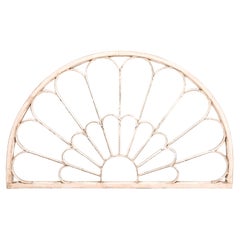
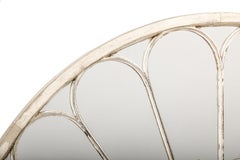
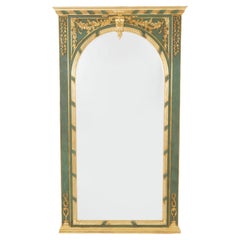
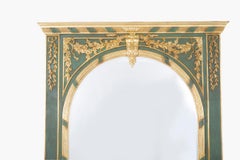
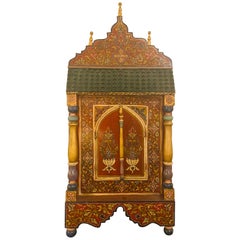
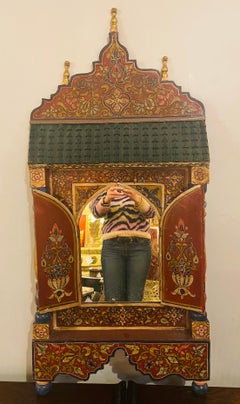
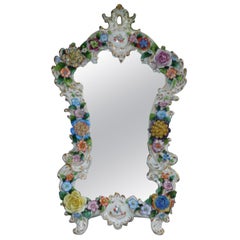
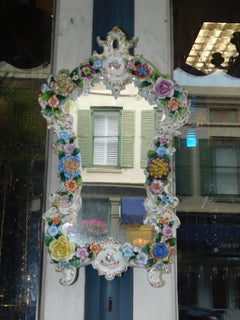
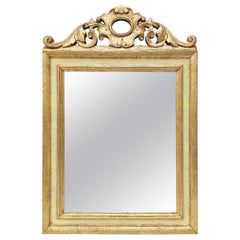
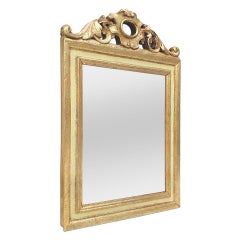
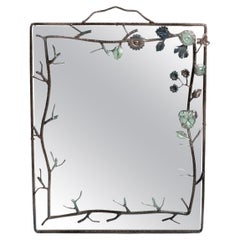
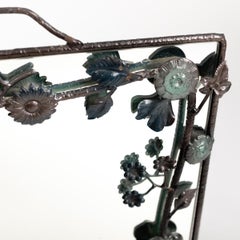
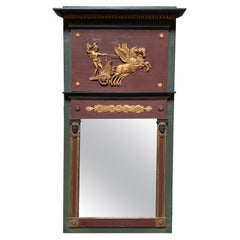
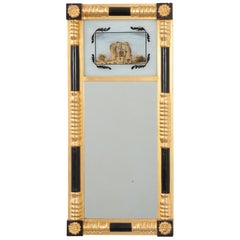
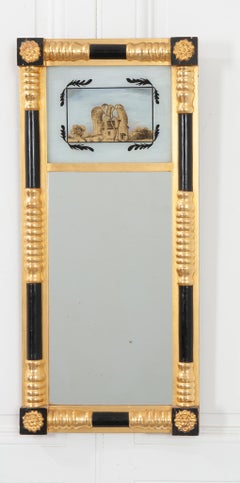
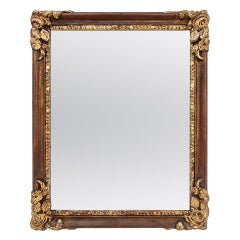
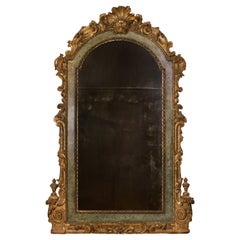
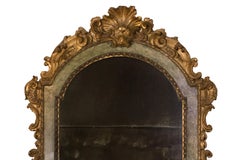
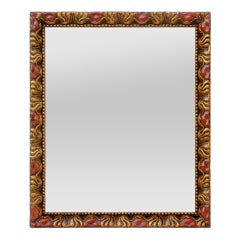
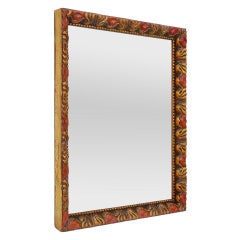
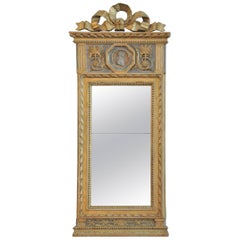
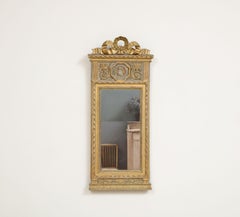
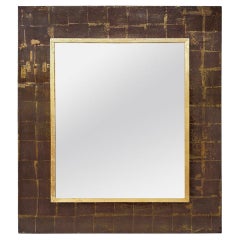
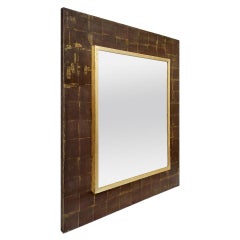
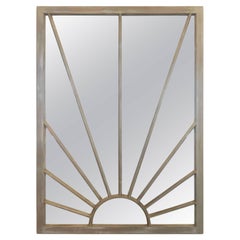
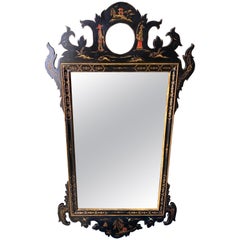
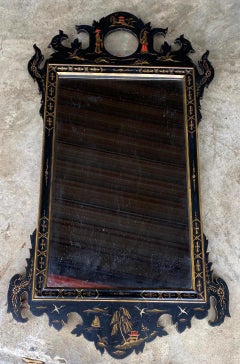
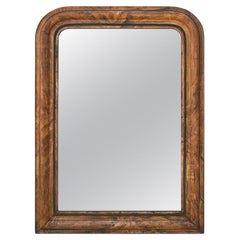
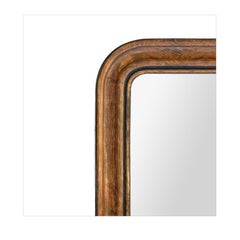
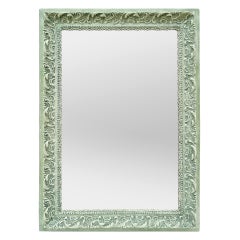
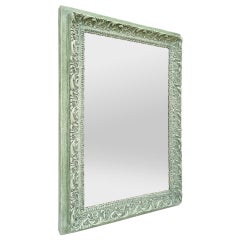
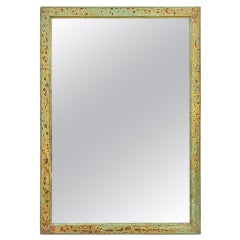
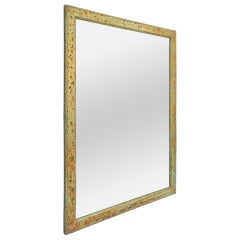
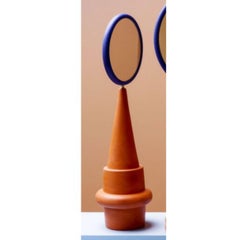
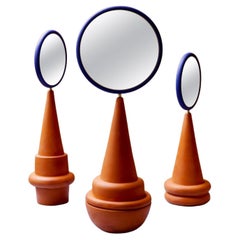
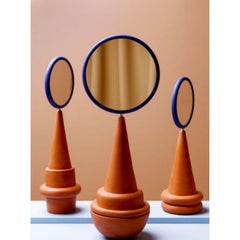
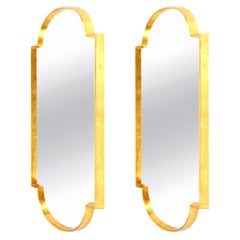
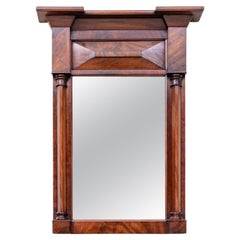
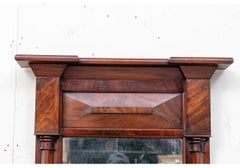
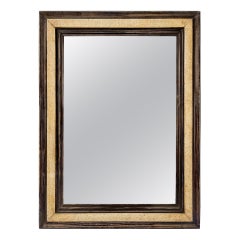
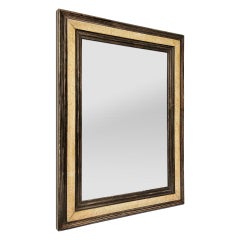
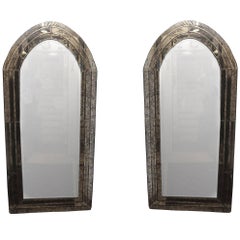
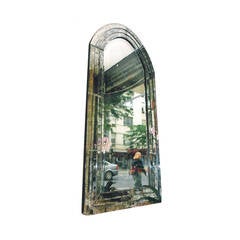
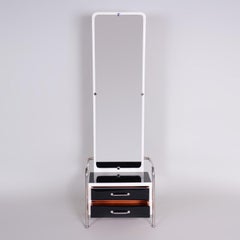
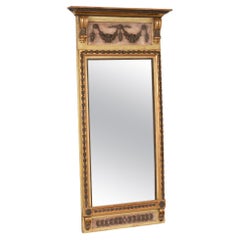
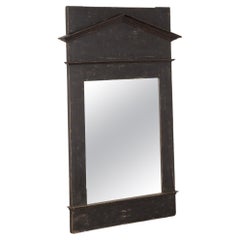
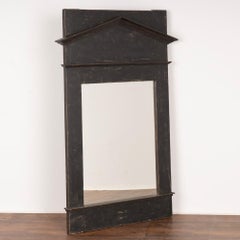
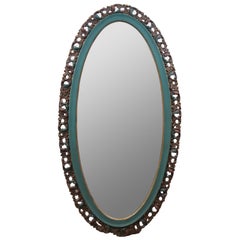
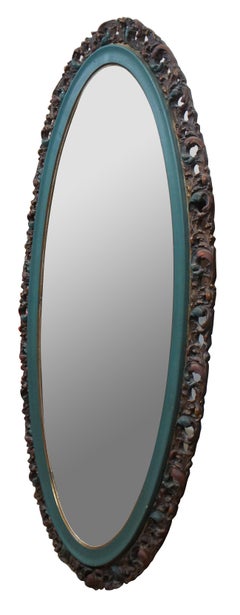
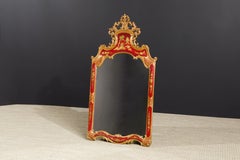
Antique early 20th century beveled oval wall mirror by the Von Gerichten Art Glass Co of Columbus, Ohio featuring French or Italian Rococo styling with reticulated or pierced accents and painted wood frame carved with swirling leaves in turquoise, red and gold. “In 1886 Theodore Von Gerichten, who had been born in 1863 in the town of Offenbach, Germany, immigrated to the United States. He became an agent for the Continental Insurance Company settling in Cullman, Alabama. The following year, 1887, his brother Ludwig Von Gerichten immigrated from Germany and shortly thereafter went to Cincinnati, Ohio where he worked as an apprentice at the Riordan Stained Glass Studio. In 1891 Ludwig left Cincinnati, moved to Cullman, and started his own stained glass company, naming it Birmingham Art Glass Company. Needing a bookkeeper he convinced his brother Theodore to join him in the business.
Two years later, in November 1893 the Von Gerichten Brothers moved their company to Columbus, Ohio, changing the name to Capital City Art Glass Company. The 1895-96 Columbus City Directory lists the first Columbus address for the company as 428 South High Street and both Von Gerichten brothers were listed with home addresses on Kossuth Street in German Village.
The name Capital City Art Glass Company did not last long. By 1898 the Von Gerichten brothers had once again changed their company's name, this time giving it their own name: The Von Gerichten Art Glass Company.
In 1914 the Von Gerichten brothers opened a studio in Munich, Germany. Theodore spent most of his time in the Columbus studio and Ludwig spent much of his time in the Munich studio.
During the time that the Von Gerichtens were in the art glass business they created approximately 1,800 windows for approximately 850 churches in the United States. Most of those windows were created in the Columbus studio. However, thinking that German workmanship was superior to American workmanship, some churches in the United States specifically requested that their windows be created at the Munich studio to the United States. In addition to having to pay extra for shipping costs there were other negative aspects for churches making this request. One church in Kingston, New York ordered windows from the Munich studio in 1914 but because of World War I and the British blockade, which continued until 1921, they did not receive their windows until late 1921. A church in Shillington, Pennsylvania ordered windows from the Munich studio in 1928 and they barely arrived in time for dedication services.
In actuality there was very little difference in the quality of workmanship in the windows done by the Columbus studio and windows done by the Munich studio. Although each studio had its specialty - the Columbus studio was noted for beautiful painted garments and Munch studio was noted for texture of skin and color - both studios employed German Craftsmen. Former Von Gerichten employee Mary Ann Holtzinger Mclean nearing 100 years old, recalls several of the long time Von Gerichten employees: head designer Jacob Renner and art glass craftsmen Joe Durr and Max Frank. Based on archival records in churches in various areas of the United States it is clear that these German men in the Von Gerichten Columbus studio used many of the same patterns in windows as their counterparts in the Von Gerichten German studio.
When a church expressed an interest in purchasing Von Gerichten stained glass windows a company representative (at one time a man named Walter Reiser) would travel to the church and meet with congregation representatives to discuss window patterns and scenes. Using standard patterns in coordination with unique drawings, a drawing of the proposed window would be created. Back in the Columbus Von Gerichten office, Employee Mary Ann Holtziger Mclean, using a pricing formula, would figure the cost of the window. This pricing formula took into account a number of things including the size of the window and the intricacy of the window; the more tiny pieces, the greater the price.
Once the congregation approved the price work began on the windows. Large sheets of paper were spread on work tables in the studio's second floor work area. Outlines of each piece were drawn on the paper as if it were a large puzzle board...
Category
Early 20th Century Baroque Paint More Mirrors
MaterialsMirror, Hardwood, Paint