By Thomas Chippendale Jr., Thomas Chippendale
Located in West Sussex, Pulborough
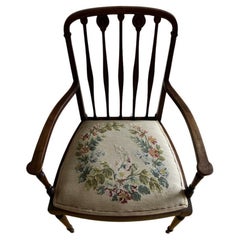
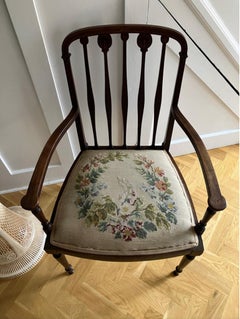
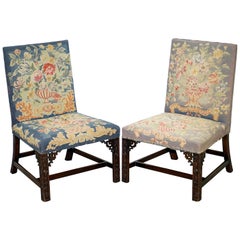
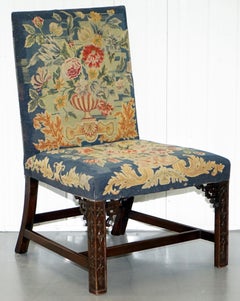
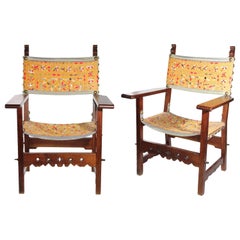
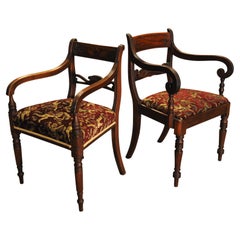
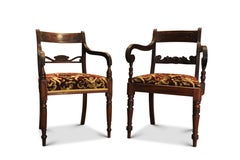
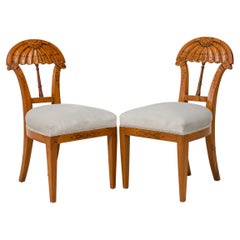
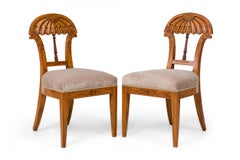
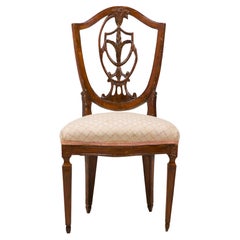
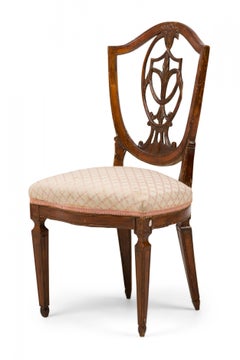
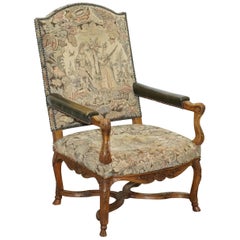
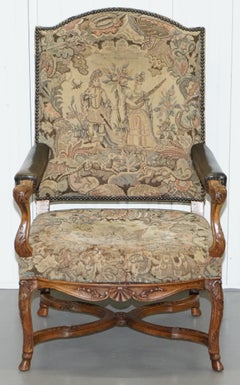
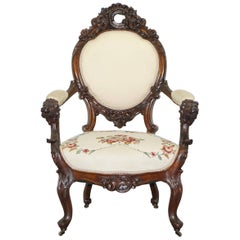
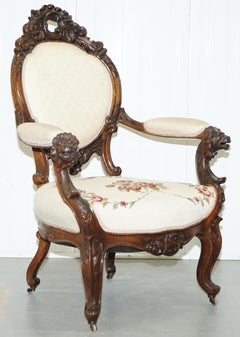
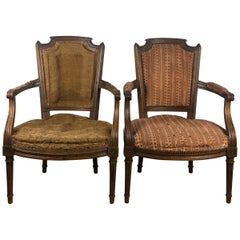
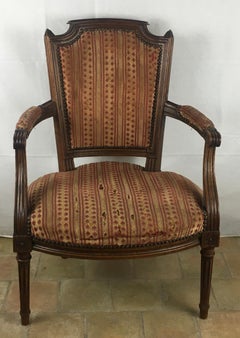
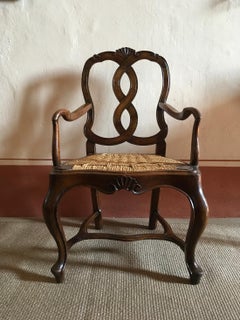
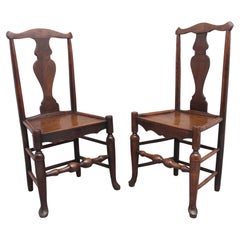
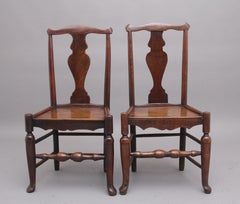
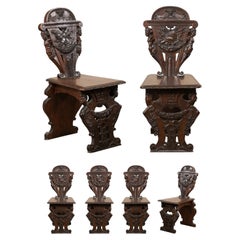
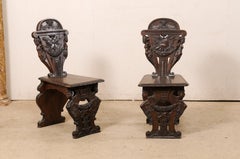
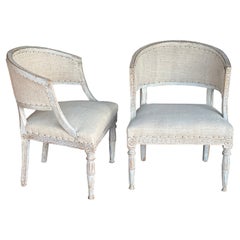
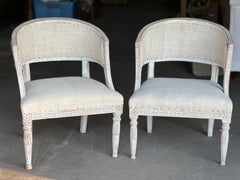
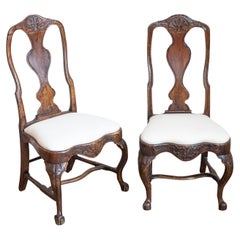
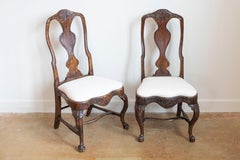
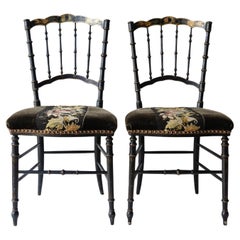
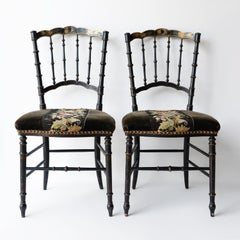
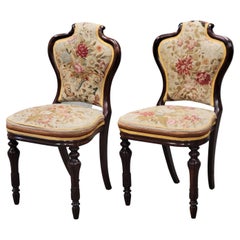
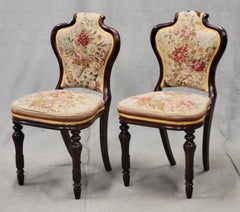
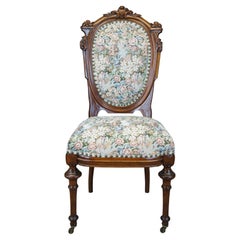
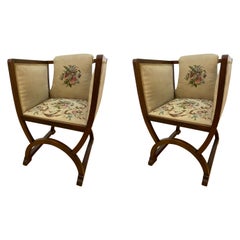
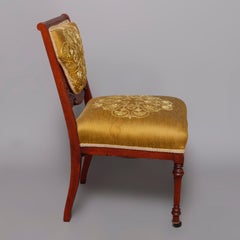
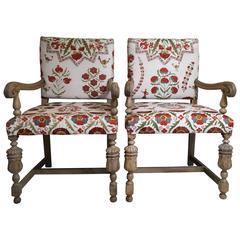
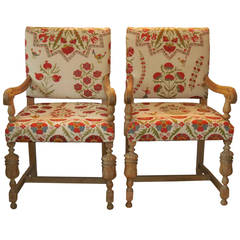
We are delighted to this very rare pair of Thomas Chippendale era circa 1760 Library chairs with period embroidered upholstery
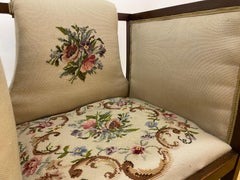
These are a very rare and highly collectible pair of Library chairs, they were made in the Chippendale era and closely after his designs, the fret work carving, ornate legs, all very finely executed by a master craftsman
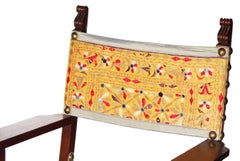
The upholstery is all original embroidery, the colours are very much of the period and not seen on later reproduction pieces. These are an exceptional example and would be highly prized in any collection
The chairs have been lightly restored to include some work to the carvings, the timber has been sympathetically French polished to ensure none of the original charm and patina has been lost
A period pair of Chippendales by the great man himself (which these could be) would retail for the high hundreds of thousands, however alas Chippendales are only originals if they come with iron clad provenance, a difficult thing to keep hold of for nearly 250 years. One of the chairs has a plaque to the base for Charles Tozer of 25 Brook street London, Mr Tozer was a very well respected Antiques dealer in the early 20th to mid 20th century that specialised in 18th century furniture
Dimensions:
Height 97cm
Width 64cm
Depth 65cm
Please note all measurements are taken at the widest point
Thomas Chippendale (1718–1779) was born in Otley in the West Riding of Yorkshire, England in June 1718. He became a cabinet-maker in London, designing furniture in the mid-Georgian, English Rococo, and Neoclassical styles. In 1754 he published a book of his designs, titled The Gentleman and Cabinet Maker's Director, upon which success he became renowned. The designs are regarded as representing the current British fashion for furniture of that period and are now reproduced globally. He was buried 16 November 1779, according to the records of St Martin-in-the-Fields, in the cemetery since built upon by the National Gallery. Chippendale furniture is much valued; a padouk cabinet that was offered for auction during 2008 sold for £2,729,250.
Life
"A Design for a State Bed" from the Director, 1762. Chippendale was born the only child of John Chippendale (1690–1768), joiner, and his first wife Mary (née Drake) (1693–1729). He received an elementary education at Prince Henry's Grammar School. The Chippendale family had long been involved with the wood working trades and so he probably received his basic training from his father, though it is believed that he was also trained by Richard Wood in York, before he relocated to London. Wood later ordered eight copies of the Director. On 19 May 1748 he married Catherine Redshaw at St George's Chapel, Mayfair and they had five sons and four daughters.
During 1749 Chippendale rented a modest house in Conduit Court, near Covent Garden. In 1752 he relocated to Somerset Court, off the Strand. In 1754 Chippendale relocated to 60–62 St Martin's Lane in London, where for the next 60 years the family business operated, until 1813 when his son, Thomas Chippendale (Junior), was evicted for bankruptcy. During 1754 he also began a partnership with James Rannie, a wealthy Scottish merchant, who put money into the business at the same time as Chippendale produced the first edition of the Director. Rannie and his bookkeeper, Thomas Haig, probably cared for the finances of the business. His wife, Catherine, died during 1772. After James Rannie died in 1766, Thomas Haig seems to have borrowed £2,000 from Rannie's widow, which he used to become Chippendale's partner. One of Rannie's executors, Henry Ferguson...
Category
1760s English Georgian Antique Embroidered Side Chairs
MaterialsUpholstery, Hardwood