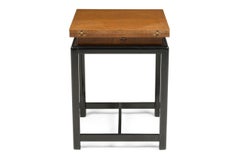
Ebonized Furniture

to
369
1,895
1,142
2,419
712
62
556
389
149
111
99
96
86
72
59
40
37
30
28
25
22
9
7
6
128
1,031
1,260
774
218
592
197
35
9
46
42
74
157
96
65
29
16
2,978
1,131
792
737
555
1,930
853
734
558
491
3,193
2,564
2,649
54
40
37
32
30
Technique: Ebonized
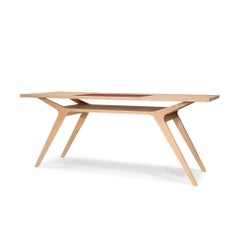
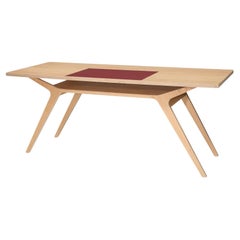
Mr. Note Desk 190cm Oak veneer

Mr. Note Desk 190cm Oak veneer

Located in Serzedo, PT

Following the principles of the “rational design,” Mr. And Mrs. Note Desks embody timeless elegance. Design to reflect the identity of the brand, where function creates attractive pu...

Category

2010s Portuguese Modern Ebonized Furniture

Materials

Faux Leather, Ash, Oak, Walnut, Plywood

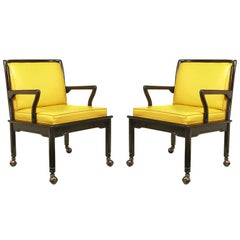
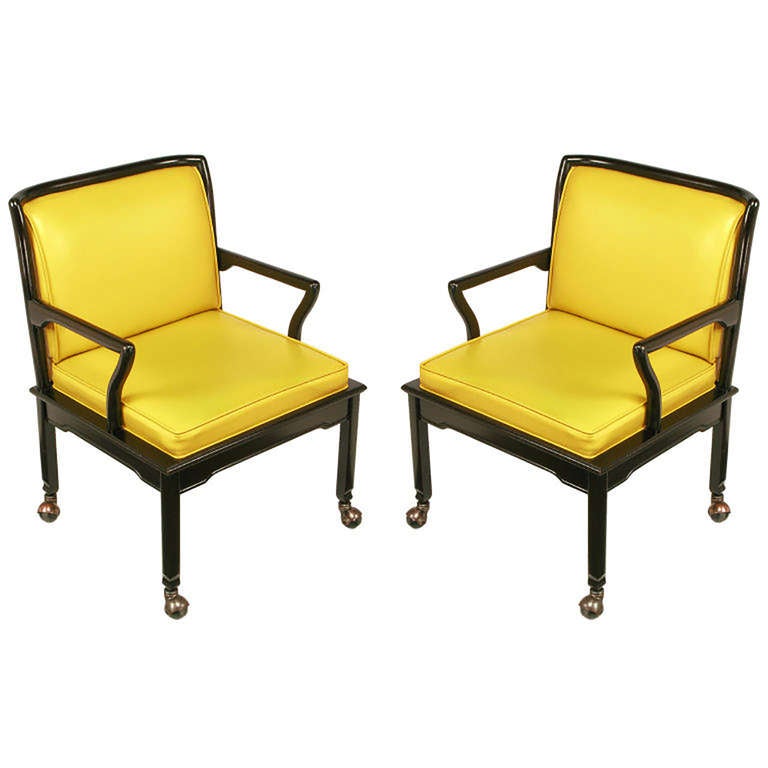
Pair of Widdicomb Ebonized Wood and Saffron Upholstered Lounge Chairs

Pair of Widdicomb Ebonized Wood and Saffron Upholstered Lounge Chairs

Located in Chicago, IL

Pair of Widdicomb ebonized mahogany and saffron leather-like upholstered chinoiserie lounge chairs. Good sized seats with ample room on padded seat cushion. Curvaceous back frame and...

Category

1960s American Vintage Ebonized Furniture

Materials

Mahogany

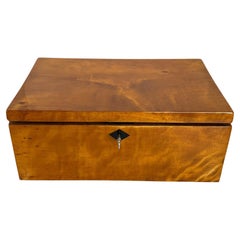
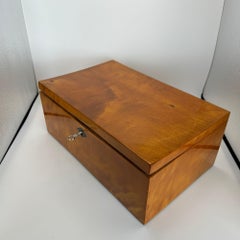
Late Biedermeier Box, Birch Solid Wood, Northern Germany, circa 1840

Late Biedermeier Box, Birch Solid Wood, Northern Germany, circa 1840

Located in Regensburg, DE

Beautiful, unadorned late Biedermeier casket box made of solid birch wood from northern Germany, circa 1840. * Ebonized diamond as key crest. * Original brass lock and hinges. * Insi...

Category

1840s German Biedermeier Antique Ebonized Furniture

Materials

Brass

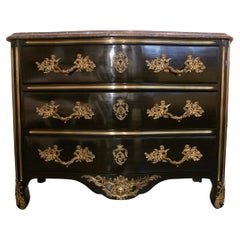
French Louis XVI Style Commode Dresser with Marble Top and Gilt Bronze Accents

French Louis XVI Style Commode Dresser with Marble Top and Gilt Bronze Accents

Located in Montreal, Quebec

French Louis XVI Style Commode dresser with marble top and gilt bronze mounts. Rare "Roi Soleil" bronze details on sides. Bronze Neoclassical references in bronze handles and base of...

Category

20th Century French Louis XVI Ebonized Furniture

Materials

Bronze

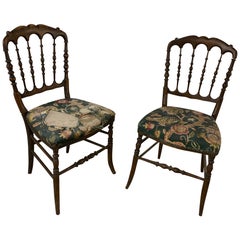
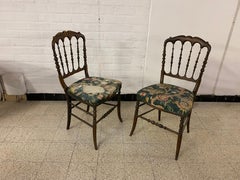
2 Original Chiarivari Napoleon III Ebonized Chairs, France, 1850s

2 Original Chiarivari Napoleon III Ebonized Chairs, France, 1850s

Located in Saint-Ouen, FR

2 original Napoleon III ebonized chairs, France, 1850s wear and lack of gilding.

Category

Mid-19th Century French Napoleon III Antique Ebonized Furniture

Materials

Wood

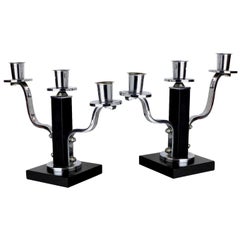
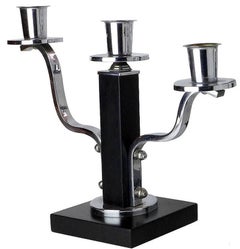
High Style Pair of Modernist Art Deco Candlesticks

High Style Pair of Modernist Art Deco Candlesticks

Located in Devon, England

Modernist Art Deco pair of matching candelabra in lacquered ebonized wood and chromed metal. Dating to the 1930s and originating from Belgium. The condition of the chromium is excel...

Category

Mid-20th Century Belgian Art Deco Ebonized Furniture

Materials

Chrome

Jane Paille chair by Philippe Starck

Jane Paille chair by Philippe Starck

By Philippe Starck

Located in PARIS, FR

Philippe Starck Chaise Jane Paille, Ca. 1987 Edition Driade, Italie Bois teinté marron foncé, assise en papier tressé façon paille H. 89 x L. 66 x P. 63 cm H. 35 1/8 x W. 26 x D. 24 ...

Category

1980s Post-Modern Vintage Ebonized Furniture

Materials

Wood, Plywood

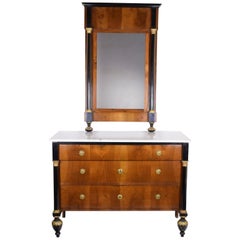
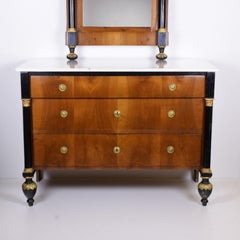
Italian Empire Commode in Walnut with Black Columns Mirror White Carrara Marble

Italian Empire Commode in Walnut with Black Columns Mirror White Carrara Marble

Located in Prato, IT

Italia, 1810 Walnut veneer Top in white Carrara marble Columns in ebonized wood Bases, capitals and paw carvings gilded in pure gold Good conditions Chest of drawers W126 x D56...

Category

Early 18th Century Italian Empire Antique Ebonized Furniture

Materials

Carrara Marble

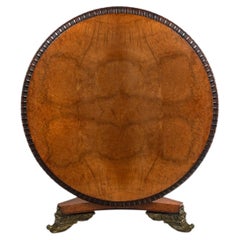
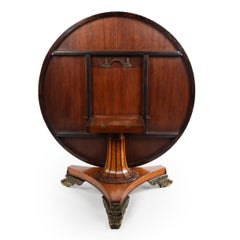
A Fine Late George IV Period Amboyna Centre Table, c.1830

A Fine Late George IV Period Amboyna Centre Table, c.1830

Located in Lymington, Hampshire

A Fine Late George IV Period Amboyna Centre Table, c.1830 This lovely table is of circular form, the top supported on an outspreading column base supported on a tripartite platform ...

Category

Mid-19th Century English George IV Antique Ebonized Furniture

Materials

Brass

Krasnogorov Studio, "Pearl" Original, Chandelier, 2019

Krasnogorov Studio, "Pearl" Original, Chandelier, 2019

By Krasnogorov Studio

Located in Los Angeles, CA

Please note that the Pearl Chandelier's dimensions do not include the ceiling suspension arm length. There is three sizes for the Pearl Chandelier, with this listing being for the Original size. Please inquire for more details on fixture dimensions with our sales team. The pearl chandelier is clearly inspired by organic forms, lily pads, oyster shells, plant tendrils, but at the same time is a rationally conceived, architectural form that is driven by the material of its construction: wood. Woodworkers must work within the discipline imposed by the strengths and limitations of their medium. Like the triangulated trusses of a timber form barn, the carved arms and supports are shaped to carry their weight, and function as members of a well-balanced wooden structure. Carving of this quality declined with the passing of the great masters of Art Nouveau, Gaudi, Majorelle, Guimard, etc. The pearl is a modern reinvention of this tradition one hundred years later. The furniture and lighting of Thomas Newman Studio...

Category

21st Century and Contemporary American Organic Modern Ebonized Furniture

Materials

Wood

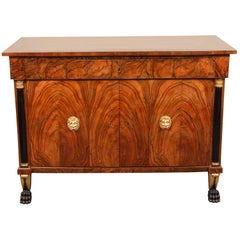
Second Empire-Style Cabinet

Second Empire-Style Cabinet

Located in Los Angeles, CA

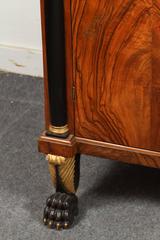
Handsome, two-door, burl veneered cabinet surmounted by a single drawer above. The face is framed by ebonized, parcel gilt pillars and features str...

Category

1930s Italian Vintage Ebonized Furniture

Materials

Wood, Burl

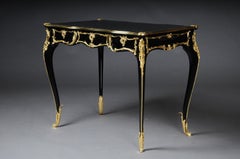
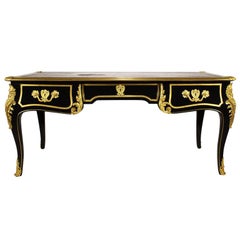
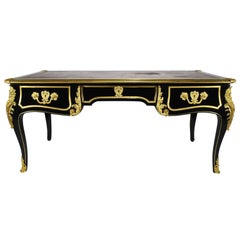
20th Century Elegant Black Bureau Plat / Writing Desk in Louis XV, Beech

20th Century Elegant Black Bureau Plat / Writing Desk in Louis XV, Beech

Located in Berlin, DE

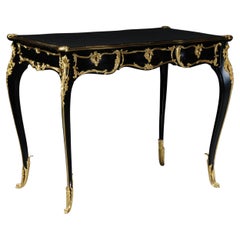
20th century elegant black bureau plat / writing desk in Louis XV, beech Exclusive bureau plat / desk in Louis XV style Solid beechwood ebonized/blackened. Very fine, floral bron...

Category

20th Century French Louis XV Ebonized Furniture

Materials

Bronze

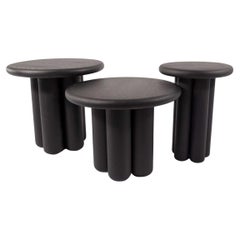
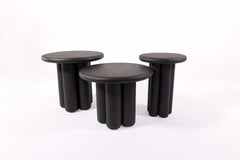
Solid Dark Oak Ina Nesting Side Table 13"Dia by Mary Ratcliffe Studio

Solid Dark Oak Ina Nesting Side Table 13"Dia by Mary Ratcliffe Studio

By Mary Ratcliffe

Located in Toronto, ON

A collection of tables designed to work independently or as a group of nested pieces. Each table is comprised of five rounded legs and a rounded top. Custom colours, sizing and heights are available upon request. 13 - 13"D x 15" or 18" - starting at $2267 in blackened oak 19 - 19"D x 18" or 15" - starting at $2295 in blackened oak 25 - 25"D x 18" or 15" - starting at $2350 in blackened oak We work with North American solid hardwoods on a made-to-order fabrication basis. Additional offerings in white oak, dark oak, walnut & hard maple are available, with different finish oils & stains at our disposal. Please reach out for any customizations to species, stains, or leather quality. We are more than happy to provide more information and pricing as per your specifications. As all of our products are made-to-order, we cannot accept returns or refunds of purchased items. Crating, shipping & packaging materials are not included in the flat rate shipping quote provided. Please inquire within at the time of order for a quote on any applicable charges. Mary Ratcliffe Studio...

Category

21st Century and Contemporary Canadian Modern Ebonized Furniture

Materials

Ash, Oak, Walnut

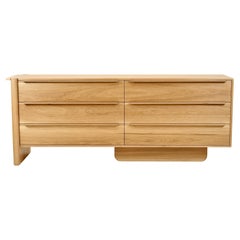
Sulaco Six Drawer Dresser

Sulaco Six Drawer Dresser

Located in Los Angeles, CA

The Sulaco Six Drawer Dresser champions the foundations of the Danish Modern Movement. Rooted in functionality, every curve and feature is meticulously crafted to ensure aesthetics a...

Category

21st Century and Contemporary American Scandinavian Modern Ebonized Furniture

Materials

Ash, Oak, Walnut

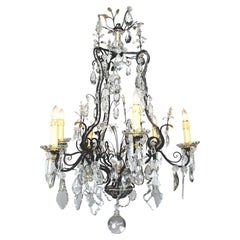
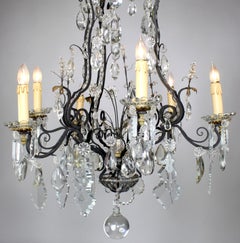
French Louis XV Style Cut-Glass, Wrought Iron and Parcel-Gilt 6 Light Chandelier

French Louis XV Style Cut-Glass, Wrought Iron and Parcel-Gilt 6 Light Chandelier

Located in Los Angeles, CA

A Fine French Louis XV Style Cut-glass, Wrought Iron and Parcel-Gilt Six Light Chandelier. The scrolled ebonized iron frame surmounted with cut-glass pendants and prisms, the flower ...

Category

Early 1900s French Louis XV Antique Ebonized Furniture

Materials

Wrought Iron

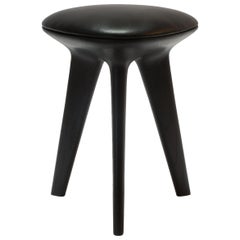
Rotor, Solid Black Oak Stool with Black Padded Leather Seat by Made in Ratio

Rotor, Solid Black Oak Stool with Black Padded Leather Seat by Made in Ratio

By Made in Ratio, Brodie Neill

Located in London, GB

Inspired by the Reuleaux rotating triangle, the form of the Rotor stool is based on the intersection of three circles. The CNC-cut organic shape celebrates ‘the curve of constant width'. Available as a comfortable stool...

Category

2010s British Minimalist Ebonized Furniture

Materials

Leather, Oak, Walnut

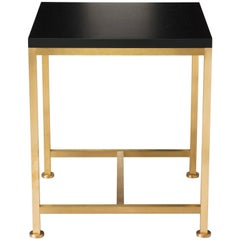
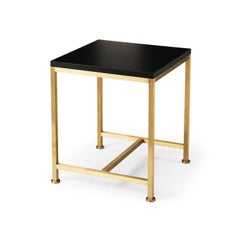
Contemporary Orichal Lamp Table in Oak or Walnut with Solid Brass Frame

Contemporary Orichal Lamp Table in Oak or Walnut with Solid Brass Frame

By Stuart Scott

Located in Trowbridge, Wiltshire

The Orichal range is perfectionist in its simplicity featuring a precision engineered solid brass frame with a top in walnut. Shown here in black lacquered walnut and brushed brass. ...

Category

21st Century and Contemporary English Modern Ebonized Furniture

Materials

Brass

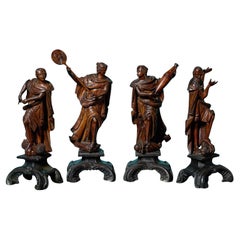
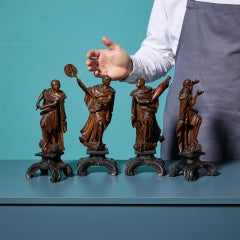
Set of 19th Century Hand Carved Allegorical Figures

Set of 19th Century Hand Carved Allegorical Figures

Located in Wormelow, Herefordshire

A set of 19th century hand carved allegorical figures, possibly depicting the four seasons. Each statue is finely carved in the grand tour style, made from a continental softwood a...

Category

Early 19th Century Antique Ebonized Furniture

Materials

Ebony, Fruitwood

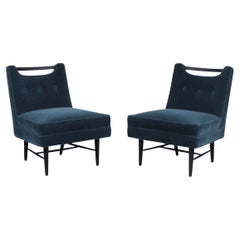
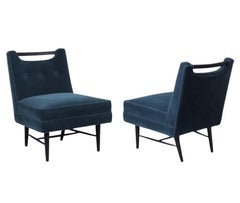
Pair of Mohair Slipper Chairs in the Manner of Harvey Probber, 1950s

Pair of Mohair Slipper Chairs in the Manner of Harvey Probber, 1950s

Located in Dallas, TX

Enjoy leisure time with this pair of glamorous slipper lounge chairs in the style of Harvey Probber c.1950's. Very comfortable and well-constructed. A modern update on a classic desi...

Category

Mid-20th Century American Mid-Century Modern Ebonized Furniture

Materials

Mohair, Wood

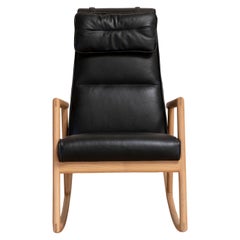
Earl White Oak, Black Leather Moresby Rocking Chair

Earl White Oak, Black Leather Moresby Rocking Chair

By Chris Earl

Located in North Hollywood, CA

Solid wood construction with hand-cut joinery and custom upholstered seat and seat back. This Rocker shown in white oak and black leather. In stock leather choice: black, olive, c...

Category

2010s American Mid-Century Modern Ebonized Furniture

Materials

Leather, Oak, Walnut

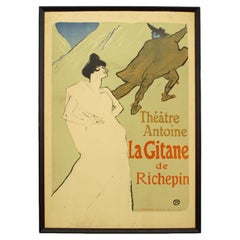
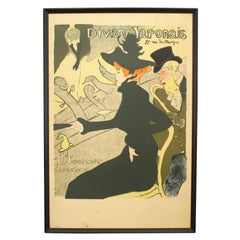
French Art Nouveau Women Portrait Poster

French Art Nouveau Women Portrait Poster

Located in Queens, NY

French Art Nouveau style portrait poster featuring women in ebonized frames (associated pieces: 013684b, 013684d) Condition: Good; Wear consistent with age and use

Category

20th Century French Art Nouveau Ebonized Furniture

Materials

Ebony

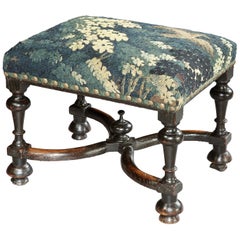
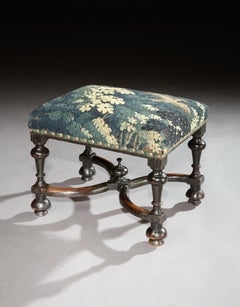
Stool, Baroque, Upholstered, Oak, Ebonised, X Stretcher, Tapestry, Verdure Bird

Stool, Baroque, Upholstered, Oak, Ebonised, X Stretcher, Tapestry, Verdure Bird

Located in BUNGAY, SUFFOLK

A rare, late 17th century. ‘X’ stretchered, ebonised, oak stool upholstered in 17th century verdure tapestry Unusual simulating ebony which was phenomenally expensive and only found in Royal and aristocratic collections at this time This stool is sophisticated, elegant and refined and the flying bird on the tapestry is a charming and unusual feature. The fine turnings, and x-stretcher evolved into the design of late-17th century English furniture in response to Continental fashions. At the same time, cabinet makers responded to the fashion for expensive Oriental laquered furniture by ebonising or black-japanning...

Category

1690s British Baroque Antique Ebonized Furniture

Materials

Oak

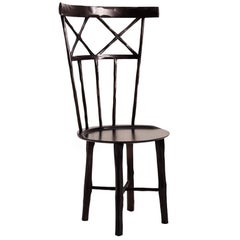
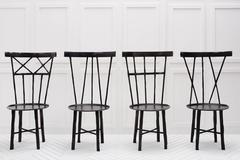
Anna Karlin, W Chair, Shape A

Anna Karlin, W Chair, Shape A

By Anna Karlin

Located in New York, NY

A modern interpretation of the classic Windsor chair. Made from hard maple, each spoke and leg is meticulously hand-carved with soft organic contours. Please note lead times for cu...

Category

2010s American Ebonized Furniture

Materials

Maple

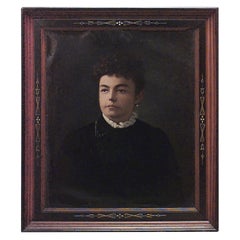
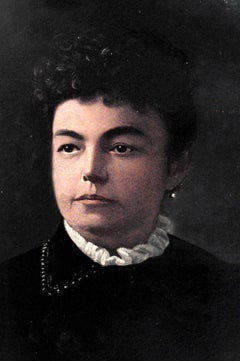
American Victorian Lady Portrait

American Victorian Lady Portrait

Located in Queens, NY

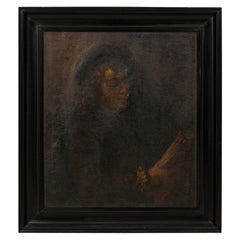
American Victorian oil painting portrait of lady with white collar in Eastlake style walnut and ebonized frame Condition: Good; Wear consistent with age and use

Category

Late 19th Century American Victorian Antique Ebonized Furniture

Materials

Walnut

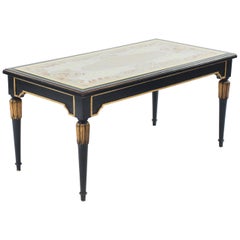
Maison Jansen Mid-Century Ebonized Églomisé Coffee Table

Maison Jansen Mid-Century Ebonized Églomisé Coffee Table

By Maison Jansen

Located in Queens, NY

Mid-Century (circa 1950) ebonized coffee table with an églomisé top resting on tapered legs with gilt detail (attributed to: MAISON JANSEN)

Category

Mid-20th Century French Mid-Century Modern Ebonized Furniture

Materials

Glass, Wood

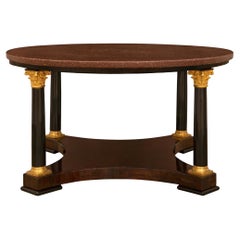
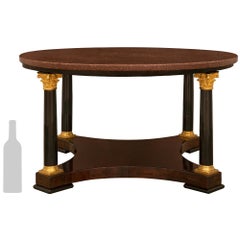
19th Century Neoclassical Style Mahogany, Ormolu and Porphyry Coffee Table

19th Century Neoclassical Style Mahogany, Ormolu and Porphyry Coffee Table

Located in West Palm Beach, FL

A handsome Continental 19th century neo-classical st. mahogany, ebonized fruitwood, ormolu and porphyry coffee table. The table is raised on four square feet below a mahogany bottom tier with concave sides and four ebonized fruitwood columns with richly chased ormolu capital and plinths. Above rests the original sensational circular porphyry top. Porphyry was Imperial Rome...

Category

19th Century Unknown Neoclassical Antique Ebonized Furniture

Materials

Ormolu

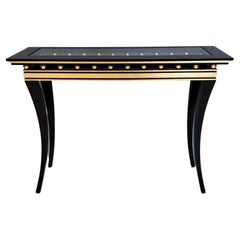
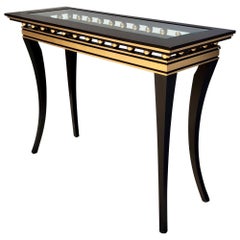
Rectangular Ebonized Beech Console by Roberto Ventura with Crystal Top, Italy

Rectangular Ebonized Beech Console by Roberto Ventura with Crystal Top, Italy

By Roberto Ventura

Located in Bresso, Lombardy

Made in Italy, 2000s. This console features an ebonized beech frame with golden lacquered details and a rectangular beveled crystal top. It might show slight traces of use since it's...

Category

Early 2000s Italian Art Deco Ebonized Furniture

Materials

Crystal

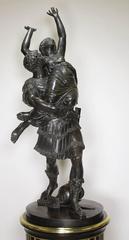
French 19th Century Patinated Bronze Group "The Abduction of the Sabine Women"

French 19th Century Patinated Bronze Group "The Abduction of the Sabine Women"

By Pierre Loison 1

Located in Los Angeles, CA

A very fine and Monumental French 19th century patinated bronze group Titled "The Abduction of the Sabine Women" after a model by Pierre Loison (French, 1816-1886), depicting a young scantily maiden being carried away on the arms of a Roman soldier, raised on circular ebonized wood and brass revolving pedestal stand. Signed at the base: P. Loison, circa: Paris, 1870-1880. Overall height (Sculpture and Pedestal): 91 inches (231.2 cm). Sculpture height: 54 3/4 inches (139.1 cm). Sculpture width: 24 inches (61 cm). Pedestal height: 36 inches (91.5 cm). Pedestal width (Widest): 25 1/2 inches (64.8 cm). Pierre Loison was a French sculptor of the 19th century born in the seaside town of Loir-et-Cher on July 5, 1816 and died in Cannes on February 3, 1886. In 1841, he joined the Pierre-Jean David d'Angers workshop where he became one of his favorite pupils. A year later he attended the School of Fine Arts in Paris. He exhibited for the first time at the Salon des artistes Français where in 1845 he was awarded third-class medal. In 1853 he was awarded First Place medal and at the Universal Exhibition of 1955 he received an honorable mention and another medal award in 1859. On 12 July 1859 and by decree, he was made "Chevalier de la Légion d’Honneur". Pierre Loison is buried at The Montparnasse Cemetery in Paris. Works by Pierre Loison "Femme assise": Terre cuite (1843) au musée Gustave-Moreau à Paris "Jeune fille portant un vase": Statue en marbre blanc, (h. 1,25 m) datée de 1857 et présentée au Salon de 1859 ; la statue fut d’abord placée au Palais-Royal (appartements du prince Napoléon) ; elle est actuellement au musée des Beaux-arts de Dole ; une réplique de taille réduite est au Musée des arts décoratifs de Paris. "La Halle aux grains de Mer": Chaque façade de ce bâtiment, classé à l’inventaire supplémentaire des monuments historiques, comporte un fronton triangulaire et celui de la façade ouest représentant « L’Agriculture distribuant des couronnes aux enfants de Beauce et de Sologne » a été sculpté gracieusement par P. Loison, natif de la commune. "La Justice assise": Allégorie de la Justice au fronton du Palais de justice de Blois (1847). "Buste d’Achille Fould": Au musée du Château de Blois 8; "Nausicaa": Statue en plâtre présentée au Salon de 1874, au musée des Beaux-arts de Vendôme. "Statue de J-B. Pigalle sur la façade de l’hôtel de ville de Paris "Sculptures extérieures du Palais du Louvre": Pierre Loison est l’auteur de neuf statues qui décorent les façades du Louvre "Figure" (1878) au deuxième étage du Pavillon Marsan10; "La Navigation" (1868) sur la balustrade du premier étage du Pavillon des États11; "Pandore" (1861) sur l’aile Est12; « Vénus » (1865) Aile Marsan13; "l’Histoire et la Vérité" (1857)14; "La Poésie et la Philosophie" (1857)15 deux oculi du Pavillon Mollien, coté cour Napoléon ; "Concordet" (1857) sur la balustarde du premier étage de la Rotonde de Beauvais, coté cour Napoléon. "Statue de Sappho sur le rocher de Leucade : datée de 1859, (h. 1,85 m) sur la façade nord de la cour carrée du Palais du Louvre à Paris ; le modèle en plâtre, offert par Mme Loison, est au musée des Beaux-arts de Blois. "Vierge à l’enfant": Statue en marbre en l’église Saint-Pierre de Dampierre-en-Yvelines. "Jeune romain enlevant une Sabine": Groupe présenté au Salon de 1863 qui a été reproduit en bronze par la fonderie d’art Raingo frères. "Sépulture de la famille Hautoy : Au cimetière du Père-Lachaise, deux bas-reliefs en marbre représentant l’un "La vie de Famille," l’autre 'Le chantier," datés de 1880. "Demoiselle d’honneur de la Cour de François Ier": Statue en pierre exposée au Salon des artistes vivants en 1870 ; acquise par l’État à ce Salon, elle a été déposée en 1891, devant la mairie d’Aubin. "La Paix distribuant des palmes aux génies des Beaux-arts": Fronton du Château de Compiègne (1866). "Daphnis et Naïs": Groupe en marbre (1869) au musée de Picardie à Amiens. "Jean-Baptiste Pigalle": Statue en pierre (1881) sur la façade principale, au rez-de-chaussée de l’Hôtel de ville de Paris. "Gisant de Ferdinand-Philippe d'Orléans: dans la chapelle royale de Dreux en collaboration avec Ary Scheffer. "La Grace": Statue en marbre (1875) dans le grand foyer de l’opéra Garnier. The Abduction of the Sabine Women The Abduction of the Sabine Women is an episode in the legendary history of Rome, traditionally dated to 750 BC, in which the first generation of Roman men acquired wives for themselves from the neighboring Sabine families. Recounted by Livy and Plutarch (Parallel Lives II, 15 and 19), it provided a subject for Renaissance and post-Renaissance works of art that combined a suitably inspiring example of the hardihood and courage of ancient Romans with the opportunity to depict multiple figures, including heroically semi-nude figures, in intensely passionate struggle. Comparable themes from Classical Antiquity are the Battle of the Lapiths and Centaurs and the theme of Amazonomachy, the battle of Theseus with the Amazons. The Abduction is supposed to have occurred in the early history of Rome, shortly after its founding by Romulus and his mostly male followers. Seeking wives in order to found families, the Romans negotiated unsuccessfully with the Sabines, who populated the area. Fearing the emergence of a rival society, the Sabines refused to allow their women to marry the Romans. Consequently, the Romans planned to abduct Sabine women, during a festival of Neptune Equester and proclaimed the festival among Rome's neighbours. According to Livy, many people from Rome's neighbours including folk from the Caeninenses, Crustumini, and Antemnates, and many of the Sabines attended. At the festival Romulus gave a Signal, at which the Romans grabbed the Sabine women and fought off the Sabine men. The indignant abductees were soon implored by Romulus to accept Roman husbands. Livy says Romulus offered them free choice and promised civic and property rights to women. According to Livy, Romulus spoke to them each in person, declaring "that what was done was owing to the pride of their fathers, who had refused to grant the privilege of marriage to their neighbours; but notwithstanding, they should be joined in lawful wedlock, participate in all their possessions and civil privileges, and, than which nothing can be dearer to the human heart, in their common children." Responsibility of the men for meeting the needs of the children thus conceived was not included. War with the Sabines and other tribes Outraged at the occurrence, the King of the Caeninenses entered upon Roman territory with his army. Romulus and the Romans met the Caeninenses in battle, killed their king, and routed their army. Romulus later attacked Caenina and took it upon the first assault. Returning to Rome, he dedicated a temple to Jupiter Feretrius (according to Livy, the first temple dedicated in Rome) and offered the spoils of the enemy king as spolia opima. According to the Fasti Triumphales, Romulus celebrated a triumph over the Caeninenses on 1 March 752 BC. At the same time, the army of the Antemnates invaded Roman territory. The Romans retaliated, and the Antemnates were defeated in battle and their town captured. According to the Fasti Triumphales, Romulus celebrated a second triumph in 752 BC over the Antemnates. The Crustumini also started a war, but they too were defeated and their town captured. Roman colonists subsequently were sent to Antemnae and Crustumerium by Romulus, and many citizens of those towns also migrated to Rome (particularly the families of the captured women). The Sabines themselves finally declared war, led into battle by their king, Titus Tatius. Tatius almost succeeded in capturing Rome, thanks to the treason of Tarpeia, daughter of Spurius Tarpeius, governor of the citadel on the Capitoline Hill. She opened the city gates for the Sabines in return for "what they bore on their arms", thinking she would receive their golden bracelets. Instead, the Sabines crushed her to death with their shields, and her body was thrown from a rock known ever since by her name, the Tarpeian Rock. The Romans attacked the Sabines, who now held the citadel. The Roman advance was led by Hostus Hostilius, the Sabine defence by Mettus Curtius. Hostus fell in battle, and the Roman line gave way, They retreated to the gate of the Palatium. Romulus rallied his men by promising to build a temple to Jupiter Stator on the site. He then led them back into battle. Mettus Curtius was unhorsed and fled on foot, and the Romans appeared to be winning. At this point, however, the Sabine women intervened: [They], from the outrage on whom the war originated, with hair dishevelled and garments rent, the timidity of their sex being overcome by such dreadful scenes, had the courage to throw themselves amid the flying weapons, and making a rush across, to part the incensed armies, and assuage their fury; imploring their fathers on the one side, their husbands on the other, "that as fathers-in-law and sons-in-law they would not contaminate each other with impious blood, nor stain their offspring with parricide, the one their grandchildren, the other their children. If you are dissatisfied with the affinity between you, if with our marriages, turn your resentment against us; we are the cause of war, we of wounds and of bloodshed to our husbands and parents. It were better that we perish than live widowed or fatherless without one or other of you." The battle came to an end, and the Sabines agreed to unite in one nation with the Romans. Titus Tatius jointly ruled with Romulus until Tatius's death five years later. The new Sabine residents of Rome settled on the Capitoline Hill, which they had captured in the battle. Artistic representations: The Rape of the Sabine Women by Johann Heinrich Schönfeld The subject was popular during the Renaissance as symbolising the importance of marriage for the continuity of families and cultures. It was also an example of a battle subject in which the artist could demonstrate his skill in depicting female as well as male figures in extreme poses, with the added advantage of a sexual theme. It was depicted regularly on 15th-century Italian cassoni and later in larger paintings. A comparable opportunity from the New Testament was afforded by the theme of the Massacre of the Innocents. Giambologna The sculpture by Giambologna (1579–1583) that was reinterpreted as expressing this theme depicts three figures (a man lifting a woman into the air while a second man crouches) and was carved from a single block of marble. This sculpture is considered Giambologna's masterpiece. Originally intended as nothing more than a demonstration of the artist's ability to create a complex sculptural group, its subject matter, the legendary rape of the Sabines, had to be invented after Francesco I de' Medici, Grand Duke of Tuscany, decreed that it be put on public display in the Loggia dei Lanzi in Piazza della Signoria, Florence. True to mannerist densely packed, intertwined figural compositions and ambitious overinclusive efforts, the statue renders a dynamic panoply of emotions, in poses that offer multiple viewpoints. When contrasted with the serene single-viewpoint pose of the nearby Michelangelo's David, finished nearly 80 years before, this statue is infused with the dynamics that lead towards Baroque, but the tight, uncomfortable, verticality— self-imposed by the author's virtuosic restriction to a composition that could be carved from a single block of marble— lacks the diagonal thrusts that Bernini would achieve forty years later with his Rape of Proserpina and Apollo and Daphne, both at the Galleria Borghese, Rome. The proposed site for the sculpture, opposite Benvenuto Cellini's statue of Perseus, prompted suggestions that the group should illustrate a theme related to the former work, such as the rape of Andromeda by Phineus. The respective rapes of Proserpina and Helen were also mooted as possible themes. It was eventually decided that the sculpture was to be identified as one of the Sabine virgins. The work is signed OPVS IOANNIS BOLONII FLANDRI MDLXXXII ("The work of Johannes of Boulogne of Flanders, 1582"). An early preparatory bronze featuring only two figures is in the Museo Nazionale di Capodimonte in Naples. Giambologna then revised the scheme, this time with a third figure, in two wax models now in the Victoria and Albert Museum, London. The artist's full-scale gesso for the finished sculpture, executed in 1582, is on display at the Accademia Gallery in Florence. Bronze reductions of the sculpture, produced in Giambologna's own studio and imitated by others, were a staple of connoisseurs' collections into the 19th century. Nicolas Poussin Nicolas Poussin produced two major versions of this subject, which enabled him to display to the full his unsurpassed antiquarian knowledge, together with his mastery of complicated relations of figures in dramatic encounter. One, now at the Metropolitan Museum of Art, was executed in Rome, 1634–35. It depicts Romulus at the left giving the Signal for the abduction. The second version, of 1636–37, now at the Louvre Museum, shows that, though some of the principal figures are similar, he had not exhausted the subject. The architectural setting is more developed. Peter Paul Rubens Peter Paul Rubens painted a version of the subject about 1635–40. It is at the National Gallery, London. Jacques-Louis David Jacques-Louis David painted the other end of the story, when the women intervene to reconcile the warring parties. The Sabine Women Enforcing Peace by Running Between the Combatants (also known as The Intervention of the Sabine Women ) was completed in 1799. It is in the Louvre Museum. David had worked on it from 1796, when France was at war with other European nations after a period of civil conflict culminating in the Reign of Terror and the Thermidorian Reaction, during which David himself had been imprisoned as a supporter of Robespierre. After David’s estranged wife visited him in jail, he conceived the IDEA of telling the story, to honor his wife, with the theme being love prevailing over conflict. The painting was also seen as a plea for the people to reunite after the bloodshed of the revolution. The painting depicts Romulus's wife Hersilia — the daughter of Titus Tatius, leader of the Sabines — rushing between her husband and her father and placing her babies between them. A vigorous Romulus prepares to strike a half-retreating Tatius with his spear, but hesitates. Other soldiers are already sheathing their swords. The rocky outcrop in the background is the Tarpeian Rock. John Leech The English 19th century satirical painter John Leech included in his Comic History of Rome a depiction of the Rape of the Sabine Women, where the women are portrayed, with a deliberate anachronism, in Victorian costume...

Category

19th Century French Mannerist Antique Ebonized Furniture
Materials

Bronze

French Art Nouveau Women Portrait Poster

French Art Nouveau Women Portrait Poster

Located in Queens, NY

French Art Nouveau style portrait poster featuring women in ebonized frames (associated pieces: 013684c, 013684d)

Category

20th Century French Art Nouveau Ebonized Furniture

Materials

Ebony

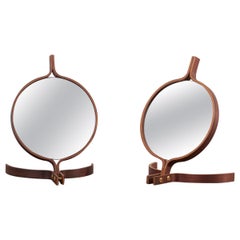
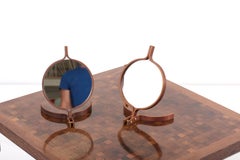
1 of 4 Hand or Table Mirror by Bech & Starup for Den Permanente Copenhagen

1 of 4 Hand or Table Mirror by Bech & Starup for Den Permanente Copenhagen

By Den Permanente

Located in Berlin, DE

A mirror in ebonized wood and brass by Bech & Starup for Den Permanente, Copenhagen in 1960s. It can be used both as a mirror to hand or as a make up table mirror. 4 pieces available.

Category

Mid-20th Century Danish Scandinavian Modern Ebonized Furniture

Materials

Brass

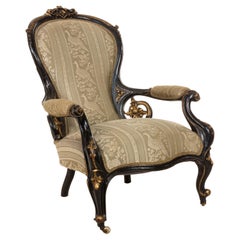
American Victorian Ebonized Arm Chair

American Victorian Ebonized Arm Chair

Located in Queens, NY

American Victorian ebonized and gold trimmed arm chair with carved floral motifs and green stripe upholstery Slight stains to the upholstery.

Category

Late 19th Century American Victorian Antique Ebonized Furniture
Materials

Gold

Unusual Mid-Century Ebonized Side Table

Unusual Mid-Century Ebonized Side Table

Located in Kent, Dover

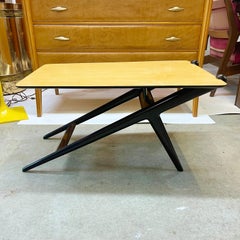
An unusual Italian mid-century, ebonized cherrywood centre table on raised articulated legs.

Category

1950s Italian Mid-Century Modern Vintage Ebonized Furniture

Materials

Cherry

Shades Sideboard
Shades Sideboard

Shades Sideboard

$6,585Sale Price / item|20% Off

Shades Sideboard

Located in Paris, FR

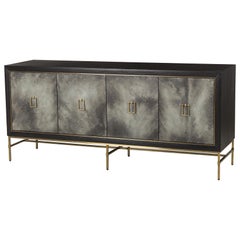
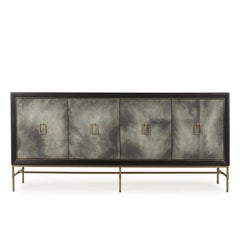
Sideboard shades with structure in solid oak in ebonized finish, with charcoal finishes on the 4 doors. With antique brass handles and base frame. Sideboard with 3 shelves and 1 d...

Category

21st Century and Contemporary English Ebonized Furniture

Materials

Brass

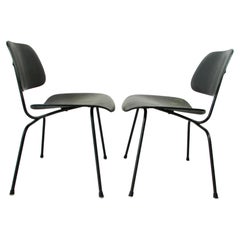
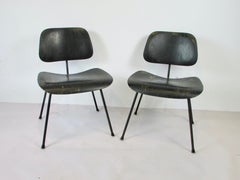
Pair Eames DCM in Worn Original Ebonized Finish

Pair Eames DCM in Worn Original Ebonized Finish

Pair of early production Dining Chair Metal DCM designed by the Charles and Ray Eames team . Black wrought iron frames support black aniline dyed wood seats and backs. Finish shows w...

Category

Mid-20th Century American Mid-Century Modern Ebonized Furniture

Materials

Steel

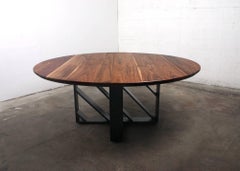
Table, Round, Dining, Blackened Steel, Hardwood, Modern, Geometric, Custom

Table, Round, Dining, Blackened Steel, Hardwood, Modern, Geometric, Custom

By Semigood Design

Located in Issaquah, WA

Modern blackened steel and hardwood round table. The lead time provided is an estimate and may extend up to 12 months. If you require delivery by a specific date, we kindly recommend inquiring prior to purchase to ensure availability. This table offers a unique visual experience from every angle, as the steel planes...

Category

21st Century and Contemporary American Modern Ebonized Furniture

Materials

Steel, Wrought Iron

French 19th Century Louis XV Style Ebonized Wood and Gilt Bronze-Mounted Desk

French 19th Century Louis XV Style Ebonized Wood and Gilt Bronze-Mounted Desk

Located in Los Angeles, CA

A fine French 19th century Louis XV style ebonized wood and gilt bronze-mounted figural bureau plat (desk) with three drawers and leather top. The shaped rectangular top enclosing a ...

Category

19th Century French Louis XV Antique Ebonized Furniture
Materials

Bronze

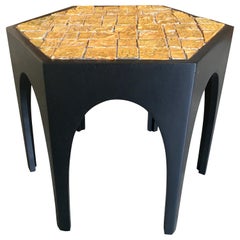
Brutal Tile Top Side Table

Brutal Tile Top Side Table

$800Sale Price|20% Off

Brutal Tile Top Side Table

By Harvey Probber

Located in Denton, TX

Ebonized wood base with orange colored abstract brutal tiles in the style of Harvey Probber.

Category

20th Century North American Ebonized Furniture

Materials

Ceramic, Wood

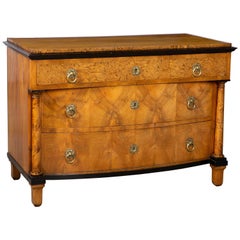
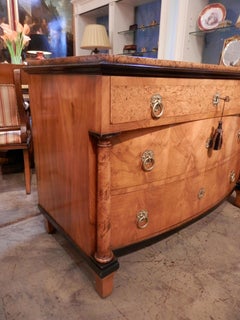
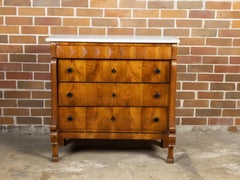
Beautiful 19th Century Period Biedermeier Satinwood Birch and Ebonized Commode

Beautiful 19th Century Period Biedermeier Satinwood Birch and Ebonized Commode

Located in Dallas, TX

Fine 19th century period Biedermeier commode. Ebonized trim with satinwood birch and exotic inlays. Original bronze pulls and escutcheons.

Category

Early 19th Century German Biedermeier Antique Ebonized Furniture
Materials

Satinwood

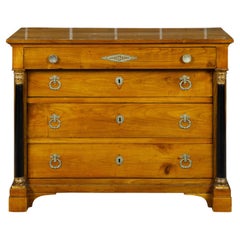
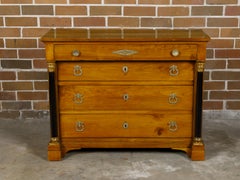
French Empire Fruitwood Four-Drawer Commode with Ebonized Corinthian Columns

French Empire Fruitwood Four-Drawer Commode with Ebonized Corinthian Columns

Located in Atlanta, GA

A French Empire fruitwood four-drawer commode from the early 19th century with ebonized columns, gilt Corinthian capitals and bronze hardware. This exquisite French Empire style frui...

Category

19th Century French Empire Antique Ebonized Furniture
Materials

Bronze

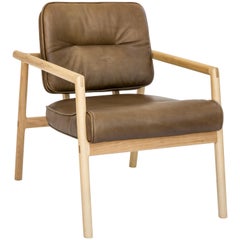
Chris Earl Natural Oak, Olive Leather Moresby Armchair

Chris Earl Natural Oak, Olive Leather Moresby Armchair

By Chris Earl

Located in North Hollywood, CA

Solid wood construction with hand-cut joinery and custom upholstered seat and seat back. This chair shown in natural oak and olive leather. In stock leather choice: black, olive, ca...

Category

2010s American Mid-Century Modern Ebonized Furniture

Materials

Leather, Oak, Walnut

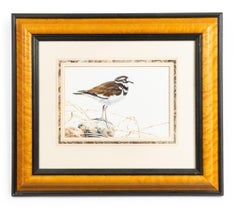
English Victorian Bird Watercolor

English Victorian Bird Watercolor

Located in Queens, NY

English Victorian maple and ebonized framed watercolor of a bird on a branch. (Companion pieces: 053214C-I) Condition: Good; Wear consistent with age and use

Category

Late 19th Century British Victorian Antique Ebonized Furniture
Materials

Paint

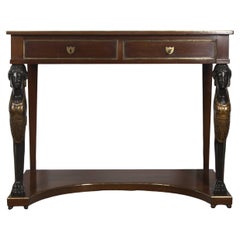
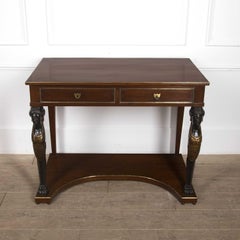
Early 19th Century French Mahogany Console Table

Early 19th Century French Mahogany Console Table

Located in Gloucestershire, GB

Early 19th century French console table with brass mouldings throughout. The top has two drawers being supported by finely carved classical female mono...

Category

Early 19th Century French Antique Ebonized Furniture
Materials

Brass

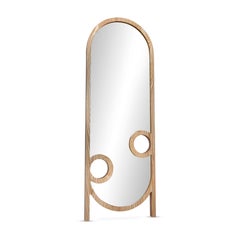
Silas Floor Mirror
Silas Floor Mirror

Silas Floor Mirror

$5,025 / item

Silas Floor Mirror

Located in Los Angeles, CA

The Silas Floor Mirror is an elegant, minimalist form, inspired by the playful use of shape and geometry throughout the Mid-Century Modern Movement. The handcrafted warmth of the s...

Category

21st Century and Contemporary American Scandinavian Modern Ebonized Furniture

Materials

Mirror, Ash, Oak, Walnut

American Modern Mahogany and Ebonized Nine Drawer Chest

American Modern Mahogany and Ebonized Nine Drawer Chest

Located in Queens, NY

American Modern Mahogany and Ebonized Nine Drawer Chest. Condition: Good; Wear consistent with age and use

Category

Mid-20th Century American Mid-Century Modern Ebonized Furniture

Materials

Mahogany

White Oak, Veg Tan and Copper Wood High Stool

White Oak, Veg Tan and Copper Wood High Stool

By Chris Earl

Located in North Hollywood, CA

Handcrafted solid wood construction, featuring true copper or brass rods. Made in Los Angeles, California. Shown in white oak, copper and leather veg tan u...

Category

2010s American Mid-Century Modern Ebonized Furniture

Materials

Aluminum, Copper, Brass

ISA Bergamo Ebonized Cocktail Table

ISA Bergamo Ebonized Cocktail Table

$1,946Sale Price|35% Off

ISA Bergamo Ebonized Cocktail Table

By ISA Bergamo

Located in Hanover, MA

***SUMMER SALE*** 1950's Italian side or occasional table produced by I.S.A. Bergamo Dimensions of slightly wedge shaped top are: The narrow end is 16.5” wide versus 19.5” wide. ...

Category

1950s Italian Mid-Century Modern Vintage Ebonized Furniture

Materials

Maple

French Empire Style Ebonized and Gilt End Table

French Empire Style Ebonized and Gilt End Table

By Maison Jansen

Located in Queens, NY

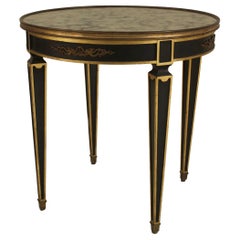
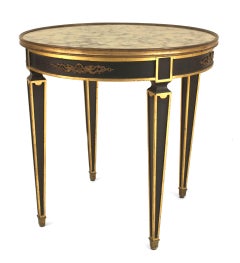
French Empire-Style (1940s) ebonized and gilt trim round end table with bronze trim on apron and a top rim surrounding a mottled mirrored round top. (At...

Category

1940s French Empire Vintage Ebonized Furniture

Materials

Bronze, Gold Leaf

Florentine Commode with White Marble Top, Volutes and Ebonized Accents

Florentine Commode with White Marble Top, Volutes and Ebonized Accents

Located in Atlanta, GA

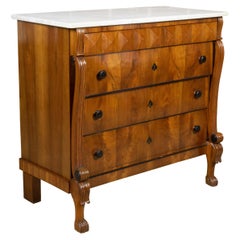
An Italian Florentine wooden commode from the 19th century, with white marble top, three drawers, volutes, paw feet and ebonized accents. Created in Florence during the 19th century, this commode features a rectangular white marble top sitting above an elegant apron adorned with a regular rhythm of raised "pointes de diamant" motifs. Three veneered drawers below, accented with ebonized spade-shaped inlaid keyholes flanked with turned pulls, showcase a dovetail construction. These drawers are flanked with delicate volutes creating a perfect sense of unity on the façade. The commode is raised on lion paw feet in the front and block feet in the back. The sides are simply veneered and the back is, of course, unfinished. With its elegant lines, delicate décor and contrasting colors, this Italian 19th century commode with white marble top...

Category

19th Century Italian Antique Ebonized Furniture
Materials

Marble

Slomo Chair Mutene Wood and Wool

Slomo Chair Mutene Wood and Wool

Located in Serzedo, PT

The Slomo chair is based on the principles of the idea of chair that is familiar to us, combining different details that revive the memory of shapes from 20th century designs. Design...

Category

2010s Portuguese Modern Ebonized Furniture

Materials

Leather, Fabric, Wool, Faux Leather, Hardwood, Ash, Oak, Sycamore, Walnut

Beautiful Antique Victorian Hall Chair

Beautiful Antique Victorian Hall Chair

Located in Crawley, GB

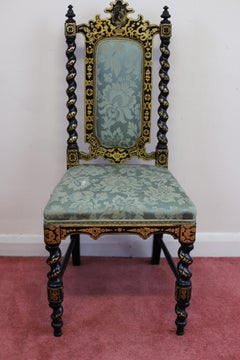
We delight to offer for sale this Stunning early Victorian ebonised and gilt painted papier mache hall chair with upholstered seat and back raised on spiral turned supports . Circa 1...

Category

Early 19th Century British Early Victorian Antique Ebonized Furniture
Materials

Oak

English Victorian Young Boy Portrait

English Victorian Young Boy Portrait

Located in Queens, NY

Ebonized framed oil painting portrait of young boy holding book

Category

Late 19th Century British Victorian Antique Ebonized Furniture
Materials

Paint

Johan Tapp Continental Mid-Century Butterfly Game Table

Johan Tapp Continental Mid-Century Butterfly Game Table

By Johan Tapp

Located in Queens, NY

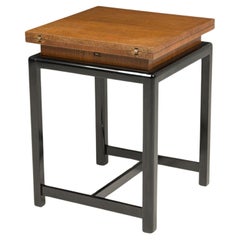
American Mid-Century "Butterfly" drop leaf Game Table with an inlaid checkerboard top section supported on an ebonize base (JOHAN TAPP) When folded closed the table top is 22" x 22"

Category

20th Century American Mid-Century Modern Ebonized Furniture
Materials

Wood