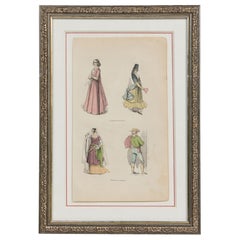
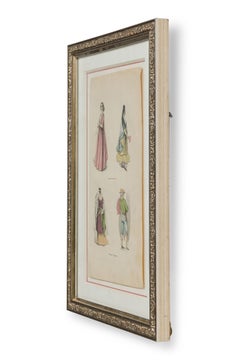
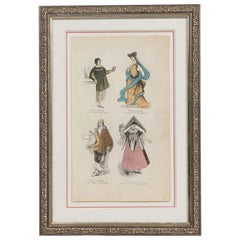
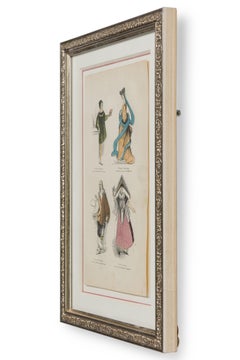
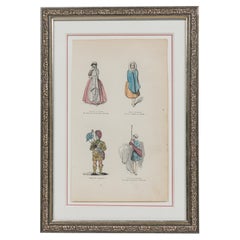
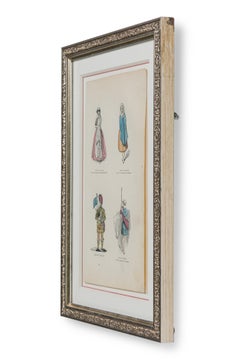
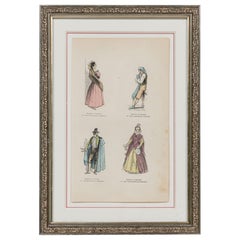
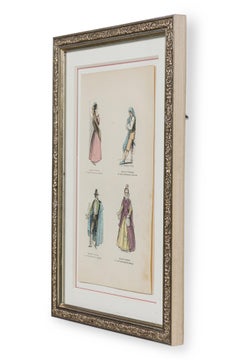
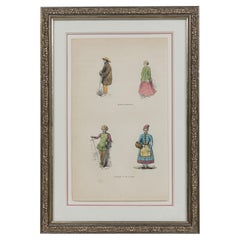
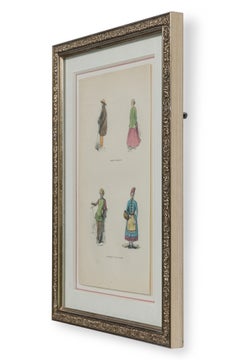
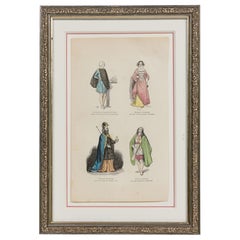
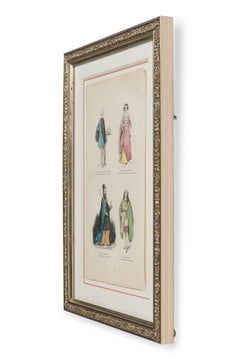
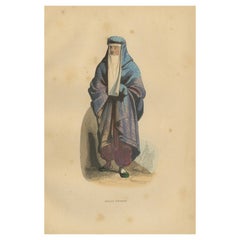
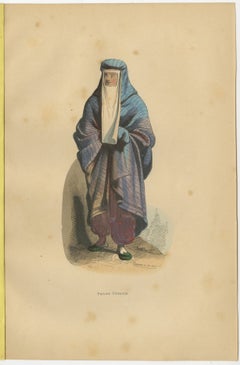
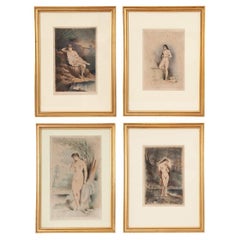
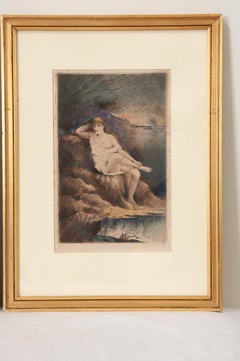
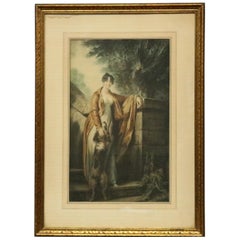
This handcoloured lithograph titled "Femme Persane" vividly captures the traditional attire of a Persian woman, showcasing the rich cultural heritage and detailed craftsmanship of 19th-century Persia.
The print is part of Auguste Wahlen's "Moeurs, Usages et Costumes de tous les Peuples de Monde," published in 1844 in Paris.
The image stands out for its intricate detailing, especially the veil and robe, which are adorned with elaborate patterns and vibrant colors typical of Persian fashion.
The woman's attire includes a veil that covers the face partially, known as a "ruband," which was commonly worn in public by women in some regions of Persia as a sign of modesty and status. Her robe, layered and colorful, reflects the sophisticated textile techniques of the time, including embroidery and fabric dyeing, which were highly regarded skills in Persian society.
The attractiveness of such prints lies in their ability to convey the elegance and intricacy of Persian women's fashion, providing a window into the everyday life and social customs of the time.
The use of handcoloured lithography, a popular printing technique of the era, allows for vivid coloration and detailed representation, making these prints highly desirable for collectors and enthusiasts of historical fashion and cultural heritage.
Keywords:
- Antique Persian prints...
Category
1840s Antique Carved Prints