Want more images or videos?
Request additional images or videos from the seller.

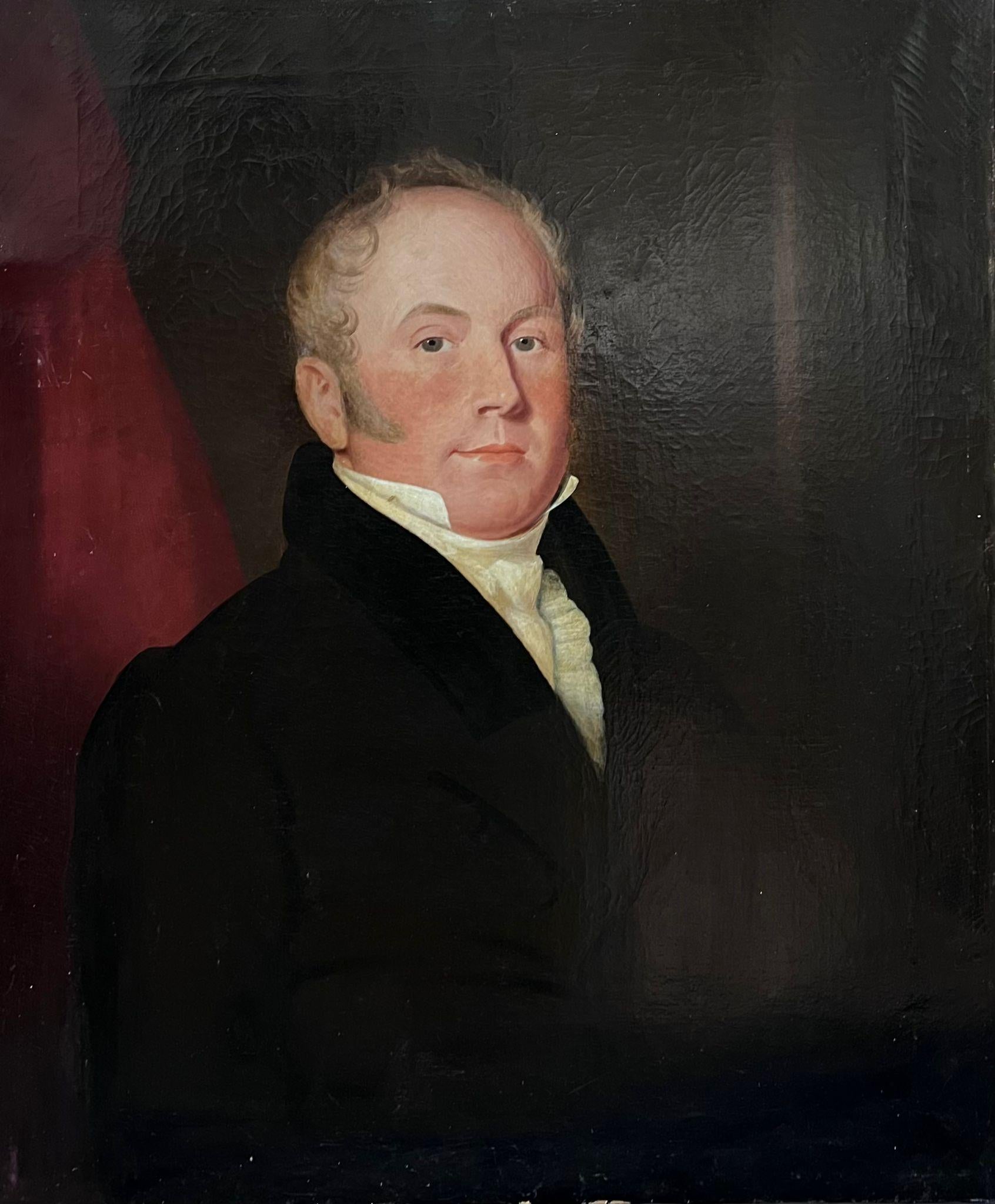
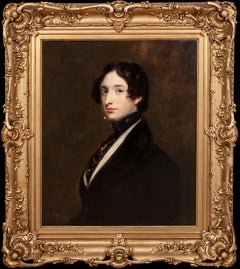
Margaret Sarah Carpenter
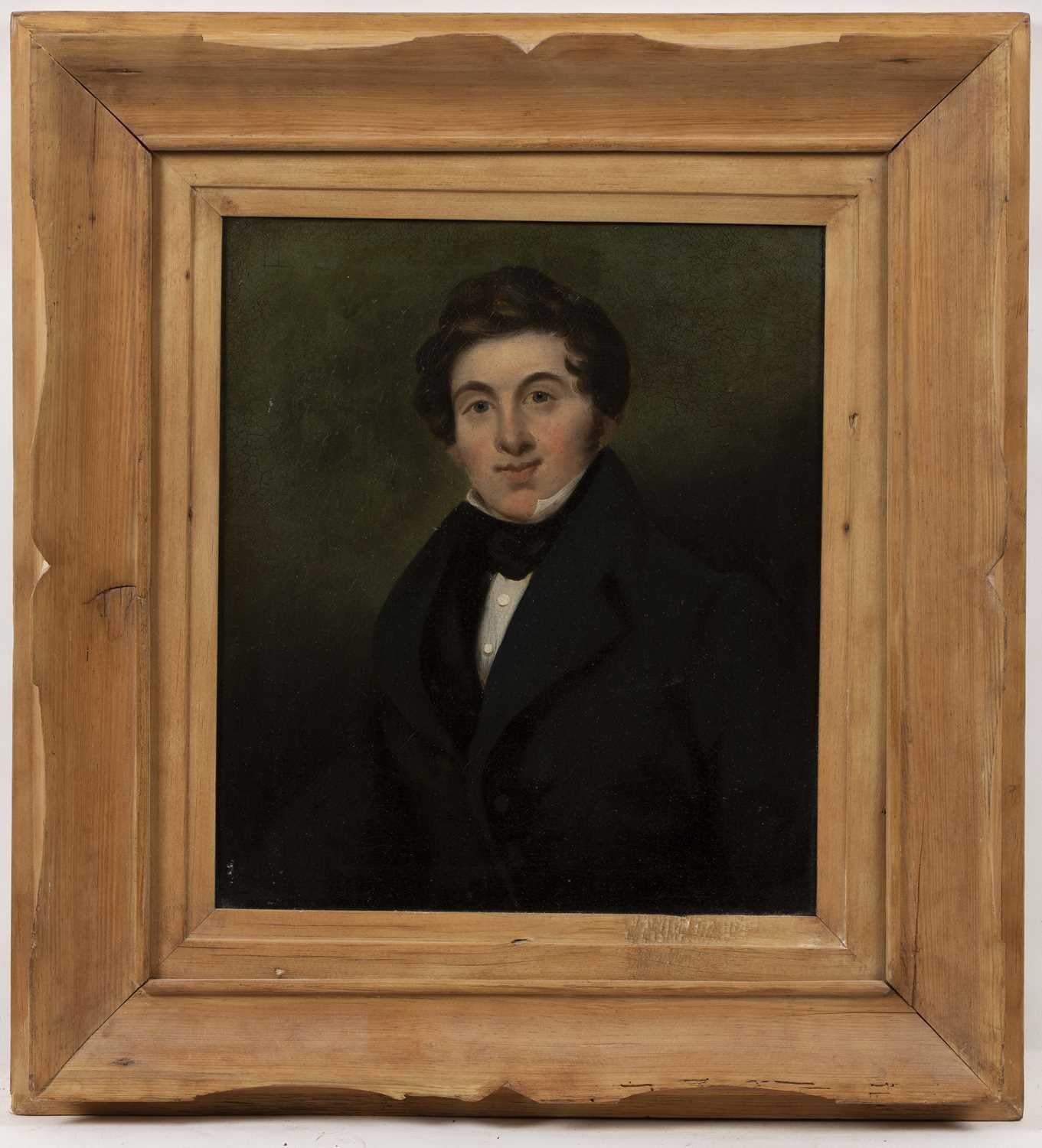
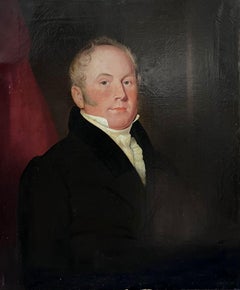
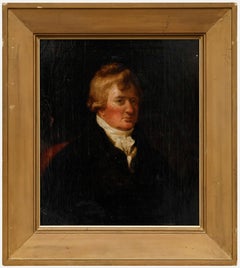
Portrait of John Manners later 7th Duke of Rutland

1835

$5,310.22
£3,900
€4,755.89
CA$7,540.37
A$7,720.33
CHF 4,384.93
MX$98,732.73
NOK 50,441.22
SEK 52,415.11
DKK 35,550.83

About the Item

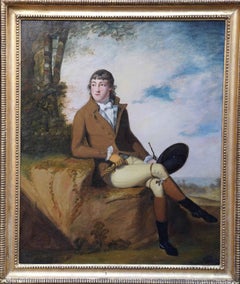
Margaret Sarah Carpenter 1793-1872, was an English portrait painter. She was one of the foremost portrait painters in the 19th Century, she exhibited at the Royal Academy, British Institution and the Suffolk Steet Gallery. She also painted over 100 Eton School leavers portraits of which this is one, they were mostly painted on Davey panels, this picture bears the stamp of Davey which would have been from 83 Newman Street London. There is another portrait of John Manners which was painted later and the image of him carrying a shotgun, the conclusion to the research regarding this painting is that Carpenter's painting was too realistic and probably not to the clients liking and consequently another painting was commissioned, hence the shotgun image, which we believe to be out of keeping with a school portrait. The picture was discovered in Sussex and the research conclusion is that it was once the property of Bernard Cecil Manners the son of the portrait enclosed and was disposed of after his demise which was in Sussex in 1945. The picture then lay undiscovered for some 60 years. This picture is unsigned but has been recognised by a number of experienced academics and auctioneer. I have enclosed an alternative biography of the painter for your interest. Margaret Sarah Carpenter (née Geddes; 1 February 1793 – 13 November 1872) was one of the most successful and prolific British portrait painters of the 19th century. Over her highly distinguished career, she produced more than 1,000 oil paintings, exhibited 156 works at the prestigious Royal Academy, and became widely regarded as the natural artistic successor to Sir Thomas Lawrence. Despite the rigid social and institutional barriers faced by women in the Victorian era, she established a thriving, independent portrait practice that supported her family and earned her national acclaim. Born in Salisbury, Wiltshire, Margaret was the daughter of Captain Alexander Geddes, an army officer, and Harriet Easton. Her exceptional gift for drawing emerged during childhood, and she initially received basic instructions from a local Salisbury drawing master named Thomas Guest. Her true artistic education, however, came from studying the classics. Jacob Pleydell-Bouverie, the 2nd Earl of Radnor, took note of her talent and granted her open access to his private gallery at Longford Castle. By age 12, she was teaching herself the trade by meticulously copying Old Master paintings. Recognizing her immense potential, Lord Radnor provided financial backing to help her move to London in 1813 to launch a professional career. Upon arriving in London, her talent was immediately recognized by the Society of Arts. Awarded a medal for her study of a boy's head, 1812, and she received a second talent medal. She also won the Society’s highest gold medal accolade. In 1814, at just 21 years old, she debuted at the Royal Academy with a portrait of Mrs. Sparkes. She quickly earned a reputation as a highly fashionable portraitist. Around 1815, she became a pupil of Sir Thomas Lawrence, the leading portrait painter in Britain. Following Lawrence's death in 1830, she inherited much of his stylistic mantle. While she captured the rich lighting and depth of Lawrence's work, critics noted that her style brought a unique, delicate, and wistful touch to her sitters, making her especially celebrated for her expressive portraits of women and children. In October 1817, Margaret married William Hookham Carpenter, an art dealer, bookseller, and publisher who would later become the Keeper of Prints and Drawings at the British Museum. The couple had eight children, though sadly only five survived infancy. Balancing heavy domestic responsibilities with a demanding creative profession was difficult. She even ran her active painting studio directly out of the Keeper's residence at the British Museum. Remarkably, three of her children—including her son William and daughter Henrietta—inherited her creative talents and grew up to become painters in their own right. Carpenter painted many notable figures of the early Victorian era. Among her most famous historical portraits is her 1835 depiction of the brilliant mathematician Ada Lovelace, which remains one of the few iconic images of Lovelace in existence. She was also commissioned for an extensive series of Eton College school leavers. Despite exhibiting a stunning 263 works across the Royal Academy and the British Institution over five decades, Carpenter was repeatedly barred from joining the Royal Academy solely because of her gender. Her exclusion sparked public indignation, and contemporary publications like the Art Journal heavily criticized the Academy for "studiously ignoring the existence of women artists". Following her husband's death in 1866, Queen Victoria granted Carpenter an annual pension of £100, acknowledging both her husband's institutional service and her own immense merit as an artist. Carpenter passed away in London on 13 November 1872 at the age of 79. While she was a household name during her lifetime, her legacy faded from mainstream art history into the 20th century. However, recent decades have seen a significant revival of interest in her work. Today, her paintings are preserved in prestigious public collections, including the National Portrait Gallery, the Tate, and the Victoria and Albert Museum.
  • Creator:
    Margaret Sarah Carpenter (1793 - 1872)
  • Creation Year:
    1835
  • Dimensions:
    Height: 18 in (45.72 cm)Width: 13 in (33.02 cm)Depth: 2.5 in (6.35 cm)
  • Medium:
  • Period:
  • Condition:
  • Gallery Location:
    Douglas, GB
  • Reference Number:
    Seller: No. 751stDibs: LU2373215360892

More From This Seller

View All
George Byng Later 7th Viscount Torrington

George Byng Later 7th Viscount Torrington

Located in Douglas, Isle of Man

Robert Frain active 1829-1877, was a Scottish painter. There is very little biographical information regarding Frain, however he was active in the first quarter to the third quarter ...

Category

1820s Portrait Paintings

Materials

Canvas, Oil

Henry Wyndham Phillips

Henry Wyndham Phillips

By Thomas Phillips

Located in Douglas, Isle of Man

Thomas Phillips R.A. 1770-1845, was an English portrait painter and he painted many of the greatest people of the day including , artists, poets, writers, scientists and many other p...

Category

Mid-19th Century Portrait Paintings

Materials

Canvas, Oil

Charles Grey 2nd Earl Grey

Charles Grey 2nd Earl Grey

Located in Douglas, Isle of Man

Philip Westcott 1815-1878, was a British born artist. This portrait is of the former Prime Minister Charles Grey 2nd Earl of the House of Howick, he was Prime Minister from 1830 to ...

Category

1840s Portrait Paintings

Materials

Canvas, Oil

Portrait of a Venetian Nobleman

Portrait of a Venetian Nobleman

Located in Douglas, Isle of Man

Attributed to, Alessandro Longhi 1733-1813, Longhi was a prominent Venetian portrait painter, printmaker, and biographer. The son of the famous genre painter Pietro Longhi, he is known for his detailed oil portraits of the Venetian aristocracy and his valuable book on contemporary Venetian painters. Longhi early life and training : Born: Alessandro Longhi was born on June 12, 1733, in Venice. He received his initial training from his father, Pietro Longhi. He later studied under Giuseppe Nogari, a respected portraitist in Venice during the 18th century, and was elected to the Venetian Academy in 1759. Longhi specialized in portraiture, primarily depicting the nobles and officials of the Republic of Venice. His paintings are a valuable record of the social and political structure of 18th-century Venice. Rococo aesthetic: Working in the Rococo style, he was adept at capturing the elegance and social status of his subjects. He paid meticulous attention to the elaborate robes, wigs, and emblems of office that signified his subjects' power. While his official state portraits could be stiff and formal, his portraits of less noble patrons demonstrated a greater sense of realism and psychological insight. Longhi was also an accomplished printmaker, particularly in etching. His etching technique showed an awareness of Rembrandt's work, and he used this skill to reproduce his and his father's paintings. In 1762, he published Compendio delle vite de' pittori veneziani istorici più rinomati del presente secolo, a biographical dictionary of contemporary Venetian painters that is still an important resource for art historians. Longhi illustrated the book with etched portraits of the artists. The portrait of Carlo Goldoni: One of his most celebrated paintings is his portrait of the Venetian playwright and librettist Carlo Goldoni. For his election to the Venetian Academy, he painted this allegory, which features a personified figure of Painting. His known portraits include Portrait of a Lady (Uffizi Gallery, Florence), Portrait of a Musician, and various portraits of Venetian nobles and officials. I have included further albeit identical biographies of Alessandro Longhi. Alessandro Longhi (born June 12, 1733, Venice—died 1813, Venice) was a painter, etcher, and biographer of Venetian artists, and was the most important Venetian portrait painter of his day. The son of the painter Pietro Longhi, he was given his first training by his father, who quite soon put him to study under the portrait painter Giuseppe Nogari. In 1759 he was elected a member of the Venetian academy, for which he painted one of his rare allegorical pictures, “Painting and Merit.” In 1762 Longhi issued his book Compendio delle Vite de’ Pittori Veneziani Istorici piu rinomati del presente secolo con sui ritratti dal naturale delineati ed indisi, one of the most important source books for the history of Venetian 18th-century painting. Both portraits and text were printed from plates he etched. Longhi’s facilely rendered portraits are largely generalized likenesses lacking any acuity of character observation. He mainly portrayed the leading Venetian luminaries and dignitaries of his day in a style that drew upon his father’s Rococo manner and 16th-century traditions of Venetian Renaissance portraiture. The personal details available for the painter Alessandro Longhi are limited, but his biography is intertwined with that of his family and the city of Venice. He was the son of a successful painter, which set his artistic path, and is known for creating sensitive and realistic portraits that captured the social atmosphere of 18th-century Venice. Alessandro was born in Venice in 1733 to the celebrated genre painter Pietro Longhi. He received his early training from his father before studying under another prominent portraitist, Giuseppe Nogari. A contrast to his father: While his father was known for painting scenes of everyday Venetian life, Alessandro focused almost exclusively on portraiture. His skill enabled him to capture the intimate psychology and character of his subjects, a quality especially evident in his portraits of less noble patrons. Election to the academy: In 1759, Alessandro was elected to the Accademia dei Pittori, the Venetian Academy of Painting. His election solidified his reputation as a master of the Rococo style. Beyond painting, Longhi was an accomplished printmaker, primarily producing etchings that reproduced his own works and those of his father. In 1762, he published the Compendio delle vite de' pittori veneziani, a collection of biographies of contemporary Venetian painters, which is an important historical resource. He became a prominent portraitist for Venice's upper class, including nobles and state officials. His official state portraits featured grand, full-length depictions of his subjects in their elaborate robes and emblems of office. Emphasis on realism: In contrast to the stylized nature of official portraits, Alessandro was praised for the "reality" he captured in works featuring common people. For example, his 1760 portrait of an innkeeper was celebrated for its realistic subject matter and "nuova maniera" (new manner). The art historian Olimpia Theodoli noted that Longhi's etching technique showed he had a firsthand knowledge of Rembrandt's work. Among his more famous works are a sensitive portrait of playwright Carlo Goldoni and the painting Portrait of a Wine Butler. He also produced religious and allegorical works, including paintings of the "Apostles" for the church of San Pantalon in Venice. This painting has been carefully conserved and the frame also, the frame looks to be original to the picture but we have no way of confirming this but we believe it to be so. 18th Century Italian portraits...

Category

Mid-18th Century Portrait Paintings
Materials

Canvas, Oil

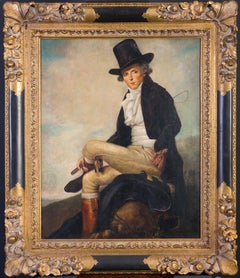
Portrait of Pierre Seriziat

Portrait of Pierre Seriziat

Located in Douglas, Isle of Man

Copy of a Portrait of Pierre Seriziat by Jacques Louis David which was painted in 1795 , David 1748-1825, this picture is a direct copy by an artist by the name of F. Hamilton. There...

Category

Late 20th Century Portrait Paintings
Materials

Canvas, Oil, C Print

Elizabeth Gordon Duchess of Gordon

Elizabeth Gordon Duchess of Gordon

By William Fisk

Located in Douglas, Isle of Man

William Fisk 1796 -1872, was an English born portrait and history painter. Although born in 1796 he didn't start his artistic career until after 1826, after the birth of his son Will...

Category

1830s Portrait Paintings

Materials

Canvas, Oil

You May Also Like

Armand Emmanuel du Plessis, 5th Duke of Richelieu

Armand Emmanuel du Plessis, 5th Duke of Richelieu

Located in London, GB

Oil on canvas Image size: 10 x 7 1/2 inches (25.5 x 19 cm) Contemporary gilt frame This painting is a copy of Thomas Lawrence’s 1822 portrait of Armand Emmanuel du Plessis, Duke of ...

Category

19th Century English School Portrait Paintings

Materials

Canvas, Oil

19th Century Oil - Portrait of a Gentleman

19th Century Oil - Portrait of a Gentleman

Located in Corsham, GB

A fine nineteenth-century portrait depicting a gentleman elegantly attired in a dark coat and white cravat. Well presented in a gilt frame. Unsigned. On canvas laid to board. Image s...

Category

19th Century Portrait Paintings
Materials

Oil