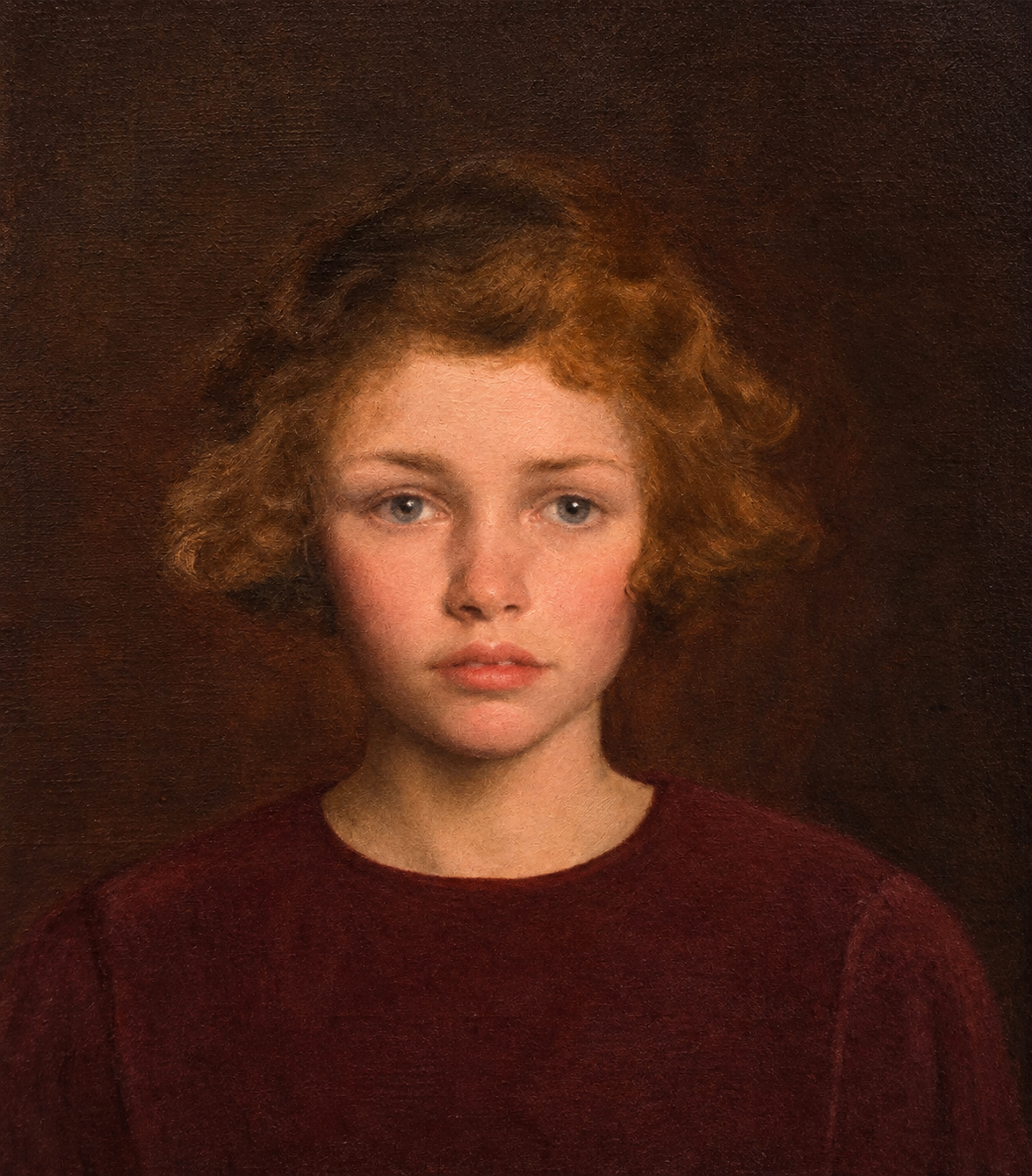
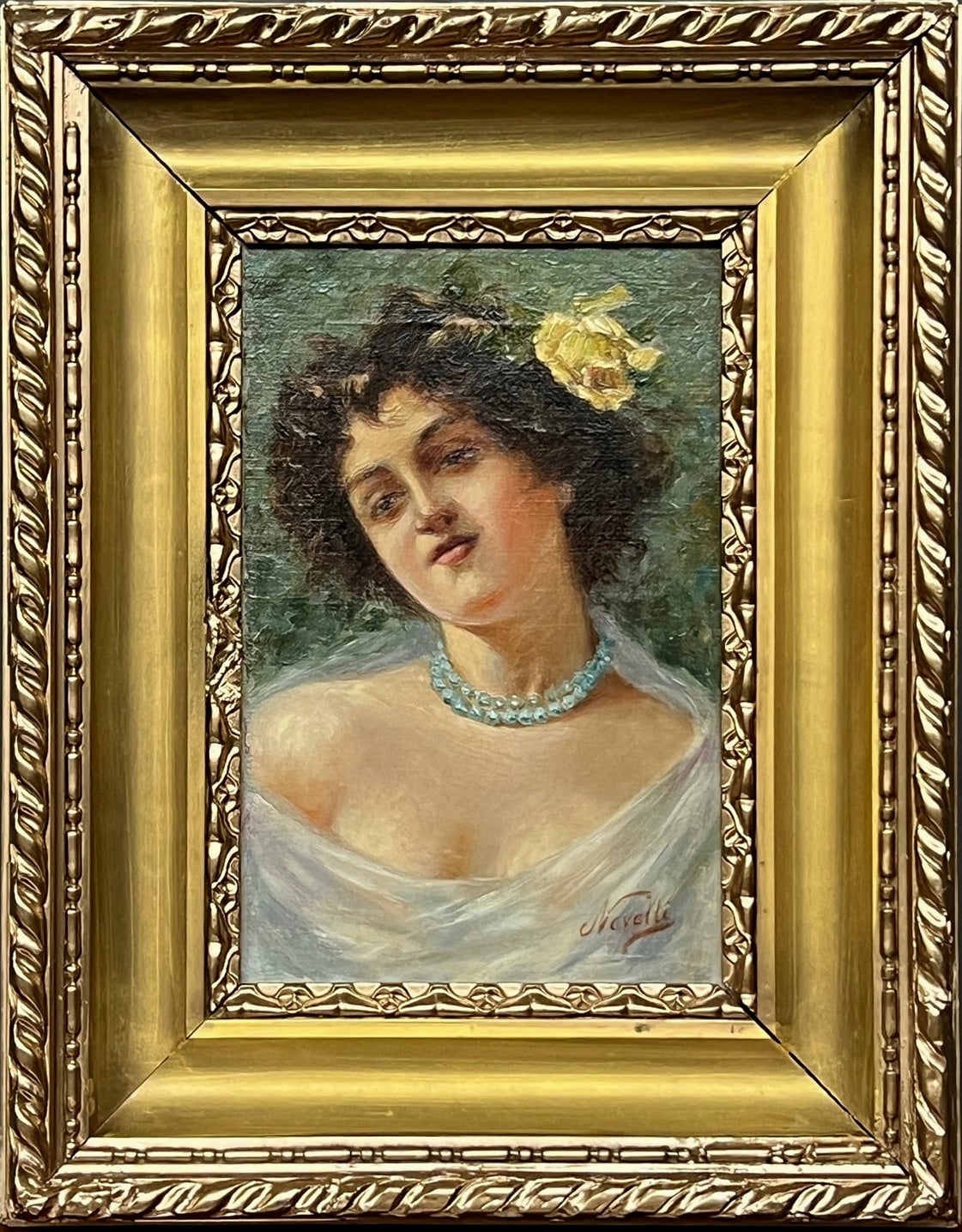
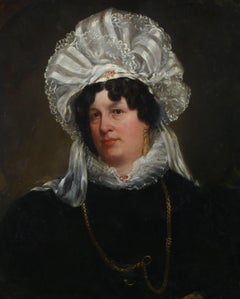
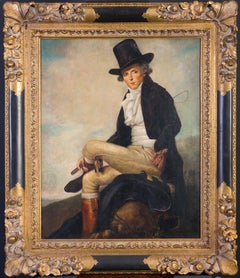
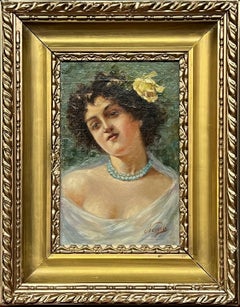
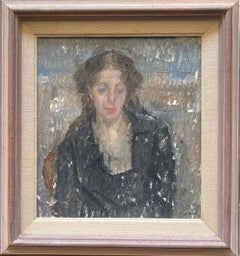
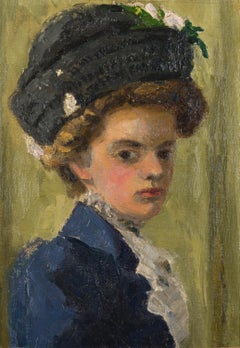
Solomon Joseph Solomon R.A. R.B.A. N.E.A.C. was an English born Jewish painter and a member of the Royal Academy and a Founding member of the New English Art Club. He studied at the Heatherley Art School, the Royal Academy Schools, the Munich Academy and the Ecole des Beaux Arts. Solomon painted portraits, Biblical subjects and mythological subjects after being influenced by Frederick Lord Leighton and Lawrence Alma -Tadema. There is a large amount of biography on Solomon and it would be an injustice here to impress his importance as a painter, there are far better reviews to be discovered. However this portrait may be a result of of the two artists knowing each other from the New English Art Club, as well as both being portrait painters. I have included before and after conservation procedures to show the improvement of the work and the skills of Solomon and the expression of a lively and youthful looking Ethel Gabain, with a skillful display of the gradation of light. This picture is signed on the reverse. I have included before and after conservation images in order to highlight the contrast in the depth of gradation of visual light which exposes the quality of Solomon's ability, and the beauty of the sitter.
I have included an alternative biography of the painter.
Solomon Joseph Solomon (16 September 1860 – 27 July 1927) was a prominent British painter of the late Victorian and Edwardian eras, highly regarded for his grand mythological and biblical scenes, sophisticated society portraits, and pioneering military innovations. He was also an important figure in the Anglo-Jewish community and became only the second Jewish artist to be elected a full Royal Academician. Born in London into a cultured Jewish family, Solomon demonstrated prodigious artistic talent at a young age. His younger sister, Lily Delissa Joseph, also grew up to be a well-known painter. Solomon underwent a rigorous and varied academic art education across Europe, he studied portraiture and figure drawing in London (1876–1877). Trained under Victorian masters like Frederic Leighton and Lawrence Alma-Tadema. He also attended the École des Beaux-Arts (Paris). Studied in the atelier of the academic master Alexandre Cabanel. Also at the Munich Academy. Spent three months refining his technique. Following his studies, he toured Italy, Spain, and Morocco, heavily absorbing the brushwork of masters like Velázquez and Rubens before returning to London to establish his career.
Solomon established a studio in Holland Park, becoming part of the prestigious Holland Park circle. His work gracefully balanced traditional Academic classicism with subtle, modern Impressionist rendering of light. He found success in two distinct realms, Mythological and Biblical Masterpieces, Solomon created vast, dramatic canvases filled with dynamic figures. His most famous work, Samson (1887), gained wide acclaim for its complex, muscular male nudes and is housed in the Walker Art Gallery. Other major works include Ajax and Cassandra (1886) and Eve (1908). To secure a reliable income, he became a highly sought-after portraitist. He painted notable figures, including actress Mrs Patrick Campbell, Prime Minister Ramsay MacDonald, King George V, and Queen Mary. In 1886, he co-founded the New English Art Club (NEAC) as an alternative exhibition space to the rigid Royal Academy, though he was eventually embraced by the establishment, becoming an RA Associate in 1896 and a full Royal Academician in 1906. He also served as the President of the Royal Society of British Artists (RBA) starting in 1919.
Solomon Joseph Solomon shared a professional and artistic relationship with the French-born British painter and lithographer Ethel Gabain (1883–1950). While both were highly active in the early 20th-century London art scene—and both frequently crossed paths through circles like the New English Art Club—their most tangible connection is documented through art history and the art market. The Portrait of Ethel Gabain, Solomon painted a striking, youthful Portrait of Ethel Gabain, Artist in the early 20th century. Art historians and marketplace evaluations indicate this oil painting was a personal study or a "keep-sake" honoring Gabain as a fellow artist. The painting showcases Solomon’s trademark delicate gradation of light and serves as a rare visual record of a young Gabain before she achieved widespread fame as a master lithographer and official World War II war artist.
At the outbreak of World War I, Solomon—already in his mid-50s—enlisted in the United Kingdom's home defence corps, the Artists Rifles. He quickly realized that modern aerial photography fundamentally changed warfare, requiring new methods of concealment. He became Britain's foremost pioneer in military camouflage. Influenced by French tactics, he designed armored observation posts disguised structurally as dead trees to blend seamlessly into the fractured landscapes of the Western Front. He aggressively campaigned for the implementation of wide-stretching camouflage netting to break up the telltale shadows of tanks, trenches, and heavy artillery equipment. He was given the rank of Lieutenant-Colonel in the Royal Engineers and established a camouflage training school in London's Hyde Park. He detailed his findings in the 1920 book Strategic Camouflage, and though the British military was initially slow to adopt his network principles, they became standard practice globally by World War II. Solomon was deeply invested in teaching and published a highly successful pedagogical manual, The Practice of Oil Painting and of Drawing as Associated with It (1910), which remains utilized by painters for its clear instructional breakdown of academic oil sketching. He was also heavily involved in cultural philanthropy, acting as a president for the Ben Uri Art Society and founding the Maccabaeans. Solomon died at his home in Kent in 1927 and was buried at the Willesden Jewish Cemetery in London. Today, his works are preserved across prestigious UK institutions, including the Tate Collection and the Imperial War Museum.