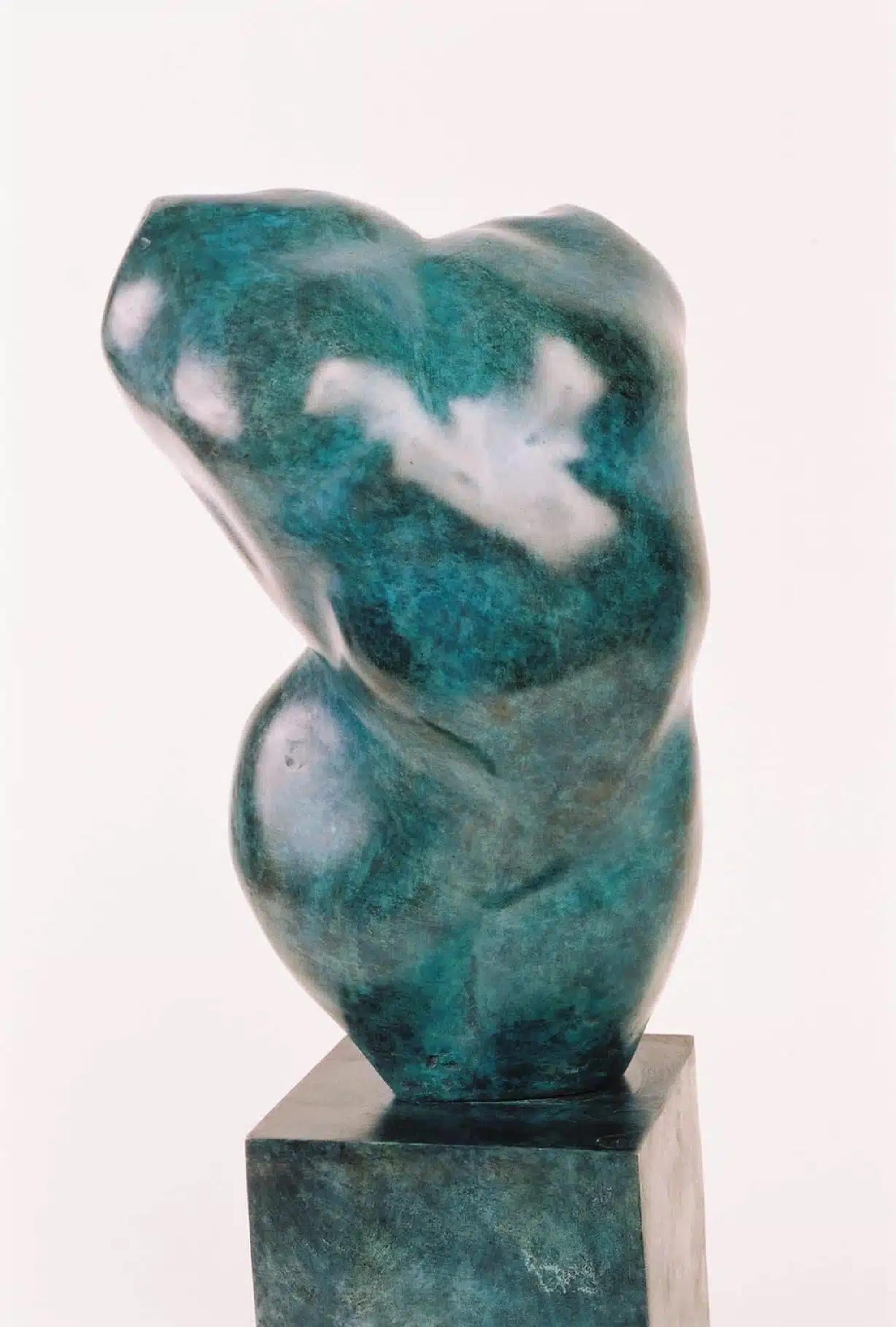
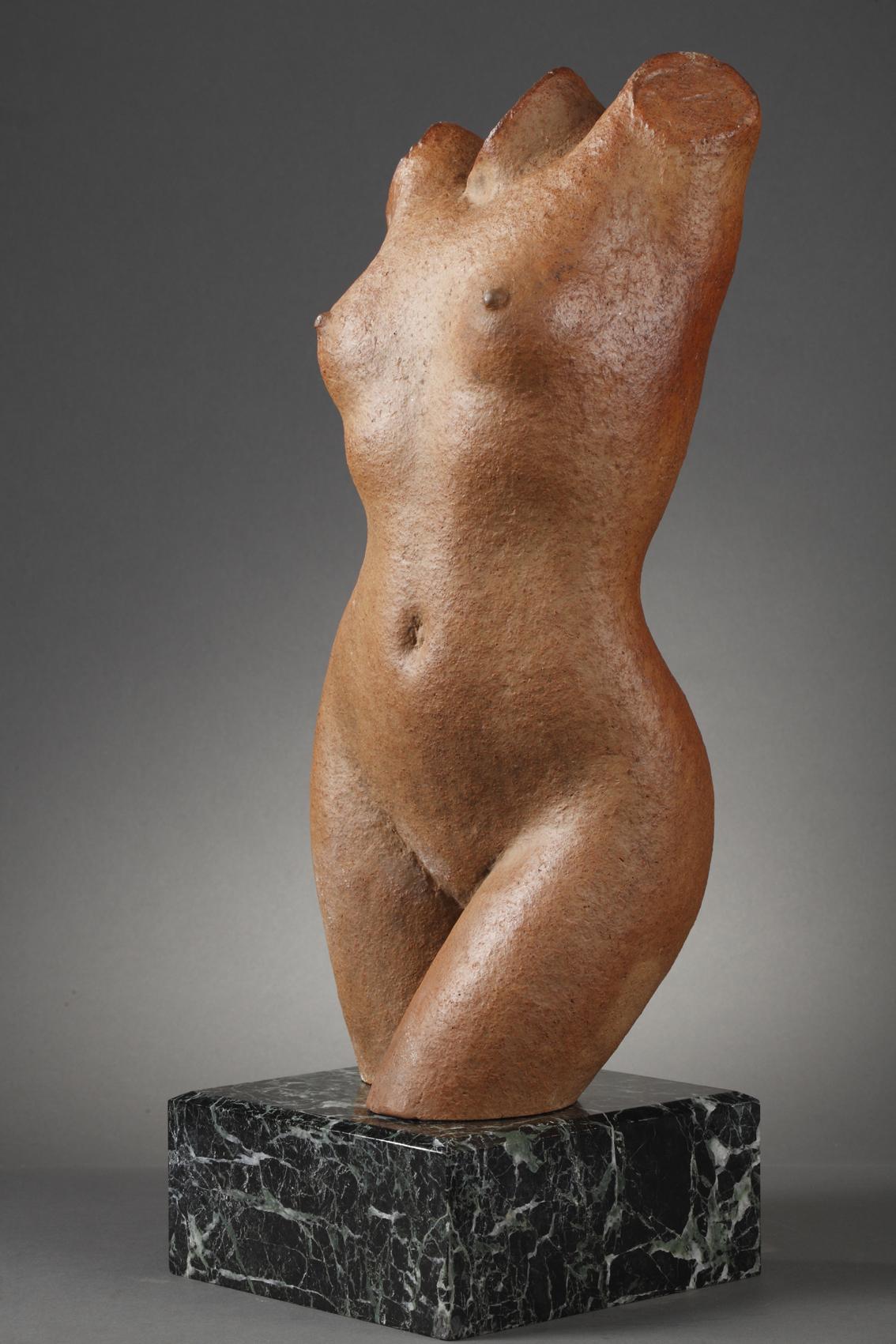
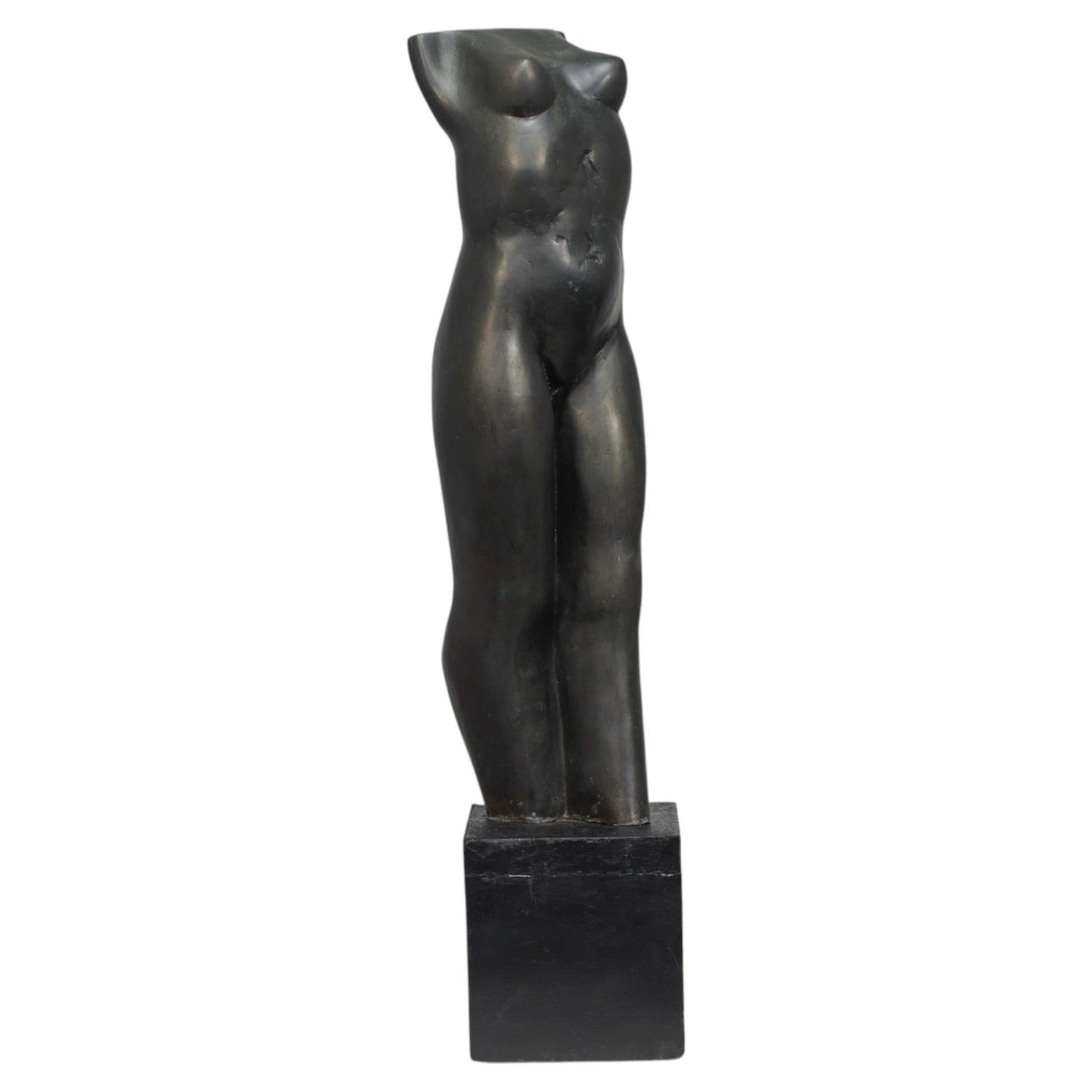
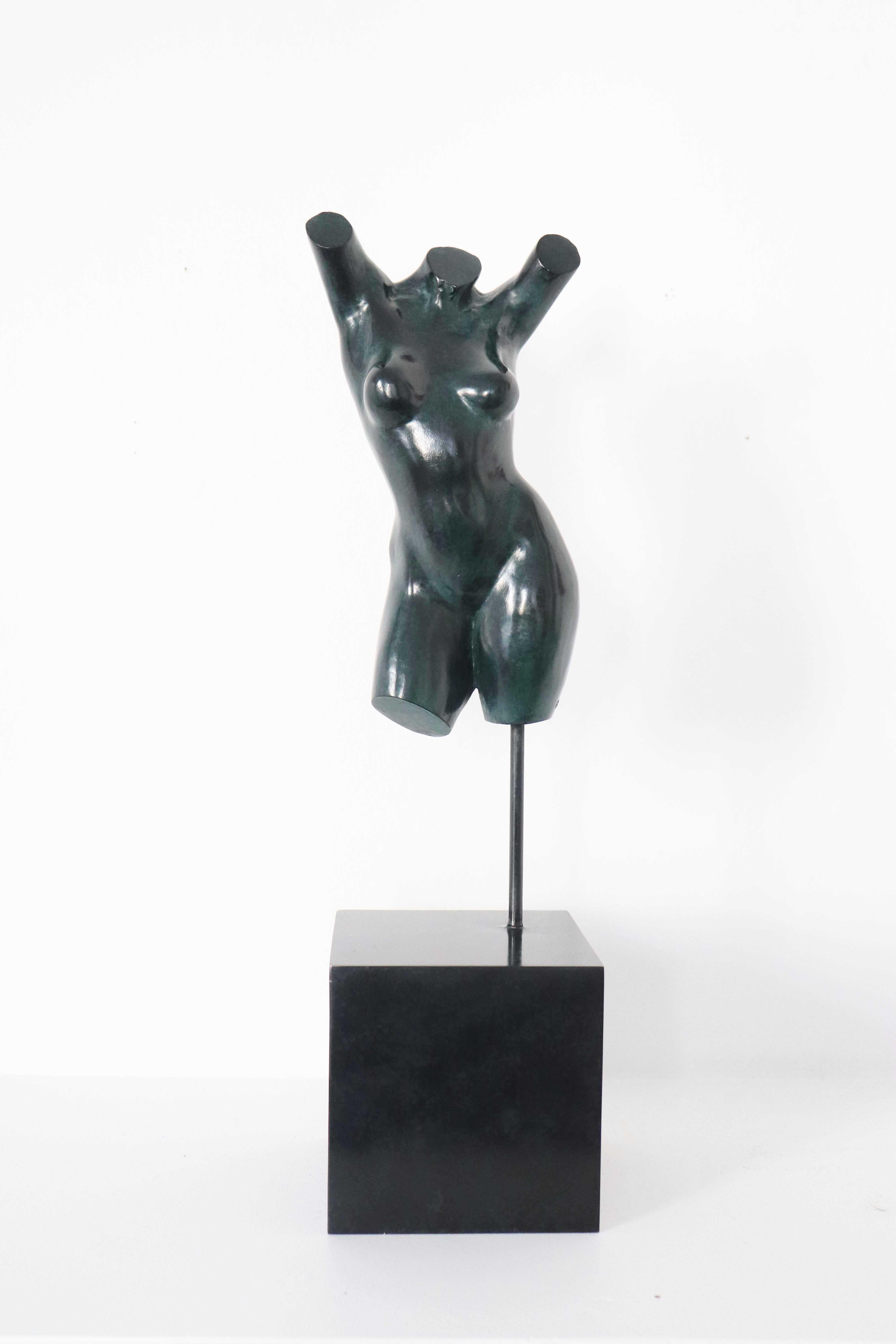
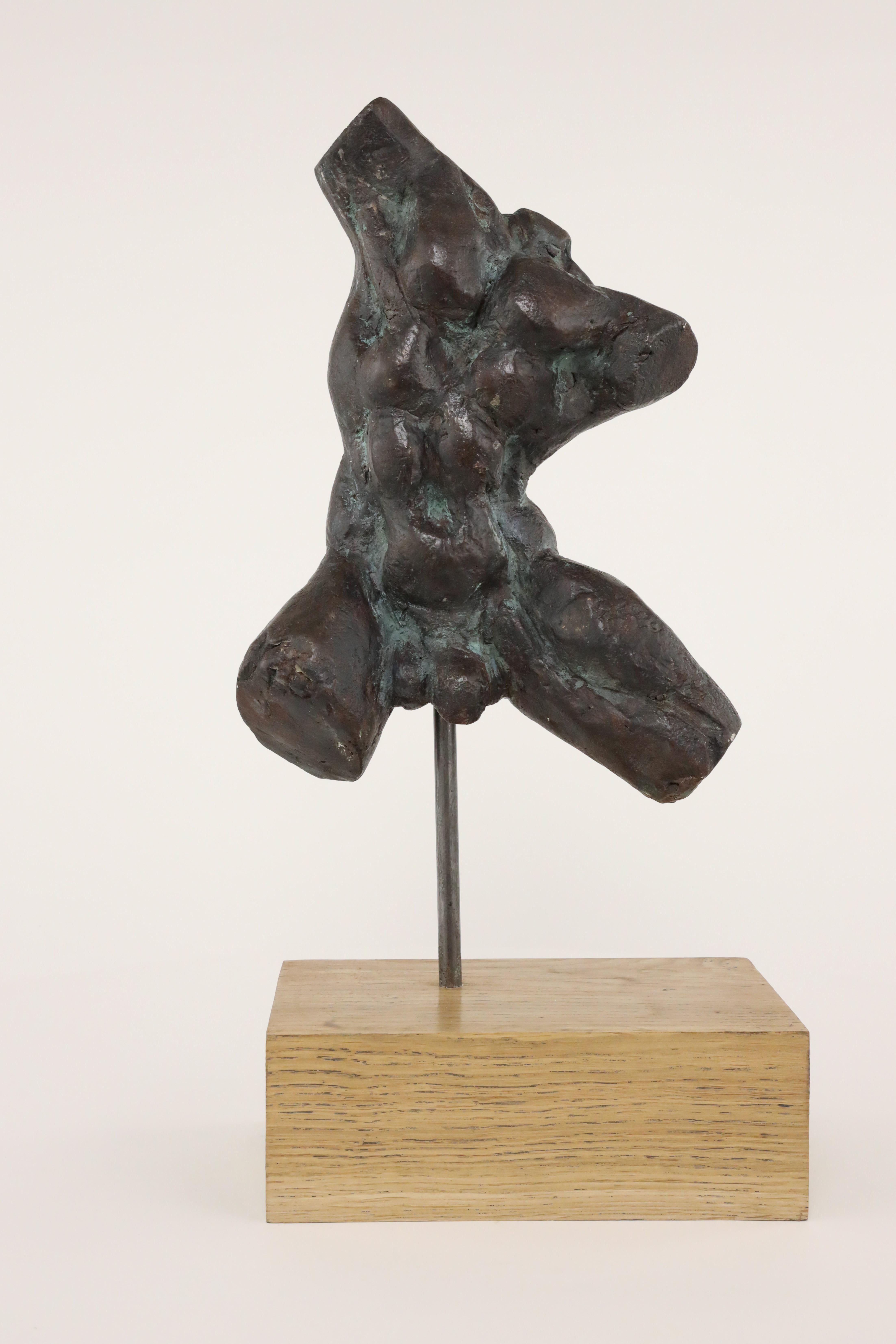
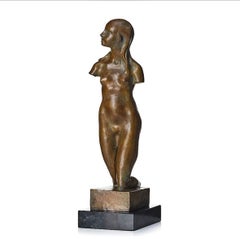
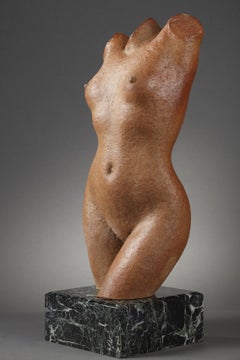
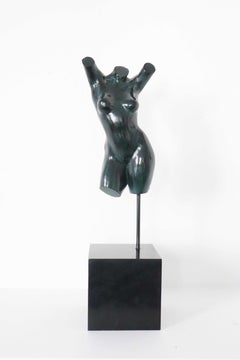
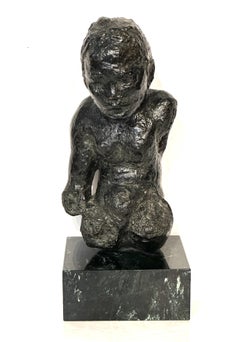
'In the manner of' Aristide Maillol 1861-1944, was a French sculptor, painter and print maker. Maillol predominantly was a painter and weaver of tapestry, however Gaugin advised him when his eyesight became worse to take up sculpture, Maillol was one of the most famous and successful sculptors of his time and knowing all the greatest artists of the early 20th century. His sculpture was modelled in clay and plaster and then prepared for the bronze foundries which would cast different sizes of the same work, this method of reproduction was extremely advantageous as it allowed lower public levels of the financial system to acquire his works, which in turn promoted the artist. Maillol made mostly female studies of the antique period which also included drawings, all signed with monogram either in the clay or on paper. This study is described as a mask being single sided, it is a large work by an unknown hand despite being signed which is still unrecognised after some considerable time researching. The height overall including the granite base is 19 1/2 inches, this weighs 31 lbs. plus it will require a wooden crate, it will require professional packing with a bona fide transporter.
I have included a biography of the artist Maillol for your interest.
Aristide Maillol (1861–1944) was a French sculptor, painter, and printmaker whose work marked a critical turning point in modern art. At a time when European sculpture was dominated by the highly emotional, expressive, and textured style of Auguste Rodin, Maillol introduced a revolutionary return to classical order, simplicity, and stable geometric forms. By focusing almost exclusively on the serene, monumental female nude, he paved the way for early 20th-century abstraction and redefined the direction of modern sculpture. Maillol was born in Banyuls-sur-Mer, Roussillon, France. He began his artistic journey as a painter, moving to Paris in 1885 to study at the École des Beaux-Arts. Early in his career, he became closely associated with the Nabis, a group of post-impressionist artists that included Pierre Bonnard and Édouard Vuillard. Inspired by tapestry art and decorative design, Maillol established a tapestry workshop in his hometown. However, by the late 1890s, a serious eye disease forced him to abandon weaving, prompting him to pivot entirely toward sculpture. Maillol’s sculpture was a deliberate rejection of Rodin’s dramatic realism and restless surfaces. Instead, Maillol sought what he called "architectural harmony." His figures are characterized by smooth surfaces, rounded masses, and a sense of profound stillness and weight. His breakout masterpiece, The Mediterranean (c. 1902–1905), perfectly encapsulated this philosophy. The seated female figure forms a stable, harmonious composition of interlocking triangles. It communicates emotion through pure form and balance rather than facial expression or theatrical posing. This focus on mass and volume over narrative detail became the cornerstone of his career. Maillol’s shift toward simplified, classicist forms had a profound impact on the next generation of European sculptors, offering them a viable alternative to Rodin's overwhelming legacy. Maillol’s emphasis on the weight, volume, and smooth contours of the human body directly anticipated the biomorphic abstraction of Jean Arp and the monumental, organic reclining figures of Henry Moore. While Brâncuși took abstraction much further, Maillol's pursuit of the essential essence of a form—stripping away superficial texture—helped clear the path for Brâncuși’s radical simplifications.
In Germany, Maillol’s classical poise deeply influenced figurative sculptors who sought to express human emotion through clear, structured forms rather than fragmented or distorted surfaces. The Franco-American sculptor Lachaise drew direct inspiration from Maillol’s celebration of the robust, ample female form, scaling it up into dynamic, gravity-defying monuments. By marrying classical ideals with a modern sensitivity to abstract shape, Maillol acted as the vital bridge linking 19th-century figurative art to 20th-century modernism.