Want more images or videos?
Request additional images or videos from the seller.

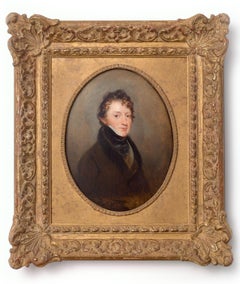
Robert Frain
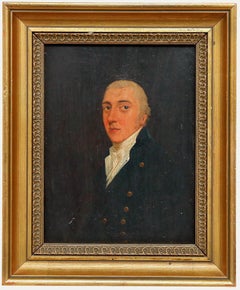
George Byng Later 7th Viscount Torrington

1829

$16,906.50
£12,500
€15,261.68
CA$24,108.61
A$24,719.33
CHF 14,084.18
MX$314,655.86
NOK 161,777.84
SEK 168,792.59
DKK 114,084.26

About the Item

Robert Frain active 1829-1877, was a Scottish painter. There is very little biographical information regarding Frain, however he was active in the first quarter to the third quarter of the 19th Century, and his works, as few as they are, are in demand in print. Frain painted some of the wealthiest and influential people of his time. This portrait shows the young George Byng, 1812-1884, holding a book in one hand and a Barristers wig in the other, he was studying the law and this portrait was painted I suspect just before or as he inherited the title of Viscount. The canvas shows a Thomas Brown Holborn stamp and register mark GBWLK329, which we have so far been unable to research effectively. However Brown of Holborn was a well known supplier of artist materials to the most famous painters of the 19th Century, a list of which is available on the NPG website. Frain signed and dated the picture and Byng would have been about 17 when this picture was painted, his father the 6th Viscount was friends with Sir Thomas Lawrence, another famous artist and President of the Royal Academy, consequently the boy George would have been familiar with the process of portrait painting. The Regency painters book and Charles Greville Diary contains more information of the Torrington and Lawrence family biography. The size quoted is the picture canvas painting only the frame is an additional 6 inches high and 6 inches wide. The Torrington line of Viscounts is currently held by the 11th Viscount, Timothy Torrington.
  • Creator:
    Robert Frain (1840 - 1870, British)
  • Creation Year:
    1829
  • Dimensions:
    Height: 30 in (76.2 cm)Width: 20 in (50.8 cm)Depth: 1 in (2.54 cm)
  • Medium:
  • Period:
  • Condition:
  • Gallery Location:
    Douglas, GB
  • Reference Number:
    Seller: No. 1671stDibs: LU2373215610122

More From This Seller

View All
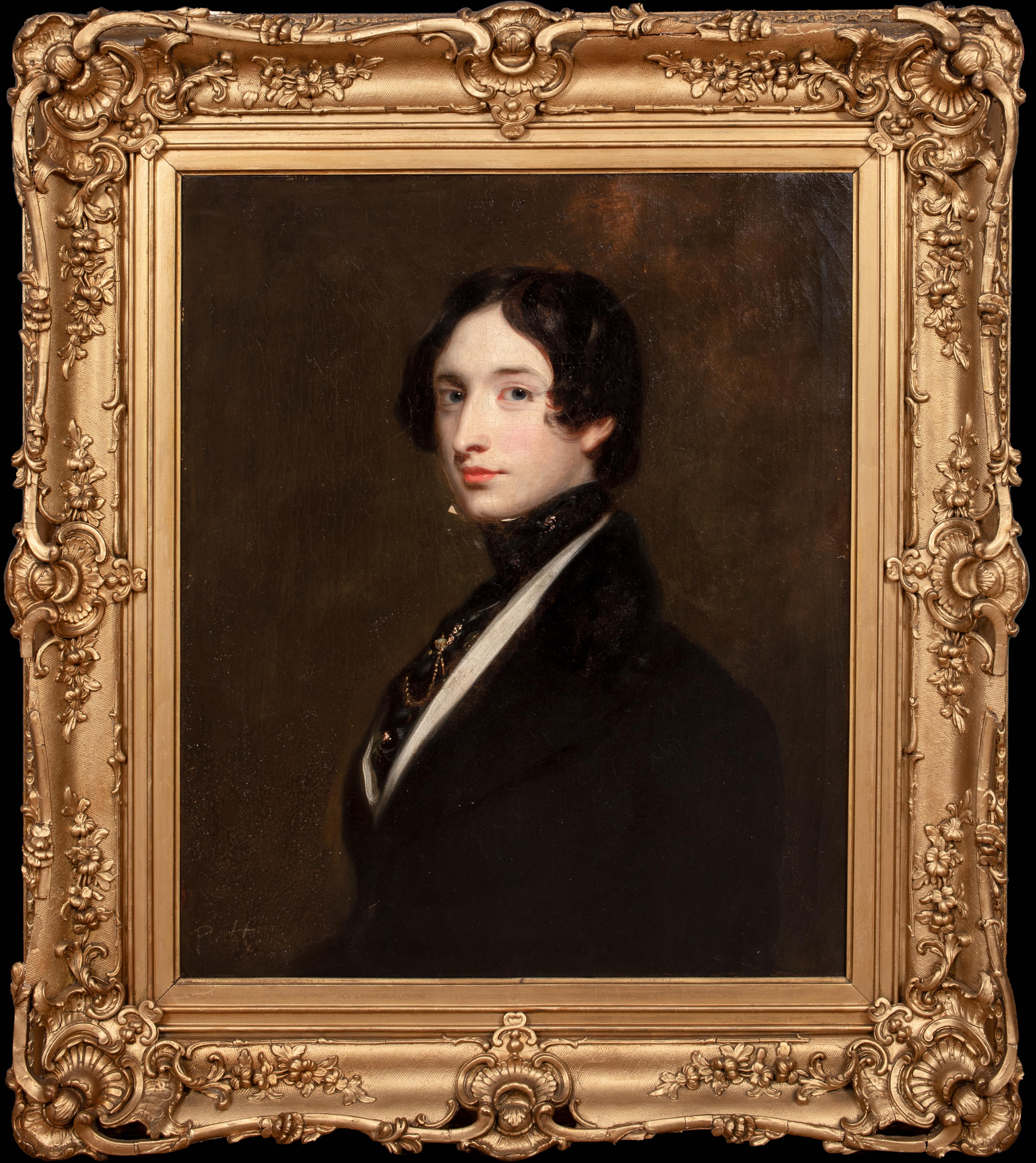
Henry Wyndham Phillips

Henry Wyndham Phillips

By Thomas Phillips

Located in Douglas, Isle of Man

Thomas Phillips R.A. 1770-1845, was an English portrait painter and he painted many of the greatest people of the day including , artists, poets, writers, scientists and many other p...

Category

Mid-19th Century Portrait Paintings

Materials

Canvas, Oil

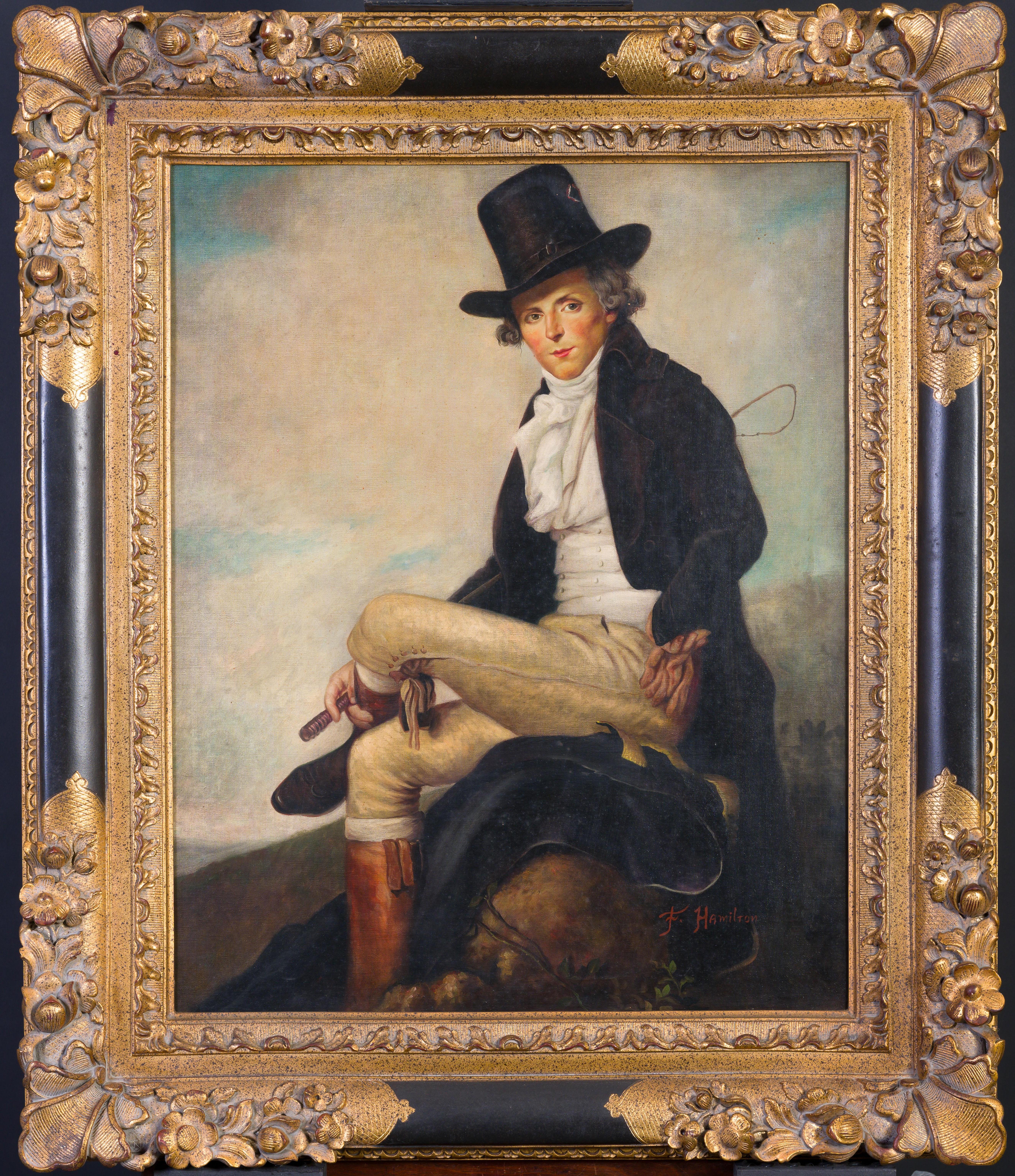
Portrait of Pierre Seriziat

Portrait of Pierre Seriziat

Located in Douglas, Isle of Man

Copy of a Portrait of Pierre Seriziat by Jacques Louis David which was painted in 1795 , David 1748-1825, this picture is a direct copy by an artist by the name of F. Hamilton. There...

Category

Late 20th Century Portrait Paintings

Materials

Canvas, Oil, C Print

Charles Grey 2nd Earl Grey

Charles Grey 2nd Earl Grey

Located in Douglas, Isle of Man

Philip Westcott 1815-1878, was a British born artist. This portrait is of the former Prime Minister Charles Grey 2nd Earl of the House of Howick, he was Prime Minister from 1830 to ...

Category

1840s Portrait Paintings

Materials

Canvas, Oil

Portrait of a Venetian Nobleman

Portrait of a Venetian Nobleman

Located in Douglas, Isle of Man

Attributed to, Alessandro Longhi 1733-1813, Longhi was a prominent Venetian portrait painter, printmaker, and biographer. The son of the famous genre painter Pietro Longhi, he is known for his detailed oil portraits of the Venetian aristocracy and his valuable book on contemporary Venetian painters. Longhi early life and training : Born: Alessandro Longhi was born on June 12, 1733, in Venice. He received his initial training from his father, Pietro Longhi. He later studied under Giuseppe Nogari, a respected portraitist in Venice during the 18th century, and was elected to the Venetian Academy in 1759. Longhi specialized in portraiture, primarily depicting the nobles and officials of the Republic of Venice. His paintings are a valuable record of the social and political structure of 18th-century Venice. Rococo aesthetic: Working in the Rococo style, he was adept at capturing the elegance and social status of his subjects. He paid meticulous attention to the elaborate robes, wigs, and emblems of office that signified his subjects' power. While his official state portraits could be stiff and formal, his portraits of less noble patrons demonstrated a greater sense of realism and psychological insight. Longhi was also an accomplished printmaker, particularly in etching. His etching technique showed an awareness of Rembrandt's work, and he used this skill to reproduce his and his father's paintings. In 1762, he published Compendio delle vite de' pittori veneziani istorici più rinomati del presente secolo, a biographical dictionary of contemporary Venetian painters that is still an important resource for art historians. Longhi illustrated the book with etched portraits of the artists. The portrait of Carlo Goldoni: One of his most celebrated paintings is his portrait of the Venetian playwright and librettist Carlo Goldoni. For his election to the Venetian Academy, he painted this allegory, which features a personified figure of Painting. His known portraits include Portrait of a Lady (Uffizi Gallery, Florence), Portrait of a Musician, and various portraits of Venetian nobles and officials. I have included further albeit identical biographies of Alessandro Longhi. Alessandro Longhi (born June 12, 1733, Venice—died 1813, Venice) was a painter, etcher, and biographer of Venetian artists, and was the most important Venetian portrait painter of his day. The son of the painter Pietro Longhi, he was given his first training by his father, who quite soon put him to study under the portrait painter Giuseppe Nogari. In 1759 he was elected a member of the Venetian academy, for which he painted one of his rare allegorical pictures, “Painting and Merit.” In 1762 Longhi issued his book Compendio delle Vite de’ Pittori Veneziani Istorici piu rinomati del presente secolo con sui ritratti dal naturale delineati ed indisi, one of the most important source books for the history of Venetian 18th-century painting. Both portraits and text were printed from plates he etched. Longhi’s facilely rendered portraits are largely generalized likenesses lacking any acuity of character observation. He mainly portrayed the leading Venetian luminaries and dignitaries of his day in a style that drew upon his father’s Rococo manner and 16th-century traditions of Venetian Renaissance portraiture. The personal details available for the painter Alessandro Longhi are limited, but his biography is intertwined with that of his family and the city of Venice. He was the son of a successful painter, which set his artistic path, and is known for creating sensitive and realistic portraits that captured the social atmosphere of 18th-century Venice. Alessandro was born in Venice in 1733 to the celebrated genre painter Pietro Longhi. He received his early training from his father before studying under another prominent portraitist, Giuseppe Nogari. A contrast to his father: While his father was known for painting scenes of everyday Venetian life, Alessandro focused almost exclusively on portraiture. His skill enabled him to capture the intimate psychology and character of his subjects, a quality especially evident in his portraits of less noble patrons. Election to the academy: In 1759, Alessandro was elected to the Accademia dei Pittori, the Venetian Academy of Painting. His election solidified his reputation as a master of the Rococo style. Beyond painting, Longhi was an accomplished printmaker, primarily producing etchings that reproduced his own works and those of his father. In 1762, he published the Compendio delle vite de' pittori veneziani, a collection of biographies of contemporary Venetian painters, which is an important historical resource. He became a prominent portraitist for Venice's upper class, including nobles and state officials. His official state portraits featured grand, full-length depictions of his subjects in their elaborate robes and emblems of office. Emphasis on realism: In contrast to the stylized nature of official portraits, Alessandro was praised for the "reality" he captured in works featuring common people. For example, his 1760 portrait of an innkeeper was celebrated for its realistic subject matter and "nuova maniera" (new manner). The art historian Olimpia Theodoli noted that Longhi's etching technique showed he had a firsthand knowledge of Rembrandt's work. Among his more famous works are a sensitive portrait of playwright Carlo Goldoni and the painting Portrait of a Wine Butler. He also produced religious and allegorical works, including paintings of the "Apostles" for the church of San Pantalon in Venice. This painting has been carefully conserved and the frame also, the frame looks to be original to the picture but we have no way of confirming this but we believe it to be so. 18th Century Italian portraits...

Category

Mid-18th Century Portrait Paintings

Materials

Canvas, Oil

Elizabeth Gordon Duchess of Gordon

Elizabeth Gordon Duchess of Gordon

By William Fisk

Located in Douglas, Isle of Man

William Fisk 1796 -1872, was an English born portrait and history painter. Although born in 1796 he didn't start his artistic career until after 1826, after the birth of his son Will...

Category

1830s Portrait Paintings

Materials

Canvas, Oil

You May Also Like

Early 19th Century Oil - Gentleman of the House

Early 19th Century Oil - Gentleman of the House

Located in Corsham, GB

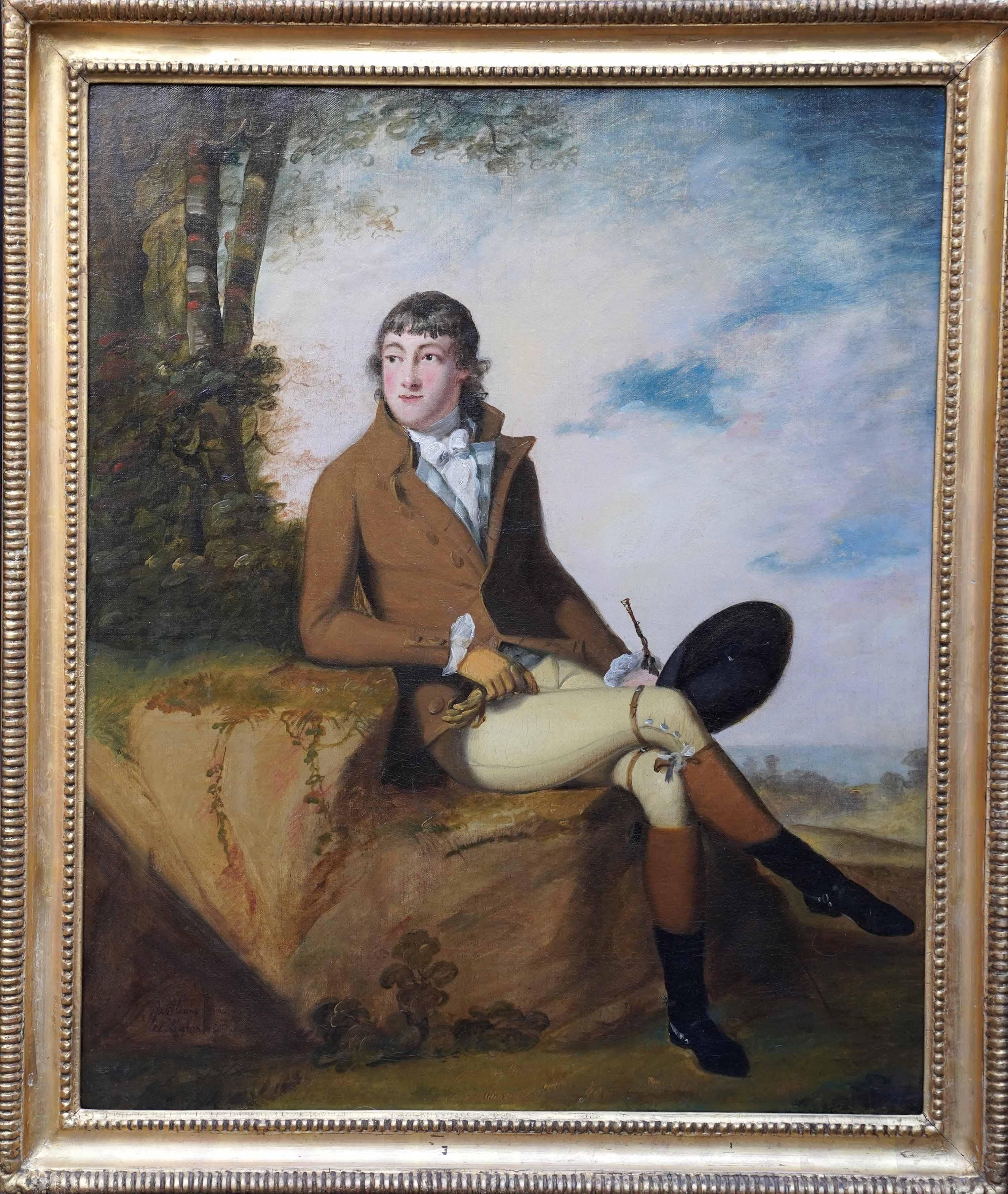
This delightful early 19th-century portrait depicts a smart gentleman, elegantly attired in clothing typical of the late Georgian period. Rendered with soft, accomplished brushwork, ...

Category

Early 19th Century Portrait Paintings

Materials

Oil

Portrait of a Gentleman

Portrait of a Gentleman

Located in London, GB

Johan Zoffany Portrait of a Gentleman 1733 - 1810 Oil on canvas, unsigned Image size: 29 1/2 x 24 1/2 inches (75 x 62 cm) Original gilt frame Provenance: Scott & Fowles, New Yo...

Category

18th Century Portrait Paintings

Materials

Oil, Canvas

19th Century Oil - Portrait of a Gentleman

19th Century Oil - Portrait of a Gentleman

Located in Corsham, GB

A fine nineteenth-century portrait depicting a gentleman elegantly attired in a dark coat and white cravat. Well presented in a gilt frame. Unsigned. On canvas laid to board. Image s...

Category

19th Century Portrait Paintings

Materials

Oil

Portrait of Captain George Week

Portrait of Captain George Week

Located in London, GB

William Roth Born 1754 Portrait of Captain George Meek Oil on canvas, signed & dated 1782 lower right Image size: 25 x 18 ½ inches (64 x 47 cm) Ornate giltwood William Kent style...

Category

Late 18th Century Portrait Paintings

Materials

Canvas, Oil

Henry Bowles Howard, 12th Earl Of Suffolk And 5th Earl Of Berkshire

Henry Bowles Howard, 12th Earl Of Suffolk And 5th Earl Of Berkshire

Located in New Orleans, LA

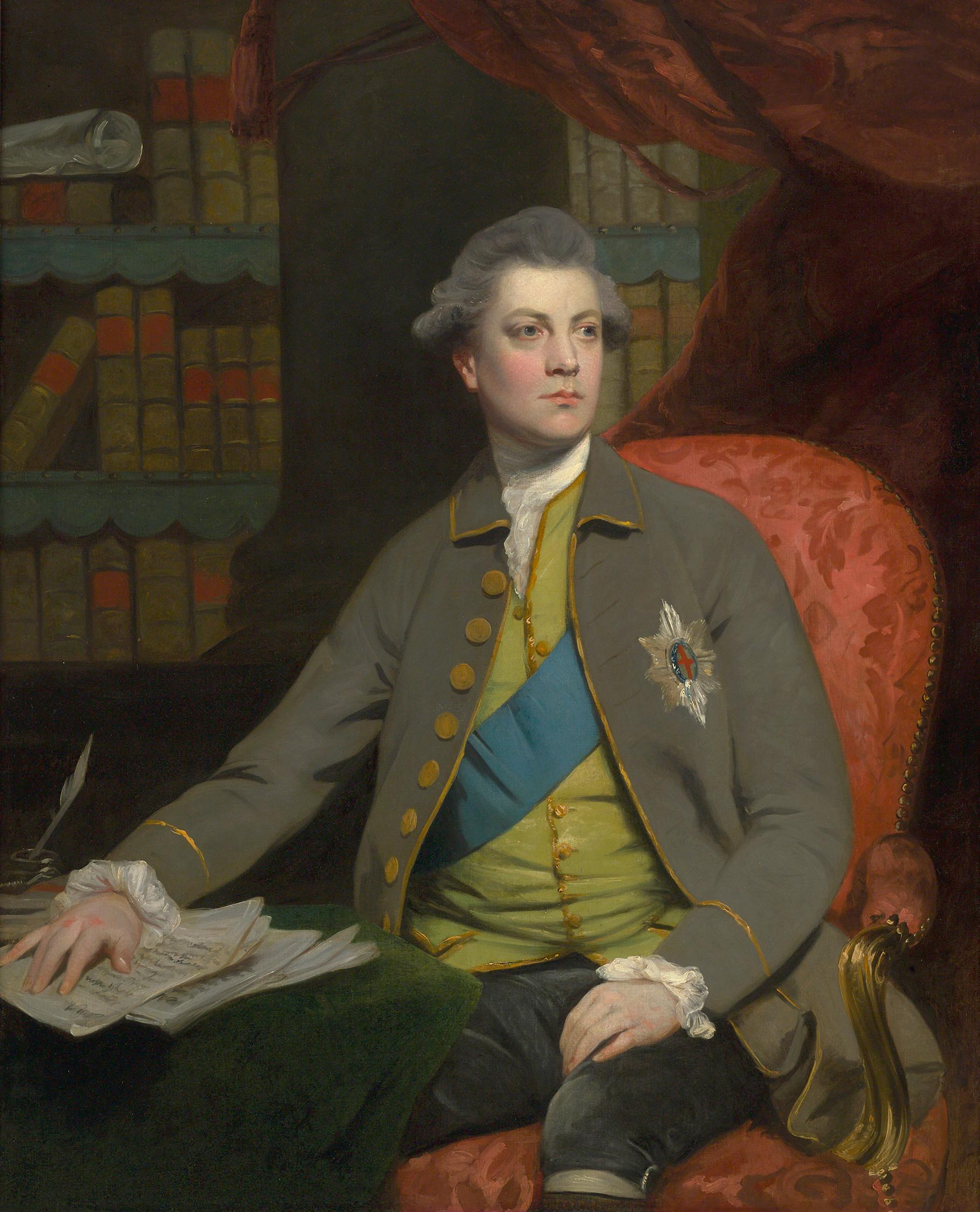
Sir Joshua Reynolds 1723-1792 British Sir Henry Bowles Howard, 12th Earl of Suffolk and 5th Earl of Berkshire Oil on canvas Sir Joshua Reynolds is unequivocally considered the most important English portraitist of the 18th century who was instrumental in adapting the Grand Manner style in the portrait genre. In fact, when the Royal Academy was founded in 1768, Reynolds was elected its first President, setting the precedent of quality for which all other portraitists would strive. Reynolds's portrait of Henry Bowles Howard, 12th Earl of Suffolk, showcases his genius in the genre and mastery over the medium. Reynolds’s portrait of the Earl expertly invokes classical values with strong lighting, rich colors and expert attention to detail to help underscore the prominence and revered echelon of the sitter. Howard was an esteemed British politician and Knight of the Garter. He served as Secretary of State for the Northern Department from 1771 to 1779, and he played a key role in utilizing mercenaries during the American Revolution and safeguarding Sweden's independence. The portrait employs Reynolds's signature style to render Howard rightfully as a gentleman of distinction. Captured seated in a stately library, the Earl appears learned and austere as he places one hand upon a stack of important documents and looks wistfully into the distance. Reynolds makes these compositional choices decisively, as the seated position gives Howard a weighty appearance of importance and the semi-profile turn captures his countenance at an attractive angle that highlights his strong, masculine features. The work draws on the classical conventions of Greek and Roman art and the Italian Renaissance masters, anchoring the nobleman in a history of refinement. Everything from his strong yet welcoming expression to his pale face enlivened by a rush of blood to the cheeks presents the picture of a strong, vital and powerful leader. As the first president of the Royal Academy in London, Reynolds’s commissions raised the status of an artist in Britain during the Romantic period and also established the portrait as an esteemed high art genre that garnered equal import to the history paintings that reigned supreme in decades prior. Today, Reynolds’s works grace the walls of the most important museums in the world, including the Louvre, the Metropolitan Museum of Art, and the National Gallery in London, among others. Circa 1770 Canvas: 50 1/2" high x 40 1/4" wide Framed: 61" high x 52 1/2" wide x 3 1/2" deep Provenance: Sir Henry Howard, 12th Earl of Suffolk and 5th Earl of Berkshire, 1739-1779 His mother, Lady Mary Howard, née Finch, Lady Andover, d. 1803 Acquired by descent to her daughter, Frances, and her husband Richard Bagot (later Howard) Acquired by descent to their daughter, Mary (1784-1877), and her husband Col. Fulke Greville Upton (later Howard), d. 1846 Acquired by descent to Lieutenant Colonel H.R.G. Howard Sale, Christie's, London, March 24, 1961, no. 29 Julius Weitzner, London and New York Sale, Paris, Musée Galliéra, December 7, 1965, no. 165 Newhouse Galleries, New York, NY Mr. and Mrs. F. Howard Walsh, Fort Worth, Texas, 1966 Walsh Family Art Trust Private collection, Oregon M.S. Rau, New Orleans Exhibited: British Institution, London, 1844, no. 130, loaned by the Hon. Fulke Greville Howard. South Kensington, "Second special exhibition of National Portraits," 1867, no. 478, lent by the Hon. Mrs. Greville. Agnew's, London, 1903, no. 17. Literature: Algernon Graves and W. V. Cronin, A History of the Works of Sir Joshua Reynolds, P.R.A., vol. 3 (London, 1899), p. 945. David Mannings...

Category

18th Century Other Art Style Portrait Paintings
Materials

Canvas, Oil