Want more images or videos?
Request additional images or videos from the seller.

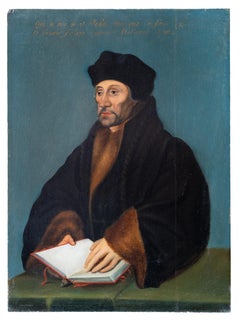
Thomas Churchyard
Erasmus of Rotterdam

circa 1829

$16,906.50
£12,500
€15,261.68
CA$24,108.61
A$24,719.33
CHF 14,084.18
MX$314,655.86
NOK 161,777.84
SEK 168,792.59
DKK 114,084.26

About the Item

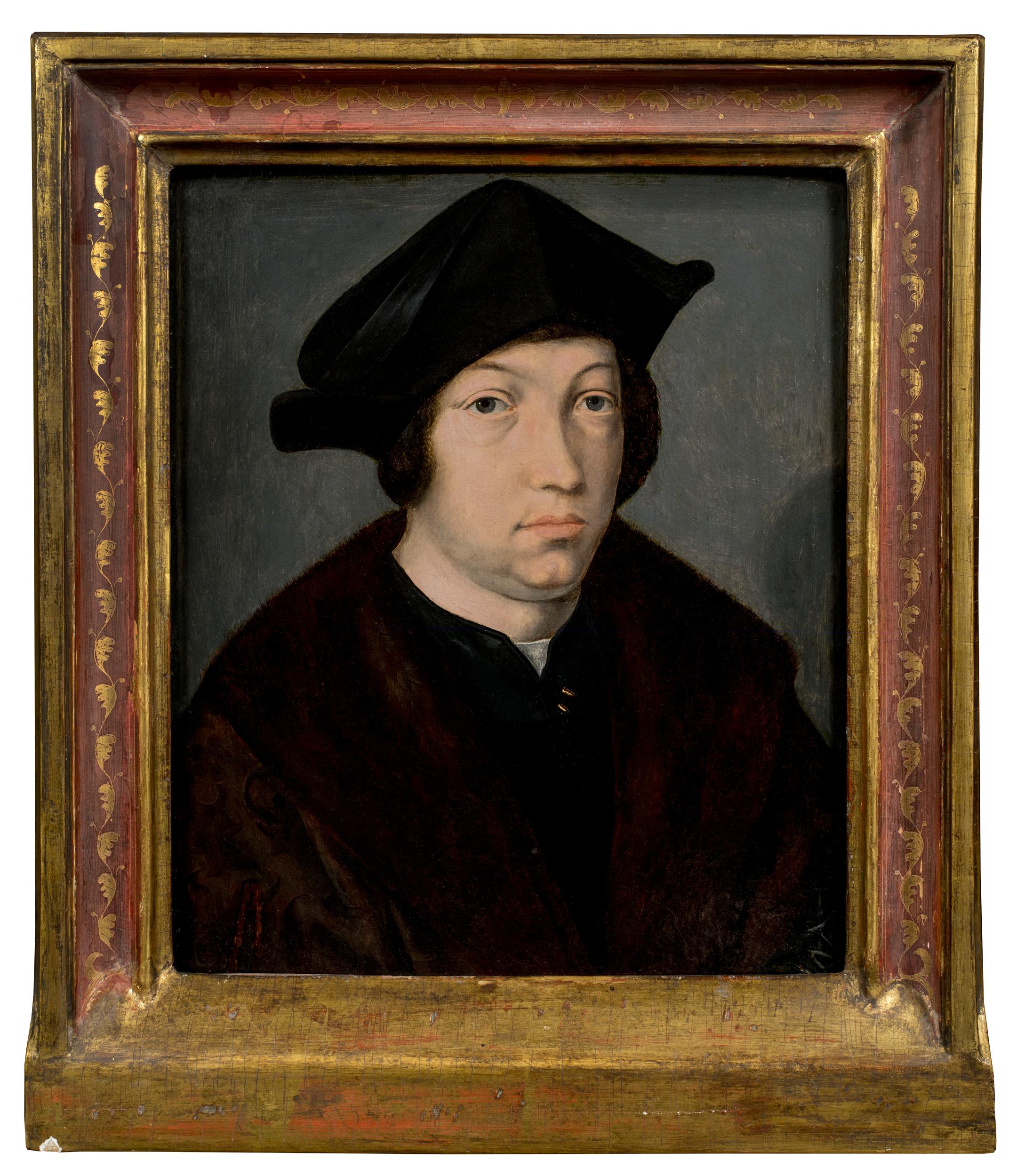
Thomas Churchyard 1798-1865, was an English painter and Lawyer. Churchyard was predominantly a landscape painter in oil and watercolour, however he was educated at the same school as John Constable and lived in Suffolk in Woodbridge close to Constable's home. Consequently Churchyard grew up wanting to be a painter but was realistic enough to train as a Lawyer and to supplement his artistic ambitions with his income from his legal practice. Churchyard was a very competent and ambitious scholar and resided with the schoolmaster being the most promising pupil, he was a gifted student in the classics, French, the poets, and religious speculation among other subjects. Due to his study of religious speculation he became knowledgeable of Erasmus and therefore painted this picture in honour of the greatest mind of the late 15th and early 16th Centuries. Churchyard was frustrated in his ambition to become a professionally active artist and travelled to London to achieve his goal but failed and returned to Woodbridge to continue in his legal profession. This portrait is very well executed study of the Holbein original and I think now worthy of the title he desired, 'professionally accomplished artist'. This painting is unsigned. I have included an alternative biography of Thomas Churchyard for your interest. Thomas Churchyard (1798–1865) was an English landscape painter and lawyer. He was born in Melton, Suffolk, to a cattle dealer and butcher. In 1808, Churchyard entered Queen Elizabeth's Free Grammar School in Dedham, Essex. As a boarder in the headmaster's house, his studies focused on Classics, French, English poetry, philosophy, religious debate and natural history. After completing his school studies in 1815, his family directed him toward the law. He was articled to a firm of solicitors in Halesworth and qualified as an attorney in London by 1820, eventually establishing a practice in Woodbridge, Suffolk. Despite his legal training, Churchyard's true passion was landscape painting. He became a keen art collector, acquiring pieces by Thomas Gainsborough and the Norwich School. However, he was most profoundly impressed by the work of John Constable. Constable’s fresh, naturalistic approach to the East Anglian countryside deeply influenced Churchyard's style. Inspired by Constable’s genius, Churchyard formed a fierce ambition to transition from a talented amateur into a professional artist. Buoyed by exhibiting a few landscapes in Norwich and a single piece at the Royal Academy in 1831, Churchyard decided to gamble on his dream. In 1832, he uprooted his growing family and moved to London to set up a professional studio .Unfortunately, he failed to achieve his professional ambitions. He struggled to secure further acceptance at the Royal Academy, and the financial reality of competing in the London art market proved insurmountable. Within 18 months, his professional pursuit collapsed. Defeated, Churchyard returned to Suffolk to resume his legal practice to support his nine children. Though he failed as a professional in his lifetime, Churchyard never stopped painting. Today, his romantic, luminous landscapes are highly regarded, with his works preserved in prestigious institutions like the Tate Collection and the Victoria and Albert Museum.
  • Creator:
    Thomas Churchyard (1798 - 1865, English)
  • Creation Year:
    circa 1829
  • Dimensions:
    Height: 28 in (71.12 cm)Width: 25 in (63.5 cm)Depth: 2 in (5.08 cm)
  • Medium:
  • Period:
  • Condition:
  • Gallery Location:
    Douglas, GB
  • Reference Number:
    Seller: No.1801stDibs: LU2373215613182

More From This Seller

View All
Portrait of a Venetian Nobleman

Portrait of a Venetian Nobleman

Located in Douglas, Isle of Man

Attributed to, Alessandro Longhi 1733-1813, Longhi was a prominent Venetian portrait painter, printmaker, and biographer. The son of the famous genre painter Pietro Longhi, he is known for his detailed oil portraits of the Venetian aristocracy and his valuable book on contemporary Venetian painters. Longhi early life and training : Born: Alessandro Longhi was born on June 12, 1733, in Venice. He received his initial training from his father, Pietro Longhi. He later studied under Giuseppe Nogari, a respected portraitist in Venice during the 18th century, and was elected to the Venetian Academy in 1759. Longhi specialized in portraiture, primarily depicting the nobles and officials of the Republic of Venice. His paintings are a valuable record of the social and political structure of 18th-century Venice. Rococo aesthetic: Working in the Rococo style, he was adept at capturing the elegance and social status of his subjects. He paid meticulous attention to the elaborate robes, wigs, and emblems of office that signified his subjects' power. While his official state portraits could be stiff and formal, his portraits of less noble patrons demonstrated a greater sense of realism and psychological insight. Longhi was also an accomplished printmaker, particularly in etching. His etching technique showed an awareness of Rembrandt's work, and he used this skill to reproduce his and his father's paintings. In 1762, he published Compendio delle vite de' pittori veneziani istorici più rinomati del presente secolo, a biographical dictionary of contemporary Venetian painters that is still an important resource for art historians. Longhi illustrated the book with etched portraits of the artists. The portrait of Carlo Goldoni: One of his most celebrated paintings is his portrait of the Venetian playwright and librettist Carlo Goldoni. For his election to the Venetian Academy, he painted this allegory, which features a personified figure of Painting. His known portraits include Portrait of a Lady (Uffizi Gallery, Florence), Portrait of a Musician, and various portraits of Venetian nobles and officials. I have included further albeit identical biographies of Alessandro Longhi. Alessandro Longhi (born June 12, 1733, Venice—died 1813, Venice) was a painter, etcher, and biographer of Venetian artists, and was the most important Venetian portrait painter of his day. The son of the painter Pietro Longhi, he was given his first training by his father, who quite soon put him to study under the portrait painter Giuseppe Nogari. In 1759 he was elected a member of the Venetian academy, for which he painted one of his rare allegorical pictures, “Painting and Merit.” In 1762 Longhi issued his book Compendio delle Vite de’ Pittori Veneziani Istorici piu rinomati del presente secolo con sui ritratti dal naturale delineati ed indisi, one of the most important source books for the history of Venetian 18th-century painting. Both portraits and text were printed from plates he etched. Longhi’s facilely rendered portraits are largely generalized likenesses lacking any acuity of character observation. He mainly portrayed the leading Venetian luminaries and dignitaries of his day in a style that drew upon his father’s Rococo manner and 16th-century traditions of Venetian Renaissance portraiture. The personal details available for the painter Alessandro Longhi are limited, but his biography is intertwined with that of his family and the city of Venice. He was the son of a successful painter, which set his artistic path, and is known for creating sensitive and realistic portraits that captured the social atmosphere of 18th-century Venice. Alessandro was born in Venice in 1733 to the celebrated genre painter Pietro Longhi. He received his early training from his father before studying under another prominent portraitist, Giuseppe Nogari. A contrast to his father: While his father was known for painting scenes of everyday Venetian life, Alessandro focused almost exclusively on portraiture. His skill enabled him to capture the intimate psychology and character of his subjects, a quality especially evident in his portraits of less noble patrons. Election to the academy: In 1759, Alessandro was elected to the Accademia dei Pittori, the Venetian Academy of Painting. His election solidified his reputation as a master of the Rococo style. Beyond painting, Longhi was an accomplished printmaker, primarily producing etchings that reproduced his own works and those of his father. In 1762, he published the Compendio delle vite de' pittori veneziani, a collection of biographies of contemporary Venetian painters, which is an important historical resource. He became a prominent portraitist for Venice's upper class, including nobles and state officials. His official state portraits featured grand, full-length depictions of his subjects in their elaborate robes and emblems of office. Emphasis on realism: In contrast to the stylized nature of official portraits, Alessandro was praised for the "reality" he captured in works featuring common people. For example, his 1760 portrait of an innkeeper was celebrated for its realistic subject matter and "nuova maniera" (new manner). The art historian Olimpia Theodoli noted that Longhi's etching technique showed he had a firsthand knowledge of Rembrandt's work. Among his more famous works are a sensitive portrait of playwright Carlo Goldoni and the painting Portrait of a Wine Butler. He also produced religious and allegorical works, including paintings of the "Apostles" for the church of San Pantalon in Venice. This painting has been carefully conserved and the frame also, the frame looks to be original to the picture but we have no way of confirming this but we believe it to be so. 18th Century Italian portraits...

Category

Mid-18th Century Portrait Paintings

Materials

Canvas, Oil

Portrait of Pierre Seriziat

Portrait of Pierre Seriziat

Located in Douglas, Isle of Man

Copy of a Portrait of Pierre Seriziat by Jacques Louis David which was painted in 1795 , David 1748-1825, this picture is a direct copy by an artist by the name of F. Hamilton. There...

Category

Late 20th Century Portrait Paintings

Materials

Canvas, Oil, C Print

Portrait of a Sculptor

Portrait of a Sculptor

By Andrea Del Sarto

Located in Douglas, Isle of Man

After Andrea Del Sarto 1486 - 1530, who was an Italian Renaissance painter and draughtsman. Del Sarto worked in Fresco decorating, portrait painting and as a painter of alter pieces,...

Category

Mid-19th Century Portrait Paintings

Materials

Canvas, Oil

Dutch shipping in a calm

Dutch shipping in a calm

Located in Douglas, Isle of Man

Augustus van Hier 1834 -1905 While art records occasionally spell his surname as "Van Heir", his works are officially signed and recognized under the Dutch spelling Van Hier. He wa...

Category

Late 19th Century Landscape Paintings

Materials

Canvas, Oil

The Spanish Beauty

The Spanish Beauty

Located in Douglas, Isle of Man

John Philip 1817 -1857, was a Scottish painter born into a poor impoverished background but was identified for his artistic abilities and sponsored by Lord Panmure the Earl of Dalhou...

Category

Mid-19th Century Portrait Paintings

Materials

Canvas, Oil

The Theatre

The Theatre

Located in Douglas, Isle of Man

John Baptista Verbruggen was an English actor and painter born of Dutch descent. His date of birth is unknown but his death was recorded in 1708. His historical biography is confusin...

Category

Late 17th Century Interior Paintings

Materials

Oil, Panel

You May Also Like

Erasmus of Rotterdam Portrait, 19th Century Oil on Wood Panel

Erasmus of Rotterdam Portrait, 19th Century Oil on Wood Panel

By English School

Located in GB

Hans Holbein the Younger (1497/98 – 1543) was one of the greatest painters of the Northern Renaissance. Born in Augsburg, Germany, he was the son of Hans Holbein the Elder, also a pa...

Category

19th Century Old Masters Portrait Paintings

Materials

Oil, Wood Panel

PHILOSOPHER - Dutch, Flemish, Baroque -  Figurative Oil on Canvas Painting

PHILOSOPHER - Dutch, Flemish, Baroque - Figurative Oil on Canvas Painting

By Ciro De Rosa

Located in Napoli, IT

Philosopher - Ciro De Rosa Italia 2008 - Oil on canvas cm. 50x50 Gold leaf gilded wooden frame available on requestThe evocative portrait of Ciro De Rosa portrays an elderly man with...

Category

Early 2000s Baroque Portrait Paintings

Materials

Canvas, Oil

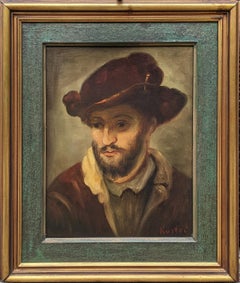
Portrait of a Man, Framed Oil Painting on Canvas after Friedrich Schaarschmidt

Portrait of a Man, Framed Oil Painting on Canvas after Friedrich Schaarschmidt

Located in Long Island City, NY

This painting, signed in the lower right "Kuster", is a stylized recreation of "Untitled - Portrait of a Man" by Friedrich Schaarschmidt. Like the figure in Schaarschmidt's painting,...

Category

Mid-20th Century Portrait Paintings

Materials

Oil

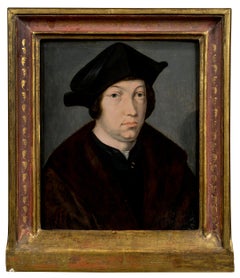
Portrait of a Man

Portrait of a Man

Located in New York, NY

Provenance: with Leo Blumenreich and Julius Böhler, Munich, 1924 Dr. Frederic Goldstein Oppenheimer (1881-1963), San Antonio, Texas; by whom given to: Abraham M. Adler, New York, until 1985; thence by descent to the present owners While old inscriptions on the verso of this panel propose its author to be Hans Holbein and the sitter Sir John More—a lawyer, judge, and the father of Sir Thomas More—this fine portrait has long been recognized to be by a Flemish hand. Max Friedländer gave the painting to Bernard van Orley (1487/1491 – 1541) in 1924, but did not include it in the volume dedicated to the artist in his Early Netherlandish Paintings...

Category

16th Century Old Masters Portrait Paintings

Materials

Oil, Panel

Fine 16th Century Oil - Portrait of a Theologian

Fine 16th Century Oil - Portrait of a Theologian

Located in Corsham, GB

This finely executed 16th-century portrait depicts a theologian adorned with a distinctive diamond-shaped headdress and encircled by a luminous nimbus, a symbol of sanctity and spiri...

Category

16th Century Portrait Paintings

Materials

Oil

Portrait of a man by Evert Jan Ligtelijn in the style of Rembrandt Van Rijn

Portrait of a man by Evert Jan Ligtelijn in the style of Rembrandt Van Rijn

Located in Diest, BE

Evert Jan Ligtelijn, pseudonym Luciénte (13 November 1893, in Amsterdam - 26 December 1975, Laren) The painter Evert Jan Ligtelijn was a productive painter of very diverse subjects....

Category

Vintage 1930s Dutch Primitive Paintings

Materials

Wood, Paint