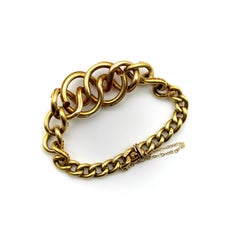
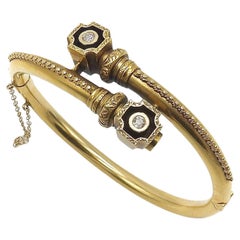
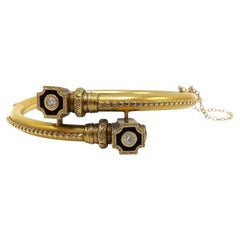
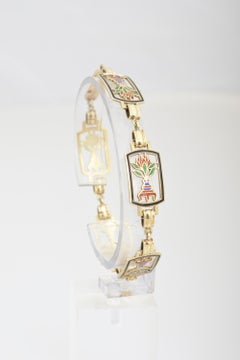
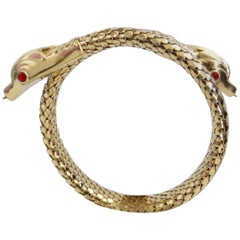
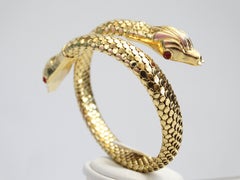
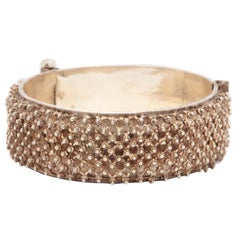
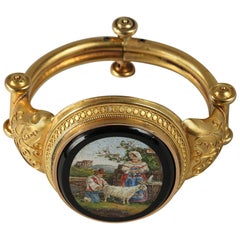
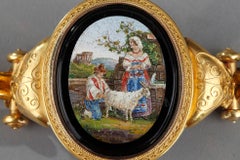
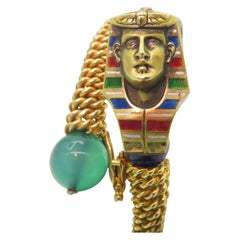
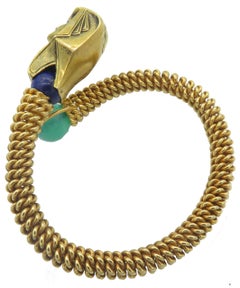
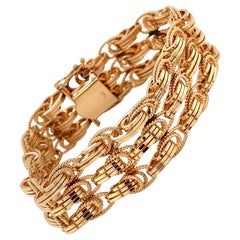
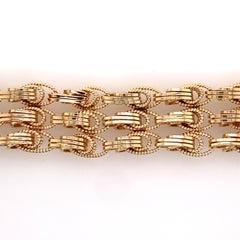
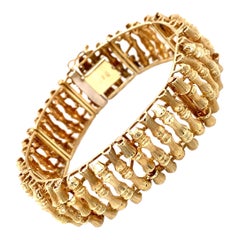
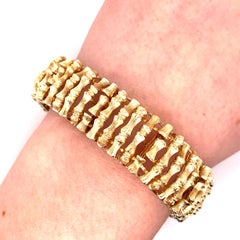
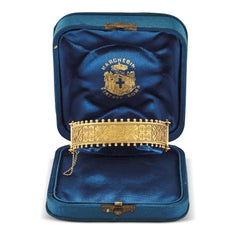
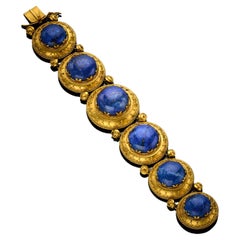
Roman grand tour Etruscan Revival Ricordi bracelet.
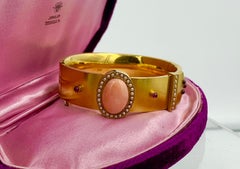
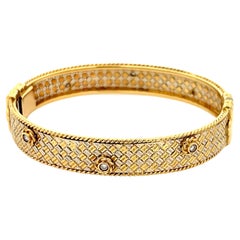
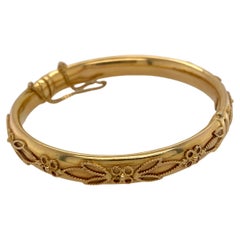
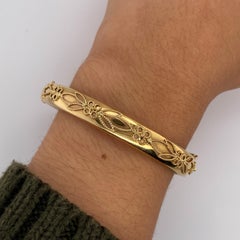
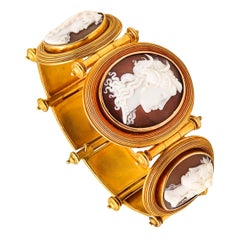
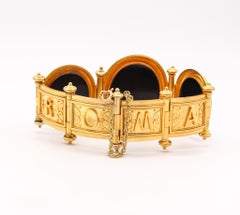
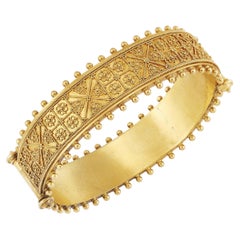
Magnificent historical piece, created in Roma Italy during the Papal States period back in the middle of the 19th century, circa 1850. This fabulous Grand Tour bracelet has been crafted with Etruscan revival patterns in solid yellow gold of 18 karats with the surfaces finished with textured and polished details. Fitted with one slider pin lock and a safety chain for extra security.
The design is made up of seven elements connected to each other with seven cylinders in the shape of Roman Cryptex. The four on the back are each inscribed in high relief with the letters R.O.M.A. in reference to the city's memento.
The three frontal ovals are decorated with the images carved in high relief of the three Roman graces. The Graces appear as divinities associated with beauty and love. In the Iliad and the Odyssey, the two great epic poems of the 8th century BC., the Graces are linked to Aphrodite, the goddess of love, and through her they are associated with love, beauty, fertility and desire. In most mythological sources it is stated that the Graces were daughters of Zeus and Hera, and that they were called Aglaia, Euphrosyne and Thalia, or "Beauty", "Jubilo" and "Abundance".
Gemstones: Two layers carvings of natural seashell with oval natural black onyx gemstones.
Weight: 60.85 Grams, (39.01 Dwt).
Measurements: Length 7.75Inches (19.75 Cm). Width 41 mm (1.61 Inches).
Hallmarks: Each element is stamped with the old Papal States assay marks for the gold. Five times with the Crossed Keys and a Cardinal Capello inside a triangle and one time with the maker's lozenge cartouche with the number 117 for the Roman identification goldsmith.
History of the Hallmark: The first statutes of the guild of Roman goldsmiths date back to 1358, in which was stated the rule of the warranty punch. The University of Goldsmiths was founded in 1508 and the statutes approved the following year introduced the use of the master's mark in addition to the previous guarantee mark. In 1738, with the reform of the Statutes of Goldsmiths, the guild acquired the name of "Nobil Collegio degli Orefici ed Argentieri di Roma" (Noble College of Goldsmiths and silversmiths of Rome). The warranty mark used prior to the French invasion was a series of "crossed keys of St. Peter under a liturgical umbrella" enclosed into shields, ovals or other geometric shapes.
Note: It was in 1870, the conquest of Rome marked the end of Stato Pontificio...
Category
Mid-19th Century Italian Antique Revival More Bracelets
MaterialsOnyx, Gold, 18k Gold, Yellow Gold