By John Glick 1
Located in Detroit, MI
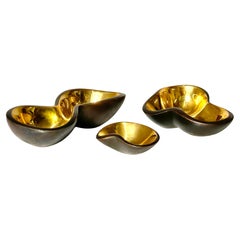
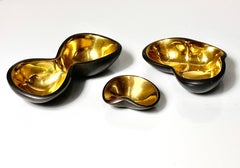
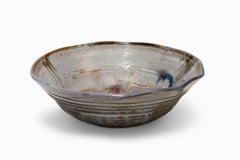
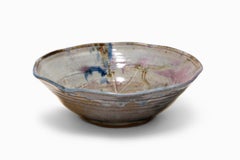
"Untitled" is a stoneware piece with the decorative layer of the rich toned glazes and markings that John was so well-known for. Each piece that John produced was unique. The lip on this piece is slightly scalloped and the shape is removed from the boring circular to mimic a gentle geometric design. He was seduced by the effects of the reduction kiln, which decreased the levels of oxygen during firing, inducing the flame to pull oxygen out of the clay and glazes changing the colors of the glazes depending on their iron and copper content. In this way he achieved the rich gradients of ochre and umber and variations in stippling and opacity. This piece is signed and stamped on the bottom.
John was an American Abstract Expressionist ceramicist born in Detroit, MI. Though open to artistic experimentation, Glick was most influenced by the styles and aesthetics of Asian pottery—an inspiration that shows in his use of decorative patterns and glaze choices. He has said that he is attracted to simplicity, as well as complexity: my work continually reflects my re-examination that these two poles can coexist… or not, in a given series. Glick also took influences from master potters of Japan, notably Shoji Hamada and Kanjrio Kawai, blending their gestural embellishments of simple forms with attitudes of Abstract Expressionism. He was particularly drown to the work of Helen Frankenthaler whose soak-stain style resonated with Glick’s multi-layered glaze surfaces, which juxtaposed veils of atmospheric color with gestural marks and pattern. He spent countless hours developing and making his own tools in order to achieve previously unseen results in his work with clay and glaze.
Glick’s “Plum Tree Pottery...
Category
1970s American Modern Michigan
MaterialsStoneware, Glaze