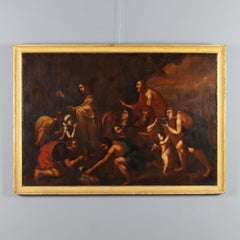
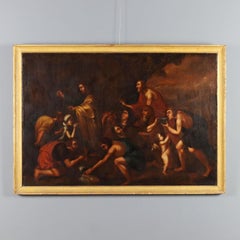
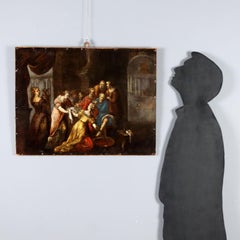
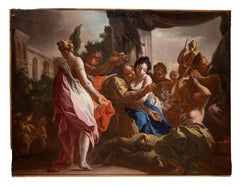
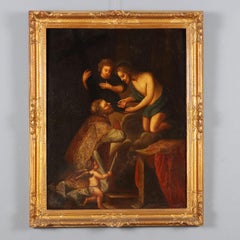
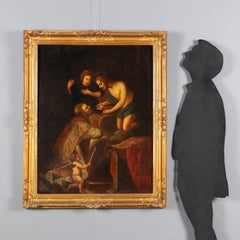
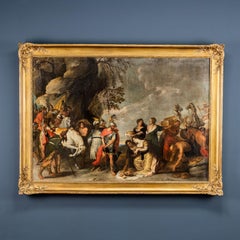
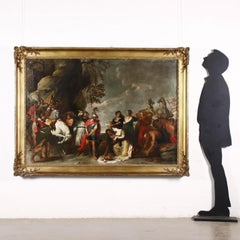
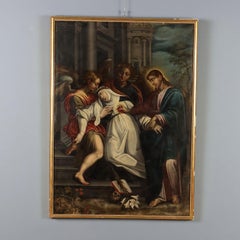
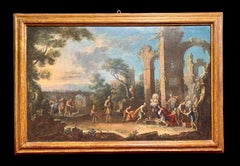
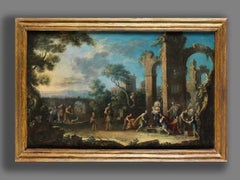
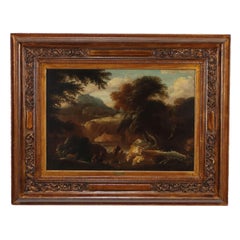
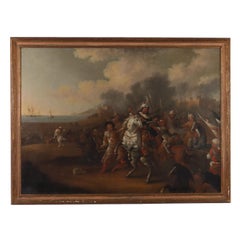
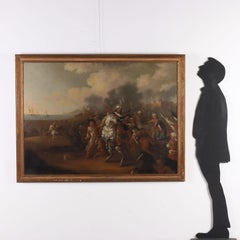
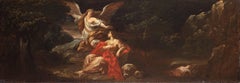
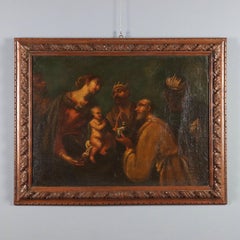
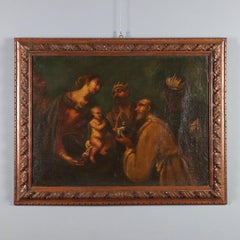
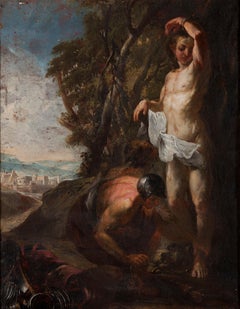
The painting, done in oil on canvas, depicts the meeting between King David and Abigail, as narrated in the biblical text from the First Book of Samuel (I Samuel 25:1-34).
David, left without food in the wilderness with his army, seeks relief from the wealthy Nabal, who contemptuously denies him any help, ungrateful of the benevolence he previously received from the king. Upon hearing the rejection, the ruler intends to take revenge by killing his entire lineage. Abigail, Nabal's beautiful and wise wife, decides to right the wrong and bring David plenty of food and gifts. In the king's presence the woman humbles herself, winning his forgiveness and benevolence. Soon afterwards widowed, she will in fact become his bride.
The broad scene depicts the climax of the Old Testament episode, the moment when the woman prostrates herself before David and his servants prepare to deliver the gifts.
The biblical event is here a pretext, as is customary in modern-age painting, for staging the colorful description of a sumptuous procession, which can be divided into two parts, almost two wings of a crowd divided specularly: on the left David with his dignitaries and the army; on the other, Abigail's retinue, handmaids, servants leading dromedaries and donkeys laden with food.
The crowded group of figures is set in a natural proscenium: above a low horizon, barely hinted at by distant blue mountains, rises on the left side a craggy rocky cliff, the shelter of the army led by the ruler.
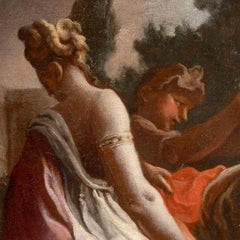
The 'somatic intonation of the characters, as well as the choice of metallic chromatics and the play of light on the shiny fabrics refer to a clear Flemish matrix, particularly the influence of the frothy and sumptuous painting of Rubens and Van Dyck.
As well set forth in the expert report prepared by Professor Giuseppe Sava, the work is to be attributed to Vincent Malò...
Category
17th Century Other Art Style Milan - Paintings