Missouri - Art

to
1,056
1,475
797
534
292
344
Overall Width
to
Overall Height
to
53
183
1,047
2,177
7
4
16
12
19
44
126
229
88
115
49
1,403
522
441
206
87
67
58
23
12
8
6
5
1
1
1,521
1,033
476
1,077
538
375
360
332
240
190
174
174
174
160
159
151
145
144
95
93
93
76
62
1,015
892
463
453
447
126
81
75
49
41
977
962
231,261
153,112
Item Ships From: Missouri
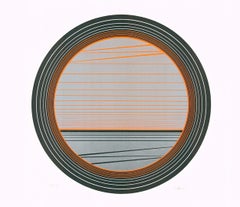
Untitled (Green)
Untitled (Green)

Untitled (Green)

By Geneviève Claisse

Located in Kansas City, MO

Geneviève Claisse Title: Untitled (Green) Year: 2016 Medium: Mixed Media on Plexiglass Signed and numbered by hand Edition: 30 Size: 15.6 × 15.6 on 19.5 × 19.5 inches COA provided G...

Category

2010s Abstract Geometric Missouri - Art

Materials

Plexiglass, Mixed Media

Danse derriére l'horizon

Danse derriére l'horizon

Located in Columbia, MO

Alexandra LeVasseur was born in Quebec in 1982. She holds a BA in Fine Arts from University of Costa Rica (2006), a post-graduate in Illustration/Communication from EINA in Barcelona...

Category

21st Century and Contemporary Contemporary Missouri - Art

Materials

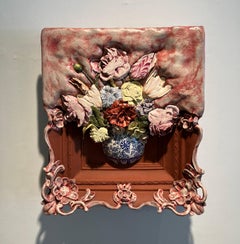
Stoneware, Mixed Media, Oil, Wood Panel

Cottonwood
Cottonwood

Cottonwood

Located in Kansas City, MO

Jeannette Pasin Sloan Cottonwood Color Lithograph Year: 2017 Size: 22.5 x 22 in Edition: 50 Signed, dated, numbered and inscribed by hand Printer chop lower right Publisher: Landfall...

Category

2010s Contemporary Missouri - Art

Materials

Lithograph

Abstract Geometric Composition

Abstract Geometric Composition

By Roland Martin

Located in Kansas City, MO

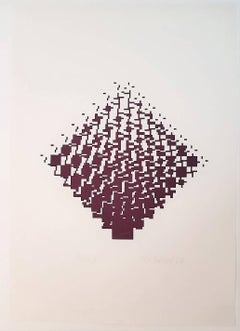
Roland Martin Abstract Geometric Composition Medium: Color Silkscreen Year: 1972 Signed, numbered and dated by hand Edition: 15 Condition: Minor Defects Size: 23.2 × 16.4 inches COA provided Roland Martin (born July 29, 1927 in Tuttlingen ) is a German sculptor . As a 16-year-old Martin was used in 1943 as a Luftwaffenhelfer, towards the end of the war he was taken prisoner. From 1946 to 1951 he studied at the Bernstein School in Glatt with Hans Ludwig Pfeiffer and Paul Kälberer In 1950 he was for a short time at the State Academy of Fine Arts Karlsruhe, Field Office Freiburg in Freiburg im Breisgau with Wilhelm Gerstel, from 1951 to 1952 he was a student of Fritz Nuss. Since 1952 Martin works as a freelance sculptor in Tuttlingen. Among his students is Jörg Bach...

Category

1970s Abstract Geometric Missouri - Art

Materials

Screen

Untitled (from ROBOTNICS Series)

Untitled (from ROBOTNICS Series)

By Christian Rothmann

Located in Kansas City, MO

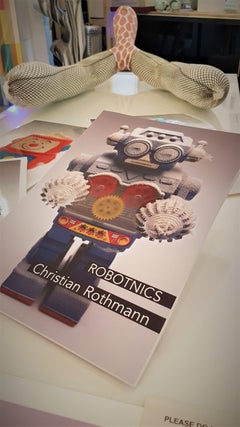
Christian Rothmann ROBOTNICS Series C-Print 2019 Edition S (Edition of 10) 12 x 8.3 inches (30.5 x 21 cm) Signed, dated and numbered verso Other Edition Sizes available: - Edition M (Edition of 6) 35.4 x 23.6 inches (90 x 60 cm) - Edition L (Edition of 6) 47.2 x 31.5 inches (120 x 80 cm) - Edition XL (Edition of 3) 88.8 x 58.8 inches (225 x 150 cm) PUR - Price Upon Request -------------- Since 1979 Christian Rothmann had more than 40 solo and 80 group exhibitions worldwide. Christian Rothmann had guest lectures, residencies, art fairs and biennials in Europe, Japan, USA, Australia and Korea. Christian Rothmann (born 1954 in Kędzierzyn, Poland ) is a painter, photographer, and graphic artist.⁠ ⁠ In 1976 he first studied at the “Hochschule für Gestaltung” in Offenbach, Germany and moved to Berlin in 1977, where he graduated in 1983 at the “Hochschule der Künste”. From 1983 to 1995 he taught at the university as a lecturer and as an artist with a focus on screenprinting and American art history. To date, a versatile body of work has been created, which includes not only paintings but also long-standing photo projects, videos, and public art.⁠ ⁠ Guest lectures, teaching assignments, scholarships and exhibitions regularly lead Rothmann to travel home and abroad.⁠ ------------------------ Rothmann's Robots These creatures date back to another era, and they connect the past and the future. They were found by Christian Rothmann, a Berlin artist, collector and traveler through time and the world: In shops in Germany and Japan, Israel and America, his keen eye picks out objects cast aside by previous generations, but which lend themselves to his own work. In a similar way, he came across a stash of historic toy robots of varied provenance collected by a Berlin gallery owner many years ago. Most of them were screwed and riveted together in the 1960s and 70s by Metal House, a Japanese company that still exists today. In systematically photographing these humanoids made of tin - and later plastic - Rothmann is paraphrasing the idea of appropriation art. Unknown names designed and made the toys, which some five decades on, Rothmann depicts and emblematizes in his extensive photo sequence. In their photographs of Selim Varol's vast toy collection, his German colleagues Daniel and Geo Fuchs captured both the stereotypical and individual in plastic figures that imitate superheroes which were and still are generally manufactured somewhere in Asia. Christian Rothmann looks his robots deep in their artificially stylized, painted or corrugated eyes - or more aptly, their eye slits - and although each has a certain degree of individuality, the little figures remain unknown to us; they project nothing and are not alter egos. Rothmann trains his lens on their faces and expressions, and thus, his portraits are born. Up extremely close, dust, dents, and rust become visible. In other words, what we see is time-traces of time that has passed since the figures were made, or during their period in a Berlin attic, and - considering that he robots date back to Rothmann's childhood - time lived by the photographer and recipients of his pictures. But unlike dolls, these mechanical robots bear no reference to the ideal of beauty at the time of their manufacture, and their features are in no way modeled on a concrete child's face. In this art project the robots appear as figures without a context, photographed face-on, cropped in front of a neutral background and reduced to their qualities of form. But beyond the reproduction and documentation a game with surfaces is going on; our view lingers on the outer skin of the object, or on the layer over it. The inside - which can be found beneath - is to an extent metaphysical, occurring inside the observer's mind. Only rarely is there anything to see behind the robot's helmet. When an occasional human face does peer out, it turns the figure into a robot-like protective casing for an astronaut of the future. If we really stop and think about modern toys, let's say those produced from the mid 20th century, when Disney and Marvel films were already stimulating a massive appetite for merchandising, the question must be: do such fantasy and hybrid creatures belong, does something like artificial intelligence already belong to the broader community of humans and animals? It is already a decade or two since the wave of Tamagotchis washed in from Japan, moved children to feed and entertain their newly born electronic chicks in the way they would a real pet, or to run the risk of seeing them die. It was a new form of artificial life, but the relationship between people and machines becomes problematic when the machines or humanoid robots have excellent fine motor skills and artificial intelligence and sensitivity on a par with, or even greater than that of humans. Luckily we have not reached that point yet, even if Hollywood adaptations would have us believe we are not far away. Rothmann's robots are initially sweet toys, and each toy is known to have a different effect on children and adults. They are conceived by (adult) designers as a means of translating or retelling history or reality through miniature animals, knights, and soldiers. In the case of monsters, mythical creatures, and robots, it is more about creating visions of the future and parallel worlds. Certainly, since the success of fantasy books and films such as Lord of the Rings or The Hobbit, we see the potential for vast enthusiasm for such parallel worlds. Successful computer and online games such as World of Warcraft...

Category

2010s Modern Missouri - Art

Materials

C Print

Remind Me to Look Up

Remind Me to Look Up

By Katherine Bello

Located in Kansas City, MO

Katherine Bello Title: Remind Me to Look Up Acrylic, Oil, Oil stick on canvas Year: 2021 Dimensions: 60"x48"x1.5" Signed by hand Canvas on stretcher fr...

Category

2010s Contemporary Missouri - Art

Materials

Canvas, Oil, Oil Pastel, Acrylic

Lemon Squeeze

Lemon Squeeze

Located in Columbia, MO

Ashlee Selburg (American, b. 1989) Ashlee Selburg is a multidisciplinary artist whose ink drawings and paintings are characterized by whimsical narratives, imaginative scenarios, and...

Category

21st Century and Contemporary American Realist Missouri - Art

Materials

Ink, Watercolor

Anthozoa Blanca
Anthozoa Blanca

Anthozoa Blanca

By Ami Ayars

Located in Kansas City, MO

Title : Anthozoa Blanca Materials : Black Stoneware, Oil-Based Clay and Sand Date : 11-15-17 Dimensions : 5x5x5" Description : This little rendition of a coral reef is delightful and...

Category

2010s Contemporary Missouri - Art

Materials

Clay, Glass

Decorative Porcelain Plate II (MADE TO ORDER)

Decorative Porcelain Plate II (MADE TO ORDER)

By Melanie Sherman

Located in Kansas City, MO

Hand Built & Painted Plate Materials: Porcelain, Glaze, China Paint, Gold Luster, Flock, Decals Fired: Electric Kiln, Cone 6 Decorative purpose only - Not for use, not dishwasher saf...

Category

2010s Contemporary Missouri - Art

Materials

Luster, Porcelain, Glaze

Words (folio of six archival pigment prints)

Words (folio of six archival pigment prints)

By Peter Wegner

Located in Kansas City, MO

Peter Wegner works in multiple media, ranging from paintings and photography to large-scale installations and wall works. His pieces are included in major public and private collecti...

Category

Early 2000s Contemporary Missouri - Art

Materials

Photographic Paper, Archival Pigment

Two Figures

Two Figures

By Amy Young

Located in Kansas City, MO

Amy Young Two Figures Year: 2020 Material: Stoneware, underglaze Size: 15 x 8 x 6 (each) Signed COA provided Ref.: 924802-797 ----------------------------...

Category

2010s Contemporary Missouri - Art

Materials

Stoneware, Glaze, Underglaze

Untitled (from ROBOTNICS Series)

Untitled (from ROBOTNICS Series)

By Christian Rothmann

Located in Kansas City, MO

Christian Rothmann ROBOTNICS Series C-Print 2019 Edition S (Edition of 10) 12 x 8.3 inches (30.5 x 21 cm) Signed, dated and numbered verso Other Edition Sizes available: - Edition ...

Category

2010s Modern Missouri - Art

Materials

C Print

Black Iron + Blue 29

Black Iron + Blue 29

By Erica Iman

Located in Columbia, MO

Erica Iman received her BFA in Ceramics and BSE in Art from the University of Missouri Columbia in 2005 and obtained her MFA in Ceramics from Southern Illinois University Edwardsvill...

Category

21st Century and Contemporary Contemporary Missouri - Art

Materials

Iron

Untitled Geometric Abstraction (Konkrete Kunst, Constructivsm)

Untitled Geometric Abstraction (Konkrete Kunst, Constructivsm)

By Friedrich Geiler

Located in Kansas City, MO

WE CAN ARRANGE FOR COST-EFFECTIVE SHIPPING (NOT $349 AS QUOTED BY THE SYSTEM!) Friedrich Geiler Untitled Geometric Abstraction (Konkrete Kunst, Constructivsm, Geometric Abstraction)...

Category

Early 2000s Contemporary Missouri - Art

Materials

Satin Paper, Screen

The Wall Design

The Wall Design

Located in Kansas City, MO

Christine Gerhard The Wall Design C-Print on Aluminum Substrate Year: 1999 Signed, numbered, dated and titled by hand Edition: 5 Size: 32.0 × 25.7 inches COA provided

Category

1990s Contemporary Missouri - Art

Materials

C Print

Abanderado (Iconic, Spanish, Baroque, Large)

Abanderado (Iconic, Spanish, Baroque, Large)

By Antonio de Felipe

Located in Kansas City, MO

Antonio de Felipe Abanderado Offset Lithograph Year: 1993 Size: 39.0 x 39.0 inches Signed in the stone COA provided --------------------------------------- Antonio de Felipe was born in Valencia in 1965. Ever since a very young age he has felt an artistic drive that led him to earn a fine arts degree at the University of Valencia. In 1996 he moved to Madrid where he has his studio. The work of Antonio de Felipe is a constant source of fascination and surprises. It is a great pleasure to witness how the artist’s ingenious world of ideas and his sense of humour are constantly evolving. His subject worlds form a surprising genre blend of striking contrasts, a linking of series characters, classical art and commercialism side by side with contemporary icon worship. Antonio de Felipe has developed his extensive work in different series like, Las Vacas Logotipos and Popsport among others. In the serie Cinemaspop Antonio de Felipe has painted portraits of brilliant actors whose icon status is secure. Two of them are Audrey Hepburn and Greta Garbo, seen against a wide range of backgrounds where the artist pays tribute to the great masters – either Picasso’s brutal Guernica or space figures reminiscent of Miró. As a third, Marilyn Monroe, parts her ruby lips...

Category

17th Century Renaissance Missouri - Art

Materials

Lithograph

24x24-08-08-2019

24x24-08-08-2019

Located in Kansas City, MO

John Marak 24x24-08-08-2019 Plaster, Acrylic Year: 2019 Size: 24x24 in Signed by hand COA provided ------------------------------------- John Marak is a second-generation artist ba...

Category

2010s Minimalist Missouri - Art

Materials

Plaster, Acrylic

"Reiner Schwarz" (II)

"Reiner Schwarz" (II)

By Reiner Schwarz

Located in Kansas City, MO

Reiner Schwarz "Reiner Schwarz" (II) From Portfolio "Portrait #11 - Reiner Schwarz" with Karin Szekessy Year: 1972 Medium: Phototype (Lichtdruck) Edition: 100 Size: 26.4 x 20.1 in. P...

Category

1970s Modern Missouri - Art

Materials

Lithograph

Nightshade
Nightshade

Nightshade

Located in Columbia, MO

Joel Sager (1980) was born in Saint Joseph, Missouri, the son of a minister and a stay-at-home mother who fostered from an early age his love of drawing and painting. It was under th...

Category

21st Century and Contemporary Contemporary Missouri - Art

Materials

Oil, Wood Panel

12x12-06-24-2021

12x12-06-24-2021

Located in Kansas City, MO

John Marak 12x12-06-24-2021 Plaster, Acrylic Year: 2021 Size: 12x12 in Signed by hand COA provided ------------------------------------- John Marak is a second-generation artist b...

Category

2010s Contemporary Missouri - Art

Materials

Plaster, Acrylic

Le cavalier inconnu
Le cavalier inconnu

Le cavalier inconnu

By Luciano de Vita

Located in Kansas City, MO

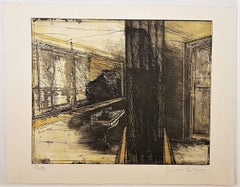
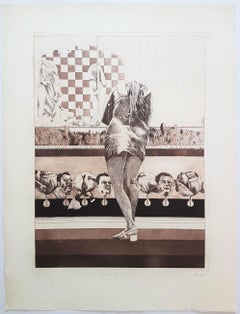
LUCIANO DE VITA "Le cavalier inconnu" Year: 1968 Medium: Etching Edition: 100 Size: 23.6 x 17.6 in. Publisher: Il Torcoliere, Rome - Italy Signed and num...

Category

1960s Modern Missouri - Art

Materials

Etching

Untitled IV

Untitled IV

Located in Kansas City, MO

Stephan Küthe Untitled IV Giclée on Hahnemühle Velvet Year: 2021 Signed, numbered and dated by hand Edition: 15 Size: 13.0 × 19.5 on 18.3 × 23.8 inches COA provided (gallery issued) ...

Category

2010s Contemporary Missouri - Art

Materials

Giclée

Hand mit Blumen (MADE TO ORDER, Porcelain, Gold Luster, Hand-painted, Unique)

Hand mit Blumen (MADE TO ORDER, Porcelain, Gold Luster, Hand-painted, Unique)

By Melanie Sherman

Located in Kansas City, MO

THIS PIECE WILL BE MADE TO ORDER BY THE ARTIST* Melanie Sherman "Hand mit Blumen" (Hand with Flowers) Year: 202* Porcelain, China Paint, 24K German Gold Luster, Hand-made Decals Fired multiple times, Cone 6, Cone 018 Size: 1.25 x 16 x 7.75 inches Signed Exhibition History: Red Lodge...

Category

2010s Contemporary Missouri - Art

Materials

Luster, Porcelain, Glaze, Paint

Memento Mori - Cake Stand & Rotten Egg

Memento Mori - Cake Stand & Rotten Egg

By Melanie Sherman

Located in Kansas City, MO

Edition: 25 Signed, dated and numbered in ink on label affixed verso Other sizes available upon request COA provided In Sherman's photographs she is experimenting with groupings of ...

Category

2010s Contemporary Missouri - Art

Materials

Archival Ink, Archival Paper, Photographic Paper, Digital

Memento Mori - Cup with Fish, Knife, Horsehair

Memento Mori - Cup with Fish, Knife, Horsehair

By Melanie Sherman

Located in Kansas City, MO

Edition: 25 Signed, dated and numbered in ink on label affixed verso Other sizes available upon request COA provided In Sherman's photographs she is experimenting with groupings of ...

Category

2010s Contemporary Missouri - Art

Materials

Archival Ink, Archival Paper, Photographic Paper, Digital

Platter with Kidney, Blackberries, Kimchi, Eel (Memento Mori)

Platter with Kidney, Blackberries, Kimchi, Eel (Memento Mori)

By Melanie Sherman

Located in Kansas City, MO

Limited Edition: 7 of 25 Signed, dated and numbered in ink on label affixed verso COA provided In Sherman's photographs she is experimenting with groupings of different objects wit...

Category

2010s Baroque Missouri - Art

Materials

Archival Ink, Archival Paper, Photographic Paper, Digital

Memento Mori – Cups in Baby Lamb Carcass

Memento Mori – Cups in Baby Lamb Carcass

By Melanie Sherman

Located in Kansas City, MO

Edition: 25 Signed, dated and numbered in ink on label affixed verso Other sizes available upon request COA provided In Sherman's photographs she is experimenting with groupings of ...

Category

2010s Contemporary Missouri - Art

Materials

Archival Ink, Archival Paper, Photographic Paper, Digital

Le Collier de Lussie

Le Collier de Lussie

By Marie Therese Vacossin

Located in Kansas City, MO

Marie Thérèse Vacossin Le Collier de Lussie Color etching on hand-made paper Year: 1971 Signed, numbered, dated and titled by hand Edition: 8 Size: 8.3 × 11.6 on 22.0 × 14.8 inches ...

Category

1970s Modern Missouri - Art

Materials

Handmade Paper, Etching

Head IV
Head IV

Head IV

By Tom Binger

Located in Kansas City, MO

Tom Binger "Head IV" Medium: Mixed Media Year: 2018, Signed Size: 14.5 x 10.25 x 2 inches Tom Binger finds it interesting that during a time in which the internet is quickly becomin...

Category

2010s American Modern Missouri - Art

Materials

Metal

Girl in the Garden with Birds

Girl in the Garden with Birds

Located in Columbia, MO

Jo Stealey is a full-time studio artist, Professor Emerita, former Chair of the Department of Art, and founding Director for the School of Visual Studies at the University of Missour...

Category

21st Century and Contemporary Contemporary Missouri - Art

Materials

Thread, Paint, Handmade Paper

Night Garden
Night Garden

Night Garden

Located in Columbia, MO

Jo Stealey is a full-time studio artist, Professor Emerita, former Chair of the Department of Art, and founding Director for the School of Visual Studies at the University of Missour...

Category

21st Century and Contemporary Contemporary Missouri - Art

Materials

Thread, Paint, Handmade Paper

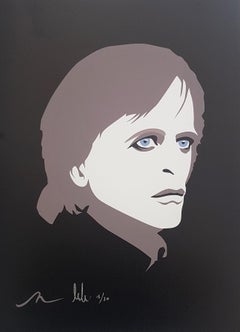
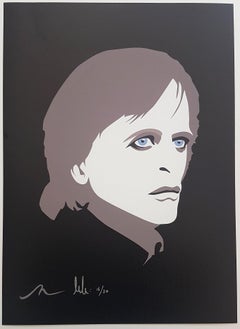
Mr. Kinski (Klaus Kinski)

Mr. Kinski (Klaus Kinski)

Located in Kansas City, MO

Michelle Mildenhall Mr. Kinski (Klaus Kinski) UV print with a gloss varnish on Hahnemühle Velvet Year: 2020 Signed and numbered by hand Edition: 20 Size: ...

Category

2010s Contemporary Missouri - Art

Materials

Varnish, Archival Paper, Digital Pigment

Love in the Elysian Fields (Geometric Abstraction, Minimalism, Josef Albers)

Love in the Elysian Fields (Geometric Abstraction, Minimalism, Josef Albers)

By Susan Kiefer

Located in Kansas City, MO

Artist : Susan Kiefer Title : Love in the Elysian Fields Materials : oil on canvas Date : March 2020 Dimensions : 40" x 30" x 1.5" Though born and raised in Kansas City, a...

Category

2010s Abstract Geometric Missouri - Art

Materials

Canvas, Paint, Oil

Police car
Police car

Tim TrantenrothPolice car, 2019

$99Sale Price|65% Off

Police car

Located in Kansas City, MO

Tim Trantenroth (* 1969) Title: Police car Giclee on linen Year: 2019 Signed and numbered by hand Edition: 25 Size: 16.0 × 21.5 on 18.1 × 23.8 inches C...

Category

2010s Contemporary Missouri - Art

Materials

Giclée

"Untitled, Ballerina", Contemporary, Graphite Drawing, Canvas, Figurative

"Untitled, Ballerina", Contemporary, Graphite Drawing, Canvas, Figurative

By Joseph Piccillo

Located in St. Louis, MO

Joseph Piccillo’s meticulous charcoal and graphite drawings and paintings reveal an exquisite draftsmanship tempered by emotional sensitivity. Piccillo presents an action-based assem...

Category

1990s Contemporary Missouri - Art

Materials

Canvas, Charcoal, Graphite

Die Schatten der Sonnenuhr

Die Schatten der Sonnenuhr

By Reiner Schwarz

Located in Kansas City, MO

Reiner Schwarz "Die Schatten der Sonnenuhr" Year: 1972 Medium: Color Lithograph Edition: 80 Size: 25.98 x 19.68 in. Signed, numbered and titled After fleeing and expelling from Sile...

Category

1970s Surrealist Missouri - Art

Materials

Lithograph

Japanese Lanterns

Japanese Lanterns

By Pablo Saccinto

Located in Kansas City, MO

Title: Japanese Lanterns Medium: Custom Archival Pigment Print on Archival Paper Date: 2019 Dimensions: 8 x 10 in. Signed, dated and inscribed on lab...

Category

2010s Contemporary Missouri - Art

Materials

Archival Paper, Archival Pigment

Factory Workshop
Factory Workshop

Factory Workshop

By Albrecht Fuchs

Located in Kansas City, MO

Albrecht Fuchs Title: Factory Workshop Medium: Color Photograph mounted on Di-bond Year: 2006/2007 Signed and dated by hand Size: 14.8 × 18.5 on 17.2 × 20.9 inches Albrecht Fuchs wa...

Category

Early 2000s Contemporary Missouri - Art

Materials

Photographic Paper, Color

Loop-de-loop
Loop-de-loop

Loop-de-loop

By Marilyn Minter

Located in Saint Louis, MO

Marilyn Minter Loop-de-Loop, 2013 Chromogenic print (c-print) on Kodak matte paper 14 x 11 inches (35.6 x 27.9 cm)

Category

2010s Contemporary Missouri - Art

Materials

Archival Paper, C Print

Untitled (from ROBOTNICS Series)

Untitled (from ROBOTNICS Series)

By Christian Rothmann

Located in Kansas City, MO

Christian Rothmann ROBOTNICS Series C-Print 2019 Edition S (Edition of 10) 12 x 8.3 inches (30.5 x 21 cm) Signed, dated and numbered verso Other Edition Sizes available: - Edition ...

Category

2010s Modern Missouri - Art

Materials

C Print

Untitled (from ROBOTNICS Series)

Untitled (from ROBOTNICS Series)

By Christian Rothmann

Located in Kansas City, MO

Christian Rothmann ROBOTNICS Series C-Print 2019 Edition S (Edition of 10) 12 x 8.3 inches (30.5 x 21 cm) Signed, dated and numbered verso Other Edition Sizes available: - Edition M (Edition of 6) 35.4 x 23.6 inches (90 x 60 cm) - Edition L (Edition of 6) 47.2 x 31.5 inches (120 x 80 cm) - Edition XL (Edition of 3) 88.8 x 58.8 inches (225 x 150 cm) PUR - Price Upon Request -------------- Since 1979 Christian Rothmann had more than 40 solo and 80 group exhibitions worldwide. Christian Rothmann had guest lectures, residencies, art fairs and biennials in Europe, Japan, USA, Australia and Korea. Christian Rothmann (born 1954 in Kędzierzyn, Poland ) is a painter, photographer, and graphic artist.⁠ ⁠ In 1976 he first studied at the “Hochschule für Gestaltung” in Offenbach, Germany and moved to Berlin in 1977, where he graduated in 1983 at the “Hochschule der Künste”. From 1983 to 1995 he taught at the university as a lecturer and as an artist with a focus on screenprinting and American art history. To date, a versatile body of work has been created, which includes not only paintings but also long-standing photo projects, videos, and public art.⁠ ⁠ Guest lectures, teaching assignments, scholarships and exhibitions regularly lead Rothmann to travel home and abroad.⁠ ------------------------ Rothmann's Robots These creatures date back to another era, and they connect the past and the future. They were found by Christian Rothmann, a Berlin artist, collector and traveler through time and the world: In shops in Germany and Japan, Israel and America, his keen eye picks out objects cast aside by previous generations, but which lend themselves to his own work. In a similar way, he came across a stash of historic toy robots of varied provenance collected by a Berlin gallery owner many years ago. Most of them were screwed and riveted together in the 1960s and 70s by Metal House, a Japanese company that still exists today. In systematically photographing these humanoids made of tin - and later plastic - Rothmann is paraphrasing the idea of appropriation art. Unknown names designed and made the toys, which some five decades on, Rothmann depicts and emblematizes in his extensive photo sequence. In their photographs of Selim Varol's vast toy collection, his German colleagues Daniel and Geo Fuchs captured both the stereotypical and individual in plastic figures that imitate superheroes which were and still are generally manufactured somewhere in Asia. Christian Rothmann looks his robots deep in their artificially stylized, painted or corrugated eyes - or more aptly, their eye slits - and although each has a certain degree of individuality, the little figures remain unknown to us; they project nothing and are not alter egos. Rothmann trains his lens on their faces and expressions, and thus, his portraits are born. Up extremely close, dust, dents, and rust become visible. In other words, what we see is time-traces of time that has passed since the figures were made, or during their period in a Berlin attic, and - considering that he robots date back to Rothmann's childhood - time lived by the photographer and recipients of his pictures. But unlike dolls, these mechanical robots bear no reference to the ideal of beauty at the time of their manufacture, and their features are in no way modeled on a concrete child's face. In this art project the robots appear as figures without a context, photographed face-on, cropped in front of a neutral background and reduced to their qualities of form. But beyond the reproduction and documentation a game with surfaces is going on; our view lingers on the outer skin of the object, or on the layer over it. The inside - which can be found beneath - is to an extent metaphysical, occurring inside the observer's mind. Only rarely is there anything to see behind the robot's helmet. When an occasional human face does peer out, it turns the figure into a robot-like protective casing for an astronaut of the future. If we really stop and think about modern toys, let's say those produced from the mid 20th century, when Disney and Marvel films were already stimulating a massive appetite for merchandising, the question must be: do such fantasy and hybrid creatures belong, does something like artificial intelligence already belong to the broader community of humans and animals? It is already a decade or two since the wave of Tamagotchis washed in from Japan, moved children to feed and entertain their newly born electronic chicks in the way they would a real pet, or to run the risk of seeing them die. It was a new form of artificial life, but the relationship between people and machines becomes problematic when the machines or humanoid robots have excellent fine motor skills and artificial intelligence and sensitivity on a par with, or even greater than that of humans. Luckily we have not reached that point yet, even if Hollywood adaptations would have us believe we are not far away. Rothmann's robots are initially sweet toys, and each toy is known to have a different effect on children and adults. They are conceived by (adult) designers as a means of translating or retelling history or reality through miniature animals, knights, and soldiers. In the case of monsters, mythical creatures, and robots, it is more about creating visions of the future and parallel worlds. Certainly, since the success of fantasy books and films such as Lord of the Rings or The Hobbit, we see the potential for vast enthusiasm for such parallel worlds. Successful computer and online games such as World of Warcraft, or the creation of avatars are also interesting worldwide phenomena of virtual realities that are not only relevant for children and teens. So when a middle-aged Berlin photographic artist (like Christian Rothmann) chooses to study 120 toy robots with great difference in form, it represents a journey back to his own childhood - even if at the time, he played with a steam engine rather than a robot. Once batteries had been inserted, some of the largely male or gender-neutral robots, could flash, shoot, turn around and even do more complicated things. Some can even still do it today - albeit clumsily. This, of course, can only be seen on film, but the artist intends to document that as well; to feature the robots in filmic works of art. The positioning of the figures in the studio is the same as the tableau of pictures in the exhibition room. In this way, one could say Rothmann deploys one robot after the other. This systematic approach enables a comparative view; the extreme enlargement of what are actually small and manageable figures is like the macro vision of insects whose fascinating, sometimes monster-like appearance only becomes visible when they are blown up a hundredfold. The same thing goes for the robots; in miniature form, they seem harmless and cute, but if they were larger than humans and made noises to match, they would seem more threatening. Some of the tin figures...

Category

2010s Pop Art Missouri - Art

Materials

C Print

Untitled (from ROBOTNICS Series)

Untitled (from ROBOTNICS Series)

By Christian Rothmann

Located in Kansas City, MO

Christian Rothmann ROBOTNICS Series C-Print 2019 Edition S (Edition of 10) 12 x 8.3 inches (30.5 x 21 cm) Signed, dated and numbered verso Other Edition Sizes available: - Edition M (Edition of 6) 35.4 x 23.6 inches (90 x 60 cm) - Edition L (Edition of 6) 47.2 x 31.5 inches (120 x 80 cm) - Edition XL (Edition of 3) 88.8 x 58.8 inches (225 x 150 cm) PUR - Price Upon Request -------------- Since 1979 Christian Rothmann had more than 40 solo and 80 group exhibitions worldwide. Christian Rothmann had guest lectures, residencies, art fairs and biennials in Europe, Japan, USA, Australia and Korea. Christian Rothmann (born 1954 in Kędzierzyn, Poland ) is a painter, photographer, and graphic artist.⁠ ⁠ In 1976 he first studied at the “Hochschule für Gestaltung” in Offenbach, Germany and moved to Berlin in 1977, where he graduated in 1983 at the “Hochschule der Künste”. From 1983 to 1995 he taught at the university as a lecturer and as an artist with a focus on screenprinting and American art history. To date, a versatile body of work has been created, which includes not only paintings but also long-standing photo projects, videos, and public art.⁠ ⁠ Guest lectures, teaching assignments, scholarships and exhibitions regularly lead Rothmann to travel home and abroad.⁠ ------------------------ Rothmann's Robots These creatures date back to another era, and they connect the past and the future. They were found by Christian Rothmann, a Berlin artist, collector and traveler through time and the world: In shops in Germany and Japan, Israel and America, his keen eye picks out objects cast aside by previous generations, but which lend themselves to his own work. In a similar way, he came across a stash of historic toy robots of varied provenance collected by a Berlin gallery owner many years ago. Most of them were screwed and riveted together in the 1960s and 70s by Metal House, a Japanese company that still exists today. In systematically photographing these humanoids made of tin - and later plastic - Rothmann is paraphrasing the idea of appropriation art. Unknown names designed and made the toys, which some five decades on, Rothmann depicts and emblematizes in his extensive photo sequence. In their photographs of Selim Varol's vast toy collection, his German colleagues Daniel and Geo Fuchs captured both the stereotypical and individual in plastic figures that imitate superheroes which were and still are generally manufactured somewhere in Asia. Christian Rothmann looks his robots deep in their artificially stylized, painted or corrugated eyes - or more aptly, their eye slits - and although each has a certain degree of individuality, the little figures remain unknown to us; they project nothing and are not alter egos. Rothmann trains his lens on their faces and expressions, and thus, his portraits are born. Up extremely close, dust, dents, and rust become visible. In other words, what we see is time-traces of time that has passed since the figures were made, or during their period in a Berlin attic, and - considering that he robots date back to Rothmann's childhood - time lived by the photographer and recipients of his pictures. But unlike dolls, these mechanical robots bear no reference to the ideal of beauty at the time of their manufacture, and their features are in no way modeled on a concrete child's face. In this art project the robots appear as figures without a context, photographed face-on, cropped in front of a neutral background and reduced to their qualities of form. But beyond the reproduction and documentation a game with surfaces is going on; our view lingers on the outer skin of the object, or on the layer over it. The inside - which can be found beneath - is to an extent metaphysical, occurring inside the observer's mind. Only rarely is there anything to see behind the robot's helmet. When an occasional human face does peer out, it turns the figure into a robot-like protective casing for an astronaut of the future. If we really stop and think about modern toys, let's say those produced from the mid 20th century, when Disney and Marvel films were already stimulating a massive appetite for merchandising, the question must be: do such fantasy and hybrid creatures belong, does something like artificial intelligence already belong to the broader community of humans and animals? It is already a decade or two since the wave of Tamagotchis washed in from Japan, moved children to feed and entertain their newly born electronic chicks in the way they would a real pet, or to run the risk of seeing them die. It was a new form of artificial life, but the relationship between people and machines becomes problematic when the machines or humanoid robots have excellent fine motor skills and artificial intelligence and sensitivity on a par with, or even greater than that of humans. Luckily we have not reached that point yet, even if Hollywood adaptations would have us believe we are not far away. Rothmann's robots are initially sweet toys, and each toy is known to have a different effect on children and adults. They are conceived by (adult) designers as a means of translating or retelling history or reality through miniature animals, knights, and soldiers. In the case of monsters, mythical creatures, and robots, it is more about creating visions of the future and parallel worlds. Certainly, since the success of fantasy books and films such as Lord of the Rings or The Hobbit, we see the potential for vast enthusiasm for such parallel worlds. Successful computer and online games such as World of Warcraft...

Category

2010s Street Art Missouri - Art

Materials

C Print

Untitled (from ROBOTNICS Series)

Untitled (from ROBOTNICS Series)

By Christian Rothmann

Located in Kansas City, MO

Christian Rothmann ROBOTNICS Series C-Print 2019 Edition S (Edition of 10) 12 x 8.3 inches (30.5 x 21 cm) Signed, dated and numbered verso Other Edition Sizes available: - Edition ...

Category

2010s Outsider Art Missouri - Art

Materials

C Print

Untitled (from ROBOTNICS Series)

Untitled (from ROBOTNICS Series)

By Christian Rothmann

Located in Kansas City, MO

Christian Rothmann ROBOTNICS Series C-Print 2019 Edition S (Edition of 10) 12 x 8.3 inches (30.5 x 21 cm) Signed, dated and numbered verso Other Edition Sizes available: - Edition ...

Category

2010s Modern Missouri - Art

Materials

C Print

Indication
Indication

Indication

Located in Columbia, MO

John Selburg was born and raised in Peoria, Illinois. He holds a BFA from Bradley University (2006) and an MFA from the University of Missouri-Columbia (2009). He is Associate Profes...

Category

21st Century and Contemporary Contemporary Missouri - Art

Materials

Charcoal, Watercolor, Archival Paper

Untitled (from ROBOTNICS Series)

Untitled (from ROBOTNICS Series)

By Christian Rothmann

Located in Kansas City, MO

Christian Rothmann ROBOTNICS Series C-Print 2019 Edition S (Edition of 10) 12 x 8.3 inches (30.5 x 21 cm) Signed, dated and numbered verso Other Edition Sizes available: - Edition ...

Category

2010s Contemporary Missouri - Art

Materials

C Print

Untitled (from ROBOTNICS Series)

Untitled (from ROBOTNICS Series)

By Christian Rothmann

Located in Kansas City, MO

Christian Rothmann ROBOTNICS Series C-Print 2019 Edition S (Edition of 10) 12 x 8.3 inches (30.5 x 21 cm) Signed, dated and numbered verso Other Edition Sizes available: - Edition ...

Category

2010s Outsider Art Missouri - Art

Materials

C Print

Untitled (from ROBOTNICS Series)

Untitled (from ROBOTNICS Series)

By Christian Rothmann

Located in Kansas City, MO

Christian Rothmann ROBOTNICS Series C-Print 2019 Edition S (Edition of 10) 12 x 8.3 inches (30.5 x 21 cm) Signed, dated and numbered verso Other Edition Sizes available: - Edition ...

Category

2010s Pop Art Missouri - Art

Materials

C Print

Untitled (from ROBOTNICS Series)

Untitled (from ROBOTNICS Series)

By Christian Rothmann

Located in Kansas City, MO

Christian Rothmann ROBOTNICS Series C-Print 2019 Edition S (Edition of 10) 12 x 8.3 inches (30.5 x 21 cm) Signed, dated and numbered verso Other Edition Sizes available: - Edition M (Edition of 6) 35.4 x 23.6 inches (90 x 60 cm) - Edition L (Edition of 6) 47.2 x 31.5 inches (120 x 80 cm) - Edition XL (Edition of 3) 88.8 x 58.8 inches (225 x 150 cm) PUR - Price Upon Request -------------- Since 1979 Christian Rothmann had more than 40 solo and 80 group exhibitions worldwide. Christian Rothmann had guest lectures, residencies, art fairs and biennials in Europe, Japan, USA, Australia and Korea. Christian Rothmann (born 1954 in Kędzierzyn, Poland ) is a painter, photographer, and graphic artist.⁠ ⁠ In 1976 he first studied at the “Hochschule für Gestaltung” in Offenbach, Germany and moved to Berlin in 1977, where he graduated in 1983 at the “Hochschule der Künste”. From 1983 to 1995 he taught at the university as a lecturer and as an artist with a focus on screenprinting and American art history. To date, a versatile body of work has been created, which includes not only paintings but also long-standing photo projects, videos, and public art.⁠ ⁠ Guest lectures, teaching assignments, scholarships and exhibitions regularly lead Rothmann to travel home and abroad.⁠ ------------------------ Rothmann's Robots These creatures date back to another era, and they connect the past and the future. They were found by Christian Rothmann, a Berlin artist, collector and traveler through time and the world: In shops in Germany and Japan, Israel and America, his keen eye picks out objects cast aside by previous generations, but which lend themselves to his own work. In a similar way, he came across a stash of historic toy robots of varied provenance collected by a Berlin gallery owner many years ago. Most of them were screwed and riveted together in the 1960s and 70s by Metal House, a Japanese company that still exists today. In systematically photographing these humanoids made of tin - and later plastic - Rothmann is paraphrasing the idea of appropriation art. Unknown names designed and made the toys, which some five decades on, Rothmann depicts and emblematizes in his extensive photo sequence. In their photographs of Selim Varol's vast toy collection, his German colleagues Daniel and Geo Fuchs captured both the stereotypical and individual in plastic figures that imitate superheroes which were and still are generally manufactured somewhere in Asia. Christian Rothmann looks his robots deep in their artificially stylized, painted or corrugated eyes - or more aptly, their eye slits - and although each has a certain degree of individuality, the little figures remain unknown to us; they project nothing and are not alter egos. Rothmann trains his lens on their faces and expressions, and thus, his portraits are born. Up extremely close, dust, dents, and rust become visible. In other words, what we see is time-traces of time that has passed since the figures were made, or during their period in a Berlin attic, and - considering that he robots date back to Rothmann's childhood - time lived by the photographer and recipients of his pictures. But unlike dolls, these mechanical robots bear no reference to the ideal of beauty at the time of their manufacture, and their features are in no way modeled on a concrete child's face. In this art project the robots appear as figures without a context, photographed face-on, cropped in front of a neutral background and reduced to their qualities of form. But beyond the reproduction and documentation a game with surfaces is going on; our view lingers on the outer skin of the object, or on the layer over it. The inside - which can be found beneath - is to an extent metaphysical, occurring inside the observer's mind. Only rarely is there anything to see behind the robot's helmet. When an occasional human face does peer out, it turns the figure into a robot-like protective casing for an astronaut of the future. If we really stop and think about modern toys, let's say those produced from the mid 20th century, when Disney and Marvel films were already stimulating a massive appetite for merchandising, the question must be: do such fantasy and hybrid creatures belong, does something like artificial intelligence already belong to the broader community of humans and animals? It is already a decade or two since the wave of Tamagotchis washed in from Japan, moved children to feed and entertain their newly born electronic chicks in the way they would a real pet, or to run the risk of seeing them die. It was a new form of artificial life, but the relationship between people and machines becomes problematic when the machines or humanoid robots have excellent fine motor skills and artificial intelligence and sensitivity on a par with, or even greater than that of humans. Luckily we have not reached that point yet, even if Hollywood adaptations would have us believe we are not far away. Rothmann's robots are initially sweet toys, and each toy is known to have a different effect on children and adults. They are conceived by (adult) designers as a means of translating or retelling history or reality through miniature animals, knights, and soldiers. In the case of monsters, mythical creatures, and robots, it is more about creating visions of the future and parallel worlds. Certainly, since the success of fantasy books and films such as Lord of the Rings or The Hobbit, we see the potential for vast enthusiasm for such parallel worlds. Successful computer and online games such as World of Warcraft, or the creation of avatars are also interesting worldwide phenomena of virtual realities that are not only relevant for children and teens. So when a middle-aged Berlin photographic artist (like Christian Rothmann) chooses to study 120 toy robots with great difference in form, it represents a journey back to his own childhood - even if at the time, he played with a steam engine rather than a robot. Once batteries had been inserted, some of the largely male or gender-neutral robots, could flash, shoot, turn around and even do more complicated things. Some can even still do it today - albeit clumsily. This, of course, can only be seen on film, but the artist intends to document that as well; to feature the robots in filmic works of art. The positioning of the figures in the studio is the same as the tableau of pictures in the exhibition room. In this way, one could say Rothmann deploys one robot after the other. This systematic approach enables a comparative view; the extreme enlargement of what are actually small and manageable figures is like the macro vision of insects whose fascinating, sometimes monster-like appearance only becomes visible when they are blown up a hundredfold. The same thing goes for the robots; in miniature form, they seem harmless and cute, but if they were larger than humans and made noises to match, they would seem more threatening. Some of the tin figures...

Category

2010s Contemporary Missouri - Art
Materials

C Print

Untitled (from ROBOTNICS Series)

Untitled (from ROBOTNICS Series)

By Christian Rothmann

Located in Kansas City, MO

Christian Rothmann ROBOTNICS Series C-Print 2019 Edition S (Edition of 10) 12 x 8.3 inches (30.5 x 21 cm) Signed, dated and numbered verso Other Edition Sizes available: - Edition M (Edition of 6) 35.4 x 23.6 inches (90 x 60 cm) - Edition L (Edition of 6) 47.2 x 31.5 inches (120 x 80 cm) - Edition XL (Edition of 3) 88.8 x 58.8 inches (225 x 150 cm) PUR - Price Upon Request -------------- Since 1979 Christian Rothmann had more than 40 solo and 80 group exhibitions worldwide. Christian Rothmann had guest lectures, residencies, art fairs and biennials in Europe, Japan, USA, Australia and Korea. Christian Rothmann (born 1954 in Kędzierzyn, Poland ) is a painter, photographer, and graphic artist.⁠ ⁠ In 1976 he first studied at the “Hochschule für Gestaltung” in Offenbach, Germany and moved to Berlin in 1977, where he graduated in 1983 at the “Hochschule der Künste”. From 1983 to 1995 he taught at the university as a lecturer and as an artist with a focus on screenprinting and American art history. To date, a versatile body of work has been created, which includes not only paintings but also long-standing photo projects, videos, and public art.⁠ ⁠ Guest lectures, teaching assignments, scholarships and exhibitions regularly lead Rothmann to travel home and abroad.⁠ ------------------------ Rothmann's Robots These creatures date back to another era, and they connect the past and the future. They were found by Christian Rothmann, a Berlin artist, collector and traveler through time and the world: In shops in Germany and Japan, Israel and America, his keen eye picks out objects cast aside by previous generations, but which lend themselves to his own work. In a similar way, he came across a stash of historic toy robots of varied provenance collected by a Berlin gallery owner many years ago. Most of them were screwed and riveted together in the 1960s and 70s by Metal House, a Japanese company that still exists today. In systematically photographing these humanoids made of tin - and later plastic - Rothmann is paraphrasing the idea of appropriation art. Unknown names designed and made the toys, which some five decades on, Rothmann depicts and emblematizes in his extensive photo sequence. In their photographs of Selim Varol's vast toy collection, his German colleagues Daniel and Geo Fuchs captured both the stereotypical and individual in plastic figures that imitate superheroes which were and still are generally manufactured somewhere in Asia. Christian Rothmann looks his robots deep in their artificially stylized, painted or corrugated eyes - or more aptly, their eye slits - and although each has a certain degree of individuality, the little figures remain unknown to us; they project nothing and are not alter egos. Rothmann trains his lens on their faces and expressions, and thus, his portraits are born. Up extremely close, dust, dents, and rust become visible. In other words, what we see is time-traces of time that has passed since the figures were made, or during their period in a Berlin attic, and - considering that he robots date back to Rothmann's childhood - time lived by the photographer and recipients of his pictures. But unlike dolls, these mechanical robots bear no reference to the ideal of beauty at the time of their manufacture, and their features are in no way modeled on a concrete child's face. In this art project the robots appear as figures without a context, photographed face-on, cropped in front of a neutral background and reduced to their qualities of form. But beyond the reproduction and documentation a game with surfaces is going on; our view lingers on the outer skin of the object, or on the layer over it. The inside - which can be found beneath - is to an extent metaphysical, occurring inside the observer's mind. Only rarely is there anything to see behind the robot's helmet. When an occasional human face does peer out, it turns the figure into a robot-like protective casing for an astronaut of the future. If we really stop and think about modern toys, let's say those produced from the mid 20th century, when Disney and Marvel films were already stimulating a massive appetite for merchandising, the question must be: do such fantasy and hybrid creatures belong, does something like artificial intelligence already belong to the broader community of humans and animals? It is already a decade or two since the wave of Tamagotchis washed in from Japan, moved children to feed and entertain their newly born electronic chicks in the way they would a real pet, or to run the risk of seeing them die. It was a new form of artificial life, but the relationship between people and machines becomes problematic when the machines or humanoid robots have excellent fine motor skills and artificial intelligence and sensitivity on a par with, or even greater than that of humans. Luckily we have not reached that point yet, even if Hollywood adaptations would have us believe we are not far away. Rothmann's robots are initially sweet toys, and each toy is known to have a different effect on children and adults. They are conceived by (adult) designers as a means of translating or retelling history or reality through miniature animals, knights, and soldiers. In the case of monsters, mythical creatures, and robots, it is more about creating visions of the future and parallel worlds. Certainly, since the success of fantasy books and films such as Lord of the Rings or The Hobbit, we see the potential for vast enthusiasm for such parallel worlds. Successful computer and online games such as World of Warcraft...

Category

2010s Modern Missouri - Art

Materials

C Print

Building

Building

By Heinz Wehlisch

Located in Kansas City, MO

Heinz Wehlisch Building Color etching Signed by hand Size: 15.2 × 22.4 on 20.1 × 26.9 inches COA provided Heinz Wehlisch was a modern artist of the late 20th century and worked in Berlin. He was a member of the professional association of visual artists in Berlin from 1946-1980; his specialty were etchings but also watercolors based on old postcard...

Category

1970s Modern Missouri - Art

Materials

Etching

(Partial) Portfolio containing 3 (three) lithographs and etchings

(Partial) Portfolio containing 3 (three) lithographs and etchings

By Grafica

Located in Kansas City, MO

Grafica '68 (Partial) Portfolio containing 3 (three) lithographs and etchings Originally issued with 10 Lithographs, Silk Screens and Etchings, of which 7 (seven) are missing Year: 1968 Edition: 100 Size: 17.6 x 23.6 in. or 23.6 x 17.6 in. Publisher: Il Torcoliere, Rome - Italy Signatures: Sheets signed and numbered by hand Comes with folio box and individual artists' presentation sheets. --------------------------------- Artists works included: RENZO VESPIGNANI "Report on the artist" Year: 1968 Medium: Lithograph in two colors Edition: 100 Size: 17.6 x 23.6 in. Publisher: Il Torcoliere, Rome - Italy Signed and numbered Ref: RVE_1909_01 LUCIANO DE VITA "Le cavalier inconnu" Year: 1968 Medium: Etching Edition: 100 Size: 23.6 x 17.6 in. Publisher: Il Torcoliere, Rome - Italy Signed and numbered Ref: LDV_1909_01 PIERO GUCCIONE "Images" Year: 1968 Medium: Lithograph in four colors Edition: 100 Size: 23.6 x 17.6 in. Publisher: Il Torcoliere, Rome - Italy Signed and numbered Ref: PGU_1909_01 ======================= Renzo Vespignani was an Italian painter, printmaker and illustrator. Vespignani illustrated the works of Boccaccio, Kafka and T. S. Eliot, among others. In 1956, he co-founded the magazine Citta Aperta and in 1963, co-founded the group II Pro e II Contro for neorealism in figure art. ---------------- Luciano De Vita ( Ancona , 1929 - 1992 ) was an Italian painter , engraver , set designer and lecturer . Born in Ancona, De vita arrived in Bologna in the first post-war period, after having actively participated in the Second World War and having suffered the dramatic consequences. He attended the Academy of Fine Arts and was a pupil of Giorgio Morandi. From 1962 he taught in Milan at the Brera Academy , while in 1975 he returned to Bologna where he obtained the same chair of engraving that had been Morandi's from 1930 to 1956 . De Vita also actively dedicated himself to the theater , overseeing sets and costumes for shows that were also staged at La Scala in Milan. An example is the Turandot curated by Raoul Grassilli. ---------------- Emilio Vedova (9 August 1919 – 25 October 2006) was a modern Italian painter...

Category

1960s Modern Missouri - Art

Materials

Etching, Lithograph, Screen

Still Life with Chess  (30% OFF LIST PRICE - LIMITED TIME ONLY)

Still Life with Chess (30% OFF LIST PRICE - LIMITED TIME ONLY)

By Daniel Brennan

Located in Kansas City, MO

Title: Still Life with Chess Materials : Oil on Canvas Date : 1960's Dimensions : 42 1/2 x 31 in. In the late 1960's, Daniel Brennan had a day job loading boxcars for Railway Express. During nights, he would go to a coffee house (Lawrence Gallery and Coffee House, at 43rd and Main St., KCMO), to sit and draw before heading home to paint. The gallery owners, Anne and Sidney Lawrence...

Category

1960s Expressionist Missouri - Art

Materials

Canvas, Paint, Oil

Kukla
Kukla

Joseph BroghammerKukla, 2019

$4,900Sale Price|57% Off

Kukla

By Joseph Broghammer

Located in Kansas City, MO

Due to the current situation related to the Novel Coronavirus pandemic, our gallery will donate 10% of our commission from this sale to the Kansas City Artists Coalition, which has been supporting local Kansas City Artists for the past 40 years. The Kansas City Artists Coalition (KCAC), is a non-profit, artist-centered, artist-run alternative space, supporting artists at every level in their career through exhibitions, continuing education and artist studios. Artist: Joseph Broghammer Title: “Kukla” Materials : Chalk pastel and pencil on Arches Paper Date : 2019 Dimensions : 42 x 43 in. Omaha based artist Joseph Broghammer is as much of a storyteller as he is an artist. His one-of-a-kind pastel drawings in “Animals” are chronicles of his life. The creatures Broghammer creates are vehicles to uncover the varying characteristics of the artist’s personal identity. Hence, Broghammer’s “Animals” translates as a flowing stream of consciousness. The different birds and livestock staring back at the viewer are ornamented with iconographic symbols – small surprises along the way. These trinkets are keys to understanding the stories Broghammer is sharing. Broghammer began mastering his “dry painting” technique during his B.F.A. in Visual Art at the University of South Dakota. He graduated in 1986 and a year later went on to study his M.F.A. at the University of Wisconsin. In 2009, he studied at Creative Capital in Omaha, Nebraska. As storytellers often do, Broghammer later went on to become an educator himself, teaching at WhyArts? and becoming an Artist Assistant at Vera Mercer in Omaha – both of which he still practices at today. It’s apparent that Broghammer’s work has resonated with so many people around the world. Only a few years after his formal education, he began exhibiting his work through various International group shows in Italy, Germany, Holland, Mexico, and even Kansas City. Although Broghammer’s portraits depict downy creatures, his work is very much about the human experience. They are honest and full of life, evoking a sincere exchange between artist and viewer. “Animals” is for the animal lovers, students, teachers, collectors, writers, the young or old, and art historians alike. Dry Painting, Pastel, Drawing, Chalk Pastel, Oil Pastel, Painting, Contemporary Drawing, Contemporary Painting, Animal Drawings, Animal Paintings, colored pencil, pencil, large-scale drawings, portrait, portrait drawing, contemporary art, contemporary artists, Joan Miro, Max Ernst, Leonora Carrington, Vladimir Kush...

Category

2010s Contemporary Missouri - Art
Materials

Chalk, Pastel, Archival Paper, Pencil, Color Pencil

Beobachtung
Beobachtung

Beobachtung

By Hans Juergen Diehl

Located in Kansas City, MO

Hans Juergen Diehl Beobachtung Year: 1973 Medium: Color Etching Edition: 100 Size: 33.5 x 25.5 in. Publisher: Ketterer, Germany Signed, numbered and/or titled COA provided Hans-Jürg...

Category

1970s Realist Missouri - Art
Materials

Etching

Don Quichotte
Don Quichotte

Reiner SchwarzDon Quichotte, 1973

$300Sale Price|40% Off

Don Quichotte

By Reiner Schwarz

Located in Kansas City, MO

Reiner Schwarz "Don Quichotte" Year: 1973 Medium: Color Lithograph Edition: 60 Size: 19.68 x 25.98 in. Signed, numbered and titled After fleeing and exp...

Category

1970s Modern Missouri - Art
Materials

Lithograph