5,407 results for "cubism"

to
2,359
3,560
1,637
1,010
662
3,275
1,726
262
2,515
1,095
843
410
518
Overall Height
to
Overall Width
to
1,355
673
576
445
434
251
71
53
53
29
13
7
6
1,597
916
859
633
581
485
322
291
178
102
92
84
75
68
65
64
64
62
62
60
1
26
4,241
1,138
16
62
244
300
319
745
1,019
498
259
77
1
382
275
129
109
93
2,268
1,869
1,079
790
748
Abstract Expressionist Gouache Oil Painting on Paper John Von Wicht WPA Artist

Abstract Expressionist Gouache Oil Painting on Paper John Von Wicht WPA Artist

Located in Surfside, FL

John von Wicht (German American, 1888-1970) Hand signed lower right Oil and media painting on Japan paper Dimensions: 17 X 24 inches Johannes Von Wicht was born in Holstein, Germa...

Category

1960s Abstract Expressionist Abstract Paintings

Materials

Oil, Gouache, Archival Paper

Ballet Dancer by Jules Schyl, Pastel on paper, Similarities with Degas

Ballet Dancer by Jules Schyl, Pastel on paper, Similarities with Degas

By Jules Schyl

Located in Stockholm, SE

Jules Schyl (Sweden, 1893-1977) Title: Ballet Dancers A Ballet Dancer painting is a rare find for an artist mostly known for his oeuvre with Cubism and Expressionist paintings. The current painting has many similarities with Degas sketches...

Category

1940s Impressionist Figurative Drawings and Watercolors

Materials

Paper, Crayon, Pastel

Marc Chagall, The Blue Beast, from Color of Love, 1958 (after)

Marc Chagall, The Blue Beast, from Color of Love, 1958 (after)

By Marc Chagall

Located in Southampton, NY

This exquisite lithograph and pochoir after Marc Chagall (1887–1985), titled La Bete Bleu (The Blue Beast), from the folio Couleur amour, 13 Aquarelles, Gouaches, Lavis (Color of Lov...

Category

1950s Modern Figurative Prints

Materials

Lithograph, Stencil

Joan Miro, Untitled, from Miro Recent Paintings, 1953

Joan Miro, Untitled, from Miro Recent Paintings, 1953

By Joan Miró

Located in Southampton, NY

This exquisite lithograph by Joan Miro (1893–1983), titled Sans titre (Untitled), originates from the 1953 album Miro Recent Paintings. Published by the Pierre Matisse Gallery, New Y...

Category

1950s Surrealist Abstract Prints

Materials

Lithograph
Pommier en fleur - Post Impressionist Figures in Landscape Oil by Eugene Chigot

Pommier en fleur - Post Impressionist Figures in Landscape Oil by Eugene Chigot

By Eugene Henri Alexandre Chigot

Located in Marlow, Buckinghamshire

Signed post impressionist figures in landscape oil on panel circa 1910 by French painter Eugene Henri Alexandre Chigot. The work depicts a mother and child outside a thatched cottage beside a pond. In the centre of the painting is an apple tree in blossom - beautifully painted in pinks, blues and greens. Signature: Signed lower right Dimensions: Framed: 19"x22.5" Unframed: 12.5"x16" Provenance: Private French collection A pupil of his father Alphonse Chigot, Eugène Chigot...

Category

1910s Post-Impressionist Landscape Paintings

Materials

Oil, Panel

A brooding American modernist landscape painting with a house or outbuilding

A brooding American modernist landscape painting with a house or outbuilding

Located in Colfax, CA

A nice American modernist landscape painting, dating from the 1940s. This work is on the manner of E. Oscar Thalinger, but does not appear to be signed. The work is unframed, as it...

Category

1940s American Modern Landscape Paintings

Materials

Oil

Paul Klee, Landscape with the Black Sands, from 12 Watercolors, 1964 (after)

Paul Klee, Landscape with the Black Sands, from 12 Watercolors, 1964 (after)

By Paul Klee

Located in Southampton, NY

This exquisite lithograph and pochoir after Paul Klee (1879–1940), titled Landschaft mit den sobwarzes Sanden (Landscape with the Black Sands), from the folio Paul Klee, 12 aquarelle...

Category

1960s Modern Abstract Prints

Materials

Lithograph, Stencil

Marc Chagall, Moses II, from Drawings for the Bible, 1956

Marc Chagall, Moses II, from Drawings for the Bible, 1956

By Marc Chagall

Located in Southampton, NY

This exquisite lithograph by Marc Chagall (1887–1985), titled Moise II (Moses II), from Marc Chagall, Dessins Pour La Bible (Drawings for the Bible), Verve: Revue Artistique et Litte...

Category

1950s Expressionist Abstract Prints

Materials

Lithograph
"Satan" from "Je Reve" portfolio, Surrealist Lithograph, Signed

"Satan" from "Je Reve" portfolio, Surrealist Lithograph, Signed

By André Masson

Located in Milwaukee, WI

"Satan" is an original color lithograph by Andre Masson. This piece is from the "Je Reve" (I Dream) portfolio of 1975. The edition number, written lower left, is H.C. XXV/XXV. The ar...

Category

1970s Surrealist Figurative Prints

Materials

Lithograph, Paper

Neo Deco - 01-06-23, Drawing, Pencil/Colored Pencil on Paper

Neo Deco - 01-06-23, Drawing, Pencil/Colored Pencil on Paper

By Corne Akkers

Located in Yardley, PA

A New Model This graphite pencil drawing ‘Neo Deco – 01-06-23’ serves as a caesura after my long series of landscapes and cityscapes. The last one depicting the Nieuwe Kerk ...

Category

2010s Art Deco Drawings and Watercolor Paintings

Materials

Pencil

Marc Chagall, David and Bathsheba, from Drawings for the Bible, 1956

Marc Chagall, David and Bathsheba, from Drawings for the Bible, 1956

By Marc Chagall

Located in Southampton, NY

This exquisite lithograph by Marc Chagall (1887–1985), titled David et Bethsabee (David and Bathsheba), from Marc Chagall, Dessins Pour La Bible (Drawings for the Bible), Verve: Revu...

Category

1950s Expressionist Abstract Prints

Materials

Lithograph
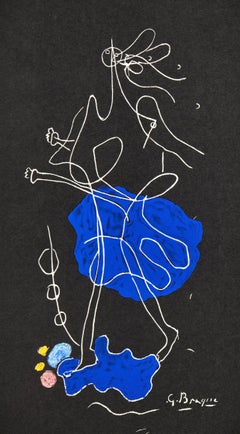
Georges Braque, Untitled, from The Intimate Sketchbooks, 1955 (after)

Georges Braque, Untitled, from The Intimate Sketchbooks, 1955 (after)

By Georges Braque

Located in Southampton, NY

This exquisite lithograph after Georges Braque (1882-1963), titled Sans titre (Untitled), from Carnets Intimes de G. Braque, Verve: Revue Artistique et Litteraire, Vol. VIII, No. 31-...
Category

1950s Cubist Abstract Prints

Materials

Lithograph
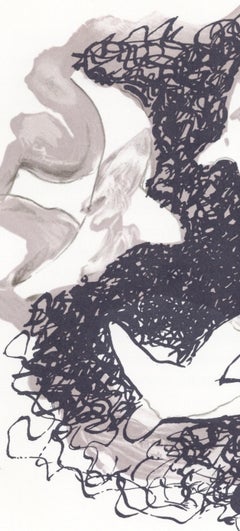
Pablo Picasso " Picador and Bull" Earthenware

Pablo Picasso " Picador and Bull" Earthenware

By Pablo Picasso

Located in Los Angeles, CA

Pablo Picasso 1881-1973 (Spanish) Round-square plate “Picador and bull” Model created on September 25, 1953. Diameter 25 cm Original proof in white earthenware and oxidized pa...

Category

1950s Still-life Sculptures

Materials

Enamel

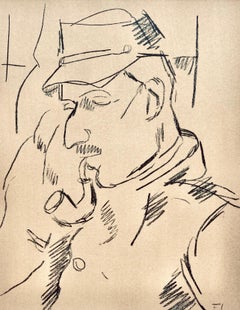
Joan Miro, Untitled, from Derriere le Miroir, 1971

Joan Miro, Untitled, from Derriere le Miroir, 1971

By Joan Miró

Located in Southampton, NY

This exquisite lithograph by Joan Miro (1893–1983), titled Sans titre (Untitled), originates from the 1971 folio Derriere le Miroir, No. 193-194, octobre-novembre 1971, published by ...
Category

1970s Surrealist Abstract Prints

Materials

Lithograph
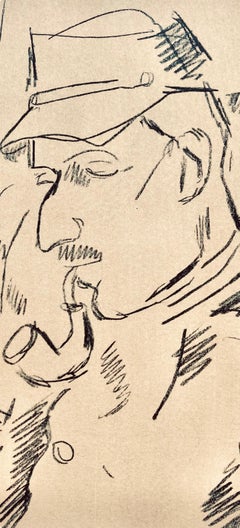
Original 1985 Hand Signed Engraving Limited Edition Spanish Artist

Original 1985 Hand Signed Engraving Limited Edition Spanish Artist

Located in Miami, FL

Alfonso Fraile (Spain, 1930-1988) 'Hombres', 1985 engraving on paper 18.2 x 13.8 in. (46 x 35 cm.) Edition of 10 ID: FRA1262-002-010 Hand-signed by author ___________________________...

Category

1980s Contemporary Prints and Multiples

Materials

Engraving

Still Life with Blue Teapots & Tall Rose Bottle French Post Oil Painting

Still Life with Blue Teapots & Tall Rose Bottle French Post Oil Painting

Located in Cirencester, Gloucestershire

Still Life with Blue Teapots and Tall Rose-Coloured Bottle by Laure Noetzin-Azam (French 1929-2024) pupil of André LHOTE oil on canvas, unframed canvas: 18 x 22 inches Provenance: al...

Category

Mid-20th Century Cubist Interior Paintings

Materials

Oil

"Abduction of the Emperor, " 1970s Modern Abstract Painting

"Abduction of the Emperor, " 1970s Modern Abstract Painting

By Stanley Bate

Located in Westport, CT

"Abduction of the Emperor" by Stanley Bate is an abstract oil painting made in 1971. This piece is primarily a textured sandy gold color with geometric shapes that add pops of light ...

Category

1970s Modern Abstract Paintings

Materials

Canvas, Oil

Contemporary French Abstract Picasso Style Original Oil Painting Signed

Contemporary French Abstract Picasso Style Original Oil Painting Signed

By Beatrice Werlie

Located in Cirencester, Gloucestershire

Regal Style French Abstract, Picasso Style, Original Oil Painting, Signed By French artist Beatrice Werlie, early 21st Century Signed by the artist on the lower right hand corner Oil painting on canvas, unframed Canvas size: 25.5 x 21.5 inches Sensational abstract oil painting by a French female artist named Beatrice Werlie. The abstract style painting shows a medley of coloured flecks, based on a ochre background, with a soft range of reds and greens. There is a faint outline of a face with what we believe to be a crown, lost amongst the cubist paint...

Category

21st Century and Contemporary Abstract Abstract Paintings

Materials

Oil

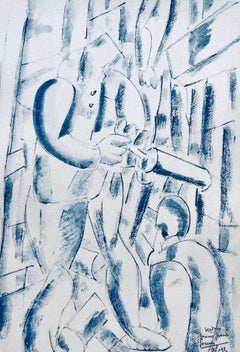
Andre Derain, Head of a Young Girl, from Verve, Revue Artistique, 1939

Andre Derain, Head of a Young Girl, from Verve, Revue Artistique, 1939

By André Derain

Located in Southampton, NY

This exquisite lithograph by Andre Derain (1880–1954), titled Tete de Jeune Fille (Head of a Young Girl), from Verve, Revue Artistique et Litteraire, Vol. II, No. 5–6, originates fro...
Category

1930s Fauvist Figurative Prints

Materials

Lithograph
Contemporary French Cubist Portrait Multicoloured Original Large Oil Painting

Contemporary French Cubist Portrait Multicoloured Original Large Oil Painting

By Beatrice Werlie

Located in Cirencester, Gloucestershire

Cubist Portrait, Multicoloured, Original Oil Painting By French artist Beatrice Werlie, early 21st Century Oil painting on canvas, unframed Canvas size: 21.5 x 18 inches Sensationa...

Category

21st Century and Contemporary Abstract Abstract Paintings

Materials

Oil

Joan Miro, Untitled, Marvels with Acrostic Variations in Miro’s Garden, 1975

Joan Miro, Untitled, Marvels with Acrostic Variations in Miro’s Garden, 1975

By Joan Miró

Located in Southampton, NY

This exquisite lithograph by Joan Miro (1893–1983), titled Sans titre (Untitled), from the folio Maravillas con variaciones acrosticas en el Jardin de Miro (Marvels with Acrostic Var...
Category

1970s Surrealist Abstract Prints

Materials

Lithograph
Marc Chagall, The Monsters of Notre-Dame, from Derriere le miroir, 1954

Marc Chagall, The Monsters of Notre-Dame, from Derriere le miroir, 1954

By Marc Chagall

Located in Southampton, NY

This exquisite lithograph by Marc Chagall (1887–1985), titled Les Monstres de Notre-Dame (The Monsters of Notre-Dame), from the folio Derriere le miroir, No. 67–68, originates from t...
Category

1950s Expressionist Landscape Prints

Materials

Lithograph
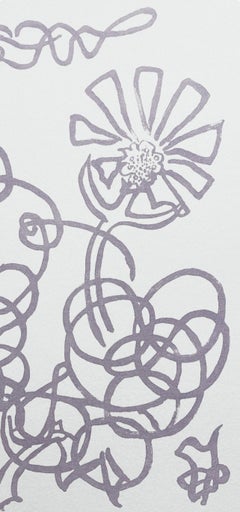
Pougny, Composition, Pougny, dix linogravures originales, 1914-1920 (after)

Pougny, Composition, Pougny, dix linogravures originales, 1914-1920 (after)

By Jean Pougny

Located in Southampton, NY

Linocut on vélin vergé ancien paper. Unsigned and unnumbered, as issued. Good condition. Notes: From the folio, Pougny, dix linogravures originales, 1964. Published by Au Vent d'Arle...

Category

1960s Cubist Abstract Prints

Materials

Linocut

Roundism – 27-10-20, Drawing, Pencil/Colored Pencil on Paper

Roundism – 27-10-20, Drawing, Pencil/Colored Pencil on Paper

By Corne Akkers

Located in Yardley, PA

Roundism – 27-10-20 Just Abstract Last model session resulted in a nice pose through which I was inspired to continue my roundism series. The general idea was to build up the p...

Category

2010s Cubist Drawings and Watercolor Paintings

Materials

Pencil

Pablo Picasso, Untitled, from Carmen, 1949

Pablo Picasso, Untitled, from Carmen, 1949

By Pablo Picasso

Located in Southampton, NY

This exquisite engraving by Pablo Picasso (1881–1973), titled Sans titre (Untitled), from the folio Picasso, Carmen (Picasso, Carmen), originates from the 1949 edition published by L...

Category

1940s Cubist Abstract Prints

Materials

Engraving

Joan Miro, Untitled, from Joan Miro, 1956

Joan Miro, Untitled, from Joan Miro, 1956

By Joan Miró

Located in Southampton, NY

This exquisite lithograph by Joan Miro (1893–1983), titled Sans titre (Untitled), originates from the 1956 publication Joan Miro. Published by Maeght Editeur, Paris, and printed by M...

Category

1950s Surrealist Figurative Prints

Materials

Lithograph
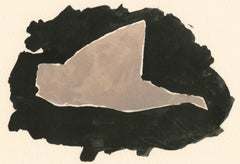
Braque, Les martinets, Derrière le miroir (after)

Braque, Les martinets, Derrière le miroir (after)

By Georges Braque

Located in Southampton, NY

Lithograph on vélin paper. Inscription: Unsigned and unnumbered, as issued. Good condition. Notes: From Derrière le miroir, N° 115, 1959. Published by Aimé Maeght, Éditeur, Paris; pr...
Category

1950s Modern Abstract Prints

Materials

Lithograph
Sonia Delaunay, Plate No. 21, from Compositions, Colors, Ideas, 1930 (after)

Sonia Delaunay, Plate No. 21, from Compositions, Colors, Ideas, 1930 (after)

By Sonia Delaunay

Located in Southampton, NY

This exquisite lithograph and pochoir after Sonia Delaunay (1885–1979), titled Planche No. 21 (Plate No. 21), from the folio Compositions, couleurs, idees, Sonia Delaunay (Compositio...
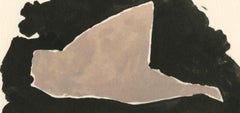
Category

1930s Orphist Abstract Prints

Materials

Lithograph, Stencil

French Abstract Surrealist Color Lithograph Andre Masson
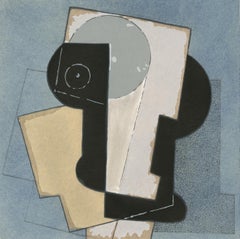
French Abstract Surrealist Color Lithograph Andre Masson
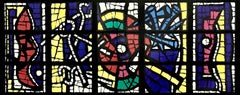
By André Masson

Located in Surfside, FL

Published Benincasa Carmine. Edizioni SEAT, Torino, Italy. Offset directly from the original plates. Limited edition. This is not hand signed or numbered. Signature in the printing p...

Category

20th Century Surrealist Abstract Prints

Materials

Lithograph, Offset

Cubist French Abstract Composition With Geometric Shapes Circles And Colour

Cubist French Abstract Composition With Geometric Shapes Circles And Colour

Located in Cirencester, Gloucestershire

Title: Cubist French Abstract Composition With Geometric Shapes Circles And Colour Guy Nicod (French 1923 - 2021) Gouache on artist paper, unframed Size: 26.25 x 19.25 inches (heigh...

Category

Mid-20th Century Modern Landscape Drawings and Watercolors

Materials

Gouache

Kaleidoscope (Abstract painting)

Kaleidoscope (Abstract painting)

Located in London, GB

Kaleidoscope (Abstract painting) Mixed media - acrylic gouache on cotton canvas - Unframed. Daniela Marin stands as a pioneering figure in the realm of South American abstract art, m...

Category

2010s Abstract Abstract Paintings

Materials

Canvas, Mixed Media, Acrylic, Gouache

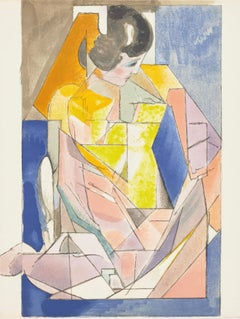
Metzinger, Femme à sa Toilette (Metzinger, AM-18-013), Du cubisme (after)

Metzinger, Femme à sa Toilette (Metzinger, AM-18-013), Du cubisme (after)

By Jean Metzinger

Located in Southampton, NY

Drypoint on vélin du Lana Papiers Spéciaux pure rag paper. Unsigned and unnumbered, as issued. Good Condition. Notes: From the folio, Du Cubisme, 1947. Published by Compagnie Françai...

Category

1940s Modern Landscape Prints

Materials

Drypoint

Star Trek  - Large Original Abstract Painting Ready to Hang

Star Trek - Large Original Abstract Painting Ready to Hang

By Bruce Rubenstein

Located in Los Angeles, CA

The paintings of Bruce Rubenstein seamlessly marry sophistication with affordability. His original art merges the creative attitudes of the two distinct art hot spots of New York and Los Angeles. Rubenstein's work has a rigid edge and strong composition but maintains organic shapes and soft colors as well. His works have a character that brightens a space. His paintings pull from abstract expressionism and cubism but maintain a contemporary edge that strikes the viewer. His work seems collectively new and timeless at once. This large affordable one-of-a-kind 42 inch high by 66 inch wide and 1.5 inch deep artwork is a mixed media composition on canvas. It is stretched, wired, and ready to hang. This large abstract painting is signed by the artist on the front and back of the artwork. The sides are painted and it does not require framing. Free local Los Angeles area delivery. Affordable Continental U.S. and worldwide shipping available. Provenance: Artplex Gallery. A certificate of authenticity issued by the art gallery is included. While the artist has chosen to keep the price upon request, this captivating piece embodies both sophistication and exceptional value. Bruce Rubenstein specializes in large-scale artworks, using huge canvases to tell his stories. Born and raised in New York, he moved to Los Angeles in 1985. His mixed media artworks defy categorization, blending abstract forms and organic shapes with subtle hints of figures and symbols. Adrien Brody and Mickey Rourke are among Rubenstein’s collectors. Bruce Rubenstein’s artistic influences include artists from Joan Miró and Jean Arp to Gerhard Richter and Pablo Picasso. “He is an artist, and that means someone who cannot restrain the flow of ideas,” says author David Rodgers. “He is someone who they just burst out of, who cannot help but communicate, and who sees no reason to stop. He’s a man not limited by media to communicate the stories that he needs to (and must) tell, through any medium he feels necessary.” His works are represented by Artplex Gallery Los Angeles and have been exhibited and collected worldwide, including exhibitions in Austria and Israel. REPRESENTATION Artplex Gallery, Los Angeles, USA EXHIBITIONS 2023 Artplex Gallery, Los Angeles, CA Beijing Contemporary Art Expo Crossing Art Collective Beijing, China 2022 Shenzhen Art Fair, Shenzhen, China Westbund Art Fair, Shanghai, China MAC Fine Art, Power Painters, Delray, FL Westbund Art & Design, Shanghai, China (solo) Context Art Miami, Miami, FL (solo) Crossing Art Gallery, NYC, NY (solo) 2021 “Space Time Fragments,” Artspace Warehouse, Los Angeles, CA MAC Fine Art, Fort Lauderdale, FL MAC Fine Art, Jupiter, FL MAC Fine Art, Miami, FL (solo) 2020 MAC Fine Art, Fort Lauderdale, FL Wynwood Art Festival, Miami, FL Artspace Gallery, Los Angeles, CA MAC Fine Art, Fort Lauderdale, FL (solo) Gottling Gallery, Palm Springs, CA (solo) Castelli Art Space, Culver City, CA (solo) 2019 MAC Fine Art, Jupiter, FL Artspace Gallery, Los Angeles, CA Palm Springs Art Fair, Palm Springs, CA Glenn Dallas Gallery...

Category

21st Century and Contemporary Abstract Expressionist Abstract Paintings

Materials

Canvas, Charcoal, Oil Pastel, Mixed Media, Acrylic

The Musical Room
The Musical Room

The Musical Room

Located in Los Angeles, CA

Pascal Jarrion was born in 1961 in Perpignan, France, a region known for its Catalan culture as well as its influence on artists before him, including Picasso, Van Gogh, and Maillol....

Category

21st Century and Contemporary Cubist Still-life Paintings

Materials

Oil, Wood Panel

Original 1962 lithographic poster by Marc Chagall - L’Oiseau Vert - Mourlot

Original 1962 lithographic poster by Marc Chagall - L’Oiseau Vert - Mourlot

By Marc Chagall

Located in PARIS, FR

Dreamlike and poetic, this original 1962 lithographic poster was created by Marc Chagall for his exhibition at the renowned Galerie Maeght in Paris, held during Juin–Juillet 1962. Ti...

Category

1960s Prints and Multiples

Materials

Paper, Lithograph
Original 1954 poster by Pablo Picasso - Suite de 180 dessins

Original 1954 poster by Pablo Picasso - Suite de 180 dessins

By Pablo Picasso

Located in PARIS, FR

This original 1954 poster, created by Pablo Picasso himself, announces the publication of Suite de 180 Dessins de Picasso, a special double issue of the celebrated art magazine Verve...

Category

1950s Prints and Multiples

Materials

Paper, Lithograph
Le Musicien et son Chien The Musician and his Dog Mixed Media on Canvas In Stock

Le Musicien et son Chien The Musician and his Dog Mixed Media on Canvas In Stock

By Skepa

Located in Utrecht, NL

Le Musicien et son Chien The Musician and his Dog Mixed Media on Canvas In Stock Skepa is a French artist, born in 1978 He graduated at the Ecole Nationale Supérieure des Beaux-Arts...

Category

21st Century and Contemporary Contemporary Abstract Paintings

Materials

Canvas, Mixed Media

"Georgia on My Mind, " 1960s Modern Abstract Painting

"Georgia on My Mind, " 1960s Modern Abstract Painting

By Stanley Bate

Located in Westport, CT

This original Modern abstract piece by Abstract Expressionist Stanley Bate features a warm, earthy palette. In it, organic and rectangular shapes are layered with deep teal and creme...

Category

1960s Modern Abstract Paintings

Materials

Canvas, Oil

Mid 20th Century French Fauvist Painting - Amazing Colors - pupil of Andre Lhote

Mid 20th Century French Fauvist Painting - Amazing Colors - pupil of Andre Lhote

By Suzanne Vattier

Located in Cirencester, Gloucestershire

'Abstract Figure' Suzanne Vattier, French 1901-1996 dated 1973 gouache painting on artist paper, framed size: 20 x 25.5 inches Fabulous 1970s abstract goauche painting. The colours ...

Category

Mid-20th Century Fauvist Abstract Paintings

Materials

Gouache

Andre Lhote, Reclining Woman, 1929 (after)

Andre Lhote, Reclining Woman, 1929 (after)

By André Lhote

Located in Southampton, NY

This exquisite lithograph and pochoir after Andre Lhote (1885–1962), titled Femme allongee (Reclining Woman), from the album L'Art Cubiste, Theories et Realisations, Etude Critique (...
Category

1920s Cubist Still-life Prints

Materials

Lithograph, Stencil

Cubist Portrait of Gabriele Varese (in Italian uniform), 1919

Cubist Portrait of Gabriele Varese (in Italian uniform), 1919

Located in Stockholm, SE

Dick Beer (b. London 1893 - d. Stockholm 1938) Portrait of Gabriele Varese (in Italian uniform), 1919 oil on canvas mounted on panel 116 x 90 cm stamp signature Exhibited: Solo exhibition, Stockholm, Nov-Dec 1917; The Royal Academy Stockholm 1973; Åmells Konsthandel – En internationell kubist, Stockholm & London 2008 Hälsinglands Museum 2011 Millesgården – Dick Beer – Impressionist & Kubist, 2012 Provenance: Within the family Beer until today Dick Beer was born in 1893 in London as Richard Beer, the youngest of five brothers. His father, John Beer (1853-1906), was a watercolourist who was born in Stockholm and had left Sweden at the age of 17. John Beer instructed his sons in drawing and painting, among other things. A number of sketchbooks bear testimony to the boys’ talent. Dick Beer’s parents died in 1906 and 1907. Barely 15 years old, Beer arrived in Sweden as an orphan. First he lived with relatives and finally he ended up at Reverend Laurell in Västergötland. Dick Beer began his artistic studies at the Althin School of Painting in Stockholm in 1908 and continued at the Royal Academy of Arts in the autumn of 1910, but in September 1912 he broke off his studies and travelled to Paris. He rented a studio and enrolled at the Colarossi and Grande Chaumière academies. In the summer of 1913, Dick Beer travelled to Pont-Aven in Bretagne in order to paint. In September the same year, he held his first solo exhibition in Stockholm which he gave the French title Exposition des tableaux de Bretagne et autour de Paris. The exhibition proved a success. Many of the paintings were executed in a light palette in a style inspired by the impressionists. In 1914, Dick Beer undertook an extensive study trip to Italy, Tunis, Morocco and Spain, which resulted in canvases overflowing with colours and light. When the French army mobilised, he volunteered and was enlisted in the French Foreign Legion. In 1915 Dick Beer sustained severe head injuries in a grenade attack, which resulted in deafness and a nervous condition that would plague him for the rest of his life. Two of his brothers died the following year, fighting for the English army. Dick Beer was hospitalised and convalesced at Château de Rochefort. Here he started painting again, in an impressionist style, a painting dominated by blue and green hues. In 1918, Dick Beer married Ruth Öhrling, a dentist, and their son John was born later in the year. During this time, Beer began experimenting with cubist painting and created several large compositions, including the painting “The Arab Café”. In the years that followed, Dick Beer was based in Paris, where he often moved house. He was instructed by André Lhote, who encouraged his students to work freely in the studio and provided them with individual critique. Beer often travelled to Bretagne or Provence. His artist friends came from all over Europe and included Amedeo Modigliani. Dick Beer exhibited fairly regularly in Paris between 1919 and 1934 and made a name for himself in French artist circles. In the summers, Ruth regularly rented a house in the countryside, often at Lake Mälaren. She kept a large house with many models and friends and there was a lot of painting and discussions. In 1933, the couple divorced but Ruth still loved Dick and continued to support him financially for the rest of his life. Dick Beer also exhibited in Sweden, albeit irregularly due to his failing health. In the 1920s and 1930s, Beer continued to pursue an expressionist painting with intense colours and unexpected perspectives, but eventually he veered towards more naturalistic forms, including a large number of nudes. He also painted several portraits of artists, politicians and writers. In 1938, Dick Beer sojourned in Arles. The budding photographer Christer Strömholm...
Category

1910s Cubist Portrait Paintings

Materials

Canvas, Oil, Panel

Marc Chagall, The Lovers in Gray, from Chagall, 1957

Marc Chagall, The Lovers in Gray, from Chagall, 1957

By Marc Chagall

Located in Southampton, NY

This exquisite lithograph by Marc Chagall (1887–1985), titled Les Amoureux au Gris (The Lovers in Gray), from the album Chagall, originates from the 1957 edition published by Maeght Editeur, Paris, and printed by Mourlot Freres, Paris, 1957. This intimate and poetic composition reveals Chagall’s enduring fascination with love as both a personal and universal theme. Les Amoureux au Gris presents two lovers tenderly united against a soft, monochromatic background, their forms gently intertwined in a suspended moment of emotion and serenity. The subdued palette of grays enhances the dreamlike atmosphere, evoking nostalgia and the quiet beauty of devotion. Through its delicate tonal harmonies and lyrical symbolism, the work exemplifies Chagall’s belief that love transcends time, space, and circumstance—a central tenet that defines his artistic legacy. Executed as a lithograph on velin paper, this work measures 9.06 x 7.875 inches (23.01 x 20 cm). Unsigned and unnumbered as issued. The edition reflects the extraordinary craftsmanship of the Mourlot Freres atelier, renowned for its close collaboration with Chagall and for achieving unmatched brilliance and subtlety in color lithography. Artwork Details: Artist: Marc Chagall (1887–1985) Title: Les Amoureux au Gris (The Lovers in Gray), from Chagall, 1957 Medium: Lithograph on velin paper Dimensions: 9.06 x 7.875 inches (23.01 x 20 cm) Inscription: Unsigned and unnumbered as issued Date: 1957 Publisher: Maeght Editeur, Paris Printer: Mourlot Freres, Paris Catalogue raisonne references: Chagall, Marc, and Julien Cain. Chagall Lithographe. Andre Sauret, Editeur, 1960, illustration 194. Cramer, Patrick, and Meret Meyer. Marc Chagall: Catalogue Raisonne Des Livres Illustres. P. Cramer ed., 1995, illustration 34. Condition: Well preserved, consistent with age and medium Provenance: From the album Chagall, published by Maeght Editeur, Paris, 1957 Notes: Excerpted from the album (translated from French), This album was printed by Drager Freres in Montrouge on behalf of Maeght Editeur, 13, Rue de Teheran, Paris VIII. The original color lithographs were drawn by Mourlot Freres. The photographs of the works printed are of Y. Hervochon, M. Routhier, Draeger. Copyright 1957. About the Publication: The 1957 album Chagall, published by Maeght Editeur, Paris, and printed by Mourlot Freres, stands among the most celebrated collaborations between Marc Chagall and the great Parisian ateliers of the mid-20th century. The album features a series of color lithographs that capture Chagall’s poetic world of memory, faith, and love through luminous tones and expressive line. Each lithograph embodies the artist’s mastery of the medium, where the transparency of pigment and fluidity of form fuse into a language of visual music. Guided by the technical expertise of Mourlot Freres, these works convey Chagall’s painterly spontaneity and emotional depth with remarkable fidelity. The Maeght album remains a touchstone in modern printmaking, symbolizing the creative dialogue between artist, publisher, and master printer that defined the golden age of the French art book. About the Artist: Marc Chagall (1887–1985) was a Belarus-born French painter, printmaker, and designer whose visionary imagination, radiant color, and deeply poetic symbolism made him one of the most beloved and influential artists of the 20th century. Rooted in the imagery of his Jewish heritage and the memories of his childhood in Vitebsk, Chagall’s art wove together themes of faith, love, folklore, and fantasy with a dreamlike modern sensibility. His unique style—merging elements of Cubism, Fauvism, Expressionism, and Surrealism—defied categorization, transforming ordinary scenes into lyrical meditations on memory and emotion. Influenced by Russian icon painting, medieval religious art, and the modern innovations of artists such as Pablo Picasso, Henri Matisse, and Georges Braque, Chagall developed a profoundly personal visual language filled with floating figures, vibrant animals, musicians, and lovers that symbolized the transcendent power of imagination and love. During his early years in Paris, he became an integral part of the Ecole de Paris circle, forming friendships with Amedeo Modigliani, Fernand Leger, and Sonia Delaunay, and his creative spirit resonated with that of his peers and successors—Alexander Calder, Alberto Giacometti, Salvador Dali, Joan Miro, Wassily Kandinsky, Marcel Duchamp, and Man Ray—artists who, like Chagall, sought to push the boundaries of perception, emotion, and form. Over a prolific career that spanned painting, printmaking, stained glass, ceramics, and stage design, Chagall brought an unparalleled poetic sensibility to modern art, infusing even the most abstract subjects with human warmth and spiritual depth. His works are held in the most prestigious museums around the world, including the Museum of Modern Art, the Centre Pompidou, the Tate, and the Guggenheim, where they continue to inspire generations of artists and collectors. The highest price ever paid for a Marc Chagall artwork is approximately $28.5 million USD, achieved in 2017 at Sotheby’s New York for Les Amoureux (1928). Marc Chagall Les Amoureux...

Category

1950s Expressionist Figurative Prints

Materials

Lithograph

Litografia Original IX (Abstract, Modern, Surrealism, Colorful, Iconic, 50% OFF)

Litografia Original IX (Abstract, Modern, Surrealism, Colorful, Iconic, 50% OFF)

By Joan Miró

Located in Kansas City, MO

Joan Miró Litografia Original IX (Abstract, Modern, Surrealism, Colorful, Iconic) Color Lithograph Year: 1975 Size: 13.25 x 20 inches (33.65 x 50.8 cm) Catalogue Raisonné: Queneau, M...

Category

1970s Modern Abstract Prints

Materials

Lithograph

Marc Chagall, Homage to Garnier, The Ceiling of the Paris Opera, 1965 (after)

Marc Chagall, Homage to Garnier, The Ceiling of the Paris Opera, 1965 (after)

By Marc Chagall

Located in Southampton, NY

This exquisite lithograph after Marc Chagall (1887–1985), titled Hommage a Garnier (Homage to Garnier), from the album Le plafond de l’Opera de Paris par Marc Chagall (The Ceiling of...

Category

1960s Expressionist Figurative Prints

Materials

Lithograph

Still life with bottles and an old iron, oil painting in canvas by Pierre Coquet

Still life with bottles and an old iron, oil painting in canvas by Pierre Coquet

Located in Montfort l’Amaury, FR

Pierre Coquet - Still life with bottles and an old iron Reference number F287 This is a oil on canvas and wear the stamp of the signature in the bottom right. The painting is not fra...

Category

1970s French School Still-life Paintings

Materials

Oil, Canvas

Apollo XL
Apollo XL

Apollo XL

Located in Palm Desert, CA

A painting by Robert Natkin. "Apollo XL" is an abstract expressionist painting, acrylic on canvas in a colorful palette by Post-War American artist Robert Natkin. The artwork is signed in the lower right, "Natkin". Robert Natkin (1930-2010) was born in Chicago and graduated from the Art Institute of Chicago in 1952. Natkin’s art blends Abstract Expressionism with Post-Impressionist colors. His work often runs in series he created using columns...

Category

Mid-20th Century Post-War Abstract Paintings

Materials

Acrylic

Marc Chagall "Le joueur de flûte"

Marc Chagall "Le joueur de flûte"

By Marc Chagall

Located in Los Angeles, CA

MARC CHAGALL 1887 - 1985 "Le joueur de flûte" 1958 Colour lithograph 25.5x44 cm, illustration; 38.3x57.3 cm, sheet size Signed lower right by the artist in ink "Marc Chagall" and dedicated "Pour Ursula et Gerd Hatje / "merci" / Marc Chagall / 1958". Inscribed lower left by the artist "Epreuve d'artiste". This is an artist’s proof, aside from the edition of 90. Catalogue Raisonné : Mourlot 197 Gerd Hatje (14 April 1915 – 24 July 2007) was a German publisher. The publishing house that he founded in 1945, named the Humanitas Verlag, renamed in 1947 as Verlag Gerd Hatje, is internationally known for contemporary art, photography and architecture. It merged in to Hatje Cantz in 1999. In the 1950s and 1960s, Hatje changed the focus to art, photography, and architecture.[1] He had contact with and was a friend of contemporary artists such as Hans Arp, Willi Baumeister, Joseph Beuys, Max Bill, Georges Braque, Marcel Breuer, Marc Chagall, Christo, Le Corbusier, Max Ernst, Alberto Giacometti, Walter Gropius, Joan Miró, Pablo Picasso, Ludwig Mies van der Rohe, and James Stirling...

Category

Mid-19th Century Impressionist Figurative Prints

Materials

Paper, Lithograph

Creole Dancer
Creole Dancer

Creole Dancer

By (after) Henri Matisse

Located in Collonge Bellerive, Geneve, CH

after Henri Matisse - Acrobat Edition of 200 with the printed signature, as issued 80 x 60 cm Posthumous edition after the original paper cut-out with stamp of the Succession Matisse References : Artvalue - Succession Matisse MATISSE'S BIOGRAPHY YOUTH AND EARLY EDUCATION Henri Emile Benoît Matisse was born in a tiny, tumbledown weaver's cottage on the rue du Chêne Arnaud in the textile town of Le Cateau-Cambrésis at eight o'clock in the evening on the last night of the year, 31 December 1869 (Le Cateau-Cambrésis is in the extreme north of France near the Belgian border). The house had two rooms, a beaten earth floor and a leaky roof. Matisse said long afterwards that rain fell through a hole above the bed in which he was born. Matisse’s ancestors had lived in the area for centuries before the convulsive social and industrial upheavals of the nineteenth century. Matisse grew up in a world that was still detaching itself from a way of life in some ways unchanged since Roman times. The coming of the railway had put Bohain on the industrial map, but people still traveled everywhere on foot or horseback. Matisse’s father, Émile Hippolyte Matisse, was a grain merchant whose family were weavers. His mother, Anna Heloise Gerard, was a daughter of a long line of well-to-do tanners. Warmhearted, outgoing, capable and energetic, she was small and sturdily built with the fashionable figure of the period: full breasts and hips, narrow waist, neat ankles and elegant small feet. She had fair skin, broad cheekbones and a wide smile. "My mother had a face with generous features," said her son Henri, who always spoke of her with particular tenderness of the sensitivity. Throughout the forty years of her marriage, she provided unwavering, rocklike support to her husband and her sons. Matisse later said: "My mother loved everything I did." He grew up in nearby Bohain-en-Vermandois, an industrial textile center, until the age of ten, when his father sent him to St. Quentin for lycée. Anna Heloise worked hard. She ran the section of her husband's shop that sold housepaints, making up the customers' orders and advising on color schemes. The colors evidently left a lasting impression on Henri. The artist himself later said he got his color sense from his mother, who was herself an accomplished painter on porcelain, a fashionable art form at the time. Henri was the couple’s first son. The young Matisse was an awkward youth who seemed ill-adapted to the rigors of the North; in particular, he hated the gelid winters. He was a pensive child and by his own account he was a dreamy, frail and not outstandingly bright. In later life he never lost his feeling for his native soil, for seeds and growing things he had encountered in his youth. The fancy pigeons he kept in Nice more than half a century after he left home recalled the weavers' pigeon-lofts tucked away behind even the humblest house in Bohain. Matisse's childhood memories were of a stern upbringing. "Be quick!" "Look out!" "Run along!" "Get cracking!" were the refrains that rang in his ears as a boy. In later years when survival itself depended on habits of thrift and self-denial, the artist prided himself on being a man of the North. When Matisse in turn had children of his own to bring up, he chided himself for any lapse in discipline or open display of tenderness as weakness on his part. In 1887 he went to Paris to study law, working as a court administrator in Le Cateau-Cambrésis after gaining his qualification. Although he considered law as tedious, he nonetheless passed the bar in 1888 with distinction and began his practice begrudgingly. Once Matisse finished school, his father, a much more practical man, arranged for his son to obtain a clerking position at a law office. PAINTING: BEGINNINGS Matisse’s discovery of his true profession came about in an unusual manner. Following an attack of appendicitis, he began to paint in 1889, when his mother had brought him art supplies during the period of convalescence. He said later, “From the moment I held the box of colors in my hands, I knew this was my life. I threw myself into it like a beast that plunges towards the thing it loves.” Matisse’s mother was the first to advise her son not to adhere to the “rules” of art, but rather listen to his own emotions. Matisse was so committed to his art that he later extended a warning to his fiancée, Amélie Parayre, whom he later married: “I love you dearly, mademoiselle; but I shall always love painting more.” Matisse had discovered "a kind of paradise" as he later described it. His drastic change of profession deeply disappointed his father. Two years later in 1891 Matisse returned to Paris to study art at the Académie Julian and became a student of William-Adolphe Bouguereau. After a discouraging year at the Académie Julian, he left in disgust at the overly perfectionist style of teaching there. Afterwards he trained with Gustave Moreau, an artist who nurtured more progressive leanings. In both studios, as was usual, students drew endless figure studies from life. From Bouguereau, he learned the fundamental lessons of classical painting. His one art-schooled technical standby, almost a fetish, was the plumb line. No matter how odd the angles in any Matisse, the verticals are usually dead true. Moreau was a painter who despised the "art du salon", so Matisse was destined, in a certain sense, to remain an "outcast" of the art world. He initially failed his drawing exam for admission to the École des Beaux-Arts, but persisted and was finally accepted. Matisse began painting still-lives and landscapes in the traditional Flemish style, at which he achieved reasonable proficiency. Most of his early works employ a dark palette and tend to be gloomy. Chardin was one of Matisse's most admired painters having made four the French still-life master paintings in the Louvre. Although he executed numerous copies after the old masters he also studied contemporary art. His first experimentations earned him a reputation as the rebellious member of his studio classes. In 1896, Matisse was elected as an associate member of the Société Nationale, which meant that each year he could show paintings at the Salon de la Société without having to submit them for review. In the same year he exhibited 5 paintings in the salon of the Société Nationale des Beaux-Arts, and the state bought two of his paintings. This was the first and almost only recognition he received in his native country during his lifetime. In 1897 and 1898, he visited the painter John Peter Russell on the island Belle Île off the coast of Brittany. Russell introduced him to Impressionism and to the work of Van Gogh who had been a good friend of Russell but was completely unknown at the time. Matisse's style changed completely, and he would later say "Russell was my teacher, and Russell explained color theory to me." Matisse also observed Russell's and other artists' stable marriages. This probably influenced him to find in Amélie Noellie Parayre, his future wife, his anchor. The Dinner Table (1897) was Matisse’s first masterpiece, and he had spent the entire winter working on the oeuvre. Though the Salon displayed the piece, they hung the work in a poor location, disgusted by what they considered its radical, Impressionist aspects. Caroline Joblaud was Matisse's early lover for four years during his initial struggles to affirm his artistic direction and professional career. Caroline (also called Camille) gave Matisse his first daughter Marguerite in 1894, who after Matisse's marriage to Amélie Noellie Parayre was warmly accepted contrary to conventional hostility such arrangements provoked. Caroline posed various times for the artist’s compositions while Marguerite served many times as a model for Matisse throughout his life. MARRIAGE WITH AMÉLIE NOELLIE PARAYRE The Matisses of Bohain and the Parayres of Beauzelle had outwardly nothing in common, and there was no reason why Matisse and Amélie should ever have met. But in October 1897 Matisse went to a wedding in Paris and happened to sit next to her at the uproarious banquet that followed. There had been no banal flirtation between them, even when the wine flowed, each recognized the other as true metal, and when they got up from the table she held out her hand to Henri Matisse in a way that he never forgot. Matisse at that time was not yet the professorial figure of legend. He was known as a prankster, as a ribald and anti-clerical songster, and as someone who had once broken up a café concert performance just for the hell of it. Amélie's relatives operated at that time within a social, intellectual, and political context of which Matisse had had no previous experience. They stood for free thinking, for the separation of church and state, and for the secularization of the French educational system. Her family, better off that that of Matisse, provided the support he needed for the budding artist. When Matisse married Amélie in January 1898, they had been introduced only three months after. Amélie's Aunt Noélie and two of her brothers ran a successful women's shop called the Grande Maison des Modes. Before her marriage, Amélie had shown a gift for designing, making, and modeling hats for a fashionable clientele. In June 1899, she found a partner and opened a shop of her own on the rue de Châteaudun. This allowed Henri and herself to live, with Marguerite, in a tiny two-room apartment on the same street. Madame Matisse, fervently loyal, would play a fundamental role in the life and career of the artist for more than 40 years. Marguerite was to become her father's lifetime mainstay In 1902 disaster struck. Amélie’s parents were disgraced and financially ruined in a spectacular scandal of national scope, as the unsuspecting employees of a woman whose financial empire was based on fraud. Thanks to his early years in a lawyer's office, Matisse was able to busy himself to great effect in the organization of his father-in-law's defense. When all about him lost their heads, burst into tears, and felt more than sorry for themselves, Henri Matisse dealt with their problems one by one. The ordeal had taken its toll, in more than one way. His doctors ordered Matisse to go to Bohain and take two months' complete rest. Amélie had lost both her hat shop and the apartment on the rue de Châteaudun. For the first time, Henri, Amélie and the three children were united in Bohain, having nowhere else to go. Hillary Spurling, one of Matisse’s biographers, asserts that Amélie’s memories of that public disgrace nurtured a “suspicion of the outside world” that would always mark the Matisse family. The Matisse family formed a kind of hermetic unit which revolved around the artist’s work and profession. They fitted their activities according his breaks and work sessions. Silence was essential. Even during the years when Matisse lived mostly alone in Nice, an annual ritual of unpacking, stretching, framing and hanging ended with the whole family settling down to respond to the paintings. The conference might last several days. Then the dealers were admitted. Matisse and his wife had had two sons, Jean (born 1899) and Pierre (born 1900). He was not always in peace with his family. He wrote that their views were not always in accord “which disturbs me considerably in my work, for which I require the most complete calm and from those how surround me, a serenity that I cannot find here. I intend to move to a village a few league away.” Pierre, his brother, Jean, and Marguerite remained close to their father through every vicissitude, and Matisse, in his last invalid years, was devoted to his several grandchildren. In 1899, at a time when his paintings displayed rebellious talent but not much clear direction, Matisse began attending classes in clay modeling and sculpture. Assigned to copy one of the sculptural masterpieces in the Louvre, he selected Jaguar Devouring a Hare a violently precise work by Antoine-Louis Barye. Later, whenever his paintings seemed stuck, he turned to sculpture to organize his thoughts and sensations. Influenced by the works of the post-Impressionists Paul Cézanne, Gauguin, Van Gogh and Paul Signac, and also by Japanese art, Matisse made color a crucial element of his paintings. Matisse said, "In modern art, it is indubitably to Cézanne that I owe the most." By studying Cézanne’s fragmented planes -- which stretched the idea of the still life to a forced contemplation of color surfaces themselves -- Matisse was able to reconstruct his own philosophy of the still life. Many of his paintings from 1899 to 1905 make use of a pointillist technique adopted from Signac. In 1898, he went to London to study the paintings of J. M. W. Turner and then went on a trip to Corsica. After years in poverty, Matisse went through his "dark period" (1902-03), moved briefly to naturalism, went back to a dark palette and told friends in 1903 that he had lost all desire to paint and had almost decided to give up. Fortunately, Matisse was able to earn some money painting a frieze for the World Fair at the Grand Palais in Paris. He also traveled extensively in the early 1900s when tourism was still a new idea. Brought on by railroad, steamships, and other forms of transportation that appeared during the industrial revolution, travel became a popular pursuit. As a cultured tourist, he developed his art with regular doses of travel. FAUVISM Matisse's career can be divided into several periods that changed stylistically, but his underlying aim always remained the same: to discover "the essential character of things" and to produce an art "of balance, purity, and serenity," as he himself put it. The changing studio environments seemed always to have had a significant effect on the style of his work. In these first years of struggle Matisse set his revolutionary artistic agenda. He disregarded perspective, abolished shadows, repudiating the academic distinction between line and color. He was attempting to overturn a way of seeing evolved and accepted by the Western world for centuries by substituting a conscious subjectivity in the place of the traditional illusion of objectivity . Matisse hit his stride in the avant-garde art world in the first years of the new decade. He explored the modern art scene through frequent visits to galleries such as Durand-Ruel and Vollard, where he was exposed to work by Paul Cézanne, Paul Gauguin, and Vincent van Gogh. Matisse’s first solo exhibition took place in 1904, without much success. In 16 May 1905 he arrived in the charming Catalan port of Collioure, in the south of France. He soon invited the painter André Derain (1880-1954), 11 years his junior, to join him. By 1905, Matisse was considered spearhead the Fauve movement in France, characterized by its spontaneity and roughness of execution as well as use of raw color straight from the palette to the canvas. Matisse combined pointillist color and Cézanne’s way of structuring pictorial space stroke by stroke to develop Fauvism - a way less of seeing the world than of feeling it with one’s eyes. When the Fauve summer drew to an end, Derain left Collioure with 30 paintings, 20 drawings and some 50 sketches, never to return, while Matisse departed some days later bringing back to Paris 15 finished paintings, 40 aquarelles, over 100 drawings. He returned Collioure in the summers of 1906, 1907, 1911 and 1914. The lure of the sun would prove always to have powers of restoration to the artist throughout his life particularly after periods of great emotional exertion. When Fauvist works were first exhibited Salon d'Automne in Paris they created a scandal. Eyewitness accounts tell of laughter emanating from room VII where they were displayed. Gertrud Stein, one of Matisse's most important future supporters, reported that people scratched at the canvases in derision. "A pot of paint has been flung in the face of the public" was the reaction by the critic Camille Mauclair. Louis Vauxcelles described the work with the historic phrase "Donatello au milieu des fauves!" (Donatello among the wild beasts), referring to a Renaissance-type sculpture that shared the room with them. His comment was printed on 17 October 1905 in Gil Blas, a daily newspaper, and passed into popular usage. Derain himself later called the Fauves' color "sticks of dynamite." The painting that was singled out for attacks was Matisse's Woman with a Hat, a portrait of Madame Matisse. This picture was bought be was bought by Gertrude and Leo Stein, a fact which had a very positive effect on Matisse who was suffering demoralization from the bad reception of his work. Matisse continued his experiments in Collioure, visible in the painting The Open Window and the View of Collioure , also a characteristic work of Fauvism in its raw color and disregard for details. Both of these works of the landscape in the French Mediterranean present a distinct development towards the spontaneous and uninhibited style. Other than André Derain, Georges Braque, Raoul Dufy and Maurice Vlaminck were also members of the Fauve movement. However, Matisse’s intimate friends among artists were mostly easygoing minor painters, such as Albert Marquet. Matisse’s temperamental aloneness made him prey to vertiginous depressions. He later recalled a breakdown that he underwent in Spain, in 1910: “My bed shook, and from my throat came a little high-pitched cry that I could not stop.” From the onset of is career women were from one of the cardinal motifs of the artist's production. His Joy of Life (1906) draws us into the world of hallucinatory vividness composed of nymphs set in an idyllic open fields dressed in pure color and sensual outline. Two women lounge in the sunlight while two more chat on the edge of the forest. One crouches to pick some flowers while her companion weaves a chain of them into her hair. A couple embraces each other while another group engages in a lively round-dance in the distance. In this way, Joy of Life depicts woodland nymphs engaging in a celebration of their life, their womanhood, and their sexuality. Due to the recurrent incidence of nude women and intensely sensual interpretation many observers have assumed that as a man Matisse must have been a hedonist. On the contrary, historic examination demonstrates that in reality, he was rather a self-abnegating Northerner who lived only to work, and did so in chronic anguish, recurrent panic, and amid periodic breakdowns. While Picasso recompensed himself, as he went along, with gratifications of intellectual and erotic play Matisse did not. In an age of ideologies, Matisse dodged all ideas except perhaps one: that art is life by other means. Matisse’s uninhibited celebration of women is often believed to have initiated from Cézanne’s painting Three Bathers (1882) (which he had acquired for himself along with a Van Gogh and a Gauguin). However, Matisse depicts women as nurturing, welcoming, and unlike the forbidding, massive clay-like presence of those of Paul Cézanne. FAME The decline of the Fauvist movement, after 1906, did nothing to deter the rise of Matisse. From 1906 -1917 he lived in Paris and established his home, studio, and school at Hôtel Biron. Among his neighbors is sculptor Auguste Rodin, writer Jean Cocteau, and dancer Isadora Duncan. Many of his finest works were created in this period, when he was an active part of the great gathering of artistic talent in Montparnasse, even though he did not quite fit in with his conservative appearance and strict bourgeois work habits. In fact, the aim of Matisse’s art was something less than revolutionary. In 1908, in a famous statement drawn from “Notes of a Painter,” Matisse declared as his ideal an art “for every mental worker, for the businessman as well as the man of letters, for example, a soothing, calming influence on the mind, something like a good armchair which provides relaxation from physical fatigue.” Matisse's personal habits were incredibly regular. On a typical day rose early and worked all morning with a second work session after lunch, followed by violin practice, a simple supper (vegetable soup, two hard-boiled eggs, salad and a glass of wine) and an early bedtime. In 1906, he created a series of 12 lithographs, all variations on the theme of a seated nude. He chose to share his graphic work with the public almost immediately. The lithographs were exhibited at the Druet Gallery in Paris the same year that they were produced, and the woodcuts were shown at the Salon des Independants in the spring of 1907. In 1907 Appolinaire, commenting about Matisse in an article published in La Falange, said, "We are not here in the presence of an extravagant or an extremist undertaking: Matisse's art is eminently reasonable." Notwithstanding newly-won fame, Matisse's work continued to encounter vehement criticism and it was difficult for him to provide for his family. His controversial 1907 painting Blue Nude was burned in effigy at the Armory Show in Chicago in 1913. Contrary to the fate of the Impressionists, Matisse and other Fauves were able to exhibit in art galleries. In 1908 Paul Cassirer, the German art dealer and editor who played a significant role in the promotion of the work the French Impressionists and Post-Impressionists, staged an exhibit of Matisse’s works in Berlin. In the same year the American photographer Alfred Stieglitz in New York organized him one-man show in his tiny Manhattan gallery called 291 which effectively introduced Matisse the powerful American art market. In the first decade of his notoriety as the leader of the Fauves, Matisse was more admired by foreigners than by the French. It was, after all, the Russians and the Americans who acquired significant collections of his early work almost as quickly as it was created. The great Matisses we see in the Paris museums today were mostly acquired after the artist's death in lieu of death duties. It took the French a good deal longer to understand Matisse's greatness-longer, certainly, than the international cadre of aspiring talents that flocked to his classes when he was still one of the most controversial figures in the Paris avant-garde. In the summer of 1907, Matisse and his wife went on a long trip to italy "for work and Pleasure," visiting Venice and Padua, where they admired Giotto's frescos. In Florence the were the guests of the Steins in their villa in Fiesole. From this base matisse visited Arezzo, to study Piero della Francesca, and Siena, attracted by the early Sienese painters, especially, Duccio. PICASSO, GERTRUDE STEIN AND THE CONE SISTERS During the first decade of the 20th century Americans in Paris Gertrude Stein, her brothers Leo Stein, Michael Stein and Michael's wife Sarah took keen interest in Matisse's art. In addition, Gertrude Stein's two friends from Baltimore. Clarabel and Etta Cone, became major patrons of Matisse and Picasso, collecting hundreds of their works.The Cone Sisters acquired their first Matisse in 1906 and, during the next four decades, went on to form one of the world's great collections of his art. The Cone Collection not only contains major works from every phase of Matisse's long career but reflects the sisters' special interest in his Nice period, when a new complexity of form and psychology entered the ever intense surface allure of his paintings. In April of 1906 during a gathering at the house of the legendary Gertrude Stein, Matisse was introduced to Pablo Picasso who was 11 years younger. Picasso and Matisse were poles apart aesthetically and their life styles were no less so. Matisse was markedly taller and more polished than the stocky, cocky Catalan, was then ruler of the turbulent Paris avant-garde art scene. The two were said to have always been looking over their shoulders at each other. It is well-known that after their rivalry grew, sides were taken. Picasso later said: "No one has ever looked at Matisse's paintings more carefully than I; and no one has looked at mine more carefully than he." One key difference between their pictorial concepts was that Matisse drew and painted from nature, while Picasso was much more inclined to work from imagination. The subjects painted most frequently by both artists were women and still lives, with Matisse more likely to place his figures in fully realized interiors. Gertrude Stein, who loved stirring things up, wrote, "the feeling between the Picassoites and the Matisse-ites became bitter." Although Matisse dryly noted that "our disputes were always friendly," it should be pointed out that Picasso and his friends threw suction-cupped darts at Matisse's 1906 Portrait of Marguerite (which Picasso had obtained in a trade for his own Pitcher, Bowl and Lemon, from 1907). While the rift between the two artists eventually healed, the one between their supporters remained. ACADEMIE MATISSE IN PARIS & SERGEI SHCHUKIN In 1909, with the Matisse family lived in a former convent on the Boulevard des Invalides, in Paris, where the artist conducted a painting school. His immense notoriety, which had been confirmed in 1905-06 by Joy of Life, a work which seemed to trash every possible norm of pictorial order and painterly finesse.His friends organized and financed the Académie Matisse in Paris, a private and non-commercial school in which Matisse instructed young artists. It operated from 1911 until 1917. Hans Purrmann and Sarah Stein were several of his most loyal students. Although it lasted for only three years (1908-11), and yet, during its brief existence the Académie Matisse became one of the principal crossroads of modern painting for a number of gifted European and American artists. Given the reputation Matisse had acquired as the"wild man" of modernist color, it must have come as a shock to some of his early students that the program of instruction he offered was remarkably conservative. As Jean Heiberg, the first Norwegian to enroll in the Académie, later wrote in a memoir: "The school had, at Matisse's suggestion, acquired a copy of two antique sculptures from the Louvre, Mars and an archaic sculpture, which he often used to demonstrate. Every now and then he got completely rid of the life model and we only drew from the plaster casts, and his critiques then were no less profitable." Among Matisse’s students was Olga Meerson, a Russian Jew who had studied with Wassily Kandinsky in Munich and, already possessed of an elegant style, sought to remake herself under Matisse’s tutelage. Amélie suspected the worst. Perhaps a combination of Amélie’s jealousy and Meerson’s neediness caused a Matisse to end the connection, with bad feeling all around. Meerson moved to Munich, where she married the musician Heinz Pringsheim, a brother-in-law of Thomas Mann. Never having fulfilled her promise as a painter, she committed suicide in Berlin, in 1929. One of Matisse's biographers, with access to much of the artist's correspondence, contends that the artist, after his marriage, rarely, if ever, had sex with models, despite his apparent feelings for many. Two Russian art collectors stood out at the beginning of the 20th century: the cloth merchant Sergei Shchukin (1854–1936) and the textile manufacturer Ivan Morozov (1871–1921). Both acquired modern French art, developed a sensibility for spotting new trends, and publicized them in Russia. In this period, Matisse had initiated his fecund association with the Russian textile magnate and visionary collector, Sergei Shchukin. The artist created one of his major works La Danse specially for Shchukin as part of a two painting commission. Inspired by a circular dance-- perhaps a sardana - performed by fishermen at Collioure, this painting embodies the clash between the sacred and reality. Human hands link together, but they form a divine spirit. Moreover, Matisse all but abandoned perspective The work ’s flatness emphasizes the idea, colors, and material, a notion that made Matisse a model for Modernists. The other painting commissioned was Music, 1909. Shchukin was considered by some almost as a co-producer of some of the artist’s greatest works and was strongly commuted to the French painter’s work. Concerning the violent attacks on his friend, the Russian wrote to the artist: “The public is against you, but the future is yours.” By 1914 Shchukin’s house in Moscow contained thirty-seven Matisses. “He always picked the best,” the artist said. During the political revolution Lenin expropriated Shchukin collection in person but allowed Shchukin to remain, in servants’ quarters, as caretaker and guide. He died in Paris, in 1936. The collection is now in the Hermitage and Pushkin Museums From about 1911 to 1915, Matisse struggled with the ideas of Cubism, an experiment he felt he was "not participating in" because it did not "speak to [his] deeply sensory nature." MOROCCO Like many avant-garde artists in Paris, Matisse was receptive to a broad range of influences. He is one of the first painters to take an interest in various forms of “primitive” art. His art was profoundly influenced by Easter art...

Category

Mid-20th Century Modern Still-life Prints

Materials

Lithograph

Joan Miro, Untitled, Marvels with Acrostic Variations in Miro’s Garden, 1975

Joan Miro, Untitled, Marvels with Acrostic Variations in Miro’s Garden, 1975

By Joan Miró

Located in Southampton, NY

This exquisite lithograph by Joan Miro (1893–1983), titled Sans titre (Untitled), from the folio Maravillas con variaciones acrosticas en el Jardin de Miro (Marvels with Acrostic Var...

Category

1970s Surrealist Abstract Prints

Materials

Lithograph

Baal
Baal

Baal

By Hans Hofmann

Located in Palm Desert, CA

"Baal (M-1128)" is an abstract Post War oil on canvas painting by Hans Hofmann in 1947. The artwork is 59 3/8 x 47 1/4 inches and with the frame is 68 x 56 x 3 1/8 inches, weighing l...

Category

20th Century Post-War Abstract Paintings

Materials

Canvas, Oil

Pablo Picasso, Untitled, from In living memory, 1950

Pablo Picasso, Untitled, from In living memory, 1950

By Pablo Picasso

Located in Southampton, NY

This exquisite lithograph by Pablo Picasso (1881–1973), titled Sans titre (Untitled), from the folio De memoire d'homme (In living memory), originates from the 1950 edition published...

Category

1950s Cubist Abstract Prints

Materials

Lithograph

Important Early American School Abstract Geometric Precisionist Signed Painting

Important Early American School Abstract Geometric Precisionist Signed Painting

Located in Buffalo, NY

Step into the enigmatic world of abstract art with this captivating original oil painting from 1945. This masterpiece, signed with a mysterious monogram by an unknown artist, embodie...

Category

1940s Abstract Abstract Paintings

Materials

Canvas, Oil

SLICED VENUS - original large art by Paula Craioveanu 30x27in Neo Mythology

SLICED VENUS - original large art by Paula Craioveanu 30x27in Neo Mythology

By Paula Craioveanu

Located in Forest Hills, NY

Sliced Venus. Original art, signed 100x70cm / 30x27in, ink, graphite, tempera on paper. large size, shipped rolled in a tube Drawing has on the back 2 white wood sticks, and it's rea...

Category

2010s Contemporary Nude Drawings and Watercolors

Materials

Tempera, Pencil, Ink, Archival Paper