672 results for "ellsworth kelly"

to
322
611
51
69
82
413
153
84
357
145
57
51
62
Overall Height
to
Overall Width
to
125
112
97
89
87
44
13
3
71
39
36
20
16
16
14
13
11
10
9
9
9
9
9
8
8
7
7
6
474
198
8
8
3
64
190
99
55
18
60
51
46
27
19
366
160
133
133
109
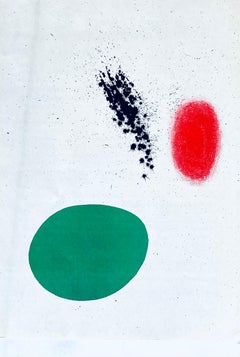
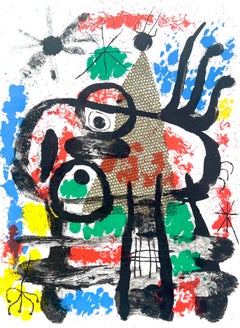
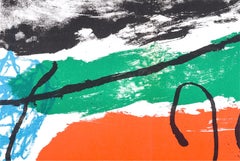
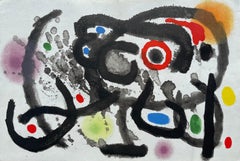
Joan Miro, Mural Ceramic for Harvard, from Derriere le Miroir, 1961

Joan Miro, Mural Ceramic for Harvard, from Derriere le Miroir, 1961

By Joan Miró

Located in Southampton, NY

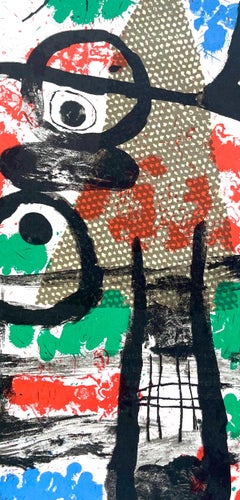
This exquisite lithograph by Joan Miro (1893–1983), titled Ceramique Murale pour Harvard (Mural Ceramic for Harvard), originates from the February 1961 folio Derriere le Miroir, No. 123, published by Maeght Editeur, Paris, under the direction of Aime Maeght, and printed by Imprimerie Arte, Paris, 1961. The composition documents Miro’s monumental ceramic project conceived for Harvard University, translating architectural scale and material experimentation into a graphic language of signs, rhythms, and chromatic force that reflects his mature synthesis of abstraction, symbolism, and public art. Executed on velin paper, this lithograph measures 15 x 22 inches (38.1 x 55.88 cm), with centerfold, as issued. Unsigned and unnumbered, as issued. The edition reflects the refined technical standards and craftsmanship of Imprimerie Arte, Paris. Artwork Details: Artist: Joan Miro (1893–1983) Title: Ceramique Murale pour Harvard (Mural Ceramic for Harvard), from Derriere le Miroir, No. 123, February 1961 Medium: Lithograph on velin paper Dimensions: 15 x 22 inches (38.1 x 55.88 cm), with centerfold, as issued Inscription: Unsigned and unnumbered as issued Date: 1961 Publisher: Maeght Editeur, Paris Printer: Imprimerie Arte, Paris Condition: Well preserved, consistent with age and medium Provenance: From the February 1961 folio Derriere le Miroir, No. 123, published by Maeght Editeur, Paris About the Publication: Derriere le Miroir (translated as "Behind the Mirror") was an iconic French art periodical published from 1946 to 1982 by Maeght Editeur, one of the most influential art publishers of the twentieth century. Founded by Aime Maeght in Paris, the publication was conceived as a visual and literary collaboration between leading modern artists, poets, and critics. Each issue functioned simultaneously as an exhibition catalogue and as an autonomous work of art, featuring original lithographs printed directly from the artists stones or plates alongside essays, poems, and critical texts. Over more than three decades, Derriere le Miroir produced over 250 issues and presented an extraordinary range of artists including Henri Matisse, Marc Chagall, Georges Braque, Alexander Calder, Fernand Leger, Pierre Bonnard, Alberto Giacometti, Eduardo Chillida, Ellsworth Kelly, Francis Bacon, Antoni Tapies, Pierre Alechinsky, Pol Bury, Bram van Velde, and many others. Printed by master ateliers such as Mourlot and Arte, the series established new standards of excellence in modern lithography and graphic design. Closely linked to exhibitions at Galerie Maeght, each issue served as a lasting document of postwar modernism, uniting image, text, and philosophy into a uniquely influential publication that remains among the most important and collectible achievements in twentieth century art publishing. About the Artist: Joan Miro (1893–1983) was a Catalan painter, sculptor, printmaker, and ceramicist whose visionary imagination and lyrical abstraction made him one of the most influential and beloved artists of the twentieth century. Born in Barcelona, Miro drew inspiration from Catalan folk art, Romanesque frescoes, and the luminous landscapes of Mont-roig del Camp, developing a deep connection to nature that infused his work with vitality and symbolism. After formal training at the Escola d'Art in Barcelona, he absorbed the lessons of Post-Impressionism and Cubism before moving to Paris in the early 1920s, where he became a leading figure in the Surrealist movement. There, Miro forged a personal visual language of biomorphic shapes, floating symbols, and radiant color harmonies that reflected both spontaneity and spiritual depth. In creative dialogue with peers such as Alexander Calder, Alberto Giacometti, Salvador Dali, Wassily Kandinsky, Marcel Duchamp, and Man Ray, he helped revolutionize modern art by dissolving the boundaries between abstraction and dream imagery. Miro's inventive approach extended far beyond painting, embracing sculpture, ceramics, and monumental public commissions that redefined how art could interact with space and emotion. His expressive freedom and gestural abstraction profoundly influenced later artists including Jackson Pollock, Mark Rothko, Alexander Calder, Jean Dubuffet, Antoni Tapies, and Joan Mitchell, inspiring generations who sought to merge instinct, color, and imagination. Today, Miro's work remains a cornerstone of modernism, prized by collectors and celebrated in major museums worldwide. His highest auction record was achieved by Peinture (Etoile Bleue) (1927), which sold for approximately 37 million USD at Sothebys London on June 19, 2012. Joan Miro Ceramique...

Category

1960s Surrealist Figurative Prints

Materials

Lithograph
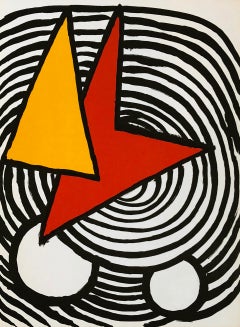
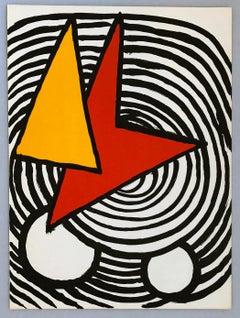
Alexander Calder lithograph derrière le miroir (Calder prints)

Alexander Calder lithograph derrière le miroir (Calder prints)

By Alexander Calder

Located in NEW YORK, NY

Alexander Calder Lithograph c. 1973 from Derrière le miroir: Lithograph in colors; 15 x 11 inches. Very good overall vintage condition; well-preseved. Unsigned from an edition of u...
Category

1970s Abstract Abstract Prints

Materials

Lithograph
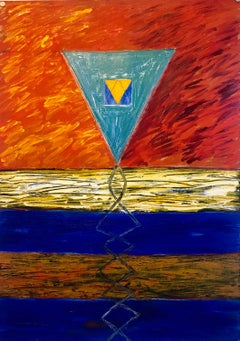
Joan Kahn Rome Vibrant Bold Color Abstract Expressionist Modernist Oil Painting

Joan Kahn Rome Vibrant Bold Color Abstract Expressionist Modernist Oil Painting

By Joan Kahn

Located in Surfside, FL

Oil paint on heavy tar paper. Hand signed and dated verso. Joan Kahn (USA 1953-) grew up in New York City; Princeton, New Jersey; and Vermont; in an environment that patronized the arts. At home her father, a professor, and mother, a state economist and homemaker, collected nineteenth and twentieth century drawings and prints, Middle eastern rugs, and ceramics, pewter, and old tools. Her grandfather, Max Westfield, was an academically trained portrait painter and her great uncle was a well-known gallery owner and art dealer in pre-World War II Germany. One of the influential experiences of Joan’s youth was visiting her grandfather in his studio in Tennessee where the family had first immigrated. Growing up near New York, and spending a year in Paris during high school, provided formative visits to museums and galleries. Joan was academically talented in grade and high school, but after her father’s death during her first years at university she found herself concentrating on studio and history of art. It was a subject above others absorbed and concentrated her focus. Influential in Joan’s development and later work are the historic movements of the Bauhaus and Modernist design and architecture, geometric art and design of diverse cultures, Color Field Painting. Many artists have had a impact on her work, such as Paul Klee, Piet Mondrian, Sonia Delaunay, Mark Rothko, Ad Reinhardt, Antoni Tapies, David Smith, John McLaughlin, Tony Smith, Louise Nevelson, Robert Mangold, Ellsworth Kelly, Agnes Martin, Valerie Jaudon, Jasper Johns, James Turrell, Robert Irwin, Vija Celmins, Caio Fonseca, Peter Halley, Ed Moses, Juan Usle, and Nancy Haynes...

Category

1980s Abstract Expressionist Abstract Paintings

Materials

Oil

Hans Jean Arp, Man, from XXe Siecle, 1957

Hans Jean Arp, Man, from XXe Siecle, 1957

By Hans Jean Arp

Located in Southampton, NY

This exquisite lithograph and pochoir by Hans Jean Arp (1886–1966), titled Homme (Man), from the album XXe Siecle, Nouvelle serie, No. 8 (double), Janvier 1957, originates from the 1...

Category

1950s Modern Abstract Prints

Materials

Lithograph
Henri Matisse, Nude Woman, from Derriere le Miroir, 1952 (after)

Henri Matisse, Nude Woman, from Derriere le Miroir, 1952 (after)

By Henri Matisse

Located in Southampton, NY

This exquisite lithograph after Henri Matisse (1869–1954), titled Femme nue (Nude Woman), originates from the 1952 folio Derriere le Miroir, No. 46–47, published by Maeght Editeur, P...
Category

1950s Modern Figurative Prints

Materials

Lithograph
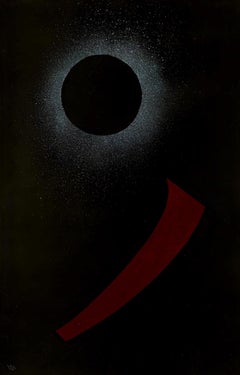
Fernand Leger, Still Life, from Derriere le miroir, 1955 (after)

Fernand Leger, Still Life, from Derriere le miroir, 1955 (after)

By Fernand Léger

Located in Southampton, NY

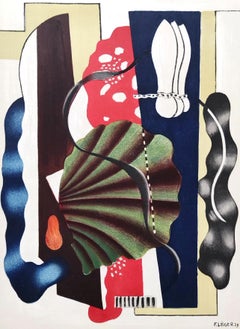
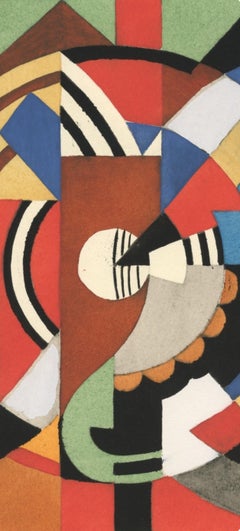
This exquisite lithograph after Fernand Leger (1881–1955), titled Nature morte (Still Life), from the folio Derriere le miroir, No. 79-81, originates from the 1955 edition published by Maeght Editeur, Paris, and printed by Mourlot Freres, Paris, 1955. This composition exemplifies Leger’s rhythmic balance of color, form, and movement, translating the mechanical vitality of modern life into a harmonious, humanized geometry. Executed as a lithograph on velin paper, this work measures 15 x 11 inches. Signed in the plate and unnumbered as issued. The edition exemplifies the superb craftsmanship of Mourlot Freres, Paris. Artwork Details: Artist: After Fernand Leger (1881–1955) Title: Nature morte (Still Life), from the folio Derriere le miroir, No. 79-81 Medium: Lithograph on velin paper Dimensions: 15 x 11 inches (38.1 x 27.94 cm) Inscription: Signed in the plate and unnumbered as issued Date: 1955 Publisher: Maeght Editeur, Paris Printer: Mourlot Freres, Paris Condition: Well preserved, consistent with age and medium Provenance: From the folio Derriere le miroir, No. 79-81, published by Maeght Editeur, Paris; printed by Mourlot Freres, Paris, 1955 About the Publication: Derriere le miroir (Behind the Mirror) was one of the most important art publications of the 20th century, created and published by Maeght Editeur in Paris from 1946 to 1982. Founded by the visionary art dealer and publisher Aime Maeght, the series served as both an exhibition catalogue and a work of art in its own right, uniting original lithographs by leading modern and contemporary artists with critical essays, poetry, and design of the highest quality. Printed by master lithographers such as Mourlot Freres and Arte, Derriere le miroir became synonymous with the artistic vanguard of postwar Europe. Each issue was devoted to a single artist or theme and published to accompany exhibitions at the Galerie Maeght in Paris, featuring works by Pablo Picasso, Henri Matisse, Georges Braque, Joan Miro, Marc Chagall, Alexander Calder, Fernand Leger, and Alberto Giacometti, among others. The publication reflected Maeght's belief that art should be both accessible and elevated—an ideal realized through its luxurious production values, meticulous printing, and collaboration with the greatest creative minds of its time. About the Artist: Fernand Leger (1881–1955) was a visionary French painter, sculptor, designer, and filmmaker whose groundbreaking fusion of modern industry, vivid color, and geometric form transformed the course of 20th-century art. Born in Argentan, Normandy, Leger began as an architectural draftsman before studying at the Academie Julian and the Ecole des Beaux-Arts in Paris, where he absorbed the lessons of Paul Cezanne’s structural rigor and the revolutionary ideas of Cubism. Alongside Pablo Picasso and Georges Braque, he became one of the leading innovators of the avant-garde, yet his work stood apart through its embrace of mechanical rhythm, bold contrasts, and industrial modernity—earning him the title “the painter of the machine age.” His art celebrated the beauty of technology, urban life, and the human form rendered in dynamic, interlocking cylinders and planes, evoking the pulse of the modern world. Immersed in the vibrant Parisian art scene, Leger worked in dialogue with peers and contemporaries such as Alexander Calder, Alberto Giacometti, Salvador Dali, Joan Miro, Wassily Kandinsky, Marcel Duchamp, and Man Ray, all of whom shared his commitment to innovation and the reimagining of artistic expression. Beyond painting, Leger’s creative reach extended into film, design, and monumental public art—his 1924 collaboration on Ballet Mecanique with Dudley Murphy and Man Ray remains a landmark of avant-garde cinema. His later works evolved toward greater clarity and monumentality, celebrating the unity of form, color, and humanity through large-scale murals and mosaics that bridged fine art and architecture. Leger’s synthesis of Cubism, Futurism, and abstraction paved the way for movements such as Pop Art and influenced generations of artists including Roy Lichtenstein, Ellsworth Kelly, Robert Indiana, and Alexander Calder, who admired his fusion of structure, energy, and optimism. Today, his works are prized by major museums and collectors worldwide for their bold visual power and enduring modernity. His highest auction record was achieved by La femme en rouge et vert (1914), which sold for 39,241,000 USD at Sotheby’s, New York, on May 7, 2008. After Fernand Leger Nature morte 1955, Leger Derriere le miroir No. 79-81, Leger Mourlot...
Category

1950s Cubist Still-life Prints

Materials

Lithograph
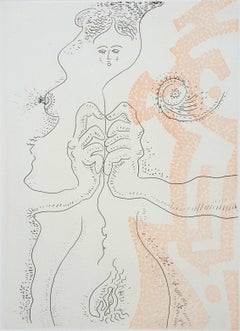
Joan Miro, Untitled, from Derriere le Miroir, 1961

Joan Miro, Untitled, from Derriere le Miroir, 1961

By Joan Miró

Located in Southampton, NY

This exquisite lithograph by Joan Miro (1893–1983), titled Sans titre (Untitled), originates from the April 1961 folio Derriere le Miroir, No. 125-126, published by Maeght Editeur, P...

Category

1960s Surrealist Figurative Prints

Materials

Lithograph
Bend 2 (Abstract Painting)

Bend 2 (Abstract Painting)

By Holly Miller

Located in London, GB

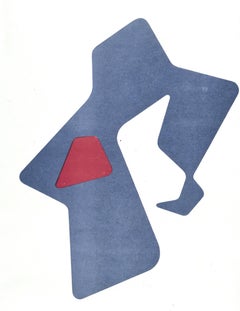
Bend 2 (Abstract Painting) Acrylic, graphite and thread on canvas - Unframed The threaded lines suggest a physical barrier that interrupts the shapes and stops them from connecting...

Category

2010s Minimalist Abstract Paintings

Materials

Canvas, Thread, Acrylic, Graphite

Bend 12 (Abstract painting)

Bend 12 (Abstract painting)

By Holly Miller

Located in London, GB

Bend 12 (Abstract painting) Acrylic, graphite and thread on canvas - Unframed The threaded lines suggest a physical barrier that interrupts the shapes and stops them from connectin...

Category

2010s Minimalist Abstract Paintings

Materials

Canvas, Thread, Acrylic, Graphite

Bend 2 (Abstract Painting)

Bend 2 (Abstract Painting)

By Holly Miller

Located in London, GB

Bend 2 (Abstract Painting) Acrylic, graphite and thread on canvas - Unframed The threaded lines suggest a physical barrier that interrupts the shapes and stops them from connecting...

Category

2010s Minimalist Abstract Paintings

Materials

Canvas, Thread, Acrylic, Graphite

Bend 12 (Abstract painting)

Bend 12 (Abstract painting)

By Holly Miller

Located in London, GB

Bend 12 (Abstract painting) Acrylic, graphite and thread on canvas - Unframed The threaded lines suggest a physical barrier that interrupts the shapes and stops them from connectin...

Category

2010s Minimalist Abstract Paintings

Materials

Canvas, Thread, Acrylic, Graphite

Soothe 1 (Abstract Painting)

Soothe 1 (Abstract Painting)

By Holly Miller

Located in London, GB

Soothe 1 (Abstract Painting) Acrylic, graphite and thread on canvas - Unframed The threaded lines suggest a physical barrier that interrupts the shapes and stops them from connecti...

Category

2010s Minimalist Abstract Paintings

Materials

Canvas, Thread, Acrylic, Graphite

Bend 12 (Abstract painting)

Bend 12 (Abstract painting)

By Holly Miller

Located in London, GB

Bend 12 (Abstract painting) Acrylic, graphite and thread on canvas - Unframed The threaded lines suggest a physical barrier that interrupts the shapes and stops them from connectin...

Category

2010s Minimalist Abstract Paintings

Materials

Canvas, Thread, Acrylic, Graphite

Bend 12 (Abstract painting)

Bend 12 (Abstract painting)

By Holly Miller

Located in London, GB

Acrylic, graphite and thread on canvas - Unframed The threaded lines suggest a physical barrier that interrupts the shapes and stops them from connecting and at the same time a tran...

Category

2010s Minimalist Abstract Paintings

Materials

Canvas, Thread, Acrylic, Graphite

Bend 2
Bend 2

Bend 2

By Holly Miller

Located in London, GB

Acrylic, graphite and thread on canvas - Unframed The threaded lines suggest a physical barrier that interrupts the shapes and stops them from connecting and at the same time a tran...

Category

2010s Minimalist Abstract Paintings

Materials

Canvas, Thread, Acrylic, Graphite

Pablo Palazuelo, Untitled, from Derriere le Miroir, 1963

Pablo Palazuelo, Untitled, from Derriere le Miroir, 1963

By Pablo Palazuelo

Located in Southampton, NY

This exquisite lithograph by Pablo Palazuelo (1915–2007), titled Sans titre (Untitled), originates from the 1963 folio Derriere le Miroir, No. 137, published by Maeght Editeur, Paris...

Category

1960s Abstract Geometric Abstract Prints

Materials

Lithograph
Henri de Toulouse-Lautrec, Invitation to a Glass of Milk, 1966 (after)

Henri de Toulouse-Lautrec, Invitation to a Glass of Milk, 1966 (after)

By Henri de Toulouse-Lautrec

Located in Southampton, NY

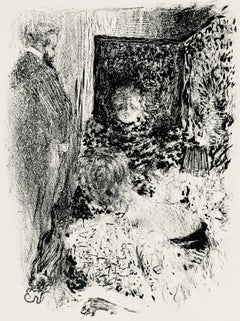
This exquisite lithograph after Henri de Toulouse-Lautrec (1864–1901), titled Invitation a un verre de lait (Invitation to a Glass of Milk), originates from the 1966 folio Derriere l...
Category

1960s Post-Impressionist Figurative Prints

Materials

Lithograph
Georges Braque, The Bird and Its Nest, from Derriere le Miroir, 1964 (after)

Georges Braque, The Bird and Its Nest, from Derriere le Miroir, 1964 (after)

By Georges Braque

Located in Southampton, NY

This exquisite lithograph after Georges Braque (1882–1963), titled L’Oiseau et son nid (The Bird and Its Nest), originates from the 1964 folio Derriere le Miroir, Nos. 144–145–146, L...
Category

1960s Cubist Animal Prints

Materials

Lithograph
Wassily Kandinsky, Untitled, from Derriere le Miroir, 1960 (after)

Wassily Kandinsky, Untitled, from Derriere le Miroir, 1960 (after)

By Wassily Kandinsky

Located in Southampton, NY

This exquisite lithograph after Wassily Kandinsky (1866–1944), titled Sans Titre (Untitled), originates from the 1960 folio Derriere le Miroir, No. 119, Poetes, peintres, sculpteurs (Poets, Painters, Sculptors), published by Maeght Editeur, Paris, under the direction of Aime Maeght, and printed by Mourlot Freres, Paris. This plate pays homage to the artist’s groundbreaking geometric abstraction and his profound influence on postwar modernism. Through precise form and rhythmic structure, Sans Titre captures the musicality and spiritual dynamism that defined Kandinsky’s mature visual language, balancing intuitive movement with mathematical harmony. Executed on velin paper, this lithograph measures 15 x 11 inches (38.1 x 27.9 cm), as issued. Signed in the plate and unnumbered, as issued. The edition reflects the exceptional quality and craftsmanship of the Maeght and Mourlot collaborations, honoring Kandinsky’s legacy in fine art printing. Artwork Details: Artist: After Wassily Kandinsky (1866–1944) Title: Sans Titre (Untitled), from Derriere le Miroir, No. 119, Poetes, peintres, sculpteurs (Poets, Painters, Sculptors), 1960 Medium: Lithograph on velin paper Dimensions: 15 x 11 inches (38.1 x 27.9 cm), as issued Inscription: Signed in the plate and unnumbered, as issued Date: 1960 Publisher: Maeght Editeur, Paris Printer: Mourlot Freres, Paris Condition: Well preserved, consistent with age and medium Provenance: From the 1960 folio Derriere le Miroir, No. 119, Poetes, peintres, sculpteurs (Poets, Painters, Sculptors), published by Maeght Editeur, Paris About the Publication: Derriere le Miroir (translated as "Behind the Mirror") was an iconic French art periodical published from 1946 to 1982 by Maeght Editeur, one of the most influential art publishers of the 20th century. Founded by Aime Maeght in Paris, the publication was conceived as a visual and literary collaboration between leading modern artists, poets, and critics. Each issue functioned as both an exhibition catalogue and a work of art in itself—featuring original lithographs printed directly from the artists' stones or plates, alongside essays, poems, and critical commentary. Over the course of 36 years, Derriere le Miroir produced more than 250 issues and showcased an extraordinary roster of artists including Henri Matisse, Marc Chagall, Joan Miro, Georges Braque, Alexander Calder, Fernand Leger, Pierre Bonnard, Alberto Giacometti, Eduardo Chillida, Ellsworth Kelly, Francis Bacon, Paul Rebeyrolle, Claude Garache, Antoni Tapies, Bram van Velde, Pierre Alechinsky, Pol Bury, Shusaku Arakawa, and Gerard Titus-Carmel. Printed in the ateliers of Mourlot, Arte, and Imprimerie Moderne du Lion, the periodical set new standards for quality in color lithography, combining fine art printing with elegant typography and poetic text. Beyond its visual brilliance, Derriere le Miroir also became a cultural chronicle of postwar European modernism. Each issue coincided with exhibitions held at Galerie Maeght, providing a collectible and widely accessible record of groundbreaking shows. Its integration of image, text, and philosophy created a dialogue between art and literature that elevated the modern art book to new aesthetic heights. Today, Derriere le Miroir remains one of the most sought-after and historically significant art publications, prized by collectors and scholars alike for its craftsmanship, influence, and its role in defining the visual language of 20th-century modernism. The Maeght Foundation in Saint-Paul-de-Vence continues to honor this legacy through exhibitions and archival preservation of the series, affirming Derriere le Miroir's enduring place in the history of modern art and fine art publishing. About the Artist: Wassily Kandinsky (1866–1944) was a Russian-born painter, theorist, and pioneer of abstract art whose revolutionary vision transformed 20th-century modernism. Regarded as one of the first artists to create purely nonobjective paintings, Kandinsky sought to express inner emotion and spirituality through color, rhythm, and form, believing that art could evoke the same universal harmony as music. His groundbreaking theories on abstraction and the “spiritual in art” shaped the foundation of modern aesthetics and influenced generations of artists worldwide. Closely associated with the Bauhaus movement, he developed a dynamic visual language that combined geometry and lyricism, bridging intuition and intellect. Kandinsky’s legacy resonates alongside the innovations of Pablo Picasso, Henri Matisse, Alexander Calder, Georges Braque, Marc Chagall, Alberto Giacometti, Salvador Dali, Joan Miro, Marcel Duchamp, and Man Ray—artists who, like him, redefined the possibilities of modern art. His works are represented in the world’s leading museums, including MoMA, the Guggenheim, the Centre Pompidou, and the Tate, and remain among the most coveted by collectors globally. The highest price ever paid for a Wassily Kandinsky artwork is approximately $45.6 million USD, achieved in 2017 at Christie’s London for Bild mit weissen Linien (Painting with White Lines) (1913). Wassily Kandinsky Sans Titre, Kandinsky Derriere le Miroir, Kandinsky Maeght Editeur Paris, Kandinsky Mourlot Freres, Kandinsky 1960 edition, Kandinsky lithograph...
Category

1960s Modern Abstract Prints

Materials

Lithograph
Joan Miro, Overweavings, from Derriere le Miroir, 1973

Joan Miro, Overweavings, from Derriere le Miroir, 1973

By Joan Miró

Located in Southampton, NY

This exquisite lithograph by Joan Miro (1893–1983), titled Sobreteixims (Overweavings), originates from the April 1973 folio Derriere le Miroir, No. 203, published by Maeght Editeur, Paris, under the direction of Aime Maeght, and printed by Imprimerie Arte, Paris, 1973. The composition reflects Miro’s late exploration of materiality, sign, and gesture, where dense textures and symbolic forms converge into a powerful synthesis of abstraction, surface, and poetic invention. Executed on velin paper, this lithograph measures 15 x 22 inches (38.1 x 55.88 cm), with centerfold, as issued. Unsigned and unnumbered, as issued. The edition reflects the refined technical standards and craftsmanship of Imprimerie Arte, Paris. Artwork Details: Artist: Joan Miro (1893–1983) Title: Sobreteixims (Overweavings), from Derriere le Miroir, No. 203, April 1973 Medium: Lithograph on velin paper Dimensions: 15 x 22 inches (38.1 x 55.88 cm), with centerfold, as issued Inscription: Unsigned and unnumbered, as issued Date: 1973 Publisher: Maeght Editeur, Paris Printer: Imprimerie Arte, Paris Catalogue raisonne reference: Miro, Joan, et al. Joan Miro Lithographe. Maeght, 1972–1992, illustration 889-891; Cramer, Patrick. Joan Miro: The Illustrated Books: Catalogue Raisonne. Patrick Cramer, 1989, illustration 167 Condition: Well preserved, consistent with age and medium Provenance: From the April 1973 folio Derriere le Miroir, No. 203, published by Maeght Editeur, Paris Notes: Excerpted from the folio (translated from French), The illustrations on the cover and pages 4-5 and 12-13 of this issue of "Behind the Mirror" are original lithographs by Miro drawn in the workshops of l'imprimerie Arte, Adrien Maeght. The four-colors were made by Graphic Panther. A luxury edition on Arches velin was printed with CL examples, numbered and signed by the artist. About the Publication: Derriere le Miroir (translated as "Behind the Mirror") was an iconic French art periodical published from 1946 to 1982 by Maeght Editeur, one of the most influential art publishers of the twentieth century. Founded by Aime Maeght in Paris, the publication was conceived as a visual and literary collaboration between leading modern artists, poets, and critics. Each issue functioned simultaneously as an exhibition catalogue and as an autonomous work of art, featuring original lithographs printed directly from the artists stones or plates alongside essays, poems, and critical texts. Over more than three decades, Derriere le Miroir produced over 250 issues and presented an extraordinary range of artists including Henri Matisse, Marc Chagall, Georges Braque, Alexander Calder, Fernand Leger, Pierre Bonnard, Alberto Giacometti, Eduardo Chillida, Ellsworth Kelly, Francis Bacon, Antoni Tapies, Pierre Alechinsky, Pol Bury, Bram van Velde, and many others. Printed by master ateliers such as Mourlot and Arte, the series established new standards of excellence in modern lithography and graphic design. Closely linked to exhibitions at Galerie Maeght, each issue served as a lasting document of postwar modernism, uniting image, text, and philosophy into a uniquely influential publication that remains among the most important and collectible achievements in twentieth century art publishing. About the Artist: Joan Miro (1893–1983) was a Catalan painter, sculptor, printmaker, and ceramicist whose visionary imagination and lyrical abstraction made him one of the most influential and beloved artists of the twentieth century. Born in Barcelona, Miro drew inspiration from Catalan folk art, Romanesque frescoes, and the luminous landscapes of Mont-roig del Camp, developing a deep connection to nature that infused his work with vitality and symbolism. After formal training at the Escola d'Art in Barcelona, he absorbed the lessons of Post-Impressionism and Cubism before moving to Paris in the early 1920s, where he became a leading figure in the Surrealist movement. There, Miro forged a personal visual language of biomorphic shapes, floating symbols, and radiant color harmonies that reflected both spontaneity and spiritual depth. In creative dialogue with peers such as Alexander Calder, Alberto Giacometti, Salvador Dali, Wassily Kandinsky, Marcel Duchamp, and Man Ray, he helped revolutionize modern art by dissolving the boundaries between abstraction and dream imagery. Miro's inventive approach extended far beyond painting, embracing sculpture, ceramics, and monumental public commissions that redefined how art could interact with space and emotion. His expressive freedom and gestural abstraction profoundly influenced later artists including Jackson Pollock, Mark Rothko, Alexander Calder, Jean Dubuffet, Antoni Tapies, and Joan Mitchell, inspiring generations who sought to merge instinct, color, and imagination. Today, Miro's work remains a cornerstone of modernism, prized by collectors and celebrated in major museums worldwide. His highest auction record was achieved by Peinture (Etoile Bleue) (1927), which sold for approximately 37 million USD at Sothebys London on June 19, 2012. Joan Miro Sobreteixims...
Category

1970s Surrealist Figurative Prints

Materials

Lithograph

Le Fil d'Ariane (Ariadne's Clew) /// Modern Surrealism Surrelist Andre Masson

Le Fil d'Ariane (Ariadne's Clew) /// Modern Surrealism Surrelist Andre Masson

By André Masson

Located in Saint Augustine, FL

Artist: André Masson (French, 1896-1987) Title: "Le Fil d'Ariane (Ariadne's Clew)" Portfolio: For Meyer Schapiro *Signed by Masson in pencil lower right Year: 1973 Medium: Original E...

Category

1970s Surrealist Nude Prints

Materials

Intaglio, Aquatint, Etching

Pablo Palazuelo, Untitled, from Derriere le Miroir, 1970

Pablo Palazuelo, Untitled, from Derriere le Miroir, 1970

By Pablo Palazuelo

Located in Southampton, NY

This exquisite lithograph by Pablo Palazuelo (1915–2007), titled Sans titre (Untitled), originates from the 1970 folio Derriere le Miroir, No. 180, published by Maeght Editeur, Paris...

Category

1970s Abstract Geometric Abstract Prints

Materials

Lithograph

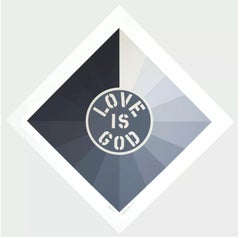
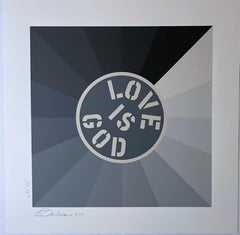
Love Is God, Silkscreen on 2 ply Rising Museum Board Signed 33/50 Iconic work

Love Is God, Silkscreen on 2 ply Rising Museum Board Signed 33/50 Iconic work

By Robert Indiana

Located in New York, NY

Robert Indiana Love Is God, 2014 Silkscreen on 2 ply Rising Museum Board Published by Gary Lichtenstein Editions 32 × 32 inches Hand signed and numbered 33/50 in graphite pencil on the front Unframed One of the most profound Robert Indiana silkscreens...

Category

2010s Pop Art Abstract Prints

Materials

Board, Pencil, Screen

Joan Miro, Album 19, Plate 5, from Derriere le Miroir, 1960

Joan Miro, Album 19, Plate 5, from Derriere le Miroir, 1960

By Joan Miró

Located in Southampton, NY

This exquisite lithograph by Joan Miro (1893–1983), titled Album 19, Planche 5 (Album 19, Plate 5), originates from the 1960 folio Derriere le Miroir, No. 121-122, published by Maeght Editeur, Paris, under the direction of Aime Maeght, and printed by Imprimerie Arte, Paris, 1960. The composition reflects Miro’s mature graphic language of the late 1950s and early 1960s, where calligraphic line, symbolic form, and chromatic restraint converge into a distilled visual syntax. The work exemplifies his exploration of spontaneity, rhythm, and cosmic metaphor within the controlled framework of lithography. Executed on velin paper, this lithograph measures 15 x 11 inches (38.1 x 27.94 cm). Unsigned and unnumbered as issued. The edition reflects the refined technical standards and craftsmanship of Imprimerie Arte, Paris. Artwork Details: Artist: Joan Miro (1893–1983) Title: Album 19, Planche 5 (Album 19, Plate 5), from Derriere le Miroir, No. 121-122, 1960 Medium: Lithograph on velin paper Dimensions: 15 x 11 inches (38.1 x 27.94 cm) Inscription: Unsigned and unnumbered as issued Date: 1960 Publisher: Maeght Editeur, Paris Printer: Imprimerie Arte, Paris Catalogue raisonne reference: Miro, Joan, et al. Joan Miro Lithographe. Maeght, 1972–1992, illustration 316; Cramer, Patrick. Joan Miro: The Illustrated Books: Catalogue Raisonne. Patrick Cramer, 1989, illustration 79 Condition: Well preserved, consistent with age and medium Provenance: From the 1960 folio Derriere le Miroir, No. 121-122, published by Maeght Editeur, Paris About the Publication: Derriere le Miroir (translated as "Behind the Mirror") was an iconic French art periodical published from 1946 to 1982 by Maeght Editeur, one of the most influential art publishers of the twentieth century. Founded by Aime Maeght in Paris, the publication was conceived as a visual and literary collaboration between leading modern artists, poets, and critics. Each issue functioned as both an exhibition catalogue and an autonomous work of art, featuring original lithographs printed directly from the artists stones or plates alongside essays, poems, and critical texts. Over more than three decades, Derriere le Miroir produced over 250 issues and presented an extraordinary range of artists including Henri Matisse, Marc Chagall, Georges Braque, Alexander Calder, Fernand Leger, Pierre Bonnard, Alberto Giacometti, Eduardo Chillida, Ellsworth Kelly, Francis Bacon, Antoni Tapies, Pierre Alechinsky, Pol Bury, Bram van Velde, and many others. Printed by master ateliers such as Mourlot and Arte, the series established new standards of excellence in modern lithography and graphic design. Closely linked to exhibitions at Galerie Maeght, each issue served as a lasting document of postwar modernism, uniting image, text, and philosophy into a uniquely influential publication that remains among the most important and collectible achievements in twentieth century art publishing. About the Artist: Joan Miro (1893–1983) was a Catalan painter, sculptor, printmaker, and ceramicist whose visionary imagination and lyrical abstraction made him one of the most influential and beloved artists of the twentieth century. Born in Barcelona, Miro drew inspiration from Catalan folk art, Romanesque frescoes, and the luminous landscapes of Mont-roig del Camp, developing a deep connection to nature that infused his work with vitality and symbolism. After formal training at the Escola d'Art in Barcelona, he absorbed the lessons of Post-Impressionism and Cubism before moving to Paris in the early 1920s, where he became a leading figure in the Surrealist movement. There, Miro forged a personal visual language of biomorphic shapes, floating symbols, and radiant color harmonies that reflected both spontaneity and spiritual depth. In creative dialogue with peers such as Alexander Calder, Alberto Giacometti, Salvador Dali, Wassily Kandinsky, Marcel Duchamp, and Man Ray, he helped revolutionize modern art by dissolving the boundaries between abstraction and dream imagery. Miro's inventive approach extended far beyond painting, embracing sculpture, ceramics, and monumental public commissions that redefined how art could interact with space and emotion. His expressive freedom and gestural abstraction profoundly influenced later artists including Jackson Pollock, Mark Rothko, Alexander Calder, Jean Dubuffet, Antoni Tapies, and Joan Mitchell, inspiring generations who sought to merge instinct, color, and imagination. Today, Miro's work remains a cornerstone of modernism, prized by collectors and celebrated in major museums worldwide. His highest auction record was achieved by Peinture (Etoile Bleue) (1927), which sold for approximately 37 million USD at Sothebys, London, on June 19, 2012. Joan Miro Album 19...

Category

1960s Surrealist Figurative Prints

Materials

Lithograph

Pablo Palazuelo, Untitled, from Derriere le Miroir, 1963

Pablo Palazuelo, Untitled, from Derriere le Miroir, 1963

By Pablo Palazuelo

Located in Southampton, NY

This exquisite lithograph by Pablo Palazuelo (1915–2007), titled Sans titre (Untitled), originates from the 1963 folio Derriere le Miroir, No. 137, published by Maeght Editeur, Paris...

Category

1960s Abstract Geometric Abstract Prints

Materials

Lithograph

Alberto Giacometti, Bust II, from Derriere le Miroir, 1960

Alberto Giacometti, Bust II, from Derriere le Miroir, 1960

By Alberto Giacometti

Located in Southampton, NY

This exquisite lithograph by Alberto Giacometti (1901–1966), titled Buste II (Bust II), originates from the 1960 folio Derriere le Miroir, No. 119, Poetes, peintres, sculpteurs (Poet...

Category

1960s Modern Abstract Prints

Materials

Lithograph

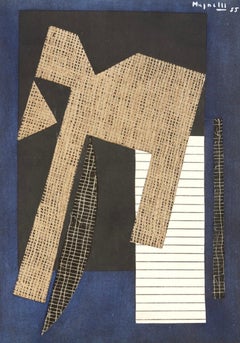
Alberto Magnelli, Composition, from XXe Siecle, 1967

Alberto Magnelli, Composition, from XXe Siecle, 1967

By Alberto Magnelli

Located in Southampton, NY

This exquisite lithograph by Alberto Magnelli (1888–1971), titled Composition, from the album XXe Siecle, Nouvelle serie, XXIXe Annee No. 29, Decembre 1967, Panorama 70, 1967, origin...

Category

1960s Modern Abstract Prints

Materials

Lithograph

Fernand Leger, Composition with Three Keys, Derriere le miroir, 1955 (after)

Fernand Leger, Composition with Three Keys, Derriere le miroir, 1955 (after)

By Fernand Léger

Located in Southampton, NY

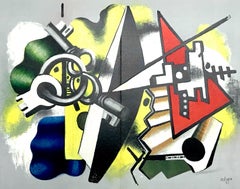
This exquisite lithograph after Fernand Leger (1881–1955), titled Composition aux trois cles (Composition with Three Keys), from the folio Derriere le miroir, No. 79-81, originates from the 1955 edition published by Maeght Editeur, Paris, and printed by Mourlot Freres, Paris, 1955. This composition exemplifies Leger’s rhythmic balance of color, form, and movement, translating the mechanical vitality of modern life into a harmonious, humanized geometry. Executed as a lithograph on velin paper, this work measures 15 x 22 inches, with centerfold as issued. Signed in the plate and unnumbered as issued. The edition exemplifies the superb craftsmanship of Mourlot Freres, Paris. Artwork Details: Artist: After Fernand Leger (1881–1955) Title: Composition aux trois cles (Composition with Three Keys), from the folio Derriere le miroir, No. 79-81 Medium: Lithograph on velin paper Dimensions: 15 x 22 inches (38.1 x 55.88 cm), with centerfold as issued Inscription: Signed in the plate and unnumbered as issued Date: 1955 Publisher: Maeght Editeur, Paris Printer: Mourlot Freres, Paris Condition: Well preserved, consistent with age and medium Provenance: From the folio Derriere le miroir, No. 79-81, published by Maeght Editeur, Paris; printed by Mourlot Freres, Paris, 1955 About the Publication: Derriere le miroir (Behind the Mirror) was one of the most important art publications of the 20th century, created and published by Maeght Editeur in Paris from 1946 to 1982. Founded by the visionary art dealer and publisher Aime Maeght, the series served as both an exhibition catalogue and a work of art in its own right, uniting original lithographs by leading modern and contemporary artists with critical essays, poetry, and design of the highest quality. Printed by master lithographers such as Mourlot Freres and Arte, Derriere le miroir became synonymous with the artistic vanguard of postwar Europe. Each issue was devoted to a single artist or theme and published to accompany exhibitions at the Galerie Maeght in Paris, featuring works by Pablo Picasso, Henri Matisse, Georges Braque, Joan Miro, Marc Chagall, Alexander Calder, Fernand Leger, and Alberto Giacometti, among others. The publication reflected Maeght's belief that art should be both accessible and elevated—an ideal realized through its luxurious production values, meticulous printing, and collaboration with the greatest creative minds of its time. About the Artist: Fernand Leger (1881–1955) was a visionary French painter, sculptor, designer, and filmmaker whose groundbreaking fusion of modern industry, vivid color, and geometric form transformed the course of 20th-century art. Born in Argentan, Normandy, Leger began as an architectural draftsman before studying at the Academie Julian and the Ecole des Beaux-Arts in Paris, where he absorbed the lessons of Paul Cezanne’s structural rigor and the revolutionary ideas of Cubism. Alongside Pablo Picasso and Georges Braque, he became one of the leading innovators of the avant-garde, yet his work stood apart through its embrace of mechanical rhythm, bold contrasts, and industrial modernity—earning him the title “the painter of the machine age.” His art celebrated the beauty of technology, urban life, and the human form rendered in dynamic, interlocking cylinders and planes, evoking the pulse of the modern world. Immersed in the vibrant Parisian art scene, Leger worked in dialogue with peers and contemporaries such as Alexander Calder, Alberto Giacometti, Salvador Dali, Joan Miro, Wassily Kandinsky, Marcel Duchamp, and Man Ray, all of whom shared his commitment to innovation and the reimagining of artistic expression. Beyond painting, Leger’s creative reach extended into film, design, and monumental public art—his 1924 collaboration on Ballet Mecanique with Dudley Murphy and Man Ray remains a landmark of avant-garde cinema. His later works evolved toward greater clarity and monumentality, celebrating the unity of form, color, and humanity through large-scale murals and mosaics that bridged fine art and architecture. Leger’s synthesis of Cubism, Futurism, and abstraction paved the way for movements such as Pop Art and influenced generations of artists including Roy Lichtenstein, Ellsworth Kelly, Robert Indiana, and Alexander Calder, who admired his fusion of structure, energy, and optimism. Today, his works are prized by major museums and collectors worldwide for their bold visual power and enduring modernity. His highest auction record was achieved by La femme en rouge et vert (1914), which sold for 39,241,000 USD at Sotheby’s, New York, on May 7, 2008. After Fernand Leger Composition aux trois cles 1955, Leger Derriere le miroir No. 79-81, Leger Mourlot...

Category

1950s Cubist Still-life Prints

Materials

Lithograph

Alexander Calder Lithographic cover 1966 (Calder Derrière le miroir)

Alexander Calder Lithographic cover 1966 (Calder Derrière le miroir)

By Alexander Calder

Located in NEW YORK, NY

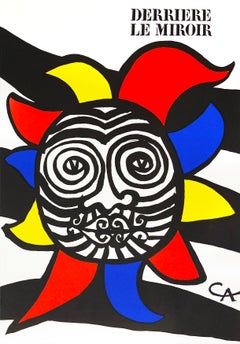
Alexander Calder Lithographic cover from Derrière le miroir c. 1966: Lithographic cover sheet; 15 x 11 inches (folding out to 15 x 22inches; see image 2). Very good overall vintage ...

Category

1960s Contemporary Figurative Prints

Materials

Lithograph

Shusaku Arakawa, Outside blank, from Derriere le Miroir, 1982

Shusaku Arakawa, Outside blank, from Derriere le Miroir, 1982

By Shusaku Arakawa

Located in Southampton, NY

This exquisite lithograph by Shusaku Arakawa (1936–2010), titled Outside Blank, originates from the historic 1982 folio Derriere le Miroir, No. 250, Hommage a Aime et Marguerite Maeg...

Category

1980s Modern Abstract Prints

Materials

Lithograph

Alexander Calder lithograph Derrière le Miroir (Calder prints)

Alexander Calder lithograph Derrière le Miroir (Calder prints)

By Alexander Calder

Located in NEW YORK, NY

Alexander Calder Lithograph c. 1971 from Derrière le miroir: Lithograph in colors; 15 x 11 inches. Very good overall vintage condition. Unsigned from an edition of unknown. From: Derrière le miroir Published Paris c. 1971. Printed in France. Derrière le miroir: In October 1945 the French art dealer Aimé Maeght opens his art gallery at 13 Rue de Téhéran in Paris. His beginning coincides with the end of Second World War and the return of a number of exiled artists back to France. The publication was created in October 1946 (n°1) and published without interruption until 1982 (n°253). Its original articles and illustrations (mainly original color lithographs by the gallery artists) who were famous at the time. The lithographic publication covered only the artists exhibited by Maeght gallery either through personal or group exhibitions. Among them were, Pierre Alechinsky, Francis Bacon, Alexander Calder, Marc Chagall, Eduardo Chillida, Alberto Giacometti, Vassily Kandinsky, Ellsworth Kelly, Fernand Léger, Henri Matisse, Joan Miró, Saul Steinberg and Antoni Tapies. Alexander Calder was an American artist best known for his invention of the kinetic sculptures known as mobiles. Calder also produced a variety of two-dimensional artworks including lithographs, paintings, and tapestries as seen in his Butterfly (1970). “My whole theory about art is the disparity that exists between form, masses, and movement,” the artist once said. Born on August 22, 1898 in Lawnton, PA, Calder turned to art in the 1920s, studying drawing and painting under George Luks and Boardman Robinson at the Art Students League in New York. Calder moved to Paris to continue his studies in 1926, where he was introduced to the European avant-garde through performances of his Cirque Calder (1926–1931). “I was very fond of the spatial relations,” he said of his interest in the circus. “The whole thing of the—the vast space—I’ve always loved it.” With these performances, along with his wire sculptures, Calder attracted the attention of such notable figures as Marcel Duchamp, Jean Arp, and Fernand Léger. Notably, it was his friend Duchamp that coined the term mobile—a pun in French meaning both “motion” and “motive”—during a visit to Calder’s Paris studio in 1931. His earliest mobiles moved by motors, but Calder soon abandoned these mechanics and designed pieces that moved by air currents or human interaction. Over the course of seven decades, along with his mobiles, he also produced paintings, monumental outdoor sculptures, works on paper, domestic objects, and jewelry. The artist lived in both Roxbury, CT, and Saché, France, before his death on November 11, 1976 in New York, NY. Today, his works are held in the collections of The Museum of Modern Art in New York, the National Gallery of Art in Washington, D.C., the Whitney Museum of American Art, New York, the Art Institute of Chicago, and the Tate Gallery in London. Related Categories Calder prints. Mid Century Modern. 1970s. Alexander Calder and Contemporary Art. Mid Century Modern. Calder clowns.

Category

1970s Modern Figurative Prints

Materials

Lithograph

Pablo Palazuelo, Untitled, from Derriere le Miroir, 1963

Pablo Palazuelo, Untitled, from Derriere le Miroir, 1963

By Pablo Palazuelo

Located in Southampton, NY

This exquisite lithograph by Pablo Palazuelo (1915–2007), titled Sans titre (Untitled), originates from the 1963 folio Derriere le Miroir, No. 137, published by Maeght Editeur, Paris...

Category

1960s Abstract Geometric Abstract Prints

Materials

Lithograph

Joan Miro, The Patagonian Star, from Derriere le Miroir, 1960

Joan Miro, The Patagonian Star, from Derriere le Miroir, 1960

By Joan Miró

Located in Southampton, NY

This exquisite lithograph by Joan Miro (1893–1983), titled L'Astre Patagon (The Patagonian Star), originates from the 1960 folio Derriere le Miroir, No. 119, Poetes, peintres, sculpteurs (Poets, Painters, Sculptors), published by Maeght Editeur, Paris, under the direction of Aime Maeght, and printed by Mourlot Freres, Paris. L'Astre Patagon embodies Miro's signature dreamlike abstraction—an interplay of cosmic forms, floating symbols, and lyrical color. This composition radiates the artist’s boundless imagination and his poetic dialogue between the material and the celestial. Executed on velin paper, this lithograph measures 15 x 22 inches (38.1 x 55.9 cm), with centerfold, as issued. Unsigned and unnumbered, as issued. The edition reflects the exceptional quality and craftsmanship of the Maeght and Mourlot collaborations, capturing Miro’s visual rhythm and surreal energy in a strikingly balanced composition. Artwork Details: Artist: Joan Miro (1893–1983) Title: L'Astre Patagon (The Patagonian Star), from Derriere le Miroir, No. 119, Poetes, peintres, sculpteurs (Poets, Painters, Sculptors), 1960 Medium: Lithograph on velin paper Dimensions: 15 x 22 inches (38.1 x 55.9 cm), with centerfold, as issued Inscription: Unsigned and unnumbered, as issued Date: 1960 Publisher: Maeght Editeur, Paris Printer: Mourlot Freres, Paris Catalogue raisonne references: Cramer, Patrick, and Joan Miro. Joan Miro, Catalogue Raisonne des Livres Illustres. P. Cramer, 1989, illustration 62. Miro, Joan. Joan Miro, Lithographe / II, 1953–1963. Preface by Raymond Queneau. Maeght, 1975, illustration 265 Condition: Well preserved, consistent with age and medium Provenance: From the 1960 folio Derriere le Miroir, No. 119, Poetes, peintres, sculpteurs (Poets, Painters, Sculptors), published by Maeght Editeur, Paris About the Publication: Derriere le Miroir (translated as "Behind the Mirror") was an iconic French art periodical published from 1946 to 1982 by Maeght Editeur, one of the most influential art publishers of the 20th century. Founded by Aime Maeght in Paris, the publication was conceived as a visual and literary collaboration between leading modern artists, poets, and critics. Each issue functioned as both an exhibition catalogue and a work of art in itself—featuring original lithographs printed directly from the artists' stones or plates, alongside essays, poems, and critical commentary. Over the course of 36 years, Derriere le Miroir produced more than 250 issues and showcased an extraordinary roster of artists including Henri Matisse, Marc Chagall, Joan Miro, Georges Braque, Alexander Calder, Fernand Leger, Pierre Bonnard, Alberto Giacometti, Eduardo Chillida, Ellsworth Kelly, Francis Bacon, Paul Rebeyrolle, Claude Garache, Antoni Tapies, Bram van Velde, Pierre Alechinsky, Pol Bury, Shusaku Arakawa, and Gerard Titus-Carmel. Printed in the ateliers of Mourlot, Arte, and Imprimerie Moderne du Lion, the periodical set new standards for quality in color lithography, combining fine art printing with elegant typography and poetic text. Beyond its visual brilliance, Derriere le Miroir also became a cultural chronicle of postwar European modernism. Each issue coincided with exhibitions held at Galerie Maeght, providing a collectible and widely accessible record of groundbreaking shows. Its integration of image, text, and philosophy created a dialogue between art and literature that elevated the modern art book to new aesthetic heights. Today, Derriere le Miroir remains one of the most sought-after and historically significant art publications, prized by collectors and scholars alike for its craftsmanship, influence, and its role in defining the visual language of 20th-century modernism. The Maeght Foundation in Saint-Paul-de-Vence continues to honor this legacy through exhibitions and archival preservation of the series, affirming Derriere le Miroir's enduring place in the history of modern art and fine art publishing. About the Artist: Joan Miro (1893–1983) was a Catalan painter, sculptor, and ceramicist whose imaginative, dreamlike vision helped spearhead the Surrealist movement and left an indelible mark on modern art. Born in Barcelona and deeply rooted in Catalan culture, Miro moved to Paris in the early 1920s where his playful shapes, cosmic motifs, and childlike yet sophisticated abstractions broke new ground alongside the great innovators of his time. His artistic dialogue aligned with contemporaries such as Pablo Picasso, Henri Matisse, Alexander Calder, Marc Chagall, Salvador Dali, Jackson Pollock, Georges Braque, Wassily Kandinsky, Marcel Duchamp, and Man Ray, each of whom challenged the conventions of form, color, and symbolism. Miro distilled these ideas into a uniquely poetic visual vocabulary—birds, stars, and bold spectral forms emerging from flat planes of color—that has inspired scores of artists and continues to influence modern and contemporary masters including Banksy, Damien Hirst, Jeff Koons, Andy Warhol, and Jasper Johns. His works are represented in leading museums worldwide, including MoMA, the Guggenheim, the Tate, and the Centre Pompidou, and remain highly sought after by collectors. The highest price ever paid for a Joan Miro artwork is approximately $37.06 million USD, achieved in June 2012 at Sotheby’s London for Peinture (Etoile Bleue) (1927). Joan Miro L'Astre Patagon, Miro Derriere le Miroir, Miro Maeght Editeur Paris, Miro Mourlot Freres, Miro 1960...

Category

1960s Surrealist Abstract Prints

Materials

Lithograph

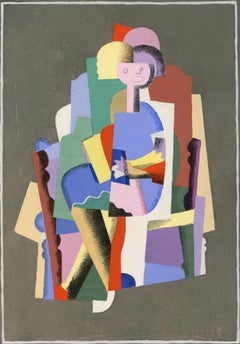
Georges Valmier, Seated Woman, 1929 (after)

Georges Valmier, Seated Woman, 1929 (after)

By Georges Valmier

Located in Southampton, NY

This exquisite lithograph and pochoir after Georges Valmier (1885–1937), titled Femme assise (Seated Woman), from the album L'Art Cubiste, Theories et Realisations, Etude Critique (C...

Category

1920s Cubist Still-life Prints

Materials

Lithograph, Stencil

Pierre Pallut, Homage to Georges Braque, from Derriere le Miroir, 1964

Pierre Pallut, Homage to Georges Braque, from Derriere le Miroir, 1964

Located in Southampton, NY

This exquisite lithograph by Pierre Pallut (1900–1985), titled Sans titre (Untitled), originates from the 1964 folio Derriere le Miroir, Nos. 144–145–146, L’Hommage a Georges Braque ...

Category

1960s Modern Abstract Prints

Materials

Lithograph

Jean Helion, Untitled, from XXe siecle, 1938

Jean Helion, Untitled, from XXe siecle, 1938

By Jean Hélion

Located in Southampton, NY

This exquisite linocut by Jean Helion (1904–1987), titled Sans titre (Untitled), from the album XXe siecle, Chroniques du jour, 13 rue Valette (5e), Directeur G. di San Lazzaro, Somm...

Category

1930s Modern Abstract Prints

Materials

Linocut

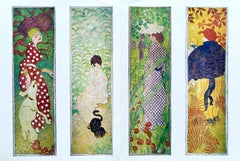
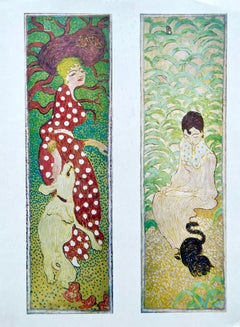
Pierre Bonnard, Women in the Garden, from Derriere le Miroir, 1966 (after)

Pierre Bonnard, Women in the Garden, from Derriere le Miroir, 1966 (after)

By Pierre Bonnard

Located in Southampton, NY

This exquisite lithograph after Pierre Bonnard (1867–1947), titled Femmes au jardin (Women in the Garden), originates from the 1966 folio Derriere le Miroir, No. 158–159, published b...

Category

1960s Post-Impressionist Figurative Prints

Materials

Lithograph

Paul Rebeyrolle, The Dance, from Derriere le Miroir, 1982

Paul Rebeyrolle, The Dance, from Derriere le Miroir, 1982

By Paul Rebeyrolle

Located in Southampton, NY

This exquisite lithograph by Paul Rebeyrolle (1926–2005), titled La Danse (The Dance), originates from the historic 1982 folio Derriere le Miroir, No. 250, Hommage a Aime et Margueri...

Category

1980s Modern Abstract Prints

Materials

Lithograph

Shift 3 (Abstract Painting)

Shift 3 (Abstract Painting)

By Holly Miller

Located in London, GB

Shift 3 (Abstract Painting) Acrylic, graphite and thread on canvas - Unframed The threaded lines suggest a physical barrier that interrupts the shapes and stops them from connectin...

Category

2010s Minimalist Abstract Paintings

Materials

Canvas, Thread, Acrylic, Graphite

Shift 3
Shift 3

Shift 3

By Holly Miller

Located in London, GB

Acrylic, graphite and thread on canvas - Unframed The threaded lines suggest a physical barrier that interrupts the shapes and stops them from connecting and at the same time a tran...

Category

2010s Minimalist Abstract Paintings

Materials

Canvas, Thread, Acrylic, Graphite

Pablo Palazuelo, Untitled, from Derriere le Miroir, 1963

Pablo Palazuelo, Untitled, from Derriere le Miroir, 1963

By Pablo Palazuelo

Located in Southampton, NY

This exquisite lithograph by Pablo Palazuelo (1915–2007), titled Sans titre (Untitled), originates from the 1963 folio Derriere le Miroir, No. 137, published by Maeght Editeur, Paris...

Category

1960s Abstract Geometric Abstract Prints

Materials

Lithograph

Pablo Palazuelo, Untitled, from Derriere le Miroir, 1963

Pablo Palazuelo, Untitled, from Derriere le Miroir, 1963

By Pablo Palazuelo

Located in Southampton, NY

This exquisite lithograph by Pablo Palazuelo (1915–2007), titled Sans titre (Untitled), originates from the 1963 folio Derriere le Miroir, No. 137, published by Maeght Editeur, Paris...

Category

1960s Abstract Geometric Abstract Prints

Materials

Lithograph

Francois Fiedler, Peinture, from Derriere le Miroir, 1960

Francois Fiedler, Peinture, from Derriere le Miroir, 1960

By François Fiedler

Located in Southampton, NY

This exquisite lithograph by Francois Fiedler (1921–2001), titled Peinture (Painting), originates from the 1960 folio Derriere le Miroir, No. 119, Poetes, peintres, sculpteurs (Poets...

Category

1960s Modern Abstract Prints

Materials

Lithograph

Pablo Palazuelo, Untitled, from Derriere le Miroir, 1970

Pablo Palazuelo, Untitled, from Derriere le Miroir, 1970

By Pablo Palazuelo

Located in Southampton, NY

This exquisite lithograph by Pablo Palazuelo (1915–2007), titled Sans titre (Untitled), originates from the 1970 folio Derriere le Miroir, No. 180, published by Maeght Editeur, Paris...

Category

1970s Abstract Geometric Abstract Prints

Materials

Lithograph

"Envelope Scribbles" Robert Indiana, Pop Art, Correspondence, Artist Letter

"Envelope Scribbles" Robert Indiana, Pop Art, Correspondence, Artist Letter

By Robert Indiana

Located in New York, NY

Robert Indiana Envelope Scribbles , 1975 Dated upper right Ink on paper 4 1/4 x 9 1/2 inches Provenance Gifted by the artist, Vinalhaven, Maine Private collection, Maine. Private Co...

Category

1970s Pop Art Abstract Drawings and Watercolors

Materials

Paper, Ink

Auguste Herbin, Composition on Green Background, 1929 (after)

Auguste Herbin, Composition on Green Background, 1929 (after)

By Auguste Herbin

Located in Southampton, NY

This exquisite lithograph and pochoir after Auguste Herbin (1882–1960), titled Composition sur fond vert (Composition on Green Background), from the album L'Art Cubiste, Theories et ...

Category

1920s Cubist Still-life Prints

Materials

Lithograph, Stencil

Hans Jean Arp, Form, from XXe Siecle, 1951

Hans Jean Arp, Form, from XXe Siecle, 1951

By Hans Jean Arp

Located in Southampton, NY

This exquisite lithograph by Hans Jean Arp (1886–1966), titled Forme (Form), from the album XXe Siecle, Nouvelle serie, No. 1, 1951, originates from the 1951 edition published by Soc...

Category

1950s Modern Figurative Prints

Materials

Lithograph

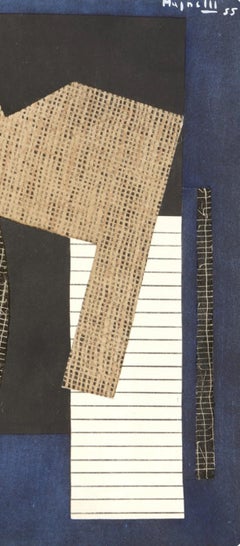
Alberto Magnelli, Pasted Paper, from XXe Siecle, 1957

Alberto Magnelli, Pasted Paper, from XXe Siecle, 1957

By Alberto Magnelli

Located in Southampton, NY

This exquisite lithograph by Alberto Magnelli (1888–1971), titled Papel colle (Pasted Paper), from the album XXe Siecle, Nouvelle serie, No. 9 (double), Juin 1957, originates from th...

Category

1950s Cubist Still-life Prints

Materials

Lithograph

Jean-Edouard Vuillard, Intimacy, from Derriere le Miroir, 1966 (after)

Jean-Edouard Vuillard, Intimacy, from Derriere le Miroir, 1966 (after)

By Edouard Vuillard

Located in Southampton, NY

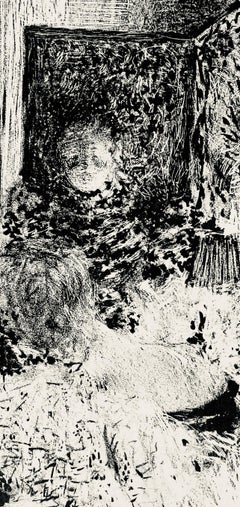
This exquisite lithograph after Jean-Edouard Vuillard (1868–1940), titled Intimite (Intimacy), originates from the 1966 folio Derriere le Miroir, No. 158–159, published by Maeght Edi...

Category

1960s Post-Impressionist Figurative Prints

Materials

Lithograph

American Modernist Abstract Expressionist Oil Painting Carving William Pellicone

American Modernist Abstract Expressionist Oil Painting Carving William Pellicone

Located in Surfside, FL

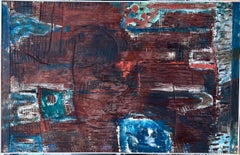
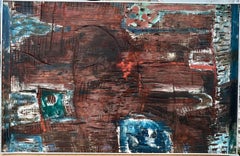
William Pellicone (American 1915-2004) Mixed media, pyrography, oil on wood carving painting. Dated 1958 Title - Enthymeme #14. Oil painting on carved and burnt distressed wood panel. Inscribed verso Enthymeme Wm. Pellicone #14, 9-4-58. Label on reverse with a typed definition for Enthymeme. Dimensions: 27 inches high, 42.5 inches wide. Metal wrap frame. Provenance: from a Shelter Island NY home that was designed by architect Henry J. Gazon - A.I.A. built in 1959. William Pellicone (1915-2004) was an American painter known for his abstract compositions and use of vibrant colors. He was born in New York City and studied at the Art Students League and the Brooklyn Museum Art School. Pellicone's early work was influenced by the Social Realist movement of the 1930s and 1940s, with his paintings often featuring realistic depictions of urban scenes and working-class people. However, in the 1950s he shifted towards abstraction, exploring the interplay of color and form. Pellicone's mature style was characterized by his use of vibrant, saturated colors, often applied in thick layers of paint. His paintings often featured geometric shapes and organic forms, with a strong sense of movement and energy. In addition to his painting, Pellicone was also a respected teacher and arts administrator. He taught at the New York Institute of Technology and the State University of New York, and served as the director of the Islip Art Museum on Long Island. Pellicone's artwork was exhibited widely during his lifetime, and he was the recipient of numerous awards and honors, including a National Endowment for the Arts grant in 1977. Today, his paintings can be found in the collections of museums and galleries around the world, including the Smithsonian American Art Museum in Washington, D.C. and the Metropolitan Museum of Art in New York. William Pellicone (Born 1915) is active/lives in New York. William Pellicone is known for Abstract expressionist, landscape and non-objective art. An American artist, sculptor, architect. He exhibited at Pennsylvania Academy Fine Arts, Philadelphia. A son of Italian immigrants from Calabria, William Pellicone Was a self-taught American Modernist who received scholarships to Temple University, the Pennsylvania Academy of Art and Philadelphia's famed Barnes Foundation. He was a friend of Edward Hopper and others of that Milieu. He was a merchant marine during World War II and a four-year farmer in Pennsylvania for New York City, where he became known for his works done with paint and fire. The work drew attention from both "Life" and "Look" magazine. With time William's style changed to more Surrealist, fantastic realism subjects. This piece has a brutalist, Arte Povera, art brut feel to it. He work is associated with Modernism and Surrealism. He was included in the show with catalogue Gene Swenson : Retrospective for a Critic. Artists included: James Rosenquist, Arman (Armand Fernandez), Stuart Davis, Robert Indiana, Roy Lichtenstein, Alain Jacquet, Ellsworth Kelly, Agnes Martin, Andre Masson, Henri Matisse, Peter Max, Robert Motherwell, Claes Oldenburg, George Ortman, Kenneth Patchen, William Pellicone, Larry Poons, Joseph Raffaele, Robert Rauschenberg, Ad Reinhardt, James Rosenquist, Frank Stella, Cy Twombly, Andy Warhol, Tom Wesselmann, Jim Dine, Jasper Johns and Paul Thek...

Category

1950s Abstract Expressionist Abstract Paintings

Materials

Wood, Oil

Sara Walton - Minimalist Abstract Painting "Three Points"  Green Black

Sara Walton - Minimalist Abstract Painting "Three Points" Green Black

By Sara Walton

Located in Brooklyn, NY

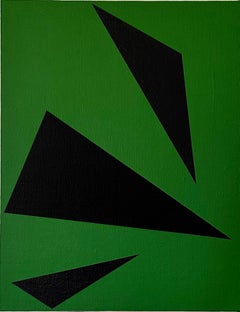
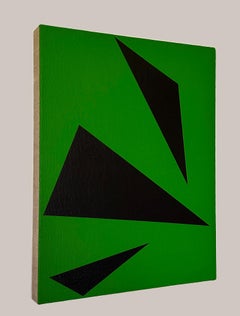
"Three Points" Acrylic on linen over panel. 18 x 14" 2018 Sara Walton orchestrates a symphony of color that transcends mere visual aesthetics, delving deep into the realm of emotio...

Category

2010s Minimalist Abstract Paintings

Materials

Acrylic, Linen, Wood Panel

Sara Walton - Minimalist Abstract Painting "Envelope 4"  Green Black

Sara Walton - Minimalist Abstract Painting "Envelope 4" Green Black

By Sara Walton

Located in Brooklyn, NY

"Envelope 4" Acrylic on canvas. 48 x 48" 2019 Sara Walton orchestrates a symphony of color that transcends mere visual aesthetics, delving deep into the realm of emotion and percep...

Category

2010s Minimalist Abstract Paintings

Materials

Canvas, Acrylic

Sara Walton - Minimalist Abstract Painting "Envelope 3"  Blue Black

Sara Walton - Minimalist Abstract Painting "Envelope 3" Blue Black

By Sara Walton

Located in Brooklyn, NY

"Envelope 3" Acrylic on canvas. 36 x 48" 2019 Sara Walton orchestrates a symphony of color that transcends mere visual aesthetics, delving deep into the realm of emotion and percep...

Category

2010s Minimalist Abstract Paintings

Materials

Canvas, Acrylic

Fritz Glarner, Tondo, from Prints from the Mourlot Press, 1964

Fritz Glarner, Tondo, from Prints from the Mourlot Press, 1964

By Fritz Glarner 1

Located in Southampton, NY

This exquisite lithograph by Fritz Glarner (1899–1972), titled Tondo, from the album Prints from the Mourlot Press, exhibition sponsored by the French Embassy, circulated by the Trav...

Category

1960s Modern Abstract Prints

Materials

Lithograph

Alexander Calder lithograph Derrière le miroir (Calder prints)

Alexander Calder lithograph Derrière le miroir (Calder prints)

By Alexander Calder

Located in NEW YORK, NY

Alexander Calder Lithograph c. 1967 from Derrière le miroir: Lithograph in colors; 15 x 11 inches. Very good overall vintage condition; well-preserved. Unsigned from an edition of u...

Category

Mid-20th Century Abstract Nude Prints

Materials

Lithograph

Georges Seurat, The Circus Performer, from Derriere le Miroir, 1966 (after)

Georges Seurat, The Circus Performer, from Derriere le Miroir, 1966 (after)

Located in Southampton, NY

This exquisite lithograph after Georges Pierre Seurat (1859–1891), titled La banquiste (The Circus Performer), originates from the 1966 folio Derriere le Miroir, No. 158–159, publish...

Category

1960s Post-Impressionist Figurative Prints

Materials

Lithograph

Juan Gris, Still Life, 1929 (after)

Juan Gris, Still Life, 1929 (after)

By Juan Gris

Located in Southampton, NY

This exquisite lithograph and pochoir after Juan Gris (1887–1927), titled Nature morte (Still Life), from the album L'Art Cubiste, Theories et Realisations, Etude Critique (Cubist Ar...

Category

1920s Cubist Still-life Prints

Materials

Lithograph, Stencil

Hans Jean Arp, Yellow, from Derriere le miroir, 1950

Hans Jean Arp, Yellow, from Derriere le miroir, 1950

By Hans Jean Arp

Located in Southampton, NY

This exquisite woodcut by Hans Jean Arp (1886–1966), titled Jaune (Yellow), from the folio Derriere le miroir, No. 33, originates from the 1950 edition published by Maeght Editeur, P...

Category

1950s Modern Abstract Prints

Materials

Woodcut

Georges Braque, The Portuguese, from Derriere le Miroir, 1964 (after)

Georges Braque, The Portuguese, from Derriere le Miroir, 1964 (after)

By Georges Braque

Located in Southampton, NY

This exquisite lithograph after Georges Braque (1882–1963), titled Le Portugais (The Portuguese), originates from the 1964 folio Derriere le Miroir, Nos. 144–145–146, L’Hommage a Geo...

Category

1960s Cubist Abstract Prints

Materials

Lithograph

Georges Braque, Ajax, from Derriere le Miroir, 1964 (after)

Georges Braque, Ajax, from Derriere le Miroir, 1964 (after)

By Georges Braque

Located in Southampton, NY

This exquisite lithograph after Georges Braque (1882–1963), titled Ajax, originates from the 1964 folio Derriere le Miroir, Nos. 144–145–146, L’Hommage a Georges Braque (Tribute to G...

Category

1960s Cubist Abstract Prints

Materials

Lithograph