Questions & Answers
Our trusted network of 1stDibs sellers answer common questions
How do I identify Quimper pottery?
1 Answer

To identify Quimper pottery, familiarize yourself with the markings associated with it. Rather than a brand, Quimper is a town in the Brittany region of France, where multiple factories have produced hand-painted glazed pottery since the 18th century. Henriot, Fouillen, Kéraluc and Porquier-Beau are some of the best-known makers of Quimper pottery, and each has had its own maker's markings. Some markings do say “Quimper,” but others don't. The best way to determine if a piece is Quimper pottery is to compare the marks on it to images shared on trusted online resources. Because there is so much variability, you may also find it helpful to use the services of a certified appraiser or knowledgeable antique dealer. Shop a large selection of Quimper pottery on 1stDibs.
1stDibs ExpertSeptember 23, 2024
Related Questions
- How do I identify my pottery?1 Answer
- Is Quimper pottery valuable?1 Answer
- How do I identify Scheurich pottery?1 Answer
- How do I identify Gouda pottery?1 Answer
- How do you identify Weller pottery?1 Answer
Shop for Quimper Faience Pottery Furniture on 1stDibs
Rare Fouillen Quimper France Faience Vase, Hand Painted, 1930-1950
By Quimper Faience Pottery, Paul Fouillen
Located in Clifton Springs, NY
Rare Paul Fouillen Quimper faience vase is hand painted with abstract decor of wide bands on the base and on the rim and abstract patterns in th...
Category
Mid-20th Century French Organic Modern Vases
Materials
Faience, Pottery, Ceramic
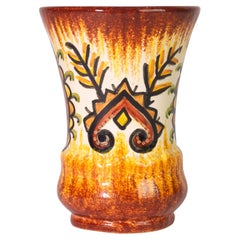
Simone Carrié Ceramic Pitcher for Elchinger, Floral Design, France 1950
By Quimper Faience Pottery, Elchinger
Located in London, England
The ceramic jug designed by Simone Carrié is a remarkable piece of contemporary art of the 1950s. Made in his small workshop "Kercy Quimper", this work reflects the artisanal know-ho...
Category
Vintage 1950s French French Provincial Vases
Materials
Ceramic

Quimper Faience Teapot with Breton Woman
By Quimper Faience Pottery
Located in Port Jervis, NY
Fabulous Quimper Faience Teapot with the lid. Breton peasant woman in virtually unused condition. Can be parcel posted. More pieces to follow.
Category
Vintage 1980s French French Provincial Tea Sets
Materials
Faience

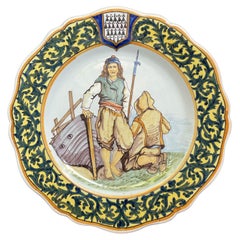
Quimper Faience Plate, Fisherman Scene, Foliate Border, Circa 1895
By Quimper Faience Pottery
Located in Winter Park, FL
A 19th century French Porquier Beau Quimper faience plate with fisherman scene. Foliate border with Brittany coat of arms. Good details. Small chips to...
Category
Antique Late 19th Century French Country Delft and Faience
Materials
Faience
Simone Carrié Ceramic Pitcher, Elchinger, Kercy Quimper, France, 1950
By Quimper Faience Pottery, Elchinger
Located in London, England
This ceramic jug, with an impressive size of 34 cm high and 12 cm in diameter, is an emblematic work of the artist Simone Carrié. Made in his workshop "Kercy Quimper" during the seco...
Category
Mid-20th Century French French Provincial Ceramics
Materials
Ceramic

Early 20th Century French HB Quimper Faïence Oval Wall Platter, "Noce Bretonne"
By Quimper Faience Pottery
Located in Dallas, TX
This charming antique wall platter was hand-painted in Brittany, France, circa 1900 by the HB Quimper workshop. Oval and scalloped in form, the tin-glazed earthenware piece features a lively and colorful scene titled "Noce Bretonne" (“Breton Wedding”), capturing the festive spirit of a traditional provincial celebration. Musicians in regional attire accompany dancing couples and onlookers, all rendered with joyful expression and vibrant costume detail. The pastoral background, dotted with trees and birds, enhances the narrative with rustic charm.
The wide rim is delicately adorned with hand-painted floral sprays in warm ochre, green, and blue, framing the central composition and complementing the naturalistic palette. The reverse is signed with the classic “HB” mark, confirming its origin at the historic Grand Maison HB Quimper, a leading producer of Breton faïence since the 17th century.
Quimper pottery traces its roots to 1685, when Jean-Baptiste Bousquet established a faïence workshop in the town of Quimper. Celebrated for its hand-painted scenes of Breton life, maritime themes, and floral borders, Quimper faïence became a symbol of French regional identity and craftsmanship. The HB atelier later merged with other regional makers, and the tradition continues today.
Rich in cultural character and in excellent condition commensurate with age, this antique wall charger...
Category
Early 20th Century French Delft and Faience
Materials
Faience
