Questions & Answers
Our trusted network of 1stDibs sellers answer common questions
What is a Japanese byōbu?
1 Answer
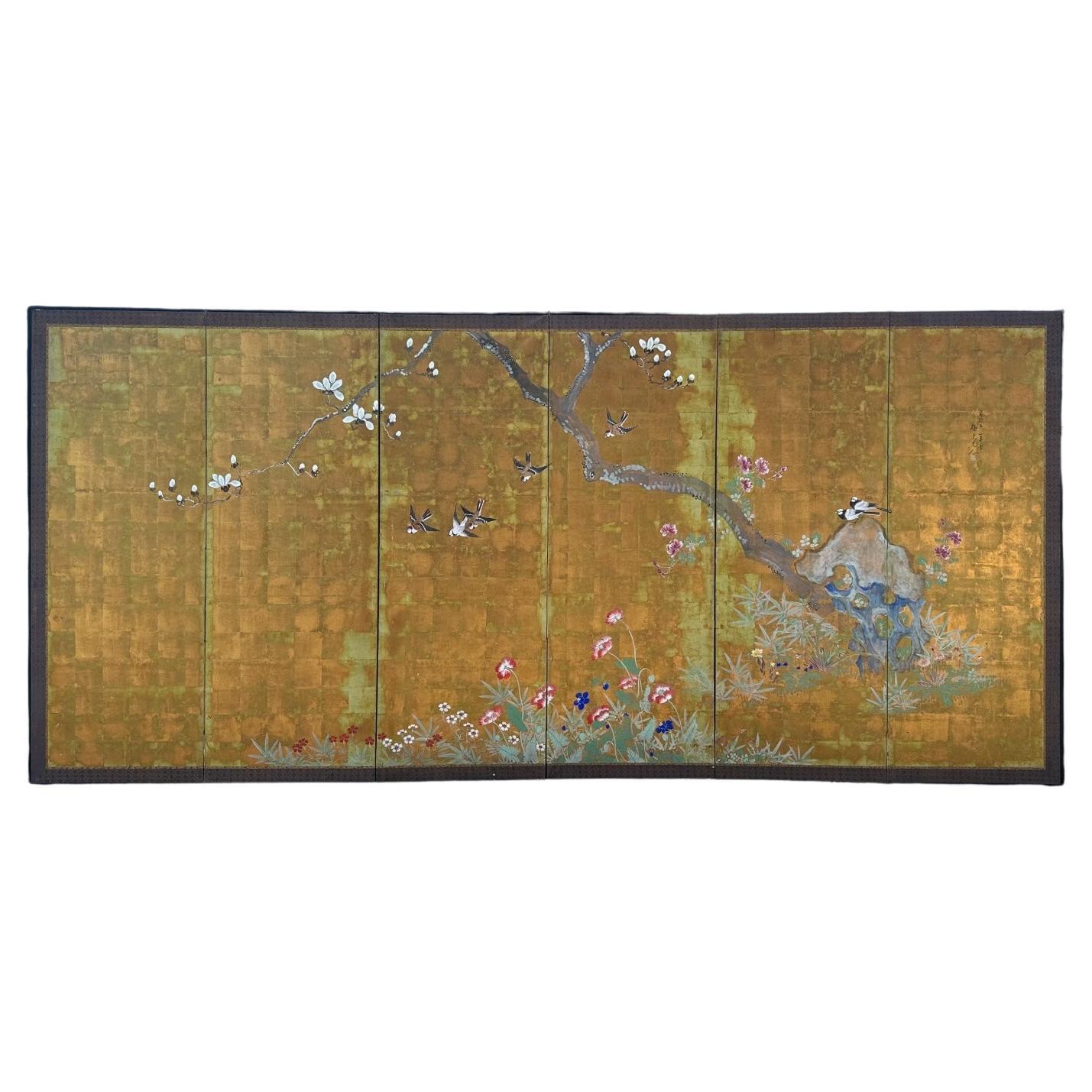
A Japanese byōbu, also known as a wind wall, is a collection of joined folding panels, which feature intricate designs and calligraphy. A byōbu’s function is to separate a room or space. On 1stDibs, find a collection of authentic byōbus from some of the world’s top sellers.
1stDibs ExpertApril 5, 2022
Related Questions
- What are Japanese screens called?1 Answer
- What is Japanese screen painting?1 Answer
- What is a Japanese low screen used for?1 Answer
- How can I tell if my Japanese pottery is antique?1 Answer
- What is a Chinese screen?1 Answer
Shop for Antique Japanese Screens on 1stDibs
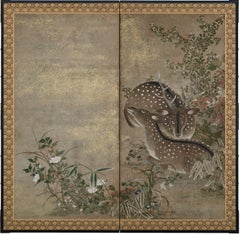
Japanese Screen. Edo period. Spotted Deer and Autumn Flowers.
Located in Kyoto, JP
Anonymous
Spotted Deer and Autumn Flowers
Two-panel Japanese Screen; ink, color, gofun and gold fleck on paper.
Category
Antique Late 17th Century Japanese Edo Paintings and Screens
Materials
Paper
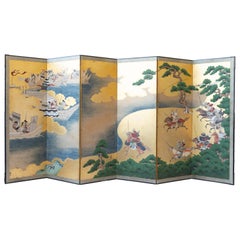
18th Century Six Panel japanese Screen with Samurai on Horses
Located in New York, NY
A spectacular six-panel Japanese screen dating to the 18th century. The screen depicts samurai warriors from the Tairo and Minamoto clans, who fought for control of Japan in the 12t...
Category
Antique Late 18th Century Japanese Paintings and Screens
Materials
Gold Leaf
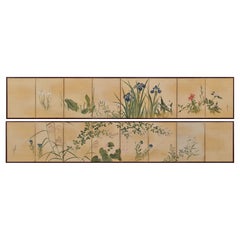
1838 Japanese Screen Pair. Flowers & Grasses of the Four Seasons.
Located in Kyoto, JP
Maruyama Oshin (1790-1838)
Flowers and grasses of the four seasons: dated 1838
Pair of eight-panel Japanese screens; ink, color and gold leaf on silk
Dimensions: each (2) H. 38.5 cm...
Category
Antique 1830s Japanese Edo Paintings and Screens
Materials
Silk
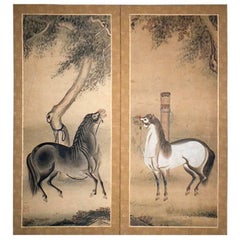
Japanese Screen Painting of Stallions
Located in Hudson, NY
Japanese two panel screen: Painting of stallions.
Category
Antique 19th Century Japanese Paintings and Screens
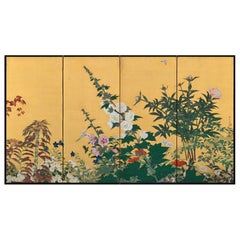
Early 20th Century Japanese Screen. Flowers of the Four Seasons.
Located in Kyoto, JP
Anonymous
Flowers of the Four Seasons
A four-panel Japanese screen. Ink, gofun and pigments on gold leaf.
Category
Early 20th Century Japanese Taisho Paintings and Screens
Materials
Gold Leaf
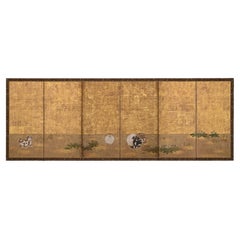
Late 17th Century Japanese Screen. Puppy and Kittens on Gold Leaf.
Located in Kyoto, JP
Anonymous
Late 17th century
Puppy & Kittens
A six-panel Japanese screen. Ink, color, gofun, gold-leaf and gold-fleck on paper.
Category
Antique Late 17th Century Japanese Edo Paintings and Screens
Materials
Gold Leaf