Questions & Answers
Our trusted network of 1stDibs sellers answer common questions
What materials did Giacometti use?
1 Answer

What materials Giacometti used varied. Alberto Giacometti was a painter, printmaker and furniture designer, but he is best known as one of the 20th century’s most important sculptors. When creating his sculptures, he typically used clay or plaster and worked with his hands to form and shape figures. His finished works were then typically cast in bronze. On 1stDibs, explore a selection of Alberto Giacometti art from some of the world's top galleries and dealers.
1stDibs ExpertFebruary 27, 2024
Related Questions
- What materials did Alberto Giacometti use for his drawings?1 Answer
- What techniques did Giacometti use?1 Answer
- What are the materials used in winnowing?1 Answer
- What materials did Michelangelo use?1 Answer
- What materials did Miró use?1 Answer
Shop for Alberto Giacometti Art on 1stDibs
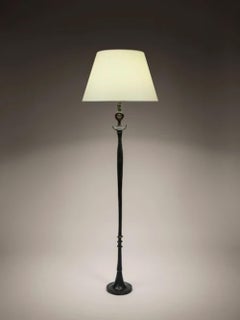
Lampadaire Modèle "Figure"
By Alberto Giacometti
Located in PARIS, FR
• Created in the mid-1930s, the Figure floor lamp reflects Alberto Giacometti’s early exploration of the relationship between sculpture and functio...
Category
1930s Modern Figurative Sculptures
Materials
Bronze
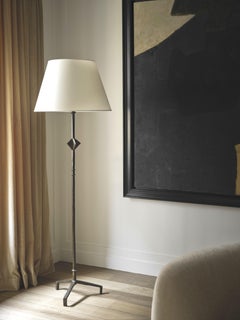
Lampadaire Etoile
By Alberto Giacometti
Located in PARIS, FR
• Designed by Alberto Giacometti in the mid-1930s, during his early work in decorative arts and interior design
• The Lampadaire Étoile was design...
Category
1930s Modern Figurative Sculptures
Materials
Bronze
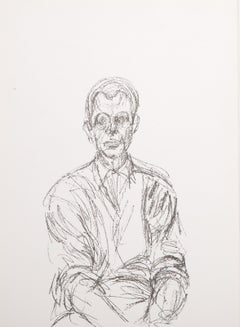
Head of A Man, Expressionist Lithograph by Alberto Giacometti
By Alberto Giacometti
Located in Long Island City, NY
Alberto Giacometti, Swiss (1901 - 1966) - Head of A Man from Derriere Le Miroir no. 127, Year: 1961, Medium: Lithograph, Edition: ~2500, Size: 15 x 11 in. (38.1 x 27.94 cm), Publ...
Category
1960s Expressionist Portrait Prints
Materials
Lithograph
Objets Mobiles et Muet Original Lithograph, Giacometti, 1952 Edition
By Alberto Giacometti
Located in Henderson, NV
Medium: original lithograph. Catalogue reference: Lust 1. Executed in 1931, this is the first lithograph created by Giacometti. This impression is from the second edition, printed in...
Category
1950s Prints and Multiples
Materials
Lithograph

Alberto Giacometti, Annette, from L'Atelier Mourlot, 1965
By Alberto Giacometti
Located in Southampton, NY
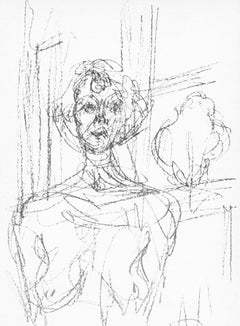
This exquisite lithograph by Alberto Giacometti (1901–1966), titled Annette (Annette), from the album Les Lithographies de L'Atelier Mourlot, Paris (The Lithographs of the Mourlot Workshop, Paris), originates from the 1965 edition published by Redfern Gallery, London; printed by Mourlot Freres, November, 1965. This artwork reflects Giacometti’s masterful exploration of portraiture, where searching line and expressive repetition capture the psychological presence of the sitter with both immediacy and existential depth.
Executed as a lithograph on velin d’Arches paper. 10 x 7.5 inches. Unsigned and unnumbered as issued. The impression reflects the exceptional quality associated with the Mourlot atelier, renowned for its collaborations with the most important artists of the twentieth century.
Artwork Details:
Artist: Alberto Giacometti (1901–1966)
Title: Annette (Annette), from Les Lithographies de L'Atelier Mourlot, Paris (The Lithographs of the Mourlot Workshop, Paris), 1965
Medium: Lithograph on velin d’Arches paper
Dimensions: 10 x 7.5 inches
Inscription: Unsigned and unnumbered as issued
Date: 1965
Publisher: Redfern Gallery, London
Printer: Mourlot Freres, Paris
Condition: Well preserved, consistent with age and medium
Provenance: From Les Lithographies de L'Atelier Mourlot, Paris, published by Redfern Gallery, London, 1965
Notes:
Excerpted from the album (translated from French), This album was published on the occasion of the exhibition, "The Mourlot Workshop" at The Redfern Gallery, 20, Cork Street London WI, December 7, 1965 to January 31, 1966. There were printed of this work M examples on velin d’Arches, and C examples on velin de Rives BFK, reserved for the artists, collaborators, and friends of the Imprimerie Mourlot and the Redfern Gallery.
About the Publication:
Les Lithographies de L'Atelier Mourlot, Paris (The Lithographs of the Mourlot Workshop, Paris), published in 1965 by the Redfern Gallery in London, stands as a landmark publication dedicated to one of the most important print ateliers of the twentieth century. Produced in conjunction with a major exhibition highlighting the achievements of the Mourlot workshop, the album celebrates the collaborative relationship between artists and master printers that defined modern lithography. Mourlot Freres, based in Paris, worked closely with leading figures of modern art, including Picasso, Miro, Chagall, Braque, and many others, providing the technical expertise necessary to translate their visions into lithographic form. The publication presents a curated selection of original lithographs that exemplify the range, innovation, and artistic excellence of the atelier, reflecting both the technical mastery of Mourlot and the creative diversity of the artists it supported. Printed with exceptional care and distributed through an international gallery context, the album represents a significant moment in the history of twentieth century printmaking, bridging the worlds of exhibition, publication, and artistic production. Today, it remains highly regarded by collectors and scholars as a definitive document of the Mourlot workshop’s central role in shaping modern graphic art.
About the Artist:
Alberto Giacometti (1901–1966) was a Swiss sculptor, painter, and draughtsman whose hauntingly elongated figures and existential vision redefined modern art and made him one of the most influential artists of the 20th century. Born in Borgonovo, Switzerland, into an artistic family his father, Giovanni Giacometti, was a noted Post Impressionist he was immersed in art from an early age before studying in Geneva and moving to Paris in 1922, where he became part of the city’s avant garde alongside Pablo Picasso, Alexander Calder, Salvador Dali, Joan Miro, Wassily Kandinsky, Marcel Duchamp, and Man Ray. In the 1920s and 1930s, Giacometti explored Cubism and Surrealism, creating symbolic and dreamlike sculptures such as Suspended Ball (1930–31) and The Palace at 4 A.M. (1932), which reflected the influence of Dali, Duchamp, and Man Ray. By the 1940s, he abandoned Surrealism to pursue a deeply personal exploration of the human condition, developing his iconic attenuated figures that embodied both fragility and resilience. His signature sculptures L’Homme qui marche I (Walking Man I), Femme debout, and Le Chariot expressed the isolation, endurance, and vulnerability of modern existence, echoing the existential philosophy of Jean Paul Sartre and Simone de Beauvoir. Giacometti’s figures stripped of mass yet monumental in spirit symbolized humanity’s search for meaning in a postwar world, while his paintings and drawings portraits of his brother Diego, his wife Annette, and his friends captured the psychological depth of perception with trembling, repetitive lines that blurred the boundary between body and soul. His friendships with Picasso, Calder, Miro, and Kandinsky shaped his understanding of form, motion, and space, while his philosophical engagement with Duchamp and Man Ray deepened his inquiry into the nature of reality and perception. Working obsessively in his modest Montparnasse studio, Giacometti pursued art as an existential act destroying and rebuilding his figures in an endless search for truth. His influence on postwar art was immense, shaping the work of Henry Moore, Francis Bacon, Louise Bourgeois, Lucian Freud, and later contemporary sculptors such as Antony Gormley and Anselm Kiefer. His aesthetic also resonated beyond sculpture, influencing fashion, photography, and architecture through his vision of form, isolation, and proportion. Giacometti’s work is represented in major museum collections including MoMA, the Tate Modern, and the Centre Pompidou, and continues to inspire artists, collectors, and thinkers worldwide. Standing alongside Pablo Picasso, Alexander Calder, Salvador Dali, Joan Miro, Wassily Kandinsky, Marcel Duchamp, and Man Ray, Giacometti remains a towering figure in modern art a sculptor philosopher who transformed the human form into a universal symbol of resilience and reflection. His highest auction record was achieved by L’Homme qui marche I (Walking Man I), which sold for 141.3 million USD at Sotheby’s, London, on February 3, 2010, reaffirming Alberto Giacometti’s enduring legacy as one of the most visionary, profound, and collectible artists in the history of modern art.
Alberto Giacometti Annette...
Category
1960s Modern Abstract Prints
Materials
Lithograph
$716 Sale Price
20% Off
Free Shipping
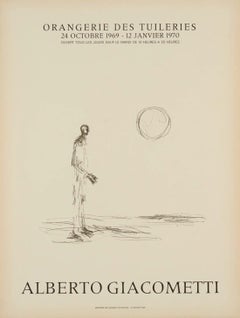
Man Walking in the Sun - Orangerie des Tuileries by Alberto Giacometti, 1969
By Alberto Giacometti
Located in New York, NY
Artist: Alberto Giacometti
Medium: Lithographic Poster, 1969
Dimensions: 26 x 19.5 in, 66 x 49.5 cm
Arches Paper - Excellent Condition A
This lithographic poster for an exhibitio...
Category
1960s Prints and Multiples
Materials
Lithograph