Book Art

16 Results
to
14
1
1
1
1
Overall Width
to
Overall Height
to
5
13
1
3
5
1
11
8
4
3
3
3
2
2
2
2
2
1
1
1
1
1
1
1
1
1
11
4

Use search to find more

2
2
2
1
1

Use search to find more

Medium: Book
William Claxton, Jazzlife, Limited Art Edition & 4 Prints, Signed and Numbered

William Claxton, Jazzlife, Limited Art Edition & 4 Prints, Signed and Numbered

By William Claxton

Located in Los Angeles, CA

All That Jazz William Claxton’s photo journey through the best of American jazz In 1960, photographer William Claxton and noted German musicologist Joachim Berendt traveled the Unit...

Category

21st Century and Contemporary Book Art

Materials

Paper, Pigment, Book

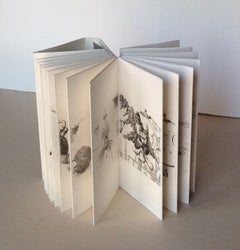
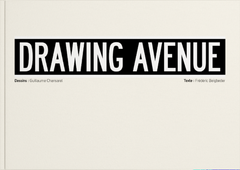
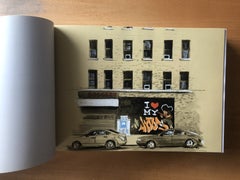
Drawing Avenue - Limited-edition artist’s book by Guillaume Chansarel, New York

Drawing Avenue - Limited-edition artist’s book by Guillaume Chansarel, New York

By Guillaume Chansarel (Guiyome)

Located in Paris, FR

Drawing Avenue is a limited-edition artist’s book by French artist Guillaume Chansarel, conceived as both a book and a collectible work of art. Only 247 copies were produced, each nu...

Category

2010s Contemporary Book Art

Materials

Book

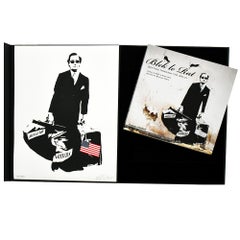
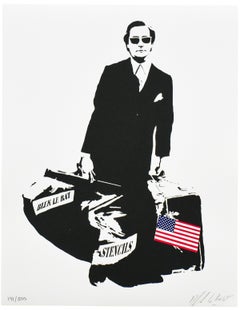
Blek Le Rat The Man Who Walks Through Walls, Special Edition Print Box Set 2008

Blek Le Rat The Man Who Walks Through Walls, Special Edition Print Box Set 2008

By Blek Le Rat

Located in Englishtown, NJ

Wonderful Special Edition of Blek Le Rat The Man Who Walks Through Walls Box Set. Comes complete with Screenprint, gorgeous custom box and Blek Le Rat’s book, Getting Through The Wal...

Category

21st Century and Contemporary Contemporary Book Art

Materials

Screen, Book

Steve Schapiro, Taxi Driver, Art Edition ‘Jodie Foster’, Numbered and Signed

Steve Schapiro, Taxi Driver, Art Edition ‘Jodie Foster’, Numbered and Signed

By Steve Schapiro

Located in Los Angeles, CA

You Talkin’ to Me? Previously unseen photographs from Scorsese’s masterpiece The Art Edition (No. 101–200) is limited to just 100 signed and numbered copies, each with the original ...

Category

21st Century and Contemporary Book Art

Materials

Leather, Archival Pigment, Book

Alex Steinweiss, The Inventor of the Modern Album Cover, Art Edition

Alex Steinweiss, The Inventor of the Modern Album Cover, Art Edition

Located in Los Angeles, CA

Art Edition (No. 1–100) copies with original signed serigraph print, The Firebird Suite Edition of 100. Seven-color serigraph print, 33 x 33 cm, hardcover volume in slipcase, 39.6 x ...

Category

21st Century and Contemporary Book Art

Materials

Serigraph, Book

Amazônia. SUMO + Black and White Print

Amazônia. SUMO + Black and White Print

By Sebastião Salgado

Located in Toronto, ON

Endangered Paradise Sebastião Salgado on the traces of the indigenous peoples of the Amazon rainforest Sebastião Salgado traveled the Brazilian Amazon and photographed the unparallel...

Category

Late 20th Century Book Art

Materials

Other Medium, Giclée, Book

Related Items
"John Belushi Mugshot" Print 39 x 36 in Limited Edition of 75 by Gerard Marti

"John Belushi Mugshot" Print 39 x 36 in Limited Edition of 75 by Gerard Marti

By Gerard Marti

Located in Culver City, CA

"John Belushi Mugshot" Print 39 x 36 in Limited Edition of 75 by Gerard Marti Digital print on paper. Ships rolled in a tube. Signed and numbered by the artist. John Belushi pose...

Category

21st Century and Contemporary Pop Art Book Art

Materials

Canvas, Digital

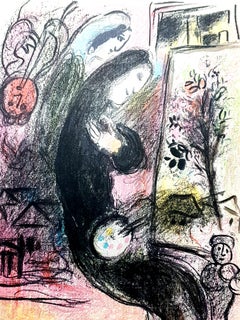
Marc Chagall - Inspiration - Original Lithograph from "Chagall Lithographe" v. 2

Marc Chagall - Inspiration - Original Lithograph from "Chagall Lithographe" v. 2

By Marc Chagall

Located in Collonge Bellerive, Geneve, CH

Marc Chagall Original Lithograph from Chagall Lithographe 1957-1962. VOLUME II. 1963 Dimensions: 32 x 24 cm From the unsigned edition of 10000 copies without margins Reference: Mourlot 398 Condition : Excellent Marc Chagall (born in 1887) Marc Chagall was born in Belarus in 1887 and developed an early interest in art. After studying painting, in 1907 he left Russia for Paris, where he lived in an artist colony on the city’s outskirts. Fusing his own personal, dreamlike imagery with hints of the fauvism and cubism popular in France at the time, Chagall created his most lasting work—including I and the Village (1911)—some of which would be featured in the Salon des Indépendants exhibitions. After returning to Vitebsk for a visit in 1914, the outbreak of WWI trapped Chagall in Russia. He returned to France in 1923 but was forced to flee the country and Nazi persecution during WWII. Finding asylum in the U.S., Chagall became involved in set and costume design before returning to France in 1948. In his later years, he experimented with new art forms and was commissioned to produce numerous large-scale works. Chagall died in St.-Paul-de-Vence in 1985. The Village Marc Chagall was born in a small Hassidic community on the outskirts of Vitebsk, Belarus, on July 7, 1887. His father was a fishmonger, and his mother ran a small sundries shop in the village. As a child, Chagall attended the Jewish elementary school, where he studied Hebrew and the Bible, before later attending the Russian public school. He began to learn the fundamentals of drawing during this time, but perhaps more importantly, he absorbed the world around him, storing away the imagery and themes that would feature largely in most of his later work. At age 19 Chagall enrolled at a private, all-Jewish art school and began his formal education in painting, studying briefly with portrait artist Yehuda Pen. However, he left the school after several months, moving to St. Petersburg in 1907 to study at the Imperial Society for the Protection of Fine Arts. The following year, he enrolled at the Svanseva School, studying with set designer Léon Bakst, whose work had been featured in Sergei Diaghilev's Ballets Russes. This early experience would prove important to Chagall’s later career as well. Despite this formal instruction, and the widespread popularity of realism in Russia at the time, Chagall was already establishing his own personal style, which featured a more dreamlike unreality and the people, places and imagery that were close to his heart. Some examples from this period are his Window Vitebsk (1908) and My Fianceé with Black Gloves (1909), which pictured Bella Rosenfeld, to whom he had recently become engaged. The Beehive Despite his romance with Bella, in 1911 an allowance from Russian parliament member and art patron Maxim Binaver enabled Chagall to move to Paris, France. After settling briefly in the Montparnasse neighborhood, Chagall moved further afield to an artist colony known as La Ruche (“The Beehive”), where he began to work side by side with abstract painters such as Amedeo Modigliani and Fernand Léger as well as the avant-garde poet Guillaume Apollinaire. At their urging, and under the influence of the wildly popular fauvism and cubism, Chagall lightened his palette and pushed his style ever further from reality. I and the Village (1911) and Homage to Apollinaire (1912) are among his early Parisian works, widely considered to be his most successful and representative period. Though his work stood stylistically apart from his cubist contemporaries, from 1912 to 1914 Chagall exhibited several paintings at the annual Salon des Indépendants exhibition, where works by the likes of Juan Gris, Marcel Duchamp and Robert Delaunay were causing a stir in the Paris art world. Chagall’s popularity began to spread beyond La Ruche, and in May 1914 he traveled to Berlin to help organize his first solo exhibition, at Der Sturm Gallery. Chagall remained in the city until the highly acclaimed show opened that June. He then returned to Vitebsk, unaware of the fateful events to come. War, Peace and Revolution In August 1914 the outbreak of World War I precluded Chagall’s plans to return to Paris. The conflict did little to stem the flow of his creative output, however, instead merely giving him direct access to the childhood scenes so essential to his work, as seen in paintings such as Jew in Green (1914) and Over Vitebsk (1914). His paintings from this period also occasionally featured images of the war’s impact on the region, as with Wounded Soldier (1914) and Marching (1915). But despite the hardships of life during wartime, this would also prove to be a joyful period for Chagall. In July 1915 he married Bella, and she gave birth to a daughter, Ida, the following year. Their appearance in works such as Birthday (1915), Bella and Ida by the Window (1917) and several of his “Lovers” paintings give a glimpse of the island of domestic bliss that was Chagall’s amidst the chaos. To avoid military service and stay with his new family, Chagall took a position as a clerk in the Ministry of War Economy in St. Petersburg. While there he began work on his autobiography and also immersed himself in the local art scene, befriending novelist Boris Pasternak, among others. He also exhibited his work in the city and soon gained considerable recognition. That notoriety would prove important in the aftermath of the 1917 Russian Revolution when he was appointed as the Commissar of Fine Arts in Vitebsk. In his new post, Chagall undertook various projects in the region, including the 1919 founding of the Academy of the Arts. Despite these endeavors, differences among his colleagues eventually disillusioned Chagall. In 1920 he relinquished his position and moved his family to Moscow, the post-revolution capital of Russia. In Moscow, Chagall was soon commissioned to create sets and costumes for various productions at the Moscow State Yiddish Theater...

Category

1960s Surrealist Book Art

Materials

Lithograph

Marc Chagall - The Red Rider - Original Lithograph

Marc Chagall - The Red Rider - Original Lithograph

By Marc Chagall

Located in Collonge Bellerive, Geneve, CH

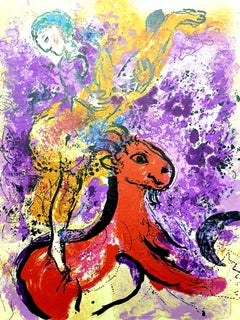
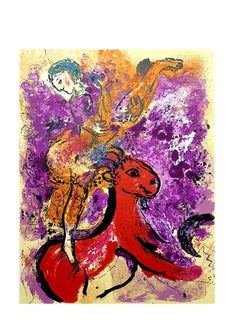
Marc Chagall - Original Lithograph The Red Rider From the unsigned, unnumbered lithograph printed in the literary review XXe Siecle 1957 See Mourlot 191 Dimensions: 32 x 24 cm Publisher: G. di San Lazzaro. Marc Chagall (born in 1887) Marc Chagall was born in Belarus in 1887 and developed an early interest in art. After studying painting, in 1907 he left Russia for Paris, where he lived in an artist colony on the city’s outskirts. Fusing his own personal, dreamlike imagery with hints of the fauvism and cubism popular in France at the time, Chagall created his most lasting work—including I and the Village (1911)—some of which would be featured in the Salon des Indépendants exhibitions. After returning to Vitebsk for a visit in 1914, the outbreak of WWI trapped Chagall in Russia. He returned to France in 1923 but was forced to flee the country and Nazi persecution during WWII. Finding asylum in the U.S., Chagall became involved in set and costume design before returning to France in 1948. In his later years, he experimented with new art forms and was commissioned to produce numerous large-scale works. Chagall died in St.-Paul-de-Vence in 1985. The Village Marc Chagall was born in a small Hassidic community on the outskirts of Vitebsk, Belarus, on July 7, 1887. His father was a fishmonger, and his mother ran a small sundries shop in the village. As a child, Chagall attended the Jewish elementary school, where he studied Hebrew and the Bible, before later attending the Russian public school. He began to learn the fundamentals of drawing during this time, but perhaps more importantly, he absorbed the world around him, storing away the imagery and themes that would feature largely in most of his later work. At age 19 Chagall enrolled at a private, all-Jewish art school and began his formal education in painting, studying briefly with portrait artist Yehuda Pen. However, he left the school after several months, moving to St. Petersburg in 1907 to study at the Imperial Society for the Protection of Fine Arts. The following year, he enrolled at the Svanseva School, studying with set designer Léon Bakst, whose work had been featured in Sergei Diaghilev's Ballets Russes. This early experience would prove important to Chagall’s later career as well. Despite this formal instruction, and the widespread popularity of realism in Russia at the time, Chagall was already establishing his own personal style, which featured a more dreamlike unreality and the people, places and imagery that were close to his heart. Some examples from this period are his Window Vitebsk (1908) and My Fianceé with Black Gloves (1909), which pictured Bella Rosenfeld, to whom he had recently become engaged. The Beehive Despite his romance with Bella, in 1911 an allowance from Russian parliament member and art patron Maxim Binaver enabled Chagall to move to Paris, France. After settling briefly in the Montparnasse neighborhood, Chagall moved further afield to an artist colony known as La Ruche (“The Beehive”), where he began to work side by side with abstract painters such as Amedeo Modigliani and Fernand Léger as well as the avant-garde poet Guillaume Apollinaire. At their urging, and under the influence of the wildly popular fauvism and cubism, Chagall lightened his palette and pushed his style ever further from reality. I and the Village (1911) and Homage to Apollinaire (1912) are among his early Parisian works, widely considered to be his most successful and representative period. Though his work stood stylistically apart from his cubist contemporaries, from 1912 to 1914 Chagall exhibited several paintings at the annual Salon des Indépendants exhibition, where works by the likes of Juan Gris, Marcel Duchamp and Robert Delaunay were causing a stir in the Paris art world. Chagall’s popularity began to spread beyond La Ruche, and in May 1914 he traveled to Berlin to help organize his first solo exhibition, at Der Sturm Gallery. Chagall remained in the city until the highly acclaimed show opened that June. He then returned to Vitebsk, unaware of the fateful events to come. War, Peace and Revolution In August 1914 the outbreak of World War I precluded Chagall’s plans to return to Paris. The conflict did little to stem the flow of his creative output, however, instead merely giving him direct access to the childhood scenes so essential to his work, as seen in paintings such as Jew in Green (1914) and Over Vitebsk (1914). His paintings from this period also occasionally featured images of the war’s impact on the region, as with Wounded Soldier (1914) and Marching (1915). But despite the hardships of life during wartime, this would also prove to be a joyful period for Chagall. In July 1915 he married Bella, and she gave birth to a daughter, Ida, the following year. Their appearance in works such as Birthday (1915), Bella and Ida by the Window (1917) and several of his “Lovers” paintings give a glimpse of the island of domestic bliss that was Chagall’s amidst the chaos. To avoid military service and stay with his new family, Chagall took a position as a clerk in the Ministry of War Economy in St. Petersburg. While there he began work on his autobiography and also immersed himself in the local art scene, befriending novelist Boris Pasternak, among others. He also exhibited his work in the city and soon gained considerable recognition. That notoriety would prove important in the aftermath of the 1917 Russian Revolution when he was appointed as the Commissar of Fine Arts in Vitebsk. In his new post, Chagall undertook various projects in the region, including the 1919 founding of the Academy of the Arts. Despite these endeavors, differences among his colleagues eventually disillusioned Chagall. In 1920 he relinquished his position and moved his family to Moscow, the post-revolution capital of Russia. In Moscow, Chagall was soon commissioned to create sets and costumes for various productions at the Moscow State Yiddish Theater, where he would paint a series of murals titled Introduction to the Jewish Theater as well. In 1921, Chagall also found work as a teacher at a school for war orphans. By 1922, however, Chagall found that his art had fallen out of favor, and seeking new horizons he left Russia for good. Flight After a brief stay in Berlin, where he unsuccessfully sought to recover the work exhibited at Der Sturm before the war, Chagall moved his family to Paris in September 1923. Shortly after their arrival, he was commissioned by art dealer and publisher Ambroise Vollard to produce a series of etchings for a new edition of Nikolai Gogol's 1842 novel Dead Souls. Two years later Chagall began work on an illustrated edition of Jean de la Fontaine’s Fables, and in 1930 he created etchings for an illustrated edition of the Old Testament, for which he traveled to Palestine to conduct research. Chagall’s work during this period brought him new success as an artist and enabled him to travel throughout Europe in the 1930s. He also published his autobiography, My Life (1931), and in 1933 received a retrospective at the Kunsthalle in Basel, Switzerland. But at the same time that Chagall’s popularity was spreading, so, too, was the threat of Fascism and Nazism. Singled out during the cultural "cleansing" undertaken by the Nazis in Germany, Chagall’s work was ordered removed from museums throughout the country. Several pieces were subsequently burned, and others were featured in a 1937 exhibition of “degenerate art” held in Munich. Chagall’s angst regarding these troubling events and the persecution of Jews in general can be seen in his 1938 painting White Crucifixion. With the eruption of World War II, Chagall and his family moved to the Loire region before moving farther south to Marseilles following the invasion of France. They found a more certain refuge when, in 1941, Chagall’s name was added by the director of the Museum of Modern Art (MOMA) in New York City to a list of artists and intellectuals deemed most at risk from the Nazis’ anti-Jewish campaign. Chagall and his family would be among the more than 2,000 who received visas and escaped this way. Haunted Harbors Arriving in New York City in June 1941, Chagall discovered that he was already a well-known artist there and, despite a language barrier, soon became a part of the exiled European artist community. The following year he was commissioned by choreographer Léonide Massine to design sets and costumes for the ballet Aleko, based on Alexander Pushkin’s “The Gypsies” and set to the music of Pyotr Ilyich Tchaikovsky. But even as he settled into the safety of his temporary home, Chagall’s thoughts were frequently consumed by the fate befalling the Jews of Europe and the destruction of Russia, as paintings such as The Yellow Crucifixion...

Category

1950s Surrealist Book Art

Materials

Lithograph

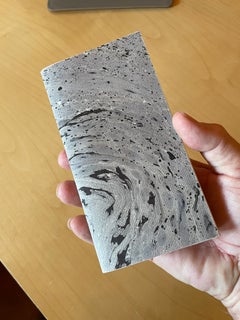
Mesh/Moire Set I-VI

Mesh/Moire Set I-VI

By Tauba Auerbach

Located in Berkeley, CA

Tauba Auerbach creates art about language and logic through painting, drawing, photography, sculpture and instrument building. Auerbach’s one-person exhibition, “Tetrachromat” was presented at the Bergen Kunsthall, Norway; traveled to Malmo Konsthall, Sweden; and Wiels Contemporary Art Center, Brussels. In 2011 Auerbach was awarded the Smithsonian’s Artist Research Fellowship. Her work was included in the 2010 “Whitney Biennial,” New York; MoMA P.S. 1’s 2010, Greater New York; and the New Museum’s 2009 “Younger Than Jesus,” New York. Her work is included in the permanent collections of The Whitney Museum of American Art and the Museum of Modern Art, New York among others. She is represented by Paula Cooper Gallery...

Category

21st Century and Contemporary Contemporary Book Art

Materials

Etching

"Jane Fonda Mugshot" Print on canvas 39 x 36 inch Edition of 75 by Gerard Marti

"Jane Fonda Mugshot" Print on canvas 39 x 36 inch Edition of 75 by Gerard Marti

By Gerard Marti

Located in Culver City, CA

"Jane Fonda Mugshot" Print on canvas 39 x 36 inch Edition of 75 by Gerard Marti Giclee print on canvas Stretched on wooden bars. Signed and numbered by the artist. Jane Fonda wa...

Category

21st Century and Contemporary Pop Art Book Art

Materials

Canvas, Digital

Juan Genoves Spanish Artist Original Hand Signed Engraving 1996

Juan Genoves Spanish Artist Original Hand Signed Engraving 1996

By Juan Genoves

Located in Miami, FL

Juan Genovés (Spain, 1930-2020) 'Untitled', 1996 engraving, aquatint on paper 15.8 x 11.9 in. (40 x 30 cm.) Edition of 150 ID: GEN1205-005-1 Hand-signed by author ___________________...

Category

1990s Contemporary Book Art

Materials

Engraving, Etching, Aquatint

"Jimi Hendrix Mugshot" Print on canvas 39 x 36 in Ltd. Ed. of 75 by Gerard Marti

"Jimi Hendrix Mugshot" Print on canvas 39 x 36 in Ltd. Ed. of 75 by Gerard Marti

By Gerard Marti

Located in Culver City, CA

"Jimi Hendrix Mugshot" Print on canvas 39 x 36 in Ltd. Ed. of 75 by Gerard Marti Giclee print on canvas Stretched on wooden bars. Signed and numbered by the artist. On May 3, 1...

Category

21st Century and Contemporary Pop Art Book Art

Materials

Digital, Canvas

"Martin Luther King Jr Mugshot" Print 39 x 36 inch Ed. of 75 by Gerard Marti

"Martin Luther King Jr Mugshot" Print 39 x 36 inch Ed. of 75 by Gerard Marti

By Gerard Marti

Located in Culver City, CA

"Martin Luther King Jr Mugshot" Print 39 x 36 inch Ed. of 75 by Gerard Marti Giclee print on canvas Stretched on wooden bars. Signed and numbered by the artist. A Montgomery C...

Category

21st Century and Contemporary Pop Art Book Art

Materials

Digital, Canvas

Untitled Aquatint Print, Artist Proof, Signed, 1980s, Framed

Untitled Aquatint Print, Artist Proof, Signed, 1980s, Framed

By Sam Francis

Located in New York, NY

Sam Francis was an American artist known for his exuberant large-scale abstract paintings. His practice incorporated elements from Abstract Expressionism, Color Field painting, Imp...

Category

1980s Contemporary Book Art

Materials

Aquatint

"This Must Be the Place VE 5/7" Intaglio, hand colored, patterns

"This Must Be the Place VE 5/7" Intaglio, hand colored, patterns

By Katie VanVliet

Located in Philadelphia, PA

This piece titled "This Must Be the Place VE 5/7" is a variable edition piece by Kate VanVliet and is made from Intaglio with soft ground on Rives BFK. This piece is an edition of 7 ...

Category

21st Century and Contemporary Contemporary Book Art

Materials

Archival Paper, Color, Etching, Intaglio

"Jim Morrison Mugshot" Print on canvas 39 x 36 inch Ed. of 75 by Gerard Marti

"Jim Morrison Mugshot" Print on canvas 39 x 36 inch Ed. of 75 by Gerard Marti

By Gerard Marti

Located in Culver City, CA

"Jim Morrison Mugshot" Print on canvas 39 x 36 inch Ed. of 75 by Gerard Marti Giclee print on canvas Stretched on wooden bars. Signed and numbered by the artist. The lead singer of The Doors Jim...

Category

21st Century and Contemporary Pop Art Book Art
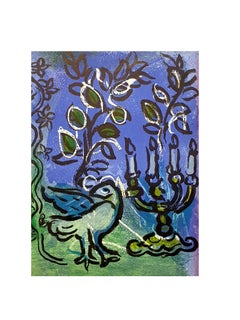
Materials

Canvas, Digital

Previously Available Items

Book art for sale on 1stDibs.
Find a wide variety of authentic Book art available on 1stDibs. While artists have worked in this medium across a range of time periods, art made with this material during the 21st Century is especially popular. There are many well-known artists whose body of work includes ceramic sculptures. Popular artists on 1stDibs associated with pieces like this include Françoise Gilot, Neil Leifer, Robert Crumb, and Keith Haring. Frequently made by artists working in the Pop Art, all of these pieces for sale are unique and many will draw the attention of guests in your home. Not every interior allows for large Book art, so small editions measuring 0.04 inches across are also available