Art by Medium: Charcoal

to
490
1,089
845
787
459
735
Overall Width
to
Overall Height
to
9
113
1,608
2,187
37
41
62
218
71
92
172
97
74
71
6
1,141
667
596
106
90
82
51
44
44
28
22
17
8
2
2,473
1,085
328
2,028
1,292
1,096
929
761
385
368
349
325
267
189
108
89
76
75
66
55
44
40
37
3,917
185,506
98,612
81,357
78,946
183
154
75
53
37
918
864
1,845
1,436
Medium: Charcoal
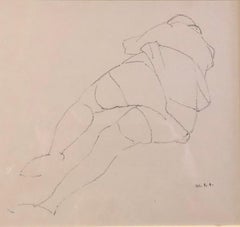
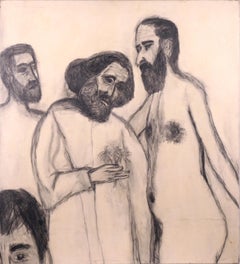
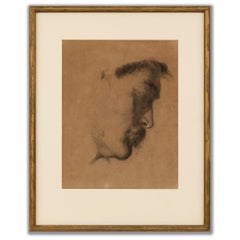
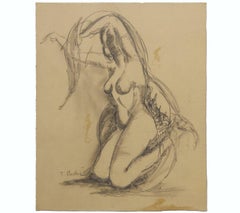
Henry Ottmann (1877-1927)  Nude in the studio, drawing signed

Henry Ottmann (1877-1927) Nude in the studio, drawing signed

By Henri Ottmann

Located in Paris, FR

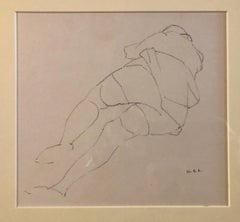
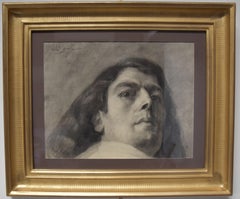
Henry Ottmann (1877-1927) Nude in the studio signed lower right Charcoal on paper 37.5 x 31.5 cm In good condition In a modern frame : 53 x 46.5 cm Published under n°414 of the artist's catalogue raisonné (p 167 reproduced) published by Bernard Toublanc-Michel, Paris 2020 This drawing is a particularly interesting and touching example of Henry Ottmann's art. It shows his special technique, which gives priority to a kind of blur, and in this case it serves very well this scene of intimacy as if captured by stealth. Henry Ottmann was born on 10 April 1877 in Ancenis. He made his debut at the Salon La Libre Esthétique in Brussels in 1904 and took part in the Salon des Indépendants in Paris from 1905, the Salon d'Automne, the Salon de la Société Nationale des Beaux-Arts and the Salon des Tuileries. In 1911 and 1912, Ottmann exhibited at the Artistes de la Société Moderne at the Gallery Paul Durand...

Category

1910s Post-Impressionist Art by Medium: Charcoal

Materials

Charcoal

At the trough  Paper, charcoal, 51.5x34.5cm

At the trough Paper, charcoal, 51.5x34.5cm

Located in Riga, LV

"At the Trough" is an artwork created on paper using charcoal. The dimensions of the artwork are 51.5x34.5 cm. The composition features a woman and a trough, suggesting a rural scene related to feeding and gathering water. The use of charcoal as the medium creates a rich, textural effect in the artwork. The focal point of the composition is the woman, who is the central figure in the scene. The artist has depicted her with a sense of realism, capturing her features, gestures, and expression. Zigurds Gustins (1919-1950) Graphic artist, teacher. Born in family of peasants. Biruta Gustynya wife - painter and teacher. He graduated from the agricultural high school Mezhotne (1937). He studied at the Latvian Academy of Art (1937-42), member of the student corporation "Dzintarzeme". From 1942 he worked in the management of monuments, drew antiques...

Category

Early 20th Century Impressionist Art by Medium: Charcoal

Materials

Paper, Charcoal

"Should Have Bought You Flowers #18" colorful, bright, abstracted flower bouquet

"Should Have Bought You Flowers #18" colorful, bright, abstracted flower bouquet

Located in Edgartown, MA

I am a Gippsland-based artist, whose creative process is ever-evolving, with the constant being my subject matter. Native Australian flora and fauna are commonly depicted in my works...

Category

2010s Contemporary Art by Medium: Charcoal

Materials

Canvas, Lacquer, Charcoal, Oil Pastel, Ink, Mixed Media, Oil, Spray Pain...

Study for Old Canal, Red and Blue (Rockaway, Morris Canal)

Study for Old Canal, Red and Blue (Rockaway, Morris Canal)

By Oscar Florianus Bluemner

Located in New York, NY

Oscar Bluemner was a German and an American, a trained architect who read voraciously in art theory, color theory, and philosophy, a writer of art criticism both in German and English, and, above all, a practicing artist. Bluemner was an intense man, who sought to express and share, through drawing and painting, universal emotional experience. Undergirded by theory, Bluemner chose color and line for his vehicles; but color especially became the focus of his passion. He was neither abstract artist nor realist, but employed the “expressional use of real phenomena” to pursue his ends. (Oscar Bluemner, from unpublished typescript on “Modern Art” for Camera Work, in Bluemner papers, Archives of American Art, Smithsonian Institution, as cited and quoted in Jeffrey R. Hayes, Oscar Bluemner [1991], p. 60. The Bluemner papers in the Archives [hereafter abbreviated as AAA] are the primary source for Bluemner scholars. Jeffrey Hayes read them thoroughly and translated key passages for his doctoral dissertation, Oscar Bluemner: Life, Art, and Theory [University of Maryland, 1982; UMI reprint, 1982], which remains the most comprehensive source on Bluemner. In 1991, Hayes published a monographic study of Bluemner digested from his dissertation and, in 2005, contributed a brief essay to the gallery show at Barbara Mathes, op. cit.. The most recent, accessible, and comprehensive view of Bluemner is the richly illustrated, Barbara Haskell, Oscar Bluemner: A Passion for Color, exhib. cat. [New York: Whitney Museum of American Art, 2005.]) Bluemner was born in the industrial city of Prenzlau, Prussia, the son and grandson of builders and artisans. He followed the family predilection and studied architecture, receiving a traditional and thorough German training. He was a prize-winning student and appeared to be on his way to a successful career when he decided, in 1892, to emigrate to America, drawn perhaps by the prospect of immediate architectural opportunities at the Chicago World’s Fair, but, more importantly, seeking a freedom of expression and an expansiveness that he believed he would find in the New World. The course of Bluemner’s American career proved uneven. He did indeed work as an architect in Chicago, but left there distressed at the formulaic quality of what he was paid to do. Plagued by periods of unemployment, he lived variously in Chicago, New York, and Boston. At one especially low point, he pawned his coat and drafting tools and lived in a Bowery flophouse, selling calendars on the streets of New York and begging for stale bread. In Boston, he almost decided to return home to Germany, but was deterred partly because he could not afford the fare for passage. He changed plans and direction again, heading for Chicago, where he married Lina Schumm, a second-generation German-American from Wisconsin. Their first child, Paul Robert, was born in 1897. In 1899, Bluemner became an American citizen. They moved to New York City where, until 1912, Bluemner worked as an architect and draftsman to support his family, which also included a daughter, Ella Vera, born in 1903. All the while, Oscar Bluemner was attracted to the freer possibilities of art. He spent weekends roaming Manhattan’s rural margins, visiting the Bronx, Brooklyn, Queens, and New Jersey, sketching landscapes in hundreds of small conté crayon drawings. Unlike so many city-based artists, Bluemner did not venture out in search of pristine countryside or unspoiled nature. As he wrote in 1932, in an unsuccessful application for a Guggenheim Fellowship, “I prefer the intimate landscape of our common surroundings, where town and country mingle. For we are in the habit to carry into them our feelings of pain and pleasure, our moods” (as quoted by Joyce E. Brodsky in “Oscar Bluemner in Black and White,” p. 4, in Bulletin 1977, I, no. 5, The William Benton Museum of Art, Storrs, Connecticut). By 1911, Bluemner had found a powerful muse in a series of old industrial towns, mostly in New Jersey, strung along the route of the Morris Canal. While he educated himself at museums and art galleries, Bluemner entered numerous architectural competitions. In 1903, in partnership with Michael Garven, he designed a new courthouse for Bronx County. Garven, who had ties to Tammany Hall, attempted to exclude Bluemner from financial or artistic credit, but Bluemner promptly sued, and, finally, in 1911, after numerous appeals, won a $7,000 judgment. Barbara Haskell’s recent catalogue reveals more details of Bluemner’s architectural career than have previously been known. Bluemner the architect was also married with a wife and two children. He took what work he could get and had little pride in what he produced, a galling situation for a passionate idealist, and the undoubted explanation for why he later destroyed the bulk of his records for these years. Beginning in 1907, Bluemner maintained a diary, his “Own Principles of Painting,” where he refined his ideas and incorporated insights from his extensive reading in philosophy and criticism both in English and German to create a theoretical basis for his art. Sometime between 1908 and 1910, Bluemner’s life as an artist was transformed by his encounter with the German-educated Alfred Stieglitz, proprietor of the Little Galleries of the Photo-Secession at 291 Fifth Avenue. The two men were kindred Teutonic souls. Bluemner met Stieglitz at about the time that Stieglitz was shifting his serious attention away from photography and toward contemporary art in a modernist idiom. Stieglitz encouraged and presided over Bluemner’s transition from architect to painter. During the same period elements of Bluemner’s study of art began to coalesce into a personal vision. A Van Gogh show in 1908 convinced Bluemner that color could be liberated from the constraints of naturalism. In 1911, Bluemner visited a Cézanne watercolor show at Stieglitz’s gallery and saw, in Cézanne’s formal experiments, a path for uniting Van Gogh’s expressionist use of color with a reality-based but non-objective language of form. A definitive change of course in Bluemner’s professional life came in 1912. Ironically, it was the proceeds from his successful suit to gain credit for his architectural work that enabled Bluemner to commit to painting as a profession. Dividing the judgment money to provide for the adequate support of his wife and two children, he took what remained and financed a trip to Europe. Bluemner traveled across the Continent and England, seeing as much art as possible along the way, and always working at a feverish pace. He took some of his already-completed work with him on his European trip, and arranged his first-ever solo exhibitions in Berlin, Leipzig, and Elberfeld, Germany. After Bluemner returned from his study trip, he was a painter, and would henceforth return to drafting only as a last-ditch expedient to support his family when his art failed to generate sufficient income. Bluemner became part of the circle of Stieglitz artists at “291,” a group which included Marsden Hartley, John Marin, and Arthur Dove. He returned to New York in time to show five paintings at the 1913 Armory Show and began, as well, to publish critical and theoretical essays in Stieglitz’s journal, Camera Work. In its pages he cogently defended the Armory Show against the onslaught of conservative attacks. In 1915, under Stieglitz’s auspices, Bluemner had his first American one-man show at “291.” Bluemner’s work offers an interesting contrast with that of another Stieglitz architect-turned-artist, John Marin, who also had New Jersey connections. The years after 1914 were increasingly uncomfortable. Bluemner remained, all of his life, proud of his German cultural legacy, contributing regularly to German language journals and newspapers in this country. The anti-German sentiment, indeed mania, before and during World War I, made life difficult for the artist and his family. It is impossible to escape the political agenda in Charles Caffin’s critique of Bluemner’s 1915 show. Caffin found in Bluemner’s precise and earnest explorations of form, “drilled, regimented, coerced . . . formations . . . utterly alien to the American idea of democracy” (New York American, reprinted in Camera Work, no. 48 [Oct. 1916], as quoted in Hayes, 1991, p. 71). In 1916, seeking a change of scene, more freedom to paint, and lower expenses, Bluemner moved his family to New Jersey, familiar terrain from his earlier sketching and painting. During the ten years they lived in New Jersey, the Bluemner family moved around the state, usually, but not always, one step ahead of the rent collector. In 1917, Stieglitz closed “291” and did not reestablish a Manhattan gallery until 1925. In the interim, Bluemner developed relationships with other dealers and with patrons. Throughout his career he drew support and encouragement from art cognoscenti who recognized his talent and the high quality of his work. Unfortunately, that did not pay the bills. Chronic shortfalls were aggravated by Bluemner’s inability to sustain supportive relationships. He was a difficult man, eternally bitter at the gap between the ideal and the real. Hard on himself and hard on those around him, he ultimately always found a reason to bite the hand that fed him. Bluemner never achieved financial stability. He left New Jersey in 1926, after the death of his beloved wife, and settled in South Braintree, Massachusetts, outside of Boston, where he continued to paint until his own death in 1938. As late as 1934 and again in 1936, he worked for New Deal art programs designed to support struggling artists. Bluemner held popular taste and mass culture in contempt, and there was certainly no room in his quasi-religious approach to art for accommodation to any perceived commercial advantage. His German background was also problematic, not only for its political disadvantages, but because, in a world where art is understood in terms of national styles, Bluemner was sui generis, and, to this day, lacks a comfortable context. In 1933, Bluemner adopted Florianus (definitively revising his birth names, Friedrich Julius Oskar) as his middle name and incorporated it into his signature, to present “a Latin version of his own surname that he believed reinforced his career-long effort to translate ordinary perceptions into the more timeless and universal languages of art” (Hayes 1982, p. 189 n. 1). In 1939, critic Paul Rosenfeld, a friend and member of the Stieglitz circle, responding to the difficulty in categorizing Bluemner, perceptively located him among “the ranks of the pre-Nazi German moderns” (Hayes 1991, p. 41). Bluemner was powerfully influenced in his career by the intellectual heritage of two towering figures of nineteenth-century German culture, Johann Wolfgang von Goethe and Georg Wilhelm Friedrich Hegel. A keen student of color theory, Bluemner gave pride of place to the formulations of Goethe, who equated specific colors with emotional properties. In a November 19, 1915, interview in the German-language newspaper, New Yorker Staats-Zeitung (Abendblatt), he stated: I comprehend the visible world . . . abstract the primary-artistic . . . and after these elements of realty are extracted and analyzed, I reconstruct a new free creation that still resembles the original, but also . . . becomes an objectification of the abstract idea of beauty. The first—and most conspicuous mark of this creation is . . . colors which accord with the character of things, the locality . . . [and which] like the colors of Cranach, van der Weyden, or Durer, are of absolute purity, breadth, and luminosity. . . . I proceed from the psychological use of color by the Old Masters . . . [in which] we immediately recognize colors as carriers of “sorrow and joy” in Goethe’s sense, or as signs of human relationship. . . . Upon this color symbolism rests the beauty as well as the expressiveness, of earlier sacred paintings. Above all, I recognize myself as a contributor to the new German theory of light and color, which expands Goethe’s law of color through modern scientific means (as quoted in Hayes 1991, p. 71). Hayes has traced the global extent of Bluemner’s intellectual indebtedness to Hegel (1991, pp. 36–37). More specifically, Bluemner made visual, in his art, the Hegelian world view, in the thesis and antithesis of the straight line and the curve, the red and the green, the vertical and the horizontal, the agitation and the calm. Bluemner respected all of these elements equally, painting and drawing the tension and dynamic of the dialectic and seeking ultimate reconciliation in a final visual synthesis. Bluemner was a keen student of art, past and present, looking, dissecting, and digesting all that he saw. He found precedents for his non-naturalist use of brilliant-hued color not only in the work Van Gogh and Cezanne, but also in Gauguin, the Nabis, and the Symbolists, as well as among his contemporaries, the young Germans of Der Blaue Reiter. Bluemner was accustomed to working to the absolute standard of precision required of the architectural draftsman, who adjusts a design many times until its reality incorporates both practical imperatives and aesthetic intentions. Hayes describes Bluemner’s working method, explaining how the artist produced multiple images playing on the same theme—in sketch form, in charcoal, and in watercolor, leading to the oil works that express the ultimate completion of his process (Hayes, 1982, pp. 156–61, including relevant footnotes). Because of Bluemner’s working method, driven not only by visual considerations but also by theoretical constructs, his watercolor and charcoal studies have a unique integrity. They are not, as is sometimes the case with other artists, rough preparatory sketches. They stand on their own, unfinished only in the sense of not finally achieving Bluemner’s carefully considered purpose. The present charcoal drawing is one of a series of images that take as their starting point the Morris Canal as it passed through Rockaway, New Jersey. The Morris Canal industrial towns that Bluemner chose as the points of departure for his early artistic explorations in oil included Paterson with its silk mills (which recalled the mills in the artist’s childhood home in Elberfeld), the port city of Hoboken, Newark, and, more curiously, a series of iron ore mining and refining towns, in the north central part of the state that pre-dated the Canal, harkening back to the era of the Revolutionary War. The Rockaway theme was among the original group of oil paintings that Bluemner painted in six productive months from July through December 1911 and took with him to Europe in 1912. In his painting journal, Bluemner called this work Morris Canal at Rockaway N.J. (AAA, reel 339, frames 150 and 667, Hayes, 1982, pp. 116–17), and exhibited it at the Galerie Fritz Gurlitt in Berlin in 1912 as Rockaway N. J. Alter Kanal. After his return, Bluemner scraped down and reworked these canvases. The Rockaway picture survives today, revised between 1914 and 1922, as Old Canal, Red and Blue (Rockaway River) in the collection of the Hirshhorn Museum and Sculpture Garden, Smithsonian Institution, Washington D. C. (color illus. in Haskell, fig. 48, p. 65). For Bluemner, the charcoal expression of his artistic vision was a critical step in composition. It represented his own adaptation of Arthur Wesley’s Dow’s (1857–1922) description of a Japanese...

Category

20th Century American Modern Art by Medium: Charcoal

Materials

Paper, Charcoal

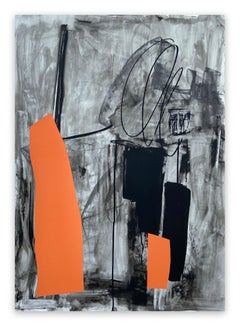
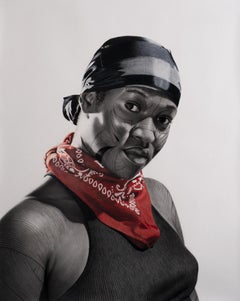
My black greyhound (Abstract painting)

My black greyhound (Abstract painting)

By Adrienn Krahl

Located in London, GB

My black greyhound (Abstract painting) Acrylic, oil pastel and charcoal on canvas Artwork exclusive to IdeelArt. This artwork will be shipped rolled in a dent-resistant tube. This...

Category

2010s Abstract Art by Medium: Charcoal
Materials

Charcoal, Oil Pastel, Acrylic, Graphite

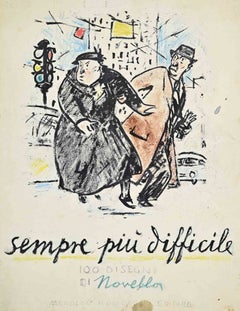
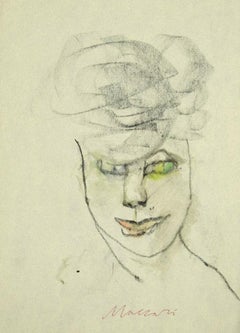
Erotic Fantasy - Drawing by Mino Maccari - 1960s

Erotic Fantasy - Drawing by Mino Maccari - 1960s

By Mino Maccari

Located in Roma, IT

Erotic Fantasy is a charcoal Drawing realized by Mino Maccari (1924-1989) in the 1960s. Hand-signed on the lower, with another drawing on the rear. Good condition. Mino Maccari (...

Category

1960s Modern Art by Medium: Charcoal

Materials

Charcoal

NEWRY
NEWRY

NEWRY

Located in Portland, ME

Barr, Wyatt. NEWRY. Drawing, Charcoal and ink wash on Arches 300lb. Hot Press Watercolor paper, 2014. The subject is a hillside next to Step Falls in Newry, Maine. Signed and dated. ...

Category

2010s Realist Art by Medium: Charcoal

Materials

Charcoal, Ink

Atheism VII: Original 1986 Painting in Acrylic, Watercolor, Charcoal

Atheism VII: Original 1986 Painting in Acrylic, Watercolor, Charcoal

By Jim Dine

Located in Minneapolis, MN

Artist: Jim Dine Title: Atheism VII Medium: Painting of Acrylic, Watercolor and Charcoal on Paper Sheet Size: 43" x 37.75" Edition: Original Years: 1986 Inscription: Signed, dated, a...

Category

Late 20th Century Art by Medium: Charcoal

Materials

Paper, Charcoal, Acrylic, Watercolor

Juvenile III
Juvenile III

Juvenile III

By Charles Osaro

Located in Ibadan, Oyo

Shipping Procedure Ships in a well-protected tube from Nigeria This work is unique, this is not a print or other type of copy. Accompanied by a Certificate of Authenticity. About Artist Charles Osaro...

Category

21st Century and Contemporary Contemporary Art by Medium: Charcoal

Materials

Canvas, Charcoal, Acrylic

High Fashion Elegant Woman with Parasol Umbrella with Geese

High Fashion Elegant Woman with Parasol Umbrella with Geese

By Ruth Eastman

Located in Miami, FL

Golden Age of Illustration preliminary drawing with Art Nouveau influence that was most likely for a major magazine commission. Eastman captures the elegance, style, and self-confidence associated with the upper-class American woman. The work is masterfully crafted and demonstrates a deep knowledge of academic drawing skills. The female figure is depicted in a classic pose with her scarf blowing in the wind, geese at her feet, clutching a red umbrella, and isolated against a neutral background. Signed lower right. Providence: The Illustrated Gallery...

Category

1910s Art Nouveau Art by Medium: Charcoal

Materials

Charcoal, Mixed Media, Gouache, Pencil

Couple, Indian Mythology, Acrylic on canvas, Red, Yellow, Green, Brown"In Stock"

Couple, Indian Mythology, Acrylic on canvas, Red, Yellow, Green, Brown"In Stock"

By Sukanta Das

Located in Kolkata, West Bengal

Sukanta Das - Untitled - 36 x 36 inches (unframed size) Acrylic on canvas Inclusive of shipment in roll form. Style : Juxtaposing the mundane with the exotic, Das’ work is usually f...

Category

2010s Contemporary Art by Medium: Charcoal

Materials

Canvas, Acrylic, Mixed Media, Charcoal

Contemporary Horse Drawing on 100% Cotton Paper, 56 x 76 cm. Marcus Aurelius

Contemporary Horse Drawing on 100% Cotton Paper, 56 x 76 cm. Marcus Aurelius

By Rubins J. Spaans

Located in ALP, ES

Charcoal drawing on archival, 100% cotton paper by Dutch contemporary artist and art teacher Rubins J. Spaans. His drawings are elaborated sketches for his paintings. ***FREE SHIPPI...

Category

2010s Contemporary Art by Medium: Charcoal

Materials

Paper, Charcoal

Original Ronald Shap figure drawing, signed

Original Ronald Shap figure drawing, signed

Located in Columbus, OH

Original oil pastel and gouache figure drawing by celebrated, twentieth-century California landscape painter, Ronald Shap. Sketch of nude man bent over. 24x18 inches. Signed. Some p...

Category

1980s Contemporary Art by Medium: Charcoal

Materials

Charcoal, Oil Pastel, Gouache

Smoke Break Street Art Basquiat Style

Smoke Break Street Art Basquiat Style

Located in OIA, ES

"Smoke Break" is a visually striking and intellectually challenging painting that combines pop culture references with childhood nostalgia. At the center of the canvas, the phrase "T...

Category

2010s Neo-Expressionist Art by Medium: Charcoal

Materials

Enamel

Mirrors of Apprehension Before the Fallen Sun, Abstract Drawing - Wesley Kimler

Mirrors of Apprehension Before the Fallen Sun, Abstract Drawing - Wesley Kimler

By Wesley Kimler

Located in Chicago, IL

Combining fractions of abstracted drawings into one, Kimler creates a whole new abstracted form. With expressive pours of black paint and brushwork in charcoal and graphite, Kimler's...

Category

2010s Abstract Expressionist Art by Medium: Charcoal

Materials

Charcoal, Acrylic, Archival Paper, Graphite

Chicano Abstract Expressionist Portrait -- The Red Headed Woman, Signed

Chicano Abstract Expressionist Portrait -- The Red Headed Woman, Signed

Located in Soquel, CA

Abstract Expressionist Portrait -- The Red Headed Woman by Chicano Artist Ricardo de Silva This striking abstract expressionist portrait is by Latino artist Ricardo (Richard) de Sil...

Category

1980s Abstract Expressionist Art by Medium: Charcoal

Materials

Charcoal, Acrylic, Gouache, Rice Paper

Indian Woman with flowers and mythology tattoo drawing on her "In Stock"

Indian Woman with flowers and mythology tattoo drawing on her "In Stock"

By Sukanta Das

Located in Kolkata, West Bengal

Sukanta Das - Untitled - 30 x 30 inches (unframed size) Acrylic on canvas Inclusive of shipment in roll form. Style : Juxtaposing the mundane with the exotic, Das’ work is usually ...

Category

2010s Contemporary Art by Medium: Charcoal

Materials

Canvas, Charcoal, Mixed Media, Acrylic

Metamorphosis, Two Female Nudes, Graphite Drawing on Paper, Matted

Metamorphosis, Two Female Nudes, Graphite Drawing on Paper, Matted

By Eduardo Alvarado

Located in Chicago, IL

This loose graphite sketch shows two women, one nude, one in various state of dress. The intertwined figures morph into one as the name suggests in this nude drawing by Eduardo Alvarado. The drawing is matted with a heavy mat. Contact the gallery for framing options. Eduardo Alvarado Metamorphosis charcoal on paper 11.75h x 9w in 29.84h x 22.86w cm EDA017 EDUARDO ALVARADO b. Spain, 1972 EDUCATION 1990-95 Licenciado en BB AA La Facultad de BB AA de la UPV, Bilbao La Facultad de BB AA de San Fernando, Madrid SOLO EXHIBITIONS 2018 Casa del Libro, Logroño 2016 Casa de Cultura. Miranda de Ebro 2015 Casa de Cultura. Miranda de Ebro Galería Espiral, Noja 2014 Galerie d´Art Anne Broitman. Biarritz, France 2013 Galería de Arte-Centro Cultural (junto a Vesna Pavlovic). Novi Sad, Serbia Centro Cultural La Vidriera, Maliaño The Gallery of Contemporary Fine Arts (junto a Vesna Pavlovic). Nis, Serbia 2012 Gallery Seasons (junto a Vesna Pavlovic). Sofia, Bulgaria Gallery SKC (junto a Vesna Palovic). Belgrado, Serbia Manos para qué os quiero. Logroño Galería Espiral. Feria Internacional de Arte Contemporáneo, Santander Sala Asociación Artistas de Guipuzcoa (junto a Juan Carlos Cardesín), San Sebastian 2011 Galería Espiral, San Miguel de Meruelo Galería Jovan Popovic (junto a Vesna Pavlovic). Opovo, Serbia Galería Veciti Trkac (junto a Vesna Pavlovic). Nis, Serbia Exit Art Gallery (Fundación Adolfo...

Category

2010s Contemporary Art by Medium: Charcoal

Materials

Paper, Charcoal

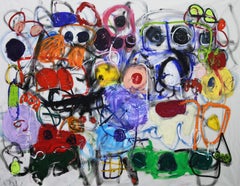
"Large Gridish #14" - Contemporary Multimedia Abstract Painting

"Large Gridish #14" - Contemporary Multimedia Abstract Painting

By G. Campbell Lyman

Located in New Orleans, LA

(NOTE: if you enter "Gridish" into the 1stDibs search field you can view other paintings in this series) Artist’s Statement: “As I often do, I chose a very simple form to work with ...

Category

2010s Abstract Art by Medium: Charcoal
Materials

Charcoal, House Paint, Acrylic

Horses Charcoal Drawing on 100% Cotton Paper, 56 x 76 cm. Marcus Aurelius

Horses Charcoal Drawing on 100% Cotton Paper, 56 x 76 cm. Marcus Aurelius

By Rubins J. Spaans

Located in ALP, ES

Charcoal drawing on archival, 100% cotton paper by Dutch contemporary artist and art teacher Rubins J. Spaans. His drawings are elaborated sketches for his paintings. ***FREE SHIPPI...

Category

2010s Contemporary Art by Medium: Charcoal

Materials

Paper, Charcoal

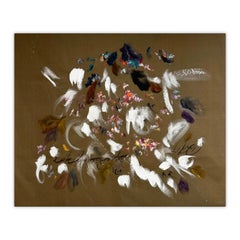
Ingenuity (Abstract painting)

Ingenuity (Abstract painting)

By Adrienn Krahl

Located in London, GB

Ingenuity (Abstract painting) Ink, oil pastel and charcoal on paper - Unframed. Artwork exclusive to IdeelArt. Adrienn Krahl’s paintings express a profound sense of drama and emot...

Category

2010s Abstract Art by Medium: Charcoal
Materials

Paper, Charcoal, Oil Pastel, Ink

FALLING UNDER THE STARS

FALLING UNDER THE STARS

Located in Badung, ID

This work emerges from Ricky Lee Gordon’s close relationship with nature, where making art becomes a quiet, meditative act rather than a purely visual exercise. Using pigments and dy...

Category

2010s Art by Medium: Charcoal

Materials

Charcoal, Raw Linen, Pigment

"View of Lambertville"

"View of Lambertville"

By Daniel Garber

Located in Lambertville, NJ

Jim’s of Lambertville Fine Art Gallery is proud to present this piece by Daniel Garber (1880 - 1958). One of the two most important and, so far, the most valuable of the New Hope Sc...

Category

1940s American Impressionist Art by Medium: Charcoal

Materials

Paper, Charcoal

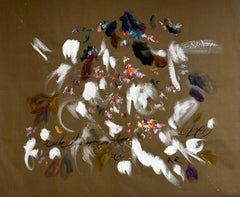
Balance (Abstract painting)

Balance (Abstract painting)

By Adrienn Krahl

Located in London, GB

Balance (Abstract painting) Ink, oil pastel and charcoal on paper - Unframed. Artwork exclusive to IdeelArt. Adrienn Krahl’s paintings express a profound sense of drama and emoti...

Category

2010s Abstract Art by Medium: Charcoal
Materials

Paper, Charcoal, Oil Pastel, Ink

Untitled

Untitled

By Mark Beard

Located in New York, NY

Charcoal with red and white conté crayon on Rives BFK paper Signed and dated, recto This artwork is offered by ClampArt, located in New York City. Mark Beard, born in 1956 in Salt ...

Category

2010s Realist Art by Medium: Charcoal

Materials

Paper, Conté, Charcoal

Woman - Original Drawing by Armand Gautier - 19th century

Woman - Original Drawing by Armand Gautier - 19th century

Located in Roma, IT

Woman is an original drawing in charcoal paper realized by Armand Gautier in the 19th Century. Good conditions. The artwork is depicted through deft strokes by mastery.

Category

19th Century Modern Art by Medium: Charcoal

Materials

Charcoal

A Walk - 21st Century Contemporary Landscape Charcoal Drawing

A Walk - 21st Century Contemporary Landscape Charcoal Drawing

Located in Nuenen, Noord Brabant

Rosanna Gaddoni (Italian artist) A Walk 20 x 20 cm ( framed in wood frame with museum glass) Measurement with included frame: 30 x 30 x 3 cm Charcoal on Paper The Italian artist Ros...

Category

2010s Contemporary Art by Medium: Charcoal

Materials

Charcoal, Paper

Standing Still - 21st Century Contemporary Landscape Charcoal Drawing

Standing Still - 21st Century Contemporary Landscape Charcoal Drawing

Located in Nuenen, Noord Brabant

Rosanna Gaddoni (Italian artist) Standing Still 20 x 20 cm ( framed in wood frame with museum glass) Measurement with included frame: 30 x 30 x 3 cm Charcoal on Paper The Italian ar...

Category

2010s Contemporary Art by Medium: Charcoal

Materials

Paper, Charcoal

Untitled 1 of 2
Untitled 1 of 2

Untitled 1 of 2

By Ricardo Mazal

Located in Phoenix, AZ

charcoal and graphite on paper and canvas

Category

1990s Minimalist Art by Medium: Charcoal

Materials

Canvas, Paper, Charcoal, Graphite

Bleu de Juliet
Bleu de Juliet

Bleu de Juliet

By Holly Addi

Located in Boston, MA

Holly Addi, living and working in Salt Lake City, UT, USA is an abstract painter using acrylic and charcoal on canvas. Her gesture and surface quality is reminiscent of the Abstract ...

Category

21st Century and Contemporary Abstract Art by Medium: Charcoal

Materials

Charcoal, Acrylic

Untitled (Torso)
Untitled (Torso)

Untitled (Torso)

Located in London, GB

Charcoal on paper Signed and dated (lower right) 105cm × 73cm (109cm × 78cm framed) A Colombian painter, draughtsman and lithographer, known for his depictions of the male nude, wit...

Category

1980s Contemporary Art by Medium: Charcoal

Materials

Paper, Charcoal

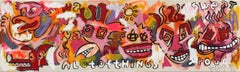
Balance (Abstract painting)

Balance (Abstract painting)

By Adrienn Krahl

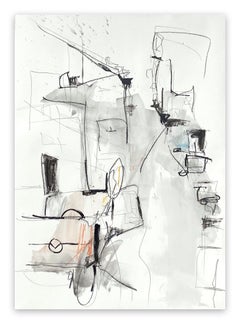
Located in London, GB

Ink, oil pastel and charcoal on paper - Unframed. Artwork exclusive to IdeelArt. Adrienn Krahl’s paintings express a profound sense of drama and emotional weight. Krahl works in a...

Category

2010s Abstract Art by Medium: Charcoal
Materials

Paper, Charcoal, Oil Pastel, Ink

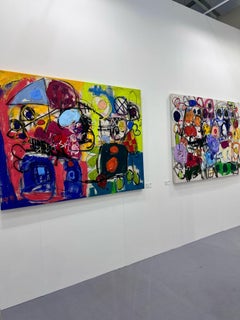
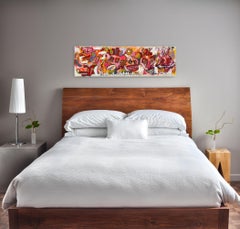
Gridish #27 (Framed Contemporary Abstract Mixed Media Painting)

Gridish #27 (Framed Contemporary Abstract Mixed Media Painting)

By G. Campbell Lyman

Located in New Orleans, LA

"I chose a very simple form to work with in the "Gridish" paintings– a grid of rectangles. Content never interests me much, and I don’t spend time thinking about it. I’m interested i...

Category

2010s Abstract Art by Medium: Charcoal
Materials

Lacquer, Charcoal, Acrylic, Oil Crayon

Korean Contemporary Art by Sa Hara - Wave of Still-Life Secret Note 1

Korean Contemporary Art by Sa Hara - Wave of Still-Life Secret Note 1

Located in Paris, IDF

Charcoal & acrylic on canvas Sa Hara is a Korean artist born in 1975 who lives and works in Seoul, South Korea. She is graduated with a bachelor’s degree in business administrat...

Category

2010s Contemporary Art by Medium: Charcoal

Materials

Canvas, Charcoal, Acrylic

Portrait Drawing of a Man

Portrait Drawing of a Man

By Otis Huband

Located in Houston, TX

Charcoal drawing of a bust of a nude man by Otis Huband in 1972. Signed and dated by artist. Artist Biography: Otis Huband was born in Fredericksburg, Virginia in 1933. He began st...

Category

1970s Modern Art by Medium: Charcoal

Materials

Charcoal

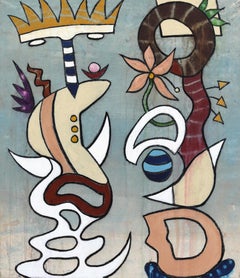
Blue Key Note - Abstract Contemporary Organic Shape Mixed Media Art on Canvas

Blue Key Note - Abstract Contemporary Organic Shape Mixed Media Art on Canvas

Located in Los Angeles, CA

Rue Bootay, a New York-born artist now rooted in the vibrant artistic landscape of Los Angeles, navigates the avant-garde realm of nonrepresentational surrealism with a style uniquel...

Category

2010s Abstract Art by Medium: Charcoal
Materials

Canvas, Charcoal, Oil Pastel, Mixed Media, Acrylic

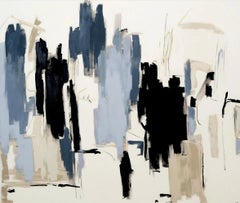
Lux on the 5th (Abstract painting)

Lux on the 5th (Abstract painting)

By Adrienn Krahl

Located in London, GB

Lux on the 5th (Abstract painting) Acrylic, charcoal and graphite on paper - Unframed. Artwork exclusive to IdeelArt. Adrienn Krahl’s paintings express a profound sense of drama ...

Category

2010s Abstract Art by Medium: Charcoal
Materials

Paper, Charcoal, Acrylic, Graphite

Quorum
Quorum

G. Campbell LymanQuorum, 2023

$1,160Sale Price|20% Off

Quorum

By G. Campbell Lyman

Located in New Orleans, LA

(Comes framed in a deep-profile maple or black floater frame, ready to hang.) Artist's Statement: "This painting harkens back to my 'Gridish' series but with more negative space, a broader array of media and more complexity to the oval forms. I have tried to create tension between these iconic forms through the divergence of dissonant and unusual materials, colors and textures. These ovals keep reappearing in my work; they seem almost like groups of silent but sentient beings to me." “Lyman’s work evolves restlessly, with the common elements generally being deft and unusual color choices that balance assonance and dissonance, and vestiges of the hand and facture purposely left in the paintings. The negative space is often so meticulously worked that it’s almost as if the objects – usually simple shapes – are there as much to complement the background as vice versa. Despite the often bold colors there is an elegance about his paintings that prevents them from being either loud or decorative. " Artbeit Zeitschrift “His paintings are a refreshing departure from the current abstract art world’s seemingly endless parade of fields of color with scribbles providing form, a style that is easily mimicked and has become a sort of “safe,” accessible go-to. There are confident decisions in these paintings appearing as commitments of strongly delineated forms and unexpected collisions of color that give the work a visceral, confident and playful soul, increasingly missing from contemporary expressionist abstraction. They are the paintings of a real painter rather than a decorative artist.” ArtSeen, 2018 (from a collector): "Love your work. We collect colorists like Wolf Kahn and Jennifer Bartlett, whom I commissioned a piece from that is in the entrance of Mayo Clinic. We are old fans...

Category

2010s Abstract Art by Medium: Charcoal
Materials

Paper, Charcoal, Pastel, House Paint, Oil, Acrylic, Clay

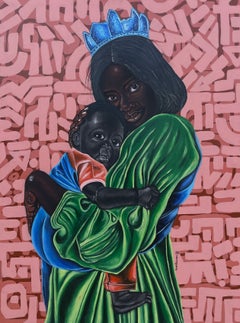
Beautiful Angel -21st Century, Contemporary, Figurative Portrait, Africa, Women

Beautiful Angel -21st Century, Contemporary, Figurative Portrait, Africa, Women

Located in Ibadan, Oyo

Shipping Procedure Ships in a well-protected tube from Nigeria This work is unique, not a print or other type of copy. Accompanied by a Certificate of Authenticity (Issued by the Gal...

Category

21st Century and Contemporary Contemporary Art by Medium: Charcoal

Materials

Canvas, Charcoal, Mixed Media, Acrylic

Puissance, Horse Drawing, Charcoal and graphite on Fabriano paper, white frame

Puissance, Horse Drawing, Charcoal and graphite on Fabriano paper, white frame

By Patsy McArthur

Located in Dallas, TX

Puissance is a beautiful and unique charcoal drawing on paper of a dynamic horse. The Fabriano paper is a high quality watercolor grade set in a custom white wood frame, all archival...

Category

2010s Realist Art by Medium: Charcoal

Materials

Charcoal, Archival Paper, Graphite

Winter Tree - Pencil Drawing by French Master mid 20th Century

Winter Tree - Pencil Drawing by French Master mid 20th Century

Located in Roma, IT

The Tree is an original drawing in pencil, realized by an anonymous artist of the XX century. Image Dimension: 21 x 30 cm Included a Passepartout. In good conditions. Here the a...

Category

Mid-20th Century Art by Medium: Charcoal

Materials

Charcoal

Lux on the 5th (Abstract painting)

Lux on the 5th (Abstract painting)

By Adrienn Krahl

Located in London, GB

Lux on the 5th (Abstract painting) Acrylic, charcoal and graphite on paper - Unframed. Artwork exclusive to IdeelArt. Adrienn Krahl’s paintings express a profound sense of drama ...

Category

2010s Abstract Art by Medium: Charcoal
Materials

Paper, Charcoal, Acrylic, Graphite

"Study for Alyssa II" 2018 - Charcoal drawing, portrait of young woman, framed

"Study for Alyssa II" 2018 - Charcoal drawing, portrait of young woman, framed

By Stephen Bauman

Located in Sag Harbor, NY

A charcoal portrait drawing of a young woman, perfectly poised and staring directly at the viewer. Her face is executed with exceptional detail, and is the focal point of the composi...

Category

2010s Academic Art by Medium: Charcoal

Materials

Charcoal, Archival Paper

Aggregate #23 (Abstract Contemporary Painting, Framed)

Aggregate #23 (Abstract Contemporary Painting, Framed)

By G. Campbell Lyman

Located in New Orleans, LA

(Comes framed in a maple floater frame, ready to hang.) This is one of a series we have posted on 1stDibs. The first got more clicks and saves on its first day than any of the many hundreds of artworks we have ever posted. If you search on "G. Campbell Lyman" on 1stDibs you can see others in this series. Here's a recent message from a 1stDibs buyer of a painting in this series, a seasoned collector: "Love your work. We collect colorists like Wolf Kahn and Jennifer Bartlett, whom I commissioned a piece from that is in the entrance of Mayo Clinic. We are old fans...

Category

2010s Abstract Art by Medium: Charcoal
Materials

Charcoal, Pastel, Acrylic, House Paint

Culture Identity 8 - 21st Century Contemporary Figurative Modern Women Painting

Culture Identity 8 - 21st Century Contemporary Figurative Modern Women Painting

Located in Ibadan, Oyo

Shipping Procedure Ships in a well-protected tube from Nigeria This work is unique, not a print or other type of copy. Accompanied by a Certificate of Authenticity. About Artist The...

Category

21st Century and Contemporary Contemporary Art by Medium: Charcoal

Materials

Canvas, Charcoal, Mixed Media, Acrylic

'Portrait of a Gentleman in Montmartre Paris', Japanese School

'Portrait of a Gentleman in Montmartre Paris', Japanese School

Located in London, GB

'Portrait of a Gentleman in Montmartre Paris', pastel and charcoal on paper, Japanese School (1972). This accomplished portrait depicts an older gentleman seated in Place du Tertre, ...

Category

1970s Art by Medium: Charcoal

Materials

Paper, Charcoal, Pastel

Family Portrait #5  (Contemporary Abstract Painting, Framed)

Family Portrait #5 (Contemporary Abstract Painting, Framed)

By Guy Lyman

Located in New Orleans, LA

"I have been painting seriously for somewhere around 35 years, but have only ever sold regionally - most recently, through my gallery on Magazine Street in New Orleans. Through 1stDi...

Category

2010s Abstract Art by Medium: Charcoal
Materials

Charcoal, Oil Crayon, Oil, Acrylic, Watercolor, Archival Paper

Charcoal art for sale on 1stDibs.

Find a wide variety of authentic Charcoal art available on 1stDibs. While artists have worked in this medium across a range of time periods, art made with this material during the 21st Century is especially popular. There are many well-known artists whose body of work includes ceramic sculptures. Popular artists on 1stDibs associated with pieces like this include Robert Lebsack, Pamela Holmes, Federico Castellon, and Richard Shaoul. Frequently made by artists working in the Contemporary, Abstract, all of these pieces for sale are unique and many will draw the attention of guests in your home. Not every interior allows for large Charcoal art, so small editions measuring 1 inches across are also available Prices for art made by famous or emerging artists can differ depending on medium, time period and other attributes. On 1stDibs, the price for these items starts at $1 and tops out at $1,450,000, while the average work can sell for $1,424.