Art by Medium: Lithograph

to
104
113
85
97
21
22
Overall Width
to
Overall Height
to
336
2
1
9
138
172
104
91
41
26
10
200
137
63
30
19
18
14
12
12
10
9
7
6
6
6
6
5
5
5
3
3
3
43
13
9
8
819
774
362
275
74
78
260
72
Medium: Lithograph
Artist: Alexander Calder
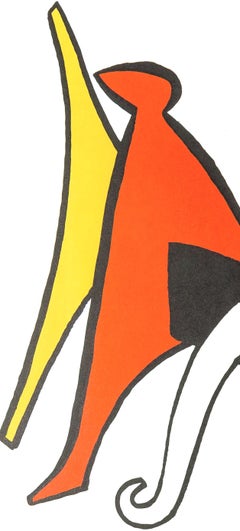
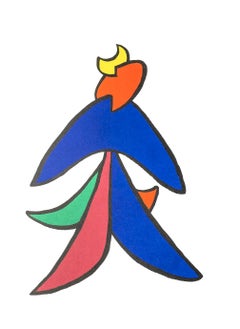
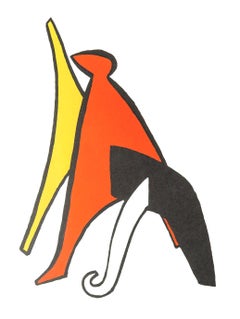
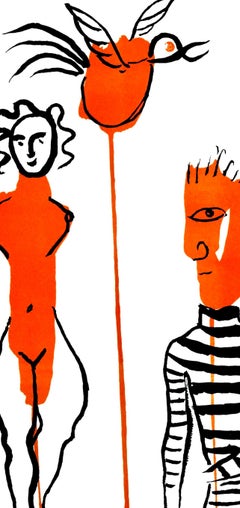
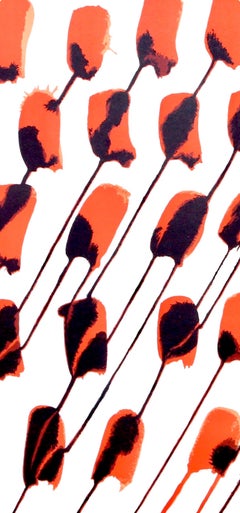
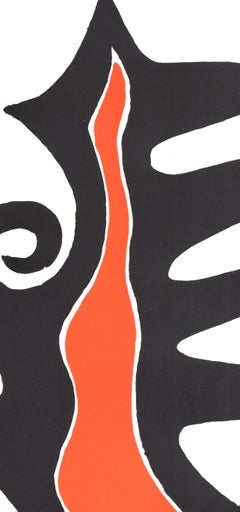
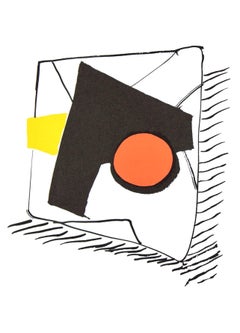
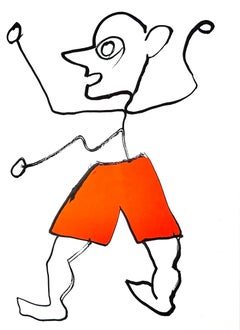
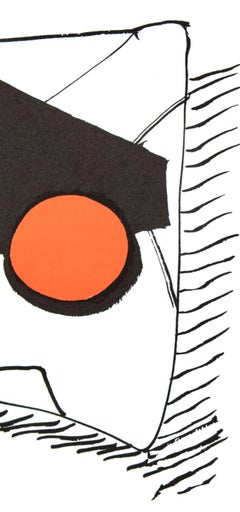
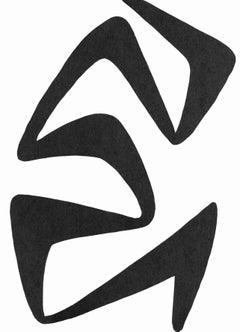
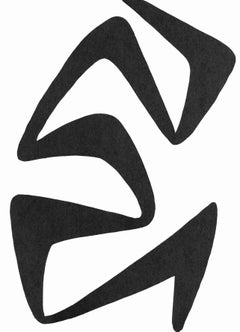
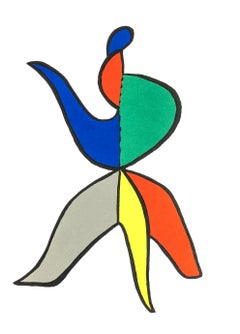
Alexander Calder, Clog, from Derriere le Miroir, 1963

Alexander Calder, Clog, from Derriere le Miroir, 1963

By Alexander Calder

Located in Southampton, NY

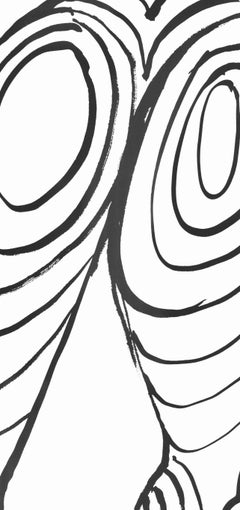
This exquisite lithograph by Alexander Calder (1898–1976), titled Sabot (Clog), originates from the historic 1963 folio Derriere le Miroir, No. 141. Published by Maeght Editeur, Pari...

Category

1960s Surrealist Art by Medium: Lithograph

Materials

Lithograph

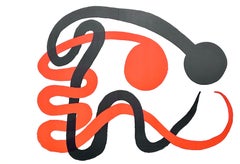
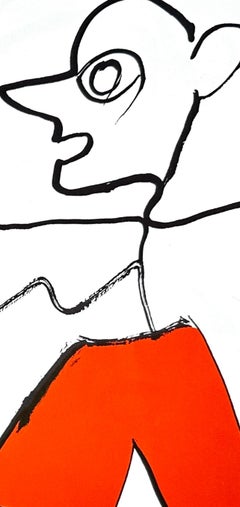
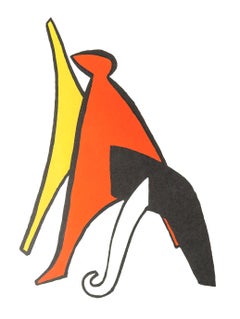
Alexander Calder, Anteater, from Derriere le Miroir, 1963

Alexander Calder, Anteater, from Derriere le Miroir, 1963

By Alexander Calder

Located in Southampton, NY

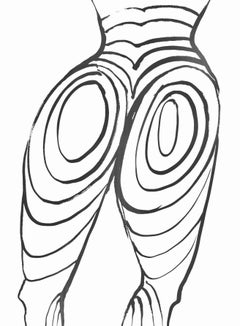
This exquisite lithograph by Alexander Calder (1898–1976), titled Tamanoir (Anteater), originates from the historic 1963 folio Derriere le Miroir, No. 141. Published by Maeght Editeu...

Category

1960s Surrealist Art by Medium: Lithograph

Materials

Lithograph

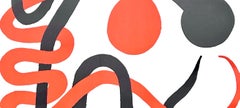
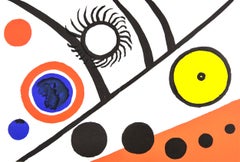
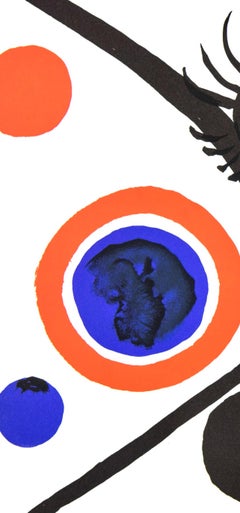
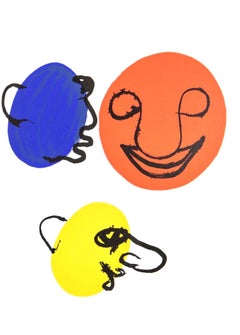
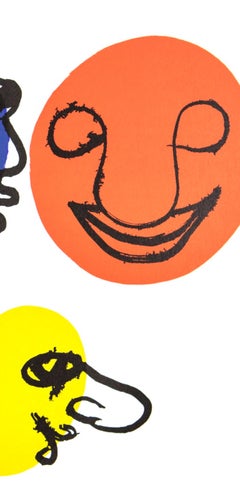
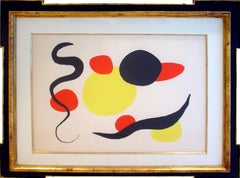
Alexander Calder, The Moon and the Prickly Pig, from Derriere le Miroir, 1963

Alexander Calder, The Moon and the Prickly Pig, from Derriere le Miroir, 1963

By Alexander Calder

Located in Southampton, NY

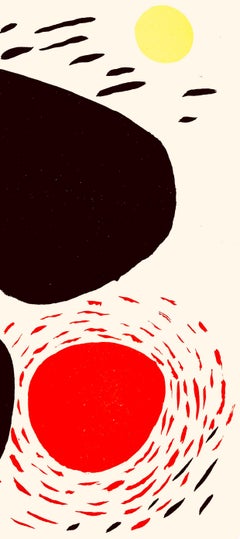
This exquisite lithograph by Alexander Calder (1898–1976), titled La lune et porc qui pique (The Moon and the Prickly Pig), originates from the historic 1963 folio Derriere le Miroir...

Category

1960s Surrealist Art by Medium: Lithograph

Materials

Lithograph

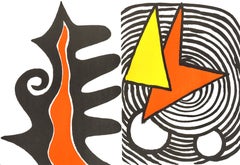
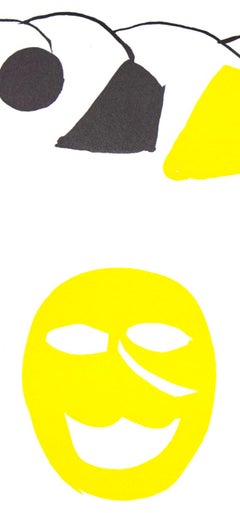
Alexander Calder, Clog and Phrygian Cap, from Derriere le Miroir, 1963

Alexander Calder, Clog and Phrygian Cap, from Derriere le Miroir, 1963

By Alexander Calder

Located in Southampton, NY

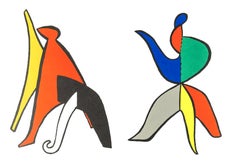
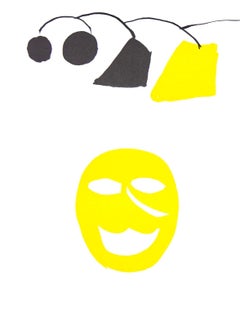
This exquisite lithograph by Alexander Calder (1898–1976), titled Sabot et le bonnet phrygien (Clog and Phrygian Cap), originates from the historic 1963 folio Derriere le Miroir, No....

Category

1960s Surrealist Art by Medium: Lithograph

Materials

Lithograph

Alexander Calder, Untitled, from XXe Siecle, 1971

Alexander Calder, Untitled, from XXe Siecle, 1971

By Alexander Calder

Located in Southampton, NY

This exquisite lithograph by Alexander Calder (1898–1976), titled Sans titre (Untitled), from the album XXe Siecle, Nouvelle serie, XXXIIIe Annee, No. 37, Decembre 1971, originates f...

Category

1970s Surrealist Art by Medium: Lithograph

Materials

Lithograph

Alexander Calder, Untitled, from XXe Siecle, 1952

Alexander Calder, Untitled, from XXe Siecle, 1952

By Alexander Calder

Located in Southampton, NY

This exquisite lithograph by Alexander Calder (1898–1976), titled Sans titre (Untitled), from the album XXe Siecle, Nouvelle serie No. 3 (double), Juin 1952, originates from the 1952...

Category

1950s Surrealist Art by Medium: Lithograph

Materials

Lithograph

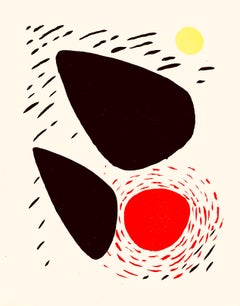
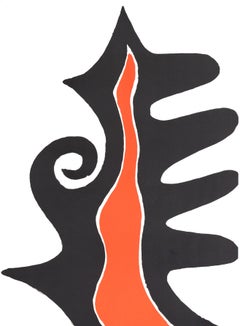
Alexander Calder, Orange Sun, from Derriere le miroir, 1954

Alexander Calder, Orange Sun, from Derriere le miroir, 1954

By Alexander Calder

Located in Southampton, NY

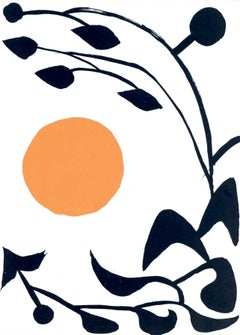
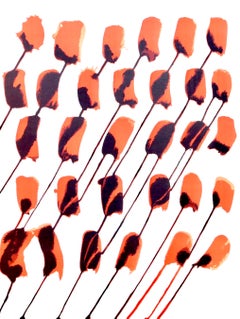
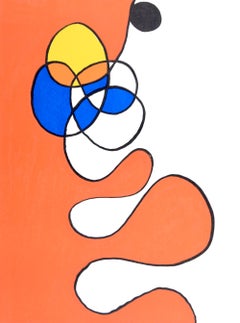
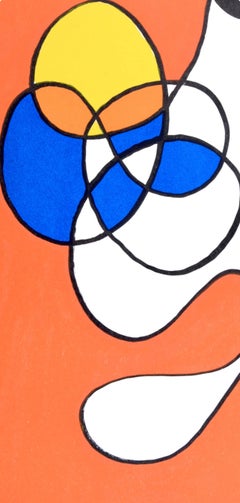
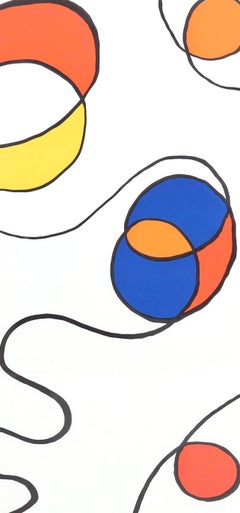
This exquisite lithograph by Alexander Calder (1898–1976), titled Soleil orange (Orange Sun), from the folio Derriere le miroir, No. 69–70, originates from the 1954 edition published by Maeght Editeur, Paris, and printed by Mourlot Freres, Paris, 1954. This work captures Calder’s mastery of motion, balance, and vibrant color through the spontaneous energy of his abstract forms, embodying the rhythmic harmony and visual poetry that defined his art. Executed as a lithograph on velin paper, this work measures 15 x 11 inches. Unsigned and unnumbered as issued. The edition exemplifies the superb craftsmanship of Mourlot Freres, Paris. Artwork Details: Artist: Alexander Calder (1898–1976) Title: Soleil orange (Orange Sun), from the folio Derriere le miroir, No. 69–70 Medium: Lithograph on velin paper Dimensions: 15 x 11 inches (38.1 x 27.9 cm) Inscription: Unsigned and unnumbered as issued Date: 1954 Publisher: Maeght Editeur, Paris Printer: Mourlot Freres, Paris Condition: Well preserved, consistent with age and medium Provenance: From the folio Derriere le miroir, No. 69–70, published by Maeght Editeur, Paris; printed by Mourlot Freres, Paris, 1954 About the Publication: Derriere le miroir (Behind the Mirror) was one of the most important art publications of the 20th century, created and published by Maeght Editeur in Paris from 1946 to 1982. Founded by the visionary art dealer and publisher Aime Maeght, the series served as both an exhibition catalogue and a work of art in its own right, uniting original lithographs by leading modern and contemporary artists with critical essays, poetry, and design of the highest quality. Printed by master lithographers such as Mourlot Freres and Arte, Derriere le miroir became synonymous with the artistic vanguard of postwar Europe. Each issue was devoted to a single artist or theme and published to accompany exhibitions at the Galerie Maeght in Paris, featuring works by Pablo Picasso, Henri Matisse, Georges Braque, Joan Miro, Marc Chagall, Alexander Calder, Fernand Leger, and Alberto Giacometti, among others. The publication reflected Maeght’s belief that art should be both accessible and elevated—an ideal realized through its luxurious production values, meticulous printing, and collaboration with the greatest creative minds of its time. About the Artist: Alexander Calder (1898–1976) was an American sculptor, painter, and printmaker whose pioneering innovations in kinetic art revolutionized 20th-century sculpture and transformed modern visual language. Born in Lawnton, Pennsylvania, into a family of artists, Calder initially trained as a mechanical engineer at the Stevens Institute of Technology before turning to art at the Art Students League in New York—a combination of technical precision and creative imagination that defined his career. Moving to Paris in 1926, he immersed himself in the avant-garde and formed friendships with Pablo Picasso, Alberto Giacometti, Joan Miro, Wassily Kandinsky, Salvador Dali, Marcel Duchamp, and Man Ray, whose ideas profoundly shaped his artistic philosophy. From Picasso, he absorbed structural invention; from Miro, lyrical abstraction; from Kandinsky, spiritual geometry; and from Duchamp and Man Ray, the courage to merge intellect and play. In Paris, Calder created his famous Cirque Calder, a miniature mechanical circus that introduced motion and performance as central components of sculpture, and by the early 1930s, he invented the mobile—a term coined by Duchamp—to describe his delicately balanced, moving sculptures that responded to air currents. Later, Jean Arp would name his stationary counterparts stabiles. These two inventions—sculptures that could either float and spin gracefully or stand monumentally still—transformed art into a dynamic dialogue between movement, balance, and space. Calder’s signature forms, painted in vivid reds, blacks, blues, and yellows, embodied both joy and precision, creating an art that was at once abstract, organic, and deeply human. Like Kandinsky and Miro, he viewed art as a form of rhythm and emotion; like Duchamp, he embraced innovation and humor; and like Giacometti and Dali, he was fascinated by perception, structure, and the unseen forces of motion. His monumental public sculptures—such as La Grande Vitesse (1969) in Grand Rapids and Flamingo (1973) in Chicago—redefined public art as a symbol of civic optimism and modern progress. A key bridge between European modernism and American abstraction, Calder’s influence extended to artists including Jean Tinguely, George Rickey, Donald Judd, Ellsworth Kelly, Richard Serra, and Olafur Eliasson, whose works in kinetic and spatial art continue to echo his vision. His gouaches, prints, and jewelry carried the same balance and movement as his sculptures, revealing a unified language of rhythm across media. Represented in every major modern museum—including MoMA, the Guggenheim, the Tate, and the Centre Pompidou—Calder remains celebrated for merging engineering, color, and poetry into an art of pure equilibrium. Standing alongside Pablo Picasso, Alexander Calder, Alberto Giacometti, Salvador Dali, Joan Miro, Wassily Kandinsky, Marcel Duchamp, and Man Ray, he remains one of the cornerstones of modern art—a visionary whose works breathe with motion, grace, and joy. His highest auction record was achieved by Poisson Volant (Flying Fish) (1957), which sold for $25.9 million at Christie’s, New York, on May 15, 2014, reaffirming Alexander Calder’s enduring legacy as one of the most inventive, dynamic, and collectible artists in the history of modern art. Alexander Calder Soleil...

Category

1950s Modern Art by Medium: Lithograph

Materials

Lithograph

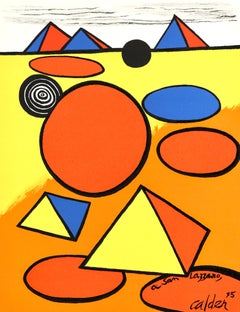
Alexander Calder, Two Pyramids and Spirals, from Derriere le miroir, 1954

Alexander Calder, Two Pyramids and Spirals, from Derriere le miroir, 1954

By Alexander Calder

Located in Southampton, NY

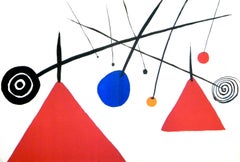
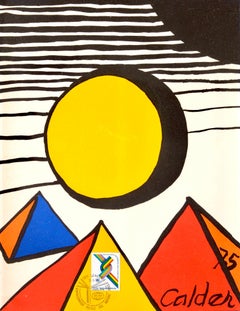
This exquisite lithograph by Alexander Calder (1898–1976), titled Deux pyramides et spirales (Two Pyramids and Spirals), from the folio Derriere le miroir, No. 69–70, originates from...

Category

1950s Modern Art by Medium: Lithograph

Materials

Lithograph

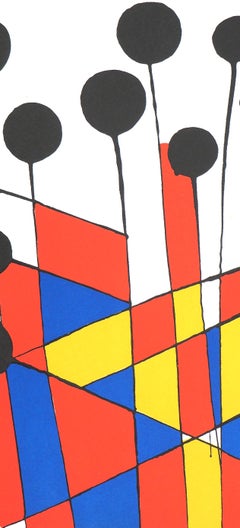
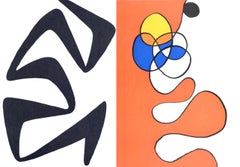
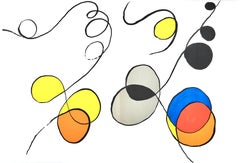
Alexander Calder, Composition with Circles, from Derriere le miroir, 1976

Alexander Calder, Composition with Circles, from Derriere le miroir, 1976

By Alexander Calder

Located in Southampton, NY

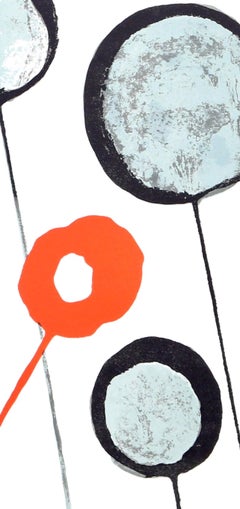
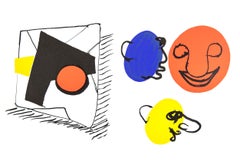
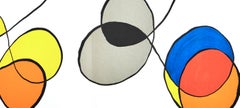
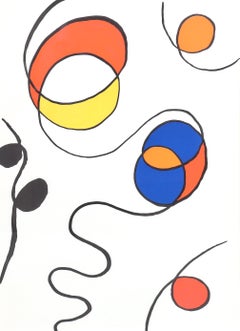
This exquisite lithograph by Alexander Calder (1898–1976), titled Composition aux Cercles (Composition with Circles), from the folio Derriere le miroir, No. 221, originates from the 1976 edition published by Maeght Editeur, Paris, and printed by Mourlot Freres, Paris, 1976. Composition aux Cercles reflects Calder’s mastery of rhythm, motion, and form—translating the dynamic energy of his sculptural works into bold, abstract compositions on paper, rich with color and movement. Executed as a lithograph on velin paper, this work measures 15 x 22 inches, with centerfold as issued. Unsigned and unnumbered as issued. The edition exemplifies the superb craftsmanship of Mourlot Freres, Paris. Artwork Details: Artist: Alexander Calder (1898–1976) Title: Composition aux Cercles (Composition with Circles), from the folio Derriere le miroir, No. 221 Medium: Lithograph on velin paper Dimensions: 15 x 22 inches (38.1 x 55.88 cm), with centerfold as issued Inscription: Unsigned and unnumbered as issued Date: 1976 Publisher: Maeght Editeur, Paris Printer: Mourlot Freres, Paris Condition: Well preserved, consistent with age and medium Provenance: From the folio Derriere le miroir, No. 221, published by Maeght Editeur, Paris; printed by Mourlot Freres, Paris, 1976 Notes: Excerpted from the folio (translated from French), The illustrations on the cover and pages 3, 4-5, 6, 9, 12-13 and 16 of this issue of "Behind the Mirror" are original lithographs by Calder printed at l'imprimerie Arte, Adrien Maeght. It was printed a luxury edition on velin d'Arches in CL numbered examples. About the Publication: Derriere le miroir (Behind the Mirror) was one of the most important art publications of the 20th century, created and published by Maeght Editeur in Paris from 1946 to 1982. Founded by the visionary art dealer and publisher Aime Maeght, the series served as both an exhibition catalogue and a work of art in its own right, uniting original lithographs by leading modern and contemporary artists with critical essays, poetry, and design of the highest quality. Printed by master lithographers such as Mourlot Freres and Arte, Derriere le miroir became synonymous with the artistic vanguard of postwar Europe. Each issue was devoted to a single artist or theme and published to accompany exhibitions at the Galerie Maeght in Paris, featuring works by Pablo Picasso, Henri Matisse, Georges Braque, Joan Miro, Marc Chagall, Alexander Calder, Fernand Leger, and Alberto Giacometti, among others. The publication reflected Maeght’s belief that art should be both accessible and elevated—an ideal realized through its luxurious production values, meticulous printing, and collaboration with the greatest creative minds of its time. About the Artist: Alexander Calder (1898–1976) was an American sculptor, painter, and printmaker whose pioneering innovations in kinetic art revolutionized 20th-century sculpture and transformed modern visual language. Born in Lawnton, Pennsylvania, into a family of artists, Calder initially trained as a mechanical engineer at the Stevens Institute of Technology before turning to art at the Art Students League in New York—a combination of technical precision and creative imagination that defined his career. Moving to Paris in 1926, he immersed himself in the avant-garde and formed friendships with Pablo Picasso, Alberto Giacometti, Joan Miro, Wassily Kandinsky, Salvador Dali, Marcel Duchamp, and Man Ray, whose ideas profoundly shaped his artistic philosophy. From Picasso, he absorbed structural invention; from Miro, lyrical abstraction; from Kandinsky, spiritual geometry; and from Duchamp and Man Ray, the courage to merge intellect and play. In Paris, Calder created his famous Cirque Calder, a miniature mechanical circus that introduced motion and performance as central components of sculpture, and by the early 1930s, he invented the mobile—a term coined by Duchamp—to describe his delicately balanced, moving sculptures that responded to air currents. Later, Jean Arp would name his stationary counterparts stabiles. These two inventions—sculptures that could either float and spin gracefully or stand monumentally still—transformed art into a dynamic dialogue between movement, balance, and space. Calder’s signature forms, painted in vivid reds, blacks, blues, and yellows, embodied both joy and precision, creating an art that was at once abstract, organic, and deeply human. Like Kandinsky and Miro, he viewed art as a form of rhythm and emotion; like Duchamp, he embraced innovation and humor; and like Giacometti and Dali, he was fascinated by perception, structure, and the unseen forces of motion. His monumental public sculptures—such as La Grande Vitesse (1969) in Grand Rapids and Flamingo (1973) in Chicago—redefined public art as a symbol of civic optimism and modern progress. A key bridge between European modernism and American abstraction, Calder’s influence extended to artists including Jean Tinguely, George Rickey, Donald Judd, Ellsworth Kelly, Richard Serra, and Olafur Eliasson, whose works in kinetic and spatial art continue to echo his vision. His gouaches, prints, and jewelry carried the same balance and movement as his sculptures, revealing a unified language of rhythm across media. Represented in every major modern museum—including MoMA, the Guggenheim, the Tate, and the Centre Pompidou—Calder remains celebrated for merging engineering, color, and poetry into an art of pure equilibrium. Standing alongside Pablo Picasso, Alexander Calder, Alberto Giacometti, Salvador Dali, Joan Miro, Wassily Kandinsky, Marcel Duchamp, and Man Ray, he remains one of the cornerstones of modern art—a visionary whose works breathe with motion, grace, and joy. His highest auction record was achieved by Poisson Volant (Flying Fish) (1957), which sold for $25.9 million at Christie’s, New York, on May 15, 2014, reaffirming Alexander Calder’s enduring legacy as one of the most inventive, dynamic, and collectible artists in the history of modern art. Alexander Calder Composition...

Category

1970s Modern Art by Medium: Lithograph
Materials

Lithograph

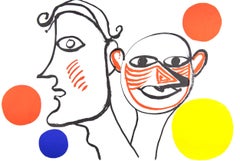
Alexander Calder, Untitled and The Three Faces, from Derriere le miroir, 1976

Alexander Calder, Untitled and The Three Faces, from Derriere le miroir, 1976

By Alexander Calder

Located in Southampton, NY

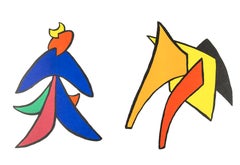
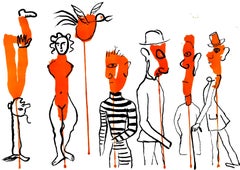
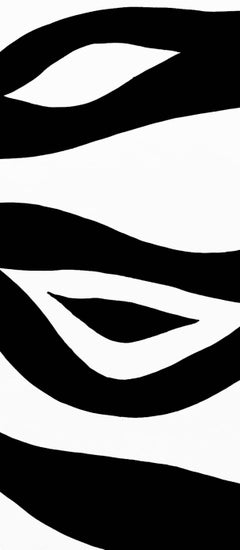
This exquisite lithograph by Alexander Calder (1898–1976), titled Sans titre et Les Trois Visages (Untitled and The Three Faces), from the folio Derriere le miroir, No. 221, originat...

Category

1970s Modern Art by Medium: Lithograph
Materials

Lithograph

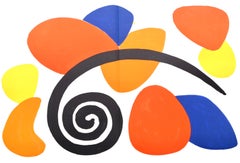
Alexander Calder, Composition with Spirals, from Derriere le miroir, 1968

Alexander Calder, Composition with Spirals, from Derriere le miroir, 1968

By Alexander Calder

Located in Southampton, NY

This exquisite lithograph by Alexander Calder (1898–1976), titled Composition aux Spirales (Composition with Spirals), from the folio Derriere le miroir, No. 173, originates from the 1968 edition published by Maeght Editeur, Paris, and printed by Mourlot Freres, Paris, 1968. Composition aux Spirales exemplifies Calder’s mastery of rhythm and form, translating his sculptural language of balance and motion into vivid, dynamic compositions on paper that capture his signature sense of energy and harmony. Executed as a lithograph on velin paper, this work measures 15 x 22 inches, with centerfold, as issued. Unsigned and unnumbered as issued. The edition exemplifies the superb craftsmanship of Mourlot Freres, Paris. Artwork Details: Artist: Alexander Calder (1898–1976) Title: Composition aux Spirales (Composition with Spirals), from the folio Derriere le miroir, No. 173 Medium: Lithograph on velin paper Dimensions: 15 x 22 inches (38.1 x 55.88 cm), with centerfold, as issued Inscription: Unsigned and unnumbered as issued Date: 1968 Publisher: Maeght Editeur, Paris Printer: Mourlot Freres, Paris Condition: Well preserved, consistent with age and medium Provenance: From the folio Derriere le miroir, No. 173, published by Maeght Editeur, Paris; printed by Mourlot Freres, Paris, 1968 Notes: Excerpted from the folio (translated from French), The illustrations in this issue are original lithographs by Alexander Calder drawn in the workshops of the Arte printing shop. This issue of "Behind the Mirror" has a luxury edition drawn on velin de Lana and limited to CL examples numbered and signed by the artist on the colophon. The text of G. Carandente was translated from Italian by Alain Veinstein. About the Publication: Derriere le miroir (Behind the Mirror) was one of the most important art publications of the 20th century, created and published by Maeght Editeur in Paris from 1946 to 1982. Founded by the visionary art dealer and publisher Aime Maeght, the series served as both an exhibition catalogue and a work of art in its own right, uniting original lithographs by leading modern and contemporary artists with critical essays, poetry, and design of the highest quality. Printed by master lithographers such as Mourlot Freres and Arte, Derriere le miroir became synonymous with the artistic vanguard of postwar Europe. Each issue was devoted to a single artist or theme and published to accompany exhibitions at the Galerie Maeght in Paris, featuring works by Pablo Picasso, Henri Matisse, Georges Braque, Joan Miro, Marc Chagall, Alexander Calder, Fernand Leger, and Alberto Giacometti, among others. The publication reflected Maeght’s belief that art should be both accessible and elevated—an ideal realized through its luxurious production values, meticulous printing, and collaboration with the greatest creative minds of its time. About the Artist: Alexander Calder (1898–1976) was an American sculptor, painter, and printmaker whose pioneering innovations in kinetic art revolutionized 20th-century sculpture and transformed modern visual language. Born in Lawnton, Pennsylvania, into a family of artists, Calder initially trained as a mechanical engineer at the Stevens Institute of Technology before turning to art at the Art Students League in New York—a combination of technical precision and creative imagination that defined his career. Moving to Paris in 1926, he immersed himself in the avant-garde and formed friendships with Pablo Picasso, Alberto Giacometti, Joan Miro, Wassily Kandinsky, Salvador Dali, Marcel Duchamp, and Man Ray, whose ideas profoundly shaped his artistic philosophy. From Picasso, he absorbed structural invention; from Miro, lyrical abstraction; from Kandinsky, spiritual geometry; and from Duchamp and Man Ray, the courage to merge intellect and play. In Paris, Calder created his famous Cirque Calder, a miniature mechanical circus that introduced motion and performance as central components of sculpture, and by the early 1930s, he invented the mobile—a term coined by Duchamp—to describe his delicately balanced, moving sculptures that responded to air currents. Later, Jean Arp would name his stationary counterparts stabiles. These two inventions—sculptures that could either float and spin gracefully or stand monumentally still—transformed art into a dynamic dialogue between movement, balance, and space. Calder’s signature forms, painted in vivid reds, blacks, blues, and yellows, embodied both joy and precision, creating an art that was at once abstract, organic, and deeply human. Like Kandinsky and Miro, he viewed art as a form of rhythm and emotion; like Duchamp, he embraced innovation and humor; and like Giacometti and Dali, he was fascinated by perception, structure, and the unseen forces of motion. His monumental public sculptures—such as La Grande Vitesse (1969) in Grand Rapids and Flamingo (1973) in Chicago—redefined public art as a symbol of civic optimism and modern progress. A key bridge between European modernism and American abstraction, Calder’s influence extended to artists including Jean Tinguely, George Rickey, Donald Judd, Ellsworth Kelly, Richard Serra, and Olafur Eliasson, whose works in kinetic and spatial art continue to echo his vision. His gouaches, prints, and jewelry carried the same balance and movement as his sculptures, revealing a unified language of rhythm across media. Represented in every major modern museum—including MoMA, the Guggenheim, the Tate, and the Centre Pompidou—Calder remains celebrated for merging engineering, color, and poetry into an art of pure equilibrium. Standing alongside Pablo Picasso, Alexander Calder, Alberto Giacometti, Salvador Dali, Joan Miro, Wassily Kandinsky, Marcel Duchamp, and Man Ray, he remains one of the cornerstones of modern art—a visionary whose works breathe with motion, grace, and joy. His highest auction record was achieved by Poisson Volant (Flying Fish) (1957), which sold for $25.9 million at Christie’s, New York, on May 15, 2014, reaffirming Alexander Calder’s enduring legacy as one of the most inventive, dynamic, and collectible artists in the history of modern art. Alexander Calder Composition...

Category

1960s Surrealist Art by Medium: Lithograph

Materials

Lithograph

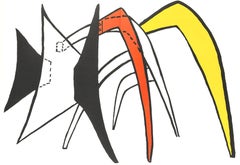
Alexander Calder, Untitled, from Derriere le miroir, 1968

Alexander Calder, Untitled, from Derriere le miroir, 1968

By Alexander Calder

Located in Southampton, NY

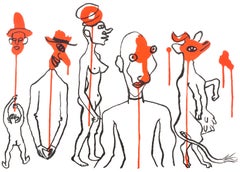
This exquisite lithograph by Alexander Calder (1898–1976), titled Sans titre (Untitled), from the folio Derriere le miroir, No. 173, originates from the 1968 edition published by Mae...

Category

1960s Surrealist Art by Medium: Lithograph

Materials

Lithograph

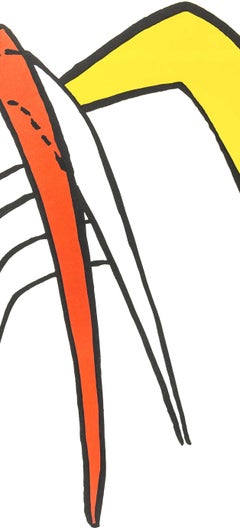
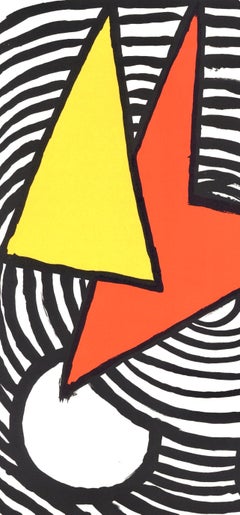
Alexander Calder, Red and Yellow Composition, from Derriere le miroir, 1968

Alexander Calder, Red and Yellow Composition, from Derriere le miroir, 1968

By Alexander Calder

Located in Southampton, NY

This exquisite lithograph by Alexander Calder (1898–1976), titled Composition Rouge et Jaune (Red and Yellow Composition), from the folio Derriere le miroir, No. 173, originates from...

Category

1960s Surrealist Art by Medium: Lithograph

Materials

Lithograph

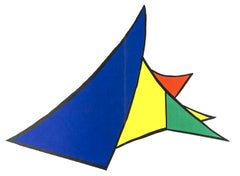
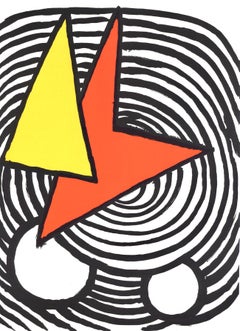
Alexander Calder, Composition with Triangles, from Derriere le miroir, 1968

Alexander Calder, Composition with Triangles, from Derriere le miroir, 1968

By Alexander Calder

Located in Southampton, NY

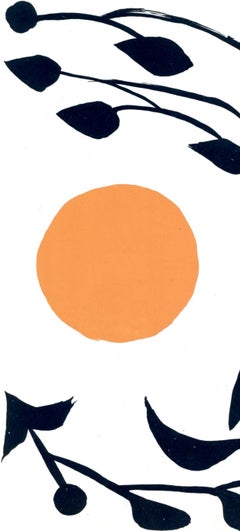
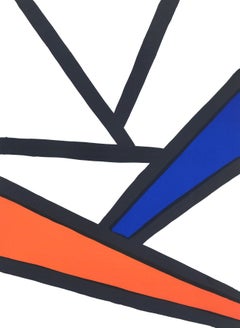
This exquisite lithograph by Alexander Calder (1898–1976), titled Composition aux Triangles (Composition with Triangles), from the folio Derriere le miroir, No. 173, originates from the 1968 edition published by Maeght Editeur, Paris, and printed by Mourlot Freres, Paris, 1968. Composition aux Triangles exemplifies Calder’s mastery of rhythm and form, translating his sculptural language of balance and motion into vivid, dynamic compositions on paper that capture his signature sense of energy and harmony. Executed as a lithograph on velin paper, this work measures 15 x 11 inches. Unsigned and unnumbered as issued. The edition exemplifies the superb craftsmanship of Mourlot Freres, Paris. Artwork Details: Artist: Alexander Calder (1898–1976) Title: Composition aux Triangles (Composition with Triangles), from the folio Derriere le miroir, No. 173 Medium: Lithograph on velin paper Dimensions: 15 x 11 inches (38.1 x 27.94 cm) Inscription: Unsigned and unnumbered as issued Date: 1968 Publisher: Maeght Editeur, Paris Printer: Mourlot Freres, Paris Condition: Well preserved, consistent with age and medium Provenance: From the folio Derriere le miroir, No. 173, published by Maeght Editeur, Paris; printed by Mourlot Freres, Paris, 1968 Notes: Excerpted from the folio (translated from French), The illustrations in this issue are original lithographs by Alexander Calder drawn in the workshops of the Arte printing shop. This issue of "Behind the Mirror" has a luxury edition drawn on velin de Lana and limited to CL examples numbered and signed by the artist on the colophon. The text of G. Carandente was translated from Italian by Alain Veinstein. About the Publication: Derriere le miroir (Behind the Mirror) was one of the most important art publications of the 20th century, created and published by Maeght Editeur in Paris from 1946 to 1982. Founded by the visionary art dealer and publisher Aime Maeght, the series served as both an exhibition catalogue and a work of art in its own right, uniting original lithographs by leading modern and contemporary artists with critical essays, poetry, and design of the highest quality. Printed by master lithographers such as Mourlot Freres and Arte, Derriere le miroir became synonymous with the artistic vanguard of postwar Europe. Each issue was devoted to a single artist or theme and published to accompany exhibitions at the Galerie Maeght in Paris, featuring works by Pablo Picasso, Henri Matisse, Georges Braque, Joan Miro, Marc Chagall, Alexander Calder, Fernand Leger, and Alberto Giacometti, among others. The publication reflected Maeght’s belief that art should be both accessible and elevated—an ideal realized through its luxurious production values, meticulous printing, and collaboration with the greatest creative minds of its time. About the Artist: Alexander Calder (1898–1976) was an American sculptor, painter, and printmaker whose pioneering innovations in kinetic art revolutionized 20th-century sculpture and transformed modern visual language. Born in Lawnton, Pennsylvania, into a family of artists, Calder initially trained as a mechanical engineer at the Stevens Institute of Technology before turning to art at the Art Students League in New York—a combination of technical precision and creative imagination that defined his career. Moving to Paris in 1926, he immersed himself in the avant-garde and formed friendships with Pablo Picasso, Alberto Giacometti, Joan Miro, Wassily Kandinsky, Salvador Dali, Marcel Duchamp, and Man Ray, whose ideas profoundly shaped his artistic philosophy. From Picasso, he absorbed structural invention; from Miro, lyrical abstraction; from Kandinsky, spiritual geometry; and from Duchamp and Man Ray, the courage to merge intellect and play. In Paris, Calder created his famous Cirque Calder, a miniature mechanical circus that introduced motion and performance as central components of sculpture, and by the early 1930s, he invented the mobile—a term coined by Duchamp—to describe his delicately balanced, moving sculptures that responded to air currents. Later, Jean Arp would name his stationary counterparts stabiles. These two inventions—sculptures that could either float and spin gracefully or stand monumentally still—transformed art into a dynamic dialogue between movement, balance, and space. Calder’s signature forms, painted in vivid reds, blacks, blues, and yellows, embodied both joy and precision, creating an art that was at once abstract, organic, and deeply human. Like Kandinsky and Miro, he viewed art as a form of rhythm and emotion; like Duchamp, he embraced innovation and humor; and like Giacometti and Dali, he was fascinated by perception, structure, and the unseen forces of motion. His monumental public sculptures—such as La Grande Vitesse (1969) in Grand Rapids and Flamingo (1973) in Chicago—redefined public art as a symbol of civic optimism and modern progress. A key bridge between European modernism and American abstraction, Calder’s influence extended to artists including Jean Tinguely, George Rickey, Donald Judd, Ellsworth Kelly, Richard Serra, and Olafur Eliasson, whose works in kinetic and spatial art continue to echo his vision. His gouaches, prints, and jewelry carried the same balance and movement as his sculptures, revealing a unified language of rhythm across media. Represented in every major modern museum—including MoMA, the Guggenheim, the Tate, and the Centre Pompidou—Calder remains celebrated for merging engineering, color, and poetry into an art of pure equilibrium. Standing alongside Pablo Picasso, Alexander Calder, Alberto Giacometti, Salvador Dali, Joan Miro, Wassily Kandinsky, Marcel Duchamp, and Man Ray, he remains one of the cornerstones of modern art—a visionary whose works breathe with motion, grace, and joy. His highest auction record was achieved by Poisson Volant (Flying Fish) (1957), which sold for $25.9 million at Christie’s, New York, on May 15, 2014, reaffirming Alexander Calder’s enduring legacy as one of the most inventive, dynamic, and collectible artists in the history of modern art. Alexander Calder Composition...

Category

1960s Surrealist Art by Medium: Lithograph

Materials

Lithograph

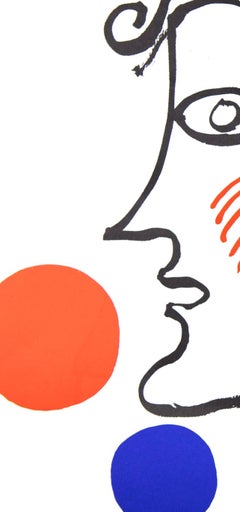
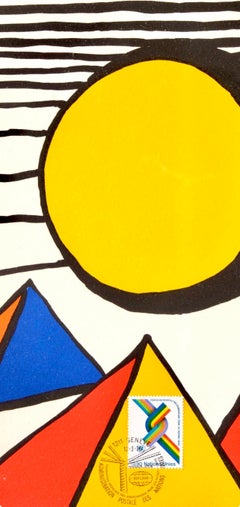
Composition, World Federation of United Nations Associations, Alexander Calder

Composition, World Federation of United Nations Associations, Alexander Calder

By Alexander Calder

Located in Southampton, NY

Lithograph and original issue World Federation of United Nations Associations postage stamp on vélin paper. Inscription: Signed in the plate, as issued. Good condition. Notes: Publis...

Category

1970s Modern Art by Medium: Lithograph
Materials

Lithograph

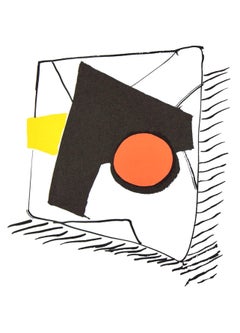
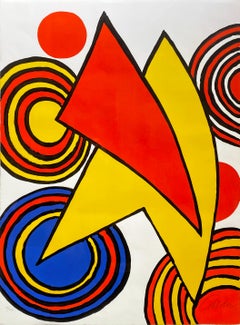
UNTITLED

Alexander CalderUNTITLED

Price Upon Request

UNTITLED

By Alexander Calder

Located in New York, NY

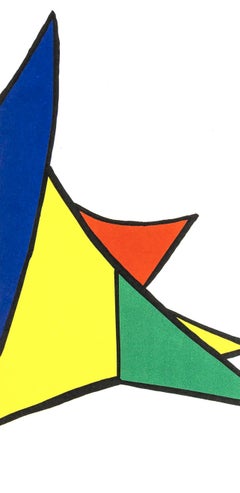
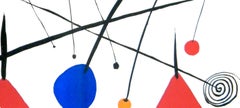
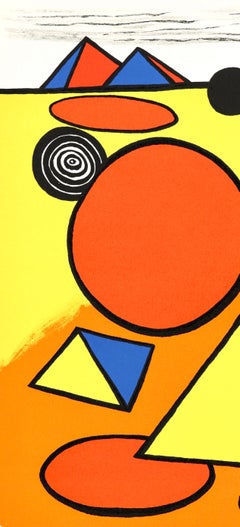
This work of art is a lithograph on paper featuring abstract geometric shapes in primary colors.

Category

20th Century Abstract Art by Medium: Lithograph
Materials

Lithograph

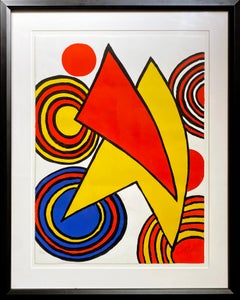
The Triangles and Spiral

The Triangles and Spiral

By Alexander Calder

Located in Missouri, MO

The Triangles and Spiral, 1973 By. Alexander Calder (American, 1898-1976) Signed Lower Right Numbered: 66/150 Unframed: 26 x 19.25 inches Framed: 34 x 27 inches Alexander Calder was born in Philadelphia in 1898. After obtaining his mechanical engineering degree from the Stevens Institute of Technology, Calder worked at various jobs before enrolling at the Art Students League in New York City in 1923. During his student years, he did line drawing for the National Police Gazette. In 1925, Calder published his first book, Animal Sketches...

Category

1970s Abstract Art by Medium: Lithograph
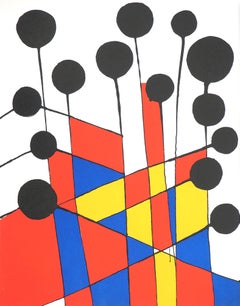
Materials

Color, Lithograph
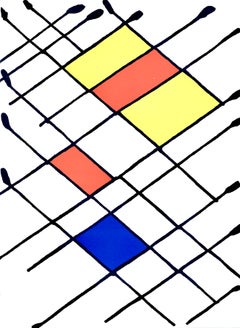
Lithograph art for sale on 1stDibs.
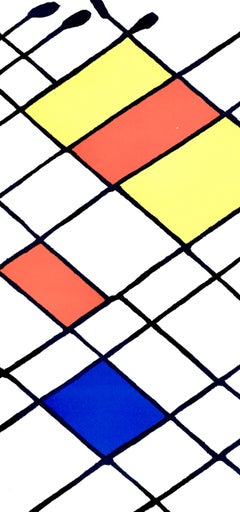
Find a wide variety of authentic Lithograph art available on 1stDibs. While artists have worked in this medium across a range of time periods, art made with this material during the 21st Century is especially popular. If you’re looking to add art created with this material to introduce a provocative pop of color and texture to an otherwise neutral space in your home, the works available on 1stDibs include elements of blue, orange, yellow, red and other colors. There are many well-known artists whose body of work includes ceramic sculptures. Popular artists on 1stDibs associated with pieces like this include Joan Miró, Marc Chagall, Peter Max, and Alexander Calder. Frequently made by artists working in the Modern, Contemporary, all of these pieces for sale are unique and many will draw the attention of guests in your home. Not every interior allows for large Lithograph art, so small editions measuring 0.01 inches across are also available