Art by Medium: Metal

to
1,179
6,057
2,582
2,240
1,652
4,407
Overall Width
to
Overall Height
to
113
646
2,797
13,379
83
44
99
79
27
69
156
292
438
485
47
7,425
2,796
993
444
409
169
130
119
104
68
59
39
11
10
2,398
1,834
1,211
3,967
2,218
1,930
1,893
1,472
1,327
901
630
520
448
422
402
400
398
357
330
301
293
253
231
383,478
184,904
98,146
81,234
78,723
235
187
148
127
122
1,659
1,020
10,146
5,156
Medium: Metal
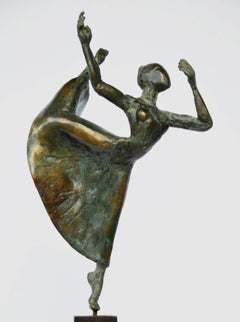
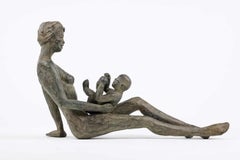
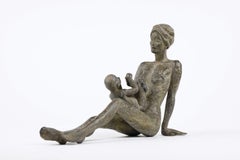
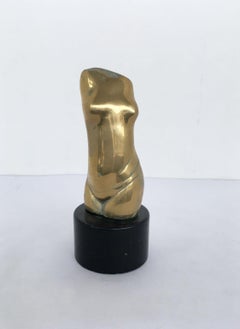
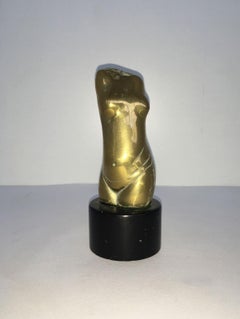
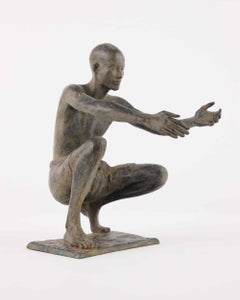
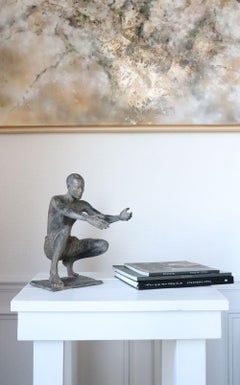
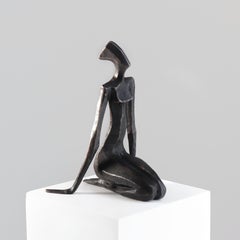
Nude - 21st Century, Contemporary Brass Figurative Sculpture, Polish art

Nude - 21st Century, Contemporary Brass Figurative Sculpture, Polish art

By Ryszard Piotrowski

Located in Warsaw, PL

Dimensions include the base. Sculpture is not mounted on the base, it comes as two pieces. Dimensions without the base are: 21 x 11 x 9 cm (ca 8.3 x 4.3 x 3.5 in) RYSZARD PIOTROWSKI...

Category

21st Century and Contemporary Contemporary Art by Medium: Metal

Materials

Brass

WTF
WTF

WTF

By Jim Rennert

Located in Greenwich, CT

8.5 ft. version of Jim Rennert's sculpture "WTF." Edition of 3 American, b. 1958 Jim Rennert was born in 1958, and grew up in Las Vegas, Nevada, and Salt Lake City, Utah. After ten...

Category

2010s Contemporary Art by Medium: Metal

Materials

Bronze

Sitter with Hand Over Mouth

Sitter with Hand Over Mouth

By Joy Brown

Located in Greenwich, CT

Artist Statement: My figures speak to me of that peaceful place in myself - calm, open, aware. My art reflects the influence of my childhood in Japan and of the rigorous discipline...

Category

2010s Contemporary Art by Medium: Metal

Materials

Bronze

Dance to Paradiso, Atelier

Dance to Paradiso, Atelier

By Richard MacDonald

Located in Laguna Beach, CA

In "Dance to Paradiso, Atelier," Richard MacDonald masterfully selects an exceptional moment of observation as two figures dance with utter trust and harmony. Her foot one with his,...

Category

2010s Contemporary Art by Medium: Metal

Materials

Bronze

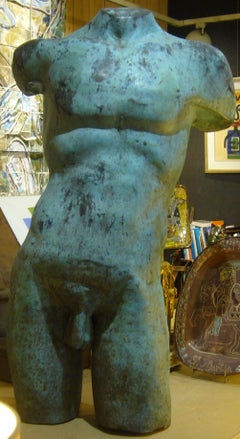
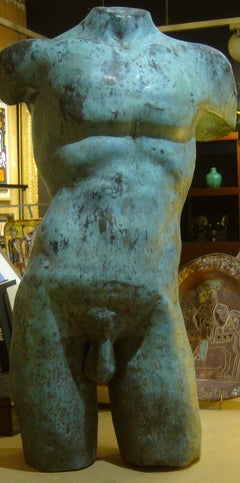
Torso of Aron
Torso of Aron

Torso of Aron

Located in London, GB

Bronze Numbered 10/10 36cm × 11.5cm × 18cm (incl. base) Ian Rank-Broadley is one of the foremost sculptors working today. His effigy of the late Queen Elizabeth II appears on all UK...

Category

2010s Contemporary Art by Medium: Metal

Materials

Bronze

Abstract Cast Glass Sculpture, 'Mandul', 2008 by David Ruth

Abstract Cast Glass Sculpture, 'Mandul', 2008 by David Ruth

By David Ruth

Located in Oakland, CA

'Mandul' is a contemporary abstract cast glass sculpture by David Ruth from his Internal Space & Standing Stones series. It features painterly brushstroke formations in glass called ...

Category

Early 2000s Abstract Expressionist Art by Medium: Metal

Materials

Stainless Steel

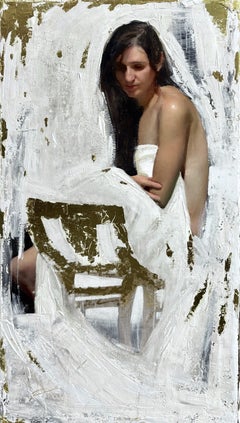
Original-Primary Red-Sunlit-British Awarded Artist-Gold Leaf oil on canvas

Original-Primary Red-Sunlit-British Awarded Artist-Gold Leaf oil on canvas

Located in London, GB

Primary Colour Series- Red is Shizico Yi's on going project, inspired by Japanese woodblock Print and the a nod to calligraphy tradition. The series is a continuation of her "Sunlit ...

Category

2010s Abstract Impressionist Art by Medium: Metal

Materials

Gold Leaf

Roofvogel met vis no. 2 Bird of Prey with Fish Bronze Sculpture Animal

Roofvogel met vis no. 2 Bird of Prey with Fish Bronze Sculpture Animal

By Evert den Hartog

Located in Utrecht, NL

Roofvogel met vis no. 2 Bird of Prey with Fish Bronze Sculpture Animal Evert den Hartog (born in Groot-Ammers, The Netherlands in 1949) followed his education to be a sculptor at th...

Category

21st Century and Contemporary Contemporary Art by Medium: Metal

Materials

Bronze

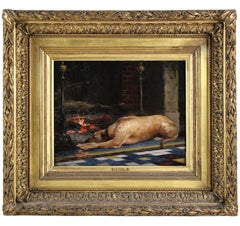
Very Rare Portrait of 6 Dogs on Enamelled Ceramic by Maison Pichenot-Loebnitz

Very Rare Portrait of 6 Dogs on Enamelled Ceramic by Maison Pichenot-Loebnitz

Located in SANTA FE, NM

Very Rare Portrait of 6 Dogs on Enameled Ceramic Maison Pichenot-Loebnitz Enamels, ceramic France, ca. 1875. 25 x 8 (31 x 13 framed) inches This rectangular panel made of enameled c...

Category

1870s Art Nouveau Art by Medium: Metal

Materials

Enamel

Girl at Waterfall Bronze Sculpture, Realist Style, Vintage, 1980s

Girl at Waterfall Bronze Sculpture, Realist Style, Vintage, 1980s

Located in Zofingen, AG

"This is one of my earliest sculptures. I depicted a naked girl at the waterfall. She bathes under jets of water. The fabric of clothing hugs her body and lies down to her feet. The ...

Category

1980s Realist Art by Medium: Metal

Materials

Bronze

Wild Boar by Chésade - Bronze sculpture, animal art

Wild Boar by Chésade - Bronze sculpture, animal art

By Chésade

Located in Paris, FR

Wild Boar is a unique bronze sculpture by contemporary artist Chésade, dimensions are 24 × 44 × 17 cm (9.4 × 17.3 × 6.7 in). The sculpture is signed and comes with a certificate of ...

Category

21st Century and Contemporary Contemporary Art by Medium: Metal

Materials

Bronze

8 Leaves Blue Gingko by Kuno Vollet Contemporary Bronze sculpture white marble

8 Leaves Blue Gingko by Kuno Vollet Contemporary Bronze sculpture white marble

By Kuno Vollet

Located in DE

Artist: Kuno Vollet Title: Bronze Gingko with 8 leaves sculpture Materials: Cast bronze, white marble base Size: 80 x 10 x 10 cm _________________________________________________...

Category

21st Century and Contemporary Contemporary Art by Medium: Metal

Materials

Marble, Gold, Brass

"Elvis", Denied Andy Warhol Silver & Black Pop Art Painting by Charles Lutz

"Elvis", Denied Andy Warhol Silver & Black Pop Art Painting by Charles Lutz

By Charles Lutz

Located in Brooklyn, NY

Elvis, Metallic Silver and Black Full Length Silkscreen Painting by Charles Lutz Silkscreen and silver enamel painted on vintage 1960's era linen with Artist's Denied stamp of the Andy Warhol Art Authentication Board. 82" x 40" inches 2010 Lutz's 2007 ''Warhol Denied'' series gained international attention by calling into question the importance of originality or lack thereof in the work of Andy Warhol. The authentication/denial process of the [[Andy Warhol Art Authentication Board]] was used to create value by submitting recreations of Warhol works for judgment with the full intention for the works to be formally marked "DENIED". The final product of the conceptual project being "officially denied" "Warhol" paintings authored by Lutz. Based on the full-length Elvis Presley paintings by Pop Artist Andy Warhol in 1964, this is likely one of his most iconic images, next to Campbell's Soup Cans and portraits of Jackie Kennedy, Marilyn Monroe, Liz Taylor, and Marlon Brando. This is the rarest of the Elvis works from the series, as Lutz sourced a vintage roll of 1960's primed artist linen which was used for this one Elvis. The silkscreen, like Warhol's embraced imperfections, like the slight double image printing of the Elvis image. Lutz received his BFA in Painting and Art History from Pratt Institute and studied Human Dissection and Anatomy at Columbia University, New York. Lutz's work deals with perceptions and value structures, specifically the idea of the transference of values. Lutz's most recently presented an installation of new sculptures dealing with consumerism at Frank Lloyd Wright's Fallingwater House in 2022. Lutz's 2007 Warhol Denied series received international attention calling into question the importance of originality in a work of art. The valuation process (authentication or denial) of the Andy Warhol Art Authentication Board was used by the artist to create value by submitting recreations of Warhol works for judgment, with the full intention for the works to be formally marked "DENIED" of their authenticity. The final product of this conceptual project is "Officially DENIED" "Warhol" paintings authored by Lutz. Later in 2013, Lutz went on to do one of his largest public installations to date. At the 100th Anniversary of Marcel Duchamp's groundbreaking and controversial Armory Show, Lutz was asked by the curator of Armory Focus: USA and former Director of The Andy Warhol Museum, Eric Shiner to create a site-specific installation representing the US. The installation "Babel" (based on Pieter Bruegel's famous painting) consisted of 1500 cardboard replicas of Warhol's Brillo Box (Stockholm Type) stacked 20 ft tall. All 1500 boxes were then given to the public freely, debasing the Brillo Box as an art commodity by removing its value, in addition to debasing its willing consumers. Elvis was "the greatest cultural force in the Twentieth Century. He introduced the beat to everything, and he changed everything - music, language, clothes, it's a whole new social revolution." Leonard Bernstein in: Exh. Cat., Boston, The Institute of Contemporary Art and traveling, Elvis + Marilyn 2 x Immortal, 1994-97, p. 9. Andy Warhol "quite simply changed how we all see the world around us." Kynaston McShine in: Exh. Cat., New York, Museum of Modern Art (and traveling), Andy Warhol: Retrospective, 1996, p. 13. In the summer of 1963 Elvis Presley was just twenty-eight years old but already a legend of his time. During the preceding seven years - since Heartbreak Hotel became the biggest-selling record of 1956 - he had recorded seventeen number-one singles and seven number-one albums; starred in eleven films, countless national TV appearances, tours, and live performances; earned tens of millions of dollars; and was instantly recognized across the globe. The undisputed King of Rock and Roll, Elvis was the biggest star alive: a cultural phenomenon of mythic proportions apparently no longer confined to the man alone. As the eminent composer Leonard Bernstein put it, Elvis was "the greatest cultural force in the Twentieth Century. He introduced the beat to everything, and he changed everything - music, language, clothes, it's a whole new social revolution." (Exh. Cat., Boston, The Institute of Contemporary Art (and traveling), Elvis + Marilyn 2 x Immortal, 1994, p. 9). In the summer of 1963 Andy Warhol was thirty-four years old and transforming the parameters of visual culture in America. The focus of his signature silkscreen was leveled at subjects he brilliantly perceived as the most important concerns of day to day contemporary life. By appropriating the visual vernacular of consumer culture and multiplying readymade images gleaned from newspapers, magazines and advertising, he turned a mirror onto the contradictions behind quotidian existence. Above all else he was obsessed with themes of celebrity and death, executing intensely multifaceted and complex works in series that continue to resound with universal relevance. His unprecedented practice re-presented how society viewed itself, simultaneously reinforcing and radically undermining the collective psychology of popular culture. He epitomized the tide of change that swept through the 1960s and, as Kynaston McShine has concisely stated, "He quite simply changed how we all see the world around us." (Exh. Cat., New York, Museum of Modern Art (and traveling), Andy Warhol: Retrospective, 1996, p. 13). Thus in the summer of 1963 there could not have been a more perfect alignment of artist and subject than Warhol and Elvis. Perhaps the most famous depiction of the biggest superstar by the original superstar artist, Double Elvis is a historic paradigm of Pop Art from a breath-taking moment in Art History. With devastating immediacy and efficiency, Warhol's canvas seduces our view with a stunning aesthetic and confronts our experience with a sophisticated array of thematic content. Not only is there all of Elvis, man and legend, but we are also presented with the specter of death, staring at us down the barrel of a gun; and the lone cowboy, confronting the great frontier and the American dream. The spray painted silver screen denotes the glamour and glory of cinema, the artificiality of fantasy, and the idea of a mirror that reveals our own reality back to us. At the same time, Warhol's replication of Elvis' image as a double stands as metaphor for the means and effects of mass-media and its inherent potential to manipulate and condition. These thematic strata function in simultaneous concert to deliver a work of phenomenal conceptual brilliance. The portrait of a man, the portrait of a country, and the portrait of a time, Double Elvis is an indisputable icon for our age. The source image was a publicity still for the movie Flaming Star, starring Presley as the character Pacer Burton and directed by Don Siegel in 1960. The film was originally intended as a vehicle for Marlon Brando and produced by David Weisbart, who had made James Dean's Rebel Without a Cause in 1955. It was the first of two Twentieth Century Fox productions Presley was contracted to by his manager Colonel Tom Parker, determined to make the singer a movie star. For the compulsive movie-fan Warhol, the sheer power of Elvis wielding a revolver as the reluctant gunslinger presented the zenith of subject matter: ultimate celebrity invested with the ultimate power to issue death. Warhol's Elvis is physically larger than life and wears the expression that catapulted him into a million hearts: inexplicably and all at once fearful and resolute; vulnerable and predatory; innocent and explicit. It is the look of David Halberstam's observation that "Elvis Presley was an American original, the rebel as mother's boy, alternately sweet and sullen, ready on demand to be either respectable or rebellious." (Exh. Cat., Boston, Op. Cit.). Indeed, amidst Warhol's art there is only one other subject whose character so ethereally defies categorization and who so acutely conflated total fame with the inevitability of mortality. In Warhol's work, only Elvis and Marilyn harness a pictorial magnetism of mythic proportions. With Marilyn Monroe, whom Warhol depicted immediately after her premature death in August 1962, he discovered a memento mori to unite the obsessions driving his career: glamour, beauty, fame, and death. As a star of the silver screen and the definitive international sex symbol, Marilyn epitomized the unattainable essence of superstardom that Warhol craved. Just as there was no question in 1963, there remains still none today that the male equivalent to Marilyn is Elvis. However, despite his famous 1968 adage, "If you want to know all about Andy Warhol, just look at the surface of my paintings" Warhol's fascination held purpose far beyond mere idolization. As Rainer Crone explained in 1970, Warhol was interested in movie stars above all else because they were "people who could justifiably be seen as the nearest thing to representatives of mass culture." (Rainer Crone, Andy Warhol, New York, 1970, p. 22). Warhol was singularly drawn to the idols of Elvis and Marilyn, as he was to Marlon Brando and Liz Taylor, because he implicitly understood the concurrence between the projection of their image and the projection of their brand. Some years after the present work he wrote, "In the early days of film, fans used to idolize a whole star - they would take one star and love everything about that star...So you should always have a product that's not just 'you.' An actress should count up her plays and movies and a model should count up her photographs and a writer should count up his words and an artist should count up his pictures so you always know exactly what you're worth, and you don't get stuck thinking your product is you and your fame, and your aura." (Andy Warhol, The Philosophy of Andy Warhol (From A to B and Back Again), San Diego, New York and London, 1977, p. 86). The film stars of the late 1950s and early 1960s that most obsessed Warhol embodied tectonic shifts in wider cultural and societal values. In 1971 John Coplans argued that Warhol was transfixed by the subject of Elvis, and to a lesser degree by Marlon Brando and James Dean, because they were "authentically creative, and not merely products of Hollywood's fantasy or commercialism. All three had originative lives, and therefore are strong personalities; all three raised - at one level or another - important questions as to the quality of life in America and the nature of its freedoms. Implicit in their attitude is a condemnation of society and its ways; they project an image of the necessity for the individual to search for his own future, not passively, but aggressively, with commitment and passion." (John Coplans, "Andy Warhol and Elvis Presley," Studio International, vol. 181, no. 930, February 1971, pp. 51-52). However, while Warhol unquestionably adored these idols as transformative heralds, the suggestion that his paintings of Elvis are uncritical of a generated public image issued for mass consumption fails to appreciate the acuity of his specific re-presentation of the King. As with Marilyn, Liz and Marlon, Warhol instinctively understood the Elvis brand as an industrialized construct, designed for mass consumption like a Coca-Cola bottle or Campbell's Soup Can, and radically revealed it as a precisely composed non-reality. Of course Elvis offered Warhol the biggest brand of all, and he accentuates this by choosing a manifestly contrived version of Elvis-the-film-star, rather than the raw genius of Elvis as performing Rock n' Roll pioneer. A few months prior to the present work he had silkscreened Elvis' brooding visage in a small cycle of works based on a simple headshot, including Red Elvis, but the absence of context in these works minimizes the critical potency that is so present in Double Elvis. With Double Elvis we are confronted by a figure so familiar to us, yet playing a role relating to violence and death that is entirely at odds with the associations entrenched with the singer's renowned love songs. Although we may think this version of Elvis makes sense, it is the overwhelming power of the totemic cipher of the Elvis legend that means we might not even question why he is pointing a gun rather than a guitar. Thus Warhol interrogates the limits of the popular visual vernacular, posing vital questions of collective perception and cognition in contemporary society. The notion that this self-determinedly iconic painting shows an artificial paradigm is compounded by Warhol's enlistment of a reflective metallic surface, a treatment he reserved for his most important portraits of Elvis, Marilyn, Marlon and Liz. Here the synthetic chemical silver paint becomes allegory for the manufacture of the Elvis product, and directly anticipates the artist's 1968 statement: "Everything is sort of artificial. I don't know where the artificial stops and the real starts. The artificial fascinates me, the bright and shiny..." (Artist quoted in Exh. Cat., Stockholm, Moderna Museet and traveling, Andy Warhol, 1968, n.p.). At the same time, the shiny silver paint of Double Elvis unquestionably denotes the glamour of the silver screen and the attractive fantasies of cinema. At exactly this time in the summer of 1963 Warhol bought his first movie camera and produced his first films such as Sleep, Kiss and Tarzan and Jane Regained. Although the absence of plot or narrative convention in these movies was a purposely anti-Hollywood gesture, the unattainability of classic movie stardom still held profound allure and resonance for Warhol. He remained a celebrity and film fanatic, and it was exactly this addiction that so qualifies his sensational critique of the industry machinations behind the stars he adored. Double Elvis was executed less than eighteen months after he had created 32 Campbell's Soup Cans for his immortal show at the Ferus Gallery, Los Angeles in July and August 1962, and which is famously housed in the Museum of Modern Art, New York. In the intervening period he had produced the series Dollar Bills, Coca-Cola Bottles, Suicides, Disasters, and Silver Electric Chairs, all in addition to the portrait cycles of Marilyn and Liz. This explosive outpouring of astonishing artistic invention stands as definitive testament to Warhol's aptitude to seize the most potent images of his time. He recognized that not only the product itself, but also the means of consumption - in this case society's abandoned deification of Elvis - was symptomatic of a new mode of existence. As Heiner Bastian has precisely summated: "the aura of utterly affirmative idolization already stands as a stereotype of a 'consumer-goods style' expression of an American way of life and of the mass-media culture of a nation." (Exh. Cat., Berlin, Neue Nationalgalerie (and traveling), Andy Warhol: Retrospective, 2001, p. 28). For Warhol, the act of image replication and multiplication anaesthetized the effect of the subject, and while he had undermined the potency of wealth in 200 One Dollar Bills, and cheated the terror of death by electric chair in Silver Disaster # 6, the proliferation of Elvis here emasculates a prefabricated version of character authenticity. Here the cinematic quality of variety within unity is apparent in the degrees to which Presley's arm and gun become less visible to the left of the canvas. The sense of movement is further enhanced by a sense of receding depth as the viewer is presented with the ghost like repetition of the figure in the left of the canvas, a 'jump effect' in the screening process that would be replicated in the multiple Elvis paintings. The seriality of the image heightens the sense of a moving image, displayed for us like the unwinding of a reel of film. Elvis was central to Warhol's legendary solo exhibition organized by Irving Blum at the Ferus Gallery in the Fall of 1963 - the show having been conceived around the Elvis paintings since at least May of that year. A well-known installation photograph shows the present work prominently presented among the constant reel of canvases, designed to fill the space as a filmic diorama. While the Elvis canvases...

Category

21st Century and Contemporary Pop Art Art by Medium: Metal

Materials

Enamel

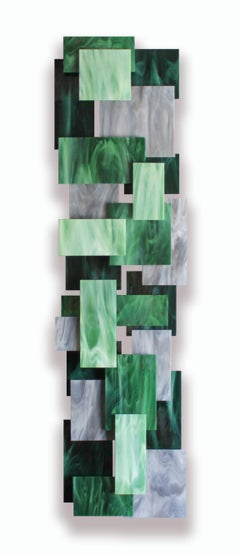
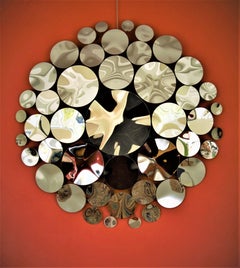
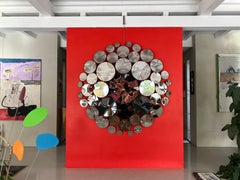
Arctic, Original Glass and Metal Wall Sculpture, Modern Art, 3D

Arctic, Original Glass and Metal Wall Sculpture, Modern Art, 3D

Located in Granada Hills, CA

Artist: Karo Martirosyan, Work: Original Artwork, Medium: Glass and Metal Wall Sculpture, Year: 2022 Style: Contemporary Art, Subject: Arctic, Size: 29" x 47" x 4'' inch, 74x125x1...

Category

2010s Modern Art by Medium: Metal
Materials

Metal

Bull, Bronze Sculpture by Modern Indian Artist B. Vithal "In Stock"

Bull, Bronze Sculpture by Modern Indian Artist B. Vithal "In Stock"

By B. Vithal

Located in Kolkata, West Bengal

B. Vithal – Horse – H 13 x W 14 x D 5 inches Bronze Born : 1935 Vardha Maharashtra Died : 1992 Education : Sir J.J. School of Art, Mumbai Exhibitions : Selected Posthumous Exhibitions 2013 'The Naked and the Nude: The Body in Indian Modern Art', Delhi Art Gallery, New Delhi 2011 'Agape', Hacienda Art...

Category

Early 2000s Modern Art by Medium: Metal
Materials

Bronze

Black Flower Nº 4: Sculpture, Iron and Plaster, Contemporary, 2010+

Black Flower Nº 4: Sculpture, Iron and Plaster, Contemporary, 2010+

Located in BARCELONA, ES

"Da sempre sono attratto dagli oggetti semplici, spesso dimenticati o fuori contesto. Riporto alla luce piccoli frammenti del quotidiano – giocattoli, gadget, elementi della cultura ...

Category

2010s Contemporary Art by Medium: Metal
Materials

Iron

"Start" - Neon Contemporary Street Sign Sculpture

"Start" - Neon Contemporary Street Sign Sculpture

By Scott Froschauer

Located in West Hollywood, CA

Using the institutionalized structure of road signage as inspiration, artist Scott Froschauer’s, START surprise and delight viewers by replacing the traditionally negative and coerci...

Category

2010s Contemporary Art by Medium: Metal
Materials

Stainless Steel

Eugène Laurent (1832-1898), The Beachcomber

Eugène Laurent (1832-1898), The Beachcomber

Located in Berlin, DE

Eugène Laurent (1832-1898), The Beachcomber Inscribed "E. Laurent" on the base plate in the cast. H 63 cm Eugène Laurent studied at the École des Beaux-Arts in Paris and was awa...

Category

Early 19th Century Jugendstil Art by Medium: Metal
Materials

Bronze

Grounded II by Eric Valat - Bronze sculpture of a bear, animal

Grounded II by Eric Valat - Bronze sculpture of a bear, animal

By Eric Valat

Located in Paris, FR

Grounded II is a bronze sculpture by contemporary artist Eric Valat, dimensions are 15.5 × 12 × 12 cm (6.1 × 4.7 × 4.7 in). The sculpture is signed and numbered, it is part of a limi...

Category

2010s Contemporary Art by Medium: Metal
Materials

Bronze

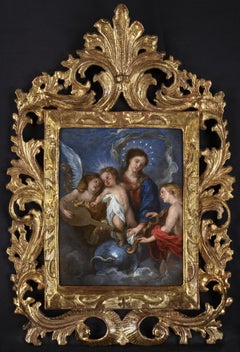
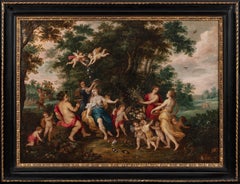
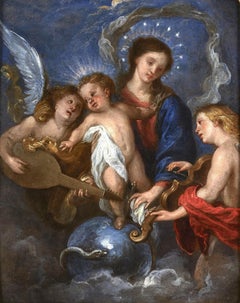
Allegory of Abundance

Allegory of Abundance

Located in New York, NY

Painted in collaboration with Hendrick van Balen (Antwerp, 1575 – 1632). Provenance: Private Collection, Uruguay, since the 1930s. The eldest son of Jan Br...

Category

17th Century Old Masters Art by Medium: Metal
Materials

Copper

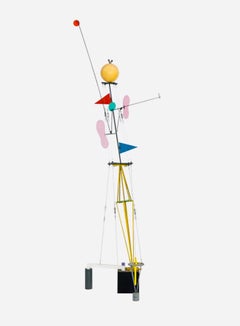
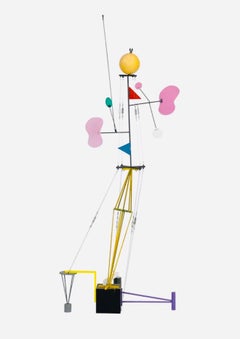
Red Queen
Red Queen

Red Queen

By Tom Nussbaum

Located in New Orleans, LA

Tom Nussbaum is known for a variety of work including drawings, paper cuts, prints, sculpture, children’s books, animations, functional design objects, and site-specific commissions....

Category

2010s Abstract Art by Medium: Metal
Materials

Steel

Lion and snake
Lion and snake

Lion and snake

By Antoine-Louis Barye

Located in PARIS, FR

Lion and snake n°3 by Antoine-Louis Barye (1796-1875) Bronze sculpture with a nuanced dark greenish brown patina signed "Barye" on the base old edition cast – probably from the Bary...

Category

1860s French School Art by Medium: Metal
Materials

Bronze

Untitled
Untitled

Untitled

By Agustín Cárdenas

Located in Miami, FL

Untitled, 1975 Bronze ED. 1 of 6 20 x 6 x 4 in Literature: Le Minotaure. Cardenas 1925-2001. May 15 - June 15, 2003. Illustrated on page 9 of the catalog.

Category

1970s Abstract Art by Medium: Metal
Materials

Bronze

Brutalist Israeli Bronze Abstract Sculpture Wave Form Zvi Aldouby

Brutalist Israeli Bronze Abstract Sculpture Wave Form Zvi Aldouby

Located in Surfside, FL

Zvi Yehuda Aldouby (1904 - 1996) was active/lived in Israel. Zvi Aldouby is known for Artist, teaching. Biography photo for Zvi Jehuda Aldouby Zvi Yehuda Aldouby (Hirsch Leib Zupnick), sculptor, born 1904, Galicia. Immigrated 1924. Upon aliyah in 1924 he worked in agriculture and construction. 1936-51 studied art and the history of art with Trude Haim, Professor J. Schwartzman, Ds. Schiff, Pinkerfeld, Aviyona, Javetz, and others. After WWII he worked for the Jewish Agency as an envoy in Italy under the aegis of the UNWRA, on the welfare of the survivors of the Holocaust in the DP Camps. In 1948 in Paris, he evaluated advanced studies in European Art Centers. He was a member of the Israel Painters and Sculptors Association. He was a member of the Artists' Village in Ein Harod from its inception. EIN HAROD About the Museum's Holdings: Israeli art is represented by the works of Reuven Rubin, Zaritzky, Nahum Gutman, Mordecai Ardon, Aharon Kahana, Arie Lubin, Yehiel Shemi, Yosl Bergner and others. The graphic arts collection contains drawings and graphic works by Camille Pissarro, Modigliani, Jules Pascin, Marc Chagall (almost all of his graphic work), and numerous other artists. The sculpture collection includes works by Jewish sculptors from all over the world including leading Israeli sculptors; Ben Zvi, Lishansky, David Palombo (brutalist), Yehiel Shemi, Aharon Bezalel and Igael Tumarkin (surrealist). Many Jewish sculptors from all parts of the world, beginning with Mark Antokolsky, are represented in the collection. In the sculpture courtyard there are works by Chana Orloff, Jacob Epstein (the works he bequeathed to the Museum), Enrico Glicenstein, Loutchansky, Constant and Indenbaum from Western Europe; Glid from Yugoslavia; William Zorach, Chaim Gross and Minna Harkavy from the United States; and most of the outstanding sculptors of Israel : Zev Ben-Zvi, Lishansky, Ziffer, Rudi Lehmann, Dov Feigin, Moshe Sternschuss, Zvi Aldouby, Yehiel Shemi, Aharon Bezalel, Hava Mehutan, Igael Tumarkin. Education: 1924-28 Hebrew University, Jerusalem, graduated 1931-37 Teachers' Seminar, Jerusalem, Teacher's Certificate 1938-29 Advanced studies, with Trude Haim Joseph Schwarzman, School of Art 1948-50 Advanced studies in Italy and France Teaching Taught history of art and sculpture Holon Awards And Prizes 1957 Herman Struck Prize, Artists' Association of Haifa and the North, Haifa Municipality 1963 Dizengoff Prize for Painting and Sculpture, Municipality of Tel Aviv-Jaffa 1964 Medal from Monaco International Exhibition 1965 Prize for the ''Breakthrough into the Negev'' proposal for a monument, Givati Corps, 52nd Brigade 1967 The Histadrut Executive Prize 1991 Worthy Citizen of Tel Aviv Award, Municipality of Tel Aviv-Jaffa Environmental Sculptures 1961 Levant Fair, Tel Aviv, "A Sculpture in a Garden" 1968 Atlit Youth Club, Bas- Relief- "Davd Playing Before King Saul" 1969 Netivot (Negev), "Yizkor"- Monument memorializing Aliyat Hanoar youngsters from Tunisia who perished in an air crash. 1944 Collective Annual Exhibition by Palestinian Artists Art Gallery of the ''Habima'' Building, Tel Aviv Artists: Hermann Struck, Moshe Sternschuss, Arie Reznik, Aaron Priver, Yitzhak Itzhak Danziger, Zvi Aldouby, Menachem Shemi, Moshe Castel, Shmuel Ovadyahu, Yohanan Simon, Marcel Janco. Group Exhibition - Etched Voices, Yad Vashem, Jerusalem painting...

Category

1950s Art by Medium: Metal
Materials

Limestone, Bronze

Metal art for sale on 1stDibs.
Find a wide variety of authentic Metal art available on 1stDibs. While artists have worked in this medium across a range of time periods, art made with this material during the 21st Century is especially popular. If you’re looking to add art created with this material to introduce a provocative pop of color and texture to an otherwise neutral space in your home, the works available on 1stDibs include elements of blue, purple, red, orange and other colors. There are many well-known artists whose body of work includes ceramic sculptures. Popular artists on 1stDibs associated with pieces like this include Stefan Traloc, Peter Mendelson, Rebecca Skinner, and Stefanie Schneider. Frequently made by artists working in the Contemporary, Abstract, all of these pieces for sale are unique and many will draw the attention of guests in your home. Not every interior allows for large Metal art, so small editions measuring 0.01 inches across are also available