1810s Mixed Media

to
2
Overall Width
to
Overall Height
to
10
77
3,129
19,452
24
28
26
52
50
109
317
452
618
584
3
2
2
2
2
2
Period: 1810s
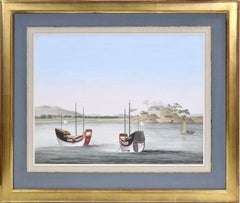
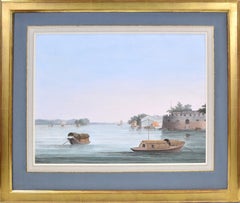
Chinese Craft on the Pearl River.
Located in London, London
[CHINESE SCHOOL]. Chinese Craft on the Pearl River. Canton, circa 1810. Pencil, water colour and body colour drawings of craft, heightened with white on paper watermarked ‘J Whatm...
Category

Naturalistic 1810s Mixed Media

Materials

Watercolor

Chinese Craft on the Pearl River.
Located in London, London
[CHINESE SCHOOL]. Chinese Craft on the Pearl River. Canton, circa 1810. A pencil, water colour and body colour drawing of craft, heightened with white on paper watermarked ‘J Whatm...
Category

Other Art Style 1810s Mixed Media

Materials

Watercolor

Related Items
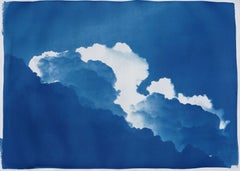
Azure Clouds, Blue Tones Cyanotype Print Landscape, Contemporary Skyscape
Located in Barcelona, ES
This is an exclusive handprinted limited edition cyanotype. "Azure Clouds" is an cyanotype of the semi-abstract patterns of clouds in the sky, showing shades of blue. Details: + Tit...
Category

Naturalistic 1810s Mixed Media

Materials

Watercolor, Rag Paper

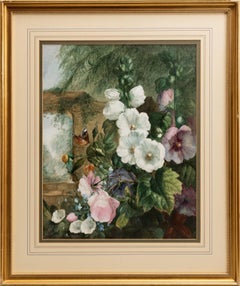
Hollyhocks and Roses with Butterfly - 19th Century Still life Watercolor
Located in Stockholm, SE
This is a beautiful and highly decorative watercolor painting, featuring a charming garden scene filled with pink and white hollyhocks alongside blooming roses. Nestled among the del...
Category

Naturalistic 1810s Mixed Media

Materials

Paper, Watercolor

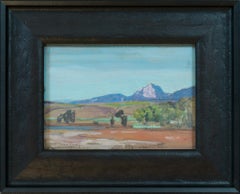
Blue Mountains, New Mexico
Located in Stockholm, SE
In this luminous landscape study, Carl Oscar Borg captures the serene beauty of the New Mexican high desert, likely looking toward Mount Taylor, a sacred peak that rises above the su...
Category

Romantic 1810s Mixed Media

Materials

Gouache

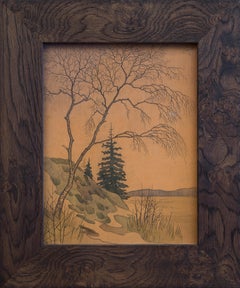
Beneath the Birch Drawing by Swedish Artist Christian Berg (1893–1976)
Located in Stockholm, SE
We are proud to present an exquisite drawing by the renowned artist Christian Berg (1893-1976), executed around the 1920s. This captivating artwork port...
Category

Naturalistic 1810s Mixed Media

Materials

Watercolor, Board, Pencil

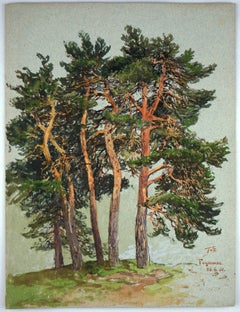
Norwegian Pine Grove - The inner glow of the trees -
Located in Berlin, DE
Themistokles von Eckenbrecher (1842 Athens - 1921 Goslar), Norwegian pine grove, 1901. Watercolor on blue-green paper, 30 x 22 cm. Signed, dated and inscribed in his own hand "TvE. Fagermes [i.e. Fagermes]. 26.6.[19]01." - Slight crease throughout at left margin, otherwise in good condition. About the artwork Themistokles von Eckenbrecher often traveled to Norway to study the nature that fascinated him there. On June 26, 1901, near the southern Norwegian town of Fagernes, in the summer evening sun, he saw a small pine grove, which he immediately captured in a watercolor. He exposed the trees growing on a small hill in front of the background, so that the pines completely define the picture and combine to form a tense motif. The tension comes from the contrast of form and color. The trunks, growing upward, form a vertical structure that is horizontally penetrated by the spreading branches and the pine needles, which are rendered as a plane. This structural tension is further intensified by the color contrast between the brown-reddish iridescent trunks and branches and the green-toned needlework. Themistokles von Eckenbrecher, however, does not use the observed natural scene as an inspiring model for a dance of color and form that detaches itself from the motif and thus treads the path of abstracting modernism. Its inner vitality is to be brought to light and made aesthetically accessible through the work of art. It is precisely in order to depict the inner vitality of nature that von Eckenbrecher chooses the technique of watercolor, in which the individual details, such as the needles, are not meticulously worked out, but rather a flowing movement is created that unites the contrasts. The trees seem to have formed the twisted trunks out of their own inner strength as they grew, creatingthose tense lineations that the artist has put into the picture. The inner strength continues in the branches and twigs, culminating in the upward growth of the needles. At the same time, the trunks, illuminated by the setting sun, seem to glow from within, adding an almost dramatic dimension to the growing movement. Through the artwork, nature itself is revealed as art. In order to make nature visible as art in the work, von Eckenbrecher exposes the group of trees so that they are bounded from the outside by an all-encompassing contour line and merge into an areal unity that enters into a figure-ground relationship with the blue-greenish watercolor paper. The figure-ground relationship emphasizes the ornamental quality of the natural work of art, which further enforces the artwork character of the group of trees. With the presentation of Themistokles von Eckenbrecher's artistic idea and its realization, it has become clear that the present watercolor is not a study of nature in the sense of a visual note by the artist, which might then be integrated into a larger work context, but a completely independent work of art. This is why von Eckenbrecher signed the watercolor. In addition, it is marked with a place and a date, which confirms that this work of nature presented itself to him in exactly this way at this place at this time. At the same time, the date and place make it clear that the natural work of art has been transferred into the sphere of art and thus removed from the time of the place of nature. About the artist Themistocles' parents instilled a life of travel in their son, who is said to have spoken eleven languages. His father, who was interested in ancient and oriental culture, was a doctor and had married Francesca Magdalena Danelon, an Italian, daughter of the British consul in Trieste. During a stay in Athens - Gustav von Eckenbrecher was a friend of Heinrich von Schliemann and is said to have given him crucial clues as to the location of Troy - Themistokles saw the light of day in 1842. After an interlude in Berlin, where Themistokles was educated at the English-American School, the journey began again. From 1850 to 1857 the family lived in Constantinople, after which the father opened a practice in Potsdam, where Themistokles, who wanted to become a painter, was taught by the court painter Carl Gustav Wegener. In 1861 the von Eckenbrechers left Potsdam and settled in Düsseldorf. There Themistokles received two years of private tuition from Oswald Aschenbach, who greatly admired the talented young artist. After his artistic training, he undertook extensive travels, often accompanied by Prince Peter zu Sayn-Wittgenstein, which took him to northern and eastern Europe, but above all to the Middle East and even to South America. The paintings that resulted from these journeys established his artistic reputation and led to his participation in large panoramas such as the 118 x 15 metre Entry of the Mecca Caravan into Cairo, painted for the City of Hamburg in 1882. 1882 was also the start of a total of 21 study trips to Scandinavia, most of them to Norway, and the unique Norwegian landscape with its rugged fjords became a central motif in his work. Along with Anders Askevold and Adelsteen Normann...
Category

Naturalistic 1810s Mixed Media

Materials

Watercolor

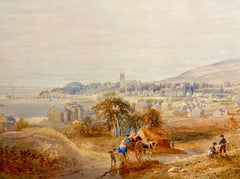
View of Dunoon on the Clyde, Scottish landscape and Figures, 19th Century
Located in Hillsborough, NC
Scottish artist Robert Carrick (1829-1904) is renowned for his landscape and figurative paintings in oil and watercolor. This painting features detailed drawings of figures in the foreground with wagon, and the town and scenery in the background, painted over in watercolor in rich raw umber and red-brown tones in the foreground and blue green tones in the background. Carrick showed promise at a young age, exhibiting his work at the Royal Academy age 16. He was a member of the Royal Institute. This two-toned watercolor work has detailed figures, wagon with hay in the forefront above a view of Dunoon town near Glasgow as it was long ago. Signed by the artist, lower left with an inscription that reads: 'View of Dunoon, Argyllshire drawn by Robert Carrick, Glasgow, for David Allan'. Verso includes a copy of the same inscription. Saltire Gallerie replaced the cracked and dirty plain glass with art glass and added an acid-free paper behind the work. While doing this work we found an art giclee, included with the painting. Presented in a patterned wooden frame with art glass. Dunoon was a thriving town on the river at the time of this work, and later became part of Glasgow. The view from above the town is a popular one, as Saltire Gallerie has another view of Dunoon from above by Scottish artist Patrick Downie...
Category

Naturalistic 1810s Mixed Media

Materials

Watercolor, Board, Pencil

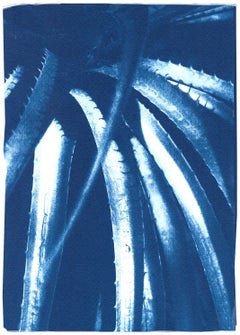
Jurassic Aloe Leaves, Botanical Cyanotype on Paper, Blue Plants, Nature Details
Located in Barcelona, ES
This is an exclusive handprinted limited edition cyanotype of a beautiful Aloe plant. Details: + Title: Jurassic Aloe Leaves + Year: 2022 + Edition Size: 100 + Stamped and Certifica...
Category

Naturalistic 1810s Mixed Media

Materials

Photographic Film, Emulsion, Watercolor, Archival Paper, Photographic Pa...

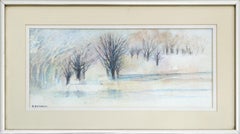
"Icy Pond" Winter Landscape
Located in Soquel, CA
Serene winter landscape by Grace Eichholz (American, b. 1927). Signed "G. EICHHOLZ" in the lower left corner. Artist info and title on verso. Presented in a double mat of cream and w...
Category

American Impressionist 1810s Mixed Media

Materials

Paper, Watercolor, Pen

"Icy Pond" Winter Landscape
$348 Sale Price
20% Off
H 9.25 in W 16.25 in D 0.75 in
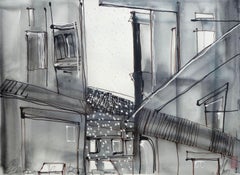
City. 2014, paper, watercolor, 35x49 cm
Located in Riga, LV
The series is dedicated to the artist's home town Riga. Māris Abiļevs (born 23 April 1956 in Kazakhstan) is a Latvian graphic artist and printer, brother of graphic artist Andris Ab...
Category

Contemporary 1810s Mixed Media

Materials

Paper, Watercolor

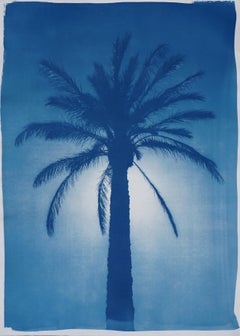
Cairo Citadel Palm, Cyanotype on Paper, Desert Botanical Tree in Blue Tones
Located in Barcelona, ES
This is an exclusive handprinted limited edition cyanotype. This cyanotype shows a desert palm tree located in the majestic mediterranean city of Cairo, Egypt. Details: + Title: C...
Category

Naturalistic 1810s Mixed Media

Materials

Photographic Film, Other Medium, Emulsion, Watercolor, Archival Paper, P...

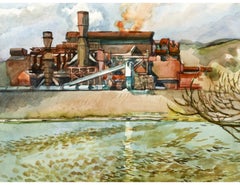
Industrial Landscape Contemporary American Watercolor Magic Realism 20th Century
Located in New York, NY
Industrial Landscape Contemporary American Watercolor Magic Realism 20th Century Henry Koerner (1915-1991) J&L Oxygen Plant 18 x 24 1/2 inches Watercolo...
Category

American Realist 1810s Mixed Media

Materials

Paper, Watercolor

Charles Culver Landscape Winter Road Watercolor Signed & Dated
Located in Detroit, MI
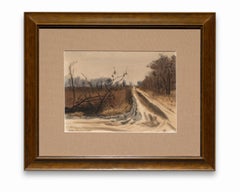
The idyllic atmosphere of this country scene falls within a couple of styles one being regionalism, an American realist modern art movement that included paintings, murals, lithographs, and illustrations depicting scenes of rural and small-town America primarily in the Midwest and frequently associated with Grant Wood and Thomas Hart Benton. The other style is romanticism wherein the scene depicted is a more desired or dramatic version of what actually is. “Untitled (Winter Road)” is a quiet country scene depicting a road leading into the distance either going to or coming from a local farm. The snow does not particularly seem fresh suggesting a melt and the coming of spring. This piece has been professionally reframed with acid-free matting and conservator glass. In a 1952 Detroit Free Press article, entitled “Artist Explains His Work,” Culver was asked why he painted the way he did. He stated: “I try to ‘see’ though not too exactly; I try to think though not too ponderously; I feel emotion yet I try not to become overwrought. I interpret rather than describe, and design rather than depict. I work with values, not light and shade; hence, when I am successful, I achieve substance rather than three-dimensional form, and this satisfies me as being wholly sufficient. In my work I wish to be serious without becoming a bore, exuberant without being frivolous, humorous without being silly. I believe that good paintings are conceived, not contrived; and I am interested in art much more than in pictures.” Charles...
Category

Naturalistic 1810s Mixed Media

Materials

Paper, Watercolor