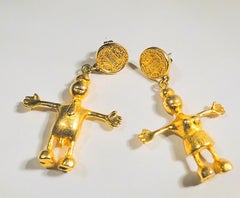
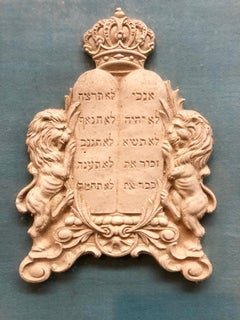
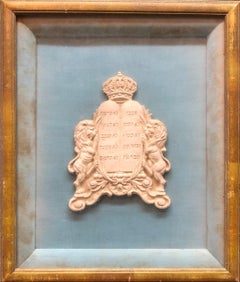
Jewish ceremonial art, also known as Judaica refers to an array of objects used by Jews for ritual purposes. Both for synagogue and for home, because enhancing a mitzvah by performing it with an especially beautiful object is considered a praiseworthy way of honoring God's commandments, Judaism has a long tradition of commissioning ritual objects from craftsmen and artists.
Judaism has a set of classical early rabbinic commentaries on the Hebrew Bible; these commentary collections are known as the midrash literature (Heb: midrashim). Midrash Mechilta has this teaching on a biblical verse:
"This is my God and I will glorify Him" (Exodus 15:2)
Is it possible for a human being to add glory to his Creator? What this really means is: I shall glorify God in the way that I perform commandments. I shall prepare a beautiful lulav, beautiful sukkah, beautiful fringes (tzitzit), and beautiful tefilin."
Other Midrash teachings (e.g. Song of Songs Rabbah 1.15) offer the same idea. This idea is expanded upon in the Babylonian Talmud (e.g. Tractate Bava Kama 9b). This teaching was understood by succeeding generations as a duty, when possible, to make beautiful items used in Jewish life and worship, both physical and textual
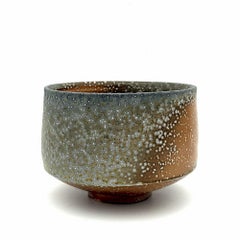
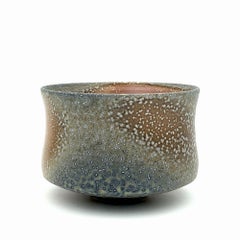
Kiddush cup: Kiddush, literally, "sanctification," is a blessing recited over wine or grape juice to sanctify the Shabbat and Jewish holidays. Kiddush cups are highly decorated, and are generally made of china, porcelain, silver, pewter and nickel. The close of the Jewish Shabbat...
Category
1910s Aesthetic Movement Mixed Media