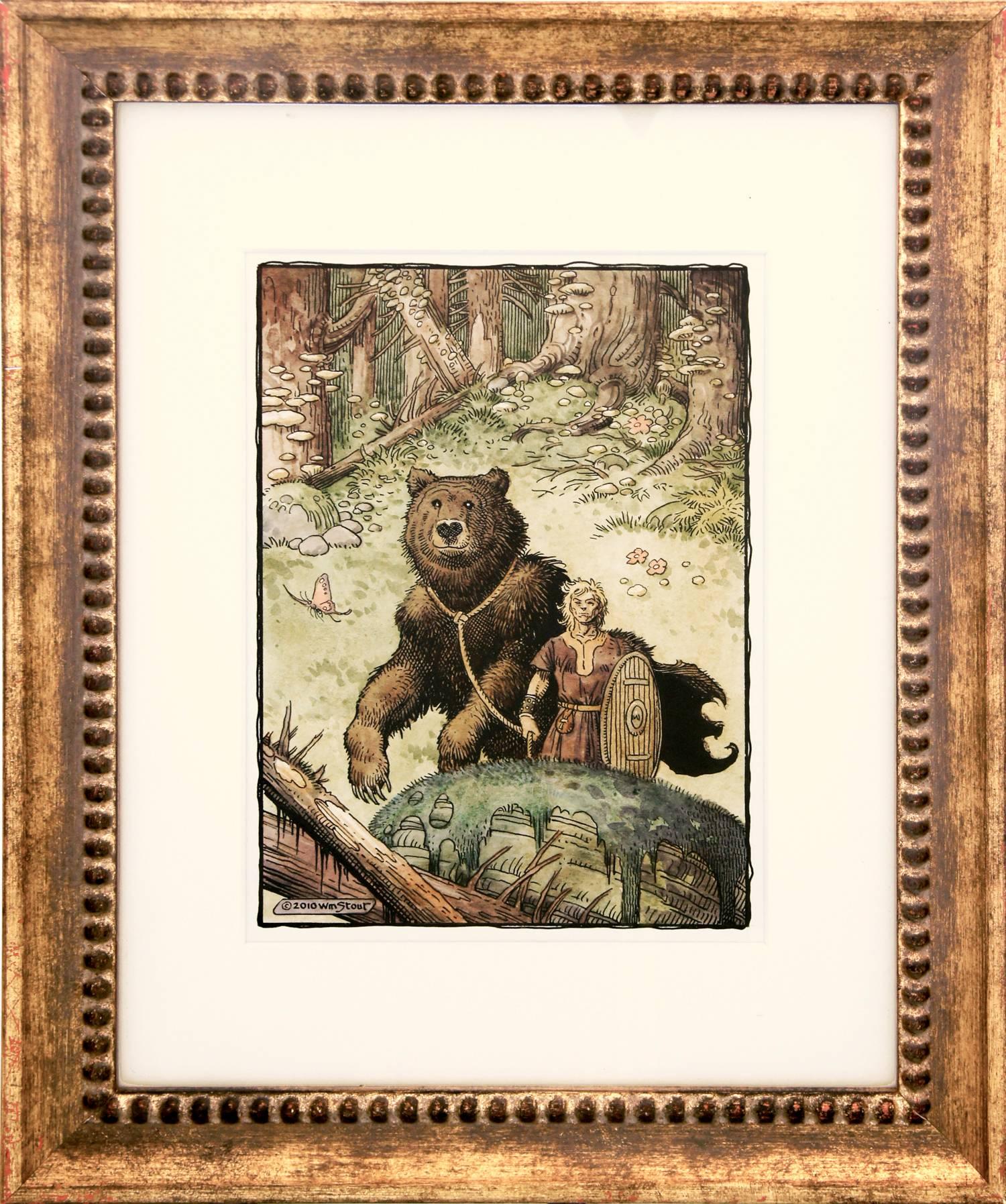
Marion Epstein (American, 1921-2002)
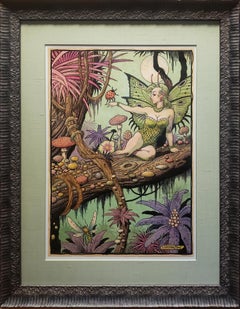
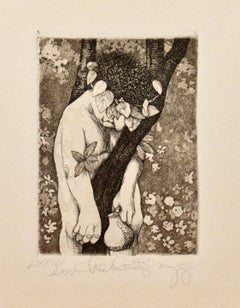
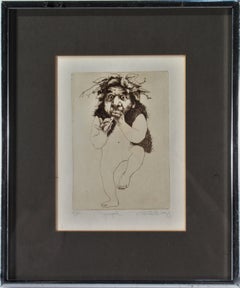
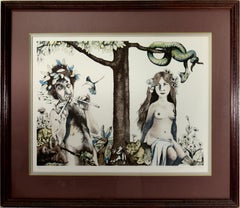
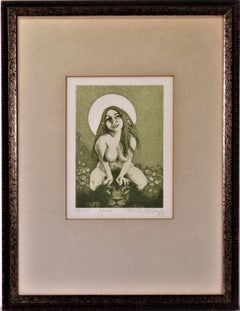
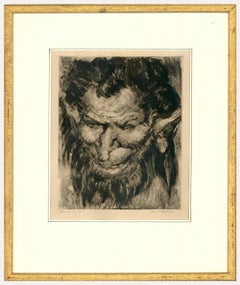
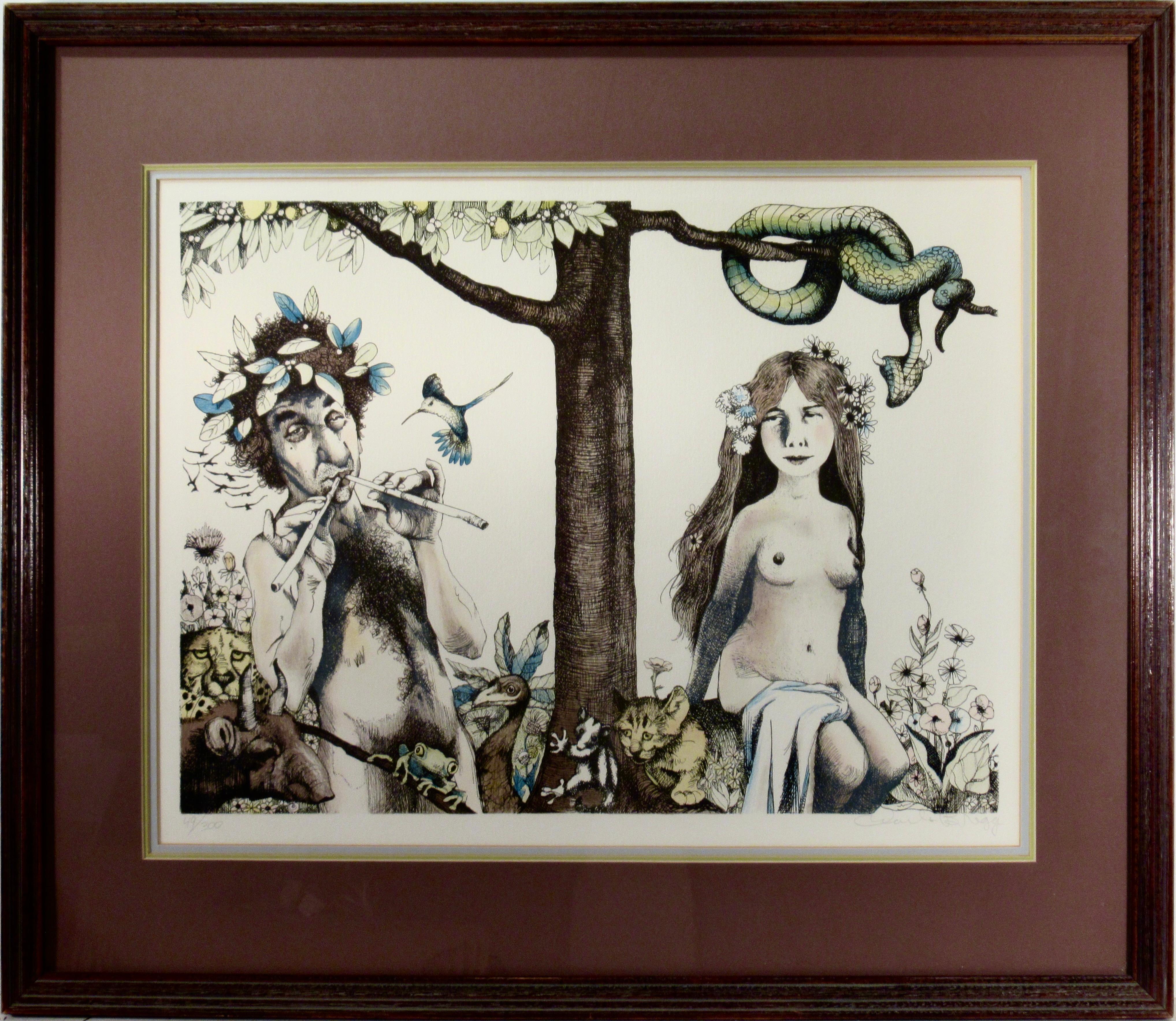
Titania, 1973
Lithograph
Framed: 31 1/2 x 25 x 1/2 in.
Numbered, titled, signed and dated bottom
For over 60 years, local artist Marion Epstein has worked through her art to bridge the personal and the political, family and career. A versatile and prolific artist, she has done sculpture, enameling, painting and photography. But it was printmaking that truly captivated her imagination.
Like many artists of her generation, Epstein was powerfully influenced by the political activism of the 1960s. A member of the Women's International League for Peace and Freedom, Epstein recalls attending meetings out of town with her young son in tow.
The anti-war movement influenced a number of her pieces. "Where Have All the Flowers Gone?" echoes the sentiment of the popular anti-war folk song. This very tall print (6-by-2-1/2 feet) in tones of black, cream and ochre shows a tall woman (Marion) shielding a child, with spindly flowers drooping around them.
"I didn't do abstractions," says Epstein. "I was always trying to say something."
Another anti-war piece, "Generations of Thy Children," combines oil painting and collage on a bisected canvas. On the right half, a lone figure of a Vietnamese child stands forlornly on a reddish orange background. The left side of the canvas is crowded with images of soldiers, artillery and politicians.
Epstein's print "Metamorphosis," completed following her participation in a civil rights march in Washington, tries to capture the changes and uncertainty in America during that time. In the background a white man looms with a questioning, almost fearful look on his face while the black youth in the foreground has his eyes downcast. Works such as "Dream Deferred" and "Aching To be Free" also represent the artist's personal reflections on the struggle for racial equality.
Much of Epstein's art is a complex layering of imagery and texture, line and translucent color. In her haunting print, "Ovens and Shoes," one of several works in which she addresses the Holocaust, she makes interesting use of photographic images from the U.S. Holocaust Memorial Museum in Washington, D.C. Over a saturated black print of the death camp ovens, she has superimposed a pale ochre print of the pile of discarded shoes. Layered on top of these and centered between the arches of the ovens is the violet image of a Rodin sculpture of a man.
(Bio sourced from Cleveland Jewish News, by Susan Kahn)
Category
1970s American Modern Nude Prints