Embossed Print More Art

1 Result
to
1
Overall Width
to
Overall Height
to
1
1
1
1
1
1
1
1
1

Use search to find more

1

Use search to find more

Medium: Embossed Print
Related Items
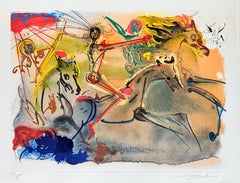
Les Caveliers de l'Apocalypse, Original Etching, Surrealism, 1971, Signed

Les Caveliers de l'Apocalypse, Original Etching, Surrealism, 1971, Signed

By Salvador Dalí­

Located in OPOLE, PL

Salvador Dali (1904-1989) - Les Caveliers de l'Apocalypse Drypoint etching on chromolithograph, embossed from 1971. The edition of 197/197 on Rives paper. Countersigned by the edi...

Category

1970s Surrealist Embossed Print More Art

Materials

Drypoint, Etching, Embossed Print

Woman - Offset and Lithograph after Willem De Kooning - 1985

Woman - Offset and Lithograph after Willem De Kooning - 1985

By Willem de Kooning

Located in Roma, IT

Woman is an offset and lithograph print realized on Fabriano Paper after a drawing by Willem De Kooning of 1952. The print suite was realized in 1985 in a limited edition of 2500, a...

Category

1980s Abstract Expressionist Embossed Print More Art

Materials

Lithograph, Offset

Stones III (~22% OFF LIST PRICE)

Avraham InlenderStones III (~22% OFF LIST PRICE), 2003

$58Sale Price|21% Off

H 5.9 in W 5.5 in

Stones III (~22% OFF LIST PRICE)

Located in Kansas City, MO

Avraham Inlender Stones III Color Offset Lithograph Year: 2003 Size: 5.9 x 5.5 inches (15 x 14 cm) Signed in pencil COA provided Avraham Inlender (1932–2003) was a Polish-born arti...

Category

Early 2000s Abstract Embossed Print More Art

Materials

Lithograph, Offset

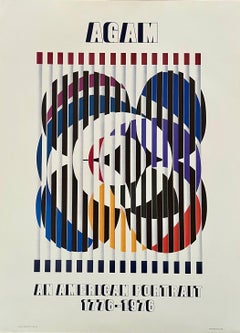
Vintage Agam American Portrait Abstract Modernist Offset Print Poster

Vintage Agam American Portrait Abstract Modernist Offset Print Poster

By Yaacov Agam

Located in Surfside, FL

Yaacov Agam, Israeli (b. 1928), after Offset Print Poster: Birth of a Flag: An American Portrait 1776-1976 Biographical info: The son of a rabbi, Yaacov Agam can trace his ancestry...

Category

20th Century Abstract Embossed Print More Art

Materials

Offset

Neuschwanstein
Neuschwanstein

Andy WarholNeuschwanstein, 1987

$6,500

H 36 in W 24.5 in

Neuschwanstein

By Andy Warhol

Located in Toronto, Ontario

"Neuschwanstein" was one of the last works that Andy Warhol completed before his untimely death in 1987. It was during this last decade that Warhol had a resurgence in both reputat...

Category

1970s Abstract Embossed Print More Art

Materials

Offset

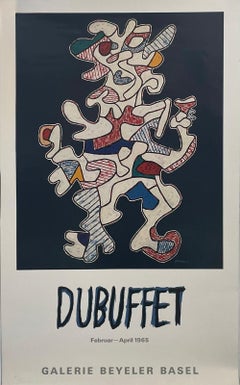
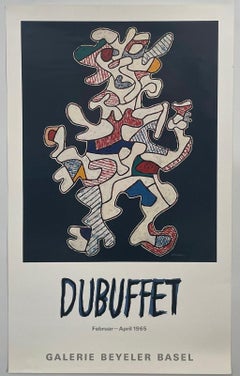
Original Vintage Poster Jean Dubuffet Gallery Exhibition Galerie Beyeler Basel

Original Vintage Poster Jean Dubuffet Gallery Exhibition Galerie Beyeler Basel

By Jean Dubuffet

Located in Surfside, FL

Galerie Beyeler Exhibition Poster Signed in plate Jean Philippe Arthur Dubuffet (French, 1901 – 1985) was a French painter and sculptor of the École de Paris (School of Paris). His idealistic approach to aesthetics embraced so-called "low art" and eschewed traditional standards of beauty in favor of what he believed to be a more authentic and humanistic approach to image-making. He is perhaps best known for founding the art brut movement, and for the collection of works—Collection de l'art brut—that this movement spawned. Dubuffet enjoyed a prolific art career, both in France and in America, and was featured in many exhibitions throughout his lifetime. His childhood friends included the writers Raymond Queneau and Georges Limbour. He moved to Paris in 1918 to study painting at the Académie Julian, becoming close friends with the artists Juan Gris, André Masson, and Fernand Léger. Six months later, upon finding academic training to be distasteful, he left the Académie to study independently. During this time, Dubuffet developed many other interests, including free noise music, poetry, and the study of ancient and modern languages. Dubuffet also traveled to Italy and Brazil, and upon returning to Le Havre in 1925, he married for the first time and went on to start a small wine business in Paris. He took up painting again in 1934 when he made a large series of portraits in which he emphasized the vogues in art history. In 1942, Dubuffet decided to devote himself again to art. He often chose subjects for his works from everyday life, such as people sitting in the Paris Métro or walking in the country. Dubuffet painted with strong, unbroken colors, recalling the palette of Fauvism, as well as the Brucke painters, with their juxtaposing and discordant patches of color. In 1943, the writer George Limbour, a friend of Dubuffet from childhood, took Jean Paulhan to the artist's studio. Dubuffet's work at that time was unknown. Paulhan was impressed and the meeting proved to be a turning point for Dubuffet. His first solo show came in October 1944, at the Galerie Rene Drouin in Paris. This marked Dubuffet's third attempt to become an established artist In 1945, Dubuffet attended and was strongly impressed by a show in Paris of Jean Fautrier paintings in which he recognized meaningful art which expressed directly and purely the depth of a person. Emulating Fautrier, Dubuffet started to use thick oil paint mixed with materials such as mud, sand, coal dust, pebbles, pieces of glass, string, straw, plaster, gravel, cement, and tar. This allowed him to abandon the traditional method of applying oil paint to canvas with a brush; instead, Dubuffet created a paste into which he could create physical marks, such as scratches and slash marks. The impasto technique of mixing and applying paint was best manifested in Dubuffet's series 'Hautes Pâtes' or Thick Impastoes, which he exhibited at his second major exhibition, entitled Microbolus Macadam & Cie/Hautes Pates in 1946 at the Galérie René Drouin. His use of crude materials and the irony that he infused into many of his works incited a significant amount of backlash from critics, who accused Dubuffet of 'anarchy' and 'scraping the dustbin'. He did receive some positive feedback as well—Clement Greenberg took notice of Dubuffet's work and wrote that '[f]rom a distance, Dubuffet seems the most original painter to have come out of the School of Paris since Joan Miro...' Greenberg went on to say that 'Dubuffet is perhaps the one new painter of real importance to have appeared on the scene in Paris in the last decade.' Indeed, Dubuffet was very prolific in the United States in the year following his first exhibition in New York (1951). After 1946, Dubuffet started a series of portraits, with his own friends Henri Michaux, Francis Ponge, George Limbour, Jean Paulhan and Pierre Matisse serving as 'models'. He painted these portraits in the same thick materials, and in a manner deliberately anti-psychological and anti-personal, as Dubuffet expressed himself. A few years later he approached the surrealist group in 1948, then the College of Pataphysique in 1954. He was friendly with the French playwright, actor and theater director Antonin Artaud, he admired and supported the writer Louis-Ferdinand Céline and was strongly connected with the artistic circle around the surrealist André Masson. In 1944 he started an important relationship with the resistance-fighter and French writer and publisher Jean Paulhan who was also strongly fighting against "intellectual terrorism", as he called it. Reception in America Corps de dame jaspé [Marbleized Body of a Lady] (1950) at the National Gallery of Art in 2022 Dubuffet achieved very rapid success in the American art market, largely due to his inclusion in the Pierre Matisse exhibition in 1946. His association with Matisse proved to be very beneficial. Matisse was a very influential dealer of contemporary European Art in America, and was known for strongly supporting the School of Paris artists. Dubuffet's work was placed among the likes of Pablo Picasso, Georges Braque, and Henri Rouault at the gallery exhibit, and he was one of only two young artists to be honored in this manner. A Newsweek article dubbed Dubuffet the 'darling of Parisian avant-garde circles,' and Greenberg wrote positively about Dubuffet's three canvases in a review of the exhibit. In 1947 Dubuffet had his first solo exhibition in America, in the same gallery as the Matisse exhibition. Reviews were largely favorable, and this resulted in Dubuffet having at least an annual, if not a biannual exhibition at that gallery. His reception in America was very closely linked to and dependent upon the New York art world's desire to create its own avant-garde environment. Specific examples of American artists interested in Dubuffet’s art were Alfonso Ossorio and Joseph Glasco. At the end of 1949, while Pierre Matisse was preparing Dubuffet’s January 1950 show, Alfonso Ossorio had traveled to Paris to meet Dubuffet and buy some of his paintings. Then in 1950, at Ossorio’s urging, his young friend Joseph Glasco left New York for Paris to meet Dubuffet. Glasco credited this encounter as having had an influence on his own art, and Dubuffet frequently asked about “Jackson Pollock and Glasco” in his letters to Ossorio. Between 1947 and 1949, Dubuffet took three separate trips to Algeria—a French colony at the time—in order to find further artistic inspiration. In this sense, Dubuffet is very similar to other artists such as Delacroix, Matisse, and Fromentin. However, the art that Dubuffet produced while he was there was very specific insofar as it recalled Post-War French ethnography in light of decolonization. Dubuffet was fascinated by the nomadic nature of the tribes in Algeria—he admired the ephemeral quality of their existence, in that they did not stay in any one particular area for long, and were constantly shifting. The impermanence of this kind of movement attracted Dubuffet and became a facet of art brut. In June 1948, Dubuffet, along with Jean Paulhan, Andre Breton, Charles Ratton, Michel Tapie, and Henri-Pierre Roche, officially established La Compagnie de l'art brut in Paris. This association was dedicated to the discovery, documentation and exhibition of art brut. Dubuffet later amassed his own collection of such art, including artists Aloïse Corbaz and Adolf Wölfli...

Category

1960s Abstract Embossed Print More Art
Materials

Offset

Untitled (Two Figures)

Untitled (Two Figures)

By Willem de Kooning

Located in New York, NY

A very good impression of this scarce offset lithograph on cream wove paper. Artist's proof, aside from the edition of 100. Signed in ink, lower right, and inscribed "A/P" in pencil,...

Category

1970s Abstract Expressionist Embossed Print More Art

Materials

Lithograph, Offset

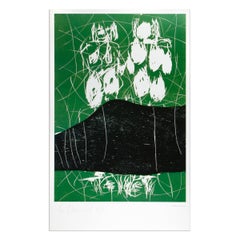
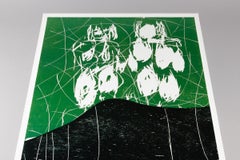
Georg Baselitz, Der Berg

Georg Baselitz, Der Berg

By Georg Baselitz

Located in Hamburg, DE

Georg Baselitz (German, b. 1938) Der Berg, 1991/93 Medium: Color offset print Dimensions: 100x 63.5 cm Edition size: Undisclosed (presumably 100-200) Markings: Hand-signed and dated ...

Category

20th Century Abstract Embossed Print More Art

Materials

Offset

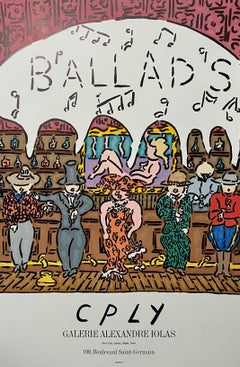
Vintage Galerie Alexandre Iolas Ballads Poster William Copley CPLY Mourlot Litho

Vintage Galerie Alexandre Iolas Ballads Poster William Copley CPLY Mourlot Litho

Located in Surfside, FL

Ballads Galerie Alexandre Iolas Poster by William N. Copley (CPLY) New-York, Geneve, Milan, Paris 196, Boulevard Saint-Germain William Nelson Copley (January 24, 1919 – May 7, 1996) also known as CPLY, was an American painter, writer, gallerist, collector, patron, publisher and art entrepreneur. His works as an artist have been classified as late Surrealist and precursory to Pop Art. William N. Copley was born in New York City in 1919 to parents John and Flora Lodwell; they died shortly after in the 1919 Spanish Flu epidemic. Copley was adopted in 1921 by Ira C. Copley, the owner of sixteen newspaper companies in Chicago and San Diego. Copley was ten years old whereby the family moved to Coronado Island, California. Copley was sent to Phillips Andover and then Yale University by his adopted parents. He was drafted in the Second World War in the middle of his education at Yale, a decision negotiated by the school and the army. Copley experimented with politics upon returning home from the war, working as a reporter for his father's newspaper. By 1946, Copley met and married Marjorie Doris Wead, the daughter of a test pilot for the Navy. Doris's sister was married to John Ployardt, a Canadian-born animator and narrator at Walt Disney Studios. Copley and Ployardt soon became friends and Ployardt began introducing Copley to painting and Surrealism. The two traveled to Mexico and New York, discovering art, meeting the artists behind the works, and grasping Surrealist ideas. It was during this time that Copley and Ployardt decided to open a gallery in Los Angeles to exhibit Surrealist works. Copley and Ployardt tracked down Man Ray while living in Los Angeles. Ray then introduced them to Marcel Duchamp in New York City. There, Duchamp opened many doors for them, introducing the two to New York dealers in Surrealism. In 1948, Copley and Ployardt opened The Copley Galleries in Beverly Hills, displaying works by artists including René Magritte, Max Ernst, Yves Tanguy, Roberto Matta, Joseph Cornell, and Man Ray. Copley moved to Paris in 1949–50, leaving behind his wife and two children to continue to paint. During his time in Paris, he remained in Surrealist circles and continued to paint with a uniquely American style. Copley's first exhibition took place in Los Angeles in 1951 at Royer's Book Shop. From there Copley participated in numerous solo and group exhibitions worldwide. In 1961, Copley was given an exhibition in Amsterdam by the Stedelijk Museum. The museum became the first public institution to add a Copley to their collection. Copley's paintings throughout the 1950s and 60s dealt with ironic and humorous images of stereotypical American symbols like the Western saloon, cowboys, and pin-up girls combined with flags. His works during this period were often considered a combination of American and Mexican folk art and melded in well with the new young POP movement occurring in America when he returned to New York in the 1960s. Artists like Andy Warhol, Christo, Roy Lichtenstein and many others were frequent visitors at Copley's studio on Lower Broadway. Copley believed that pop art had always interested him, claiming American pop art had much to do with "self-disgust" and "satire." In 1967, after a divorce with his second wife, Noma, Copley and new friend Dmitri Petrov decided to publish portfolios of 20th-century artist collaborations with the abbreviation SMS (for "Shit Must Stop"). Copley's Upper West Side loft became a meeting place for performers, artists, curators, and composers to work together on the open-ended collective. The SMS portfolio...

Category

20th Century Abstract Embossed Print More Art

Materials

Paper, Lithograph, Offset

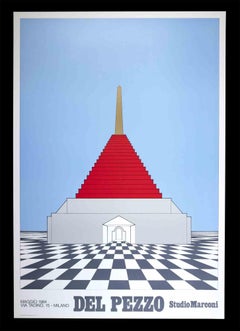
Lucio Del Pezzo Poster Exhibition - Vintage Offset Print - 1984

Lucio Del Pezzo Poster Exhibition - Vintage Offset Print - 1984

Located in Roma, IT

Lucio Del Pezzo - Poster Exhibition is a mixed colored offset print realized in 1984 This print was realized on the occasion of the exhibition dedicated to the artist and held in St...

Category

1980s Abstract Embossed Print More Art

Materials

Offset

Original 24 Hours du Le Mans vintage auto racing poster  1978

Original 24 Hours du Le Mans vintage auto racing poster 1978

Located in Spokane, WA

Original vintage poster: 24 Heures du Mans; 10-11 Juni 1978; Automobile Club De L'Ouest. Artist: Lardrot. Linen backed French vintage automotive racing poster. Event: 24 Heu...

Category

1970s Abstract Expressionist Embossed Print More Art
Materials

Offset

Woman - Offset and Lithograph after Willem De Kooning - 1985

Woman - Offset and Lithograph after Willem De Kooning - 1985

By Willem de Kooning

Located in Roma, IT

Woman is an offset and lithograph print realized on Fabriano Paper after a drawing by Willem De Kooning of 1952. The print suite was realized in 1985 in a limited edition of 2500, a...

Category

1980s Abstract Expressionist Embossed Print More Art
Materials

Lithograph, Offset

Woman in a Rowing Boat - Offset and Lithograph after Willem De Kooning - 1985

Woman in a Rowing Boat - Offset and Lithograph after Willem De Kooning - 1985

By Willem de Kooning

Located in Roma, IT

Woman in a Rowing Boat is an offset and lithograph print after Willem De Kooning in 1965. The print suite was realized in 1985 in a limited edition of 2500, and curated by Xavier F...

Category

1980s Abstract Expressionist Embossed Print More Art

Materials

Lithograph, Offset

Embossed Print more art for sale on 1stDibs.

Find a wide variety of authentic Embossed Print more art available on 1stDibs. While artists have worked in this medium across a range of time periods, art made with this material during the 20th Century is especially popular. There are many well-known artists whose body of work includes ceramic sculptures. Popular artists on 1stDibs associated with pieces like this include and Jasper Johns. Frequently made by artists working in the Modern, all of these pieces for sale are unique and many will draw the attention of guests in your home. Not every interior allows for large Embossed Print more art, so small editions measuring 0.1 inches across are also available