Dutch School More Art

to
1
2
1
Overall Width
to
Overall Height
to
1
1
1
1
3,205
2,650
2,242
1,993
1,517
398
390
253
145
80
69
53
35
3
1
1
1
1
1
1
1
2
1
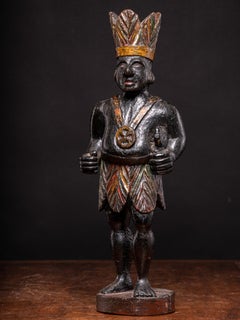
Style: Dutch School
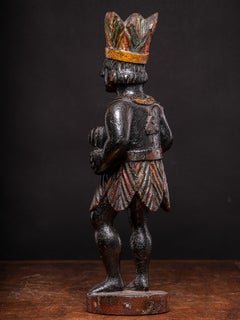
19th C Counter top Cigarstore Northern American Indian statue, Unknown artist

19th C Counter top Cigarstore Northern American Indian statue, Unknown artist

Located in brussel, BE

The cigar store Indian originated as a tradition, not in the United States but in Europe, where carved “Virginie men,” as Europeans called native Americans, were used for advertising...

Category

19th Century Dutch School More Art

Materials

Wood

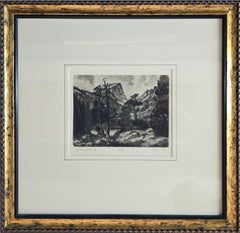
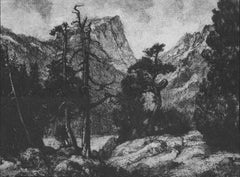
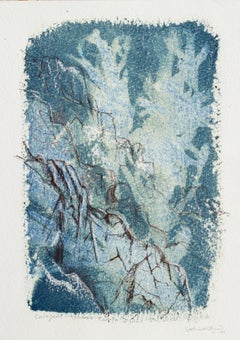
Dream Lake II (Contemporary Realism, Dutch Master Influence)

Dream Lake II (Contemporary Realism, Dutch Master Influence)

Located in Kansas City, MO

Doug Osa Dream Lake II Intaglio on Paper 1994 Image Size: 4.25 x 5.5 inches (10.8 × 14.0 cm) Framed Size: 13 x 13.75 inches (33.0 × 34.9 cm) Edition: 6 of 50 Signed, dated and number...

Category

1990s Dutch School More Art

Materials

Intaglio

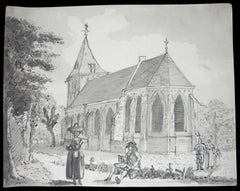
Old Master Drawing, Westerkerk Keizersgracht in Amsterdam, 17th century, Dutch

Old Master Drawing, Westerkerk Keizersgracht in Amsterdam, 17th century, Dutch

Located in Greven, DE

Jan van der Heyden (1637 Gorinchem - 1712 Amsterdam), attributed. Old Master Drawing, Westerkerk Keizersgracht in Amsterdam, 17th century, Dutch Westerkerk and Keizersgracht in Amsterdam Backside: later drawn backside with village church of the 18th century Chalk and pen on paper 23,5 x 18,5 cm Preliminary drawing for a painting from the creative period c. 1667 - 1670. This painting has been published a few years ago by Peter C. Sutton in the catalogue raisonné of the artist. Van der Heyden was initially a pupil of a glass painter, but later turned exclusively to architectural painting and went to Amsterdam, where he painted views of churches, castles, palaces, public squares, streets, canals, etc., most of which are richly decorated with staffage. In addition, van der Heyden was also active as an inventor, for example, he developed a street lighting system for Amsterdam by means of oil street lamps, which was in operation from 1669 to 1840. After a stay in London, he painted the London fire of 1666, which he either witnessed himself or had seen the consequences of. Certainly influenced by this, he did much to further the technical and organisational development of the fire brigade from 1669 onwards. His greatest invention was probably the fire hose, which enabled significant improvements in fire-fighting technology and tactics. He also improved the hand-operated fire engines of the time by making them smaller, more mobile and more powerful, and he developed the series connection of several pumps to increase the pressure in order to achieve a greater range for the water jet. In 1690, together with his son, he was the author and illustrator of the Brandspuiten-boek, the first manual for fire fighting. Johann Lingelbach, Adriaen van de Velde and Eglon van der Neer...

Category

17th Century Dutch School More Art

Materials

Paper, Chalk

Related Items
Littlehampton Watercolour Early 20th Century

Littlehampton Watercolour Early 20th Century

By Horace Mann Livens

Located in London, GB

Horace Mann Livens 1862 - 1936 Littlehampton Watercolour, gouache, and black chalk on paper, signed and dated '10' lower left Image size: 11 ¼ x 15 inches (28.5 x 38 cm) Acid free mo...

Category

Early 20th Century Dutch School More Art

Materials

Paper, Chalk, Watercolor, Gouache

The Chameleon Effect - Flexible Rigids - sculptural wall, parametric design

The Chameleon Effect - Flexible Rigids - sculptural wall, parametric design

By Hugo Garcia-Urrutia

Located in Dallas, TX

HUGO G. URRUTIA B. 1974, Mexico Hugo G. Urrutia is a multidisciplinary artist-designer, interested in the cross-pollination between art and architecture. His artwork challenges the...

Category

2010s Dutch School More Art

Materials

Plywood, Lacquer, Oil

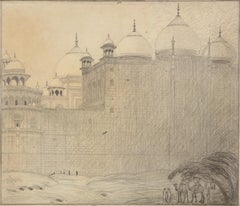
Part of the ring-wall of the Taj Mahal, Agra, India, 1914

Part of the ring-wall of the Taj Mahal, Agra, India, 1914

Located in Amsterdam, NL

Part of the ring-wall of the Taj Mahal, Agra, India, 1914 Signed with initials and dated bottom right Black chalk on paper, 45.5 x 53 cm Literature: Ernst Braches en J.F. Heijbro...

Category

1910s Dutch School More Art

Materials

Paper, Chalk

Modernist Conte Crayon Drawing Beach Scene David Burliuk Russian Futurist

Modernist Conte Crayon Drawing Beach Scene David Burliuk Russian Futurist

By David Burliuk

Located in Surfside, FL

David Burliuk (Ukrainian, 1882-1967) Three figure on the beach (Hamptons, Long Island New York) Conte crayon drawing on paper. Hand signed lower left. Unframed Provenance: Bloomsbury Auctions David Davidovich Burliuk (Дави́д Дави́дович Бурлю́к; 1882-1967) was a Russian poet, artist and publicist of Ukrainian origin associated with the Futurist and Neo-Primitivist movements. Burliuk has been described as "the father of Russian Futurism." David Burliuk was born on 21 July 1882 in the village of Riabushky (near Lebedyn, Ukraine) in the Kharkov Governorate of the Russian Empire. Burliuk's family was artistically inclined; two of his brothers were talented artists as well, Nikolai and Volodimir Burliuk. The Burliuk family partly descended from Ukrainian Cossacks on their father's side, who held premier positions in the Hetmanate. His mother, Ludmyla Mikhnevich, was of ethnic Belarusian descent. From 1898 to 1904, he studied at Kazan and Odesa art schools, as well as at the Royal Academy in Munich. His exuberant, extroverted character was recognized by Anton Azhbe, his professor at the Munich Academy, who called Burliuk a "wonderful wild steppe horse". During a time of significant industrialization and political change, movements such as the famed Der Blaue Reiter, a group Burliuk associated with in 1912, while he was in Munich, emphasized a shift away from the classical styles of the past, prioritizing the innovations of the future. In 1907, he made contact with the Russian art world; he met and befriended Mikhail Larionov, and they are both credited as being major forces in bringing together the contemporary art world. In 1908, an exhibition with the group Zveno ("The Link") in Kiev was organized by David Burliuk together with Wladimir Baranoff-Rossine, Alexander Bogomazov, his brother Volodymyr (Wladimir) Burliuk and Aleksandra Exter. The exhibition was a flop, especially because they were all unknown painters. The Burliuks and Larionov left for the aforementioned brothers' home in Chernianka, also known as Hylea; it was during this stay that their work became more Avant-Garde. That autumn, while visiting Ekster, they organized an exhibition which took place in the street; it was a success, and enough money was raised to go to Moscow. In 1909, Burliuk painted a portrait of his future wife, Marussia, on a background of flowers and rocks...

Category

Mid-20th Century Dutch School More Art

Materials

Paper, Conté, Crayon

Bound Heart by Peter Brooke-Ball - Cord and oak wood sculpture, abstract, sense

Bound Heart by Peter Brooke-Ball - Cord and oak wood sculpture, abstract, sense

By Peter Brooke-Ball

Located in Paris, FR

Bound Heart is a unique oak wood and cotton cord sculpture by contemporary artist Peter Brooke-Ball, dimensions are 19 × 34 × 26 cm (7.5 × 13.4 × 10.2 in). The sculpture comes with...

Category

2010s Dutch School More Art

Materials

Cotton, Cord, Wood, Oak

Landscape with Antique Ruins, Red Chalk on Laid Paper, 18th Century

Landscape with Antique Ruins, Red Chalk on Laid Paper, 18th Century

By Hubert Robert

Located in Paris, Île-de-France

French School, 18th century Circle of Hubert Robert (1733–1808) Landscape with Antique Ruins Red chalk on paper, 31 x 20.5 cm Unsigned Collector’s stamp lower left, very faint: “L...

Category

Late 18th Century Dutch School More Art

Materials

Chalk, Washi Paper, Laid Paper

View of Florence with the Duomo - Original Ink Drawing

View of Florence with the Duomo - Original Ink Drawing

By Christopher Ganz

Located in Chicago, IL

Christopher Ganz View of Florence with the Duomo 2016 colored pencil, pens, chalk, crayon 12h x 19w in 30.48h x 48.26w cm Frame: 18.25h x 24.25w in CG0060 -ARTIST STATEMENT- I dep...

Category

21st Century and Contemporary Dutch School More Art

Materials

Paper, Chalk, Crayon, Ink, Color Pencil

Close to Heart 2 - Wood sculpture by Zlata Kornilova

Close to Heart 2 - Wood sculpture by Zlata Kornilova

By Zlata Kornilova

Located in Paris, FR

Sculpture Close to Heart 2 Limited edition of 12 Mediums: old pine, steel, acrylic hand painted, oil CLOSE TO HEART - Collection Working on the series I used a “wood with history”...

Category

21st Century and Contemporary Dutch School More Art

Materials

Steel

Previously Available Items

Dutch School more art for sale on 1stDibs.

Find a wide variety of authentic Dutch School more art available for sale on 1stDibs. Works in this style were very popular during the 19th Century, but contemporary artists have continued to produce works inspired by this movement. Frequently made by artists working with Chalk, and Paper and other materials, all of these pieces for sale are unique and have attracted attention over the years. Not every interior allows for large Dutch School more art, so small editions measuring 7.29 inches across are also available. Prices for more art made by famous or emerging artists can differ depending on medium, time period and other attributes. On 1stDibs, the price for these items starts at $1,639 and tops out at $7,573, while the average work sells for $4,606.