Mannerist More Art

to
1
Overall Width
to
Overall Height
to
1
3,105
2,531
2,108
1,507
1,493
356
313
253
139
81
58
42
42
3
1
1
1
1
Style: Mannerist
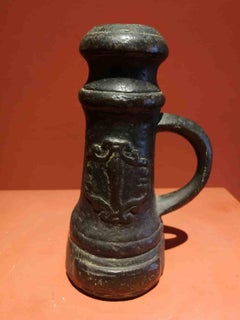
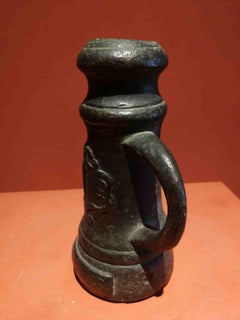
Tuscan Mannerist bronze Mortaretto d'allegrezza from the 17th century

Tuscan Mannerist bronze Mortaretto d'allegrezza from the 17th century

Located in Florence, IT

Decorated with a cartouche on which the family coat of arms was probably engraved, this interesting small bronze object is a "cheer mortar" (also called a "mascolo" or "mastio" of ch...

Category

17th Century Mannerist More Art

Materials

Bronze

Related Items
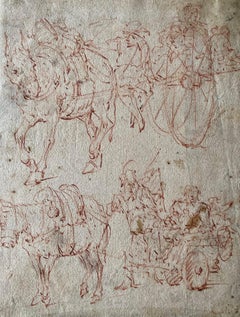
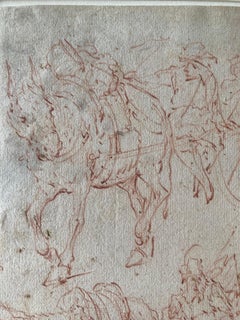
Flemish Old Master, Study of Donkey Carriage, 17th Century, Sanguine Drawing

Flemish Old Master, Study of Donkey Carriage, 17th Century, Sanguine Drawing

Located in Greven, DE

This drawing shows several studies of a donkey with a carriage. Its style is close to Flemish 17th century artists. On the passepartout one reads "Mathias Scheyer/ Jacob Weyer", both...

Category

17th Century Mannerist More Art

Materials

Chalk, Handmade Paper

Arman African Candlestick Sculpture, Gilded Bronze, Limited Edition

Arman African Candlestick Sculpture, Gilded Bronze, Limited Edition

By Arman

Located in Paris, FR

2003 Edition of 99 copies + 15 EA +15 HC + 30 copies numebered /XXX. Signed « Arman » and numbered on the gilded bronze. Referenced in Denyse Durand-Ruel Archives under Nr 7698. Referenced at the Arman Studio in New York under NR APA# 7030.03.006. Arman is a Franco-American artist best known for his unique style of found object sculpture known as accumulations. Inspired by the philosophy and aesthetics of Dadaism, he brings together forks, instruments and teapots in display cases. A member of Nouveau Réalisme alongside Yves Klein and Jean Tinguely, among others, he responds to the emergence of Pop art through his own critique of consumption, waste and mass production, particularly in his series "Poubelles" in the early 1960s. For his famous and monumental sculpture "Long-Term Parking" (1982), the artist piles up 60 cars...

Category

Early 2000s Mannerist More Art

Materials

Bronze

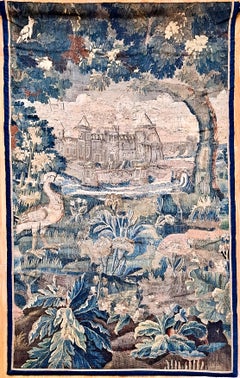
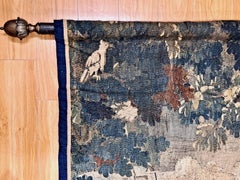
18th-Century Forest and Chateâu Tapestry

18th-Century Forest and Chateâu Tapestry, Unknown

$9,250

H 83.5 in W 52.5 in D 0.13 in

18th-Century Forest and Chateâu Tapestry

Located in San Francisco, CA

On offer is a classic Verdure tapestry, popular in the 17th and 18th centuries for its lush nature scenes. "Verdure" comes from the French word for greenery, focusing on forest and g...

Category

18th Century Mannerist More Art

Materials

Wool, Silk

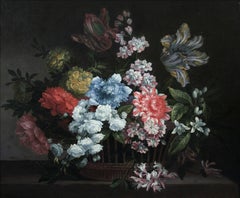
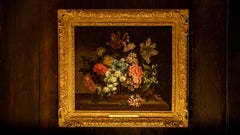
Flowers In A Basket - Original Oil, Still Life, French, Franco-Flemish painter

Flowers In A Basket - Original Oil, Still Life, French, Franco-Flemish painter

By Jean-Baptiste Monnoyer

Located in Knowle Lane, Cranleigh

Flowers in A Basket by Jean-Baptiste Monnoyer. A Still Life of flowers in a basket including jasmine, honeysuckle, dahlias, parrot tulips, delphiniums and white carnations.

Category

1690s Mannerist More Art

Materials

Oil, Canvas

Old Master Drawing, Baroque, Jacob de Wit, Allegory of Victory, Putti, Ships

Old Master Drawing, Baroque, Jacob de Wit, Allegory of Victory, Putti, Ships

By Jacob De Wit

Located in Greven, DE

Two putti with symbols of war and victory (cannons, cannonballs, armour, anchor, lion's head, laurel branch/ olive branch, flag, staff with helmet) in pediment triangle. Probably a design for a painting or architecture Pen-and-ink drawing in black on brownish paper, black wash Plain gold moulding with UV glass Allegory of Victory, 18th Century, Old Master Drawing, By De Wit, Figurative Jacob de Wit...

Category

Late 17th Century Mannerist More Art

Materials

Paper, Crayon

18th C, In the Style of the Classicizing Baroque, Biblical, Rebekka and Eliëzer

18th C, In the Style of the Classicizing Baroque, Biblical, Rebekka and Eliëzer

Located in brussel, BE

Willem Muys was a Dutch, 18th-century painter of history pieces, portraits and cabinet pieces. Above all, he appears to have been active as a painter of ‘wallpaper’. Until the mid-18th century, ‘wallpaper’ was not painted on paper but on coarsely woven linen. Wealthy citizens had their mansions or country estates adorned with ‘wallpaper’ with landscapes, exotic birds or chinoiseries. Willem Muys mainly painted ‘wallpaper’, which means that few of his works have been preserved. They are hardly represented in public collections. The works of his sons, Nicolaas en Robbert, both painters, are a little less rare. The painting with Rebecca and Eliezer...

Category

18th Century Mannerist More Art

Materials

Canvas, Oil

16th C, Biblical, Manner of Joos van Cleve, Madonna with Child, Oil on Panel

16th C, Biblical, Manner of Joos van Cleve, Madonna with Child, Oil on Panel

By Joos van Cleve

Located in brussel, BE

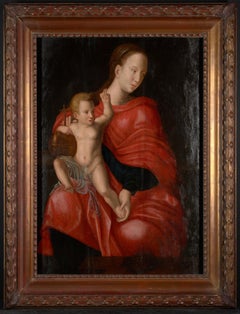
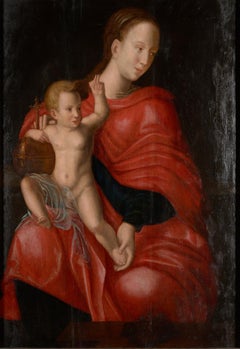
Attentive observer, may I challenge you to find some unusual elements in this panel painting? One detail has to do with the symbolic use of color, the other with a later adjustment of the image. Indeed! The Blessed Virgin is not dressed in her usual sky blue cloak, which refers to her purity, but in a red robe. During the Late Middle Ages and early Renaissance, the Virgin often wore such a red garment to refer to the Passion of Christ. After all, the blessing Christ child with his orb would shed his blood for the redemption of mankind. The second strange element catches the eye when one looks closer at the little Jesus. It appears that he was originally depicted completely naked, but got on a transparent loincloth over time. In the past there were several times when nudity in art was subject to some form of censorship. For example, the supervision of Christian art was strongly encouraged by the Council of Trent (1545-1563). This assembly was dealing with the inner-ecclesiastical reform of the Roman Catholic Church. One of the important theologians who followed the council’s guidelines was Joannes Molanus (1533-1585). He did not consider the nakedness of the Christ Child to be edifying and pointed out that children could be endangered in this way. He may have been referring to the dangers of paedophilia. During the 19th century, puritanism emerged. A famous example of a moral preacher was Pope Pius IX...

Category

16th Century Mannerist More Art

Materials

Canvas, Oil

Mannerist more art for sale on 1stDibs.

Find a wide variety of authentic Mannerist more art available for sale on 1stDibs. Works in this style were very popular during the 18th Century and Earlier, but contemporary artists have continued to produce works inspired by this movement. Frequently made by artists working with Bronze, and Metal and other materials, all of these pieces for sale are unique and have attracted attention over the years. Not every interior allows for large Mannerist more art, so small editions measuring 2.76 inches across are also available. Prices for more art made by famous or emerging artists can differ depending on medium, time period and other attributes. On 1stDibs, the price for these items starts at $777 and tops out at $777, while the average work sells for $777.