Want more images or videos?
Request additional images or videos from the seller
1 of 6

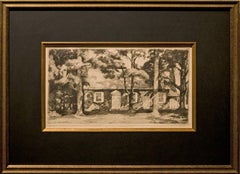
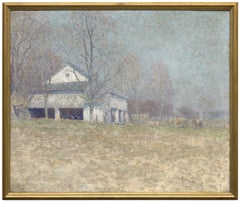
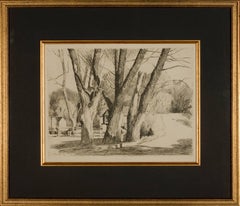
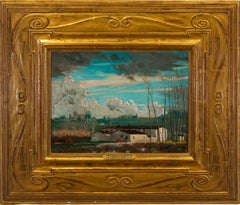
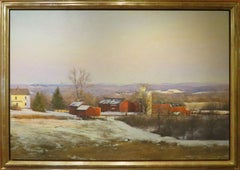
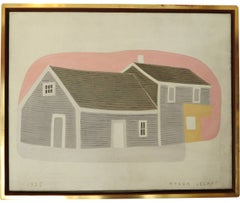
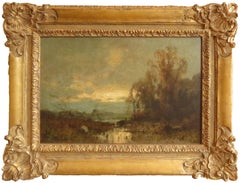
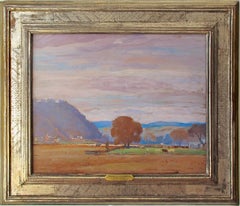
Daniel Garber
A Solebury Farm

1943

You May Also Like

"Fields in Jersey"

"Fields in Jersey"

By Daniel Garber

Located in Lambertville, NJ

Jim’s of Lambertville Fine Art Gallery is proud to present this piece by Daniel Garber (1880 - 1958). One of the two most important and, so far, the most valuable of the New Hope Sc...

Category

Early 1900s American Impressionist Landscape Paintings

Materials

Canvas, Oil

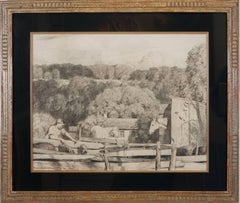
"Improvidence"

"Improvidence"

By Daniel Garber

Located in Lambertville, NJ

Jim’s of Lambertville Fine Art Gallery is proud to present this piece by Daniel Garber (1880 - 1958). One of the two most important and, so far, the most valuable of the New Hope Sc...

Category

1920s American Impressionist Landscape Prints

Materials

Etching

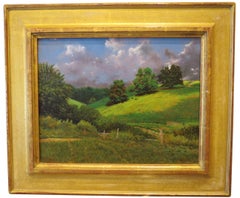
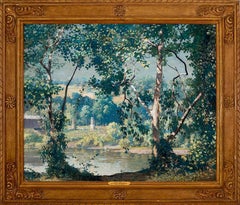
"Up the Valley"

Daniel Garber"Up the Valley", Circa 1941

$206,250

H 27 in W 31 in D 2 in

"Up the Valley"

By Daniel Garber

Located in Lambertville, NJ

In an original Harer frame. Illustrated in "Daniel Garber Catalogue Raisonne" Vol. II, pg. 271, and in book titled "Blue Chips", pg. 33 Jim’s of Lambertville is proud to offer this artwork by: Daniel Garber (1880-1958) One of the two most important and, so far, the most valuable of the New Hope School Painters, Daniel Garber was born on April 11, 1880, in North Manchester, Indiana. At the age of seventeen, he studied at the Art Academy of Cincinnati with Vincent Nowottny. Moving to Philadelphia in 1899, he first attended classes at the "Darby School," near Fort Washington; a summer school run by Academy instructors Anshutz and Breckenridge. Later that year, he enrolled at the Pennsylvania Academy of the Fine Arts. His instructors at the Academy included Thomas Anshutz, William Merritt Chase and Cecilia Beaux. There Garber met fellow artist Mary Franklin while she was posing as a model for the portrait class of Hugh Breckenridge. After a two year courtship, Garber married Mary Franklin on June 21, 1901. In May 1905, Garber was awarded the William Emlen Cresson Scholarship from the Pennsylvania Academy, which enabled him to spend two years for independent studies in England, Italy and France. He painted frequently while in Europe, creating a powerful body of colorful impressionist landscapes depicting various rural villages and farms scenes; exhibiting several of these works in the Paris Salon. Upon his return, Garber began to teach Life and Antique Drawing classes at the Philadelphia School of Design for Women in 1907. In the summer of that same year, Garber and family settled in Lumbertville, Pennsylvania, a small town just north of New Hope. Their new home would come to be known as the "Cuttalossa," named after the creek which occupied part of the land. The family would divide the year, living six months in Philadelphia at the Green Street townhouse while he taught, and the rest of the time in Lambertville. Soon Garber’s career would take off as he began to receive a multitude of prestigious awards for his masterful Pennsylvania landscapes. During the fall of 1909, he was offered a position to teach at the Pennsylvania Academy as an assistant to Thomas Anshutz. Garber became an important instructor at the Academy, where he taught for forty-one years. Daniel Garber painted masterful landscapes depicting the Pennsylvania and New Jersey countryside surrounding New Hope. Unlike his contemporary, Edward Redfield, Garber painted with a delicate technique using a thin application of paint. His paintings are filled with color and light projecting a feeling of endless depth. Although Like Redfield, Garber painted large exhibition size canvases with the intent of winning medals, and was extremely successful doing so, he was also very adept at painting small gem like paintings. He was also a fine draftsman creating a relatively large body of works on paper, mostly in charcoal, and a rare few works in pastel. Another of Garber’s many talents was etching. He created a series of approximately fifty different scenes, most of which are run in editions of fifty or less etchings per plate. Throughout his distinguished career, Daniel Garber was awarded some of the highest honors bestowed upon an American artist. Some of his accolades include the First Hallgarten Prize from the National Academy in 1909, the Bronze Medal at the International Exposition in Buenos Aires in 1910, the Walter Lippincott Prize from the Pennsylvania Academy and the Potter Gold Medal at the Art Institute of Chicago in 1911, the Second Clark Prize and the Silver Medal from the Corcoran Gallery of Art for “Wilderness” in 1912, the Gold Medal from the Panama-Pacific Exposition in San Francisco of 1915, the Second Altman Prize in1915, the Shaw prize in 1916, the First Altman Prize in 1917, the Edward Stotesbury Prize in1918, the Temple Gold Medal, in 1919, the First William A...

Category

1940s American Impressionist Landscape Paintings
Materials

Oil, Panel

"Pigs"

Daniel Garber"Pigs", 1944

$49,375

H 18.25 in W 24.25 in D 1 in

"Pigs"

By Daniel Garber

Located in Lambertville, NJ

Jim’s of Lambertville Fine Art Gallery is proud to present this piece by Daniel Garber (1880 - 1958). One of the two most important and, so far, the most valuable of the New Hope Sc...

Category

1940s American Impressionist Landscape Drawings and Watercolors

Materials

Charcoal

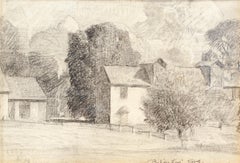
Daniel Garber Original Drawing, from Artist's Estate

Daniel Garber Original Drawing, from Artist's Estate

By Daniel Garber

Located in New York, NY

Daniel Garber (American, 1880-1958) Balderstons, c. Early 20th Century Pencil on paper 7 x 9 in. Framed: 12 x 4 x 1/2 in. Titled and initialed lower right: Balderstons, D.G. Proven...

Category

Early 20th Century American Impressionist Figurative Drawings and Waterc...

Materials

Paper, Pencil

"Birmingham Meeting House"

"Birmingham Meeting House"

By Daniel Garber

Located in Lambertville, NJ

Jim’s of Lambertville Fine Art Gallery is proud to present this piece by Daniel Garber (1880 - 1958). One of the two most important and, so far, the most valuable of the New Hope Sc...

Category

1930s American Impressionist Landscape Prints

Materials

Etching

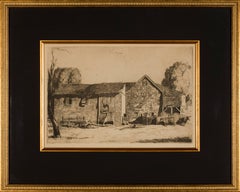
Pyle's Barn - American Impressionist oil on canvas landscape painting, c. 1919

Pyle's Barn - American Impressionist oil on canvas landscape painting, c. 1919

By Newell Convers Wyeth

Located in Palm Desert, CA

“Pyle's Barn” is an oil on canvas impressionist painting by American artist, N.C. Wyeth. Howard Pyle had conducted summer classes in his Brandywine mill studio, where students work...

Category

Early 20th Century American Impressionist Landscape Paintings
Materials

Canvas, Oil

"Spring Valley Willows"

"Spring Valley Willows"

By Daniel Garber

Located in Lambertville, NJ

Jim’s of Lambertville Fine Art Gallery is proud to present this piece by Daniel Garber (1880 - 1958). One of the two most important and, so far, the most valuable of the New Hope School Painters, Daniel Garber was born on April 11, 1880, in North Manchester, Indiana. At the age of seventeen, he studied at the Art Academy of Cincinnati with Vincent Nowottny. Moving to Philadelphia in 1899, he first attended classes at the "Darby School," near Fort Washington; a summer school run by Academy instructors Anshutz and Breckenridge. Later that year, he enrolled at the Pennsylvania Academy of the Fine Arts. His instructors at the Academy included Thomas Anshutz, William Merritt Chase and Cecilia Beaux. There Garber met fellow artist Mary Franklin while she was posing as a model for the portrait class of Hugh Breckenridge. After a two year courtship, Garber married Mary Franklin on June 21, 1901. In May 1905, Garber was awarded the William Emlen Cresson Scholarship from the Pennsylvania Academy, which enabled him to spend two years for independent studies in England, Italy and France. He painted frequently while in Europe, creating a powerful body of colorful impressionist landscapes depicting various rural villages and farms scenes; exhibiting several of these works in the Paris Salon. Upon his return, Garber began to teach Life and Antique Drawing classes at the Philadelphia School of Design for Women in 1907. In the summer of that same year, Garber and family settled in Lumbertville, Pennsylvania, a small town just north of New Hope. Their new home would come to be known as the "Cuttalossa," named after the creek which occupied part of the land. The family would divide the year, living six months in Philadelphia at the Green Street townhouse while he taught, and the rest of the time in Lambertville. Soon Garber’s career would take off as he began to receive a multitude of prestigious awards for his masterful Pennsylvania landscapes. During the fall of 1909, he was offered a position to teach at the Pennsylvania Academy as an assistant to Thomas Anshutz. Garber became an important instructor at the Academy, where he taught for forty-one years. Daniel Garber painted masterful landscapes depicting the Pennsylvania and New Jersey countryside surrounding New Hope. Unlike his contemporary, Edward Redfield, Garber painted with a delicate technique using a thin application of paint. His paintings are filled with color and light projecting a feeling of endless depth. Although Like Redfield, Garber painted large exhibition size canvases with the intent of winning medals, and was extremely successful doing so, he was also very adept at painting small gem like paintings. He was also a fine draftsman creating a relatively large body of works on paper, mostly in charcoal, and a rare few works in pastel. Another of Garber’s many talents was etching. He created a series of approximately fifty different scenes, most of which are run in editions of fifty or less etchings per plate. Throughout his distinguished career, Daniel Garber was awarded some of the highest honors bestowed upon an American artist. Some of his accolades include the First Hallgarten Prize from the National Academy in 1909, the Bronze Medal at the International Exposition in Buenos Aires in 1910, the Walter Lippincott Prize from the Pennsylvania Academy and the Potter Gold Medal at the Art Institute of Chicago in 1911, the Second Clark Prize and the Silver Medal from the Corcoran Gallery of Art for “Wilderness” in 1912, the Gold Medal from the Panama-Pacific Exposition in San Francisco of 1915, the Second Altman Prize in1915, the Shaw prize in 1916, the First Altman Prize in 1917, the Edward Stotesbury Prize in1918, the Temple Gold Medal, in 1919, the First William A...

Category

1940s American Impressionist Landscape Prints

Materials

Etching

"Bellosguardo (Florence, Italy)"

"Bellosguardo (Florence, Italy)"

By Daniel Garber

Located in Lambertville, NJ

Jim’s of Lambertville Fine Art Gallery is proud to present this piece by Daniel Garber (1880 - 1958). One of the two most important and, so far, the most valuable of the New Hope Sc...

Category

Early 1900s American Impressionist Landscape Paintings
Materials

Oil, Board

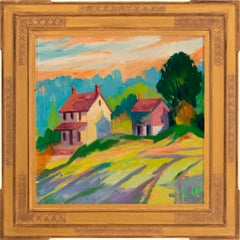
"Farm House, Solebury"

Joseph Barrett"Farm House, Solebury"

$8,700

H 23 in W 23 in D 2 in

"Farm House, Solebury"

By Joseph Barrett

Located in Lambertville, NJ

Illustrated in "Joseph Barrett, The Prime Years 1970s - 1990s", pg. 38, plate #044. Jim’s of Lambertville is proud to offer this artwork by: Joseph Barrett (1936 – ) Joseph B...

Category

Late 20th Century American Impressionist Landscape Paintings
Materials

Canvas, Oil

More From This Seller

View All
"Snow Squals, Parmelee Farm"

"Snow Squals, Parmelee Farm"

By Peter Poskas

Located in Lambertville, NJ

Signed Lower Left Poskas was born in Waterbury, Connecticut, a small industrial city set on the banks of the Naugatuck River. He was interested in art as a child, but on entering ...

Category

20th Century American Realist Landscape Paintings

Materials

Canvas, Oil

"Overhanging  Trees"

"Overhanging Trees"

By Julian Alden Weir

Located in Lambertville, NJ

Ashley John is proud to offer this artwork by: J Alden Weir (1852 - 1919) Born in West Point, New York Julian Alden Weir received his first art training from his father, Robert W. Weir, who was a professor of drawing at the United States Military Academy. The younger Weir continued his studies in New York at the National Academy of Design and in Paris at the Ecole des Beaux-Arts where he worked under the important academic teacher Jean-Léon Gérôme beginning in 1873. Traveling to Holland and Spain during his student years, Weir was inspired by the work of Hals and Velasquez. However, the major influence on his early career was the French painter Jules Bastien-Lepage, who was well known for his realistic depictions of Breton peasants in the outdoor landscape. On his return to New York in the fall of 1877, Weir supported himself by teaching at the Cooper Union Women's Art School and at the Art Students League. He was also active in avant-garde artist organizations that began in the late 1870s, helping to found the Society of American Artists and participating in Tile Club...

Category

Late 19th Century American Impressionist Landscape Paintings
Materials

Canvas, Oil

"Afternoon Storm"

"Afternoon Storm"

By Peter Sculthorpe

Located in Lambertville, NJ

Signed LL & on Verso: Signed, Dated, Attributed Peter Sculthorpe was born in Ontario, Canada, in 1948 of dual US-Canadian citizenship. His talent was evident even as a child and at age 12 he first studied art with his uncle, Gordon Peters, a renowned Canadian painter. Sculthorpe's Father, an insurance executive was transferred from Toronto to Philadelphia in1962 and it was while in high school that he developed rapidly, was recognixed by a local artist - watercolorist Philip Jamison...

Category

21st Century and Contemporary Landscape Paintings

Materials

Linen, Oil

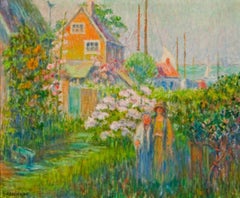
"The End of the Village, Nantucket"

"The End of the Village, Nantucket"

By Anna W. Speakman

Located in Lambertville, NJ

Signed LL Anna Weatherby Parry Speakman was born in Springfield, Illinois, in the late part of the nineteenth century. Yet another artist of obvious talent, there is little known in...

Category

1920s Landscape Paintings

Materials

Oil, Canvas

"Massachusetts House and Barn"

"Massachusetts House and Barn"

By Myron Lechay

Located in Lambertville, NJ

Myron Lechay was born in Russia in 1898 and moved to the United States in 1906 with his family. He completed his initial art education at the National Academy of Design. Lechay often...

Category

20th Century Abstract Impressionist Abstract Paintings

Materials

Oil

"After the Rain"

"After the Rain"

By John Francis Murphy

Located in Lambertville, NJ

Signed Lower Right Known for his Tonalist-style landscape paintings, John Francis Murphy was referred to as the "American Corot" because of his similarity to the painting style of Camille Corot (1796-1875), one of the original Barbizon...

Category

Late 19th Century Tonalist Landscape Paintings

Materials

Canvas, Oil