1 of 17
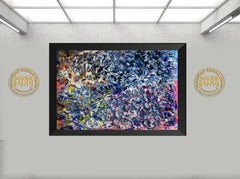
Estelle AsmodelleUntitled 862023
2023
$10,860List Price
About the Item
- Creator:Estelle Asmodelle (1954, Australian)
- Creation Year:2023
- Dimensions:Height: 77.96 in (198 cm)Width: 134.65 in (342 cm)Depth: 1.58 in (4 cm)
- Medium:
- Movement & Style:
- Period:
- Condition:
- Gallery Location:NIAGARA PARK, AU
- Reference Number:1stDibs: LU1993213118822
Estelle Asmodelle is a famous multi-awarding winning Australian artist who was train from the age of 5 by her mother, who was also an artist. While attending Wollongong University, Estelle started painting abstract pieces in the style of abstract expressionism. Estelle has exhibited in many galleries worldwide, from the Tokyo Metropolitan Art Museum, Los Angeles Center for Digital Art, to local Galleries in Sydney, Brisbane and Melbourne. Her works are in corporate and private collections in over seven countries. Estelle is considered one of the best selling painters in Australia by many Australian art portals.
Authenticity Guarantee
In the unlikely event there’s an issue with an item’s authenticity, contact us within 1 year for a full refund. DetailsMoney-Back Guarantee
If your item is not as described, is damaged in transit, or does not arrive, contact us within 7 days for a full refund. Details24-Hour Cancellation
You have a 24-hour grace period in which to reconsider your purchase, with no questions asked.Vetted Professional Sellers
Our world-class sellers must adhere to strict standards for service and quality, maintaining the integrity of our listings.Price-Match Guarantee
If you find that a seller listed the same item for a lower price elsewhere, we’ll match it.Trusted Global Delivery
Our best-in-class carrier network provides specialized shipping options worldwide, including custom delivery.You May Also Like
Mistery in Blue
By Juan Jose Garay
Located in LAS ROZAS DE MADRID, ES
In this work, I wanted to capture the vibrant energy of the meeting between sky and earth, using acrylics to create textures and dynamic movement. The blues convey calm and depth, wh...
Category
21st Century and Contemporary Abstract Expressionist Interior Paintings
Materials
Paper, Acrylic
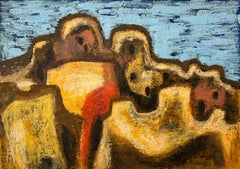
"Desert Sunset II" Abstract Painting 14" x 20" inch by Salah Boutros
Located in Culver City, CA
"Desert Sunset II" Abstract Painting 14" x 20" inch by Salah Boutros
Salah Boutros was born in 1964 in Cairo where he still lives and works. He gained a BA degree from the Faculty o...
Category
21st Century and Contemporary Abstract Expressionist Abstract Paintings
Materials
Paper, Acrylic
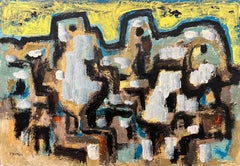
"Desert Sunset IV" Abstract Painting 14" x 20" inch by Salah Boutros
Located in Culver City, CA
"Desert Sunset IV" Abstract Painting 14" x 20" inch by Salah Boutros
Salah Boutros was born in 1964 in Cairo where he still lives and works. He gained a BA degree from the Faculty o...
Category
21st Century and Contemporary Abstract Expressionist Abstract Paintings
Materials
Paper, Acrylic
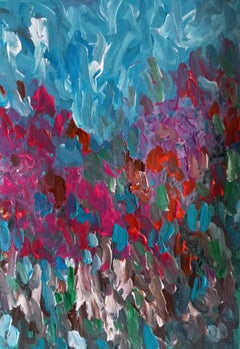
Contemporary abstract expressive floral painting "Vibrant spring flowers "
Located in VÉNISSIEUX, FR
“Vibrant Spring Flowers” is an abstract floral painting that captures the luminous energy and emotional freshness of spring.
In this artwork, French artist Natalya Mougenot explores ...
Category
2010s Abstract Expressionist Abstract Paintings
Materials
Paper, Acrylic
$359
Free Shipping
H 16.54 in W 11.7 in D 0.04 in
"Chequered Fantasy" Abstract Painting 39" x 47" inch by Kinda Adly
By Kinda Adly
Located in Culver City, CA
"Chequered Fantasy" Abstract Painting 39" x 47" inch by Kinda Adly
Kinda Adly, born in Egypt in 1989, is a self-taught artist. She grew up in Egypt and currently lives in Switzerlan...
Category
21st Century and Contemporary Abstract Expressionist Abstract Paintings
Materials
Canvas, Mixed Media, Acrylic
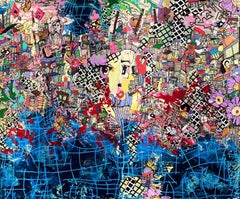
$6,200
H 39 in W 47 in D 1 in
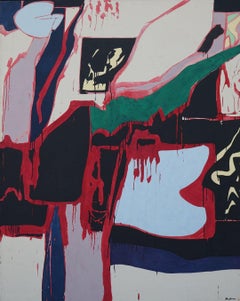
Shore V, large colorful red, black & blue mid-century abstract expressionist
By Richard Andres
Located in Beachwood, OH
Richard Andres (American, 1927-2013)
Shore V, c. 1964
acrylic on canvas
signed lower right, signed and titled verso
54 x 44 inches
Richard Andres was born in Buffalo, New York in 1927. A graduate of the Cleveland Institute of Art in 1950, he was immediately drafted and served for two years in the army as a mural painter. He received his Master of Arts from Kent State in 1961. A frequent exhibitor at galleries and museums and winner of multiple May Show prizes, Andres taught art in the Cleveland Public Schools for 28 years, as well as teaching the University of Buffalo, the Cleveland Institute of Art and the Western Reserve University.
Very little in Richard Andres’ childhood would have predicted his love of classical music, mid-century-modern architecture and certainly not his lifelong passion for art and in particular abstract art. Richard’s father, Raymond, had no more than a third-grade education, and his mother, Clara, was one of thirteen children – only three of whom lived into adulthood and none of whom attended high school.
They lived, when Richard was a boy, in a dingy area of Buffalo, NY in a walk-up apartment situated above a tavern. Raymond and Clara supplemented the income from their factory jobs in the bar downstairs with Raymond playing ragtime on the piano and Clara serving drinks. This often left Richard and his two older brothers at home alone to fend for themselves. The two older boys, Raymond and Russell, were - unlike Richard- rather rough and tumble and entertained themselves with stickball, boxing and the like. Richard, on the other hand, from a very young age liked to draw, or better yet even, to paint with the small set of watercolors he received for Christmas one year. Paper, however, at the height of the depression, was hard to come by. Luckily, Clara used paper doilies as decoration for the apartment and Richard would contentedly paint and then cut up doilies, gluing the pieces together to create collages.
At eight-years-old, he discovered the Albright-Knox Museum (then known as the Albright Art Gallery) and spent several hours a week there studying the paintings. He was particularly fond of Charles Burchfield‘s landscapes, enamored with their ‘messiness’ and thinking that they somehow captured more ‘feeling’ than works he was previously familiar with. For his tenth Christmas, he asked for and received a ‘how-to’ paint book by Elliot O’Hare. Through this self-teaching, he assembled the portfolio needed for acceptance to Buffalo Technical High School where he studied Advertising Arts. In his Junior year, he was encouraged to enter a watercolor painting, “Two Barns,” in the national 1944-45 Ingersoll Art Award Contest and was one of twelve grand prize winners – each one winning one hundred dollars. More importantly the painting was exhibited at the Carnegie Institute Galleries, which resulted in his winning a national scholarship to the Cleveland School of Art (The Cleveland Art Institute).
He flourished at the art school under the tutelage of faculty members such as Carl Gaertner, as well as that of visiting artists such as William Sommer and Henry George Keller. He would say in later years that Gaertner, in particular, influenced his attitude toward life as well as art. “Gaertner,” Andres said, “believed that there was no need to be a ‘tortured artist’, that an artist should rather enjoy beauty, family, and life in general.” Free to spend his days as he chose, he wandered the Cleveland Art Museum for most of the hours he was not attending classes or painting; the remaining time was spent drinking coffee at a local hangout with art school friends – which is where he met fellow Henry Keller scholarship winner, Avis Johnson. Richard was immediately smitten with Avis, but being rather shy, it took him the entire summer of 1948 to build up his courage to ask her out. Over that summer he ‘thought about Avis’ and worked in a diner to save money. He also used the hundred-dollar prize money won in High School to visit the first Max Beckmann retrospective in the United States at the City Art Museum in St. Louis. Over a half century later he spoke of that exhibit with a reverence usually reserved for spiritual matters, “I walked in and it was like nothing I had ever seen before... the color...It just glowed.”
Returning to campus in the Fall, the first thing he did was go to the coffee shop in hopes of finding Avis. He did, and she, upon seeing him, realized that she was also smitten with him. They quickly became known as ‘the couple’ on campus, and a year later, with Richard being drafted for the Korean war, they were quickly married by a Justice of the Peace, celebrating after with family at Avis’s Cleveland home. As a gift, faculty member John Paul Miller...
Category
1960s Abstract Expressionist Abstract Paintings
Materials
Acrylic
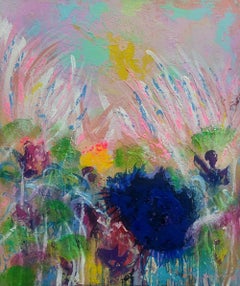
The Silent Awakening
Located in Zofingen, AG
This artwork is a vivid explosion of color and movement, capturing a sense of vibrant energy and celebration. Dominating the scene are dynamic brushstrokes in shades of pink, blue, a...
Category
2010s Abstract Expressionist Abstract Paintings
Materials
Oil, Acrylic
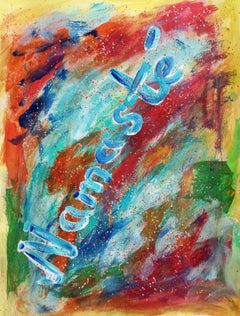
Abstract expressionist word art text-base mixed media painting paper "NAMASTE"
Located in VÉNISSIEUX, FR
"Namaste" is an expressive mixed-media work by French artist Natalya Mougenot, part of her Abstract Word Art series—a collection focused on the emotional power of language and its vi...
Category
2010s Abstract Expressionist Abstract Paintings
Materials
Acrylic, Watercolor
$538
Free Shipping
H 25.6 in W 19.69 in D 0.04 in
"AD 108" Abstract Painting 39" x 47" inch by Ahmed Dafrawy
By Ahmed Dafrawy
Located in Culver City, CA
"AD 108" Abstract Painting 39" x 47" inch by Ahmed Dafrawy
Medium: Mixed Media on Canvas
Dafrawy’s fine arts academic background started in 2014 when he received the certificate of...
Category
21st Century and Contemporary Abstract Expressionist Abstract Paintings
Materials
Canvas, Acrylic
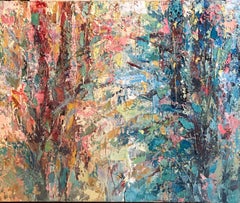
$4,750
H 39 in W 47 in D 1 in
"Cairo 2" Abstract Painting 39" x 28" inch by Ahmed Dafrawy
By Ahmed Dafrawy
Located in Culver City, CA
"Cairo 2" Abstract Painting 39" x 28" inch by Ahmed Dafrawy
Dafrawy’s fine arts academic background started in 2014 when he received the certificate of drawing course completion fr...
Category
21st Century and Contemporary Abstract Expressionist Abstract Paintings
Materials
Canvas, Acrylic
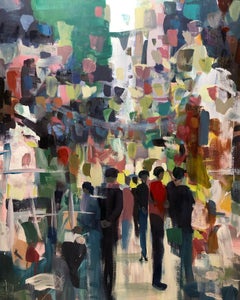
$2,650
H 39 in W 28 in D 1 in
Still Thinking About These?
All Recently ViewedMore Ways To Browse
Josef Albers Painting
Kelly Rossetti
Korean American Artist
Muted Abstract Art
Paintings 1970s Acrylic
Save Me
72 Inches Paintings
Abstract Painting 36x48
African American Abstract Art
Birds On A Wire
Blue Jay Painting
Camellia Painting
Gillian Ayres
Large Vertical Paintings
Rhode Island Painting
Saito Kikuo
Solo Sofa
Cubism Oil Painting