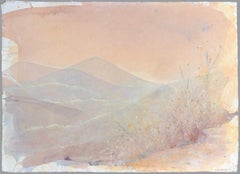
By François Boucher
Located in PARIS, FR
Provenance:
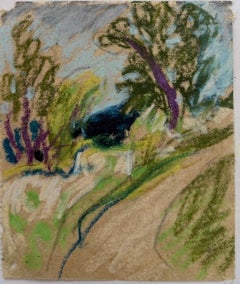
• Bought from Sicart in Lyon by the Marquis de Chennevières (1820 - 1899) - Chennevières Collection (stamped lower left - Lugt 2072)
• Inscribed on the back of the mount "Salle 10/Delestre, 27 February 1899”
• Sold in Paris at the Hôtel Drouot during the second Chennevières sale (4 to 7 April 1900, n°44) as François Boucher - number 44 (sold for 18 francs to Roblin)
• Sold in Paris at the Hôtel Drouot, 4 and 5 March 1901, n°12 as François Boucher
Bibliography: this drawing is cited by Chennevières in "Une collection de dessins d'artistes français" (chapter XVIII, page 24-25) and is number 1033 of the Catalogue de la Collection Chennevières compiled by Louis-Antoine Prat with the collaboration of Laurence Lhinares.
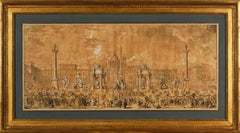
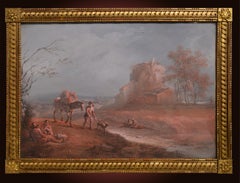
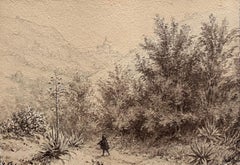
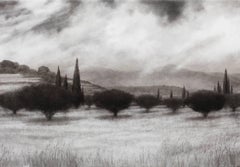
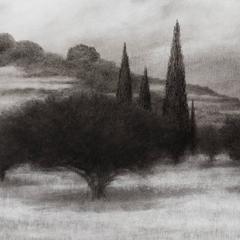
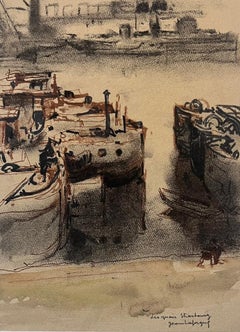
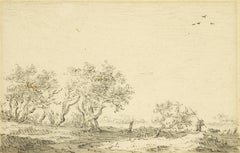
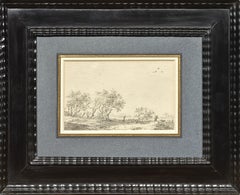
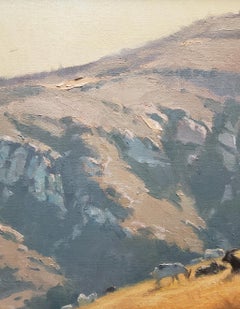
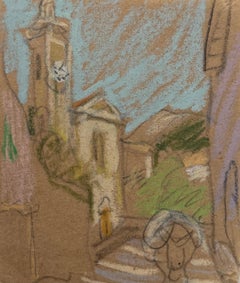
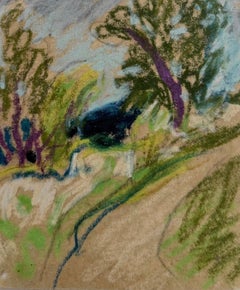
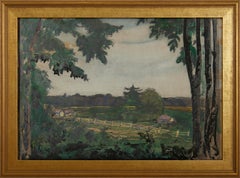
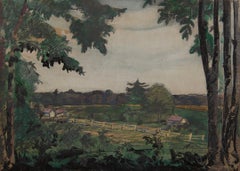
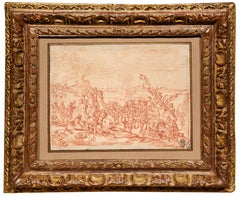
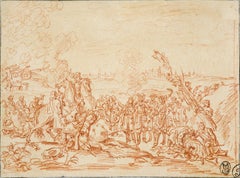
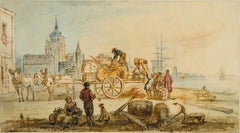
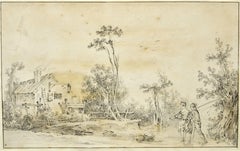
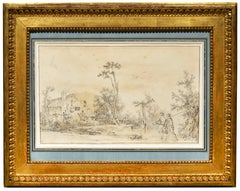
This well-documented drawing was given to Boucher by the Marquis de Chennevières, one of the most important collectors of drawings at the end of the 19th century. While the landscape is reminiscent of Boucher's other landscape drawings, our drawing was probably modified at a later stage by the addition of the two figures in the right foreground and by the slight enhancement of the horizon line behind them.
1. François Boucher, the master of French rocaille
The extraordinary career of Francois Boucher was unmatched by his contemporaries in versatility, consistency, and output. For many, particularly the writers and collectors who led the revival of interest in the French rococo during the last century, his sensuous beauties and plump cupids represent the French eighteenth century at its most typical. His facility with the brush, even when betraying the occasional superficiality of his art, enabled him to master every aspect of painting – history and mythology, portraiture, landscape, ordinary life and, as part of larger compositions, even still life. He had been trained as an engraver, and the skills of a draftsman, which he imbued in the studio of Jean-Francois Cars (1661 – 1738), stood him in good stead throughout his career; his delightful drawings are one of the most sought-after aspects of his oeuvre.
As a student of Francois Lemoyne (1688 - 1737), he mastered the art of composition. The four years he spent in Italy, from 1727-1731, educated him in the works of the masters, classics, and history, that his modest upbringing had denied him.
On his return to Paris in 1734, he gained full membership of the Royal Academy of Painting and Sculpture with his splendid Rinaldo and Armida (Paris, Musée du Louvre). Although, throughout his career, he occasionally painted subjects taken from the Bible, and would always have considered himself first as a history painter, his own repertoire of heroines, seductresses, flirtatious peasant girls and erotic beauties was better suited to a lighter, more decorative subject matter. His mastery of technique and composition enabled him to move from large scale...
Category
1740s Old Masters Chalk Landscape Paintings