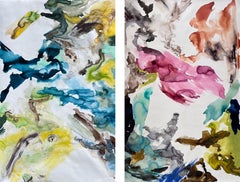
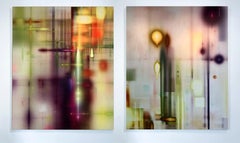
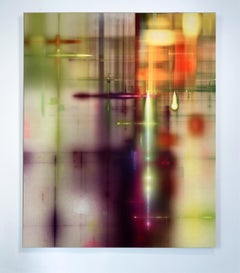
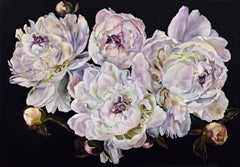
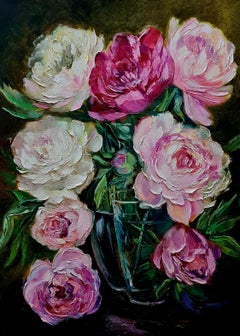
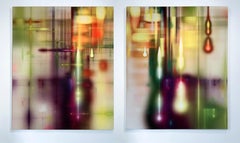
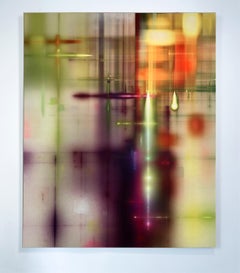
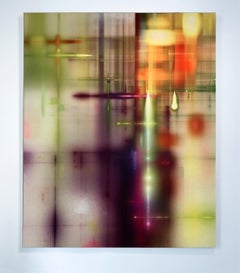
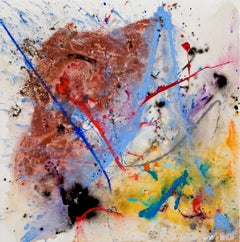
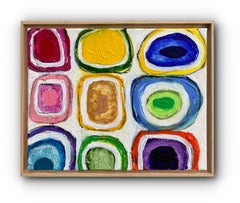
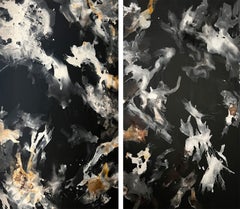
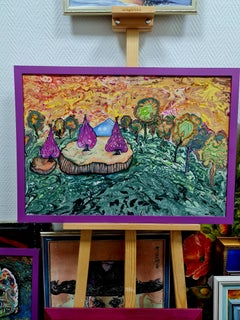
Located in Wilton Manors, FL
Thea Ekström
1920–1988
Sweden
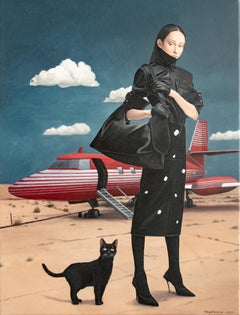
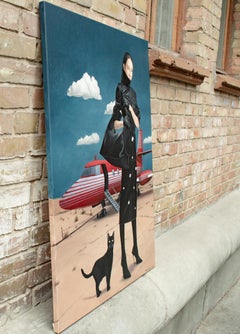
Thea Ekström was a Swedish musician and surrealist painter, born in Söndrum, Halmstad, on the west coast of Sweden. Ekström initially aspired to a career in music, but a long history of illness (she contracted polio as well as tuberculosis at a young age) put an end to those plans. In connection with a convalescence at the beginning of the 1950s, she instead began taking art classes through ABF/Arbetarnas bildningsförbund (Workers’ Educational Association, an educational section of the Swedish labour movement, founded by the Swedish Social Democratic Party in 1912, conducting classes and seminars on a variety of subjects including workshops, music, and languages), which led her to further studies in the field of art.
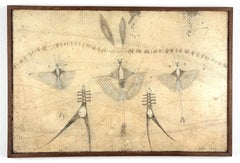
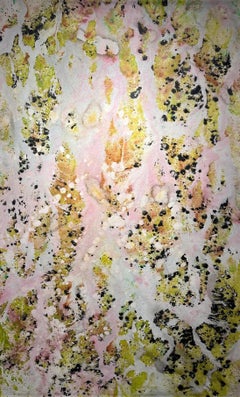
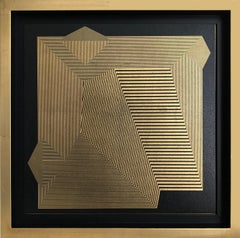
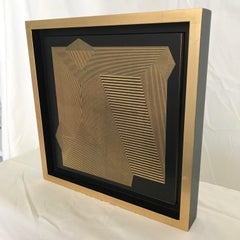
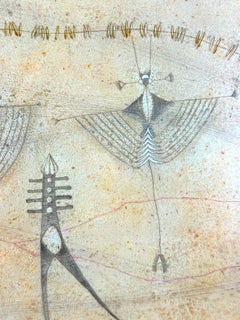
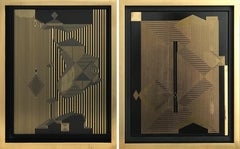
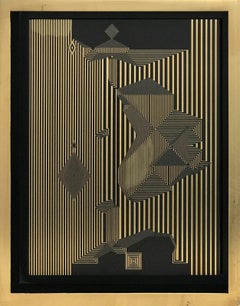
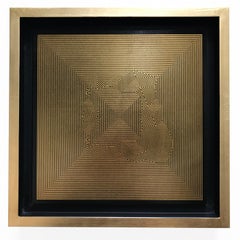
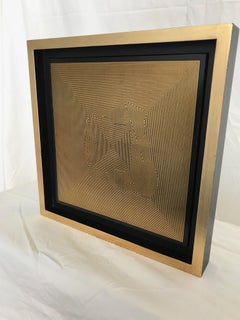
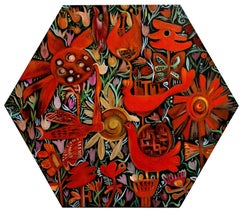
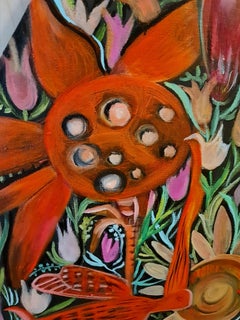
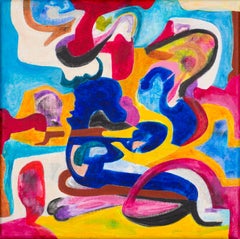
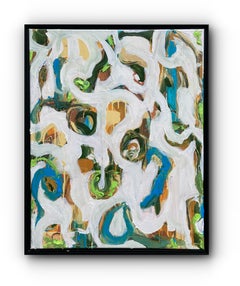
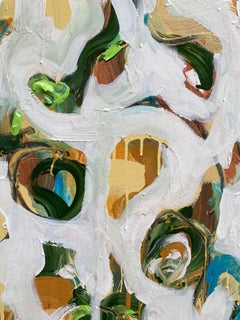
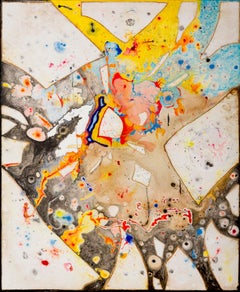
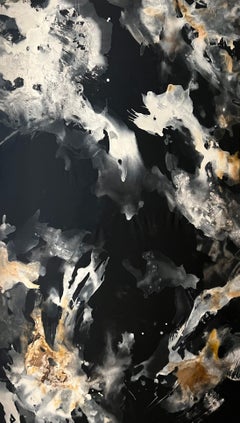
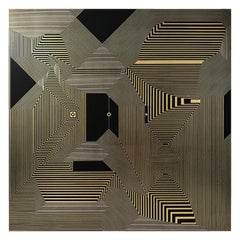
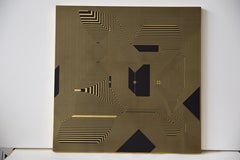
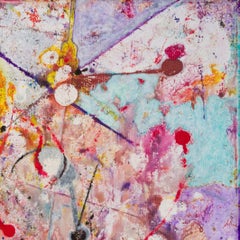
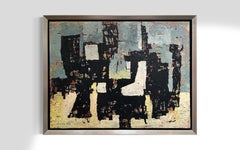
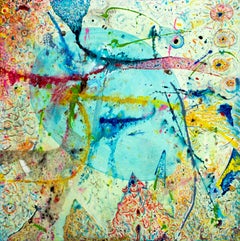
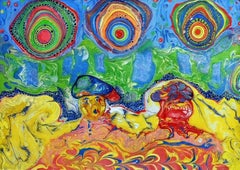
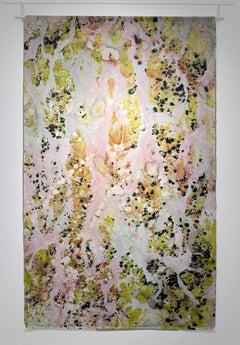
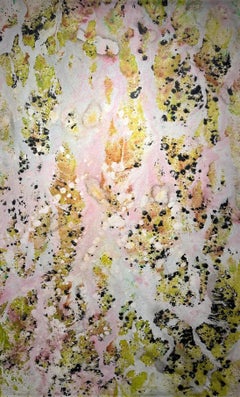
In addition to elements of symbolism and expressionism, her early paintings show inspiration from Halmstadgruppen (the Halmstad Group), a pioneering group of six Swedish surrealist painters that, like Ekström, came from the city of Halmstad and its surroundings. Towards the end of the 1950s, however, Ekström had found her own voice and developed a highly personalised abstract visual language based on rhythmic lines and pattern-based geometric shapes. She also gradually created her own alphabet of signs, with symbols and figures inspired by hieroglyphics and other early written languages.
Tormented by poor health whilst growing up in a family that existed under meagre financial circumstances (illness and dire personal finances would continue to haunt her for most of her life), Ekström only attended elementary school for a total of four years. When the family discovered that she had a talent for music, however, a potential way forward was identified. Ekström thus moved to Stockholm, in 1937, where she initiated studies to become a church musician and organist. These studies were complemented with work at Oscarsteatern as a chorus girl. This led to her being employed in Oscarsteatern’s 1940 production of Bertolt Brecht’s (1898–1956, German playwright and leading theoretician of epic theatre, which he later preferred to call ‘dialectical theatre’) and Kurt Weill’s (1900–1950, German-born American composer best known for his fruitful collaborations with Bertolt Brecht) legendary Die Dreigroschenoper (The Threepenny Opera), upon which she decided to abandon her music studies in order to pursue a full-time career as a professional musician. This move entailed earning a living as a touring musician (something that she had to give up after a new bout of TB in the early 1940s) and working as a bar pianist (1942-1943).
After having, once again, fallen ill with lung disease in the mid-1950s, Ekström turned her interests towards art and spent her convalescence attending painting courses at ABF and the Pernby painting school. She also managed to sit in on life drawing classes at the Royal Institute of Art, Stockholm, under the tutelage of professors Bror Hjorth (1894-1968, one of Sweden’s best-known sculptors and painters, awarded the Sergel Prize in 1955) and Lennart Rodhe (1916-2005, Swedish artist, painter, and printmaker, considered one of the most prominent of the Swedish modernists). As if this was not enough, she also began attending art history lectures given by Oscar Reutersvärd (1917-2002, Swedish painter, draughtsman, sculptor, and professor of art history) to the students at the Royal Academy of Fine Arts, Stockholm. Reutersvärd (with whom Ekström would engage in an extramarital affair) was impressed by her work and secured a studio for Ekström in Stockholm.
Her debut solo exhibition, as early on as in May 1960, was held at the Lilla Paviljongen gallery in Stockholm. In the following years Ekström’s paintings were regularly accepted into the yearly spring salon at Liljevalchs’ Public Art Gallery, Stockholm, and in the summer of 1961 her work was even included in a group exhibition at Galerie Raymond Cordier in Paris.
The following decades (the 1960s and 1970s) would prove the most successful for Ekström. The highly productive artist (in a letter from 1969 she mentions ‘125 new paintings’ taking up space in her apartment) was sought after by galleries and museums, with her work regularly exhibited in several countries. It is therefore hardly surprising that Ekström was singled out (as the only woman) for participation in the group exhibition 12 Swedish Painters (which also included works by other avant-garde artists like Öyvind Fahlström), a 1962-1963 travelling exhibition (organised by the American Federation of Arts, the Swedish Institute, and Moderna Museet, Stockholm), touring sixteen US cities before ending up at the Atheneum in Helsinki. The 1962-1963 travelling exhibition in the United States paved the way for her solo show at the Viviano Gallery, New York, in 1964. Further international exhibitions followed in cities like Paris (Galerie Raymond Cordier, 1963), Helsinki (Atheneum, 1964), Dortmund (1965), Tokyo (Seibu Gallery and Azabu Gallery, 1967), and New York (Viviano Gallery, 1968). 1968 was also the year when Norrköping Art Museum in Sweden presented a solo exhibition of Ekström’s paintings, while she, once again, became the only woman to represent Sweden in a 1968-1969 travelling group exhibition in the U.S.A., Sweden Today. Paintings and Sculpture. An exhibition organised by the Corcoran Gallery of Art under the sponsorship of the Swedish Government, that travelled from Washington D.C., to Arizona, Ohio, Michigan, Pennsylvania, Iowa, and Colorado.
Marc Moyens (who initiated the 1964 exhibition at the Viviano Gallery in New York) showed Ekström at his gallery in Washington D.C., in 1971. That same year Ekström also participated in the group exhibition Der Geist des Surrealismus (The Spirit of Surrealism) in Cologne, Federal Republic of Germany. Further international recognition came in 1975 when she, together with her friend and mentor Ragnar von Holten, PhD (1934-2009, Swedish painter, printmaker, and museum director who served as senior curator of Nationalmuseum, Stockholm, 1982-1997; and senior curator of Moderna Museet, Stockholm, 1998-2000), exhibited at the Centre Culturel Suédois in Paris. On a personal level, the 1970s also brought with it increased stability in life. Linda Fagerström (associate professor of art history and visual studies at Linnaeus University, Växjö, Sweden) writes:
In the end of 1968, she moved to Östermalm and an apartment at Sibyllegatan 16 -the first proper and long-term housing she’d had in her entire adult life, despite her being 48 years old. Around the same time, Ekström was awarded a major grant from The Royal Academy, which of course marked this period as a fresh start, in both work and life.
Her international success was further reflected at home, and in 1977 Konstnärshuset (Artists’ House, a building in central Stockholm,owned by Svenska konstnärernas förening/the Swedish Artists Association and used as an art gallery) presented a major Ekström retrospective with around a hundred works. The exhibition caused a great deal of attention, was praised by art critics, and attracted a high number of visitors (with many works sold on the spot). In 1979, Ragnar von Holten’s biography Thea Ekström was published, and the following year her art was included in an extensive travelling exhibition that was shown in museums in Sweden, Finland, Norway, Iceland, and Denmark.
After these high points, the following decade was mostly characterised by smaller exhibitions at Swedish galleries in Stockholm and other cities. Ekström’s old friend and colleague Ragnar von Holten, who took over as director of the Centre Culturel Suédois, Paris, in 1985, opened an exhibition (at the institute) with Ekström and Dagmar Norell...
Category
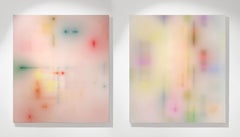
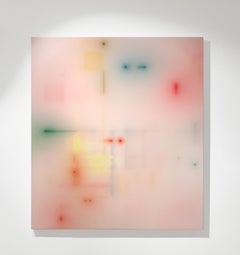
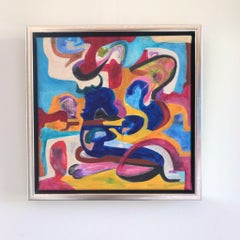
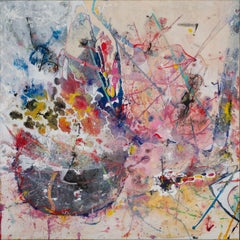
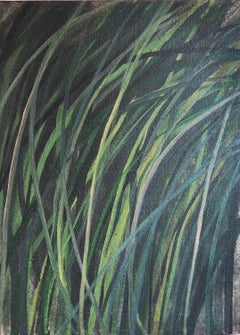
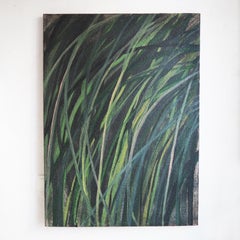
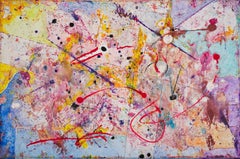
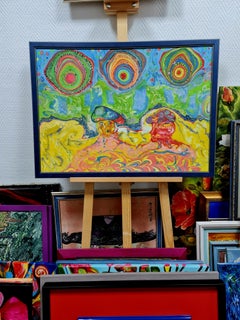
Mid-20th Century Surrealist Lacquer Paintings
MaterialsMasonite, Lacquer, Oil