1780s Art

to
18
74
26
13
10
8
Overall Width
to
Overall Height
to
7,698
21,641
163,788
227,225
2,016
2,279
4,948
6,541
5,868
15,041
20,614
25,813
18,685
14,100
5,501
41
8
1
69
58
1
78
41
27
25
19
12
11
10
8
7
7
6
5
5
5
5
4
4
4
3
59
33
28
25
24
21
4
4
4
3
49
31
64
57
Period: 1780s
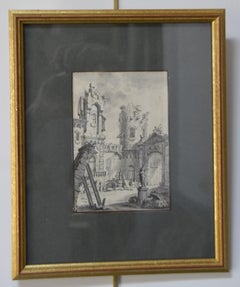
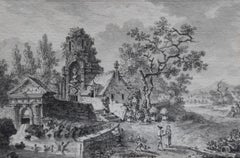
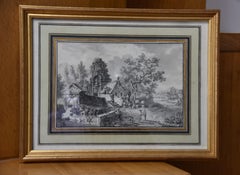
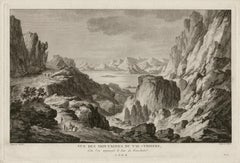
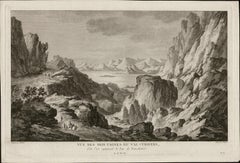
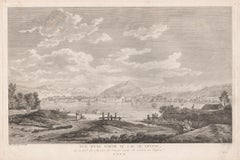
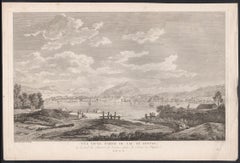
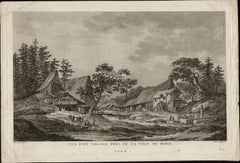
Set of Four Engravings from Nash's "History of Worcestershire" /// Landscape Art

Set of Four Engravings from Nash's "History of Worcestershire" /// Landscape Art

By Treadway Russell Nash

Located in Saint Augustine, FL

Artist: Treadway Russell Nash (English, 1724-1811) Title: "A View of Stourbridge", "A View of Upton upon Severn, from Ryal Hill", "Bewdley", and "Tenbury" Portfolio: Collections for the History of Worcestershire Year: 1781-1782 (First edition) Medium: Set of Four Original Engravings on watermarked laid paper Limited edition: Unknown Printer: John Nichols, London, UK Publisher: T. Payne and Son, J. Robson, B. White, Leigh and Sotheby, London, UK; Fletcher, Oxford, UK; and Lewis, Worcester, UK Sheet size (each): approx. 10" x 16.5" Image size (each): approx. 6.88" x 11.75" Reference: Upcott III, page 1330 Condition: A few light handling creases. Have been professionally stored away for decades. They are all strong impressions in excellent condition Notes: Provenance: private collection - Aspen, CO. All four works were engraved by English artist Thomas Sanders (Active: Mid-Late 18th Century) after drawings by himself. Comes from Nash's two volume "Collections for the History of Worcestershire", (1781-1782) (First edition), which consists of 75 engravings. Each work is printed from one copper plate in one color: black. There was a (Second edition) "with Additions" bound in with Volume II of this portfolio published by John White in 1799. And, both the First and Second editions of "Collections for the History of Worcestershire" are based off Thomas Sanders' 1779-1781 "Perspective Views of the Market Towns within the County of Worcester". Both "A View of Stourbridge" and "A View of Upton upon Severn, from Ryal Hill" have unidentified fleur-de-lis watermarks in the center of their sheets. "Bewdley" has an unidentified watermark in the center of its sheet resembling "XV" and "Tenbury" has no watermark. Biography: Treadway Russell Nash (24 June 1724 – 26 January 1811) was an English clergyman, now known as an early historian of Worcestershire and the author of Collections for the History of Worcestershire, an important source document for Worcestershire county histories. He was a fellow of the Society of Antiquaries of London. Treadway Russell Nash was born on 24 June 1724 born at Clerkenleap, in Kempsey, Worcestershire. His family were from Ombersley. They had lands there and at Claines, and had later bought lands in the Reformation around St Peter's, Droitwich. He was related to James Nash and John Nash, both MPs for Worcester. His father Richard, a grandson of Sir Rowland Berkeley, died in 1740, and Richard's eldest son in 1757. As a result, Treadway Russell Nash inherited the Russells' Strensham estates from his brother, as well as the Nash estates, and took both names. He was educated from the age of twelve at King's School, Worcester, and became a scholar at Worcester College, Oxford aged fifteen. In March 1749, he accompanied his brother on a trip to the continent, to aid Richard's health. They visited Paris for about six weeks, before spending the summer "on the banks of the Loire". They then visited "Bourdeaux, Thoulouse, Montpelier, Marseilles, Leghorn, Florence, Rome, Naples, Bologna, Venice, Padua, Verona, Milan, Lyons, and again Paris"; such expeditions are often known as the Grand Tour. On his return in late summer 1751, Nash took up a post as Vicar of Eynsham through his friend and future brother-in-law, John Martin. He also had an income as a tutor at Oxford. He took his Doctor of Divinity degree and left Oxford, having "gone out grand compounder", following the death of his brother. He also left his benefice at Eynsham in 1757. While at Oxford he had proposed a road from there to Witney (now the A40 and B4022), and also stood for Parliament. Nash married Margaret Martin...

Category

Old Masters 1780s Art

Materials

Laid Paper, Engraving
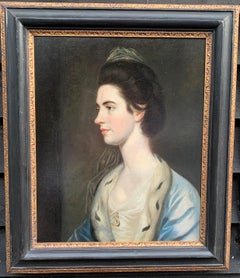
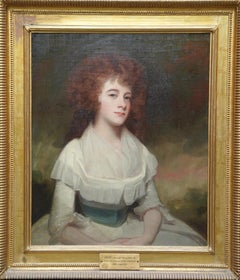
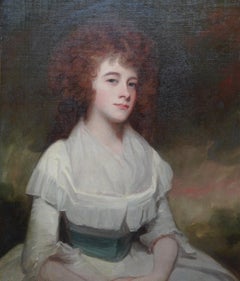
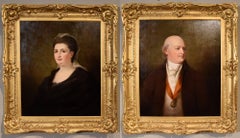
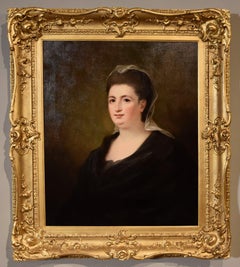
Portrait of Anne Evelyn - British 18thC Old master oil painting excellent prov.

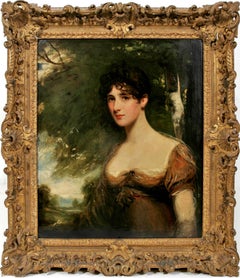
Portrait of Anne Evelyn - British 18thC Old master oil painting excellent prov.

By George Romney

Located in Hagley, England

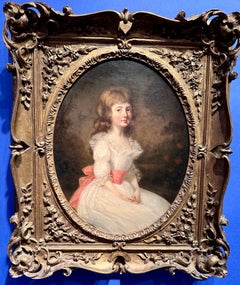
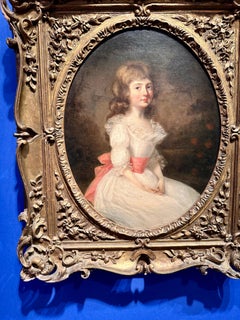
This stunning British 18th century Old Master portrait oil painting, with exceptional provenance, is by noted artist George Romney. It was painted in 1788, commissioned by James Evelyn of Felbridge as it is of his younger daughter Anne, aged 20 years old. James was a Doctor of Law and Anne's mother was his second wife, Jane. Felbridge house, Anne's home, was in the village of Godstone in Surrey. This superb oil painting is a seated portrait of Anne, wearing a white dress with a green sash, her forearms exposed and her hands in her lap. Anne is blessed with the most wonderful long auburn curly hair and is visually stunning. Her body is partly turned away from the artist/viewer and she is slightly gazing down at us with confident, clear eyes. Anne is pictured in a landscape with a dramatic sky behind her. Romney's brushwork on her dress, hair and the background is superb. The delicate detailing of her facial features is also stunning. Sometimes Old Master portraits can be a little staid, but this one of Anne with her wild auburn hair and bold look is just magnificent. This is a fantastic example of George Romney's work and of an 18th century British Old Master with exceptional detailed provenance. Name plate states: Anne, younger daughter of James Evelyn of Fellbridge Esq. 1788, aged 20. Romney. Provenance. With Charles Cecil Cope Jenkinson, 3rd Earl of Liverpool (1784-1851) With The Hon. Henry Berkeley Portman (1860-1923), Later 3rd Viscount Portman; with Emma, Viscountess Portman (1862-1929) By 1926; with her daughter Lady Moyra Dawson-Damer (1897-1962) Thence by family descent. Painted in 1788. There are various labels verso. Mentioned in Lord Hawkesbury's Catalogues of Portraits at Compton Place and at Buxted Park, in Sussex, 1903, p.18, no. 3, at Buxted Park, as in the 'Dining Room, South Wall'. Further Bibliography: Gower (R. S.) Romney, London, 1904, p. 175 Kidson (Alex) George Romney, A Complete Catalogue of his Paintings, New Haven and London: Yale University Press, 2015, I, p. 205, no. 422 (illus).Ward (Humphrey) and Roberts (William) Romney: A Biographical and Critical Essay, London: T Agnew & Sons, 1904, p. 51 Condition. Oil on canvas. Image size 30 inches by 24 inches and in good condition. Frame. Housed in an ornate gilt frame with name plate, 37 inches by 31 inches and in good condition. George Romney (1734-1802) was born in Dalton-on-Furness, Lancashire, on 15 December 1734, the third of the eleven children of John Romney and Anne Simpson. Leaving school at the age of eleven, he worked for eight years in his father's cabinetmaking workshop before being apprenticed to a local painter, Christopher Steele, with whom he served for two years, from 1755 to 1757, in Kendal, York, and Lancaster. He married a Kendal girl, Mary Abbot...

Category

Old Masters 1780s Art

Materials

Oil

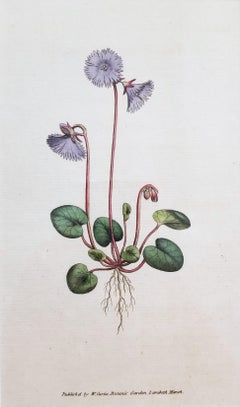
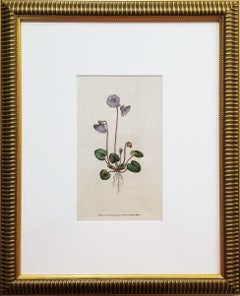
Soldanella Alpina Alpine Soldanella /// English Botanical Flower Engraving Print

Soldanella Alpina Alpine Soldanella /// English Botanical Flower Engraving Print

By William Curtis

Located in Saint Augustine, FL

Artist: William Curtis (English, 1746-1799) Title: "Soldanella Alpina Alpine Soldanella" (Vol. 2, Plate 49) Portfolio: The Botanical Magazine; or, Flower-Garden Displayed Year: 1788 ...

Category

Victorian 1780s Art

Materials

Intaglio, Engraving, Laid Paper, Watercolor

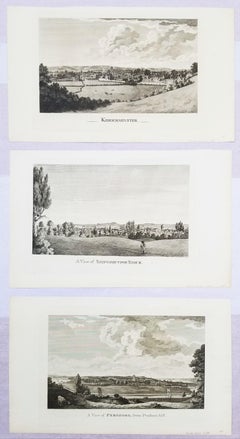
Set of Three Engravings from Nash's "History of Worcestershire" /// Landscapes

Set of Three Engravings from Nash's "History of Worcestershire" /// Landscapes

By Treadway Russell Nash

Located in Saint Augustine, FL

Artist: Treadway Russell Nash (English, 1724-1811) Title: "A View of Pershore, from Pensham hill", "A View of Shipston upon Stour", and "Kidderminster" Portfolio: Collections for the History of Worcestershire Year: 1781-1782 (First edition) Medium: Set of Three Original Engravings on watermarked laid paper Limited edition: Unknown Printer: John Nichols, London, UK Publisher: T. Payne and Son, J. Robson, B. White, Leigh and Sotheby, London, UK; Fletcher, Oxford, UK; and Lewis, Worcester, UK Sheet size (each): approx. 10.13" x 16.75" Image size (each): approx. 7" x 11.88" Reference: Upcott III, page 1330 Condition: A few light handling creases. Have been professionally stored away for decades. They are all strong impressions in excellent condition Notes: Provenance: private collection - Aspen, CO. All three works were engraved by English artist Thomas Sanders (Active: Mid-Late 18th Century) after drawings by himself. Comes from Nash's two volume "Collections for the History of Worcestershire", (1781-1782) (First edition), which consists of 75 engravings. Each work is printed from one copper plate in one color: black. There was a (Second edition) "with Additions" bound in with Volume II of this portfolio published by John White in (1799). And both the First and Second editions of "Collections for the History of Worcestershire" are based off Thomas Sanders' 1779-1781 "Perspective Views of the Market Towns within the County of Worcester". All three, "A View of Pershore, from Pensham hill", "A View of Shipston upon Stour", and "Kidderminster" have an unidentified watermark in the center of their sheets resembling "XV". Biography: Treadway Russell Nash (24 June 1724 – 26 January 1811) was an English clergyman, now known as an early historian of Worcestershire and the author of Collections for the History of Worcestershire, an important source document for Worcestershire county histories. He was a fellow of the Society of Antiquaries of London. Treadway Russell Nash was born on 24 June 1724 born at Clerkenleap, in Kempsey, Worcestershire. His family were from Ombersley. They had lands there and at Claines, and had later bought lands in the Reformation around St Peter's, Droitwich. He was related to James Nash and John Nash, both MPs for Worcester. His father Richard, a grandson of Sir Rowland Berkeley, died in 1740, and Richard's eldest son in 1757. As a result, Treadway Russell Nash inherited the Russells' Strensham estates from his brother, as well as the Nash estates, and took both names. He was educated from the age of twelve at King's School, Worcester, and became a scholar at Worcester College, Oxford aged fifteen. In March 1749, he accompanied his brother on a trip to the continent, to aid Richard's health. They visited Paris for about six weeks, before spending the summer "on the banks of the Loire". They then visited "Bourdeaux, Thoulouse, Montpelier, Marseilles, Leghorn, Florence, Rome, Naples, Bologna, Venice, Padua, Verona, Milan, Lyons, and again Paris"; such expeditions are often known as the Grand Tour. On his return in late summer 1751, Nash took up a post as Vicar of Eynsham through his friend and future brother-in-law, John Martin. He also had an income as a tutor at Oxford. He took his Doctor of Divinity degree and left Oxford, having "gone out grand compounder", following the death of his brother. He also left his benefice at Eynsham in 1757. While at Oxford he had proposed a road from there to Witney (now the A40 and B4022), and also stood for Parliament. Nash married Margaret Martin...

Category

Old Masters 1780s Art

Materials

Engraving, Laid Paper

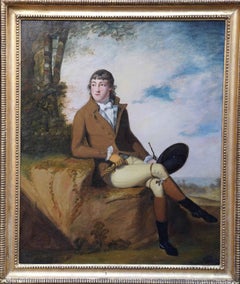
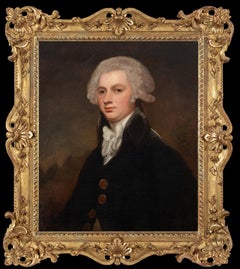
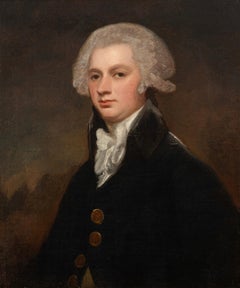
Portrait of a Gentleman, traditionally identified as Edward Addison, Esq., 1780s

Portrait of a Gentleman, traditionally identified as Edward Addison, Esq., 1780s

By George Romney

Located in Henley-on-Thames, England

George Romney (1734-1802) Portrait of a Gentleman, traditionally identified as Edward Addison, Esq., c.1780s Oil on canvas In a period carved and gilded swept frame 76.3 x 63.2 cm.; ...

Category

Old Masters 1780s Art

Materials

Oil

Portrait of Lady Bagot - Niece to the Duke of Wellington

Portrait of Lady Bagot - Niece to the Duke of Wellington

By Sir John Hoppner

Located in Miami, FL

The sitter is Mary Charlotte Anne Wellesley-Pole, eldest daughter of William, 4th Earl of Mornington, and niece to the Duke of Wellington and two-time Prime Minister of England. This...

Category

Old Masters 1780s Art

Materials

Oil

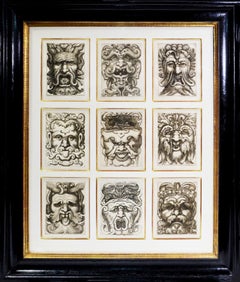
Four Groups of Nine Grotesque Masks

Four Groups of Nine Grotesque Masks

By Alò Giovannoli

Located in London, London

4 Groups of 9 plates of Grotesque Masks. [Published: Venanzio Monaldini, Rome, 1781]. Rare and strong impressions of etchings of grotesque masks, after...

Category

Gothic 1780s Art

Materials

Handmade Paper, Etching, Engraving
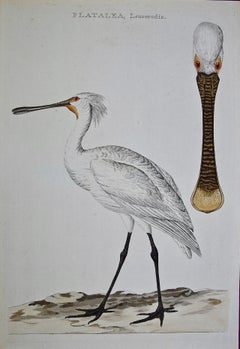
Spoonbill "Platalea leucorodia": An 18th Century Hand-colored Nozeman Engraving
Spoonbill "Platalea leucorodia": An 18th Century Hand-colored Nozeman Engraving

This a rare 18th century hand-colored large folio-sized copperplate engraving entitled "Platalea leucorodia" (Spoonbill) by Cornelius Nozeman in volume II of his publication 'Nederlandsche Vogelen', engraved by Christiaan Sepp or his son Jan Christiaan Sepp, published in Amsterdam in 1770. This engraving depicts a Platalea leucorodia Spoonbill, a large bird that lives mainly in Europe, Asia and Africa. It commonly migrates long distances on thermal air currents from the colder Northern European climates to Sub-Saharan Africa in the winter, sometimes as far long as Finland to South Africa. The Asian black stork...
Category

Naturalistic 1780s Art

Materials

Engraving
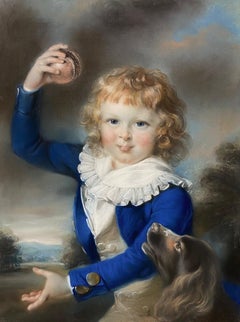
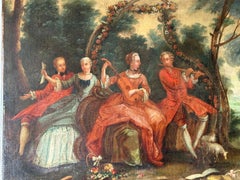
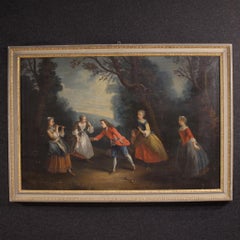
18th Century Oil on Canvas French Gallant Scene Painting Children Playing, 1780

18th Century Oil on Canvas French Gallant Scene Painting Children Playing, 1780

Located in Vicoforte, IT

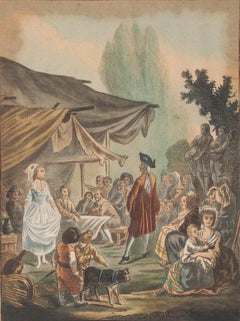
Antique French painting from the second half of the 18th century. Painting oil on canvas, first canvas, depicting an early reinterpretation of the famous masterpiece by Nicolas Lancr...

Category

1780s Art

Materials

Oil, Canvas

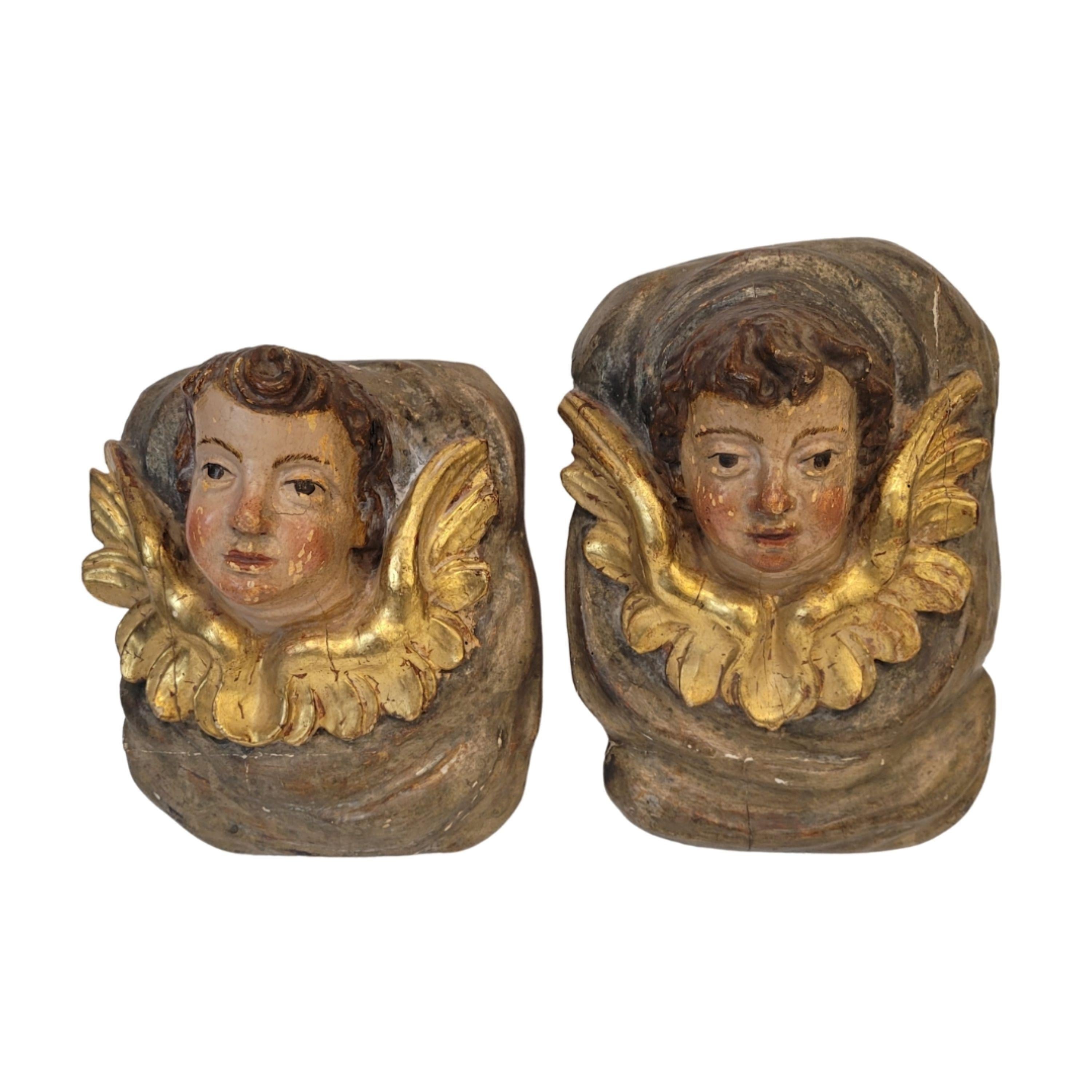
Pair of Angels Baroque Sculpture “Cherubim”, polychrome and gilded wood

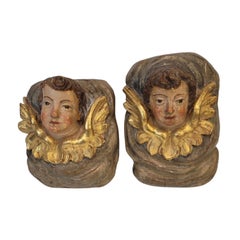
Pair of Angels Baroque Sculpture “Cherubim”, polychrome and gilded wood

Located in Valladolid, ES

One of a kind pair of cherub high reliefs dating from the 18th century, probably belonging to the Castilian school. These are two rectangular high reliefs in carved, polychrome, an...

Category

Baroque 1780s Art

Materials

Wood

"A Dance in Otaheite" (Tahiti), Engraving from Captain Cook's 3rd Voyage
"A Dance in Otaheite" (Tahiti), Engraving from Captain Cook's 3rd Voyage
By John Webber

Located in Alamo, CA

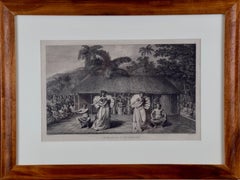
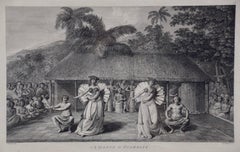
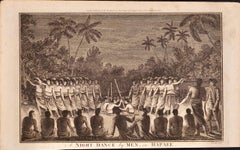
"A Dance in Otaheite" (Tahiti) is an engraving created by William Sharp (1749-1824), from a drawing by John Webber (1752-1793), who was the artist on Captain James Cook's 3rd and final voyage of discovery. It is a plate in the atlas of "A Voyage to the Pacific Ocean Undertaken by the Command of His Majesty, for Making Discoveries in the Northern Hemisphere", the official British Admirality sanctioned journal published upon completion of the voyage in London in 1784 by Strahan & Cadell. Two women and two men wearing ceremonial costumes, performing a dance outdoors standing on a mat. Three men are playing the drums in the background, in front of a thatched roof building. An audience of men are sitting on both sides of the stage. By the time Webber arrived in Tahiti, 'south sea' imagery had become familiar. Webber gave concentrated attention to dance. He had the opportunity to distinguish the Tahitian dance from the more formalized dancing of Tonga. Whereas they seem to have called to mind the more formal dances of antiquity, the Tahitian dancing aroused memories of peasant and folk dancing. This engraving is professionally framed in Koa wood. Koa wood is legendary in Hawaii. Not only is this amazing wood native to Hawaii, but it is known for the deep rich colors and varied grain pattern. Koa has an honored heritage in Hawaii and is highly revered and sacred. The word “koa” means “warrior” in Hawaiian. The warriors of King Kamehameha the Great, created canoes and weapons from a wood plentiful on the Big Island of Hawaii. This wood became synonymous with the warriors themselves, and it became known as koa. The print is in excellent condition. There are three other engravings listed from the official journal of Captain Cook's 3rd voyage available that are presented in identical Koa wood frames and double mats (LU117324682432, LU117324684052, LU117324684062). They would make a wonderful grouping for a display of 2, 3 or 4 prints. A discount is available for a grouping depending on the number of items included. Hawaii was discovered by Captain Cook during this voyage. Hawaii was originally called The Sandwich Islands in honor of The Earl of Sandwich...

Category

Realist 1780s Art

Materials

Engraving
Antique 18th C Oil on Canvas A Polish Russian Nobleman Portrait Rembrandt 1637

Antique 18th C Oil on Canvas A Polish Russian Nobleman Portrait Rembrandt 1637

By (After) Rembrandt van Rijn

Located in Portland, OR

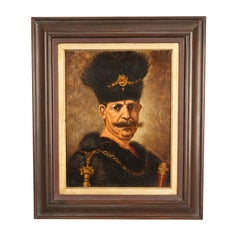
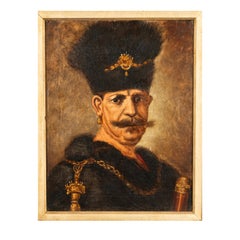
Antique oil on canvas of a Russian or Polish nobleman, painted by Rembrandt van Rijn in 1637. There is much controversy about this painting, currently housed in the National Gallery of Art in Washington D.C. and has previously been owned by such luminaries as Catherine the Great and Andrew Mellon. It has been referred to as both a Polish and Russian nobleman, the sitter wears a Russian sable hat...

Category

Old Masters 1780s Art

Materials

Oil

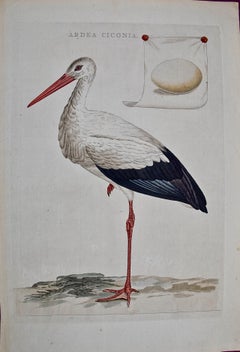
White Stork "Ardea Ciconia": An 18th Century Hand-colored Engraving by Nozeman
White Stork "Ardea Ciconia": An 18th Century Hand-colored Engraving by Nozeman
This is a rare 18th Century hand-colored large folio-sized copperplate engraving entitled "Ardea Ciconia" (White Stork) by Cornelius Nozeman in volume II of his publication 'Nederlan...
Category

Naturalistic 1780s Art

Materials

Engraving
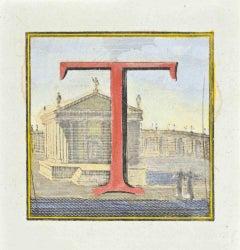
Letter T - Etching by Luigi Vanvitelli - 1780

Letter T - Etching by Luigi Vanvitelli - 1780

Located in Roma, IT

Letter T is an Etching hand watercolored realized by Luigi Vanvitelli in 18th century. The etching belongs to the print suite “Antiquities of Herculaneum Exposed” (original title: “...

Category

Old Masters 1780s Art

Materials

Etching

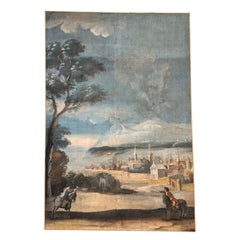
Watercolor painting on linen, French Provençal Baroque style, “Duel of Knights”

Watercolor painting on linen, French Provençal Baroque style, “Duel of Knights”

Located in Valladolid, ES

One of a Kind large-scale, vertically formatted work entitled “Duel of Knights,” 18th century. These works were typically displayed on boiseries, decorative wall coverings originati...

Category

Baroque 1780s Art

Materials

Linen

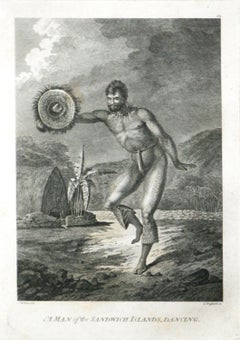
A Man of the Sandwich Islands, Dancing (Hawaii) from Captain Cooks travels engra

A Man of the Sandwich Islands, Dancing (Hawaii) from Captain Cooks travels engra

By John Webber

Located in Paonia, CO

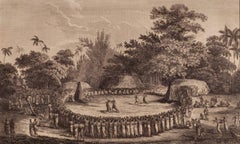
A Man of the Sandwich Islands Dancing (Hawaii) is from the 1784 First Edition Atlas Accompanying Capt. James Cook and King; Third and Final Voyage of Captain James Cook. John Webber (1752-1793) was the official artist for the third voyage of Captain James Cook (1728-1779). The purpose of this voyage was to discover the Northwest Passage and to explore the Pacific Ocean north of the Equator. These engravings were published in 1784-85 by G. Nichol and Thomas Cadell of London in the four large format atlas, Voyage to the Pacific Ocean. Captain Cook was an extraordinary explorer known for discovering and mapping unknown territory and for his many contributions to the scientific world. These original engravings from Webber’s drawings and paintings are only a glimpse into this great man’s historical contributions that make him one of the greatest explorers of all times. This image shows a Hawaiian dancer...

Category

Realist 1780s Art

Materials

Engraving
Four Koa Wood Framed 18th C. Engravings from Captain Cook's 3rd Voyage Journal

Four Koa Wood Framed 18th C. Engravings from Captain Cook's 3rd Voyage Journal

By John Webber

Located in Alamo, CA

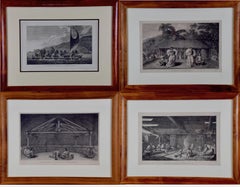
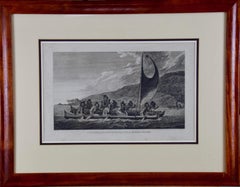
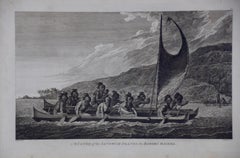
A grouping of four framed engravings of Hawaii, Tahiti, Tonga and Vancouver Island from the atlas of the official British Admiralty sanctioned journal of Captain Cook's 3rd Voyage entitled "A Voyage to the Pacific Ocean Undertaken by the Command of His Majesty, for Making Discoveries in the Northern Hemisphere", published upon completion of the voyage in London in 1784 by Strahan & Cadell. These engravings were made from drawings by John Webber (1752-1793), who was the artist on Captain James Cook's 3rd and final voyage of discovery. The set of engravings includes: "A Canoe of the Sandwich Islands, the Rowers Masked", Plate 65 in the atlas; "A Dance in Otaheite" (Tahiti), Plate 28; "King of the Friendly Islands" (Tonga), plate 20; "Inside of a House in Nootka Sound" (Canada), plate 42. These engravings are professionally framed in Koa wood, the same wood as was used to make the canoes of the ancient Hawaiians. Koa wood is legendary in Hawaii. Not only is this amazing wood native to Hawaii, but it is known for the deep rich colors and varied grain pattern. Koa has an honored heritage in Hawaii and is highly revered and sacred. The word “koa” means “warrior” in Hawaiian. The warriors of King Kamehameha the Great, created canoes and weapons from a wood plentiful on the Big Island of Hawaii. This wood became synonymous with the warriors themselves, and it became known as koa. These four engravings would make a wonderful grouping for a display of 2, 3 or 4 prints. They may be purchased separately or in groups on 1stDibs. Their listing Reference #'s are: LU117324682432, LU117324682022, LU117324684052 and LU117324684062. A discount is available for a grouping depending on the number of items included. Hawaii was discovered by Captain Cook (1728-1779) during this voyage. Hawaii was originally called The Sandwich Islands in honor of The Earl of Sandwich...
Category

Other Art Style 1780s Art

Materials

Engraving

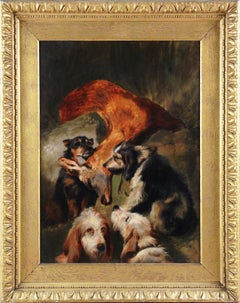
Hunting dogs and a deer, British oil painting Richard ANSDELL 19Th c

Hunting dogs and a deer, British oil painting Richard ANSDELL 19Th c

By Richard Ansdell

Located in Gavere, BE

Hunting dogs and a deer, British oil painting Richard ANSDELL 19Th c Description Title: End of the run Materials: oil on canvas Signature: not signed Provenance: private collection...

Category

Other Art Style 1780s Art

Materials

Canvas, Oil

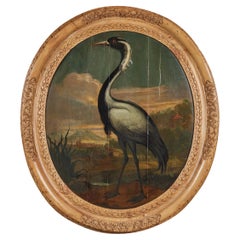
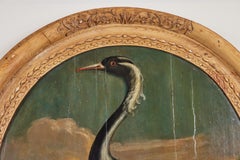
Period Oil Painting of a Crane

Period Oil Painting of a Crane

Located in Los Angeles, CA

A rare, richly hand-painted, 18th century oil-on-panel portrait of a crane set against a moody sky amidst a lush landscape of mountains, forest, architecture, and water. Held in a ne...

Category

1780s Art

Materials

Oil, Wood Panel

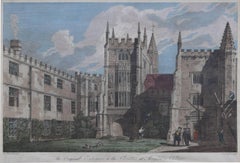
The Original Entrance to the Cloisters at Magdalen College, Oxford Engraving

The Original Entrance to the Cloisters at Magdalen College, Oxford Engraving

Located in London, GB

To see our other views of Oxford and Cambridge, scroll down to "More from this Seller" and below it click on "See all from this seller" - or send us a message...

Category

Realist 1780s Art

Materials

Engraving

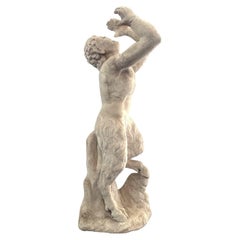
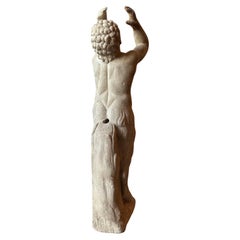
Carrara Marble Fountain of Pan

Carrara Marble Fountain of Pan

Located in Los Angeles, CA

A Roman, Carrara marble sculpture of the mythological Greek god Pan as a fountain. Italy.

Category

1780s Art

Materials

Marble

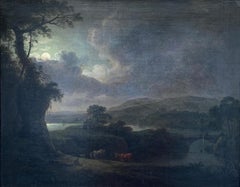
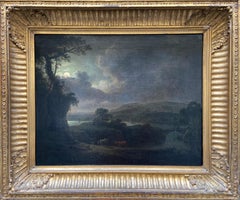
View Across the Valley, Late 18th Century English Moonlit Scene

View Across the Valley, Late 18th Century English Moonlit Scene

Located in London, GB

Oil on canvas Image size: 14 1/4 x 18 inches (36 x 45.7 cm) Period gilt frame In this painting the bright moon, partially obscured by mounting dark clouds, dramatically lights the l...

Category

1780s Art

Materials

Oil, Canvas

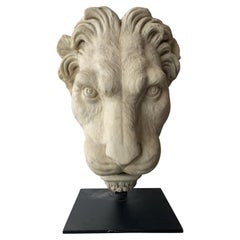
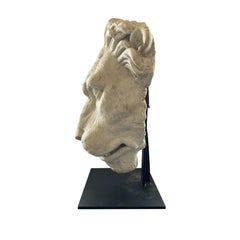
Roman Carrara Marble Lioness

Roman Carrara Marble Lioness

Located in Los Angeles, CA

Magnificent hand carved Carrara marble sculpture of a lioness head from Rome. Mounted on a metal base. Base 13.75"W x 12.25"D.

Category

1780s Art

Materials

Marble, Metal

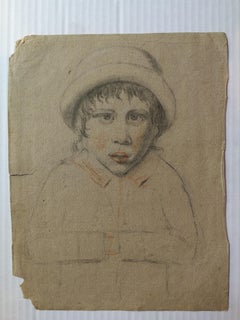
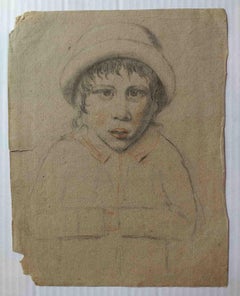
Figurative drawing child portrait 18th century pencil on paper oltralpe

Figurative drawing child portrait 18th century pencil on paper oltralpe

Located in Florence, IT

Il disegno a matita grigia e rossa raffigura un intenso ritratto frontale di un fanciullo con cappello, con le braccia incrociate davanti. While the face is much more detailed, the b...

Category

Naturalistic 1780s Art

Materials

Paper, Color Pencil

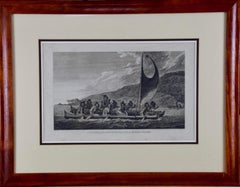
Sandwich Islands Canoe (Hawaii): Framed 18th C. Engraving Captain Cook's Journal

Sandwich Islands Canoe (Hawaii): Framed 18th C. Engraving Captain Cook's Journal

By John Webber

Located in Alamo, CA

"A Canoe of the Sandwich Islands, the Rowers Masked" is an engraving created by Charles Grignion, from a drawing by John Webber (1752-1793), who was the artist on Captain James Cook's 3rd and final voyage of discovery. It is Plate 65 in the atlas of "A Voyage to the Pacific Ocean Undertaken by the Command of His Majesty, for Making Discoveries in the Northern Hemisphere", the official British Admiralty sanctioned journal published upon completion of the voyage in London in 1784 by Strahan & Cadell. This famous image of ten Hawaiian rowers transporting a priest who is carrying a feather-covered image of Kukailimoku, the Hawaiian god of war. The priests and paddlers are all wearing gourd masks in their double-hulled canoe with an upright lateen woven sail. Each hull was shaped from a single large Koa log harvested from island rainforests, where they were carved before being transported to the coast. This engraving is presented in a Koa wood frame and a white mat. There are occasional faint spots, but the print is otherwise in very good condition. Koa is the same wood as was used to make the canoe. Koa wood is legendary in Hawaii. Not only is this amazing wood native to Hawaii, but it is known for the deep rich colors and varied grain pattern. Koa has an honored heritage in Hawaii and is highly revered and sacred. The word “koa” means “warrior” in Hawaiian. The warriors of King Kamehameha the Great, created canoes and weapons from a wood plentiful on the Big Island of Hawaii. This wood became synonymous with the warriors themselves, and it became known as koa. The frame measures 20.75" high, 26.75" wide and 0.88" deep. There are three other engravings listed from the official journal of Captain Cook's 3rd voyage available that are presented in identical Koa wood frames and mat (LU117324682022, LU117324684052, LU117324684062). They would make a wonderful grouping for a display of 2, 3 or 4 prints. A discount is available for a grouping depending on the number of items included. Hawaii was discovered by Captain Cook (1728-1779) during this voyage. Hawaii was originally called The Sandwich Islands in honor of The Earl of Sandwich...

Category

1780s Art

Materials

Engraving

Flowers in a glass, resting on a book

Flowers in a glass, resting on a book

Located in BELEYMAS, FR

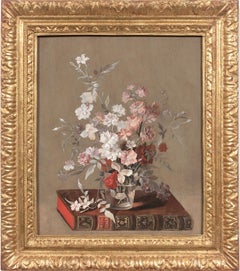
Jean-Louis PREVOST (attributed to) (Nointel, 1745 – Paris, 1827) Flowers in a Glass, Resting on a Book Gouache on paper H. 38.5 cm; W. 30.5 cm Unsigned The biography of Jean-Louis P...

Category

French School 1780s Art

Materials

Gouache, Vellum

"Inside of a House in Nootka Sound" (Canada) from Captain Cook's 3rd Voyage

"Inside of a House in Nootka Sound" (Canada) from Captain Cook's 3rd Voyage

By John Webber

Located in Alamo, CA

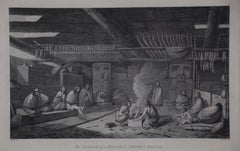
"The Inside of a House in Nootka Sound" is an engraving created by William Sharp (1749-1824), from a drawing by John Webber (1752-1793), who was the artist on Captain James Cook's 3rd and final voyage of discovery. It is Plate 65 in "A Voyage to the Pacific Ocean Undertaken by the Command of His Majesty, for Making Discoveries in the Northern Hemisphere", the official British Admirality sanctioned journal published upon completion of the voyage in London in 1784 by Strahan & Cadell. This engraving is presented in a Koa wood frame and a white mat. There are occasional tiny faint spots, but the print is otherwise in very good condition. Koa wood is legendary in Hawaii. Not only is this amazing wood native to Hawaii, but it is known for the deep rich colors and varied grain pattern. Koa has an honored heritage in Hawaii and is highly revered and sacred. The word “koa” means “warrior” in Hawaiian. The warriors of King Kamehameha the Great, created canoes and weapons from a wood plentiful on the Big Island of Hawaii. This wood became synonymous with the warriors themselves, and it became known as koa. There are three other engravings listed form the official journal of Captain Cook's 3rd voyage available that are presented in identical Koa wood frames and mats. They would make a wonderful grouping for a display of 2, 3 or 4 prints. Please see listings: LU117324682432, LU117324684022, LU117324684062. A discount is available for a grouping depending on the number of items included. Nootka Sound is on the west coast of Vancouver Island, British Columbia, Canada. It was explored by Captain Cook in 1778 after he discovered Hawaii during his 3rd voyage. He originally named it King George's Sound, but did record Nootka Sound, which he thought was its native name. Hawaii was originally called The Sandwich Islands in honor of The Earl of...

Category

Realist 1780s Art

Materials

Engraving