1780s Art

to
19
74
26
13
10
8
Overall Width
to
Overall Height
to
7,717
21,686
164,068
227,318
2,017
2,287
4,950
6,554
5,843
15,080
20,672
25,837
18,702
14,131
5,512
41
8
1
69
58
1
78
42
27
26
19
11
11
10
8
7
7
6
5
5
5
5
4
4
4
3
59
33
28
25
24
21
4
4
4
3
49
31
64
57
Period: 1780s
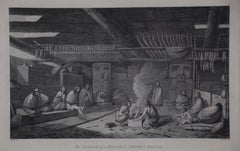
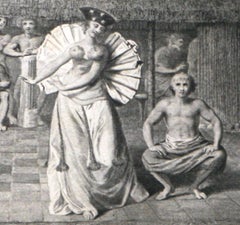
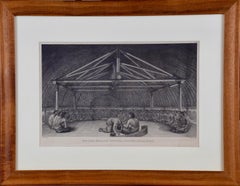
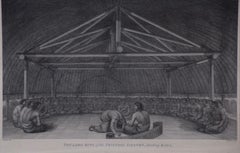
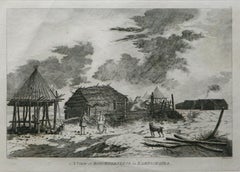
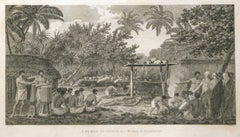
"Inside of a House in Nootka Sound" (Canada) from Captain Cook's 3rd Voyage

"Inside of a House in Nootka Sound" (Canada) from Captain Cook's 3rd Voyage

By John Webber

Located in Alamo, CA

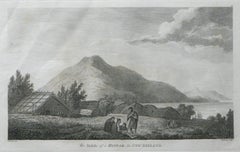
"The Inside of a House in Nootka Sound" is an engraving created by William Sharp (1749-1824), from a drawing by John Webber (1752-1793), who was the artist on Captain James Cook's 3rd and final voyage of discovery. It is Plate 65 in "A Voyage to the Pacific Ocean Undertaken by the Command of His Majesty, for Making Discoveries in the Northern Hemisphere", the official British Admirality sanctioned journal published upon completion of the voyage in London in 1784 by Strahan & Cadell. This engraving is presented in a Koa wood frame and a white mat. There are occasional tiny faint spots, but the print is otherwise in very good condition. Koa wood is legendary in Hawaii. Not only is this amazing wood native to Hawaii, but it is known for the deep rich colors and varied grain pattern. Koa has an honored heritage in Hawaii and is highly revered and sacred. The word “koa” means “warrior” in Hawaiian. The warriors of King Kamehameha the Great, created canoes and weapons from a wood plentiful on the Big Island of Hawaii. This wood became synonymous with the warriors themselves, and it became known as koa. There are three other engravings listed form the official journal of Captain Cook's 3rd voyage available that are presented in identical Koa wood frames and mats. They would make a wonderful grouping for a display of 2, 3 or 4 prints. Please see listings: LU117324682432, LU117324684022, LU117324684062. A discount is available for a grouping depending on the number of items included. Nootka Sound is on the west coast of Vancouver Island, British Columbia, Canada. It was explored by Captain Cook in 1778 after he discovered Hawaii during his 3rd voyage. He originally named it King George's Sound, but did record Nootka Sound, which he thought was its native name. Hawaii was originally called The Sandwich Islands in honor of The Earl of...

Category

Realist 1780s Art

Materials

Engraving

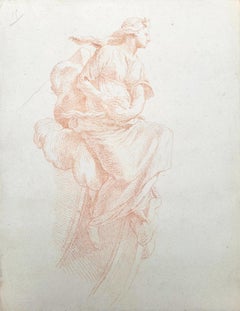
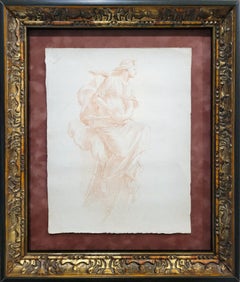
La Femme Muse /// Allegorical Symbolism Romantic Old Masters European Drawing

La Femme Muse /// Allegorical Symbolism Romantic Old Masters European Drawing

Located in Saint Augustine, FL

Artist: Unknown (Likely French, 18th Century) Title: "La Femme Muse" *No signature found Circa: 1780 Medium: Original Pastel Drawing on heavy laid paper Framing: Recently beautifully...

Category

Old Masters 1780s Art

Materials

Pastel, Laid Paper

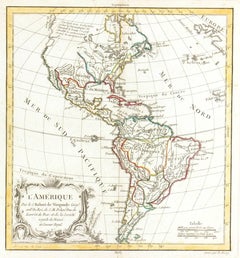
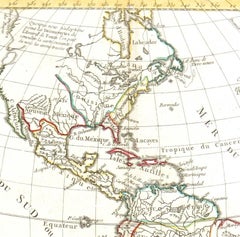
Map of Americas
Map of Americas

Map of Americas

Located in Houston, TX

Over 200 year old engraved map of Americas by Robert de Vaugondy from 1783. Original hand color. Shows North, Central and South Americas. Note the po...

Category

1780s Art

Materials

Ink, Watercolor, Handmade Paper

"King of the Friendly Islands" (Tonga); Engraving from Captain Cook's 3rd Voyage

"King of the Friendly Islands" (Tonga); Engraving from Captain Cook's 3rd Voyage

By John Webber

Located in Alamo, CA

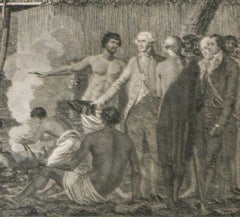
"Poulaho, King of the Friendly Islands, Drinking Kava" is an engraving created by William Sharp (1749-1824), from a drawing by John Webber (1752-1793), who was the artist on Captain James Cook's 3rd and final voyage of discovery. It was published in the atlas of "A Voyage to the Pacific Ocean Undertaken by the Command of His Majesty, for Making Discoveries in the Northern Hemisphere", the official British Admirality sanctioned journal published upon completion of the voyage in London in 1784 by Strahan & Cadell. Captain Cook visited Tonga on his 3rd voyage, which he named The Friendly Islands because of the warm welcome he and his crew received, unlike some of the other more hostile Pacific islands. The engraving depicts Cook and his men observed a kava ceremony at the village of Mu’a on Tongatapu. King Paulaho sits in the centre foreground, his back to the spectator with a man kneeling before him. The ceremonial mat depicted behind Paulaho indicates that nobody was allowed to sit behind him. The figure in the centre holds a single cup, referring to the Tongan custom of offering the cup to the king first. Kava is native to the islands of the South Pacific and was first described for English readers in 1768 by Captain James Cook. The kava root has been used for centuries as a central feature of ceremonies and celebrations because it was able to bring about a calming and pleasant social atmosphere. The root was crushed and processed into coconut milk to become the focal ceremonial beverage, simply referred to as kava. This engraving is presented in a Koa wood frame and a white mat. Koa wood is legendary in Hawaii. There are occasional faint spots, but the print is otherwise in very good condition. This amazing Koa wood is native to Hawaii and it is known for the deep rich colors and varied grain pattern. Koa has an honored heritage in Hawaii and is highly revered and sacred. The word “koa” means “warrior” in Hawaiian. The warriors of King Kamehameha the Great, created canoes and weapons from a wood plentiful on the Big Island of Hawaii. This wood became synonymous with the warriors themselves, and it became known as koa. There are three other engravings listed from the official journal of Captain Cook's 3rd voyage available that are presented in identical Koa wood frames and mats (LU117324682422, LU117324684052, LU117324684032). They would make a wonderful grouping for a display of 2, 3 or 4 prints. A discount is available for a grouping depending on the number of items included. Captain Cook is remembered as one of the greatest explorers and navigators in history. His explorations included Australia, New Zealand and islands of the South Pacific and the northwest coast of North America. Hawaii was discovered by Captain Cook during this voyage. Hawaii was originally called The Sandwich Islands in honor of The Earl of Sandwich...

Category

Realist 1780s Art

Materials

Engraving

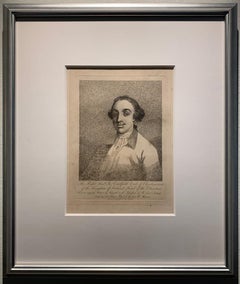
'Portrait of James Caulfield' by William Hogarth, Etching

'Portrait of James Caulfield' by William Hogarth, Etching

By William Hogarth

Located in Oklahoma City, OK

This 21" x 18" etching was produced by William Hogarth in the mid-18th century. The work has been newly matted and framed with archival materials. The subject, identified as James Caulfield, 4th Viscount, 1st Earl of Charlemont (1728-1799), became commander in chief of the Irish Volunteers...

Category

Realist 1780s Art

Materials

Etching

Indie - II Sheet

Indie - II Sheet

Located in Roma, IT

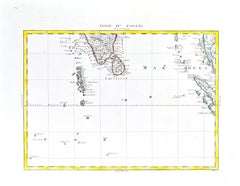
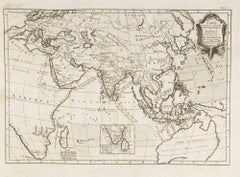
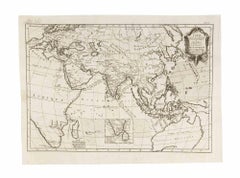
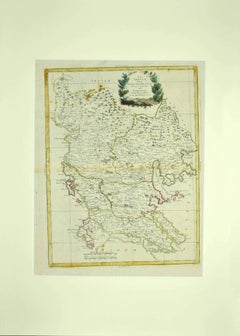
Etching hand colored realized by Antonio Zatta in 1785, and published by G. Pitteri. It depicts the Eastern Indian Ocean & its islands. Southern India, Sri Lanka, the Maldives, The ...

Category

Modern 1780s Art

Materials

Etching

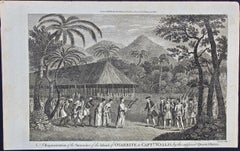
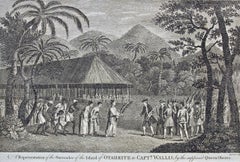
Attack on Captain Wallis When He Discovered Tahiti: Original 18th C. Engraving

Attack on Captain Wallis When He Discovered Tahiti: Original 18th C. Engraving

Located in Alamo, CA

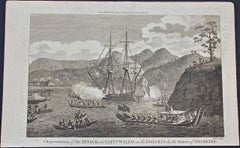
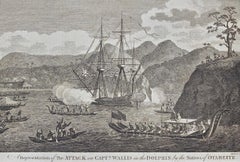
"A Representation of the Attack on Captain Wallis in the Dolphin by the Natives of Otaheite (Tahiti)" is an engraving created by the artist Sparrow based on an engraving in John Hawk...

Category

1780s Art

Materials

Engraving

Map of Europe

Map of Europe

Located in Roma, IT

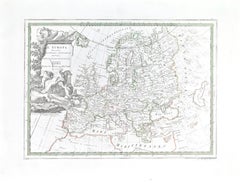
Etching hand colored realized by Giovanni Maria Cassini in 1788. Table from "Nuovo Atlante Geografico Universale", published in Rome in 1788 at Calcografia Camerale. Very good cond...

Category

Modern 1780s Art

Materials

Etching

Antique French Copper Engraving - Horse Stables

Antique French Copper Engraving - Horse Stables

Located in Houston, TX

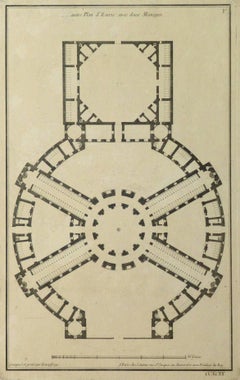
Crisp antique copper engraving of a unique floor plan of French horse stables from Recueil d'Architecture, 1780. Original artwork on paper displayed on a...

Category

1780s Art

Materials

Ink, Paper

Antique French Copper Engraving - Cathedral

Antique French Copper Engraving - Cathedral

Located in Houston, TX

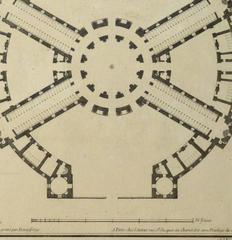
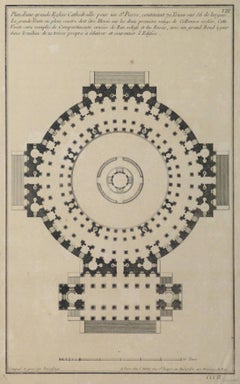
Bold antique copper engraving of the floor plan of a French cathedral from Recueil d'Architecture, 1780. Original artwork on paper displayed on a whi...

Category

1780s Art

Materials

Ink, Paper, Engraving

Sígnic
Sígnic

Sígnic

By Antoni Tàpies

Located in BARCELONA, ES

Antoni Tàpies, 1981 “Signic” Engraving with carborundum and resins. Signed and numbered by hand Bona tiré copy 50 copies Edited by galerie Lelong (Paris) Printed by Joan Barberà (...

Category

Abstract 1780s Art

Materials

Resin, Engraving

A Cart Race
A Cart Race

A Cart Race

By Thomas Rowlandson

Located in Fairlawn, OH

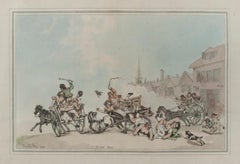
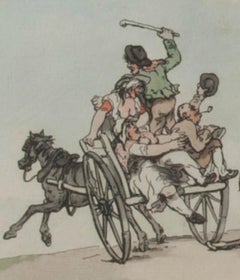
A Cart Race Hand colored etching & aquatint, 1788 Signed in the plate (see photo) Published by William Hollande, London Inscribed in the plate with title, artist's name and publication line 'Rowlandson. 1788./ London. Pubd 1789 by Wm Holland No 50. Oxford Street.' Reference: M.Dorothy George, 'Catalogue of Political and Personal Satires in the British Museum', VI, 1938) British Museum Satires 7607 Grego, 'Rowlandson', i. 260, Grego II.392 Provenance: Chris Beetles Ltd., London (label), 2003 Jeffrey M. Kaplan, Washington, D.C. (label) Fursten zu Oettingen-Wallerstein, Lugt 2715a, verso (see photo) Condition: Excellent Printed on 18th century laid paper Archival framing by Chris Beetles Ltd., London Note: The British Museum has two impressions, one trimmed the other full sheet as this example. Accession Number: 1868,0711.35 The Metropolitan Museum has an impression: Accession number 59.533.314 Fitzwilliam Museum: Accession number: 34.14-286 Cleveland Museum of Art accession number: 1958.10 Image description per BM: Three ramshackle two-wheeled carts drawn by wretched horses race (right to left) against a background formed by the church... Note: The British Museum has two impressions, one trimmed the other full sheet as this example. Accession Number: 1868,0711.35 The Metropolitan Museum has an impression: Accession number 59.533.314 Fitzwilliam Museum: Accession number: 34.14-286 Cleveland Museum of Art accession number: 1958.10 Image description per BM: Three ramshackle two-wheeled carts drawn by wretched horses race (right to left) against a background formed by the clouds of dust which they have raised, with a row of gabled houses (right) inscribed 'St Giles', terminating in a church spire (left), and probably representing Broad St. Giles. The occupants of the carts are Irish costermongers typical of St. Giles. The foremost horse gallops, urged on by the shouts of a standing man brandishing a club. The other occupants, two women and a man, cheer derisively the next cart, whose horse has fallen, one woman falling from it head-first, another lies on the ground. The driver lashes the horse furiously. The third cart, of heavier construction, is starting. The horses are partly obscured by the clouds of dust, but denizens watch from casement windows and a door. Two ragged urchins (right) cheer the race; a dog barks. "It was said that the amount of copper Thomas Rowlandson etched would sheathe the British Navy. An inveterate gambler, for much of his life Rowlandson had to produce a flood of his comic prints to stay ahead of financial losses.A wealthy uncle and aunt raised Rowlandson after his textile-merchant father went bankrupt. His career developed quickly. He entered London's Royal Academy Schools in 1772, visited Paris in 1774, exhibited at the Royal Academy in 1775, and won a silver medal in 1777. He left school in 1778 to set up in business. Rowlandson's depictions of life in Georgian England exposed human foibles and vanity with sympathy and rollicking humor. During the 1780s he consolidated the delicate style he used for his coarse subjects. He worked mainly in ink and watercolor, his rhythmic compositions, flowing line, and relaxed elegance inspired by French Rococo art...

Category

Romantic 1780s Art

Materials

Aquatint

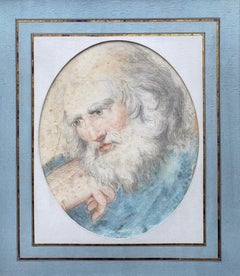
“Portrait of a Head”

“Portrait of a Head”, Circa 1780

$1,440Sale Price|20% Off

“Portrait of a Head”

Located in Southampton, NY

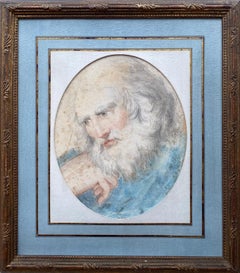
Late 18th century mixed media portrait of the head of an old man, perhaps the biblical figure Moses. Italian school . Composed of graphite, colored chalk, watercolor and gouache on ...

Category

Academic 1780s Art

Materials

Chalk, Graphite, Paper, Watercolor, Gouache

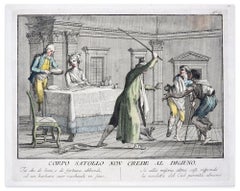
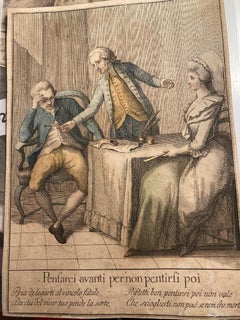
Tuscan Proverbs - Etching by Carlo Lasinio - 1786

Tuscan Proverbs - Etching by Carlo Lasinio - 1786

Located in Roma, IT

Tuscan Proverbs 3 is an original etching realized by Carlo Lasinio in 1786. Etching and watercolour technique, in good conditions, except for some stains on the back of the yellowed...

Category

Old Masters 1780s Art

Materials

Etching

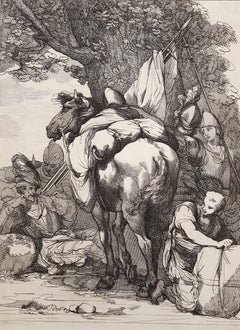
Packhorse and Soldiers /// Antique British Victorian Etching Figurative Animal

Packhorse and Soldiers /// Antique British Victorian Etching Figurative Animal

By John Hamilton Mortimer

Located in Saint Augustine, FL

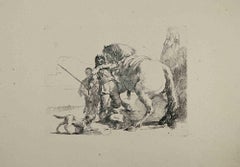
Artist: (after) John Hamilton Mortimer (English, 1740-1779) Title: "Packhorse and Soldier" Year: 1783 Medium: Original Etching on watermarked laid paper Limited edition: Unknown Prin...

Category

Old Masters 1780s Art

Materials

Laid Paper, Etching, Intaglio

Set of Two Engravings from Nash's "History of Worcestershire" /// Landscapes Art

Set of Two Engravings from Nash's "History of Worcestershire" /// Landscapes Art

By Treadway Russell Nash

Located in Saint Augustine, FL

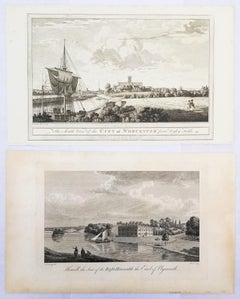
Artist: Treadway Russell Nash (English, 1724-1811) Title: "The South View of the City of Worcester, from Digley Fields" and "Hewell, the Seat of the Right Honorable the Earl of Plymouth" Portfolio: Collections for the History of Worcestershire Year: 1781-1782 (First edition) Medium: Set of Two Original Engravings on watermarked laid paper Limited edition: Unknown Printer: John Nichols, London, UK Publisher: T. Payne and Son, J. Robson, B. White, Leigh and Sotheby, London, UK; Fletcher, Oxford, UK; and Lewis, Worcester, UK Sheet size (each): approx. 10.25" x 16.63" Image size (each): approx. 7" x 12" Reference: Upcott III, page 1330 Condition: "The South View of the City of Worcester, from Digley Fields" has some minor foxmarks in margins. "Hewell, the Seat of the Right Honorable the Earl of Plymouth" has toning and uneven discoloration to its sheet. Have been professionally stored away for decades. They are both otherwise strong impressions, the first in excellent condition, and the second in good condition Notes: Provenance: private collection - Aspen, CO. "The South View of the City of Worcester, from Digley Fields" was engraved by English artist Thomas Sanders (Active: Mid-Late 18th Century) after a drawing by himself. "Hewell, the Seat of the Right Honorable the Earl of Plymouth" was engraved by English artist Michael Angelo Rooker (1743-1801) after a watercolor painting by English artist Paul Sandby (1731-1809). Comes from Nash's two volume "Collections for the History of Worcestershire", (1781-1782) (First edition), which consists of 75 engravings. Each work is printed from one copper plate in one color: black. There was a (Second edition) "with Additions" bound in with Volume II of this portfolio published by John White in (1799). And both the First and Second editions of "Collections for the History of Worcestershire" are based off Thomas Sanders' 1779-1781 "Perspective Views of the Market Towns within the County of Worcester". "The South View of the City of Worcester, from Digley Fields" has an unidentified watermark in the center of its sheet resembling "XV". Biography: Treadway Russell Nash (24 June 1724 – 26 January 1811) was an English clergyman, now known as an early historian of Worcestershire and the author of Collections for the History of Worcestershire, an important source document for Worcestershire county histories. He was a fellow of the Society of Antiquaries of London. Treadway Russell Nash was born on 24 June 1724 born at Clerkenleap, in Kempsey, Worcestershire. His family were from Ombersley. They had lands there and at Claines, and had later bought lands in the Reformation around St Peter's, Droitwich. He was related to James Nash and John Nash, both MPs for Worcester. His father Richard, a grandson of Sir Rowland Berkeley, died in 1740, and Richard's eldest son in 1757. As a result, Treadway Russell Nash inherited the Russells' Strensham estates from his brother, as well as the Nash estates, and took both names. He was educated from the age of twelve at King's School, Worcester, and became a scholar at Worcester College, Oxford aged fifteen. In March 1749, he accompanied his brother on a trip to the continent, to aid Richard's health. They visited Paris for about six weeks, before spending the summer "on the banks of the Loire". They then visited "Bourdeaux, Thoulouse, Montpelier, Marseilles, Leghorn, Florence, Rome, Naples, Bologna, Venice, Padua, Verona, Milan, Lyons, and again Paris"; such expeditions are often known as the Grand Tour. On his return in late summer 1751, Nash took up a post as Vicar of Eynsham through his friend and future brother-in-law, John Martin. He also had an income as a tutor at Oxford. He took his Doctor of Divinity degree and left Oxford, having "gone out grand compounder", following the death of his brother. He also left his benefice at Eynsham in 1757. While at Oxford he had proposed a road from there to Witney (now the A40 and B4022), and also stood for Parliament. Nash married Margaret Martin...

Category

Old Masters 1780s Art

Materials

Laid Paper, Engraving, Intaglio

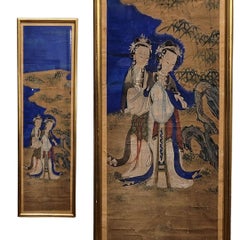
Qing Dynasty Blue White and Black Gouache Scroll Geishas

Qing Dynasty Blue White and Black Gouache Scroll Geishas

Located in Valladolid, ES

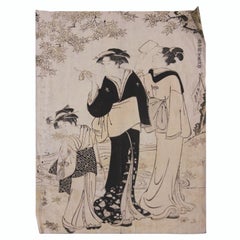
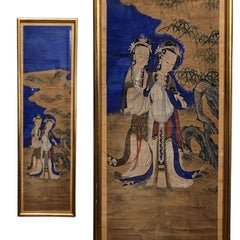
Amazing and Exquisite vertical Chinese scroll, 18th century Qing Dynasty, blue, white, and brown, "Geisha Pair" (Gouache on paper, hanging vertically, possibly a vertical scroll, fra...

Category

Baroque 1780s Art

Materials

Paper

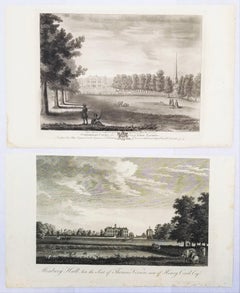
Set of Two Engravings from Nash's "History of Worcestershire" /// Landscapes Art

Set of Two Engravings from Nash's "History of Worcestershire" /// Landscapes Art

By Treadway Russell Nash

Located in Saint Augustine, FL

Artist: Treadway Russell Nash (English, 1724-1811) Title: "Henbury Hall, late the Seat of Thomas Vernon, now of Henry Cecil Esq." and "Ombersley Court, the Seat of Lord Sandys" Portfolio: Collections for the History of Worcestershire Year: 1781-1782 (First edition) Medium: Set of Two Original Engravings and Etching with Aquatint on watermarked laid paper Limited edition: Unknown Printer: John Nichols, London, UK Publisher: T. Payne and Son, J. Robson, B. White, Leigh and Sotheby, London, UK; Fletcher, Oxford, UK; and Lewis, Worcester, UK Sheet size (each): approx. 10.13" x 16.88" Image size (each): approx. 8.13" x 12.63" Reference: Upcott III, page 1330 Condition: "Henbury Hall, late the Seat of Thomas Vernon, now of Henry Cecil Esq." has scattered light foxmarks in margins. The top edge is unevenly trimmed and a small taped tear to lower right corner. "Ombersley Court, the Seat of Lord Sandys" has light toning to sheet and some faint discoloration in right margin. A small light water stain to lower left corner. Have been professionally stored away for decades. They are both otherwise strong impressions in good condition Notes: Provenance: private collection - Aspen, CO. "Henbury Hall, late the Seat of Thomas Vernon, now of Henry Cecil Esq." was likely engraved by English artist James Ross (1745-1821) after a drawing by himself. "Ombersley Court, the Seat of Lord Sandys" was engraved by English artist Valentine Green (1739-1813) and English artist Francis Jukes (1745-1812) after a drawing by an unknown, likely English artist. The first work is an engraving; the second work is an etching with aquatint. Comes from Nash's two volume "Collections for the History of Worcestershire", (1781-1782) (First edition), which consists of 75 engravings. Each work is printed from copper plates in one color: black. There was a (Second edition) "with Additions" bound in with Volume II of this portfolio published by John White in (1799). And both the First and Second editions of "Collections for the History of Worcestershire" are based off Thomas Sanders' 1779-1781 "Perspective Views of the Market Towns within the County of Worcester". "Ombersley Court, the Seat of Lord Sandys" has an unidentified watermark in the center of its sheet. "Henbury Hall" is actually incorrectly misnamed; its correct name is "Hanbury Hall". "PLATES, Drawn and engraved by J. Ross, unless otherwise expressed." - "A Bibliographical Account of the Principal Works Relating to English Topography", (1818) - William Upcott. Biography: Treadway Russell Nash (24 June 1724 – 26 January 1811) was an English clergyman, now known as an early historian of Worcestershire and the author of Collections for the History of Worcestershire, an important source document for Worcestershire county histories. He was a fellow of the Society of Antiquaries of London. Treadway Russell Nash was born on 24 June 1724 born at Clerkenleap, in Kempsey, Worcestershire. His family were from Ombersley. They had lands there and at Claines, and had later bought lands in the Reformation around St Peter's, Droitwich. He was related to James Nash and John Nash, both MPs for Worcester. His father Richard, a grandson of Sir Rowland Berkeley, died in 1740, and Richard's eldest son in 1757. As a result, Treadway Russell Nash inherited the Russells' Strensham estates from his brother, as well as the Nash estates, and took both names. He was educated from the age of twelve at King's School, Worcester, and became a scholar at Worcester College, Oxford aged fifteen. In March 1749, he accompanied his brother on a trip to the continent, to aid Richard's health. They visited Paris for about six weeks, before spending the summer "on the banks of the Loire". They then visited "Bourdeaux, Thoulouse, Montpelier, Marseilles, Leghorn, Florence, Rome, Naples, Bologna, Venice, Padua, Verona, Milan, Lyons, and again Paris"; such expeditions are often known as the Grand Tour. On his return in late summer 1751, Nash took up a post as Vicar of Eynsham through his friend and future brother-in-law, John Martin. He also had an income as a tutor at Oxford. He took his Doctor of Divinity degree and left Oxford, having "gone out grand compounder", following the death of his brother. He also left his benefice at Eynsham in 1757. While at Oxford he had proposed a road from there to Witney (now the A40 and B4022), and also stood for Parliament. Nash married Margaret Martin...

Category

Old Masters 1780s Art

Materials

Laid Paper, Engraving, Intaglio, Etching, Aquatint
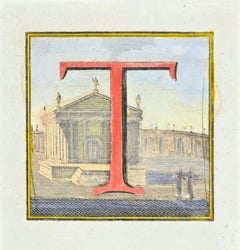
Letter T - Etching by Luigi Vanvitelli - 1780

Letter T - Etching by Luigi Vanvitelli - 1780

Located in Roma, IT

Letter T is an Etching hand watercolored realized by Luigi Vanvitelli in 18th century. The etching belongs to the print suite “Antiquities of Herculaneum Exposed” (original title: “...
Category

Old Masters 1780s Art

Materials

Etching

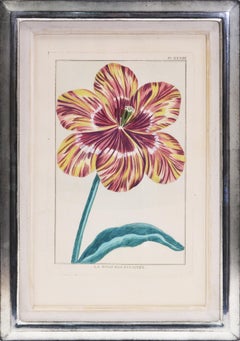
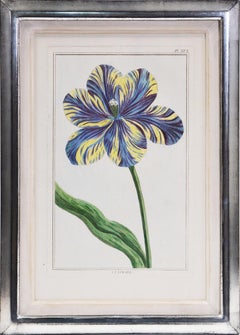
BUCHOZ. A Group of Four Tulips

BUCHOZ. A Group of Four Tulips

Located in London, London

A Group of 4 hand-coloured engraved plates of tulips, in matching silver leaf frames. Dimensions: 34.6cm by 48.5cm. A fine group of these rare flower plates, the complete volume of 40 being part of Le Jardin d'Eden, which was intended as the supplement to the Collection des Fleurs de la Chine & de l'Europe, first published in 1776. [Paris 1781] The second half of the eighteenth century saw a boom in natural history publications in France fuelled by such works as Buffon’s Histoire Naturelle. The accession of Louis XVI in 1774 was followed by a relaxation in the regulation of the book trade making it easier for authors to publish their own works. No other writer was to take such copious advantage of these two developments as Pierre-Joseph Buchoz (1731-1807), a French physician, lawyer and naturalist. His works are characterised by the beauty of the illustrations, and their rarity owing to the small size of the print runs. The final tulip plate...
Category

Naturalistic 1780s Art

Materials

Engraving, Paper

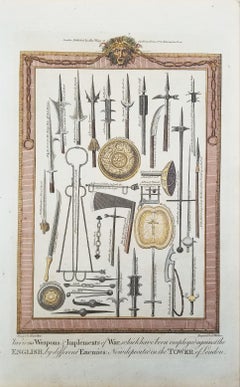
Various Weapons & Implements of War /// Edward Barnard's "History of England"

Various Weapons & Implements of War /// Edward Barnard's "History of England"

Located in Saint Augustine, FL
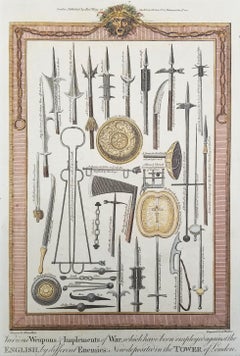
Artist: Edward Barnard (English, 1717-1781) Title: "Various Weapons & Implements of War ... Which have been Employed Against the English, by Different Enemies: Now Deposited in the Tower of London" Portfolio: New Complete and Authentic History of England Circa: 1785 Medium: Original Hand-Colored Etching on laid paper Limited edition: Unknown Printer: Alex Hogg, London, UK Publisher: Alex Hogg, London, UK Sheet size: 15.38" x 9.63" Image size: 11.75" x 7.94" Condition: Slight toning to edges. Has been professionally stored away for decades. It is otherwise a strong impression in excellent condition Notes: Provenance: private collection - Cheltenham, UK. Engraved by English artist George Walker (1781-1856) after a drawing by English artist William Hamilton (1751-1801). Comes from Barnard's one volume "New Complete and Authentic History of England", (1783, 1785, 1790) (First - third editions), which consists of 105 engravings. Printed in one color from one copper plate: black. Biography: Edward Barnard (1717-1781) was an English cleric and academic, provost of Eton from 1764. Barnard was second son of Rev. George Barnard...
Category

Old Masters 1780s Art

Materials

Watercolor, Laid Paper, Engraving, Intaglio