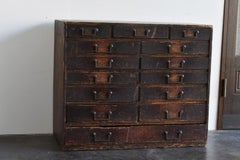
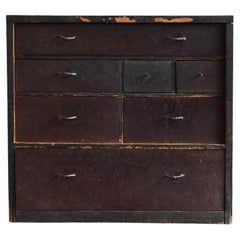
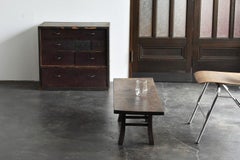
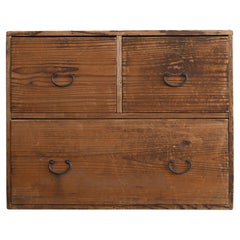
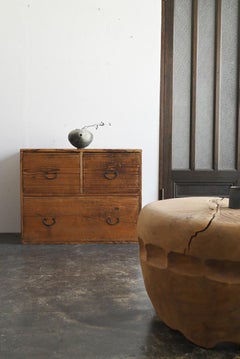
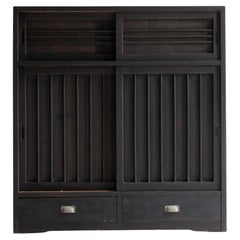
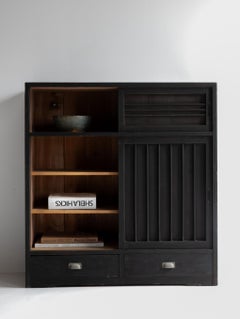
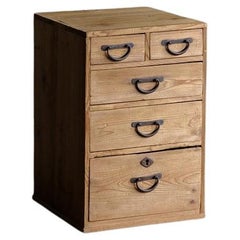
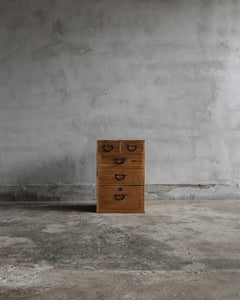
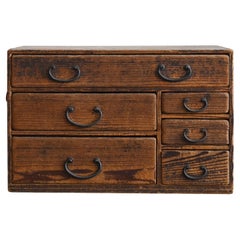
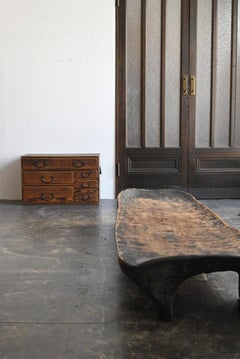
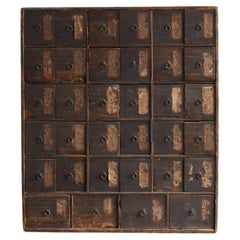
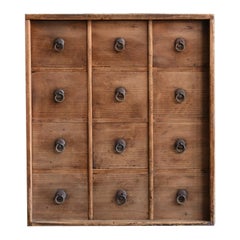
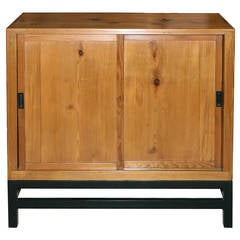
1920 Cedar Chest
Antique Late 19th Century Japanese Meiji Commodes and Chests of Drawers
Cedar
Recent Sales
Antique Late 19th Century Japanese Meiji Commodes and Chests of Drawers
Cedar
Antique 19th Century Japanese Meiji Commodes and Chests of Drawers
Cedar
Mid-20th Century Japanese Taisho Commodes and Chests of Drawers
Cedar
Vintage 1920s Japanese Taisho Commodes and Chests of Drawers
Cedar
Antique Late 19th Century Japanese Meiji Commodes and Chests of Drawers
Cedar
Antique Late 19th Century Japanese Meiji Commodes and Chests of Drawers
Cedar
Antique Late 19th Century Japanese Meiji Commodes and Chests of Drawers
Cedar
Antique Late 19th Century Japanese Meiji Commodes and Chests of Drawers
Cedar
Vintage 1920s Japanese Furniture
People Also Browsed
21st Century and Contemporary Brazilian Modern Carts and Bar Carts
Steel
2010s Modern Coffee and Cocktail Tables
Stone, Marble
Early 20th Century French Louis XVI Commodes and Chests of Drawers
Carrara Marble, Brass
Vintage 1920s Art Deco Figurative Sculptures
Porcelain, Fabric
Late 20th Century Danish Scandinavian Modern Lounge Chairs
Leather, Oak
Vintage 1960s Brazilian Mid-Century Modern Lounge Chairs
Leather, Nutwood
Vintage 1970s German Mid-Century Modern Sectional Sofas
Fabric
Vintage 1910s Hungarian Rustic Commodes and Chests of Drawers
Oak, Pine
Early 20th Century Japanese Commodes and Chests of Drawers
Wood
Early 20th Century Kenyan Tribal Decorative Bowls
Wood
Antique 19th Century Japanese Furniture
Wood
Vintage 1960s French Mid-Century Modern Dining Room Chairs
Leather, Rope, Elm
Vintage 1960s French Mid-Century Modern Dining Room Chairs
Leather, Elm
Late 20th Century Japanese Coffee and Cocktail Tables
Wood
Vintage 1980s Austrian Jugendstil Settees
Silk, Walnut
1920 Cedar Chest For Sale on 1stDibs
How Much is a 1920 Cedar Chest?
Finding the Right Commodes-chests-of-drawers for You
Shopping for a commode or a chest of drawers?
Commode is the French term for a low chest of drawers, but it is also sometimes used to denote any case piece with a particularly intricate design. The commode dates to circa 1700 France, where it was used as an alternative to a taller cabinet piece so as to not obscure paneled, mirrored or tapestried walls. Coffers, or chests, which were large wooden boxes with hinged lids and sometimes stood on ball feet, preceded chests of drawers, a fashionable cabinet furnishing that garnered acclaim for its obvious storage potential and versatility. The term commode was also used to refer to a piece of bedroom furniture — a washstand or nightstand that contained a chamber pot.
As time passed, French and British furniture makers led the way in the production of chests of drawers, and features like the integration of bronze and ornamental pulls became commonplace. Antique French commodes in the Louis XV style were sometimes crafted in mahogany or walnut, while an Italian marble top added a sophisticated decorative flourish. This specific type of case piece grew in popularity in the years that followed.
So, what makes a chest of drawers different from a common dresser? Dressers are short, and chests of drawers are overall taller pieces of furniture that typically do not have room on the top for a mirror as most dressers do. Tallboys and highboys are variations of the dresser form. Some chests of drawers have one column of four to six long drawers or three long drawers in their bottom section that are topped by a cluster of small side-by-side drawers on the top. To further complicate things, we sometimes refer to particularly short chests of drawers as nightstands.
Even though chests of drawers are commonly thought of as bedroom furniture to store clothing, these are adaptable pieces. A chest of drawers can house important documents — think of your walnut Art Deco commode as an upgrade to your filing cabinet. Nestle your chest near your home’s front door to store coats and other outerwear, while the top can be a place to drop your handbag. Add some flair to your kitchen, where this lovable case piece can hold pots, pans and even cookbooks.
When shopping for the right chest of drawers for your home, there are a few key things to consider: What will you be storing in it? How big a chest will you need?
Speaking of size, don’t dream too big. If your space is on the smaller side, a more streamlined vintage mid-century modern chest of drawers, perhaps one designed by Paul McCobb or T.H. Robsjohn-Gibbings, may best suit your needs.
At 1stDibs, we make it easy to add style and storage to your home. Browse our collection of antique and vintage commodes and chests of drawers today.
- 1stDibs ExpertApril 5, 2022Whether or not Lane cedar chests are solid cedar depends on the furniture in question. Most chests produced by the manufacturer feature solid cedar wood interiors finished with five layers of walnut veneers. Legs and molding are usually some variety of solid hardwood but not always cedar. On 1stDibs, find a range of Lane cedar chests.
- What is a waterfall cedar chest?1 Answer1stDibs ExpertApril 5, 2022The term Waterfall Cedar Chest refers to a specific shape of cedar chest where the lid extends down the side a bit as though it’s flowing off the top. It’s not like modern waterfall countertops where the top extends to the floor, instead it reaches a few inches down from the top. Shop a collection of cedar chests from some of the world’s top sellers on 1stDibs.
- How do you date a cedar chest?1 Answer1stDibs ExpertMarch 25, 2024To date a cedar chest, search the piece for a manufacturer’s mark. Then, use trusted online resources to determine who the maker is based on those markings. From there, you can use photographs, serial numbers and other identifying characteristics to get a rough idea of when the maker produced it. Alternatively, you can have a certified appraiser or knowledgeable antiques dealer evaluate your cedar chest. On 1stDibs, explore a variety of cedar chests.
- Are cedar chests worth anything?1 Answer1stDibs ExpertNovember 26, 2024Yes, some cedar chests may be worth something. There is a market for many kinds of cedar chests, particularly those made by well-known companies like Lane and Cavalier. Potential selling prices vary based on age, maker, style, condition and other factors. To learn more about the potential value of your cedar chest, consult a certified appraiser or experienced antique dealer. On 1stDibs, shop a collection of cedar chests.
- 1stDibs ExpertMarch 31, 2023To tell how old a cedar chest is, look for a stamp or label that indicates the maker's name. In some cases, you may find a date printed on the label. Otherwise, use trusted online resources to determine the years that the manufacturer operated and when it produced chests similar to yours. Alternatively, you can consult a certified appraiser or licensed antique dealer for assistance dating the piece. Find a collection of cedar chests on 1stDibs.
- 1stDibs ExpertMarch 25, 2024Cavalier cedar chests were mostly made between 1923 and the 1940s. The company's history dates back to 1865, with the formation of the Tennessee Furniture Company in Chattanooga, Tennessee. Its name changed to the Cavalier Corporation the same year that the furniture maker unveiled its line of cedar chests. Shop a selection of Cavalier furniture on 1stDibs.
- 1stDibs ExpertAugust 15, 2024How much your Lane cedar chest is worth depends on its age, style, condition and other factors. According to online sales information, the average selling price of Lane cedar chests is $200 to $400, but some pieces may be worth more or less. When the first iteration of the Lane Furniture company began to produce its now-famous Lane cedar chests in the early 20th century, the family behind the brand was unsure of how successful they’d be, so they initially didn’t bother adding their name to them. After securing a government contract during World War I, the company prospered and applied mass-production methods to its cedar-chest manufacturing. In 1922, it rebranded as the Lane Company and implemented a national advertising campaign to market its products, which led to a huge demand for its cedar chests that continues to this day. A certified appraiser or knowledgeable antique dealer can assess your chest and give you an idea of how much your piece is worth. Find a wide range of Lane furniture on 1stDibs.
- 1stDibs ExpertOctober 24, 2024To tell how old your Lane cedar chest is, look inside for its serial number. By reading it backward, you can determine the production date of your piece. For example, 869150 would be 05, 19, 68, or May 19, 1968. On 1stDibs, find a range of Lane chests from some of the world's top sellers.
- 1stDibs ExpertApril 5, 2022No, the last Lane cedar chest produced was in 2001 and the plant was then permanently closed. The company hit its heights in World War II, using a great ad campaign and encouraging the purchase of cedar chests, known as Hope Chests. In 1987 a hostile corporate purchase occurred and the new owners filed for bankruptcy in 1992. Shop a collection of Lane chests from some of the world’s top sellers on 1stDibs.
- 1stDibs ExpertApril 5, 2022Yes, Lane Furniture does indeed make cedar chests. From 1912 to 1987, the American furniture company estimated it had sold around 12 million chests and that number continues to grow with today’s sales. Cedar chests are widely used to store clothing and linen because cedar wood is a natural repellent against moisture and moths. You can shop a collection of Lane cedar chests from some of the world’s top sellers on 1stDibs.
- 1stDibs ExpertOctober 12, 2021An old cedar chest’s worth is based on its age, condition or rarity -- starting at $99 and as high as $700 or more. If the hardware is original then it is worth more and can fetch about $200 to $400. Find a collection of old cedar chests on 1stDibs today.
- 1stDibs ExpertOctober 30, 2024How much a 1965 Lane cedar chest is worth varies. Prices for a 1960s-era Lane cedar chest can differ depending on size, style, condition and other attributes, but you will likely pay between $200 and $400 (you may find an authentic Lane cedar chest for a bit less or a bit more depending on the aforementioned factors).
When the first iteration of the Lane Furniture company began to produce its now-famous Lane cedar chests in the early 20th century, the family behind the brand was unsure of how successful they’d be, so they initially didn’t bother adding their name to them. After securing a government contract during World War I, the company prospered and applied mass-production methods to its cedar-chest manufacturing. In 1922, it rebranded as the Lane Company and implemented a national advertising campaign to market its products, which led to a huge demand for its cedar chests that continues to this day.
Consider having a certified appraiser or experienced antique dealer evaluate your cedar chest to learn how much it may be worth. Explore a wide range of Lane furniture on 1stDibs.