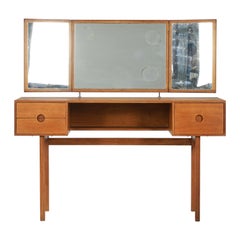
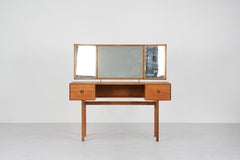
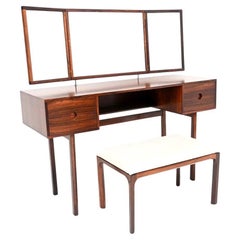
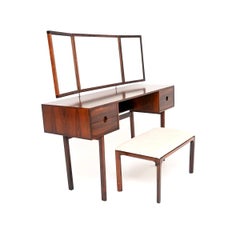
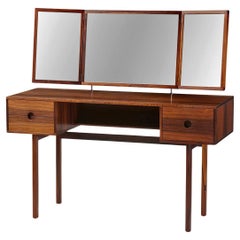
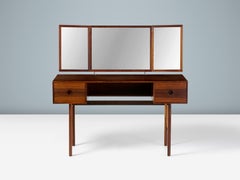
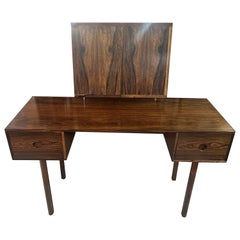
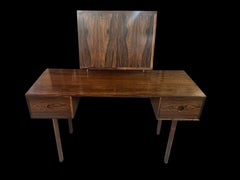
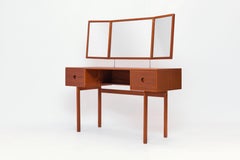
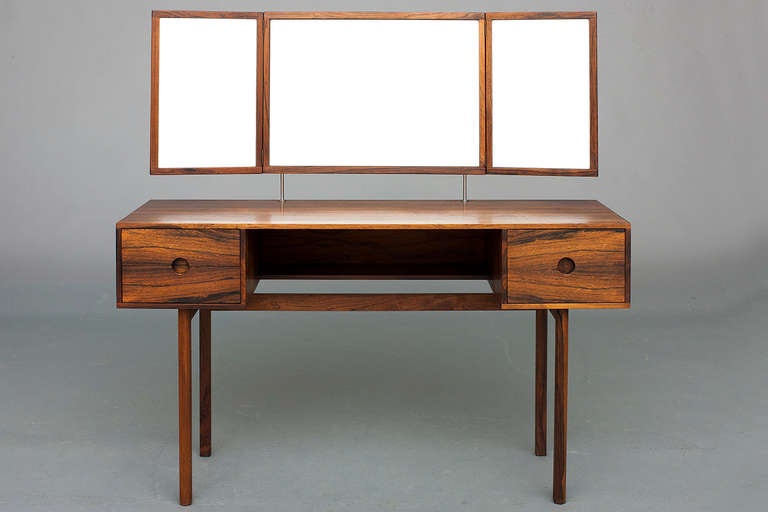
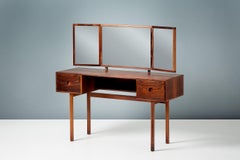
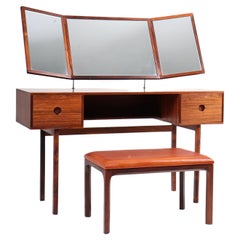
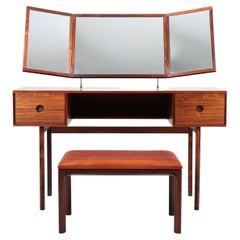
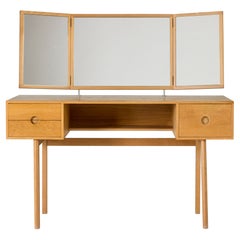
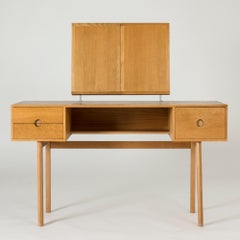
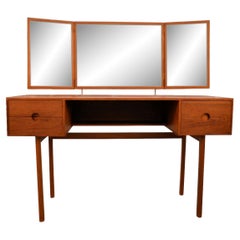
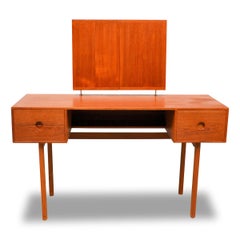
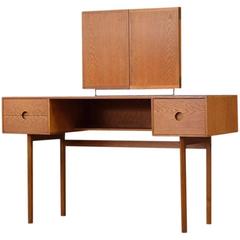
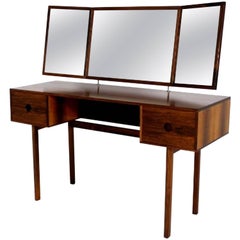
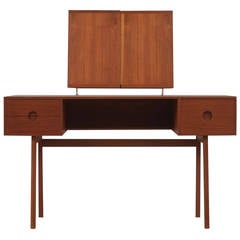
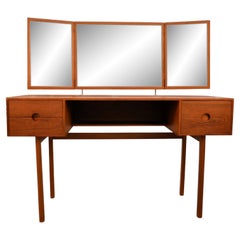
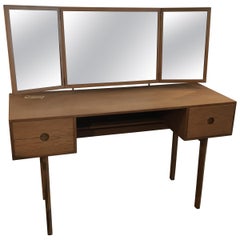
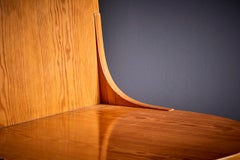
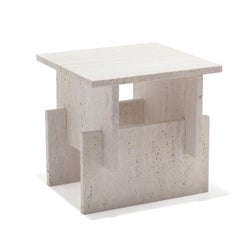
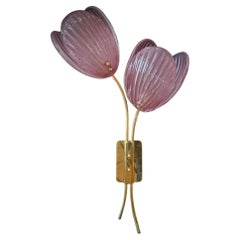
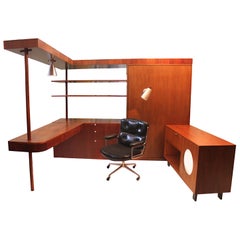
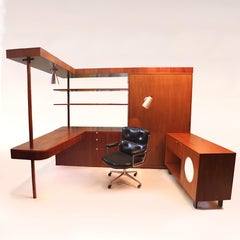
With a vast inventory of beautiful furniture at 1stDibs, we’ve got just the aksel kjersgaard dressing table you’re looking for. Frequently made of
wood,
glass and
mirror, every aksel kjersgaard dressing table was constructed with great care. Your living room may not be complete without a aksel kjersgaard dressing table — find older editions for sale from the 20th Century and newer versions made as recently as the 20th Century. When you’re browsing for the right aksel kjersgaard dressing table, those designed in
Scandinavian Modern and
Mid-Century Modern styles are of considerable interest. Many designers have produced at least one well-made aksel kjersgaard dressing table over the years, but those crafted by
Aksel Kjersgaard and
Kai Kristiansen are often thought to be among the most beautiful.
Danish designer Aksel Kjersgaard founded his eponymous furniture manufacturing company in 1952. Revered by mid-century furniture lovers for its straightforward approach to design of its classic mirrors, which are frequently framed in teak or rosewood — or the graceful, angular forms of its vintage case pieces and storage cabinets — Aksel Kjersgaard is eminently collectible today. It is among the manufacturers that popularized Scandinavian modernism on an international scale, and the popularity of the brand endures.
A master cabinetmaker, Kjersgaard had spent three years traveling through Europe and Morocco toiling in other workshops before he opened his own factory. When he returned to Odder, in his native country, he was eager to start creating his own furniture, and his sleek, minimalist dressers, sideboards, cabinets and wall mirrors debuted in 1955.
The factory quickly gained a sterling reputation for its focus on craftsmanship and Kjersgaard’s reluctance to embellish his handmade pieces with ornament or unnecessary decorative flourishes. Kjersgaard attracted many talents of the Scandinavian modernist movement (and continues to do so today).
Known for his Chair #42, which he created with Schou Andersen, designer Kai Kristiansen worked with the company through the 1950s and 1960s, and his side tables and chests became a hallmark of the brand. During the 1970s, architects and former Rud Rasmussen cabinetmakers Søren Nissen and Ebbe Gehl brought their expertise to the manufacturer, introducing a Shaker-influenced line that represented the start of what is now the very popular Naver collection, which is offered by way of a collaboration between Gramrode Møbelfabrik and Aksel Kjersgaard A/S.
Find vintage Aksel Kjersgaard mirrors, tables and other furniture on 1stDibs.
Vintage, new and antique vanity tables have forever felt like personal, intimate sanctuaries of sorts, designed to introduce a level of serenity that feels rare and welcome in our otherwise frenetic days. They’ve been variously known as dressing tables or makeup tables over the years, but no matter what we call them — and whether it's a sophisticated contemporary piece or an iconic vintage Luigi Massoni vanity — vanities have offered a special place for us to get ready for work, an early-morning appointment or lunch date or whatever lies ahead.
“Beauty routines, taking the time to protect what you have, a moment to accessorize, a moment to pause and slow down — these are all so important now as an antidote to our fast and hectic lives,” says Oona Bannon, creative director of Pinch Design in Clapham, South London. “Just thinking about a dressing table makes me feel calm.”
When decorative boxes would no longer suffice as repositories for cosmetics, fragrant oils and perfumes, dressing tables originated in France and England during the 17th century. Men who called the latter home used “shaving tables” — a proto-dressing table — for their grooming routines while women found in dressing tables an oasis for applying makeup, particularly as improvements upon vanity tables equipped them with mirrors and lighting. In the United States, as vanity tables became a seamless component of bedroom furniture, furniture makers working in Chippendale, Rococo and other styles were regularly commissioned to produce these popular items.
Vanity tables have evolved over the years, and while there is lots to love about the ornate carving and pronounced curvilinear forms of Victorian vanities, the clean lines that characterize mid-century modern vanities and the decorative flourishes associated with Art Deco vanities, the main elements of this furnishing are the same. All vanities are about as tall as a standard table with room for seating furniture, which tends to be a small bench, a stool or an armless chair. Many also have special organization features for makeup. Without a chair and a mirror, a vanity would resemble a dresser.
Nowadays, vanities are more than a place to do hair and makeup. They’re a platform to display beauty products and store makeup collections. Vanities are standard in bedrooms, particularly if you’re not lucky enough to have a spacious dressing room or walk-in closet for your dressing table. The better the lighting is in your bedroom or wherever you’ve positioned your vanity table — even if you’ve opted for a moody setting versus a bright one — the more you will benefit from having this personal place of respite to prepare for the day ahead.
Find your antique, new or vintage vanity table today on 1stDibs.