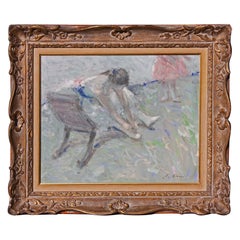
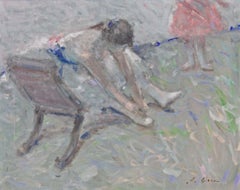
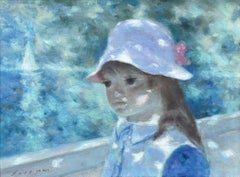
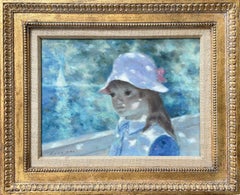
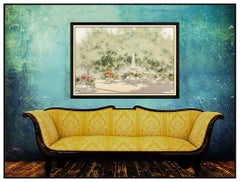
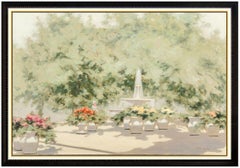
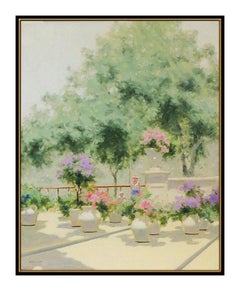
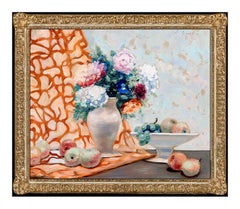
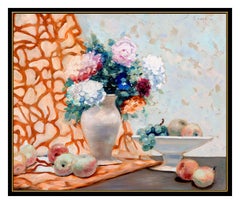
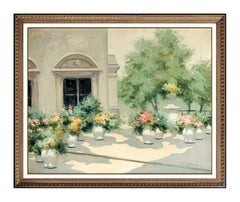
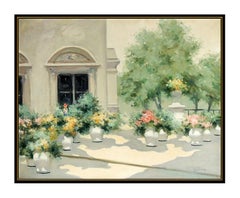
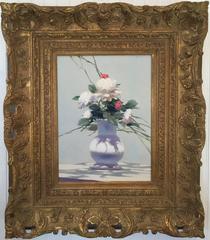
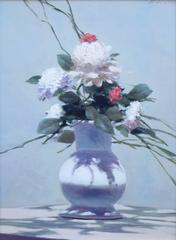
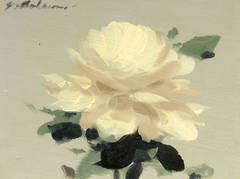
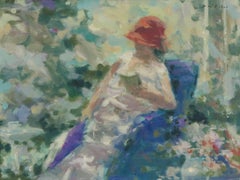
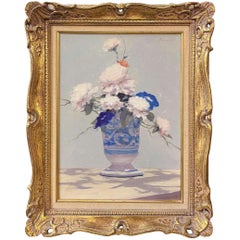
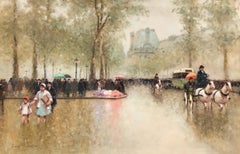
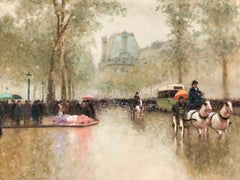
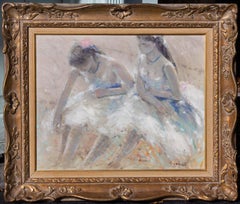
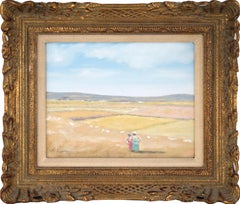
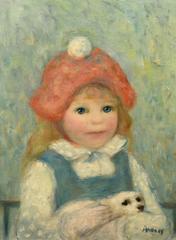
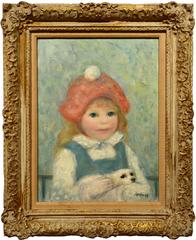
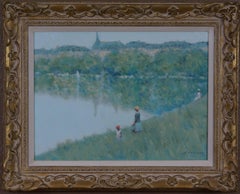
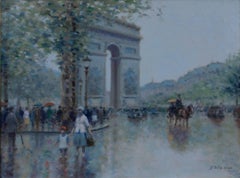
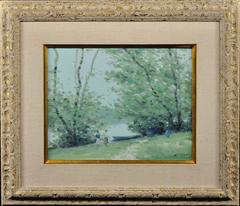
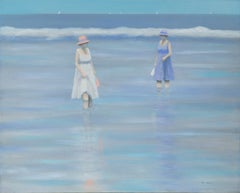
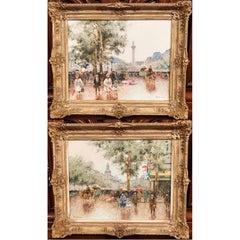
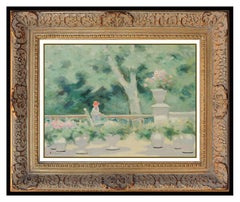
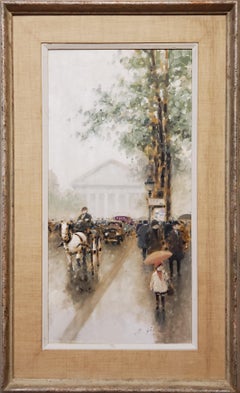
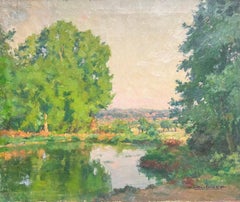
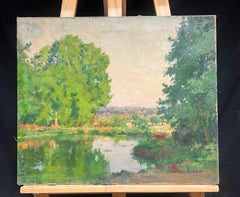
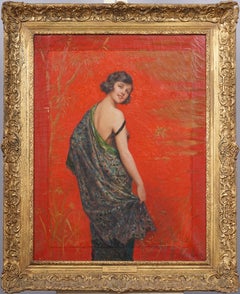
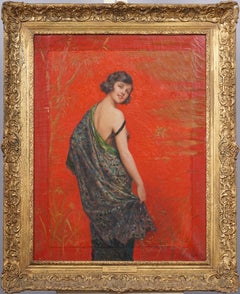
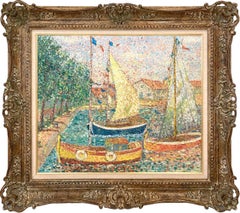
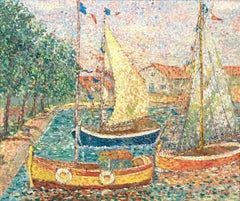
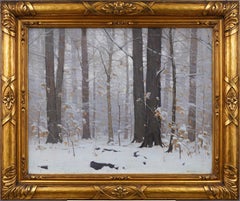
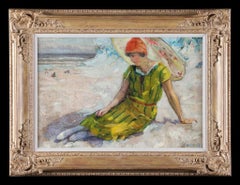
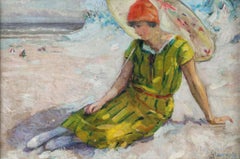
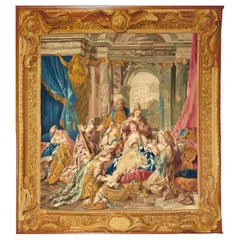
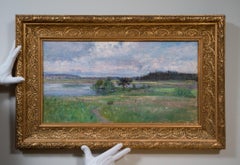
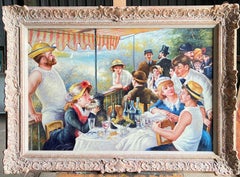
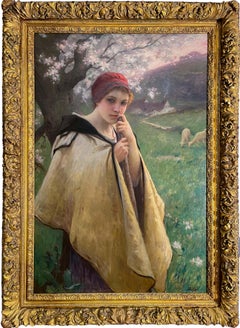
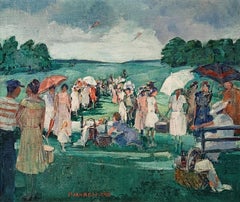
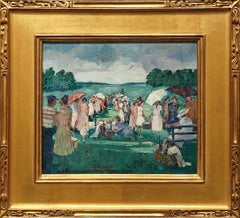
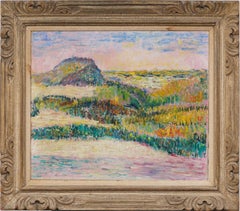
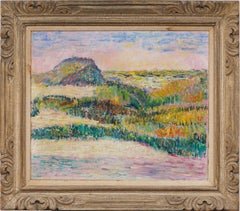
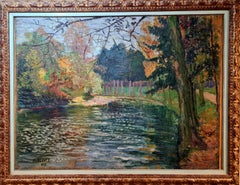
You are likely to find exactly the anders gisson you’re looking for on 1stDibs, as there is a broad range for sale. You can easily find an example made in the
Post-Impressionist style, while we also have 3
Post-Impressionist versions to choose from as well. On 1stDibs, the right anders gisson is waiting for you and the choices span a range of colors that includes
gray,
beige,
brown and
blue. A anders gisson from
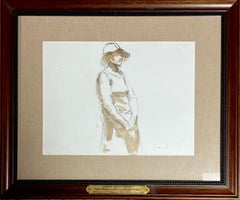
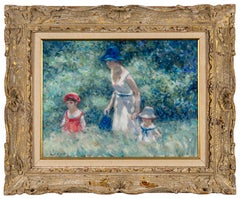
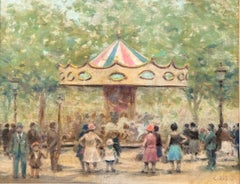
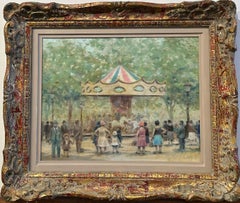
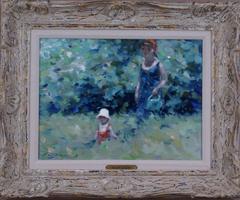
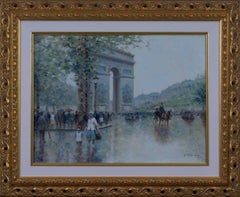
André Gisson and
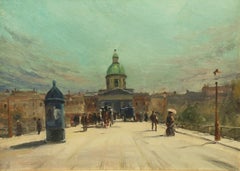
Constantine Kluge — each of whom created distinctive versions of this kind of work — is worth considering. Artworks like these — often created in
oil paint,
paint and
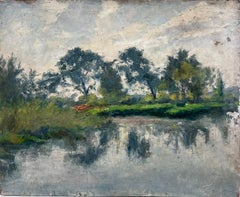
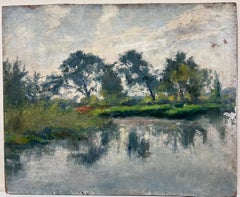
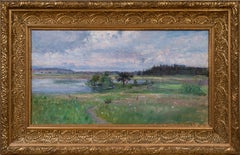
canvas — can elevate any room of your home. A large anders gisson can be an attractive addition to some spaces, while smaller examples are available — approximately spanning 12 high and 16 wide — and may be better suited to a more modest living area.
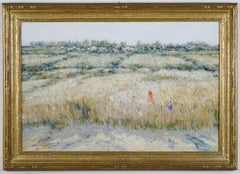
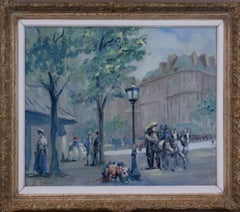
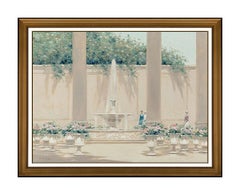
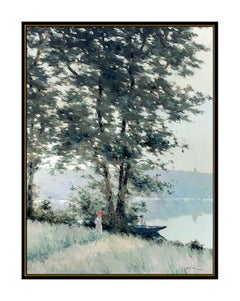
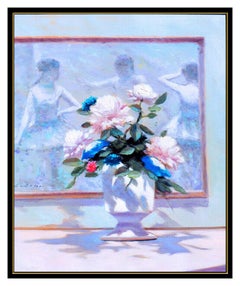
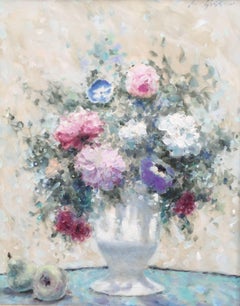
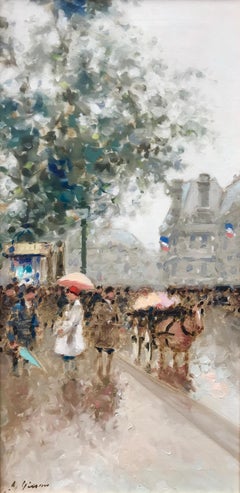
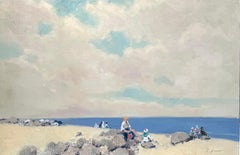
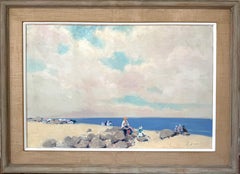
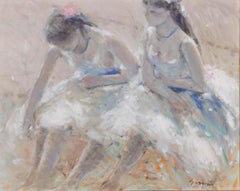
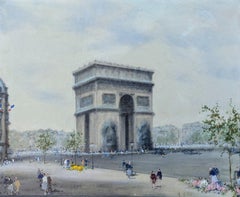
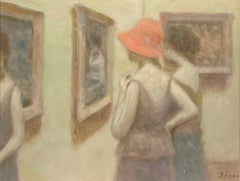
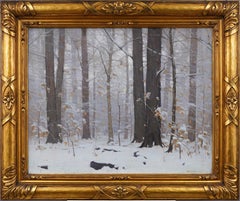
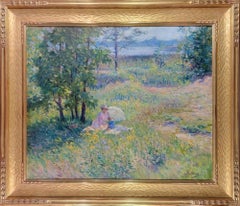
André Gisson was born 'Anders Gittelson' in 1921 in Brooklyn, New York. A widely-collected American Impressionist painter, he is known for landscape, still life, portrait and figure paintings. In order to be seen as belonging to the French Impressionist movement, he claimed to be a Frenchman born in 1910, and adopted the artist name 'André Gisson'.
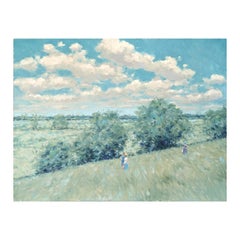
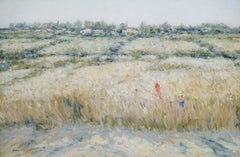
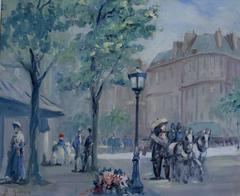
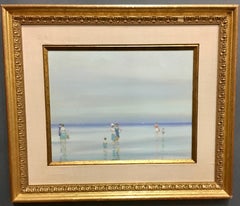
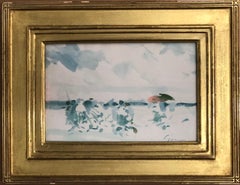
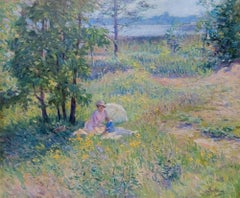
He lived in New York, Westport, Connecticut and France for much of his life, and traveled widely. He studied at the prestigious Pratt Institute in New York. After graduation, he joined the United States Army and become a captain during World War II. Gisson continued his studies in Europe, where he came under the influence of the great French impressionists. Upon his return to New York, he adapted the style and technique of impressionism and used small, broken brushwork and soft and vibrant colors. Gisson's landscapes and beach scenes depict the French countryside, where he painted every summer, and the region around Lake Mahopac in upstate New York, where he lived for many years.
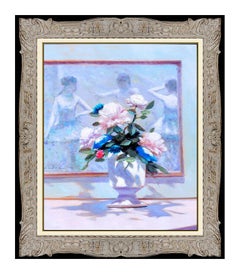
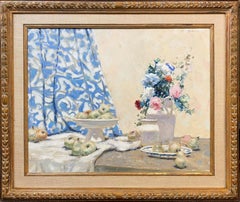
Gisson's still life compositions show a Japanese influence in his work; whereas the French influence is more pronounced in his landscapes and figures. Several of Gisson’s paintings have been published and distributed internationally. His works have been exhibited in leading art galleries throughout the country for over four decades, as a solo show extended from New York, Washington, Philadelphia, Texas and California, also overseas locations in London, Paris and Tokyo. His work are part of the collections of the Smithsonian Institution and the Triton Museum of Art, in North Carolina. Among his private collectors were President Lyndon B. Johnson and W. Somerset Maugham. Gisson died in 2003 in Atlanta, Georgia.
He was listed in The Artist's Yearbook (p. 332, 2000), Artists in the Southwest Art (p. 64, 1993) and Who Was Who in American Art (p. 1296, 1999).
Painting is an art form that has spanned innumerable cultures, with artists using the medium to tell stories, explore and communicate ideas and express themselves. To bring abstract paintings, landscape paintings, still-life paintings and other original paintings into your home is to celebrate and share in the long tradition of this discipline.
When we look at paintings, particularly those that originated in the past, we learn about history, other cultures and countries of the world. Like every other work of art, paintings — whether they are contemporary creations or works that were made during the 19th century — can often help us clearly see and understand the world around us in a meaningful and interesting way.
Cave walls were the canvases for what were arguably the world’s first landscape paintings, which depict natural scenery through art. Portrait paintings and drawings, which, along with sculpture, were how someone’s appearance was recorded prior to the advent of photography, are at least as old as Ancient Egypt. In the Netherlands, landscapes were a major theme for painters as early as the 1500s. Later, artists in Greece, Rome and elsewhere created vast wall paintings to decorate stately homes, churches and tombs.
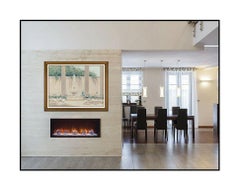
Today, creating a wall of art is a wonderful way to enhance your space, showcase beautiful pieces and tie an interior design together.
No matter your preference, whether you favor Post-Impressionist paintings, animal paintings, Surrealism, Pop art or another movement or specific period, arranging art on a blank wall allows you to evoke emotions in a room while also showing off your tastes and interests. A symmetrical wall arrangement may comprise a grid of four to six pieces or, for an odd number of works, a horizontal row. Asymmetrical arrangements, which may be small clusters of art or large, salon-style gallery walls, have a more collected and eclectic feel.
Download the 1stDibs app, which includes a handy “View on Wall” feature that allows you to see how a particular artwork will look on a particular wall, and read about how to arrange wall art. And if you’re searching for the perfect palette for your interior design project, what better place to turn than to the art world’s masters of color?
On 1stDibs, you’ll find an expansive collection of paintings and other fine art for your home or office. Browse abstract paintings, portrait paintings, paintings by emerging artists and more today.