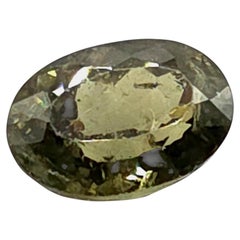
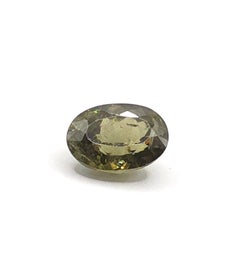
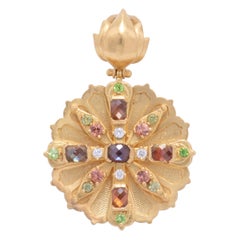
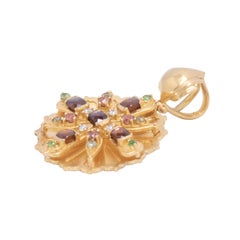
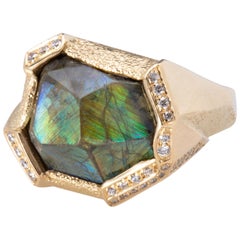
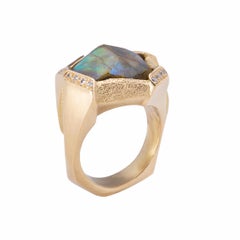
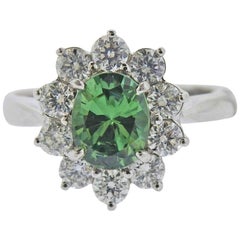
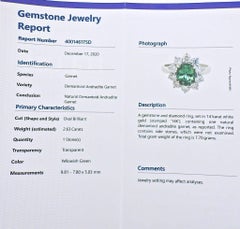
On 1stDibs, you can find the most appropriate piece of andradite jewelry for your needs in our varied inventory. Each design created in this style — which was crafted with great care and often made from
gold,
yellow gold and
14k gold — can elevate any look. You can easily find a 7 antique edition and 8 modern creations to choose from as well. Finding the perfect item from our selection of andradite jewelry may mean sifting through those created during different time periods — you can find an early version that dates to the 19th Century and a newer variation that were made as recently as the 21st Century. Finding an appealing choice in our collection of andradite jewelry — no matter the origin — is easy, but
Alexey Gabilo each produced a popular version that is worth a look. Today, if you’re looking for a
brilliant cut version of this piece and are unable to find the perfect match, our selection also includes
oval cut and
round cut alternatives. When shopping for an object in our assortment of andradite jewelry, you’ll find that there are less available pieces for unisex or
men today than there are for
women.
Vintage and antique garnet jewelry has been around for a long time.
Garnets have been used for adornment going all the way back to the Bronze Age. While we will never know if garnets can be used to prevent plagues or heal warriors, as has been suggested, we do know that both the Egyptians and the Romans felt that it was a worthy stone to set in gold for their nobility. In more “recent” times, garnets were ubiquitous in Victorian jewelry. The “G” in REGARD rings, the equivalent of the modern-day engagement ring, implied garnet.
Garnets were also highly valued in the region of Bohemia. The Smithsonian Museum of Natural History has in its collection an antique hairpin with Bohemian pyrope garnets from the Czech Republic. Bohemian pyrope got its name from Bohuslav Balbín, sometimes referred to as the “Czech Pliny,” in 1679. Abundant in the region, it was used often in jewelry during this time. In fact, it became so popular that in 1762, Empress Marie Terezie forbade its export. Stonecutting workshops opened in several regions across Bohemia, and pyrope became the country’s mineralogical symbol. While there was never a decline in its popularity, it was only in the mid-20th century that garnets enjoyed a revival.
Garnets can come in many shapes and sizes — one of the largest ever discovered is a 68.82-carat Tsavorite garnet. This stone is also in the collection of the Smithsonian Museum of Natural History.
According to the Gemological Institute of America, Brazil’s mines are rich in garnets, including spessartine, which can also be found in the Myanmar area, recognized for a specific shade of reddish-orange. While red garnets are the most popular, garnets actually come in a medley of colors.
Find a collection of antique and vintage garnet rings, necklaces and other jewelry today on 1stDibs.