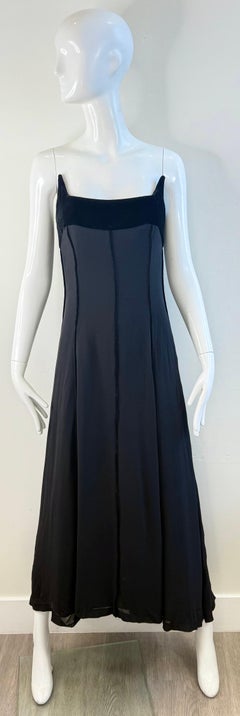
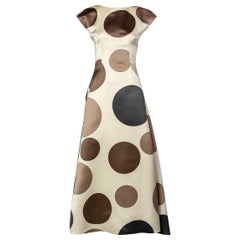
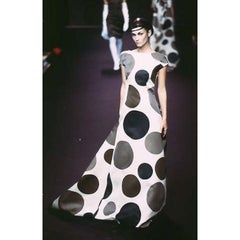
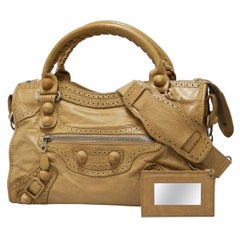
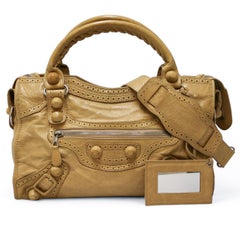
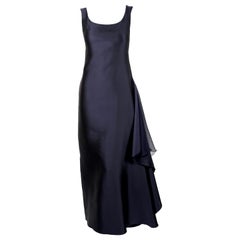
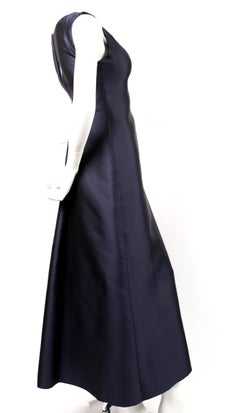
Starting as a modest boutique, Balenciaga evolved to transform the landscape of women’s fashion with shapes and contours during the middle of the 20th century that were nothing less than groundbreaking. Today, the brand is as venturesome as ever and is well known for its shoes, handbags, sneakers, streetwear and other clothing and accessories.
Though he was born in the quiet fishing village of Getaria in Spain’s Basque region, Cristóbal Balenciaga (1895–1972) was destined to reshape modern fashion. As a child, he worked alongside his seamstress mother. Showing immense talent, he earned commissions as a teenager from local patron Marquesa de Casa Torres, who paid for his tailoring education in Madrid. In 1917, he established his first haute couture house — named Eisa, for his mother — in the trendy resort town San Sebastián. He soon followed it with boutiques in Madrid and Barcelona, drawing such clientele as the Spanish royal family.
When the Spanish Civil War put a hold on his prospects in Spain, the designer moved to Paris, opening a house on Avenue Georges V in 1937. There, Balenciaga rubbed elbows with fashion greats like Coco Chanel and Elsa Schiaparelli and quickly won over clients like Gloria Guinness, Pauline de Rothschild and Wallis Simpson, Duchess of Windsor.
As a couturier, Balenciaga drew from his Spanish heritage for ideas, riffing on everything from matador costumes and flamenco dresses to the paintings of Diego Velázquez, whose portraits of Spanish princesses famously inspired Balenciaga’s Infanta gown.
An expert tailor, he experimented with sculptural silhouettes that didn’t follow the body. Some of his notable designs include the 1953 balloon jacket, and from 1957, the cocoon coat, the baby-doll dress and the sack dress, which he popularized with his good friend designer Hubert de Givenchy. All of these could be considered not just the masterpieces of haute couture, but also objets d’art in their own right, leading to Balenciaga’s nickname, “The Master.”
Balenciaga continued designing until 1968, when he retired after three decades of influential work and his fashion house went dormant. The rights to Balenciaga were acquired by Jacques Bogart S.A. in 1986. Under designer Michel Goma, who focused on ready-to-wear, the brand experienced a resurgence, with his first collection introduced in 1987.
The brand returned to high fashion with the arrival of designer Josephus Thimister in 1992. It has since been led by a series of creative directors who have paid homage to Balenciaga’s iconic designs, including Nicolas Ghesquière, Alexander Wang and, most recently, Demna Gvasalia. In 2011, a museum celebrating Balenciaga’s legacy opened in his hometown in Spain, commemorating where it all began.
On 1stDibs, find vintage Balenciaga crossbody bags, tote bags, day dresses, shirts and more.
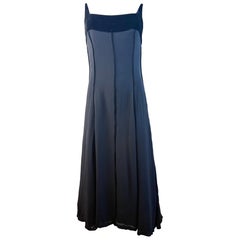
For fashion lovers, the 1990s have become associated with styles adopted by today’s supermodels and influencers, who never wear the same thing twice. And because fast fashion didn’t yet exist, the design associated with 1990s fashion — vintage '90s handbags, clothing and accessories — has a quality appreciated by the millennial generation: authenticity.
If there was one concept unifying fashion in the 1990s, it was the lean silhouette. “Fashion is a game of proportion,” Alexander Fury wrote in the New York Times in 2016. “Narrow-shouldered and narrow-hipped, the ’90s were skinny.”
If it takes a practiced eye to identify that single concept, that’s because in truth, ’90s fashion was many things to many people. After the 1980s era of strong-shouldered working women, glossy aerobicized bodies and Madonna, fashion branched out.
The industry gained momentum from big-money relaunches of the great Paris houses Dior, Givenchy and Balenciaga, rescued at long last from the constraints of licensing. Japan and Belgium gave fashion new avant-garde ideas to play with. From America came denim, minimalism, '90s grunge fashion and hip-hop. From Italy came sex appeal. And Prada.
For the colorful corsets of her 1990 Portrait collection, audacious British designer Dame Vivienne Westwood drew on 18th-century oil paintings — her models donned the pearl choker necklaces that have become a social media star and a favorite of influencers and fashion lovers all over the world. For a jacket-and-shorts suit from her Fall/Winter 1996–97 Storm in a Teacup line, the designer used the extreme asymmetry of a tartan mash-up to confront, according to Westwood, “the horror of uniformity and minimalism.”
“The ethos of the time was, you could have style, you could be into all kinds of cool stuff. It wasn’t about money, it wasn’t about status,” says Katy Rodriguez, cofounder of Resurrection. In contrast, “our last 10 years have seen the domination of nonstop luxury, money and status.”
Vintage 1990s Chanel bags, for example, are among the most prized of the brand’s offerings — at Newfound Luxury, proprietor L. Kiyana Macon has "clients who only buy ’90s Chanel because they recognize that it is the best quality.”
Things were different in the ’90s, and the difference is reflected in the clothes. Pull up any recent “How to Do the 1990s” fashion article (or look at photos of current supermodels Gigi, Kendall and Bella), and you’ll see iconic '90s outfits — knee socks, cardigans, fanny packs, fishnet stockings, slip dresses, flannel shirts and combat boots.
Rodriguez has recently noticed something similar happening. Before COVID, customers searched 1990s stock “for very sexy Galliano, Dior, Cavalli — that kind of thing,” she explains, noting that just a few months ago, “people were posting [on social media] the poshest things they could.” Now, in the age of shutdown, “that would just look out of touch.”
Instead, people are looking for “things that are cool but also easy and comfortable, not necessarily super-luxe,” Rodriguez continues. They’re “heading back to the more avant-garde, anti-fashion designers, like Helmut Lang, [Martin] Margiela and [Ann] Demeulemeester.”
Late designer Franco Moschino shocked and titillated the ’80s fashion elite with his whimsical, irreverent parodies of bourgeois finery. Whether emblazoning a sober blazer with smiley faces or embellishing a skirt suit with cutlery, Moschino rendered high style with a hearty wink. He famously said, “If you can’t be elegant, at least be extravagant” — words that, with all due respect to Susan Sontag, epitomize the essence of camp.
Vintage Moschino pants, jackets and other '90s Moschino garments remain so bold and fresh today that even the house's former creative director, Jeremy Scott, drew on the brand's past and the pop culture of the decade for his debut collection in 2014.
Find vintage 90s dresses, skirts, sweaters and other clothing and accessories on 1stDibs — shop Thierry Mugler, Miuccia Prada, Jean Paul Gaultier and more today.
With entire museum exhibitions dedicated to examining fashion designers and their creations, we’re finally recognizing that costuming is art. Evening dresses over time have conveyed specific statements about social class, position and beliefs. Fashion is a powerful means of self-expression, and sophisticated vintage evening dresses and gowns by our favorite couturier play no small role in making us feel wonderful but, perhaps more importantly, making us feel like ourselves.
In the 16th century, dresses and gowns were so important that England's Queen Elizabeth I defined rules about what dresses women could wear — guidance included long skirts and fitted bodices. Forward-thinking designers have responded to this history.
Gabrielle “Coco” Chanel reimagined traditionally masculine garments for feminine shapes, and her elegant evening dresses and gowns promoted comfort and grace in women’s wear that had been dominated in the previous century by layers of fabric. Christian Dior's gowns celebrated luxury and femininity in the late 1940s — and gave to women the gift of glamour they’d lost in the miserable years of the war. French fashion designer Yves Saint Laurent introduced innovative and highly coveted dress designs in the 1960s while at the same time challenging sexist stereotypes about which members of society could wear tuxedos.
Works by unconventional British designer John Galliano — featured in houses like Givenchy and Dior — redefined limits that dressmakers faced in terms of material, construction and vision during the late 20th century. From his embroidered absinthe-green Oscars gown for actress Nicole Kidman to the iconic sleeveless Dior newspaper dress that Sex and the City’s Carrie Bradshaw made famous, Galliano’s intricate and multifaceted work is reliably collectible and newsworthy
Today’s designers target an increasingly broad audience with their boundary-crossing work, and their tendency to play off of each other’s ideas means that every walk down the runway is also a walk through an entire history of fashion design and dress craftsmanship.
Whether you gravitate toward backless maxi dresses or silk charmeuse gowns by Alexander McQueen or embellished, ruffled floral-print designs by Chloe or Versace, there is an extraordinary collection of vintage and designer evening dresses and gowns waiting for you on 1stDibs.