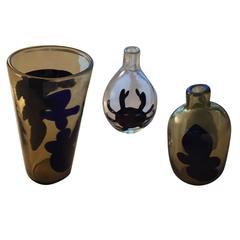
Bianconi Macchie

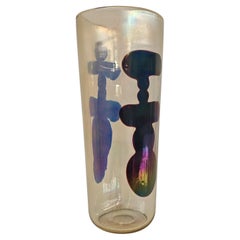
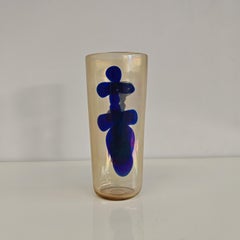
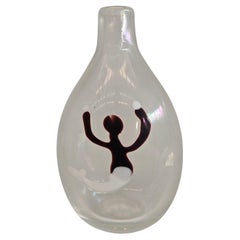
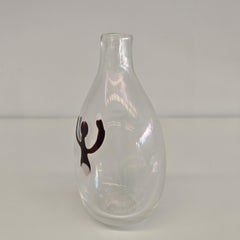
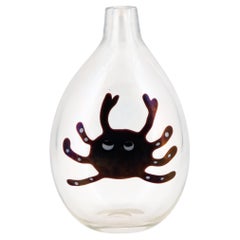
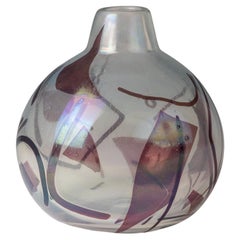
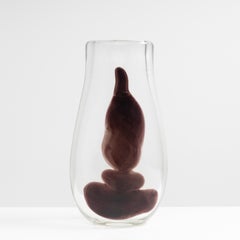
Macchie Vase 'Model 4321', Fulvio Bianconi, Venini Murano, 'Italy'

Macchie Vase 'Model 4321', Fulvio Bianconi, Venini Murano, 'Italy'

By Fulvio Bianconi, Venini

Located in Uccle, BE

It bears the 3-line "venini murano italia" acid stamp. The series of macchie vases can be considered one of the most desirable series by Fulvio Bianconi for Venini.

Category

Vintage 1950s Italian Mid-Century Modern Vases

Materials

Blown Glass

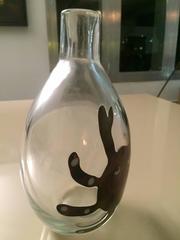
venini Fulvio Bianconi artistic murano vase series "a Macchie" 1950s

venini Fulvio Bianconi artistic murano vase series "a Macchie" 1950s

$19,540Sale Price|63% Off

H 10.83 in Dm 4.73 in

venini Fulvio Bianconi artistic murano vase series "a Macchie" 1950s

By Fulvio Bianconi, Venini

Located in Milano, Lombardia

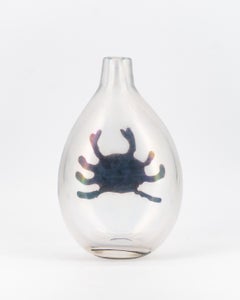
Questo vetro artistico appartiene alla serie "A Macchie" disegnata all'inizio degli anni 50 da Fulvio Bianconi per la fiera Biennale di Venezia Firma "Venini Murano Italia" acidata ...

Category

Mid-20th Century Italian Mid-Century Modern Glass

Materials

Murano Glass

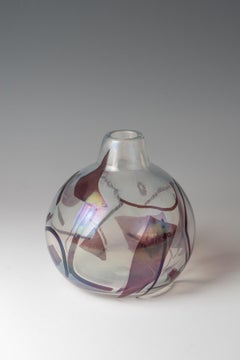
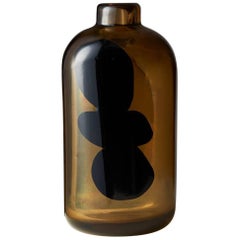
Venini iridescent Murano vase series "A Macchie" by Fulvio Bianconi Italy 1950

Venini iridescent Murano vase series "A Macchie" by Fulvio Bianconi Italy 1950

By Fulvio Bianconi, Venini

Located in Milano, Lombardia

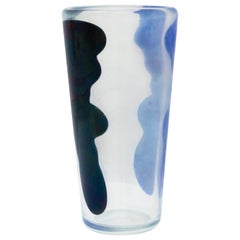
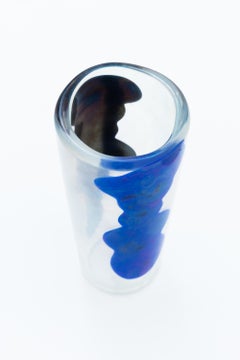
Raro vaso disegnato negli anni 50 da Fulvio Bianconi per Venini. La serie "a Macchie" Il vaso in vetro soffiato disegnato dall'artista con inserti pittorici astratti.

Category

Early 20th Century Italian Mid-Century Modern Glass

Materials

Murano Glass

Recent Sales

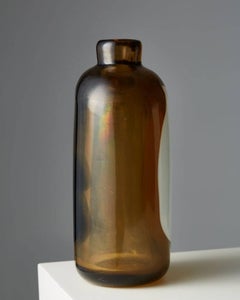
"A macchie" Vase Mod. 4323 by Fulvio Bianconi for Venini

"A macchie" Vase Mod. 4323 by Fulvio Bianconi for Venini

By Fulvio Bianconi

Located in Munich, DE

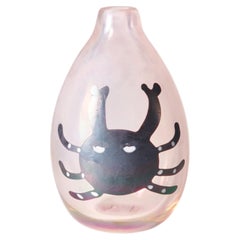
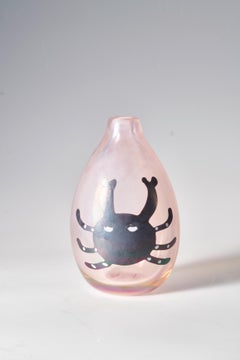
An important piece by Fulvio Bianconi, for Venini, Murano: Vase a macchie (with patches) in transparent glass with polychrome inclusions.

Category

Vintage 1950s Italian Mid-Century Modern Vases

Materials

Blown Glass

Three Most Important "A Macchie" by Fulvio Bianconi for Venini, 1950

Three Most Important "A Macchie" by Fulvio Bianconi for Venini, 1950

By Venini, Fulvio Bianconi

Located in Zurich, CH

Fulvio Bianconi at Venini "A Macchie"  with patches, 1950.

Category

Vintage 1950s Italian Mid-Century Modern Vases

Materials

Blown Glass

Vase A Macchie Designed by Fulvio Bianconi for Venini, Italy, 1950s

Vase A Macchie Designed by Fulvio Bianconi for Venini, Italy, 1950s

By Fulvio Bianconi

Located in Stockholm, SE

Vase A Macchie designed by Fulvio Bianconi for Venini, Italy, 1950s.

Category

Vintage 1950s Italian Mid-Century Modern Vases

Materials

Glass

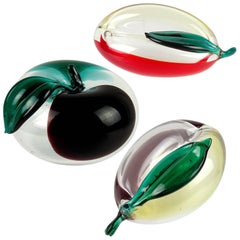
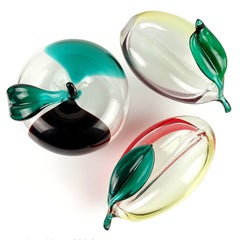
Venini Fulvio Bianconi Murano Macchie Italian Art Glass Fruit Sculpture Set

Venini Fulvio Bianconi Murano Macchie Italian Art Glass Fruit Sculpture Set

By Venini, Fulvio Bianconi

Located in Kissimmee, FL

Documented to designer Fulvio Bianconi for Venini. There is an apple, and 2 other fruit pieces, with applied leafs in the "Macchie" design.

Category

Mid-20th Century Italian Mid-Century Modern Figurative Sculptures

Materials

Art Glass, Blown Glass, Murano Glass, Sommerso, Glass

People Also Browsed

Mid-Century Modern Murano Glass Vase by Ercole Barovier, Green, 1940

Mid-Century Modern Murano Glass Vase by Ercole Barovier, Green, 1940

By Barovier&Toso, Ercole Barovier

Located in West Palm Beach, FL

A light-green, vintage Mid-Century modern Italian single vase made of hand blown slightly smoked, colored Murano glass, designed by Ercole Barovier and produced by Barovier & Tos...

Category

Mid-20th Century Italian Mid-Century Modern Vases

Materials

Murano Glass

Napoleone Martinuzzi for Venini Red Cactus Succulent Sculpture, Signed, 1929

Napoleone Martinuzzi for Venini Red Cactus Succulent Sculpture, Signed, 1929

$126,300Sale Price|25% Off

H 33.08 in W 17.72 in D 5.91 in

Napoleone Martinuzzi for Venini Red Cactus Succulent Sculpture, Signed, 1929

By Venini, Napoleone Martinuzzi

Located in Brooklyn, NY

Napoleone Martinuzzi for Venini red Cactus Succulent sculpture, Signed, 1929. Exceedingly rare example of a signed Venini succulent by Matinuzzi. Museum-worthy masterwork by Martin...

Category

Vintage 1920s Italian Mid-Century Modern Figurative Sculptures

Materials

Glass, Art Glass, Blown Glass, Murano Glass

Napoleone Martinuzzi, Bassotto Giallo Sculpture, White & Gold Venini Murano 1930

Napoleone Martinuzzi, Bassotto Giallo Sculpture, White & Gold Venini Murano 1930

$43,800Sale Price|25% Off

H 6.5 in W 18.12 in D 3.55 in

Napoleone Martinuzzi, Bassotto Giallo Sculpture, White & Gold Venini Murano 1930

By Napoleone Martinuzzi, Venini

Located in Brooklyn, NY

Napoleone Martinuzzi, Bassotto Giallo (Yellow Dachsund) sculpture, white & gold Venini Murano 1930 Exceedingly rare example of a signed Venini large-scale Dachsund Dog Sculpture by N...

Category

Vintage 1930s Italian Mid-Century Modern Figurative Sculptures

Materials

Gold

Ercole Barovier Toso Murano 1954 Purple Gold Flecks Italian Art Glass Vase

Ercole Barovier Toso Murano 1954 Purple Gold Flecks Italian Art Glass Vase

By Barovier&Toso, Ercole Barovier

Located in Kissimmee, FL

Beautiful and rare, vintage Murano hand blown amethyst purple and yellow stripes, with gold flecks Italian art glass flower vase. Documented to designer Ercole Barovier, for Barovier...

Category

Mid-20th Century Italian Mid-Century Modern Vases

Materials

Gold Leaf

Flavio Poli for Seguso Sommerso Vase Murano ca. 1960s

Flavio Poli for Seguso Sommerso Vase Murano ca. 1960s

By Flavio Poli, Seguso Vetri d'Arte

Located in Berghuelen, DE

Flavio Poli for Seguso Sommerso Vase Murano ca. 1960s A large sommerso art glass vase manufactured by Seguso Vetri D'Arte and designed by Flavio Poli in the 1960ties. Manufactured i...

Category

Mid-20th Century Italian Mid-Century Modern Vases

Materials

Art Glass, Murano Glass

Fulvio Bianconi Bowl Pezzato Americano, Venini, Murano 1950s

Fulvio Bianconi Bowl Pezzato Americano, Venini, Murano 1950s

By Fulvio Bianconi, Venini

Located in Berghuelen, DE

A Pezzato Americano bowl in yellow, green, straw and black colored glass designed by Fulvio Bianconi in 1950. Manufactured by Venini, Venice ca. 1950s. With acid etched signature "Ve...

Category

Mid-20th Century Italian Mid-Century Modern Decorative Bowls

Materials

Art Glass, Murano Glass

Flavio Poli Valva Vase Model 9826 for Seguso Vetri d'Arte, Italy 1954

Flavio Poli Valva Vase Model 9826 for Seguso Vetri d'Arte, Italy 1954

$11,368Sale Price|20% Off

H 4.81 in W 12.8 in D 10.44 in

Flavio Poli Valva Vase Model 9826 for Seguso Vetri d'Arte, Italy 1954

By Flavio Poli, Seguso Vetri d'Arte

Located in Milan, IT

Rare Flavio Poli Valva vase Model 9826 for Seguso Vetri d'Arte, Italy 1954 Reference: Seguso Vetri d'Arte / M. Heiremans.

Category

Vintage 1950s Italian Mid-Century Modern Glass

Materials

Murano Glass

"Scozzese" Vase 4595 by Fulvio Bianconi for Venini, 1954-1957

"Scozzese" Vase 4595 by Fulvio Bianconi for Venini, 1954-1957

By Fulvio Bianconi

Located in Brussels, BE

"Scozzese" vase 4595 by Fulvio Bianconi for Venini, 1954-1957.

Category

Mid-20th Century Italian Mid-Century Modern Vases

Materials

Murano Glass

Vase Sign: Schneider ( Jade Decoration ), France, 1922, Art Deco

Vase Sign: Schneider ( Jade Decoration ), France, 1922, Art Deco

By Charles Schneider

Located in Ciudad Autónoma Buenos Aires, C

Logistics and International Shipping We provide a comprehensive export service so that your only concern is enjoying your acquisition. • Door-to-Door Service: Pieces located in our A...

Category

Vintage 1920s French Art Deco Glass

Materials

Art Glass

Get Updated with New Arrivals
Save "Bianconi Macchie", and we’ll notify you when there are new listings in this category.

Fulvio Bianconi for sale on 1stDibs

For a range of work that includes everything from illustrating thousands of books and other publications to his role as a visionary glassmaker, Fulvio Bianconi is remembered as one of the most innovative cross-disciplinarian artists of the postwar era.

Born in Ponte di Brenta in 1915, Bianconi showed a prodigious talent for drawing at an early age and, as a teenager, earned money as a portraitist. He also worked as an apprentice decorator in his youth at the Murano glass furnaces, where he first discovered the art of glassmaking.

In 1933, he moved to Milan to pursue a career as a graphic artist, and it was there he met Dino Villani, a painter who had ties to some of Milan’s most prestigious publishing houses and advertising firms. However, at the onset of World War II, Bianconi paused his graphic design ambitions and joined the army. In 1944, he narrowly escaped the infamous Via Rasella Nazi raids in German-occupied Rome.

Following the war, Bianconi went to work designing perfume bottles for the Milan perfume house Giviemme at Venini glassworks, where he worked with glass masters Ermete and Arturo Biassuto. Bianconi became one of Venini’s most influential glass designers — and was appointed artistic director following Carlo Scarpa — known for his bold use of color, modern style and unique, playful designs.

Among Bianconi's most iconic works in glass are the series of glass figures from the Commedia dell’Arte, his remarkably fluid bowls, and the patchwork “Pezzato” technique — his colorful vases created with this technique feature patterns that resemble those of a patchwork quilt. Works made in this fashion caused a sensation at the 25th Venice Biennale in 1950.

Venini co-founder Paolo Venini’s best designs are thought to be his two-color Clessidre hourglasses, produced from 1957 onward, and the Fazzoletto (“handkerchief”) vase, designed with Bianconi in 1949. 

Bianconi worked with several other glass studios, including Cenedese in 1954 and Vistosi in 1963, creating decorative vessels, bowls, hourglasses and sculptures. He was also a graphic designer with the Italian publishing house Garzanti for nearly 30 years. Bianconi’s portfolio of graphic design included work for FIAT, Pathé and Pirelli, among others.

Bianconi’s glassworks are held in museum collections worldwide, including London’s Victoria and Albert Museum, the Museum of Modern Art and the Corning Museum of Glass in New York. The artist died in 1996.

On 1stDibs, discover a range of vintage Fulvio Bianconi decorative objects, glassware and lighting.

A Close Look at Mid-century-modern Furniture

Organically shaped, clean-lined and elegantly simple are three terms that well describe vintage mid-century modern furniture. The style, which emerged primarily in the years following World War II, is characterized by pieces that were conceived and made in an energetic, optimistic spirit by creators who believed that good design was an essential part of good living.

ORIGINS OF MID-CENTURY MODERN FURNITURE DESIGN

CHARACTERISTICS OF MID-CENTURY MODERN FURNITURE DESIGN

MID-CENTURY MODERN FURNITURE DESIGNERS TO KNOW

ICONIC MID-CENTURY MODERN FURNITURE DESIGNS

VINTAGE MID-CENTURY MODERN FURNITURE ON 1STDIBS

The mid-century modern era saw leagues of postwar American architects and designers animated by new ideas and new technology. The lean, functionalist International-style architecture of Le Corbusier and Bauhaus eminences Ludwig Mies van der Rohe and Walter Gropius had been promoted in the United States during the 1930s by Philip Johnson and others. New building techniques, such as “post-and-beam” construction, allowed the International-style schemes to be realized on a small scale in open-plan houses with long walls of glass.

Materials developed for wartime use became available for domestic goods and were incorporated into mid-century modern furniture designs. Charles and Ray Eames and Eero Saarinen, who had experimented extensively with molded plywood, eagerly embraced fiberglass for pieces such as the La Chaise and the Womb chair, respectively. 

Architect, writer and designer George Nelson created with his team shades for the Bubble lamp using a new translucent polymer skin and, as design director at Herman Miller, recruited the Eameses, Alexander Girard and others for projects at the legendary Michigan furniture manufacturer

Harry Bertoia and Isamu Noguchi devised chairs and tables built of wire mesh and wire struts. Materials were repurposed too: The Danish-born designer Jens Risom created a line of chairs using surplus parachute straps for webbed seats and backrests.

The Risom lounge chair was among the first pieces of furniture commissioned and produced by celebrated manufacturer Knoll, a chief influencer in the rise of modern design in the United States, thanks to the work of Florence Knoll, the pioneering architect and designer who made the firm a leader in its field. The seating that Knoll created for office spaces — as well as pieces designed by Florence initially for commercial clients — soon became desirable for the home.

As the demand for casual, uncluttered furnishings grew, more mid-century furniture designers caught the spirit.

Classically oriented creators such as Edward Wormley, house designer for Dunbar Inc., offered such pieces as the sinuous Listen to Me chaise; the British expatriate T.H. Robsjohn-Gibbings switched gears, creating items such as the tiered, biomorphic Mesa table. There were Young Turks such as Paul McCobb, who designed holistic groups of sleek, blond wood furniture, and Milo Baughman, who espoused a West Coast aesthetic in minimalist teak dining tables and lushly upholstered chairs and sofas with angular steel frames.

Generations turn over, and mid-century modern remains arguably the most popular style going. As the collection of vintage mid-century modern chairs, dressers, coffee tables and other furniture for the living room, dining room, bedroom and elsewhere on 1stDibs demonstrates, this period saw one of the most delightful and dramatic flowerings of creativity in design history.