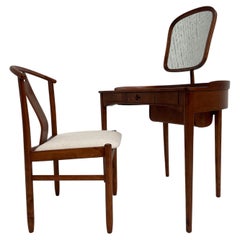
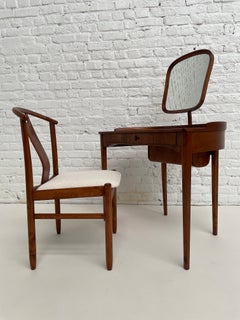
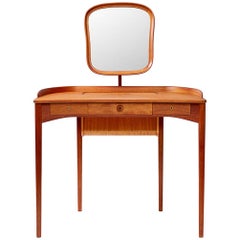
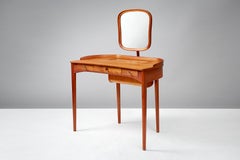
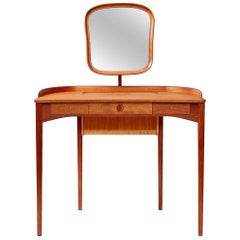
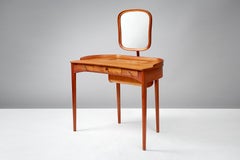
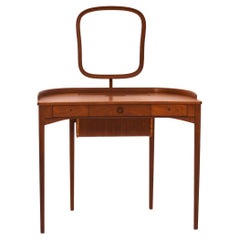
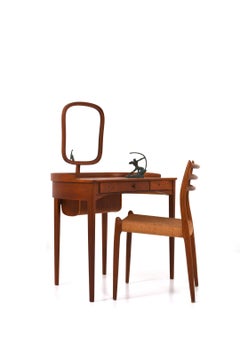
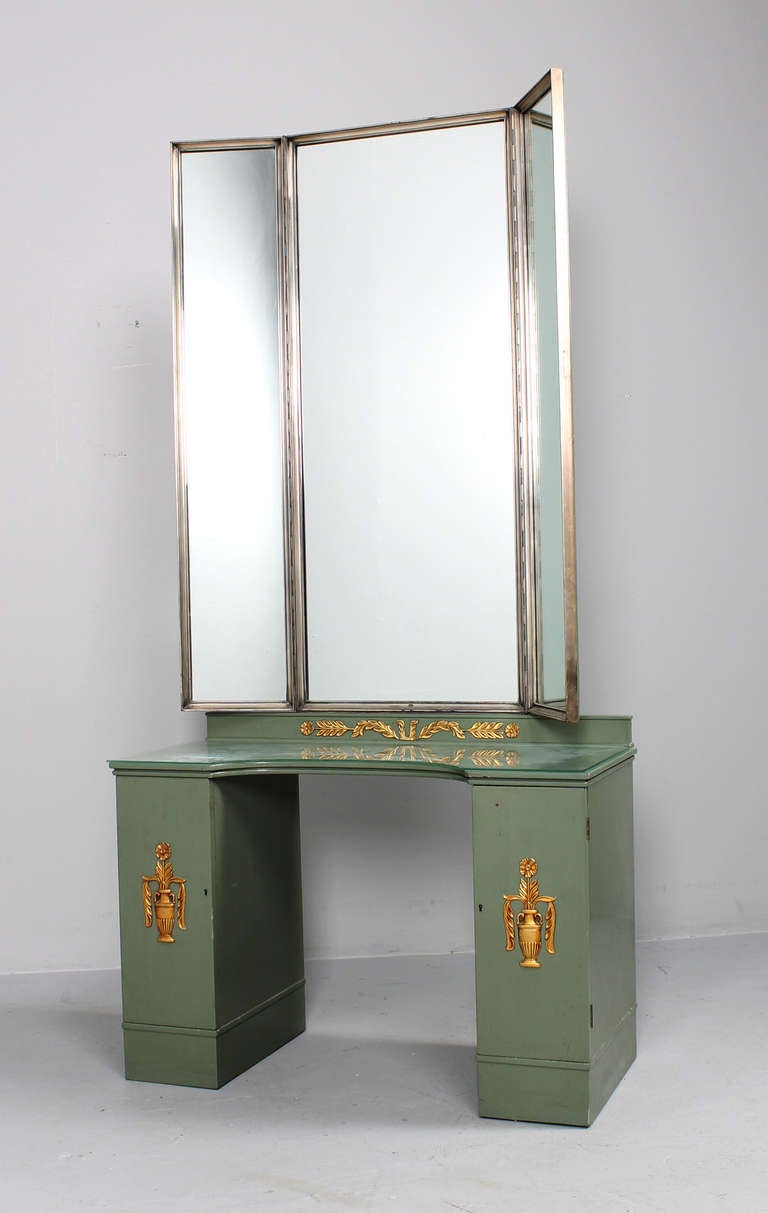
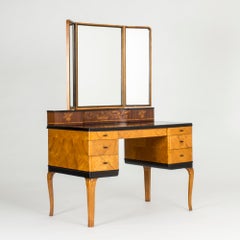
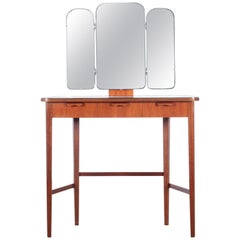
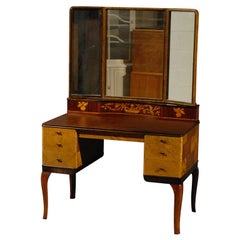
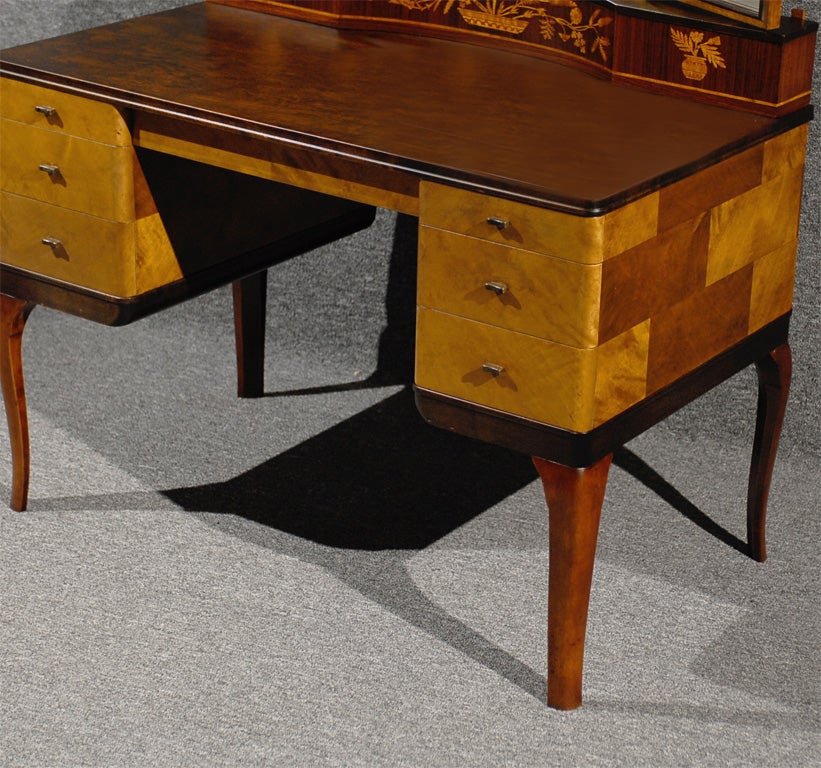
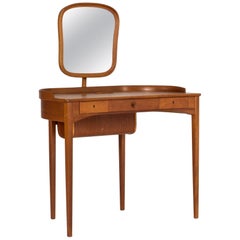
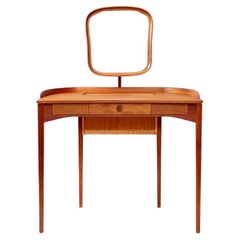
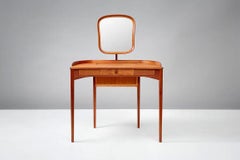
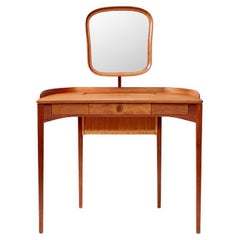
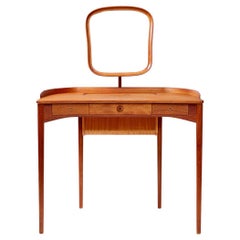
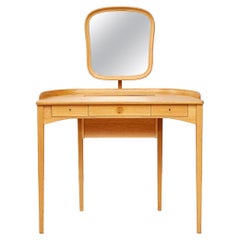
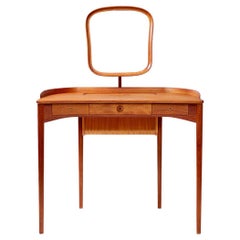
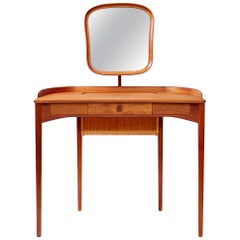
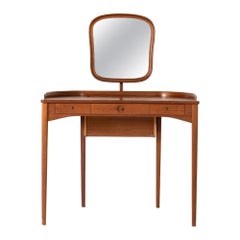
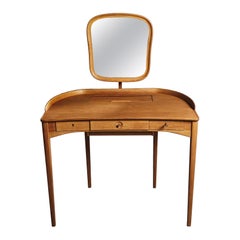
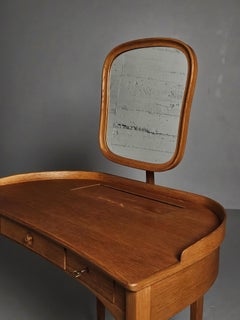
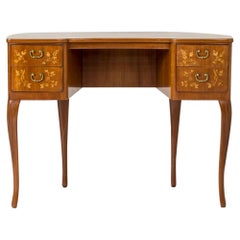
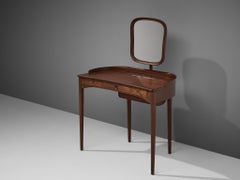
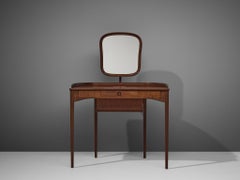
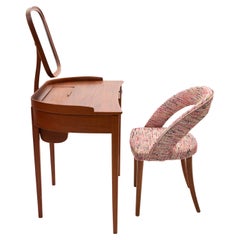
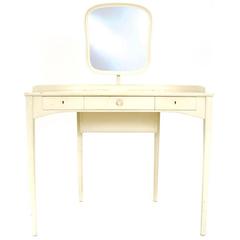
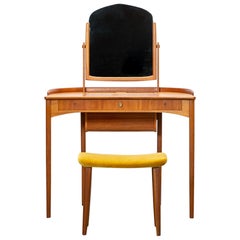
Find many varieties of an authentic carl malmsten dressing table available at 1stDibs. A carl malmsten dressing table — often made from
wood,
mahogany and
glass — can elevate any home. Whether you’re looking for an older or newer carl malmsten dressing table, there are earlier versions available from the 20th Century and newer variations made as recently as the 20th Century. A carl malmsten dressing table made by
Scandinavian Modern designers — as well as those associated with
Mid-Century Modern — is very popular.
Prices for a carl malmsten dressing table can differ depending upon size, time period and other attributes — at 1stDibs, they begin at $1,476 and can go as high as $8,612, while the average can fetch as much as $4,823.
Carl Malmsten, a prominent furniture designer and educator associated with Swedish modernism, enjoyed immense popularity for his shapely sofas and armchairs in luscious color palettes. Malmsten believed that light — much like our eyes and bodies — doesn’t like to bump into sharp objects. Smooth edges, on the other hand, are kinder to the eye and and to our touch, and allow light to softly bounce off surfaces. Malmsten felt that if his furniture didn’t “serve well” in the home, it had no business being there.
Malmsten’s career essentially began in 1915, when his submissions for a competition to furnish the new Stockholm City Hall were first- and second-place prize winners. In the 1920s, his profile soared. He won a prize at the International Exhibition of Modern Decorative and Industrial Arts — the show that brought the Art Deco style to worldwide attention — and quickly became one of the most sought-after designers of commercial seating in Sweden.
Malmsten was soon contracted to design chairs, tables and other furniture for the Stockholm Concert Hall, the Swedish Institute in Rome and the Waldorf Astoria hotel in New York. His famous Art Nouveau-influenced Stadshusstolen chair, designed for Stockholm City Hall in 1916, is a highlight of the city’s recently opened Museum of Furniture Studies. Malmsten expanded into interior design and created a luxurious, well-appointed living room in the palace of then-Crown Prince Gustaf Adolf and his bride, Crown Princess Louise.
In the 1930s, Malmsten clashed with critics when he voiced his opposition to functionalism. Like Danish modernist Kaare Klint, he favored using quality local materials and prized traditional craftsmanship. Malmsten’s furniture draws on graceful neoclassical influences, and he said that extreme functionalism contributed to “sterile” interiors — while the curving contours of his work may share ground with furniture designed by Alvar Aalto or Bruno Mathsson, Malmsten differed with Bauhaus eminences and some Scandinavian modernists on their prioritization of functionalism.
For an exhibition in 1956 at the Röhsska Museum in Gothenburg, Malmsten designed furniture that was intended for mass production — and his striking designs began to make their way into middle-class Swedish homes owing to Malmsten’s partnerships with manufacturers such as O.H. Sjögren. Until then, he had built his pieces at the school he founded in the 1930s or had them made by artisans at several small local workshops.
Malmsten founded a number of schools for design and collaborated with other designers who shared his philosophy of “hand and mind in creative collaboration.” These included the esteemed textile artist Märta Måås Fjetterström, whose pieces he included in exhibits and even his own home.
On 1stDibs, find vintage Carl Malmsten seating, tables, cabinets and more.
Vintage, new and antique vanity tables have forever felt like personal, intimate sanctuaries of sorts, designed to introduce a level of serenity that feels rare and welcome in our otherwise frenetic days. They’ve been variously known as dressing tables or makeup tables over the years, but no matter what we call them — and whether it's a sophisticated contemporary piece or an iconic vintage Luigi Massoni vanity — vanities have offered a special place for us to get ready for work, an early-morning appointment or lunch date or whatever lies ahead.
“Beauty routines, taking the time to protect what you have, a moment to accessorize, a moment to pause and slow down — these are all so important now as an antidote to our fast and hectic lives,” says Oona Bannon, creative director of Pinch Design in Clapham, South London. “Just thinking about a dressing table makes me feel calm.”
When decorative boxes would no longer suffice as repositories for cosmetics, fragrant oils and perfumes, dressing tables originated in France and England during the 17th century. Men who called the latter home used “shaving tables” — a proto-dressing table — for their grooming routines while women found in dressing tables an oasis for applying makeup, particularly as improvements upon vanity tables equipped them with mirrors and lighting. In the United States, as vanity tables became a seamless component of bedroom furniture, furniture makers working in Chippendale, Rococo and other styles were regularly commissioned to produce these popular items.
Vanity tables have evolved over the years, and while there is lots to love about the ornate carving and pronounced curvilinear forms of Victorian vanities, the clean lines that characterize mid-century modern vanities and the decorative flourishes associated with Art Deco vanities, the main elements of this furnishing are the same. All vanities are about as tall as a standard table with room for seating furniture, which tends to be a small bench, a stool or an armless chair. Many also have special organization features for makeup. Without a chair and a mirror, a vanity would resemble a dresser.
Nowadays, vanities are more than a place to do hair and makeup. They’re a platform to display beauty products and store makeup collections. Vanities are standard in bedrooms, particularly if you’re not lucky enough to have a spacious dressing room or walk-in closet for your dressing table. The better the lighting is in your bedroom or wherever you’ve positioned your vanity table — even if you’ve opted for a moody setting versus a bright one — the more you will benefit from having this personal place of respite to prepare for the day ahead.
Find your antique, new or vintage vanity table today on 1stDibs.