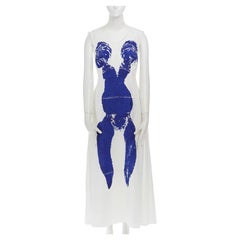
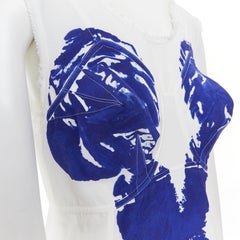
new CELINE PHOEBE PHILO 2017 Yves Klein body print cotton dress FR34 XS
By Celine
Located in Hong Kong, NT
new CELINE PHOEBE PHILO 2017 Yves Klein body print cotton dress FR34 XS Reference: TGAS/A06032
Category
new CELINE PHOEBE PHILO 2017 Yves Klein body print cotton dress FR34 XS
By Celine
Located in Hong Kong, NT
new CELINE PHOEBE PHILO 2017 Yves Klein body print cotton dress FR34 XS Reference: TGAS/A06032
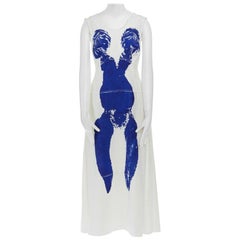
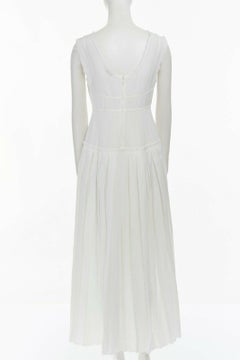
runway CELINE PHOEBE PHILO SS17 Yves Klein body print white frayed dress FR36 S
By Celine
Located in Hong Kong, NT
runway CELINE PHOEBE PHILO SS17 Yves Klein body print white frayed dress FR36 S CELINE BY PHOEBE
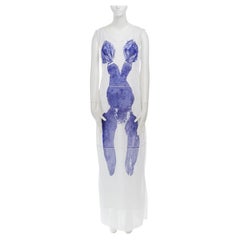
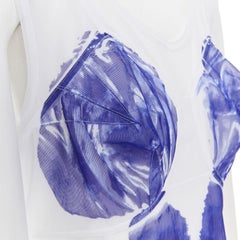
new CELINE PHOEBE PHILO 2017 Yves Klein body print semi sheer maxi dress FR36 S
By Celine
Located in Hong Kong, NT
new CELINE PHOEBE PHILO 2017 Yves Klein body print semi sheer maxi dress FR36 S Reference: TGAS
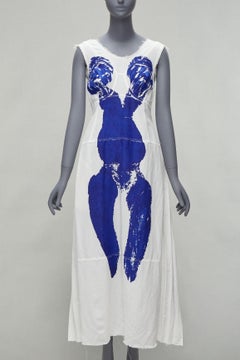
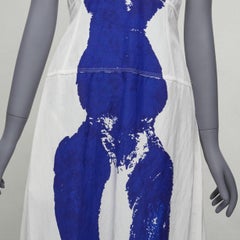
OLD CELINE Phoebe Philo 2017 Runway Yves Klein body print white dress FR34
By Celine, Phoebe Philo
Located in Hong Kong, NT
OLD CELINE Phoebe Philo 2017 Runway Yves Klein blue body print white dress FR34 XS Reference: LNKO
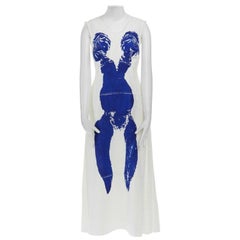

runway CELINE PHOEBE PHILO SS17 Yves Klein body print white frayed dress FR36 S
By Celine
Located in Hong Kong, NT
CELINE BY PHOEBE PHILO YVES KLEIN COLLABORATION FROM SPRING SUMMER 2017 COLLECTION Ramie, viscose
Now renowned for chic womenswear as well as luxury leather handbags that are often recognized for their iconic gold-tone fastening and hardware, French fashion house Celine got its start in children’s shoes.
In 1945, Céline Vipiana and her husband, Richard, opened a made-to-measure shoe shop for children at 52 rue de Malte in Paris. Designer Céline’s name graced the business, alongside a red elephant designed by French cartoonist Raymond Peynet that served as the company’s first logo.
In 1967, following an expansion into women’s shoes and leather accessories, the Vipianas decided to expand their company’s reach into women’s ready-to-wear, focusing on high-end sportswear. Céline Vipiana, who remained chief designer until her death in 1997, would oversee a range of fashion that would reach an international audience with a pared-down elegance and timeless style.
The company quickly achieved widespread success with its new offerings, most notably its trench coat, which became a staple for the brand. In the 1970s, they expanded outside Paris with boutiques in Monte Carlo, Beverly Hills and Hong Kong. In 1973, Céline Vipiana, inspired by chain links around the Arc de Triomphe, debuted the Blazon Chaîne motif of interlocking C’s. She began using it on a printed canvas and branding as well as accents on accessories, such as the Triomphe bag.
Vipiana’s designs were created to appeal as everyday fashion: Celine skirts, suits, fitted shirts, vests and coats were stylish but rooted in practicality. Quality, too, was paramount; Vipiana’s determination to deliver the best possible leather led to the opening of a studio in Florence, where the brand created its leather goods.
Vipiana died a year after her brand was acquired by Bernard Arnault’s luxury conglomerate LVMH for about $540 million. American designer Michael Kors then took the helm as creative director. Kors, too, was known for practical but chic ready-to-wear. He introduced such luxury staples as cashmere sets, smartly tailored pants and simple slip dresses, plus themed collections around jet-setter locales like Monte Carlo and Tahiti. Following Kors’s departure in 2004, onetime Burberry designer Roberto Menichetti took the job for just a year. He was followed by designer Phoebe Philo, the young British designer who is now credited with establishing Celine’s 21st-century style.
Philo created a distinct, minimal style that channeled the brand’s roots of practical simplicity with luxury materials. (“I just thought I’d clean it up,” she quipped of her debut collection in 2010.) Over the course of ten years, Philo turned the company into a beloved fixture of the fashion industry. In 2018, after Philo’s departure, the house tapped Hedi Slimane, former creative director of Yves Saint Laurent, as its new leader; he caused a stir when he famously removed the accent from the brand name. Controversial though it was, Slimane maintained it was a return to the label’s roots: an exercise in strong simplicity.
Find vintage Celine day dresses, handbags and other items on 1stDibs.
Luxurious and versatile, designer day dresses are as well suited to tea at an upscale hotel as they are to your next garden or rooftop party.
Today’s featherlight unisex day dresses — as well as the vibrant vintage day dresses of the 1950s and ’60s — look quite different from the heavy, fabric-rich de rigueur garments of the Victorian era. In the late 19th century, a woman of a certain standing might have multiple dresses to wear throughout the day: specifically, one or two for the daytime and one for the evening. For example, a long-sleeve silk dress with a prominently flared back and a round collar of gold beaded lace that hugs the neck would be suitable for stepping out during the day, while a velvet gown trimmed in silk embroidery but overall comparatively informal in appearance would be worn for afternoon tea at home. At night, a silk velvet evening dress could feature natural world motifs such as butterflies (a characteristic of Art Nouveau design) and have short sleeves adorned with lace and ruffles and a scooped neckline — the perfect attire for the theater.
During the 1920s, after all the chores were done, a woman would change from her housework clothing into a more fashionable day dress to run her errands or socialize. Some 1920s day dresses were brightly colored and featured bold patterns — a cotton dress with a dazzling floral print, perhaps, or, in the case of the more venturesome Art Deco apparel sold in high-end couture fashion boutiques of the era, semi-sheer silk garments embellished with three-dimensional beadwork or rich metallic gold lamé.
Today, a closet full of casual vintage day dresses is a must-have. Whether you opt for black, crimson or beige, day dresses bring an element of glamour to your next appointment, and in the summer, who doesn’t love a wonderfully simple, lightweight day dress cut in cotton and linen?
Because different fashion designers of every decade have offered their own take on the widely loved day dress, you’ll be able to find a variety of vintage and designer day dresses on 1stDibs. Search by creator to find enduring designs by the likes of Emilio Pucci, Pierre Cardin, Yves Saint Laurent and Christian Dior, or browse by period to uncover a scintillating collection of cotton and satin patterned dresses of the 1950s and ’60s.