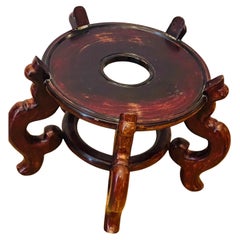
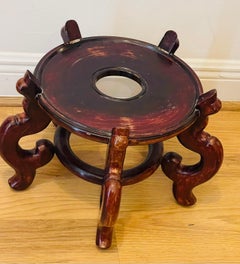
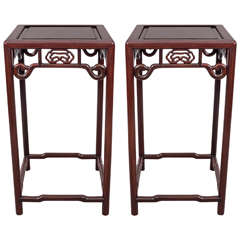
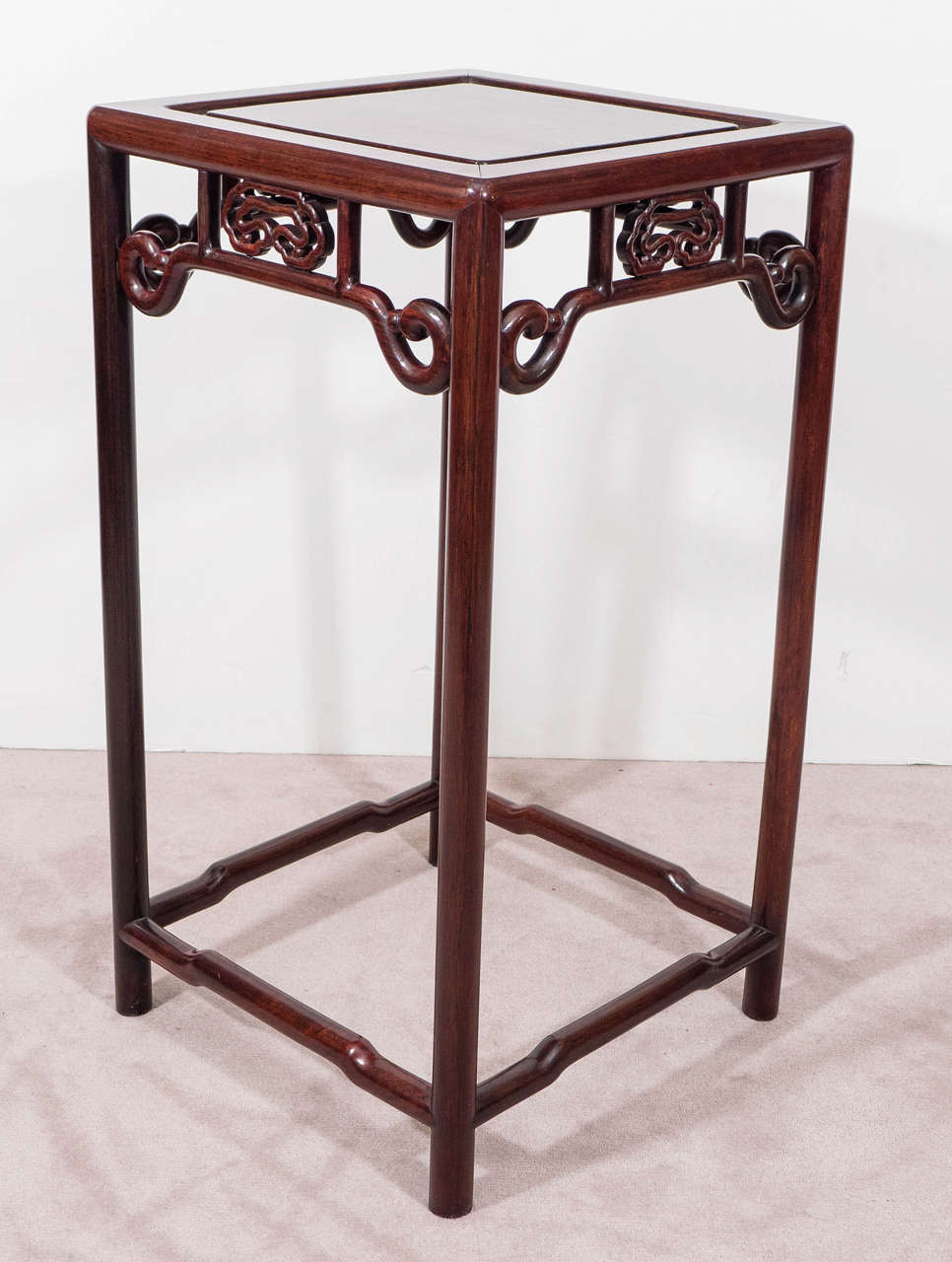
Vintage Chinese Rosewood Plant or Vase stand
Located in Boca Raton, FL
Vintage Chinese Rosewood plans or vase stand, 11” inside dimensions.
Category
Vintage 1950s Chinese Chinese Chippendale Luggage Racks
Materials
Pearwood
Vintage Chinese Rosewood Plant or Vase stand
Located in Boca Raton, FL
Vintage Chinese Rosewood plans or vase stand, 11” inside dimensions.
Pearwood
$795
H 29.75 in W 14.5 in D 14.5 in
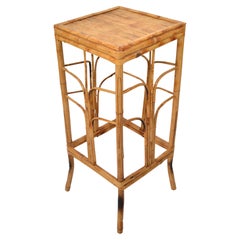
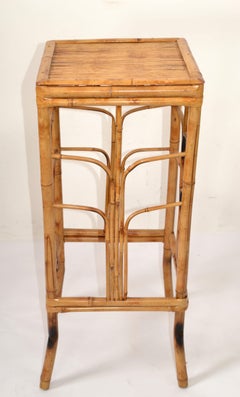
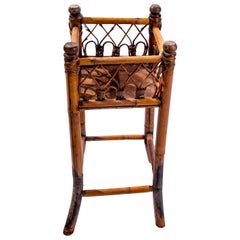
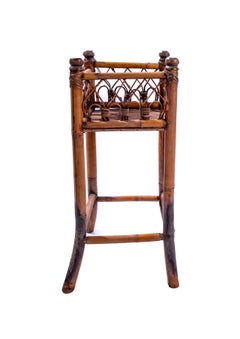
Vintage Brighton Chinoiserie Rattan Burnt Bamboo Plant Stand Side Table Column
By Brighton Pavilion 1
Located in Miami, FL
Vintage Chinoiserie handcrafted Plant Stand, Table, Pedestal, Colum with cane detail feature burnt
Bamboo, Cane
Rattan Plant Stand, Midcentury
Located in Cookeville, TN
Offering this simple rattan plant stand. Starting at the bottom with four curved legs and
Rattan
Sold
H 30.5 in W 17.5 in D 17.5 in
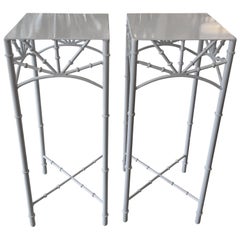
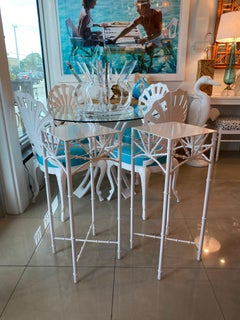
Vintage Pair of Newly Powder-Coated Faux Bamboo Chinese Chippendale Plant Stands
Located in West Palm Beach, FL
Lovely pair of metal, faux bamboo, Chinese Chippendale plant, display, statue stands. These have
Metal
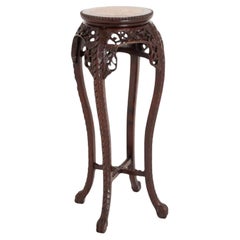
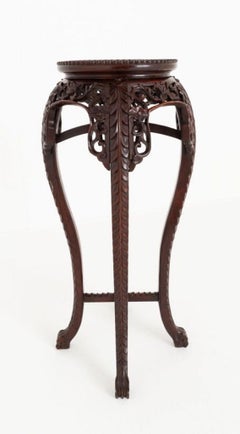
Chinese Plant Stand Carved Harwood Pedestal 1880
Located in Potters Bar, GB
Chinese hardwood plant stand. Circa 1880 This plant stand being of a typical chinese form. The
Wood, Hardwood
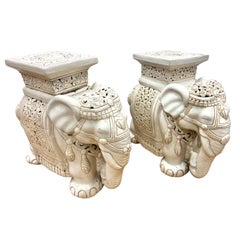
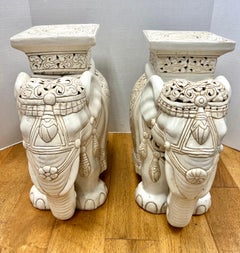
Pair of Chinese White Elephant Ceramic Garden Stools Plant Stands
Located in West Hartford, CT
all around. Use as a garden seat, plant stand or small table. Whatever you do, own the best!
Ceramic
Pair of Midcentury Maitland-Smith Oriental Plant Stands in Mahogany
By Maitland Smith
Located in Astoria, NY
A pair of vintage plant stands produced by Maitland-Smith, with stylistic Asian motifs, inspired by
Mahogany
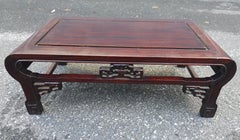
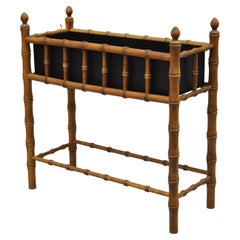
Chinese Chippendale Rosewood Foot Stool or Bonsai Tree Plant Stand
Located in Germantown, MD
A cute Chinese Chippendale Rosewood Foot Stool or Bonsai Tree Plant Stand in good vintage condition
Rosewood

Sold
H 25 in W 24.5 in D 10.5 in
Vintage Hollywood Regency Chinese Chippendale Faux Bamboo Plant Stand Planter
Located in Philadelphia, PA
Vintage Hollywood Regency Chinese Chippendale faux bamboo plant stand planter. Item features solid
Metal
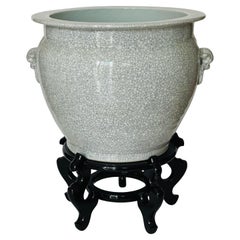
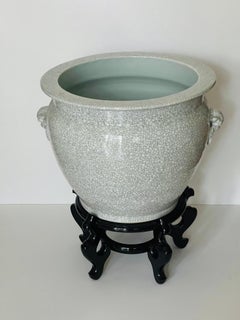
Antique Chinese Porcelain Plant Bowl with Stand
Located in Boca Raton, FL
Antique Chinese craquellure porcelain large and heavy impressive plant bowl on matching lacquer
Porcelain

Sold
H 30.25 in W 13.5 in D 12 in
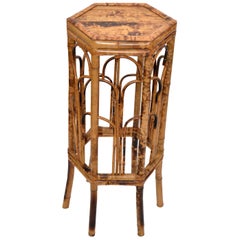
Vintage Chinoiserie Octagonal Shaped Rattan and Bamboo Plant Stand, Side Table
Located in Miami, FL
stand is handcrafted with a cane top and features a bamboo frame and Chinese inspired bamboo patterns
Bamboo, Cane
$234,055Sale Price|33% Off
H 51.19 in W 55.12 in D 201.58 in
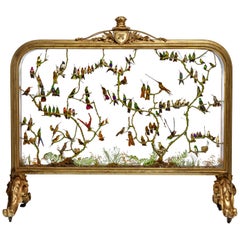
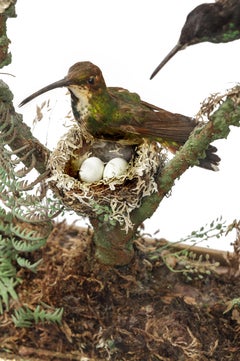
Rare Victorian Firescreen with Taxidermy Hummingbirds by Henry Ward
By Henry Ward
Located in Amsterdam, NL
England, third quarter of the 19th century On two scrolling foliate feet with casters, above which a rectangular two-side glazed frame, with on top a two-sided shield with initial...
Other
$1,722 / item
H 27.56 in W 11.03 in D 11.03 in
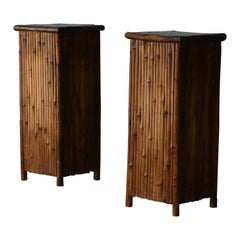
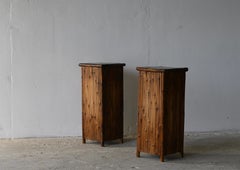
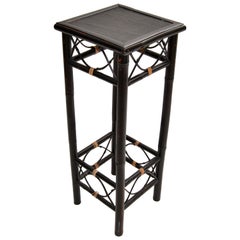
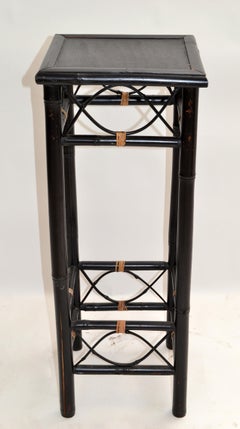
Patinated Bamboo and Rattan Plant Stands in American Colonial Style
Located in Oxford, GB
Antiqued majestic Pair of traditional colonial or regency in style plant or lamp stands painstakingly patinated, adorning an aged blackened lacquer cerused top, organic rattan legs, ...
Bamboo, Rattan
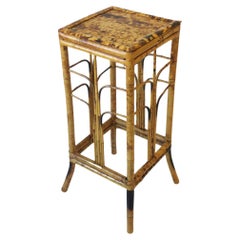
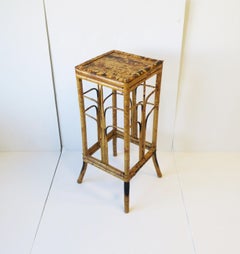
Wicker Bamboo Pedestal Column Stand
Located in New York, NY
A bamboo pedestal column stand table in the Art Deco Modern style, circa 1970s. A hand-crafted piece with Art Deco Modern lines. Use to display a plant, books, etc. Dimensions incl...
Bamboo, Wicker
$795
H 33.5 in W 12.5 in D 12.5 in
Vintage Brighton Chinoiserie Rattan Bamboo Stand, Side or End Table, Column 1970
Located in Miami, FL
Vintage handcrafted with cane detail feature bamboo frames and Chinese inspired bamboo patterns. This is a beautiful piece for your Pavilion. F-758-335
Bamboo, Cane
Like chinoiserie, which had emerged in Europe in the 17th century, antique Chinese Chippendale furniture was an appropriation of Asian design that often distilled it to stereotypes.
Thomas Chippendale published The Gentleman and Cabinet-Maker’s Director in 1754, and the widespread popularity of the book of furniture designs influenced a new style of furniture named for the English cabinetmaker. Artisans in England, the United States and Europe adapted the work illustrated in its pages. The publication of the pattern book included designs reflecting “Gothic, Chinese and Modern Taste,” with illustrations of “Chinese” chairs and cabinets featuring elaborate hand-carved latticework.
Pagoda-shaped flourishes and wood painted in the “japanned” finish that mimicked lacquer were common on these pieces, as were fretwork patterns on chair backs. The back of a chair is the easiest way to distinguish between Gothic, Rococo and Chinese Chippendale chairs, all of which typically feature broad seats and luxurious upholstery. Chippendale’s designs for “Chinese” chairs tend to favor more clean lines and less ornamentation than the other styles, with cutouts in the rails and the fretwork on the back evoking a European ideal of East Asian design.
Dark woods such as walnut and solid mahogany were commonly used, as were bamboo turnings. Cabinets for imported Chinese ceramics frequently were adorned with glazing bars, while small tea tables were detailed with angular fretwork. The style remained popular through the 18th century and into the decades that followed, even inspiring an entire room at Buckingham Palace.
Find antique Chinese Chippendale dining room chairs, side tables, case pieces and other furniture and decor on 1stDibs.