Indistinctly signed in Bengali, dated ‘79
Bangladesh/Indian
Indistinctly signed in Bengali and dated ‘79
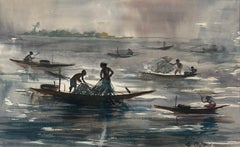
Untitled - Fishermen
1979
Watercolour on paper
Paper size: 34 x 53 cm
Frame Size: 46 x 62.5 cm
Provenance: From a private UK family
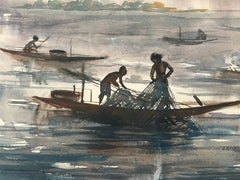
A fabulously evocative watercolour painting showing fisherman, struggling against the elements. This is Bangladesh, 1979, not long after Independence, when the focus was on the working classes, the everyday struggle to make a living and when the artists depicting these times were concurrently exploring and establishing a new aesthetic.
The painting combines naturalism with the wash method of watercolour painting and a reduced palette which allows for a rich harmony of shadow and light. Although appearing to simply utilize monotone colours, closer inspection reveals splashes of quite vivid colours; the yellow on the horizon, a deep crimson on the trousers of one of the figures, blue in the nets etc. The colour is subtle but adds a richness to the overall composition implying that this artist has received an academic training; knowing how to get the most from the materials.
Add to this the beautiful watery effect from the wash on the paper and we can immediately see references to Bengal school art techniques. It is not surprising that the artist employs this medium. Neuroarthistory points to the rich heritage of Bengal school painters and the fascination with wash technique emanating from their connection to the water which provides the backbone for the region. From supplying food; fish and seafood, to transportation, agriculture and festivities. Bengal and Bangladesh live and die with the water.
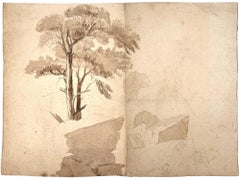
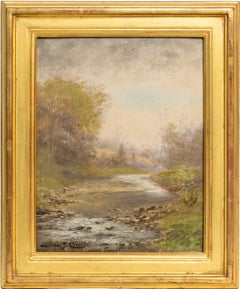
Some of the leading protagonists of the mid 20th century Bengal school of painters were equally captivated by the same subject and ideology. D P Roy Choudhury was a leading figure in the academic art institutions in the first half of the 20th century. He was also a great experimenter of style. In the image shown,, we can see Choudhury’s treatment of the same subject and how he to chose the monotone palette. It is through observing the similarities and differences that we begin to learn more about the times these artists were painting in and in the case of the Bangladeshi artists how they were approaching the political traumas of the time.
The label to the back of the frame tells its own story;. Saju Arts & Crafts, Dacca-12.
“Saju was born in 1944 in Ramu, Cox's Bazar. At one point, he became friends with Shamsul Islam Nizami, one of the veteran painters of Bangladesh. At that time, Nizami was a teacher of the Institute of Fine Arts (now Faculty of Fine Arts, University of Dhaka).
Nizami introduced Saju to all the notable painters in the contemporary art scenario -- from master painters like Zainul Abedin, Quamrul Hassan...
Category
1970s Modern Unknown Art
MaterialsPaper, Watercolor