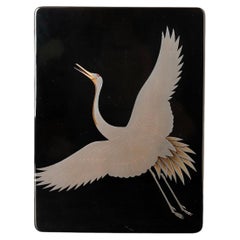
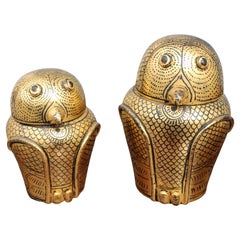
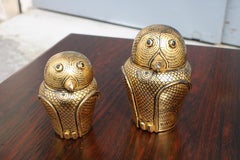
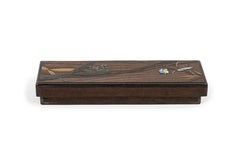
Chinese Antique Lacquer Boxes Black and 24 KT Gold Leaf Owl
Located in Palermo, Sicily
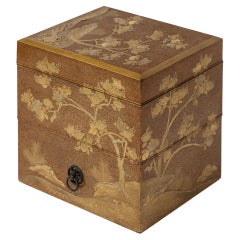
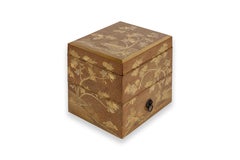
Antique Owl-shaped boxes in Chinese lacquer and gold leaf circa 1930 .
1930s Chinese Chinoiserie Vintage Gold Lacquer
Gold Plate
Chinese Antique Lacquer Boxes Black and 24 KT Gold Leaf Owl
Located in Palermo, Sicily
Antique Owl-shaped boxes in Chinese lacquer and gold leaf circa 1930 .
Gold Plate
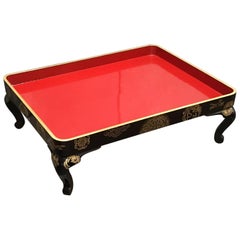
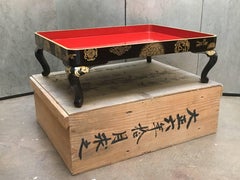
19th century Japanese Lacquer Zataku (low table) with Scattered fan Motif
Located in New York, NY
This Japanese antique low table features a scattered fan motif and is a type of zataku (low table), historically used for meals, tea ceremonies, and other seated activities. Lacque...
Gold Leaf
$1,442 / set
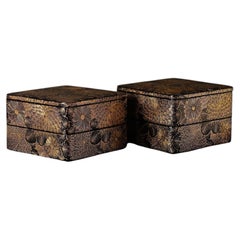
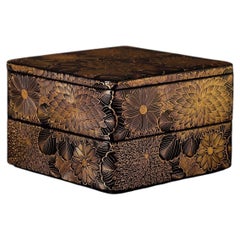
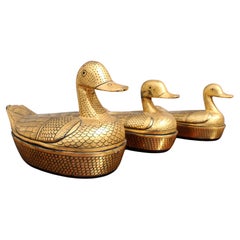
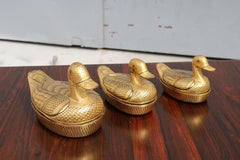
Chinese Lacquer Boxes Black Leaf Gold 1930 Ducks
Located in Palermo, Sicily
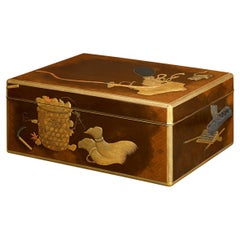
Boxes in antique Chinese Lacquer , 24KT gold leaf.
Gold Leaf
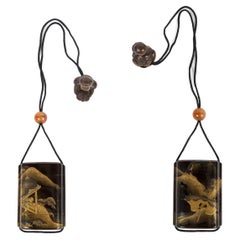
Japanese inro of the edo period adorned with a landscape houses near a lake
Located in PARIS, FR
Inrō with four gold lacquer compartments, decorated with a lake landscape. Accompanied by a bronze ryusa manju. Small boxes formed of compartments that fit one on top of the other, i...
Gold
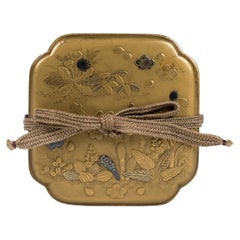
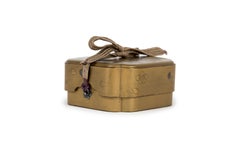
Japanese golden kobako flowers Edo period 18th century
Located in PARIS, FR
Quadrangular kobako box decorated with flowers in gold and blue lacquer with aogai inlay. Lid and sides in fundame lacquer, underside and interio...
Gold
Pair of Japanese Lacquer Hibachi with Tropical Motifs — Taishō to Early Shōwa Pe
Located in Fukuoka, JP
Dimensions: each approx. 23 × 23 × 26 cm Material: Black lacquer with gold maki-e decoration Condition: Very good, minor wear consistent with age A rare matched pair of Japanese lac...
Copper, Gold Leaf
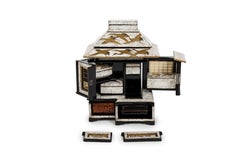
17th Century Japanese Export Lacquer Cabinet with Depiction the Dutch Tradepost
Located in Amsterdam, NL
A highly important Japanese export lacquer cabinet with depiction of the Dutch East India Company tradepost Deshima and the annual Dutch delegation on its way to the Shogun in Edo Edo period, circa 1660-1680 H. 88 x W. 100.5 x D. 54 cm This cabinet includes a later European japanned stand, but also a modern powder-coated steel frame. The latter can be designed and added to your specific needs. The sides and front of the rectangular two-door cabinet are embellished in gold and silver hiramaki-e and takamaki-e on a black roiro lacquer ground with a continuous design. The two doors depict a long procession of numerous figures travelling on foot and horseback along buildings and a pagoda into a mountainous landscape. This is the annual court journey, Hofreis, of the Dutch from Nagasaki to the Shogun’s court in Edo. Three horseback riders are dressed as Dutch merchants and a fourth figure, probably het Opperhoofd, is seen inside a palanquin, norimon. Just about to cross the bridge, two men are carrying a cabinet like the present one. Many Japanese figures on either side of the procession are engaged in various activities; some play musical instruments on board of small boats, others are fishing; figures inside buildings are depicted playing go, and farmers are tending to their rice paddocks. The upper part of the right door shows a large mansion, probably the local daimyo’s castle, with men kneeling before a man in the central courtyard. The court journey fits in with the foreign policy of the shogunate which accorded a role to the VOC alongside China, Korea, and the Ryukyu Islands who also had to pay tribute. However, the VOC employees were traders, having low status in Japan’s social hierarchy, and they were received with less deference than were the state embassies from Korea and the Ryukyu Islands. Nevertheless, the contacts with the Dutch were a welcome source of information to the Shogun about Europe and European science and technology. The left side of the cabinet depicts, in mirror image, a rare view of the artificial fan-shaped Deshima Island, the trading post for the Dutch in Japan. The island, where the Dutch flag flies, is surrounded by small Japanese boats and an anchored three-masted fluyt (cargo ship), flying Dutch flags, with on the stern the VOC monogram. On the bottom right a busy street of Nagasaki is shown, bordered by shops and leading up to the stone bridge. On the island the trees are beautifully painted, two cows can be seen, and the flagpole, all in very fine detail. Dutchmen and enslaved Malay are visible outside the buildings and two Japanese figures, probably guards, sit in a small hut in the centre. A maximum of fifteen to twenty Dutchmen lived on the island at any time and soldiers or women were not allowed. Restrictions on Deshima were tight, and the merchants were only allowed to leave the island by special permission. The Opperhoofd had to be replaced every year, and each new Opperhoofd had to make a court journey to pay tribute, present gifts, and to obtain permission to Margaret Barclay eep on trading. In the distance, many birds fly above the hills and a four-story pagoda can be seen. The right side of the cabinet is painted with other horse riders and their retinue journeying through mountains. The pair of doors to the front open to reveal ten rectangular drawers. The drawers are decorated with scenes of birds in flight and landscapes with trees and plants. The reverse of the left door with two thatched buildings, one with a ladder, underneath a camelia tree with large blooms; the right door with a three-story pagoda nestled among trees and both doors with a flying phoenix, ho-oo bird. The cabinet, with elaborately engraved gilt copper mounts, hinges, lock plates and brass handles, is raised on an 18th-century English japanned wood stand. A pair of large cabinets...
Copper, Gold
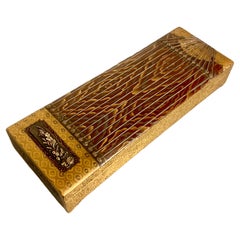
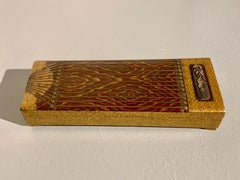
Japanese Lacquer Writing Box, Suzuribako, Edo Period, 18th Century, Japan
Located in Austin, TX
An exceptionally fine and unusual Japanese lacquer writing implements box, suzuribako, in the form of a zither, koto, Edo Period, 18th century, Japan. With a modern wood storage box,...
Gold, Silver, Copper
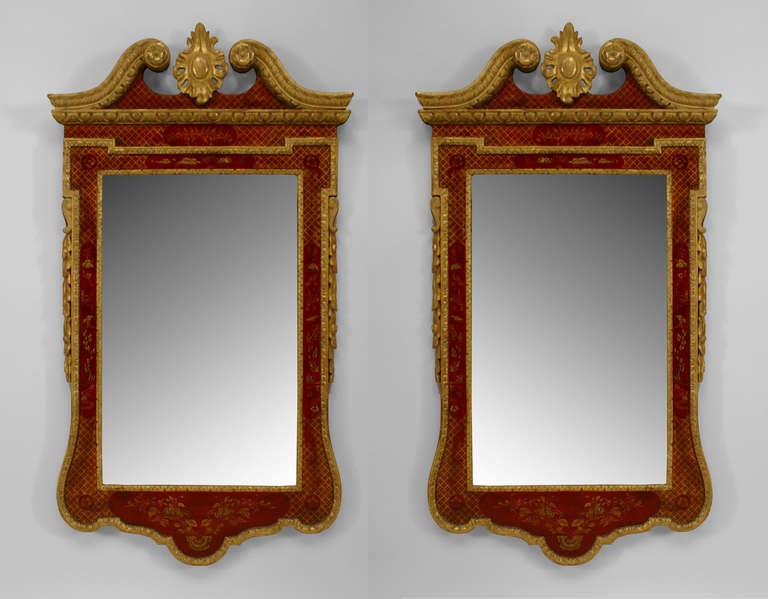
Pair of English Georgian Chinoiserie Red Lacquered Wall Mirrors
Located in Queens, NY
Pair of English Georgian (mid-18th Century) red lacquered and Chinoiserie decorated wall mirrors with gilt carved open pediment top with a centered cartouche. (PRICED AS Pair) Lacqu...
Gold Leaf
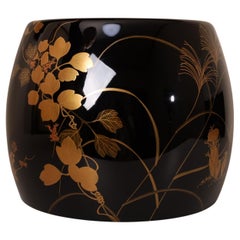
Lacquer Hibachi with Seasonal Motifs — Late Meiji Period (c.1900)
Located in Fukuoka, JP
Dimensions: 23 × 23 × 26 cm Material: Black lacquer with maki-e decoration Box: Signed tomobako (original wooden box) A refined example of late Meiji craftsmanship, this lacquer hibachi (traditional Japanese brazier...
Copper, Gold Leaf
JAPAN 1900 Meiji Period Fubako Box In Hiramaki-e Lacquered Wood With Gilding
Located in Miami, FL
Fubako letters-box from the Japanese Meiji period (1868-1912). Beautiful decorative Fubako letters box from the Japanese Imperial Meiji period, circa 1900. This box has been meticul...
Gold
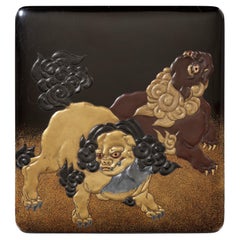
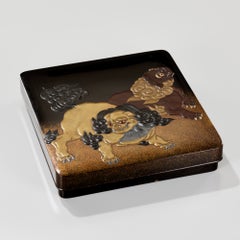
Japanese lacquer suzuri’bako 硯箱 (writing box) with shishi & Hotei design
Located in Amsterdam, NL
A captivating lacquer suzuri’bako (writing box) of rounded rectangular form depicting a pair of shishi (temple lions) and the lucky god Hotei 布袋 on a rôiro...
Gold Leaf, Silver Leaf
Antique Burmese Gilt Lacquered Kammavaca Manuscript
Located in Point Richmond, CA
Antique Burmese Gilt Lacquered Kammavaca Manuscript, Consisting of 2 lacquered wood end covers and 16 double sided folios of lacquered cloth in red and black with gold leaf. This Kam...
Gold Leaf
Suzuribako or writting box circular shape in nashiji and gold lacquer
Located in PARIS, FR
Suzuribako (writing box) in black lacquer, rectangular in shape, with a gold lacquer (maki-e) decoration of a pavilion by the edge of a waterfall and a mountain river surrounded by v...
Gold Leaf
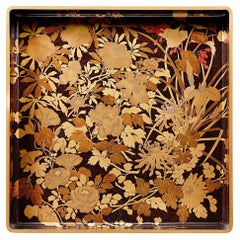
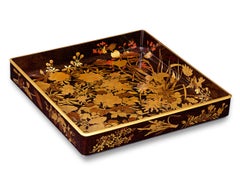
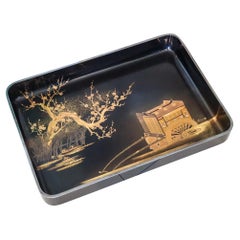
MEIJI PERIOD 1890 Maki-e Presentation Tray In Lacquer & Gold With Kanji Wood Box
Located in Miami, FL
A large maki-e presentation tray from the Meiji period. This is an extraordinary presentation rectangular tray created in the Imperial Japan period during the pinnacle of the Meiji ...
Gold, Silver
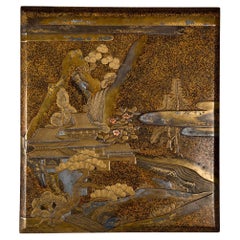
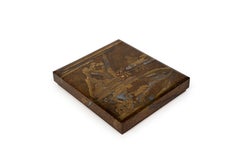
Suzuribako or writing box made of nashiji lacquer and adorned with a landscape
Located in PARIS, FR
Suzuribako, or writing box, of rectangular shape, decorated with an imposing architecture realized in hira maki-e lacquer, probably a palatial structure, situated beside a waterfall...
Gold Leaf
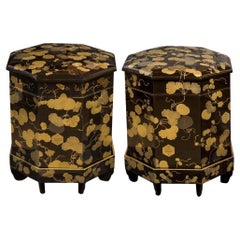
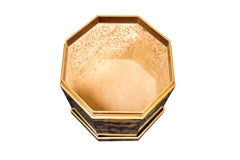
Japanese pair of kaioke boxes or Hokkaibako made of black and gold lacquer
Located in PARIS, FR
Two large eight-sided kaioke boxes in black lacquer, decorated with mon and maple leaves in golden lacquer. These are usually octagonal boxes containing the painted shells used in ...
Gold
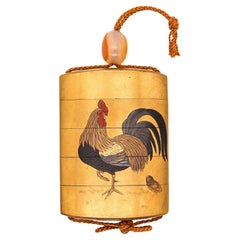
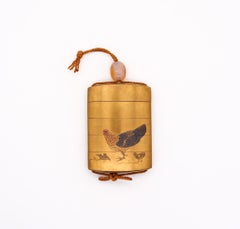
Japan 1810 Kajikawa Edo Period Five Drawer Inro Lacquered Gilt Wood With Rooster
Located in Miami, FL
Japanese Inro from the Edo period (1615-1868) created by Kajikawa. Beautiful Inro, created in Japan by one of the Kajikawa family during the Edo period (1615-1868), circa 1810. Has been carefully crafted in carved precious wood with applications of gilding maki-e and decorated with Japonism patterns. All dan trays are attached together with a himo cord. The detailed craftsmanship was a true pleasure to behold. Period: Edo period (1615-1868). Shogunate. Approximate Date: 1790-1810 Motif: A family of birds consisting of a cockerel, the hen and three chicks. Drawers: Five. Shape: Rectangular navette. Technique: Carved wood, lacquer and decorated in iroe-hiramaki-e on a gold ground. Ojime: 15mm 20mm, oval carved from natural translucent agate. Netsuke: None Weight: 47.70 Grams. Measurements: Inro is 78 mm by 55 mm by 18 mm (3.07 x 2.17 x 0.71 Inches). Signatures: Kajikawa Saku, in the underside with the signature KAJIKAWA. By a member of the Kajikawa family, signed Kajikawa 梶川 Japan, late 18th century to early 19th century, Edo period (1615-1868). The Kajikawa family Kajikawa family, flourished in the 19th century, they was Japanese lacquerware artists whose school in Edo (now Tokyo) flourished for more than 200 years. This family is perhaps the most famous of all the dynasties of Japanese lacquer artists, and certainly the name most often found on inro. The family is said to have been founded by Hikobei at Edo in the early 17th century, although some claim that the family’s great reputation really stemmed from his son and pupil Kyujiro. In any event, Hikobei worked for the shogunate, as did his successors until well into the 19th century. Kijirō excelled in designing particularly delicate lacquer inrō, portable medicine cases...
Agate, Gold
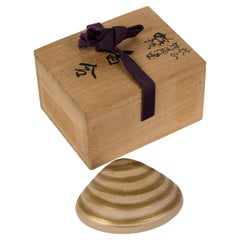
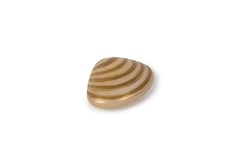
Kobako in the form of a Seashell in gold and wajima lacquer
Located in PARIS, FR
Wajima-lacquer kobako in grey lacquer, decorated with gold-lacquer stripes forming a bivalve shell motif. The interior is finished in nashiji lacquer on a black ground. Wajima lacque...
Gold
JAPAN Meiji Period 1870 Four Tiers Presentation Jubako Box Namiki Lacquer & Gold
Located in Miami, FL
Four Tier Japanese Gilt Jubako Maki-E box with red Interior. This is a beautiful decorative presentation Jubako box created in the Imperial Japan during the early Meiji period (1868...
Gold
Rare 17th Century Japanese Export Lacquer Medical Instrument Box
Located in Amsterdam, NL
A rare Japanese export lacquer medical instrument box Edo-period, 1650-1700 L. 19 x W. 6 x H. 8.5 cm This unconventionally shaped lacquer b...
Gold
Japanese suzuribako lacquered box peony river
Located in PARIS, FR
Suzuribako box (empty) in black lacquer. Gold maki-e decoration of a river bordered by peonies, one with red highlights. The edges of the lid are in gold lacquer. Nashi-ji interior.
Gold
Kobako in nashiji lacquer imitating wood texture, lid decorated with an ikebana
Located in PARIS, FR
Imposing kobako in nashiji lacquer on a black ground, decorated with a motif imitating wood grain. The lid is adorned with an ikebana basket (hanakago) containing a bouquet of remark...
Gold
Fine Japanese Export Red Lacquer Box with Masonic Symbols, circa 1800
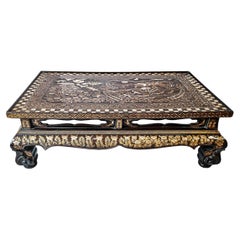
Located in Amsterdam, NL
A fine Japanese export red lacquer box with Masonic symbols Kyoto/Nagasaki, 1800-1820 Red lacquer decorated with scattered flowers and flying birds with long tails in gold, wit...
Gold
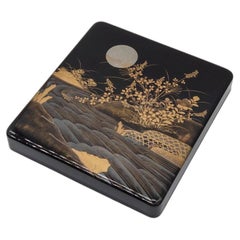
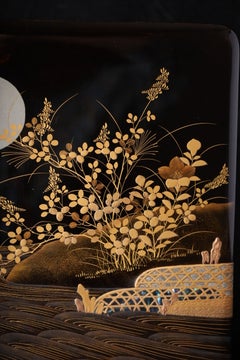
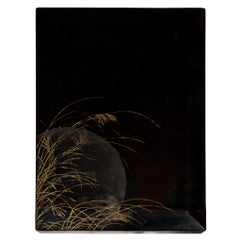
Suzuribak or writting box decorated with a moonrise landscape
Located in PARIS, FR
An old suzuribako, or writing box, in black lacquer with a faceted lid and featuring, as its sole decoration in the lower left section, a moonlight scene emerging from tall grasses. ...
Gold Leaf, Silver Leaf
Japanese Sagemono Inro box with a maki-e decor of a Samuari in a lake landscape
Located in PARIS, FR
Inrô in gilded lacquer according to the takamaki-e, hiramaki-e and kirigane techniques, with five squares of a mountain lake landscape. On the first side, there is a man on horsebac...
Gold
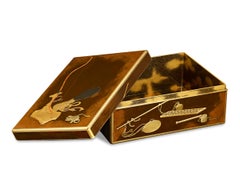
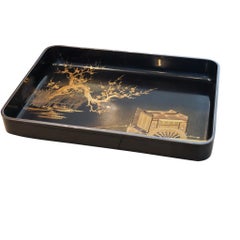
Japanese Lacquer and Gold Tray
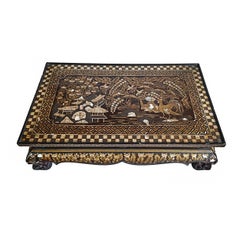
Located in New Orleans, LA
This Meiji-period lacquer tray represents the mastery of Japanese craftsmen in the art of lacquer work. Precious materials are precisely inlaid in the lacquer base, creating a highly...
Gold
Japan lake landscape kobako box lacquer - Edo
Located in PARIS, FR
Rectangular kobako box in takamaki-e and kirigane gold lacquer circled with pewter depicting a lake landscape. Inside and back of the box in nashi-ji lacquer. Japan – Edo period (16...
Gold
$39,850
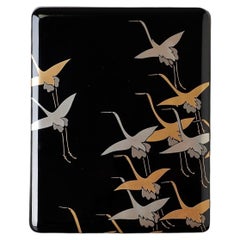
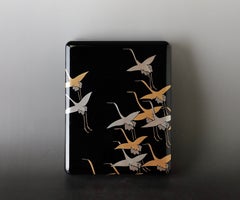
Japanese Lacquer Box
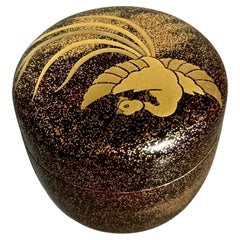
Located in New Orleans, LA
This exquisite Meiji-period lacquer document box known as a ryoshibako showcases the meticulous artistry of maki-e, a technique of raised lacquer decoration. Adorned with gold and vi...
Gold
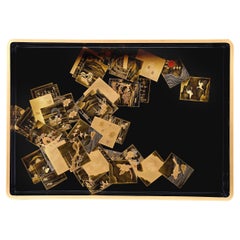
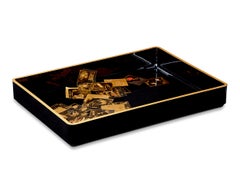
Japanese Lacquer Tray With Cards
Located in New Orleans, LA
This Meiji-period lacquer tray represents the mastery of Japanese craftsmen in the art of lacquer work. Precious materials are precisely inlaid in the lacquer base, creating a highly...
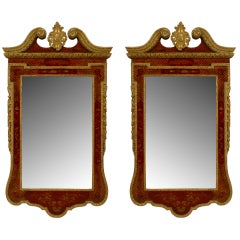
Gold
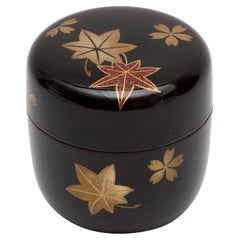
Japanese Natsume or tea box adorned with mapple leaves and sakure flowers
Located in PARIS, FR
Natsume in dark red lacquer, decorated with autumn leaves and cherry blossoms in hiramaki-e and nashiji. Interior in black lacquer. Maple leaves (Momiji) are celebrated in literature...
Gold
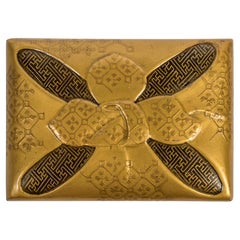
Japanese Kobako box in the form of a furoshiki present in gold and black lacquer
Located in PARIS, FR
Rectangular and flat lacquer Kobako (small box) representing a furoshiki knot seen from above. Fundame background, furoshiki in takamaki-e with floral pattern, inside the folds of th...
Gold
A Japanese export lacquer box with depiction of the Grand Hotel, Yokohama
Located in Amsterdam, NL
Meiji period, circa 1873-1887 The black lacquered box decorated in maki-e and hiramaki-e gold, with on the lid a European style building complex and several Japanese and European figures walking along a street in the foreground. The sides are finely decorated with several insects and the inside with several compartments and nashiji decoration. H. 7.4 x W. 29 x D. 25.7 cm After the Americans forced Japan to open their harbours to the outside world and take part in international treaty and trade around the mid 19th century, the formerly feudal society rapidly changed. Japan was now focussing on an industrial future. One of the major international ports was Yokohama with its foreign embassies and warehouses - which attracted a great number of visitors of all sorts. For the higher society visiting Japan for the first time a new and ‘Western’ hotel had to be realised; hence the construction of The Grand Hotel on Kaigandori. The hotel was opened on August 16, 1873 (Meiji 6) and was soon considered the height of Western culture and elegance in Japan. The building probably depicted on this box, designed by American architect Richard P. Bridgens (リチャード・ブリジェンス, 1819 -1891), is the original hotel...
Gold
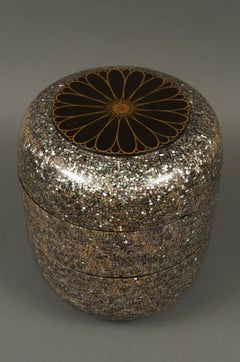
Antique Japanese Lacquer Stacking Food Box 'Jubako'
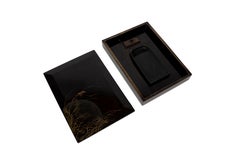
Located in Hudson, NY
With all-over mother of pearl inlay and mon design of chrysanthemum in gold and black lacquer on top. The chrysanthemum is a national symbol of Japan and the Imperial family.
Gold
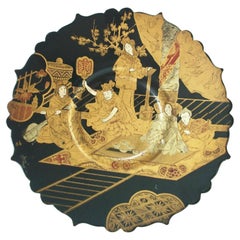
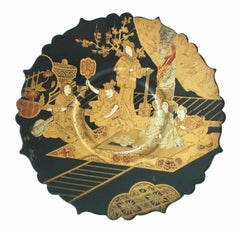
Orientalist Hand Painted & Gilt Black Lacquer Plate or Dish, 19th Century
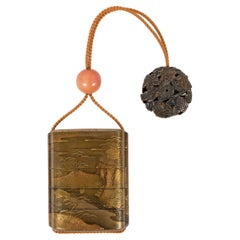
Located in Chatham, ON
Orientalist hand painted and gilt decorated black lacquer papier-mâché plate on stand - possibly by Adt Frères - exceptional detail - unsigned - late 19th century. Excellent/extra...
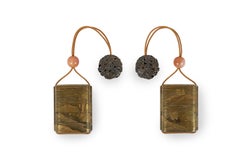
Gold Leaf
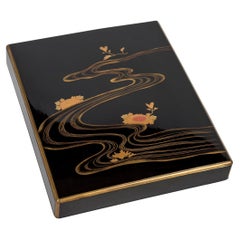
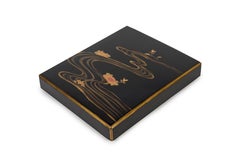
Japanese Red and Black Lacquer Maki-e Decorated Presentation Tray, dated 1917
Located in Austin, TX
A fine Japanese red and black maki-e lacquer presentation tray with original tomobako storage box, Taisho period, dated 1917, Japan. The large prese...
Gold
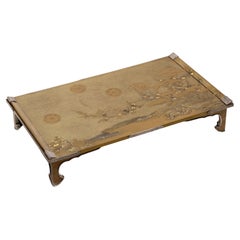
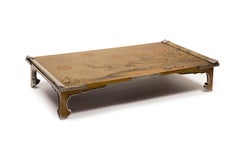
Miniature hokkai bako or kaioke, doll furniture replica of a traditional box
Located in PARIS, FR
Small hokkai bako or kaioke seashells game box, of circular form with its four feet, its bronzes and cordon, decorated with a motive of flowers of gold lacquer on a black lacquer bac...
Gold, Bronze
Mid-19th Century Japanese Lacquered Inlaid Table, Edo Period
Located in New York, NY
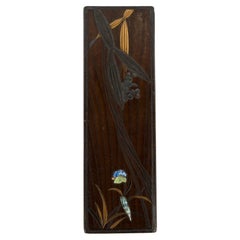
An antique Japanese table with inlaid mother-of-pearl (Raden) and gold maki-e over brown lacquer. Japan, late Edo period, possibly earlier. Raden (螺鈿) is a traditional Japanese dec...
Gold
Japanese Bundai or writting table in gold lacquer with a decor of lake landscape
Located in PARIS, FR
Rectangular bundai writing table on four legs in gold lacquer with black highlights on a nashi-ji background. The top is decorated with a lake landscape with plum trees, pine trees a...
Gold, Bronze
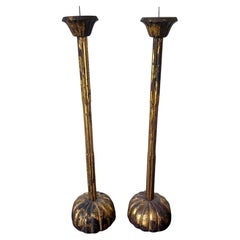
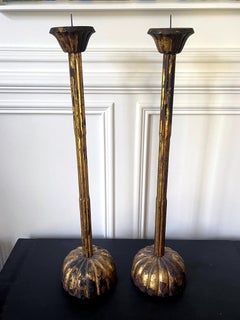
Pair of Large Japanese Carved Wood Temple Candleholders Edo Period
Located in Atlanta, GA
A tall pair of Japanese carved wood candle holders circa early 19th century (late Edo Period). The pair is carved in the typical form with a block base in the shape of stylized chrysanthemums and long fluted stem with changes in diameter that supports a grooved holder fitted with metal pricket. These types of oversized candle holders were traditionally used in Buddhist temples or Samurai's resident where they were placed on the altar table for worshiping. What is extraordinary of these candle stickers is that they feature a wonderfully conserved surface with lacquered gold leaf. The sparkling gold on the well weathered surface is visually striking. The professional conservation was performed in 2007 and as a result, the pieces display a wonderful aged Wabi-Sabi patina. The piece retains an original invoice from Far Eastern Antiques...
Gold Leaf
Japanese fudebako or brush box in lacquered hardwood and ceramic inlay
Located in PARIS, FR
Brush box (fudebako) is made of wood and lacquer. On the lid, lacquer decoration representing sagittarius, a flower inlaid with ceramic and a leaf inlaid (raden). Interior and base o...
Gold
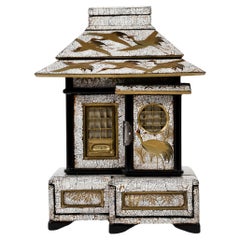
Japanese tea house in rankanku or eggshell lacquer with a decor of gold crane
Located in PARIS, FR
Miniature tea house with a crane and bamboo motif in black and gold takamaki-e lacquer on a rankaku (eggshell inlay) base. It has several compartments and trays on the roof, walls an...
Gold
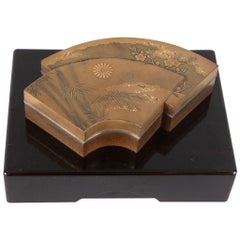
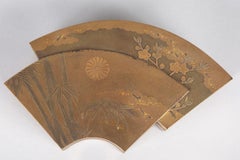
Japanese Lacquer Kogo 'Incense Box'
Located in Hudson, NY
Late Edo (1614 - 1868) period incense storage box in stacked, double fan design. Fans have bamboo and plum design with a chrysanthemum crest. Silve...
Gold
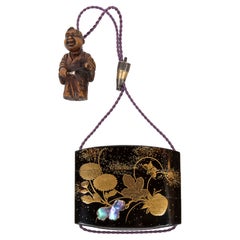
Inro in black and gold lacquer with a proeminent chrysantemum flower motive
Located in PARIS, FR
Two compartments inrô in black lacquer, hira maki-e and mother-of-pearl inlay on a hirameiji background, decorated with a bouquet of chrysanthemums in a small purse, a hoe on the other side, and a fluttering butterfly which can be found on both sides. The interior is in hirameiji lacquer. The ojime is a drum made out of black lacquer and ivory with a mother-of-pearl inlay. The Manjû netsuke...
Gold
An exceptional Namban 'escritório' writing-box, with a single drawer
Located in Amsterdam, NL
Kyoto, Late Momoyama to Edo period, circa 1590-1630 Decorated in pearl shell and gold with branches, leaves and flowers inside cartouches on a pearl shell mosaic background. H. 25 ...
Gold
Japanese Tebako in Nashiji lacquer adorned with golden Persimon flowers
Located in PARIS, FR
Tebako box with two compartments in golden and nashi-ji lacquer, decorated with golden, red, and kirigane lacquer, golden persimmon tree leaves, among rocks. The compartments are of ...
Gold
Japanese inro box in black and gold lacquer with a decor of snowy landscape
Located in PARIS, FR
Inrō with four boxes in black and gold lacquer, representing a person in a pavilion in a snowy landscape with mountain on the background. Realised in maki-e on black lacquer with sma...
Gold
Japanese Export Nagasaki Lacquer Box with the Portrait of Napoleon Bonaparte
Located in Amsterdam, NL
A Japanese export Nagasaki lacquer tobacco box with the portrait of Napoleon Bonaparte Edo-period, circa 1810 The box in black lacquer on copper, ...
Copper, Gold
Fine 17th Century Japanese Export Black and Gold Lacquered Pictorial-Style Dish
Located in Amsterdam, NL
A fine Japanese export black and gold lacquered pictorial-style dish Nagasaki or Kyoto, 1680-1720 The dish with wide flat rim of Keaki wood (Zelkova species) in black lacquer with...
Gold