By Auguste Rodin
Located in Fairlawn, OH
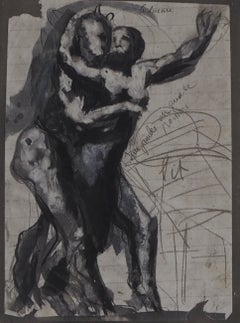
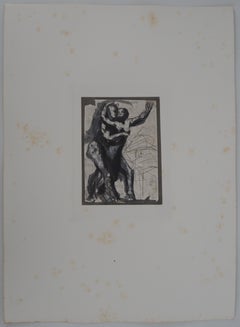
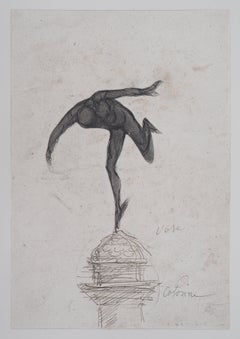
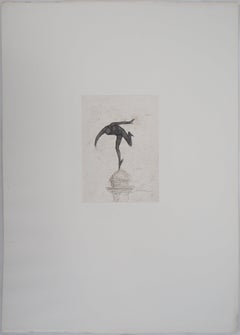
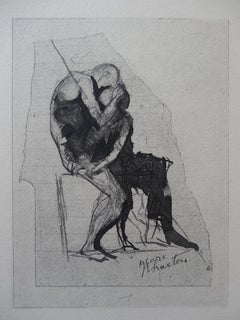
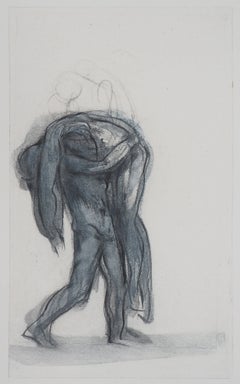
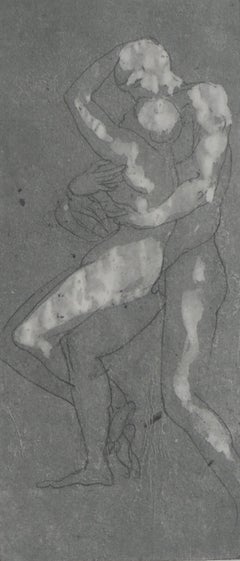
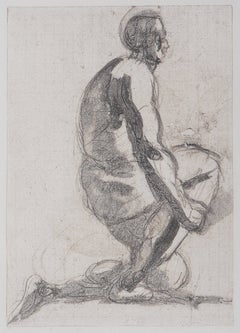
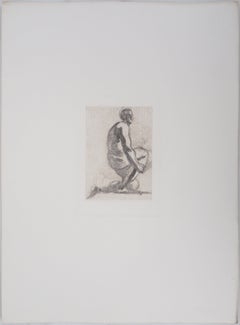
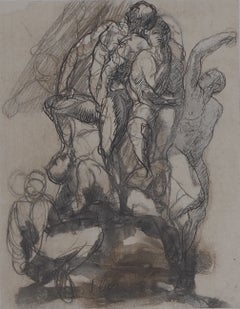
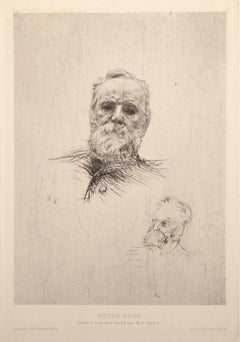
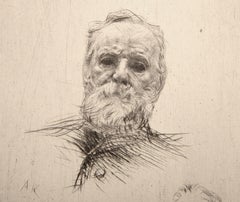
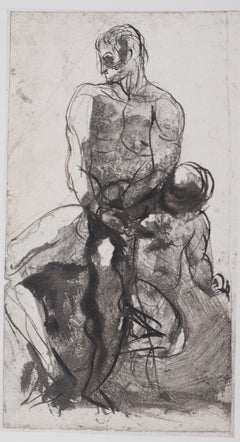
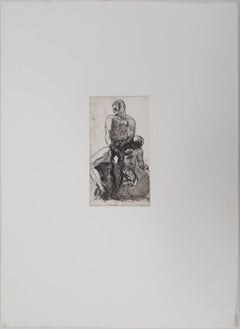
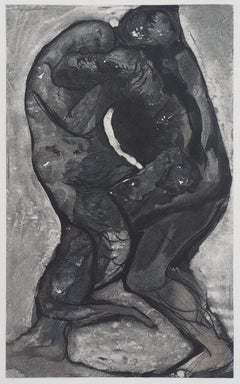
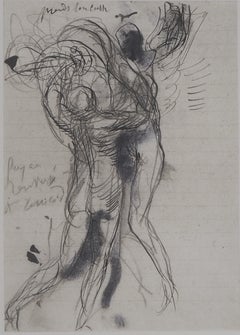
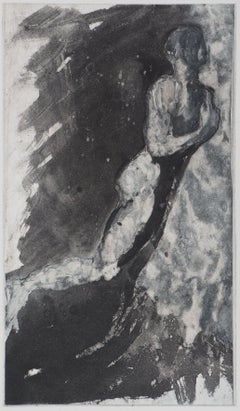
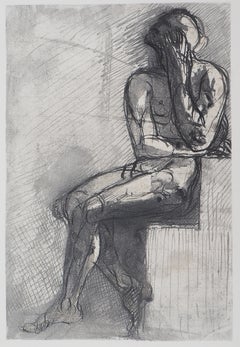
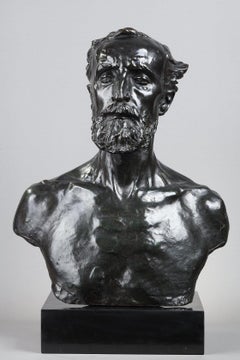
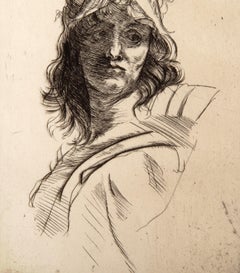
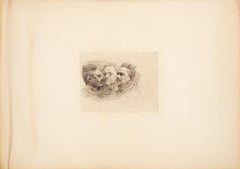
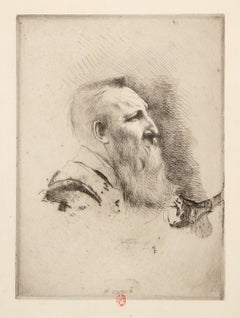
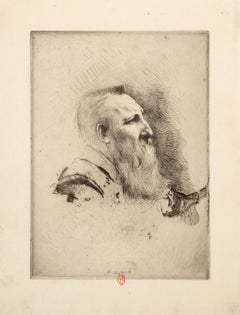
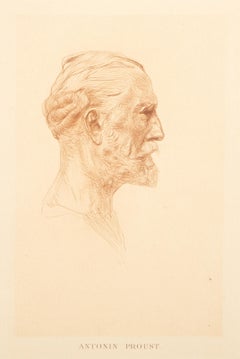
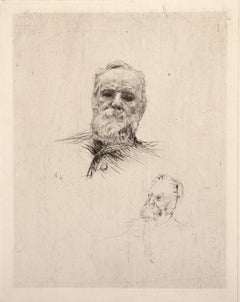
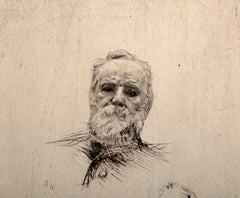
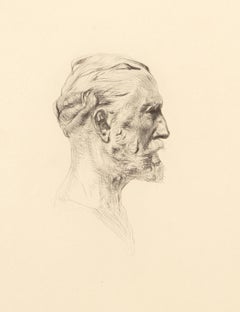
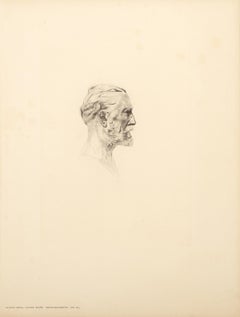
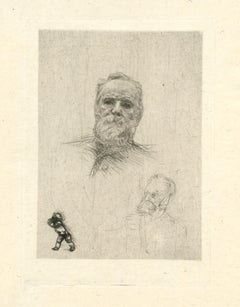
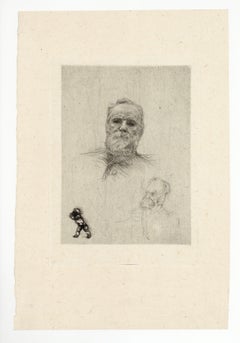
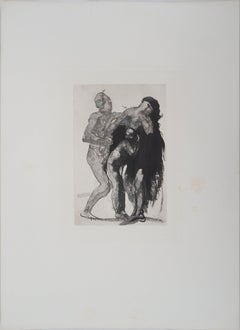
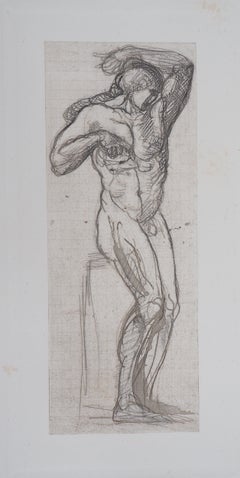
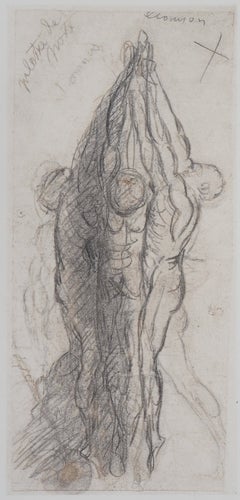
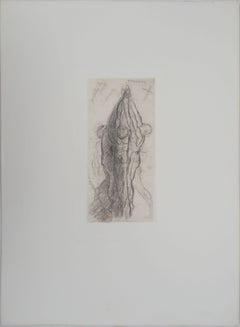
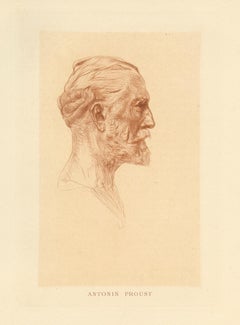
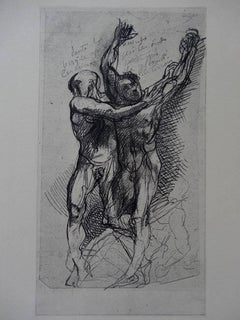
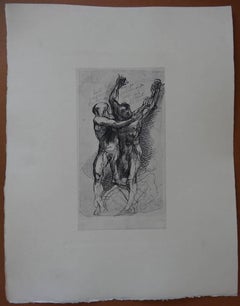
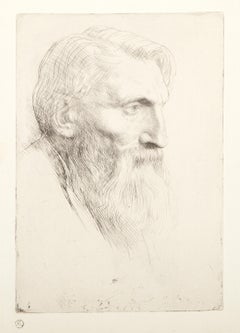
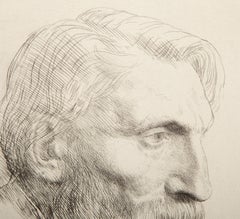
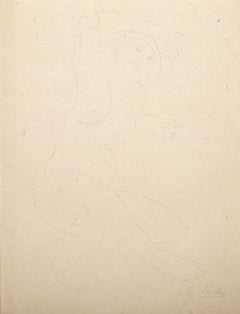
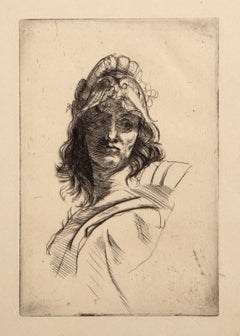
Victor Hugo, de trois quarts
Etching & Drypoint, 1884
Unsigned (as issued)
Published in Geffroy, Le Statuaire Rodin, 1889
Printed on wove paper
Reference: Delteil 6 vi/VIII
Thorson 8 vi/VIII
Condition: Excellent
Victor-Marie Hugo (French: [viktɔʁ maʁi yɡo] (listen); 26 February 1802 – 22 May 1885) was a French Romantic writer and politician. During a literary career that spanned more than sixty years, he wrote in a variety of genres and forms. He is considered to be one of the greatest French writers of all time.
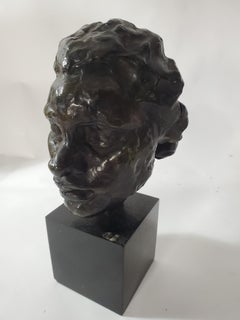
His most famous works are the novels The Hunchback of Notre-Dame (1831) and Les Misérables (1862). In France, Hugo is renowned for his poetry collections, such as Les Contemplations (The Contemplations) and La Légende des siècles (The Legend of the Ages). Hugo was at the forefront of the Romantic literary movement with his play Cromwell and drama Hernani. Many of his works have inspired music, both during his lifetime and after his death, including the opera Rigoletto and the musicals Les Misérables and Notre-Dame de Paris. He produced more than 4,000 drawings in his lifetime, and campaigned for social causes such as the abolition of capital punishment.
Though he was a committed royalist when young, Hugo's views changed as the decades passed, and he became a passionate supporter of republicanism, serving in politics as both deputy and senator. His work touched upon most of the political and social issues and the artistic trends of his time. His opposition to absolutism and his literary stature established him as a national hero. He was honoured by interment in the Panthéon.
Auguste Rodin (French, 1840–1917) was deeply inspired by tradition yet rebelled against its idealized forms. Over the course of a career that spanned the late 1800s and early 1900s, he introduced innovative practices that paved the way for modern sculpture. He believed that art should be true to nature, a philosophy that shaped his attitudes to models and materials.
Controversies surrounded certain of his works, such as the scandals around The Age of Bronze or the Monument to Honoré de Balzac, and for his unfinished projects, most famously The Gates of Hell, but few who recognize Rodin's sculptures have failed to be moved by them. His genius was to express inner truths of the human psyche, and his gaze penetrated beneath the external appearance of the world. Exploring this realm beneath the surface, Rodin developed an agile technique for rendering the extreme physical states that correspond to expressions of inner turmoil or overwhelming joy. He sculpted a universe of great passion and tragedy, a world of imagination that exceeded the mundane reality of everyday existence.
Rodin was not educated at the École des Beaux-Arts in Paris, the prestigious school for the training of French artists. But his focus on the human form and use of various materials such as bronze, marble, plaster, and clay illustrate his respect for sculptural tradition and his desire to work within the system for commissions and exhibition opportunities. The hallmarks of Rodin's style—his decision not to smooth over or hide signs of his sculptural process and the creation of sculptures from parts of the body like hands—were revolutionary in his time. The evocative intensity of his works were elaborated on by countless artists who followed him, including many who worked in his studio, such as Constantin Brancusi (French, born Romania, 1876–1957) and Aristide Maillol (French, 1861–1944).
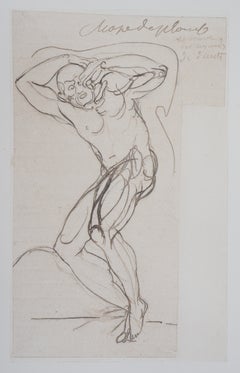
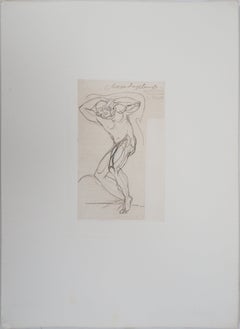
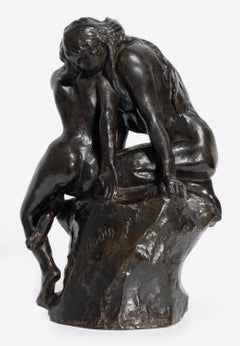
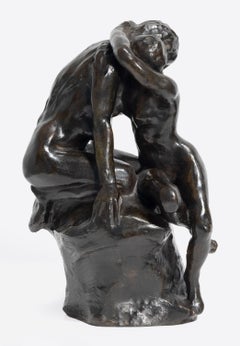
In 1901, a friend suggested that Philadelphia body builder Samuel Stockton White 3rd (1876-1952) present himself to Rodin as a model. The artist was impressed by the young athlete’s physique and created these sculptures, which are visually related to The Thinker. The twenty-year gap between the two works highlights Rodin’s more relaxed approach toward figure modeling, the later work showing White resting rather than brooding. These bronzes reflect the twentieth-century taste for a new classicism in art, in which classical nude figures were reinterpreted as modern figures.
The Age of Bronze is the earliest surviving example of a life-sized sculpture by Rodin, which he began before leaving for Italy in late 1875 and completed after his return the following year. The figure’s musculature and underlying structures are so authentic that the work proved an artistic liability for Rodin, and he spent three years defending himself against the charge that he had cast it from a live model. This accusation was a great insult because it denied Rodin’s creative process, instead implying that he had done nothing more than simply make an impression of the model. Eventually a group of important artists sent a letter to the French government in the artist’s defense, and the French state ultimately bought The Age of Bronze and had it cast in bronze for the Paris Salon of 1880.
The Gates of Hell is the defining project of Rodin’s career and a key to understanding his artistic aims. Work on The Gates occupied him for thirty-seven years and during this period he regularly added, removed, and altered the more than two hundred figures that appear on the doors. Near the end of his life, as Rodin was making plans for the creation of a museum devoted to his work, he had a new plaster made of The Gates since the original model was falling apart after so much reworking. Due to the sculptor’s failing health and the outbreak of World War I, his plans to carve the work in marble never came to fruition, and The Gates existed only in plaster at the time of his death.
View More
Back to top
Timeline
1840
François-Auguste-René Rodin is born in Paris on November 12 to Jean-Baptiste Rodin, a clerk with the police department, and Marie Cheffer Rodin. The family, which also included Rodin's sister Maria (born 1838), is devoutly Catholic.
1854
After his early religious schooling, Rodin attends the Petite École, a school specializing in the arts and mathematics, where he studies drawing and painting.
1857
Although a successful student at the Petite École, Rodin fails the entrance exam to the École des Beaux-Arts, the most prominent art school in France. The committee likes his drawings but the eighteenth-century manner of Rodin's sculpture fails to meet with approval.
1858
To earn money to help support his family, Rodin takes a series of jobs working for commercial decorators, learning at the same time every facet of the sculptor's craft.
1862
Rodin's beloved sister Maria dies and in his grief he decides to enter the order of the Society of the Blessed Sacrament. However, by the following year, the founder of the order, Father Pierre-Julien Eymard, advises Rodin to leave the order and pursue a career as a sculptor.
1864
Rodin meets Rose Beuret, a twenty-four-year-old seamstress who becomes his lifelong companion. Their stormy relationship inspires a number of the sculptor's most dramatic works.
Rodin begins work in the studio of the successful sculptor Albert-Ernest Carrier-Belleuse (French, 1824–1887). During the six years Rodin assists Carrier-Belleuse, his independent sculptural work is influenced by his employer.
1866
Rodin and Rose Beuret's son, Auguste-Eugène Beuret, is born on January 18.
1870
Rodin enlists in the 158th Regiment of the National Guard and attains the rank of corporal during the Franco-Prussian War, but is soon discharged for nearsightedness.
1871
Rodin joins his former employer Carrier-Belleuse in Brussels; Rose arrives the following year.
1873
In Brussels, Rodin enters a partnership with sculptor Antoine Van Rasbourg (Belgian, 1831–1902), another former employee of Carrier-Belleuse. Brussels Rodin exhibits Mask of the Man with the Broken Nose at the Brussels Salon.
1875
Rodin begins work on a figure that later becomes known as The Age of Bronze and exhibits a modified version of Mask of the Man with the Broken Nose in marble at the Paris Salon.
1876
Rodin visits Rome, Florence, and Naples, where he begins an in-depth study of the work and artistic principles of the Renaissance artist Michelangelo (Italian, 1475–1564).
Rodin exhibits eight works in the Belgian exhibit at the Centennial Exposition in Philadelphia.
1877
The Age of Bronze is exhibited in plaster at the Paris Salon and Rodin is accused of casting the figure from life. Paris Rodin leaves Brussels and returns to Paris with Rose, where he begins the over-life-size figure Saint John the Baptist Preaching, partly in response to the charges against The Age of Bronze.
1880
The Age of Bronze wins...
Category
1880s French School Auguste Rodin Art