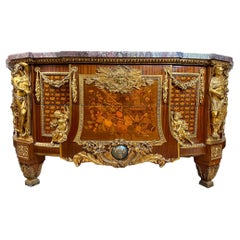
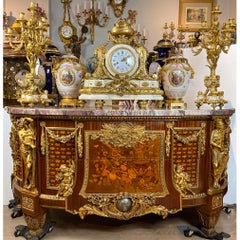
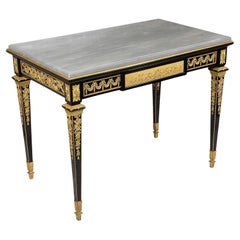
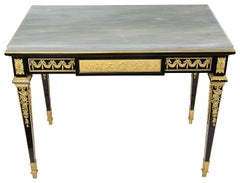
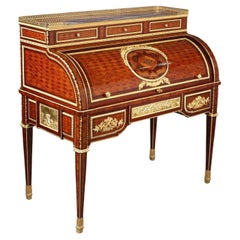
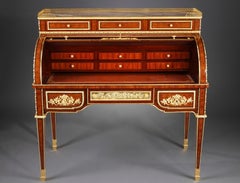
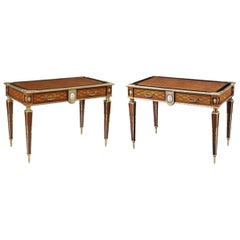
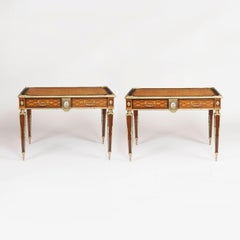
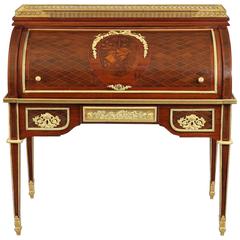
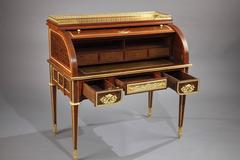
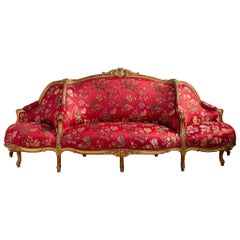
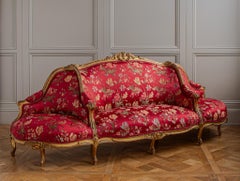
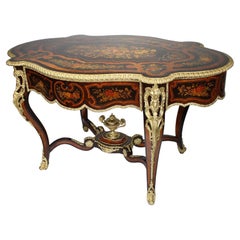
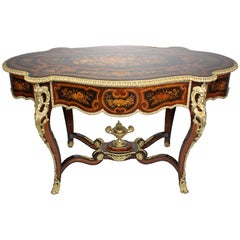
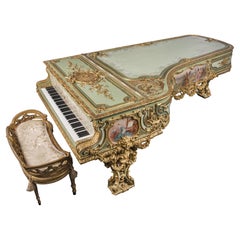
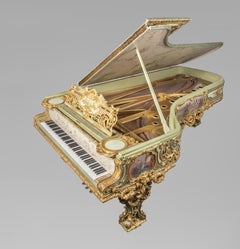
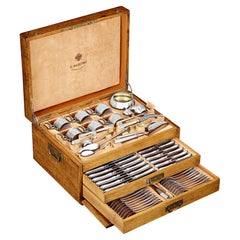
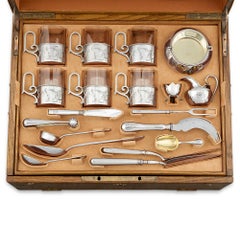
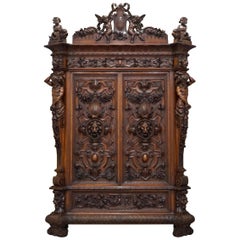
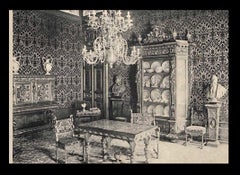
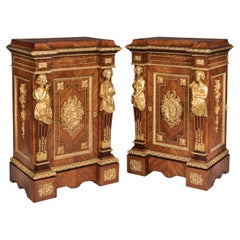
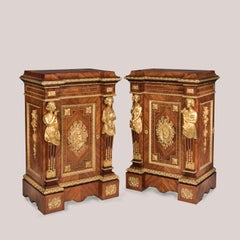
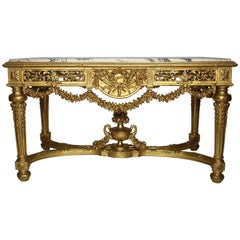
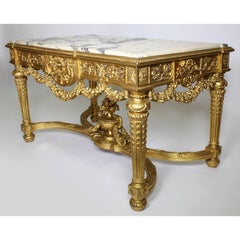
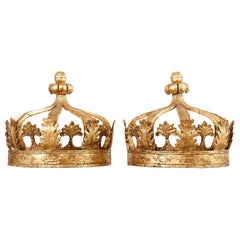
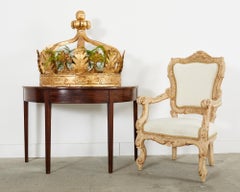
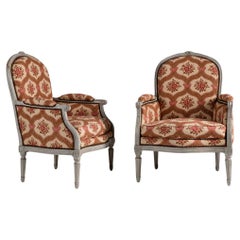
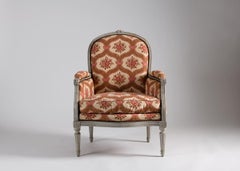
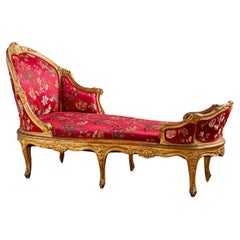
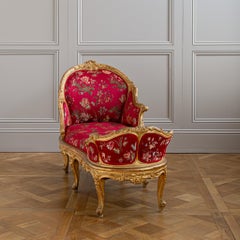
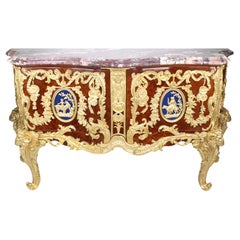
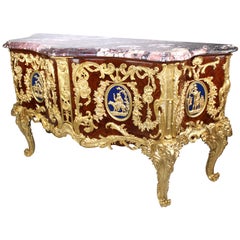
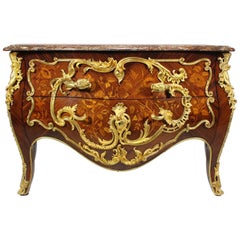
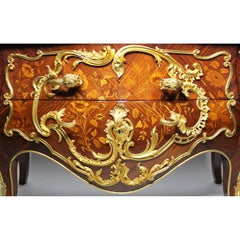
Reflecting the final era of royal opulence before the upheaval of the French Revolution, antique Louis XVI furniture features more angular shapes than the Rococo curves of the Louis XV style, harkening back to the imposing grandeur of Louis XIV.
Dating between 1750 and 1800, an era that overlapped with the last king of France whose reign was cut short by the guillotine, Louis XVI furniture, known as the goût grec, is emblematic of the neoclassical revision that French furniture underwent during the second half of the 18th century.
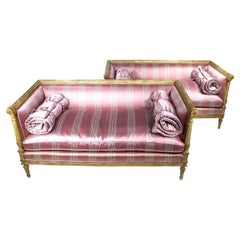
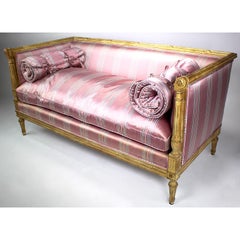
Authentic Louis XVI furniture characteristics include clean lines and carved details such as scrolls and acanthus flourishes that were inspired by ancient Greece and Rome. This was informed by a burgeoning interest in antiquity in the 18th century, owing to new archaeological excavations at sites including Pompeii and Herculaneum. It largely eclipsed the more East Asian–influenced ornamentation of Louis XV for something more geometric and symmetrical.
The Louis XVI style was defined by what was being created for the palatial rooms at Versailles and Fontainebleau, particularly for the queen, with cabinetmaker Jean-Henri Riesener being a favorite of Marie-Antoinette’s for his luxurious pieces accented with gilded bronze and marquetry. Furniture maker Jean-Baptiste-Claude Sené was also a major designer of the period, with his pieces for the royal residences adorned with giltwood and neoclassical touches like tapered columns for chair legs and laurel leaf carvings. Cabinetmaker Adam Weisweiler occasionally incorporated into his furniture porcelain panels produced by Sèvres, a popular manufacturer of European ceramics that served the crown with serveware, vases and other decorative objects.
Find a collection of antique Louis XVI seating, tables, cabinets and other furniture on 1stDibs.