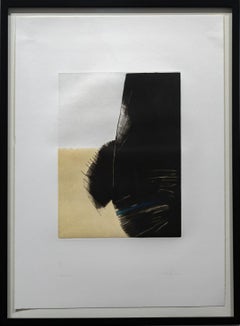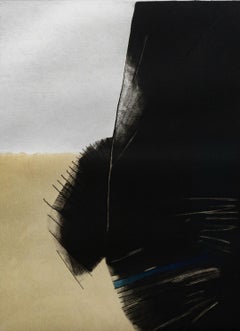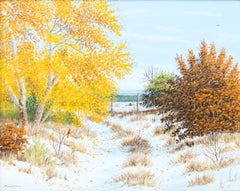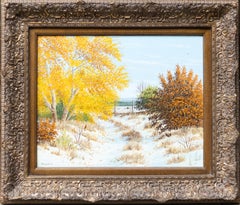
Charles Quest Art

1904-1993

Charles Quest, a successful artist, and fine art instructor, worked in a variety of mediums including mosaic, stained glass, mural painting, and sculpture, but remains best known as a printmaker. Quest grew up in St. Louis, his talent evident as a teenager when he began copying the works of masters such as Michelangelo on his bedroom walls. He studied at the Sam Fox School of Design & Visual Arts at Washington University where he later taught from 1944–71. He traveled to Europe after his graduation in 1929, and studied at the Académie de la Grande Chaumière and Académie Colarossi, Paris, continuing to draw inspiration from the works of the Old Masters. After returning to St. Louis, Quest received several commissions to paint murals in public buildings, schools, and churches, including one from Joseph Cardinal Ritter to paint a replica of Velázquez's Crucifixion over the main altar of the Old Cathedral in St. Louis.

Quest soon became interested in the woodcut medium which he apparently learned through his study of J. J. Lankes' A Woodcut Manual (1932) and Paul Landacre's articles in the American Artist magazine since no artists in St. Louis were working in wood at that time. Quest also revealed that for him, woodcutting and engraving were ‘more enjoyable than any other means of expression.’ In the late 1940s, his graphic works began attracting a lot of critical attention — several of his woodcuts won prizes and were acquired by major American and European museums. His wood engraving entitled Lovers was included in the American Federation of Art's traveling print exhibition in 1947. Two years later Quest's two prize-winning prints, Still Life with Grindstone and Break Forth into Singing were exhibited in major American museums in a traveling show organized by the Philadelphia Print Club. His work was included in the Chicago Art Institute's exhibition, Woodcut Through Six Centuries and the print Still Life with Vise, which was purchased by the Museum of Modern Art in New York. In 1951, he was invited by artist-curator Jacob Kainen to exhibit 30 wood engravings and color woodcuts in the Graphic Arts Division of the Smithsonian's National Museum (now known as the American History Museum). This one-man exhibition was a remarkable achievement for Quest, who had been working in the medium for only about 10 years.

In the press release for the show, Kainen praised the ‘technical refinement’ of Quest's work. “He obtains a great variety of textural effects through the use of the graver, and these dense or transparent grays are set off against whites or blacks to achieve sparkling results. His work has the handsome qualities characteristic of the craftsman and designer,” noted Kainen. At the time of the Smithsonian exhibition, Quest's work was represented by three New York galleries in addition to one in his hometown. He had also won 38 prizes, and his prints were in the collections of the Library of Congress, the Art Institute of Chicago, the Metropolitan Museum and the Philadelphia Museum of Art. In cooperation with the Art in Embassies program, his color woodcuts were displayed at the American Embassy in Paris in 1951. Recognition at home came in 1955 with his first solo exhibition in St. Louis. Press coverage of the show heralded the growth of graphic arts toward rivaling painting and sculpture as a major independent medium.

Quest retired from teaching in 1971 and made relatively few prints in his later years, as the rigors of the medium were too demanding. He moved to Tryon, North Carolina, with his wife Dorothy, an artist and portrait painter, and remained active as a painter until he died in 1993. An exhibition of his prints at the Bethesda Art Gallery in 1983 attracted the interest of Curator Emeritus Joseph A. Haller, S. J., who began purchasing his work for the University's collection. In 1990, Georgetown University Library's Special Collections Division became the grateful recipient of a large body of Quest's work including prints, drawings, paintings, sculpture, and stained glass, as well as his archive of correspondence and professional memorabilia. These extensive holdings, including some 260 of his fine prints, provide a rich opportunity for further study and appreciation of this versatile and not-to-be-forgotten mid-Western American artist of the 20th century.

to
2
1
Overall Width
to
Overall Height
to
3
2
2
1
2
1
1
1
2
1
1
1
1
3
10,575
2,818
2,500
1,410
1
3
Artist: Charles Quest
Underwater — Mid-century Modern

Underwater — Mid-century Modern

By Charles Quest

Located in Myrtle Beach, SC

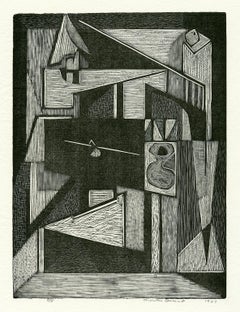
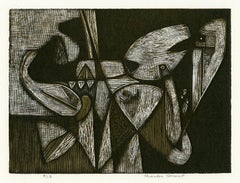
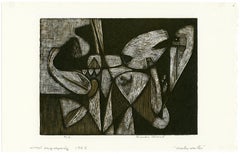
Charles Quest, 'Underwater', 1948, chiaroscuro wood engraving, edition 12. Signed, titled, dated and numbered '3/12' in pencil. A fine, richly-inked impression, in dark brown and warm black, on off-white wove paper, with full margins (5/8 to 1 1/2 inch), in excellent condition. Scarce. ABOUT THE ARTIST Charles Quest, painter, printmaker, and fine art instructor, worked in various mediums, including mosaic, stained glass, mural painting, and sculpture. Quest grew up in St. Louis, his talent evident as a teenager when he began copying the works of masters such as Michelangelo on his bedroom walls. He studied at the Washington University School of Fine Arts, where he later taught from 1944 to 1971. He traveled to Europe after his graduation in 1929 and studied at La Grande Chaumière and Academie Colarossi, Paris, continuing to draw inspiration from the works of the Old Masters. After returning to St. Louis, Quest received several commissions to paint murals in public buildings, schools, and churches, including one from Joseph Cardinal Ritter, to paint a replica of Velasquez's Crucifixion over the main altar of the Old Cathedral in St. Louis. Quest soon became interested in the woodcut medium, which he learned through his study of J. J. Lankes' A Woodcut Manual (1932) and Paul Landacre's articles in American Artist magazine ‘since no artists in St. Louis were working in wood’ at that time. Quest also revealed that for him, wood cutting and engraving were ‘more enjoyable than any other means of expression.’ In the late 1940s, his graphic works began attracting critical attention—several of his woodcuts won prizes and were acquired by major American and European museums. His wood engraving entitled ‘Lovers’ was included in the American Federation of Art's traveling print exhibition in 1947. Two years later, Quest's two prize-winning prints, ‘Still Life with Grindstone’ and ‘Break Forth into Singing’, were exhibited in major American museums in a traveling show organized by the Philadelphia Print Club. His work was included in the Chicago Art Institute's exhibition, ‘Woodcut Through Six Centuries’, and the print ‘Still Life with Vise’ was purchased by the Museum of Modern Art in New York. In 1951 he was invited by artist-Curator Jacob Kainen to exhibit thirty wood engravings and color woodcuts in a one-person show at the Smithsonian's National Museum (now known as the American History Museum). Kainen's press release praised the ‘technical refinement’ of Quest's work: ‘He obtains a great variety of textural effects through the use of the graver, and these dense or transparent grays are set off against whites or blacks to achieve sparkling results. His work has the handsome qualities characteristic of the craftsman and designer.’ At the time of the Smithsonian exhibition, Quest's work was represented by three New York galleries in addition to one in his home town. He had won 38 prizes, and his prints were in the collections of the Library of Congress, the Chicago Art Institute, the Metropolitan Museum, and the Philadelphia Museum of Art. In cooperation with the Art in Embassies program, his color woodcuts were displayed at the American Embassy in Paris in 1951. Recognition at home came in 1955 with his first solo exhibition in St. Louis. Press coverage of the show heralded the ‘growth of graphic arts toward rivaling painting and sculpture as a major independent medium’. An exhibition of his prints at the Bethesda Art Gallery in 1983 attracted Curator Emeritus Joseph A. Haller, S.J., who began purchasing his work for Georgetown University's collection. In 1990 Georgetown University Library's Special Collections Division was the recipient of a large body of Quest's work, including prints, drawings, paintings, sculpture, stained glass, and his archive of correspondence and professional memorabilia. These extensive holdings, including some 260 of his fine prints, provide a rich opportunity for further study and appreciation of this versatile and not-to-be-forgotten mid-Western American artist...

Category

1940s American Modern Charles Quest Art

Materials

Woodcut

Still Life — Mid-century Modern

Still Life — Mid-century Modern

By Charles Quest

Located in Myrtle Beach, SC

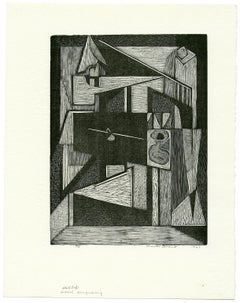
Charles Quest, 'Still Life', 1947, wood engraving, edition 8. Signed, dated, and numbered '3/8' in pencil. Titled and annotated 'wood engraving' in the bottom left margin. A fine impression, on off-white wove paper, with full margins (1 to 2 inches), in excellent condition. Scarce. Matted to museum standards, unframed. ABOUT THE ARTIST Charles Quest, painter, printmaker, and fine art instructor, worked in various mediums, including mosaic, stained glass, mural painting, and sculpture. Quest grew up in St. Louis, his talent evident as a teenager when he began copying the works of masters such as Michelangelo on his bedroom walls. He studied at the Washington University School of Fine Arts, where he later taught from 1944 to 1971. He traveled to Europe after his graduation in 1929 and studied at La Grande Chaumière and Academie Colarossi, Paris, continuing to draw inspiration from the works of the Old Masters. After returning to St. Louis, Quest received several commissions to paint murals in public buildings, schools, and churches, including one from Joseph Cardinal Ritter, to paint a replica of Velasquez's Crucifixion over the main altar of the Old Cathedral in St. Louis. Quest soon became interested in the woodcut medium, which he learned through his study of J. J. Lankes' A Woodcut Manual (1932) and Paul Landacre's articles in American Artist magazine ‘since no artists in St. Louis were working in wood’ at that time. Quest also revealed that for him, wood cutting and engraving were ‘more enjoyable than any other means of expression.’ In the late 1940s, his graphic works began attracting critical attention—several of his woodcuts won prizes and were acquired by major American and European museums. His wood engraving entitled ‘Lovers’ was included in the American Federation of Art's traveling print exhibition in 1947. Two years later, Quest's two prize-winning prints, ‘Still Life with Grindstone’ and ‘Break Forth into Singing’, were exhibited in major American museums in a traveling show organized by the Philadelphia Print Club. His work was included in the Chicago Art Institute's exhibition, ‘Woodcut Through Six Centuries’, and the print ‘Still Life with Vise’ was purchased by the Museum of Modern Art in New York. In 1951 he was invited by artist-Curator Jacob Kainen to exhibit thirty wood engravings and color woodcuts in a one-person show at the Smithsonian's National Museum (now known as the American History Museum). Kainen's press release praised the ‘technical refinement’ of Quest's work: ‘He obtains a great variety of textural effects through the use of the graver, and these dense or transparent grays are set off against whites or blacks to achieve sparkling results. His work has the handsome qualities characteristic of the craftsman and designer.’ At the time of the Smithsonian exhibition, Quest's work was represented by three New York galleries in addition to one in his home town. He had won 38 prizes, and his prints were in the collections of the Library of Congress, the Chicago Art Institute, the Metropolitan Museum, and the Philadelphia Museum of Art. In cooperation with the Art in Embassies program, his color woodcuts were displayed at the American Embassy in Paris in 1951. Recognition at home came in 1955 with his first solo exhibition in St. Louis. Press coverage of the show heralded the ‘growth of graphic arts toward rivaling painting and sculpture as a major independent medium’. An exhibition of his prints at the Bethesda Art Gallery in 1983 attracted Curator Emeritus Joseph A. Haller, S.J., who began purchasing his work for Georgetown University's collection. In 1990 Georgetown University Library's Special Collections Division was the recipient of a large body of Quest's work, including prints, drawings, paintings, sculpture, stained glass, and his archive of correspondence and professional memorabilia. These extensive holdings, including some 260 of his fine prints, provide a rich opportunity for further study and appreciation of this versatile and not-to-be-forgotten mid-Western American artist...

Category

1940s American Modern Charles Quest Art

Materials

Woodcut

The Old Courthouse
The Old Courthouse

The Old Courthouse

By Charles Quest

Located in Missouri, MO

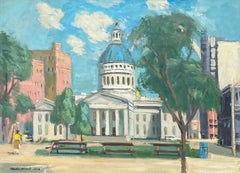
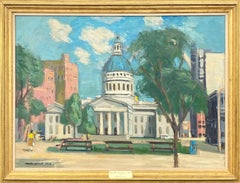
The Old Courthouse, 1968 By. Charles Quest (American, 1904-1993) Signed and Dated Lower Left 32 x 44 inches 38.25 x 50.25 inches with frame Born in Troy, New York, Charles Quest was...

Category

20th Century American Impressionist Charles Quest Art

Materials

Canvas, Oil

Related Items
Untitled Double Page Illustration for DLM

Untitled Double Page Illustration for DLM

By Alexander Calder

Located in Fairlawn, OH

Untitled Double Page Illustration for DLM Color lithograph, 1968 Unsigned as issued in DLM Published in Derriere le Miroir (Behind the Mirror), calle...

Category

1960s American Modern Charles Quest Art

Materials

Lithograph

Composition with Red and Blue Ball - Original lithograph (Mourlot)

Composition with Red and Blue Ball - Original lithograph (Mourlot)

By Alexander Calder

Located in Paris, IDF

Alexander CALDER Composition with Red and Blue Ball Original lithograph (printed in Mourlot workshop) Printed signature in the plate On Arches vellum 25 x 19 cm (c. 10 x 8 inch) Edi...

Category

1960s American Modern Charles Quest Art

Materials

Lithograph

“Impressionist Landscape, c. 1915-1920” California Forest American Impressionist

“Impressionist Landscape, c. 1915-1920” California Forest American Impressionist

By Francis Stillwell Dixon

Located in Yardley, PA

“Impressionist Landscape, c. 1915-1920” by Francis Stillwell Dixon (American, 1879-1967). One of Dixon’s finest canvases, depicting a tranquil forest scene bathed in soft, dappled l...

Category

Early 20th Century American Impressionist Charles Quest Art

Materials

Canvas, Oil

Sunny Day in the Park

Sunny Day in the Park, 1900

$3,975

H 29 in W 31 in D 2 in

Sunny Day in the Park

Located in Buffalo, NY

19th century Impressionist oil painting of two women in a park. Oil on canvas, circa 1900. Signed illegibly lower left. Displayed in giltwood...

Category

1890s American Impressionist Charles Quest Art

Materials

Canvas, Oil

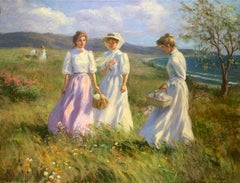
Brian Blood 'Monterey Bay' Plein Air California Impressionist Seascape Painting

Brian Blood 'Monterey Bay' Plein Air California Impressionist Seascape Painting

By Brian Blood

Located in San Rafael, CA

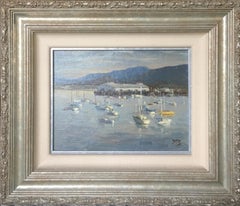
Brian Blood (American, b. 1962) Monterey Bay, 2000 Oil on canvas board Signed lower right: BB signed, dated, and titled verso: Brian Blood, 2000 Monterey Bay 9in H x 12in L In a silvered gilt frame with linen mat and moulding: 17 1/4in H x 20in L Brian Blood is a resident of Pebble Beach, California. He began his professional life as a graphic artist and art director in Boston, Massachusetts. He then came to California to attend the Academy of Art College in San Francisco for both undergraduate and graduate studies. In 2003, Blood and his artist wife, Laurie Kersey...

Category

Early 2000s American Impressionist Charles Quest Art

Materials

Oil, Canvas

Untitled
Untitled

Untitled

By Charles William Smith

Located in Fairlawn, OH

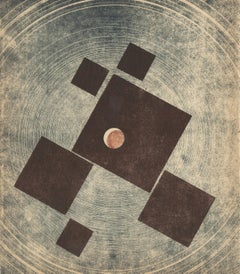
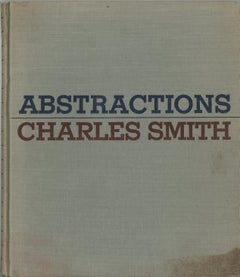
Untitled Color woodcut, 1939 Unsigned as issued Signed and dedicated by the artist on the justification page (see photo) From: Abstractions By Charles Smith Forward by Carl O. Schnie...

Category

1930s American Modern Charles Quest Art

Materials

Woodcut

Sandscapes #4 Florida Artist Abstract Modernist Signed Print

Sandscapes #4 Florida Artist Abstract Modernist Signed Print

By Kathy Stark

Located in Surfside, FL

Fine piece of Florida abstract Landscape art. With a French Art Deco feel to it.

Category

1990s American Modern Charles Quest Art

Materials

Lithograph

"Forest Snow" George Gardner Symons, Snowy Winter Landscape, Pennsylvania

"Forest Snow" George Gardner Symons, Snowy Winter Landscape, Pennsylvania

By George Gardner Symons

Located in New York, NY

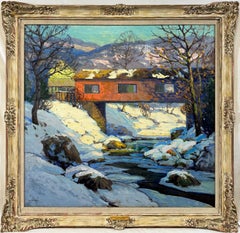
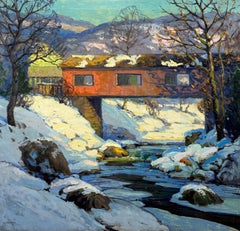
George Gardner Symons Forest Snow, circa 1920s Signed lower right Oil on canvas laid on board 30 x 36 inches Provenance Estate of Jean Stanton, Neenah, Wisconsin A landscape and m...

Category

1920s American Impressionist Charles Quest Art

Materials

Canvas, Oil

Genesis 3th Day
Genesis 3th Day

Dennis Ray BeallGenesis 3th Day, 1962

$400

H 16.35 in W 12.35 in D 0.65 in

Genesis 3th Day

By Dennis Ray Beall

Located in San Francisco, CA

This artwork titled "Genesis 3th Day" 1962 is a n original colors etching , with embossing by noted American artist Dennis Ray Beall, b.1929. It is hand signed, titled, dated and num...

Category

Mid-20th Century American Modern Charles Quest Art

Materials

Etching

Plein Air Creekside, 8x9" oil on board

Plein Air Creekside, 8x9" oil on board

By Lu Haskew

Located in Loveland, CO

Plein Air Creekside by Lu Haskew Oil 8x9" image size Landscape Painting This painting is unframed, canvas on gator board, the price reflects that it is unframed. ​ ABOUT THE ARTIST: Lu Haskew 1921-2009 "Life is good to me. Being able to go to my studio five days weekly and paint for several hours, living in a supportive community, having family and friends who encourage me--all have contributed to helping me become an artist. Being fortunate to study with some of the artists I admire has kept me painting from the garden, people and my favorite things. With the support of galleries, teaching and doing demos, how could I do anything else? My goal is to try to be the best I can be by always being a student, looking for new ideas and stretching my horizons." Upon retirement from a 33-year teaching career, Lu rented a studio in Loveland and began concentrating on her oil and watercolor painting. Learning from artists she had followed and admired throughout the years her painting became a full time career that lasted 17-years. Beginning in 1992, she studied with renowned painters Richard Schmid, Clyde Aspevig, Joyce Pike...

Category

Early 2000s American Impressionist Charles Quest Art

Materials

Canvas, Oil, Board

American Impressionist Oil on Canvas Painting "California Highlands" Los Angeles

American Impressionist Oil on Canvas Painting "California Highlands" Los Angeles

By Charles Smith

Located in Portland, OR

A very attractive California Impressionist oil on canvas painting by Charles L. A. Smith, "California Highlands", dated 1930. This very attractive large painting by one of the foremo...

Category

1930s American Impressionist Charles Quest Art

Materials

Canvas, Oil

"Road to Provincetown, " Henry MacGinnis, Massachusetts Landscape

"Road to Provincetown, " Henry MacGinnis, Massachusetts Landscape

By Henry Ryan MacGinnis

Located in New York, NY

Henry Ryan MacGinnis (1875 - 1962) Road to Provincetown, 1924 Oil on canvas 25 x 30 inches Signed lower right; titled and dated on the stretcher Housed in a Stanford White Newcomb-Macklin frame. Exhibited: Trenton, New Jersey, School of Industrial Arts Provincetown by Professor MacGinnis, 1924. Henry Ryan MacGinnis, 1875-1962, was born in Indiana and began his art studies under the eminent Hoosier artists T.C. Steele, J.O. Adams and William Forsyth. One of his earliest exhibitions was in 1896, when he showed his work with other notable Hoosier artists such as T.C. Steele, J. Ottis Adams...

Category

1920s American Impressionist Charles Quest Art

Materials

Canvas, Oil

Previously Available Items
Work Bench — Mid-century Modern

Work Bench — Mid-century Modern

By Charles Quest

Located in Myrtle Beach, SC

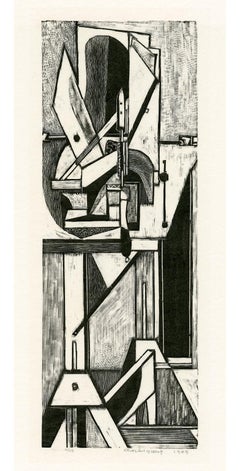
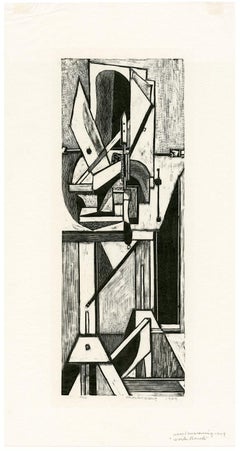
Charles Quest, 'Work Bench', 1949, wood engraving, edition 40. Signed, dated and numbered 9/40 in pencil. Titled and annotated 'wood engraving 1949' in pencil, in the artist’s hand, lower right margin. A fine, richly-inked impression, on off-white wove Japan, with full margins (1 3/4 to 2 inches), in excellent condition. Matted to museum standards, unframed. ABOUT THE ARTIST Charles Quest, a successful artist, and fine art instructor, worked in a variety of mediums including mosaic, stained glass, mural painting, and sculpture, but remains best known as a printmaker. Quest grew up in St. Louis, his talent evident as a teenager when he began copying the works of masters such as Michelangelo on his bedroom walls. He studied at the Washington University School of Fine Arts where he later taught from 1944 to 1971. He traveled to Europe after his graduation in 1929, and studied at La Grande Chaumière and Academie Colarossi, Paris, continuing to draw inspiration from the works of the Old Masters. After returning to St. Louis, Quest received several commissions to paint murals in public buildings, schools, and churches, including one from Joseph Cardinal Ritter to paint a replica of Velasquez's Crucifixion over the main altar of the Old Cathedral in St. Louis. Quest soon became interested in the woodcut medium which he apparently learned through his study of J. J. Lankes' A Woodcut Manual (1932) and Paul Landacre's articles in American Artist magazine ‘since no artists in St. Louis were working in wood’ at that time. Quest also revealed that for him, wood cutting and engraving were ‘more enjoyable than any other means of expression.’ In the late 1940s, his graphic works began attracting a lot of critical attention—several of his woodcuts won prizes and were acquired by major American and European museums. His wood engraving entitled ‘Lovers’ was included in the American Federation of Art's traveling print exhibition in 1947. Two years later Quest's two prize-winning prints, ‘Still Life with Grindstone’ and ‘Break Forth into Singing’ were exhibited in major American museums in a traveling show organized by the Philadelphia Print Club. His work was included in the Chicago Art Institute's exhibition, ‘Woodcut Through Six Centuries’ and the print ‘Still Life with Vise’, was purchased by the Museum of Modern Art in New York. In 1951 he was invited by artist-Curator Jacob Kainen to exhibit thirty wood engravings and color woodcuts in the Graphic Arts Division of the Smithsonian's National Museum (now known as the American History Museum). This one-man exhibition was a remarkable achievement for Quest, who had been working in the medium for only about ten years. In the press release for the show, Kainen praised the ‘technical refinement’ of Quest's work: ‘He obtains a great variety of textural effects through the use of the graver, and these dense or transparent grays are set off against whites or blacks to achieve sparkling results. His work has the handsome qualities characteristic of the craftsman and designer.’ At the time of the Smithsonian exhibition, Quest's work was represented by three New York galleries in addition to one in his home town. He had also won 38 prizes, and his prints were in the collections of the Library of Congress, the Chicago Art Institute, the Metropolitan Museum and the Philadelphia Museum of Art. In cooperation with the Art in Embassies program, his color woodcuts were displayed at the American Embassy in Paris in 1951. Recognition at home came in 1955 with his first solo exhibition in St. Louis. Press coverage of the show heralded the ‘growth of graphic arts toward rivaling painting and sculpture as a major independent medium’. Charles Quest retired from teaching in 1971 and made relatively few prints in his later years, as the rigors of the medium were too demanding. He moved to Tryon, North Carolina, with his wife Dorothy, an artist and portrait painter, and remained active as a painter until his death in 1993. An exhibition of his prints at the Bethesda Art Gallery in 1983 attracted the interest of Curator Emeritus Joseph A. Haller, S.J., who began purchasing his work for the University's collection. In 1990 Georgetown University Library's Special Collections Division became the grateful recipient of a large body of Quest's work including prints, drawings, paintings, sculpture, and stained glass, as well as his archive of correspondence and professional memorabilia. These extensive holdings, including some 260 of his fine prints, provide a rich opportunity for further study and appreciation of this versatile and not-to-be-forgotten mid-Western American artist...

Category

1940s American Modern Charles Quest Art

Materials

Woodcut

Charles Quest art for sale on 1stDibs.

Find a wide variety of authentic Charles Quest art available for sale on 1stDibs. You can also browse by medium to find art by Charles Quest in woodcut print, canvas, fabric and more. Much of the original work by this artist or collective was created during the 20th century and is mostly associated with the modern style. Not every interior allows for large Charles Quest art, so small editions measuring 5 inches across are available. Customers who are interested in this artist might also find the work of Giovanni Pintori, Caroline Durieux, and Paul Sample. Charles Quest art prices can differ depending upon medium, time period and other attributes. On 1stDibs, the price for these items starts at $750 and tops out at $1,500, while the average work can sell for $875.

Artists Similar to Charles Quest