Kyoto

to
982,511
750,573
25
18
17
16
11
10
5
5
4
4
2
2
2
1
1
1
1
1
1
1
1
2
1
1
1
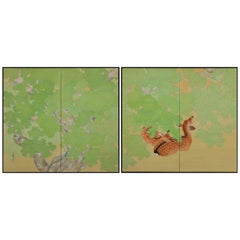
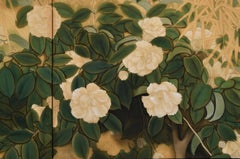
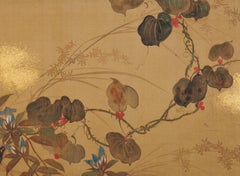
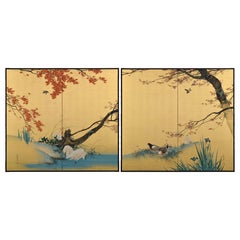
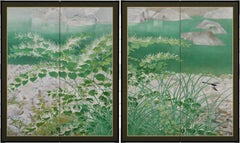
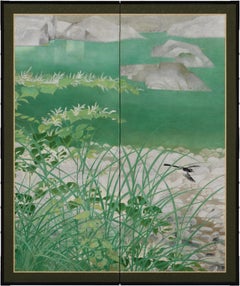
Japanese Screen Pair. Showa era. Nihonga Riverside landscape. Late Summer.

Japanese Screen Pair. Showa era. Nihonga Riverside landscape. Late Summer.

Located in Kyoto, JP

Ono Tosei (1902–?) Late Summer Showa era. Circa 1935 Pair of two-panel Japanese Screens. Ink, gofun and pigment on silk. Dimensions (each screen): H. 176 cm x W. 148 cm (69” x 58”) ...

Category

1930s Vintage Kyoto

Materials

Silk

19th Century Japanese Shunga Hand-Scroll, Katsukawa School

19th Century Japanese Shunga Hand-Scroll, Katsukawa School

Located in Kyoto, JP

Shunga Unknown artist Meiji era, circa 1880 Hand-scroll mounted with 12 paintings Ink, pigment and gofun on silk Dimensions: Each image measures H. 23.2 cm x W. 34.4 cm (9.15” x 13.5”) The hand-scroll measures H. 28 cm x W. 540 cm (11” x 212”) A set of 12 late 19th century Japanese Shunga paintings mounted as a hand-scroll. Two of the leaves bear the signature and seal ‘Setsuzan’, although we are unable to confirm the identity of the artist using this art name. 6 of the 12 images are taken almost directly from Katsukawa Shuncho’s late 18th century woodblock series, ‘Erotic Pictures...

Category

Late 19th Century Japanese Meiji Antique Kyoto

Materials

Silk

Early 20th Century Japanese Nihonga Screen. Bamboo Forest.

Early 20th Century Japanese Nihonga Screen. Bamboo Forest.

Located in Kyoto, JP

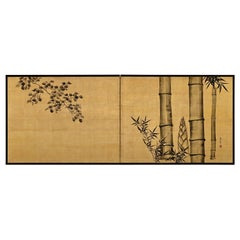
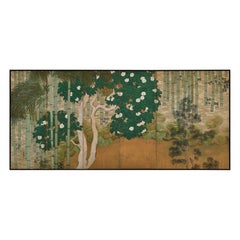
Anonymous Bamboo Forest Early Taisho era. Circa 1910-1915. Six-panel Japanese Screen. Mineral pigment, gofun and ink on silk. A six-panel Japanese folding screen, painted on silk in...

Category

Early 20th Century Japanese Taisho Kyoto

Materials

Silk

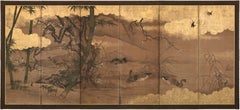
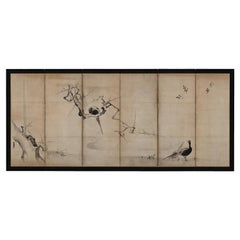
17th Century Japanese Screen. Flowers & Birds of Winter and Early Spring.

17th Century Japanese Screen. Flowers & Birds of Winter and Early Spring.

Located in Kyoto, JP

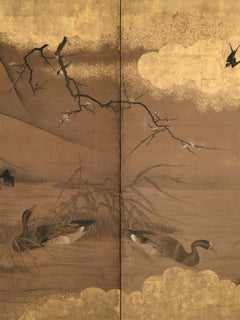
Signed Unkoku Toyu (1660-1716) Flowers & Birds of Winter and Early Spring A Six-panel Japanese Screen. Ink, color and gold leaf on paper. This later 17th century Japanese screen is signed Unkoku Tōyū (1660–1716), a leading figure of the Unkoku school in the early Edo period. Tōyū was the eldest son of Unkoku Tōji, and he carried forward a lineage that deliberately anchored itself in the authority of Sesshū Tōyō. The mood of the scene is observational and seasonal, not emblematic of power as were many screens from the more wide-spread Kano school. The composition is unified by wind and atmosphere. Everything — bamboo, plum, reeds, water, birds — participates in a single directional force moving from left to right. Unlike certain later screens that flatten elements across the surface, this composition preserves a sense of depth. Yet the recession is moderated by gold clouds and frontal placement of forms. The result is a balanced tension between depth and surface. The compositional structure — with its expansive sweep across the panels — reflects the decorative ambition of Momoyama screen...

Category

Late 17th Century Japanese Edo Antique Kyoto

Materials

Gold Leaf

Japanese Screen. 19th Century. Reflections of the Moon.

Japanese Screen. 19th Century. Reflections of the Moon.

Located in Kyoto, JP

Yokoyama Seiki (1792–1864) Reflections of the Moon Six-panel Japanese Screen. Ink, color and gold on paper. Dimensions: H. 63.5 cm x W. 274 cm (25” x 108”) Executed as a six-panel folding screen, this atmospheric composition presents an evocative nocturnal study of moonlight reflected upon a tranquil expanse of water. The moon itself remains unseen, its presence revealed only through elongated bands of pale light that drift across the softly rippling surface, their forms broken and reformed by gently undulating currents rendered in delicate ink line. Subtle washes and fluid brushwork create a refined interplay between luminosity and shadow, conveying the quiet movement of water beneath the night sky. The screen's broad horizontal format emphasizes the vastness of the scene, surrounding the reflected light with expansive areas of open space that evoke the stillness and silence of the night. Particularly notable is Seiki's use of translucent gold washes, which permeate the composition with a soft, radiant glow. Rather than serving a purely decorative function, the gold creates an enveloping atmosphere suggestive of moonlight diffused through mist, while the reflective surface of the screen itself causes the image to shift subtly as ambient light changes. Reduced almost to abstraction and distilled to the essential elements of light, water, and space, the work exemplifies the Shijō school's sensitivity to observed natural phenomena while expressing a distinctly Japanese appreciation for atmosphere, transience, and contemplative space. Yokoyama Seiki (1792–1864) was a leading painter of the Kyoto-based Shijō school during the late Edo period. Born in Kyoto, he studied under Matsumura Keibun (1779–1843), the younger half-brother of Matsumura Goshun, founder of the Shijō school. Following Keibun's death, Seiki emerged as one of the school's most distinguished artists and was ranked among the foremost painters of Kyoto. Together with Nakajima Raishō, Kishi Renzan...

Category

Mid-19th Century Japanese Edo Antique Kyoto

Materials

Wood, Paper

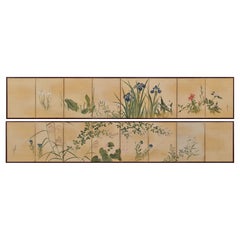
1838 Japanese Screen Pair. Flowers & Grasses of the Four Seasons.

1838 Japanese Screen Pair. Flowers & Grasses of the Four Seasons.

Located in Kyoto, JP

Maruyama Oshin (1790-1838) Flowers and grasses of the four seasons: dated 1838 Pair of eight-panel Japanese screens; ink, color and gold leaf on silk Dimensions: each (2) H. 38.5 cm...

Category

1830s Japanese Edo Antique Kyoto

Materials

Silk

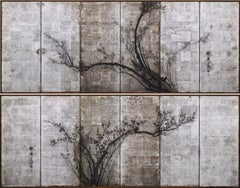
Japanese Screen Pair. Red and White Plum Blossoms on Silver Leaf.

Japanese Screen Pair. Red and White Plum Blossoms on Silver Leaf.

Located in Kyoto, JP

Okada Yosai (1785–1864) Red and White Plum Blossoms Pair of six-panel Japanese screens. Ink and silver leaf on paper. Dimensions (Each Screen): H. 105.5 cm x W. 270 cm (41.5” x 10...

Category

Mid-19th Century Japanese Edo Antique Kyoto

Materials

Silver Leaf

19th Century Japanese Screen for Tea-Ceremony, Ink Bamboo and Plum on Gold Leaf

19th Century Japanese Screen for Tea-Ceremony, Ink Bamboo and Plum on Gold Leaf

Located in Kyoto, JP

Three Friends of Winter Nakajima Raisho (1796-1871) Late Edo period, circa 1850 Ink and gold leaf on paper. This is a double-sided Japanese Furosaki or tea-ceremony screen from the mid 19th century; bamboo and plum on the front, young pines the back. It by Nakajima Raisho, a master painter of the Maruyama school in the late Edo and early Meiji periods. In this work Raisho combines exquisite ink brushwork with large open spaces of brilliant gold-leaf to inspire the viewers imagination. Rather than naturalism, he is searching for the phycological impression of the motifs, resulting in abstraction and stylization. His simplification of the motifs the result of looking to capture the inner nature of the objects. This art motif is known as Sho Chiku Bai, or the Three Friends of Winter. Evergreen pine connotes steadfastness, bamboo suggests both strength and flexibility, while plum blossoms unfurling on snow-laden branches imply hardiness. Combined, this trio is emblematic of Japanese new year. Chinese literati were the first to group the three plants together due to their noble characteristics. Like these resilient plants flowering so beautifully in winter, it was expected of the scholar-gentleman to cultivate a strong character with which he would be able to show the same degree of perseverance and steadfastness even during times of adverse conditions. The screen would have been placed near the hearth of a room used for the Japanese tea ceremony, shielding the fire from draughts and also forming a stimulating and decorative backdrop behind the tea utensils. It would have been used in the Hatsugama, or first tea-ceremony of the new year. Nakajima Raisho (1796-1871) originally studied under Watanabe Nangaku before entering the school of Maruyama Ozui. He was the highest ranking Maruyama school painter at the end of the Edo period and was known as one of the ‘Four Heian Families’ along with Kishi...

Category

Mid-19th Century Japanese Edo Antique Kyoto
Materials

Gold Leaf

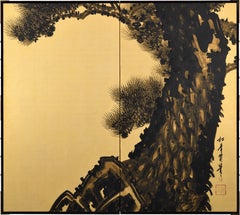
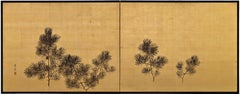
Japanese Screen. Two-panel. Aged Pines by Suzuki Shonen. Meiji period.

Japanese Screen. Two-panel. Aged Pines by Suzuki Shonen. Meiji period.

Located in Kyoto, JP

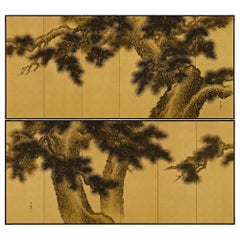
Suzuki Shonen (1848-1918) Aged Pine Meiji period (1868-1912). Circa 1900. Two-panel Japanese screen. Ink and gold leaf on paper. This commanding two-panel screen by Suzuki Shōnen...

Category

Early 20th Century Meiji Kyoto

Materials

Gold Leaf

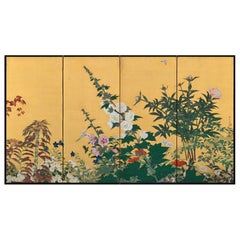
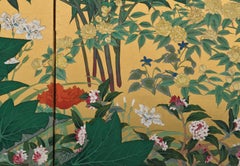
Early 20th Century Japanese Screen. Flowers of the Four Seasons.

Early 20th Century Japanese Screen. Flowers of the Four Seasons.

Located in Kyoto, JP

Anonymous Flowers of the Four Seasons A four-panel Japanese screen. Ink, gofun and pigments on gold leaf. This Japanese screen is a rich visual celebration of the flowers of the fo...

Category

Early 20th Century Japanese Taisho Kyoto

Materials

Gold Leaf

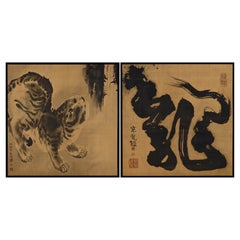
19th Century Japanese Paintings. Zenga Tiger and Dragon by Inoue Kanshu.

19th Century Japanese Paintings. Zenga Tiger and Dragon by Inoue Kanshu.

Located in Kyoto, JP

Inoue Kanshu (1807-1880) Zenga Tiger and Dragon 19th century Pair of framed Japanese paintings. Ink on silk. Dimensions (each): W. 114 cm x H. 115 cm (45” x 45”) Presented here ...

Category

Mid-19th Century Japanese Meiji Antique Kyoto

Materials

Silk

Late 17th Century Japanese Screen. Puppy and Kittens on Gold Leaf.

Late 17th Century Japanese Screen. Puppy and Kittens on Gold Leaf.

Located in Kyoto, JP

Anonymous Late 17th century Puppy & Kittens A six-panel Japanese screen. Ink, color, gofun, gold-leaf and gold-fleck on paper. A medium sized late 17th century Japanese screen fe...

Category

Late 17th Century Japanese Edo Antique Kyoto

Materials

Gold Leaf

Early 20th Century Japanese Screen Pair - Ink Pine Trees on Gold

Early 20th Century Japanese Screen Pair - Ink Pine Trees on Gold

Located in Kyoto, JP

Imao Keisho (1902-1993) Pine Trees Early 20th Century, Circa 1930 Pair of six-panel Japanese screens. Ink on silk and gold leaf. Dimensions: Each screen H. 67.5” x 148” (172 cm x 376 cm) A pair of monumental six-panel Japanese pine screens by the renowned Nihonga artist Imao Keisho. Here Keisho entirely removed the background and brought the pine trees to the surface of the painting. This simplification of the elements makes the scene exceptionally direct and compelling and injects a very modern...

Category

Early 20th Century Japanese Showa Kyoto

Materials

Gold Leaf

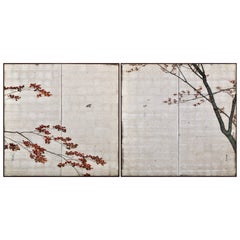
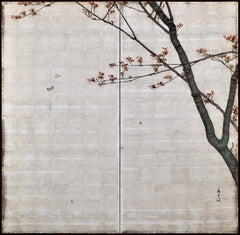
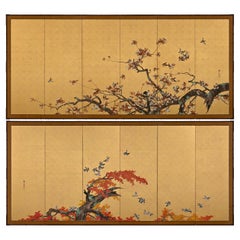
1895 Meiji Japanese Screen Pair. Cherry Blossoms & Autumn Maples on Silver Leaf

1895 Meiji Japanese Screen Pair. Cherry Blossoms & Autumn Maples on Silver Leaf

Located in Kyoto, JP

Cherry Blossoms and Autumn Maples Isobe Hyakurin (1836–1906) Dated Meiji 28, April: 1895 Pair of two-panel Japanese screens; ink and pigments on silver leaf This refined pair of scr...

Category

Late 19th Century Japanese Meiji Antique Kyoto

Materials

Silver Leaf

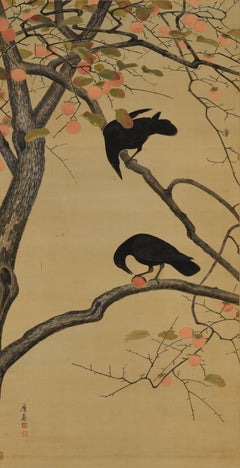
Early 20th Century Japanese Nihonga Scroll. Crow & Persimmon.

Early 20th Century Japanese Nihonga Scroll. Crow & Persimmon.

Located in Kyoto, JP

Anonymous. Crows & Persimmon Japanese Scroll. Pigments and Ink on Silk. Dimensions: Scroll: H. 235 cm x W. 106 cm. Image: H. 168 cm x W. 86 cm. Bird and flower paintings are oft...

Category

Early 20th Century Japanese Taisho Kyoto

Materials

Silk

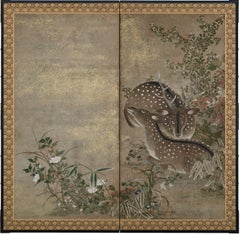
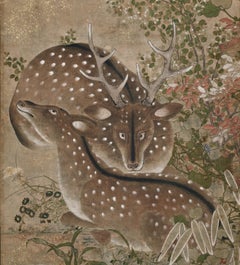
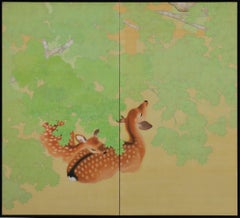
Japanese Screen. Edo period. Spotted Deer and Autumn Flowers.

Japanese Screen. Edo period. Spotted Deer and Autumn Flowers.

Located in Kyoto, JP

Anonymous Spotted Deer and Autumn Flowers Two-panel Japanese Screen; ink, color, gofun and gold fleck on paper. This two-panel Japanese screen, painted on paper and likely dating ...

Category

Late 17th Century Japanese Edo Antique Kyoto

Materials

Paper

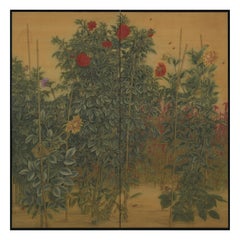
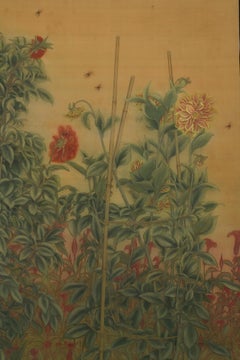
Circa 1920. Taisho era Japanese Nihonga Screen. Dahlias & Cockscomb.

Circa 1920. Taisho era Japanese Nihonga Screen. Dahlias & Cockscomb.

Located in Kyoto, JP

Kawabe Kasho (b.1892) Dahlias & Cockscomb Taisho era. Circa 1920 Two-panel Japanese Screen. Mineral pigments and ink on silk. This exquisite two-panel Japanese folding screen, pa...

Category

Early 20th Century Japanese Taisho Kyoto

Materials

Silk

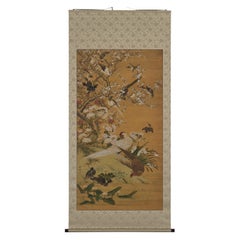
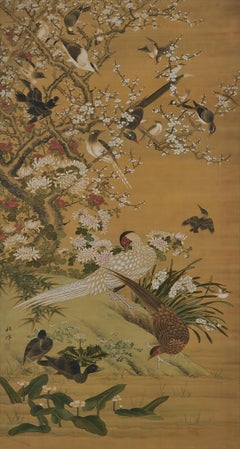
Meiji Era, Circa 1900 Japanese Screen Pair, Flowers & Birds of Spring & Autumn

Meiji Era, Circa 1900 Japanese Screen Pair, Flowers & Birds of Spring & Autumn

Located in Kyoto, JP

Flowers & Birds of Spring and Autumn Unknown artist. Japan. Meiji period, circa 1900. A pair of six-fold screens. Ink, color, gofun and gold leaf on paper. Signed: Gaga S...

Category

1890s Japanese Meiji Antique Kyoto

Materials

Gold Leaf

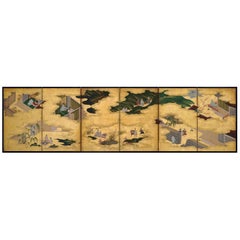
Japanese Screen Painting, Circa 1700 'Tales of Ise' by Tosa Mitsusuke

Japanese Screen Painting, Circa 1700 'Tales of Ise' by Tosa Mitsusuke

By Tosa Mitsusuke 1

Located in Kyoto, JP

A six-fold Japanese screen by Tosa Mitsusuke (1675-1710), Japan 17th-18th century, Edo period. The signature reads Shoroku-i ge Tosa sa Konoe Shogen Mit...

Category

Late 17th Century Japanese Edo Antique Kyoto

Materials

Gold Leaf

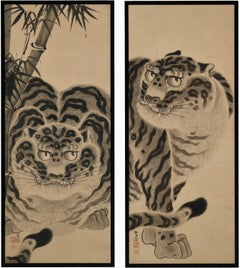
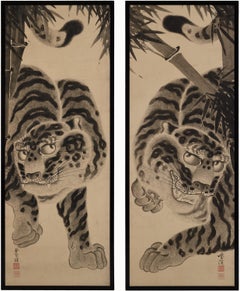
19th Century Japanese Tiger Painting Pair by Kokuho Shimei (1789–1859)

19th Century Japanese Tiger Painting Pair by Kokuho Shimei (1789–1859)

Located in Kyoto, JP

Kokuho Shimei (1789–1859) Tigers Pair of framed paintings; ink on paper Kokuho Shimei was active during the late Edo period as a Nagasaki School artist, working at a cultural cross...

Category

1840s Japanese Edo Antique Kyoto

Materials

Paper

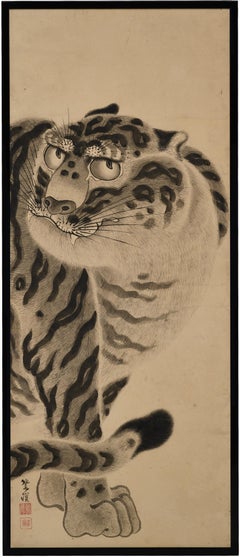
19th Century Japanese Tiger Painting Pair by Kokuho Shimei (1789–1859)

19th Century Japanese Tiger Painting Pair by Kokuho Shimei (1789–1859)

Located in Kyoto, JP

Kokuho Shimei (1789–1859) Tigers Pair of framed paintings; ink on paper Kokuho Shimei was active during the late Edo period as a Nagasaki School artist, working at a cultural cross...

Category

1840s Japanese Edo Antique Kyoto

Materials

Paper

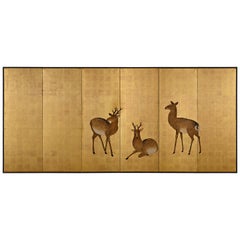
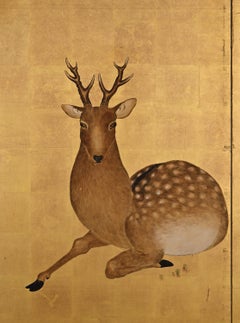
19th Century Japanese Screen, Deer in Spring, Maruyama Shijo School

19th Century Japanese Screen, Deer in Spring, Maruyama Shijo School

Located in Kyoto, JP

A six-panel Japanese folding screen from the leading Maruyama-Shijo artist Okamoto Toyohiko (1773-1845). Simply featuring three deer and a few sprigs of foliage on a sumptuous gold-leaf background this work emphasizes naturalistic expression and a masterful use of negative space. Reduced to its most basic elements, the blank spaces inspire imagination and evoke the smells, sounds and even the weather of the scene. Whilst deer are traditionally depicted in association with autumn, here the green growth on the tops of the foliage indicates the season of spring. The work references Maruyama Okyo’s two-panel deer screen...

Category

Early 19th Century Japanese Edo Antique Kyoto
Materials

Gold Leaf

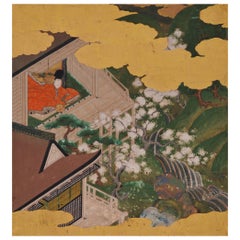
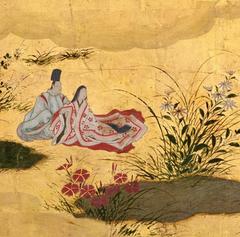
Japanese Painting, 17th Century, Tale of Genji, Tosa School

Japanese Painting, 17th Century, Tale of Genji, Tosa School

Located in Kyoto, JP

Illustration to an unidentified chapter of the Tale of Genji (Genji Monogatari) Tosa School (second half of the 17th Century) Ink, pigment, gofun and...

Category

Late 17th Century Japanese Edo Antique Kyoto
Materials

Gold Leaf

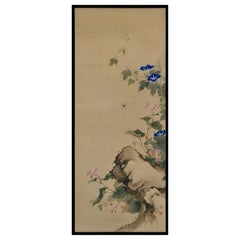
Mid 19th Century Framed Japanese Painting. Spider & Morning Glory.

Mid 19th Century Framed Japanese Painting. Spider & Morning Glory.

Located in Kyoto, JP

Obata Tosho (1812-1886) Spider & Morning Glory Late Edo period, mid 19th Century Framed Japanese Painting. Ink and color on paper. Individually framed 19th century bird and f...

Category

Mid-19th Century Japanese Edo Antique Kyoto
Materials

Paper

19th Century Japanese Tiger Painting Pair by Kokuho Shimei (1789–1859)

19th Century Japanese Tiger Painting Pair by Kokuho Shimei (1789–1859)

Located in Kyoto, JP

Kokuho Shimei (1789–1859) Tigers Pair of framed paintings; ink on paper Kokuho Shimei was active during the late Edo period as a Nagasaki School artist, working at a cultural cross...

Category

1840s Japanese Edo Antique Kyoto

Materials

Paper

Circa 1920 Japanese Screen. Cat & Mouse Harvest Scene on Gold Silk.

Circa 1920 Japanese Screen. Cat & Mouse Harvest Scene on Gold Silk.

Located in Kyoto, JP

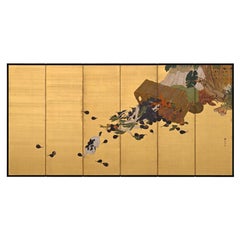
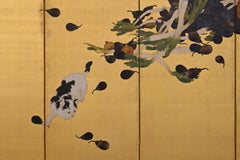
The narrative playfulness of the scene depicted on this Japanese screen sets alight what is at its core a celebration of a bountiful harvest. The screen offers a visual representatio...

Category

Early 20th Century Japanese Taisho Kyoto

Materials

Gold

17th Century Korean Grapevine and Squirrel Scroll Painting, Mid Joseon Period

17th Century Korean Grapevine and Squirrel Scroll Painting, Mid Joseon Period

Located in Kyoto, JP

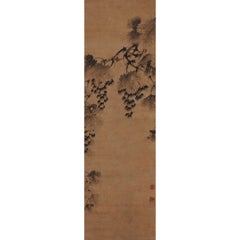
Anonymous. Korean, 17th century. Joseon period. Hanging scroll. Ink on paper. Seal: Shinso Dimensions: Scroll: H. 200 cm x W. 31 cm (79” x 12”) Image: H. 122 cm x W. 29.5 cm (48” x 11.5”) The grapevine came to China and then Korea from western Asia via the silk road trade routes. By the mid-Joseon period, it was one of the most popular subjects for Korean literati painters. Grapevines were painted as a singular subject or, less commonly, in combination with squirrels, which are associated with children due to their playful nature. Together, grapevines and squirrels embody wishes for abundant offspring and wealth. For the Korean literati artist the twisting vines, curling tendrils and round, plump grapes provided ample opportunity for expressive "brush play”. In this painting the artist has abstracted the scene and is seemingly unconcerned with discontinuities and proportion. Vines spring up from nowhere, grapes hang in random clusters and the squirrel’s head appears as if twisted backwards. For the vines and leaves we can feel a sense of speed in the brushstrokes, imparting a dynamic feel which is at once intense and animated. This contrasts dramatically with the countless tiny strokes of ink which realistically capture the texture of the squirrel’s fur...

Category

17th Century Korean Other Antique Kyoto

Materials

Paper

Meiji era Japanese Screen Pair, Two-panel. Spring & Autumn Birds & Flowers.

Meiji era Japanese Screen Pair, Two-panel. Spring & Autumn Birds & Flowers.

Located in Kyoto, JP

Spring and Autumn Birds & Flowers Hasegawa Gyokujun (1863-1921) Meiji period, circa 1900. Ink, color and gofun on silk. Dimensions of each screen: H. 172 cm x W. 188 cm (68’’ x 7...

Category

Early 20th Century Japanese Meiji Kyoto

Materials

Gold Leaf

17th Century Japanese Screen. Ink Plum Tree & Birds by Kano Naonobu.

17th Century Japanese Screen. Ink Plum Tree & Birds by Kano Naonobu.

Located in Kyoto, JP

Kano Naonobu (1607-1650) Plum Tree and Birds Six-fold Japanese Screen. Ink and slight color on paper. In this evocative ink work spread over a six-panel folding screen, we see the consummation of the elegance and refinement of the Edo Kano school. This 17th century screen is a rare surviving example of a large-scale bird and flower painting by Kano Naonobu, the younger brother of Kano Tanyu...

Category

17th Century Japanese Edo Antique Kyoto
Materials

Wood, Paper

Japanese Painting. Bird and Flower. 19th century copy of Lu Ji by Ogata Tomin.

Japanese Painting. Bird and Flower. 19th century copy of Lu Ji by Ogata Tomin.

Located in Kyoto, JP

Ogata Tomin (1839 -1895) Birds in a spring landscape Ink and colour on silk. Inscription reads: “Copy of Lu Ji, painted with heartfelt appreciation” “Painted by Tomin Ogat...

Category

Late 19th Century Japanese Ming Antique Kyoto

Materials

Silk

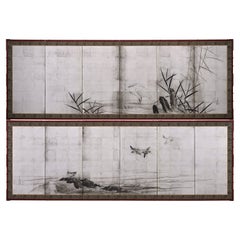
Japanese Silver Screen Pair, Meiji Period, Herons & Plovers, Shijo School

Japanese Silver Screen Pair, Meiji Period, Herons & Plovers, Shijo School

Located in Kyoto, JP

Heron & Plovers Ink and silver leaf on paper Maekawa Bunrei (1837-1917) A pair of low six-panel Japanese screens by Maekawa Bunrei, a later master of the Kyoto based Shijo school of painting. On the right screen a solitary white heron stands motionless in a stream. On the left screen plovers play along a shoreline. The elegant forms are executed employing fluid, minimalistic ink brushstrokes. The soft brushstrokes and the sharp light of the silver leaf lend the scenes a sense of translucence. The sophisticated composition superbly exploits the long, horizontal pictorial surface of the pair of folding screens...

Category

Early 1900s Japanese Meiji Antique Kyoto

Materials

Silver Leaf

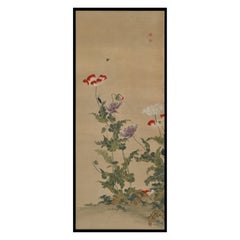
19th Century Japanese Scroll Painting by Igarashi Chikusa, Poppies & Butterflies

19th Century Japanese Scroll Painting by Igarashi Chikusa, Poppies & Butterflies

Located in Kyoto, JP

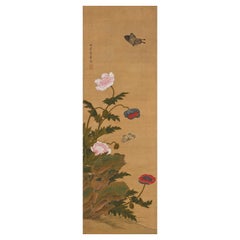
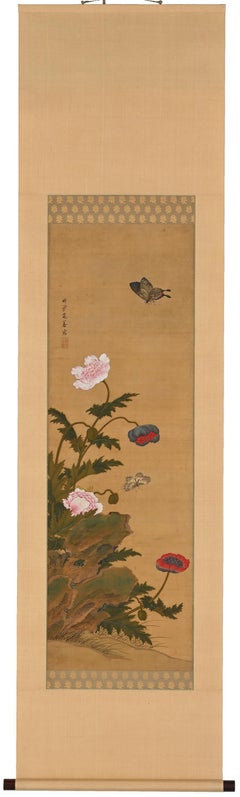
Poppies & Butterflies Ink, pigment and gofun on silk Igarashi Chikusa (1774-1844) Signature: Chikusa Ran Zen Upper Seal: Ran Shuzen Lower Seal: Kyoho Dimensions: Scroll: H. 68” x W. 18” (172cm x 45cm) Image: H. 38.5’’ x W. 12.5’’ (98cm x 32cm) This composition shows elegant images of poppies and the butterflies that are inevitably drawn to them. It captures a momentary glimpse into a world both visually dazzling and startlingly realistic. The painting is infused with sensitivity and attention to seasonal change and weather conditions. The thin and fragile poppies are beautifully depicted with brilliant colors and the butterflies are similarly infused with life. The painting is on silk which requires extremely precise painting skills as no element once painted can be removed. Poppies were a favorite subject of Rinpa school artists through the ages. Originally they were somewhat abstracted but by the age of Sakai Hoitsu...

Category

Early 19th Century Japanese Edo Antique Kyoto
Materials

Silk

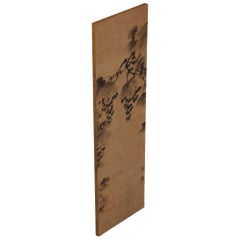
Korean Painting, Wall Panel, 17th Century Ink Grapevine

Korean Painting, Wall Panel, 17th Century Ink Grapevine

Located in Kyoto, JP

Grapevine Anonymous. Korean, 17th century. Wall panel, ink on paper. Upper seal: Kou Kinun in Lower seal: Kaigen Dimensions: Measures: 98.5 cm x 29.5 cm (39” ...

Category

17th Century Korean Other Antique Kyoto

Materials

Wood, Paper

Japanese Framed Silk Painting, Turtledoves and Peaches, Taisho Era, circa 1920

Japanese Framed Silk Painting, Turtledoves and Peaches, Taisho Era, circa 1920

Located in Kyoto, JP

Nakamura Daizaburo Turtledoves in a Peach Tree Taisho period, circa 1920 Framed painting. Mineral pigments, ink and gofun on silk Signed: Daizaburo Dimensions (framed)...

Category

1910s Japanese Taisho Vintage Kyoto

Materials

Wood, Silk

Japanese Painting, Hanging Scroll, Circa 1930, Amaranth and Rooster

Japanese Painting, Hanging Scroll, Circa 1930, Amaranth and Rooster

Located in Kyoto, JP

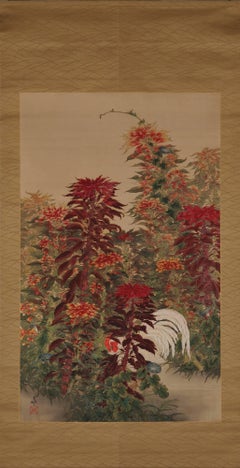
Amaranth and Rooster Artist unknown Hanging scroll, ink, mineral pigment and gofun on silk. Painting inscription: Tojo ?? Painting seal: Tojo ?? circa 1930 Dimensions: Scroll:...

Category

Early 20th Century Japanese Taisho Kyoto

Materials

Silk

Mid 19th Century Framed Japanese Painting. Snail, Wasp & Hollyhock.

Mid 19th Century Framed Japanese Painting. Snail, Wasp & Hollyhock.

Located in Kyoto, JP

Obata Tosho (1812-1886) Snail, Wasp & Hollyhock Late Edo period, mid 19th Century Framed Japanese Painting. Ink and color on paper. Individually framed 19th century bird and ...

Category

Mid-19th Century Japanese Edo Antique Kyoto
Materials

Paper

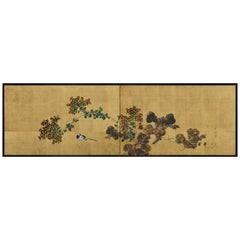
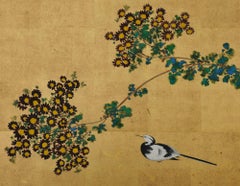
Japanese Screen, Early 20th Century Wagtail & Chrysanthemum by Ishizaki Koyo

Japanese Screen, Early 20th Century Wagtail & Chrysanthemum by Ishizaki Koyo

Located in Kyoto, JP

Ishizaki Koyo (1884-1947) Wagtail & Chrysanthemum Early 20th century Folding screen in two-panels. Ink, pigments and gofun on gold leaf. Sign: Koyo Seal: Koyo This ...

Category

Early 20th Century Japanese Taisho Kyoto

Materials

Gold Leaf

Mid 19th Century Framed Japanese Painting. Longhorn Beetle & Poppies.

Mid 19th Century Framed Japanese Painting. Longhorn Beetle & Poppies.

Located in Kyoto, JP

Obata Tosho (1812-1886) Longhorn Beetle & Poppies. Late Edo period, mid 19th Century Framed Japanese Painting. Ink and color on paper. Individually framed 19th century bird a...

Category

Mid-19th Century Japanese Edo Antique Kyoto
Materials

Paper

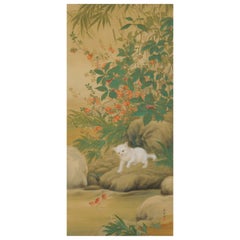
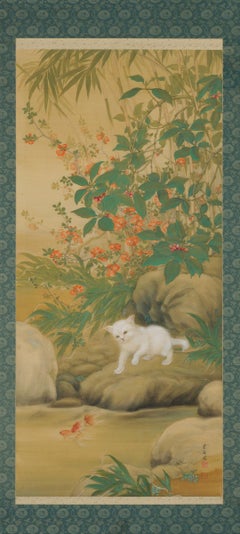
Japanese Painting, Hanging Scroll, 'Playful Cat' by Hirose Toho, 1920s Taisho

Japanese Painting, Hanging Scroll, 'Playful Cat' by Hirose Toho, 1920s Taisho

By Hirose Toho

Located in Kyoto, JP

Playful Cat Hirose Toho (1875-1930) Hanging scroll, ink, mineral pigments and gofun on silk. Painting inscription: Toho Sha Painting seals: Upper - Hirose Hitoshi Lo...

Category

1920s Japanese Taisho Vintage Kyoto

Materials

Silk

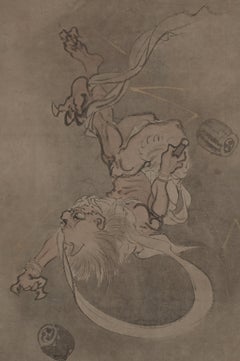
Late 18th Century Japanese Framed Painting, God of Thunder by Yamaguchi Soken

Late 18th Century Japanese Framed Painting, God of Thunder by Yamaguchi Soken

Located in Kyoto, JP

Raijin - God of Thunder Yamaguchi Soken (1759-1818) Mid to Late Edo period, circa 1800. Framed painting. Ink and light color on paper. This humorous painting depicts the Thunder God, Raijin, tumbling from the sky, presumably being struck down by one of his own lighting bolts. He clings to one drumstick as the other is in free-fall along with his Taiko drums...

Category

Late 18th Century Asian Edo Antique Kyoto

Materials

Paper

1844 - Chichi, Japanese Scroll Painting. Colour on Silk

1844 - Chichi, Japanese Scroll Painting. Colour on Silk

Located in Kyoto, JP

Mother’s Breast (Chichi) 1844 Hanging scroll. Ink, pigments and gofun on silk. Inscription: Kouka era, dragon year, late winter, painted by Shozan Yashou Artist’ seals: ...

Category

1840s Japanese Edo Antique Kyoto

Materials

Silk

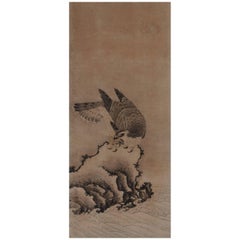
Japanese Painting, Framed Panel, 17th Century Falcon by Mitani Toshuku

Japanese Painting, Framed Panel, 17th Century Falcon by Mitani Toshuku

By Mitani Toshuku

Located in Kyoto, JP

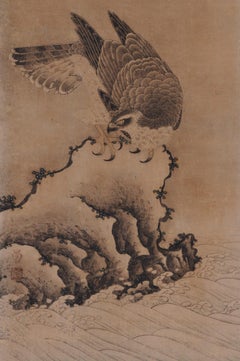
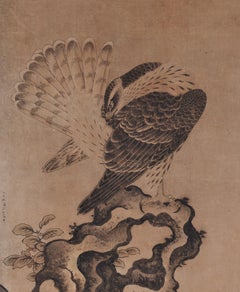
Mitani Toshuku (1577-1654) “Falcon” Wall panel, ink and light color on paper. Upper seal: Mitani Lower seal: Toshuku Dimensions: Each 118.5 cm x 51 cm x 2 cm (46.5” x 20” x .75”) Individual falcon paintings by Mitani Toshuku (1577-1654), an early artist of the Unkoku School. Founded by Unkoku Togan (1547–1618), a master of the Momoyama period, the Unkoku school enjoyed long lasting patronage in southern Japan. Togan was a retainer of the Mori family in present day Yamaguchi prefecture. Members of the school considered themselves to be in the artistic lineage of Sesshu Toyo...

Category

Early 17th Century Japanese Edo Antique Kyoto
Materials

Wood, Paper

17th century Japanese Falcon Painting, Mitani Toshuku, Unkoku School

17th century Japanese Falcon Painting, Mitani Toshuku, Unkoku School

By Mitani Toshuku

Located in Kyoto, JP

Mitani Toshuku (1577-1654) “Falcon” Wall panel, ink and light color on paper. Upper Seal: Mitani Lower Seal: Toshuku Dimensions: Each 118.5 cm x 51 cm x 2 cm (46.5” x 20” x .75”) Individual falcon paintings by Mitani Toshuku (1577-1654), an early artist of the Unkoku School. Founded by Unkoku Togan (1547–1618), a master of the Momoyama period, the Unkoku school enjoyed long lasting patronage in southern Japan. Togan was a retainer of the Mori family in present day Yamaguchi prefecture. Members of the school considered themselves to be in the artistic lineage of Sesshu Toyo...

Category

Early 17th Century Japanese Edo Antique Kyoto

Materials

Paper

Early 20th Century Japanese Cherry Blossom Screen by Kano Sanrakuki

Early 20th Century Japanese Cherry Blossom Screen by Kano Sanrakuki

Located in Kyoto, JP

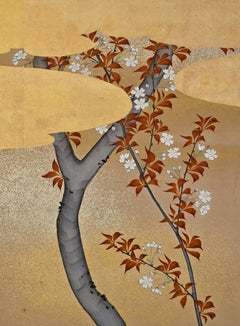
Cherry Blossoms Kano Sanrakuki (1898-1981) Showa period, circa 1930 2-panel Japanese Screen Color, gofun and gold leaf on paper Against a backdrop of gold-leafed ground, the lichen covered trunk and branches of the life-sized cherry blossom tree reach out and beyond the confines of the pictorial surface. The overall composition has a feeling of flatness which draws emphasis to the surface and the three-dimensionality of the cherry blossoms. Painstakingly built-up layers of thickly applied shell-white gofun detail the voluminous blossoms and cover large areas of this tour-de-force of Japanese Nihonga painting. By simplifying the background, minimizing the number of colors and depicting the blossoms with such heavy relief, the artist has emphasized the stunning presence of the cherry tree. The type of tree depicted is the Yae-Zakura; a double-layered type of cherry blossom famed for its beauty and strength. When we think of Japanese cherry blossoms, the first thing that comes to mind is Somei Yoshino variety, which has a single flower with five almost white petals. This type is fragile and easily blown away by strong wind or rain. Most of the double-flowered cherry blossoms begin to bloom when the Somei-Yoshino falls, and the flowering period lasts longer than that of the Somei-Yoshino. Kano Sanrakuki originally studied painting at the Kyoto City Arts and Crafts School under the tutelage of Yamamoto Shunkyo...
Category

Early 20th Century Japanese Showa Kyoto
Materials

Gold Leaf