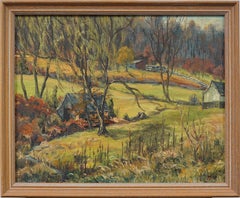
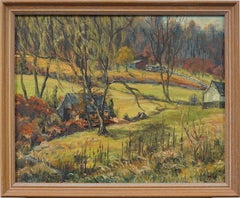
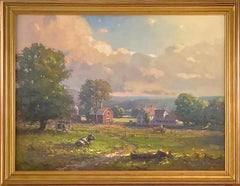
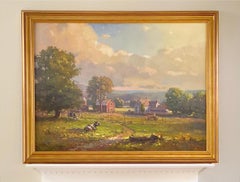
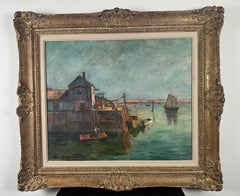
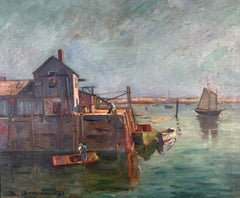
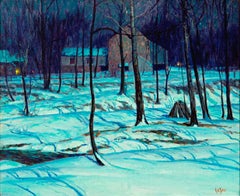
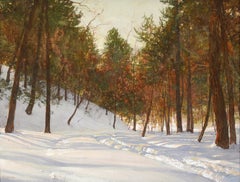
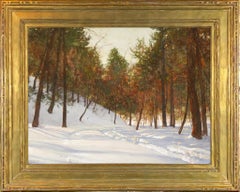
Leo B. Blake received a thorough education in art at the Art Institute of Chicago where he was a student from 1908 to 1912. His instructors at this time included such notables as J.H. Vanderpoel, Alphonse Mucha, Allen Philbrick, W.J. Reynolds, Antonin Sterba, and F. DeForrest Schook. He also received special training under Mathis Alten, Birge Harrison, Conway Peyton and Alfred East. While at the Institute, he was honored with two scholarships in 1910 and 1911.
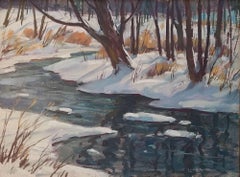
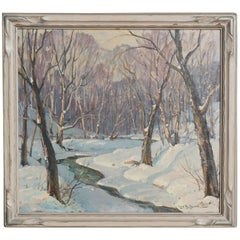
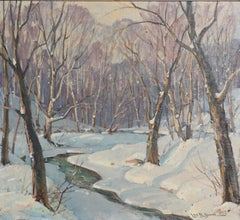
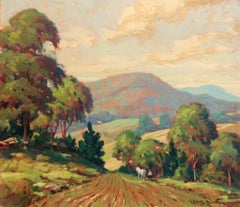
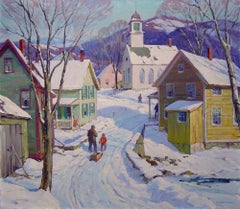
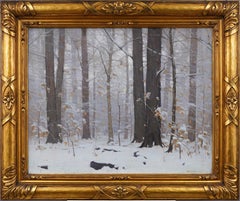
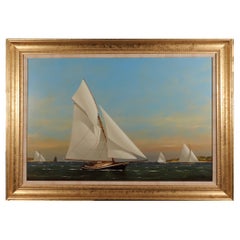
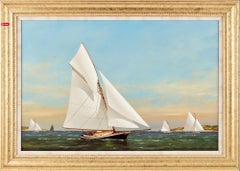
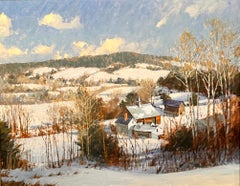
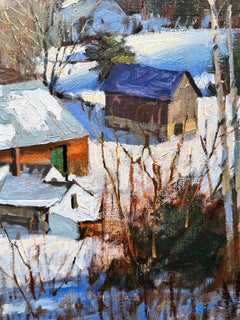
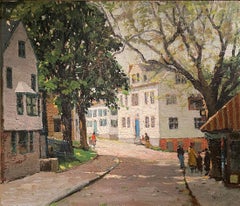
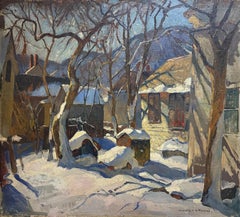
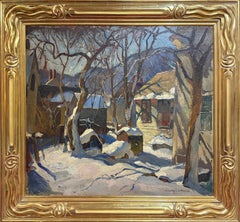
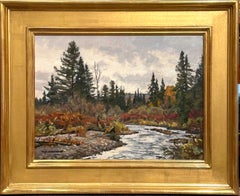
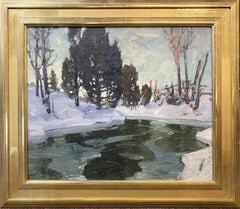
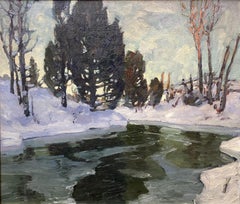
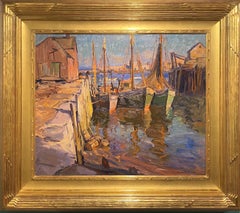
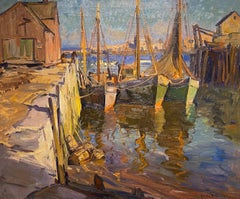
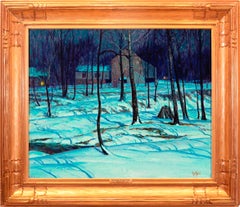
After emerging from the Art Institute of Chicago, Blake began his career in illustration and commercial art and continued his residence in the Mid-West until he decided to break away and work as a free lance painter according to his own ideas and preferences. He set up a permanent studio in the Berkshires in 1933. Blake spent the rest of his career depicting landscape and seasonal changes around New England.
Blake was an active member of the Salmagundi Club, Illinois Academy of Fine Arts, Pittsfield Art League (President 1935), Berkshire Business Men's Art League, North Shore Arts Association, Connecticut Academy of Fine Arts, New Haven Paint and Clay Club, Springfield Art League, and the American Artists Professional League.
Blake exhibited throughout the country at many fine institutions including at the Art Institute of Chicago, Illinois Academy of Fine Arts (award, 1931), Allied Artists of America, Berkshire Museum, Connecticut Academy of Fine Arts (award, 1939), Salmagundi Club (award, 1942), Philadelphia Art Alliance, and Syracuse University.
Blake's work is represented in the permanent collections of the Illinois State Museum, Mechanics Institute of the Rochester Institute of Technology and the Berkshire Museum, Pittsfield, Mass.
Blake taught painting at Williams College from 1937 to 1941 and at the Berkshire Museum from 1943 to 1953. He also taught at the Lenox Art Study Group, Lenox Library, Great Barrington Painting Class, Great Barrington High School, Crestalbal School for Girls, Junior League of Pittsfield, and Blake Studios Summer School.
It could be argued that cave walls were the canvases for the world’s first landscape paintings, which depict and elevate natural scenery through art, but there is a richer history to consider.
The Netherlands was home to landscapes as a major theme in painting as early as the 1500s, and ink-on-silk paintings in China featured mountains and large bodies of water as far back as the third century. Greeks created vast wall paintings that depicted landscapes and grandiose garden scenes, while in the late 15th century and early 16th century, landscapes were increasingly the subject of watercolor works by the likes of Leonardo da Vinci and Fra Bartolomeo.
The popularity of religious paintings eventually declined altogether, and by the early 19th century, painters of classical landscapes took to painting out-of-doors (plein-air painting). Paintings of natural scenery were increasingly realistic but romanticized too. Into the 20th century, landscapes remained a major theme for many artists, and while the term “landscape painting” may call to mind images of lush, grassy fields and open seascapes, the genre is characterized by more variety, colors and diverse styles than you may think. Painters working in the photorealist style of landscape painting, for example, seek to create works so lifelike that you may confuse their paint for camera pixels. But if you’re shopping for art to outfit an important room, the work needs to be something with a bit of gravitas (and the right frame is important, too).
Adding a landscape painting to your home can introduce peace and serenity within the confines of your own space. (Some may think of it as an aspirational window of sorts rather than a canvas.) Abstract landscape paintings by the likes of Korean painter Seungyoon Choi or Georgia-based artist Katherine Sandoz, on the other hand, bring pops of color and movement into a room. These landscapes refuse to serve as a background. Elsewhere, Adam Straus’s technology-inspired paintings highlight how our extreme involvement with our devices has removed us from the glory of the world around us. Influenced by modern life and steeped in social commentary, Straus’s landscape paintings make us see our surroundings anew.
Whether you’re seeking works by the world’s most notable names or those authored by underground legends, find a vast collection of landscape paintings on 1stDibs.